Valerie Johnson and David Thomas Does the Digital Change Anything ?
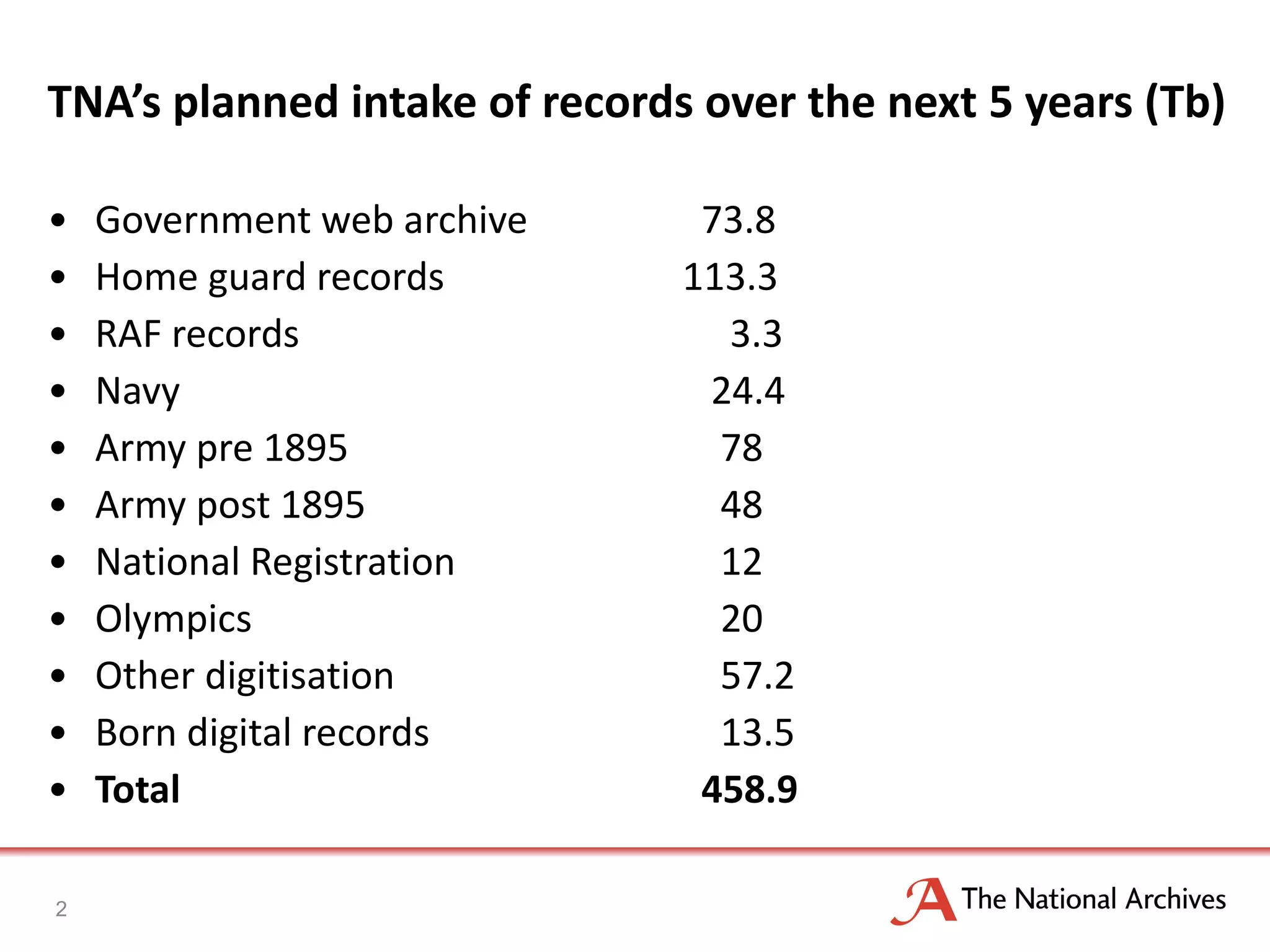
TNA’s planned intake of records over the next 5 years (Tb) Government web archive   73.8 Home guard records 113.3 RAF records   3.3 Navy   24.4 Army pre 1895   78 Army post 1895   48 National Registration   12 Olympics   20 Other digitisation   57.2 Born digital records   13.5 Total   458.9
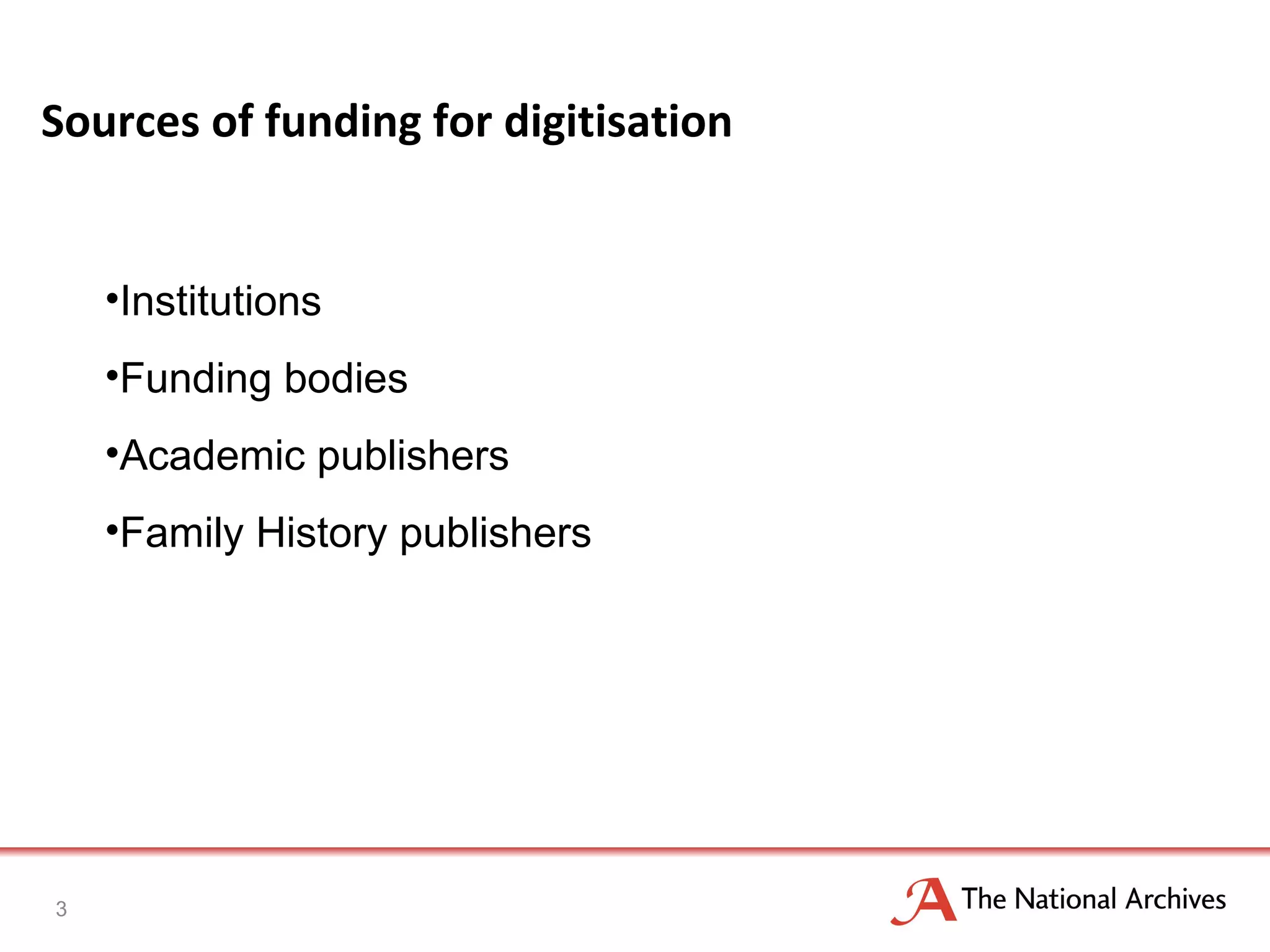
Sources of funding for digitisation Institutions Funding bodies Academic publishers Family History publishers
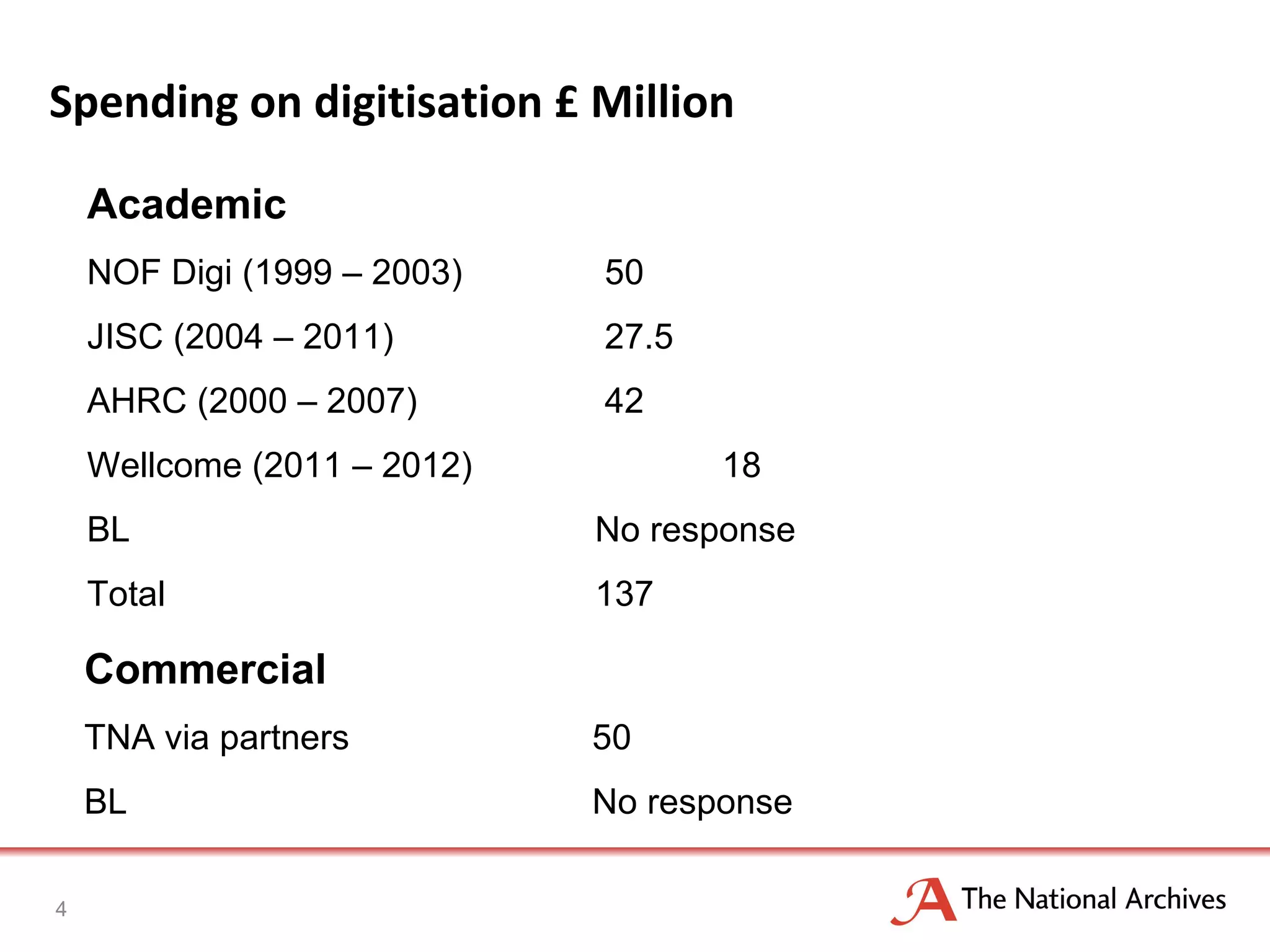
Spending on digitisation £ Million Academic NOF Digi (1999 – 2003)   50  JISC (2004 – 2011)   27.5  AHRC (2000 – 2007)  42  Wellcome (2011 – 2012) 18 BL No response Total 137 Commercial TNA via partners 50  BL  No response
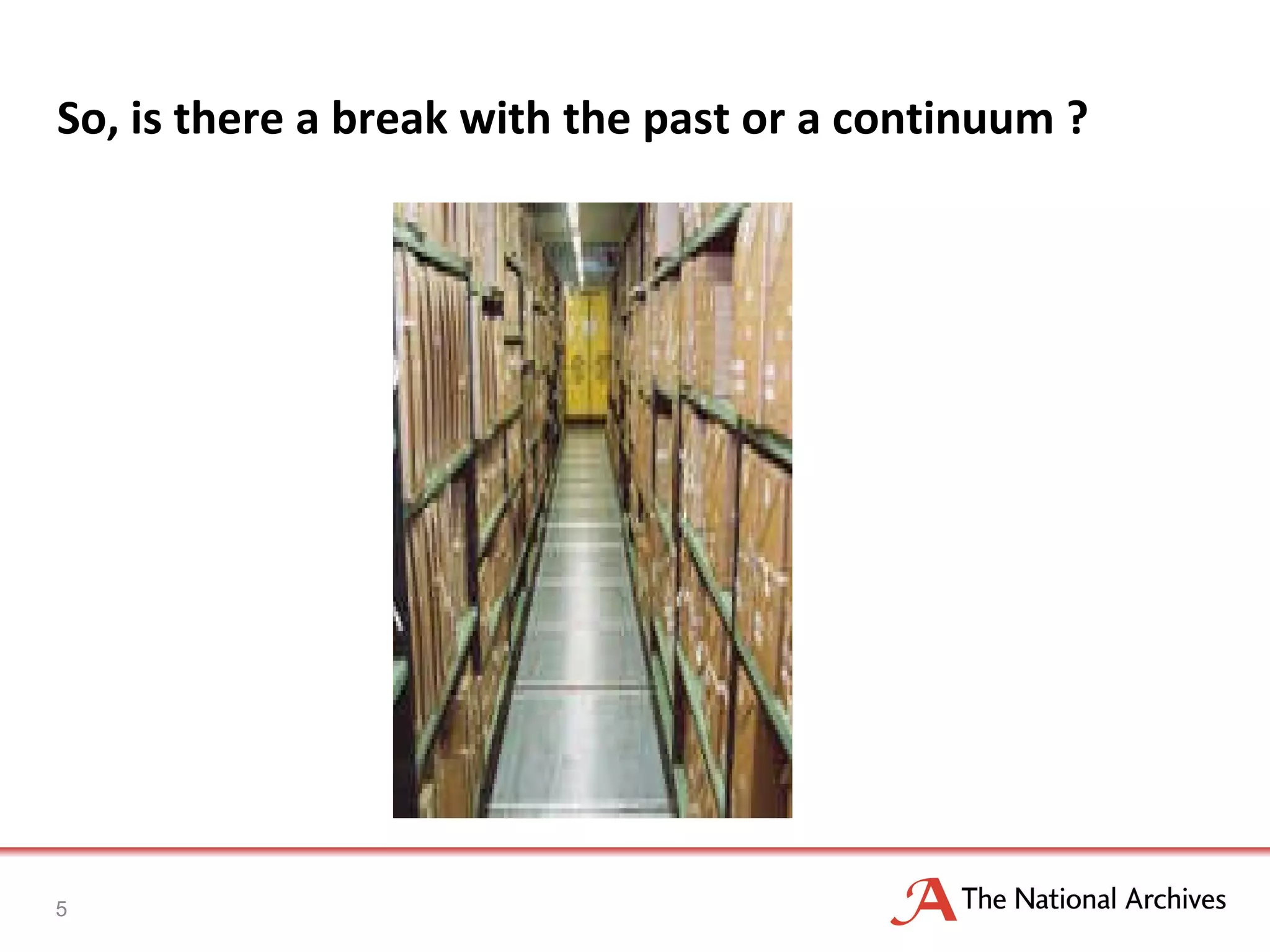
So, is there a break with the past or a continuum ?
Break... ? Loss of the physical record and its implications New types of records: audio stream, websites Problems of authenticity, provenance and originality Problem of records as unchanging versus 'website as performance' Some records can't exist in physical format: shareholding registers. Is this the end of the record?  Consequently the end of the archive? All is information
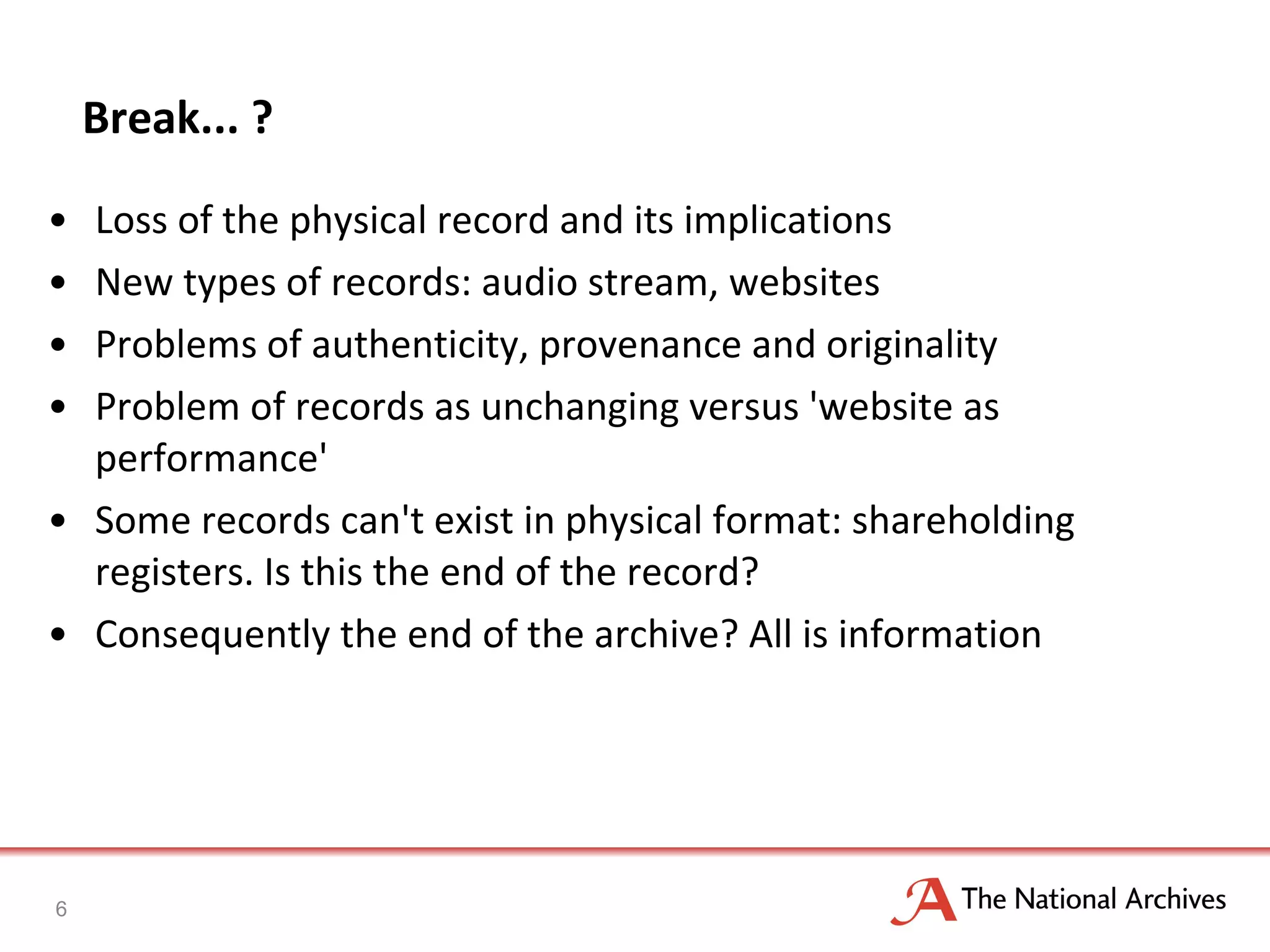
or...continuum ? Overlapping technologies: data not replacing paper, but co-existing Emails = simply like letters Medium of records changes, but not the concept Some records always dynamic: datasets; records of shareholdings, medical records
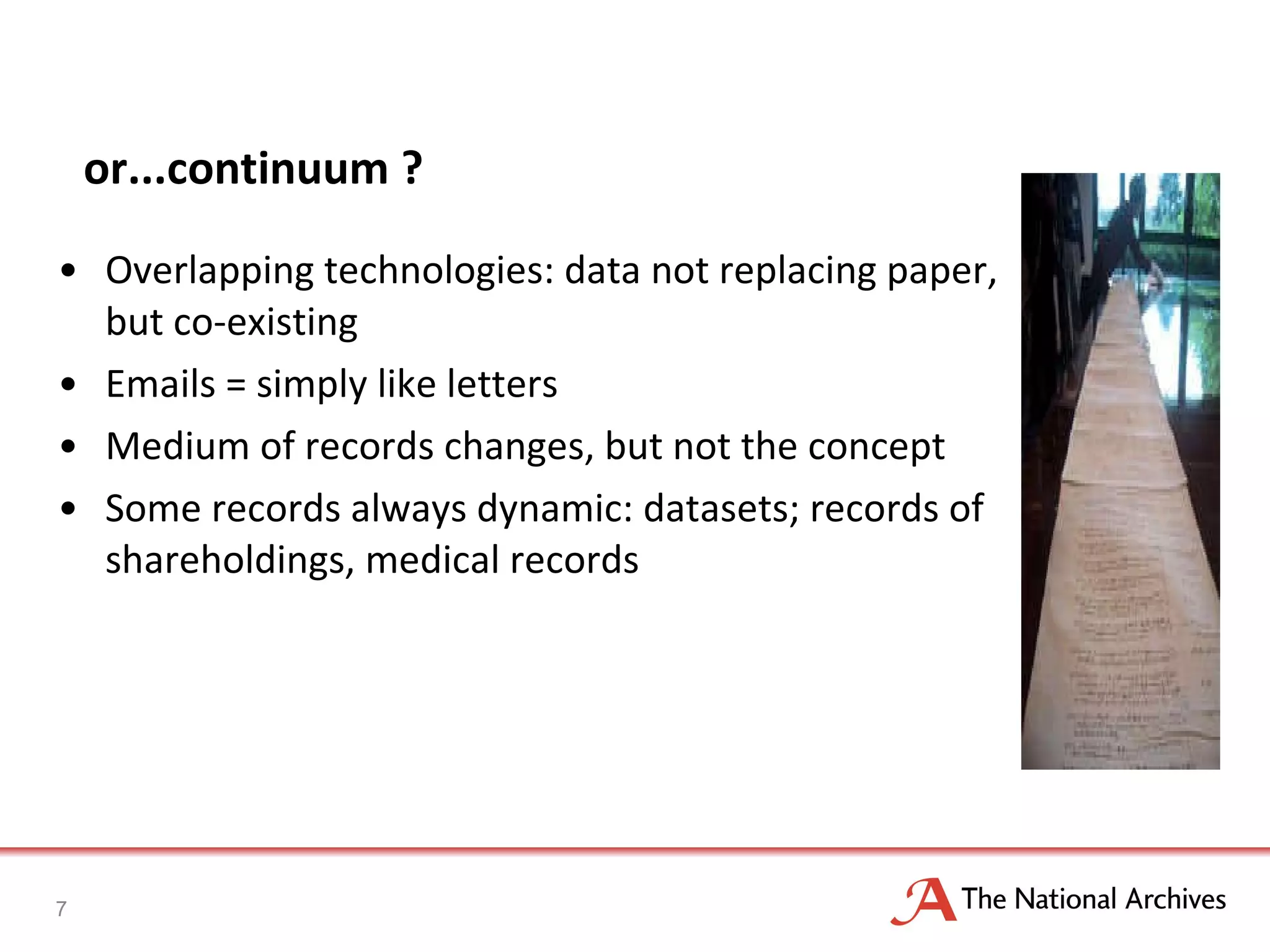
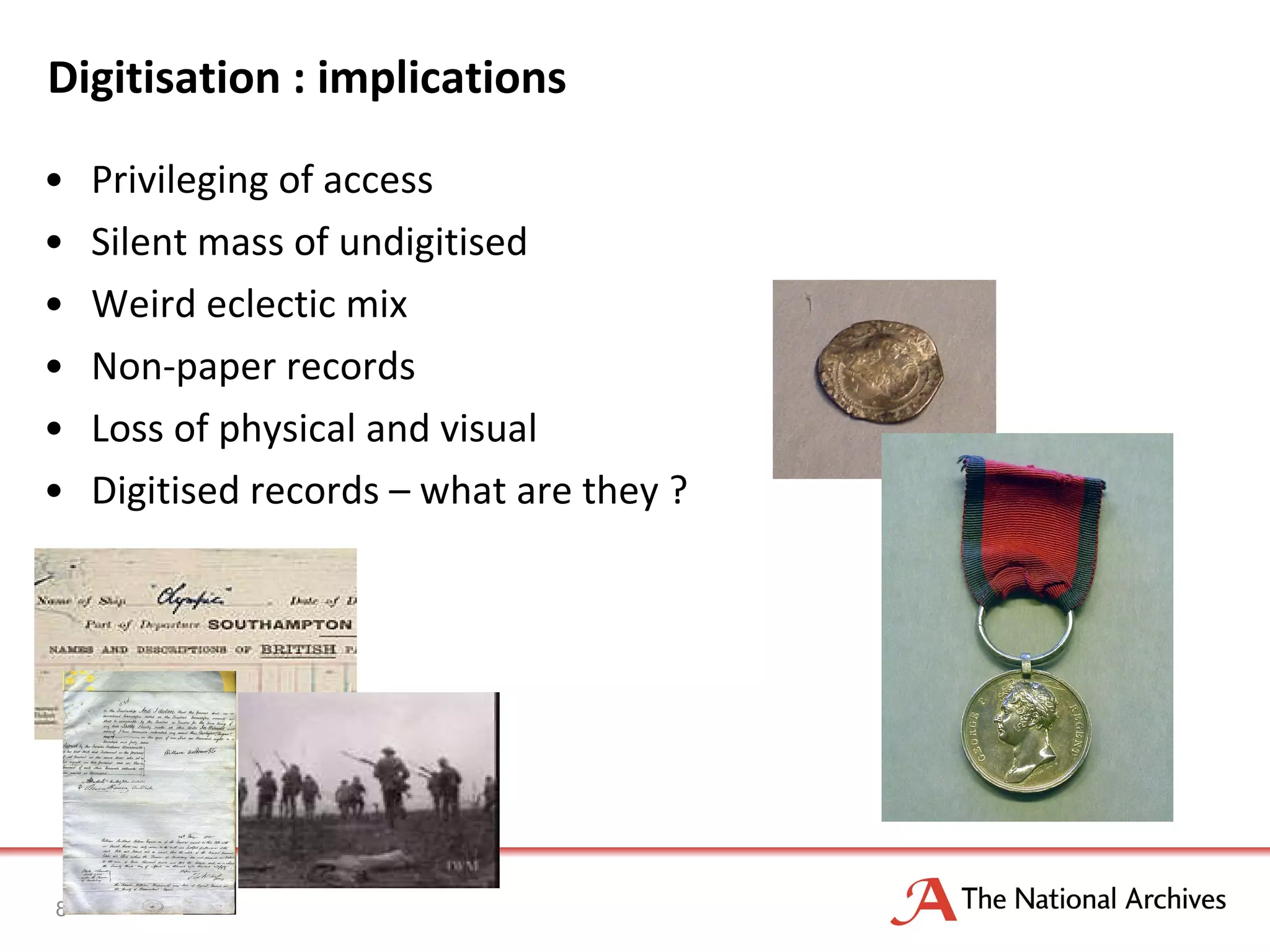
Digitisation : implications Privileging of access Silent mass of undigitised Weird eclectic mix Non-paper records Loss of physical and visual Digitised records – what are they ?
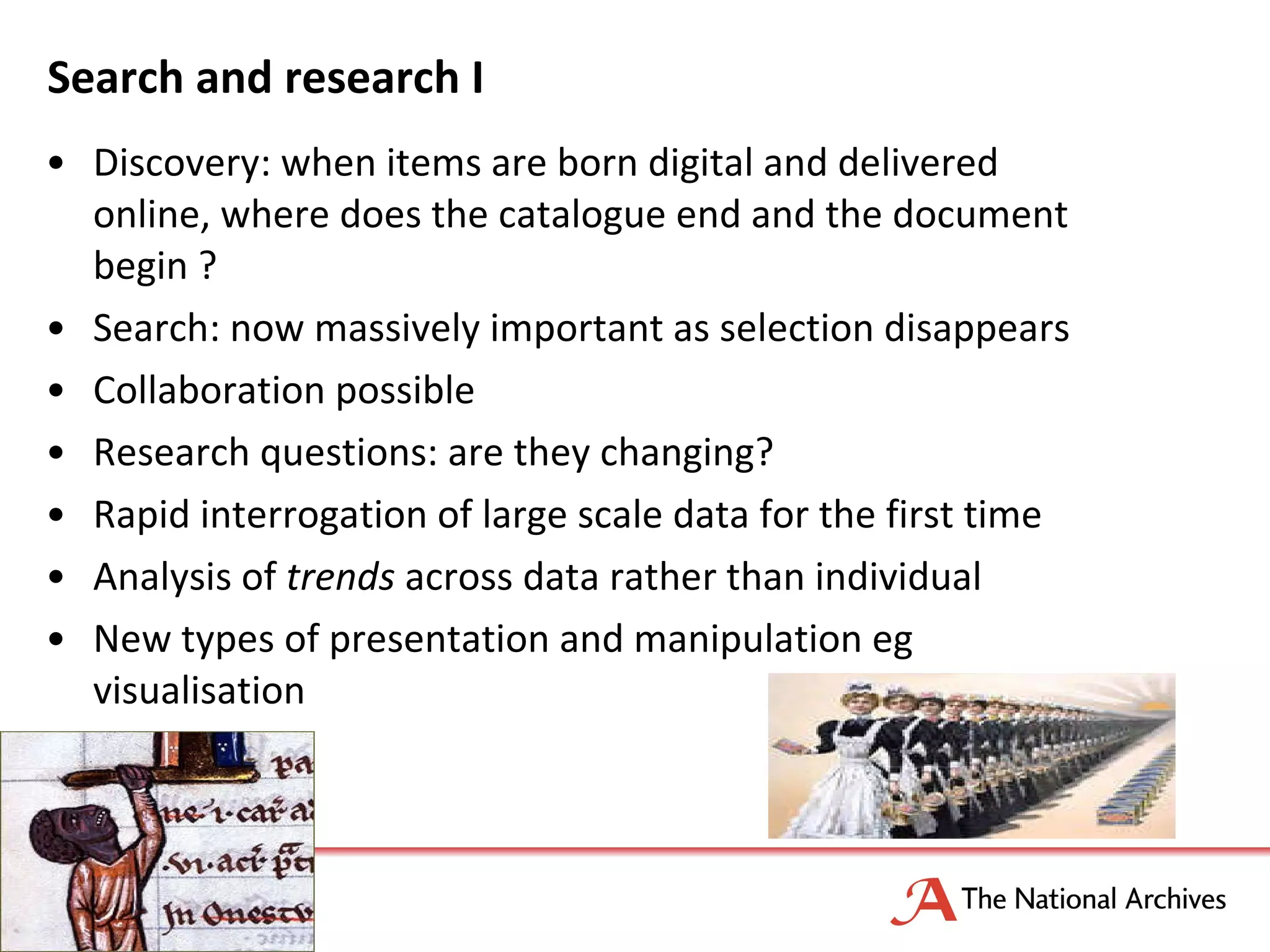
Search and research I Discovery: when items are born digital and delivered online, where does the catalogue end and the document begin ? Search: now massively important as selection disappears Collaboration possible Research questions: are they changing? Rapid interrogation of large scale data for the first time Analysis of  trends  across data rather than individual New types of presentation and manipulation eg visualisation
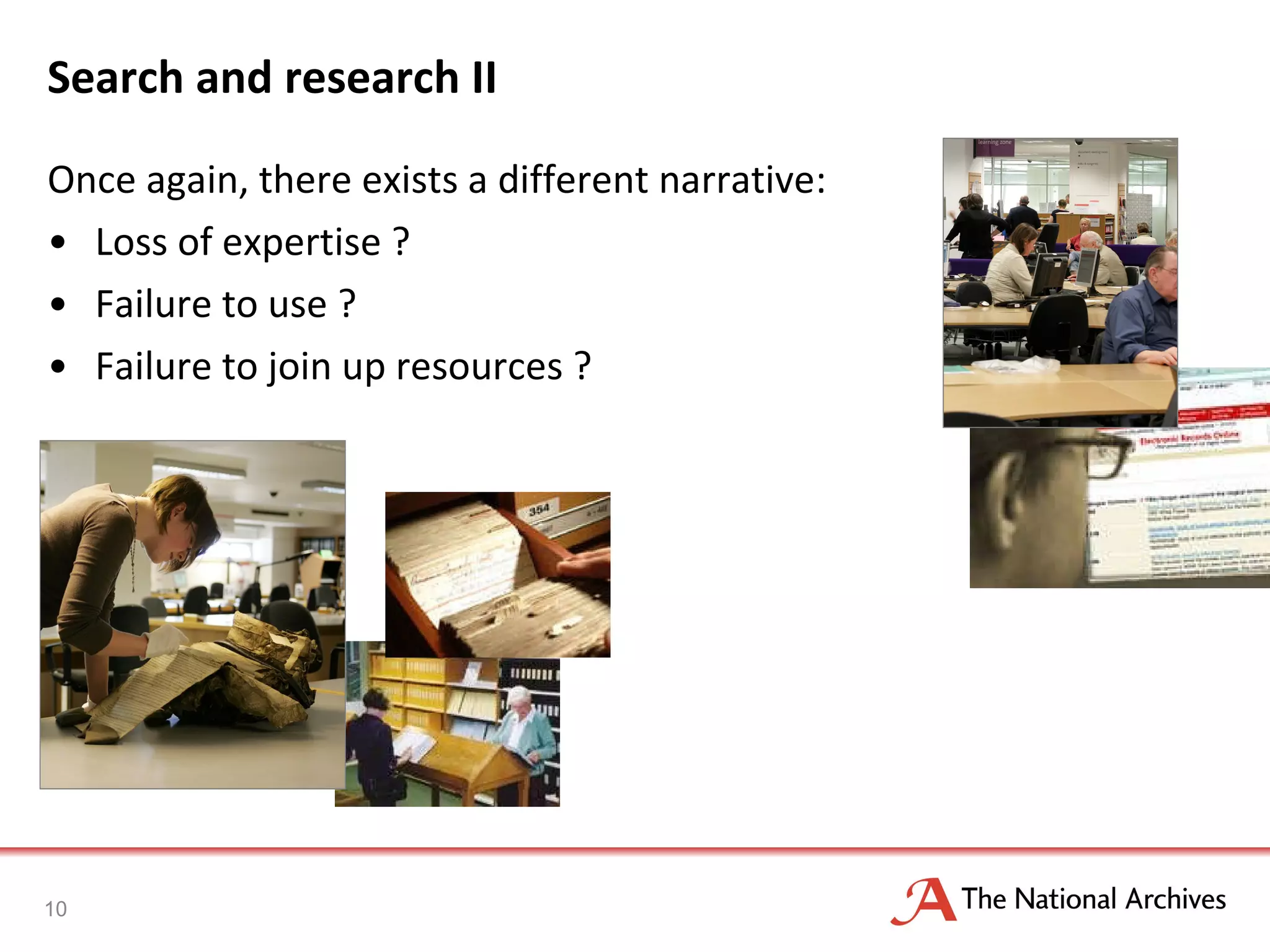
Search and research II Once again, there exists a different narrative: Loss of expertise ? Failure to use ? Failure to join up resources ?
Welcomed with open arms, or an impasse of resistance ? Self-limiting beliefs at an individual level Self-limiting beliefs at a community level The privileging of the original: sentimentality or reality ? At the same time: Digital humanities is deliberately exploiting new technologies
So what is the way forward ?
Conclusion: Brave New World ? Mixed economy  New standards and definitions Reassurance on persistence Coherent vision of joined-up resources Mainstreaming of Digital Humanities?

Does the digital change anything?

  • 1.
    Valerie Johnson andDavid Thomas Does the Digital Change Anything ?
  • 2.
    TNA’s planned intakeof records over the next 5 years (Tb) Government web archive 73.8 Home guard records 113.3 RAF records 3.3 Navy 24.4 Army pre 1895 78 Army post 1895 48 National Registration 12 Olympics 20 Other digitisation 57.2 Born digital records 13.5 Total 458.9
  • 3.
    Sources of fundingfor digitisation Institutions Funding bodies Academic publishers Family History publishers
  • 4.
    Spending on digitisation£ Million Academic NOF Digi (1999 – 2003) 50 JISC (2004 – 2011) 27.5 AHRC (2000 – 2007) 42 Wellcome (2011 – 2012) 18 BL No response Total 137 Commercial TNA via partners 50 BL No response
  • 5.
    So, is therea break with the past or a continuum ?
  • 6.
    Break... ? Lossof the physical record and its implications New types of records: audio stream, websites Problems of authenticity, provenance and originality Problem of records as unchanging versus 'website as performance' Some records can't exist in physical format: shareholding registers. Is this the end of the record? Consequently the end of the archive? All is information
  • 7.
    or...continuum ? Overlappingtechnologies: data not replacing paper, but co-existing Emails = simply like letters Medium of records changes, but not the concept Some records always dynamic: datasets; records of shareholdings, medical records
  • 8.
    Digitisation : implicationsPrivileging of access Silent mass of undigitised Weird eclectic mix Non-paper records Loss of physical and visual Digitised records – what are they ?
  • 9.
    Search and researchI Discovery: when items are born digital and delivered online, where does the catalogue end and the document begin ? Search: now massively important as selection disappears Collaboration possible Research questions: are they changing? Rapid interrogation of large scale data for the first time Analysis of trends across data rather than individual New types of presentation and manipulation eg visualisation
  • 10.
    Search and researchII Once again, there exists a different narrative: Loss of expertise ? Failure to use ? Failure to join up resources ?
  • 11.
    Welcomed with openarms, or an impasse of resistance ? Self-limiting beliefs at an individual level Self-limiting beliefs at a community level The privileging of the original: sentimentality or reality ? At the same time: Digital humanities is deliberately exploiting new technologies
  • 12.
    So what isthe way forward ?
  • 13.
    Conclusion: Brave NewWorld ? Mixed economy New standards and definitions Reassurance on persistence Coherent vision of joined-up resources Mainstreaming of Digital Humanities?

Editor's Notes