Download to read offline
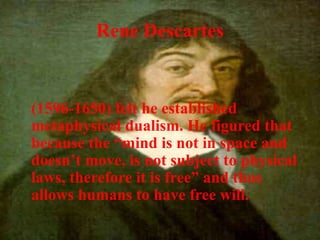
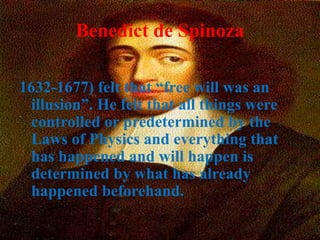
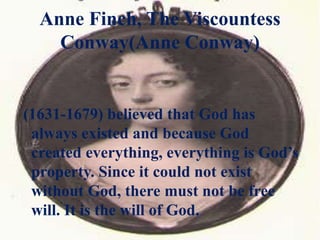





The document discusses whether free will exists or if human decisions are predetermined. It presents different philosophical views on dualism, materialism, and idealism regarding the relationship between mind and body. Several philosophers are discussed who had differing opinions on free will, including Thomas Hobbes believing free will exists through reasoning, Benedict de Spinoza believing free will is an illusion and all is predetermined, and Rene Descartes arguing free will exists through the separation of mind and body. The document concludes that there is such a thing as free will, as seen through actions and reactions, though God's omniscience allows foreseeing decisions as the first example was Adam and Eve's choice in the garden.


