End of 12.1 and 12.2
 Nucleotides are made
 up of 3 things:
  1. 5 carbon sugar
  2. Nitrogenous
     (containing nitrogen)
     bases
  3. Phosphate group
 Nucleic
       Acids (like
 DNA and RNA)
 The nucleic acid DNA consists of the
 following:
  1.   Deoxyribose- sugar
  2.   A phosphate group
  3.   A series of 4 nitrogenous bases: cytosine, adenine, thymine,
       guanine
 The nucleic acid RNA
 consists of the
 following:
  1. Ribose- sugar
  2. A phosphate group
  3. A series of 4
     nitrogenous bases:
     adenine, uracil,
     guanine, cytosine
 Adenineand Guanine
 are considered purine
 Thymine, Cytosine,
 and Uracil are
 considered
 pyrimidines
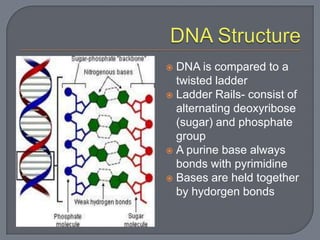
 DNA is compared to a
  twisted ladder
 Ladder Rails- consist of
  alternating deoxyribose
  (sugar) and phosphate
  group
 A purine base always
  bonds with pyrimidine
 Bases are held together
  by hydorgen bonds
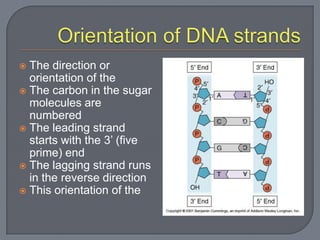
 The direction or
  orientation of the
 The carbon in the sugar
  molecules are
  numbered
 The leading strand
  starts with the 3’ (five
  prime) end
 The lagging strand runs
  in the reverse direction
 This orientation of the
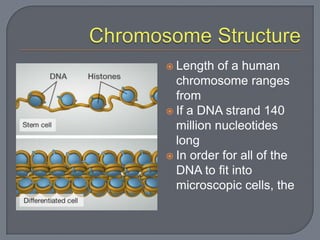
 Length  of a human
  chromosome ranges
  from
 If a DNA strand 140
  million nucleotides
  long
 In order for all of the
  DNA to fit into
  microscopic cells, the
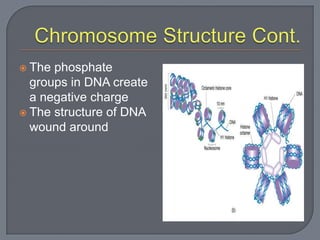
 The phosphate
  groups in DNA create
  a negative charge
 The structure of DNA
  wound around
 DNA  replication is
 considered
 semiconservative
 replication- because
 this process consists
 DNA   replication
  occurs during
  interphase of the cell
  cycle-
 There are 3 main
  stages to
  semiconservative
  replication:
 Helicase-is an
  enzyme used to
 When DNA is
  unzipped, the
  hydrogen bonds
  between the bases
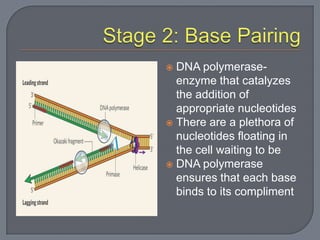
 DNA polymerase-
  enzyme that catalyzes
  the addition of
  appropriate nucleotides
 There are a plethora of
  nucleotides floating in
  the cell waiting to be
 DNA polymerase
  ensures that each base
  binds to its compliment
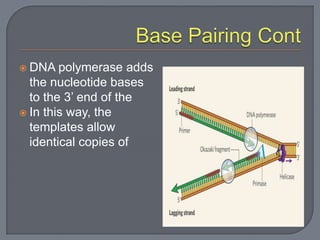
 DNA   polymerase adds
  the nucleotide bases
  to the 3’ end of the
 In this way, the
  templates allow
  identical copies of
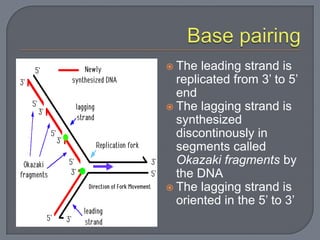
 The  leading strand is
  replicated from 3’ to 5’
  end
 The lagging strand is
  synthesized
  discontinously in
  segments called
  Okazaki fragments by
  the DNA
 The lagging strand is
  oriented in the 5’ to 3’
 DNA  ligase- is an
 enzyme that connects
 all the fragments of

Dna structure 12.1 and 12.2 students

  • 1.
    End of 12.1and 12.2
  • 2.
     Nucleotides aremade up of 3 things: 1. 5 carbon sugar 2. Nitrogenous (containing nitrogen) bases 3. Phosphate group  Nucleic Acids (like DNA and RNA)
  • 3.
     The nucleicacid DNA consists of the following: 1. Deoxyribose- sugar 2. A phosphate group 3. A series of 4 nitrogenous bases: cytosine, adenine, thymine, guanine
  • 4.
     The nucleicacid RNA consists of the following: 1. Ribose- sugar 2. A phosphate group 3. A series of 4 nitrogenous bases: adenine, uracil, guanine, cytosine
  • 5.
     Adenineand Guanine are considered purine
  • 6.
     Thymine, Cytosine, and Uracil are considered pyrimidines
  • 7.
     DNA iscompared to a twisted ladder  Ladder Rails- consist of alternating deoxyribose (sugar) and phosphate group  A purine base always bonds with pyrimidine  Bases are held together by hydorgen bonds
  • 8.
     The directionor orientation of the  The carbon in the sugar molecules are numbered  The leading strand starts with the 3’ (five prime) end  The lagging strand runs in the reverse direction  This orientation of the
  • 9.
     Length of a human chromosome ranges from  If a DNA strand 140 million nucleotides long  In order for all of the DNA to fit into microscopic cells, the
  • 10.
     The phosphate groups in DNA create a negative charge  The structure of DNA wound around
  • 11.
     DNA replication is considered semiconservative replication- because this process consists
  • 12.
     DNA replication occurs during interphase of the cell cycle-  There are 3 main stages to semiconservative replication:
  • 13.
     Helicase-is an enzyme used to  When DNA is unzipped, the hydrogen bonds between the bases
  • 14.
     DNA polymerase- enzyme that catalyzes the addition of appropriate nucleotides  There are a plethora of nucleotides floating in the cell waiting to be  DNA polymerase ensures that each base binds to its compliment
  • 15.
     DNA polymerase adds the nucleotide bases to the 3’ end of the  In this way, the templates allow identical copies of
  • 16.
     The leading strand is replicated from 3’ to 5’ end  The lagging strand is synthesized discontinously in segments called Okazaki fragments by the DNA  The lagging strand is oriented in the 5’ to 3’
  • 17.
     DNA ligase- is an enzyme that connects all the fragments of