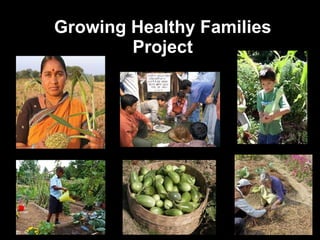
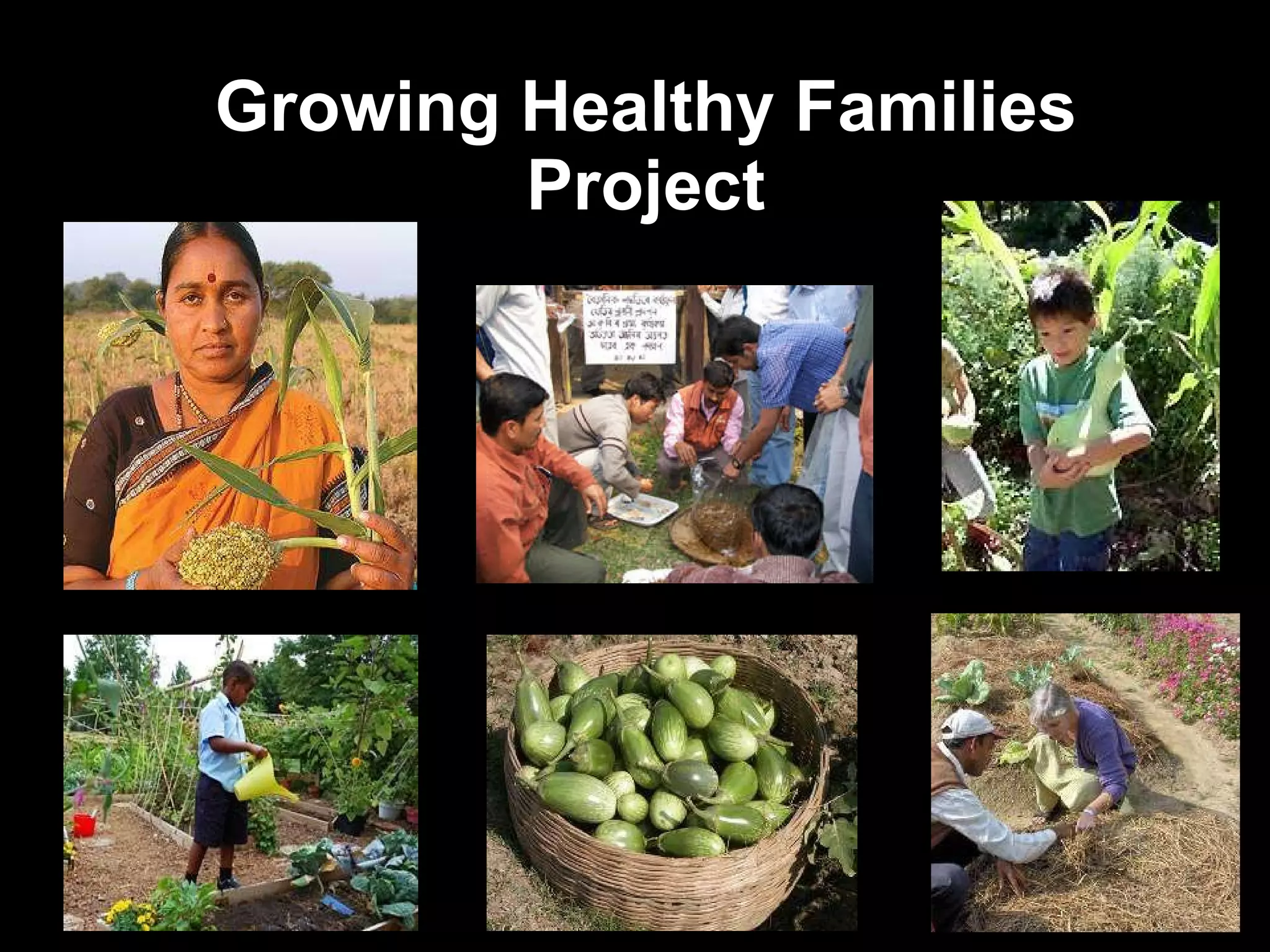


Growing Healthy Families Project
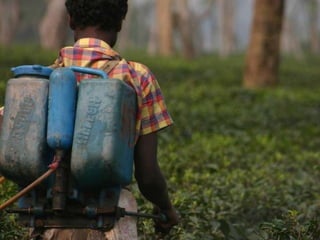
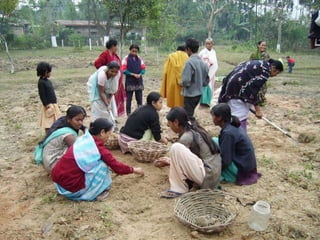
PROJECT GOALS to offer the knowledge and skills they need to meet nutritional needs of their family members to educate families about health risks associated with pesticide use to provide the means to cultivate and sell agricultural crops as a potential source of income to ensure families have the information they need to avoid taking on debt and loans that they can’t manage
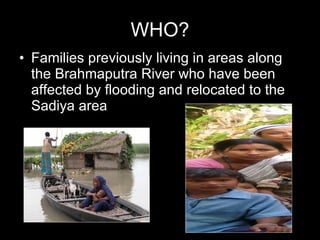
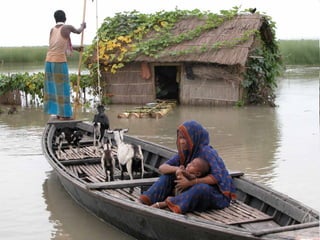
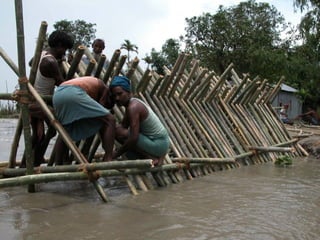
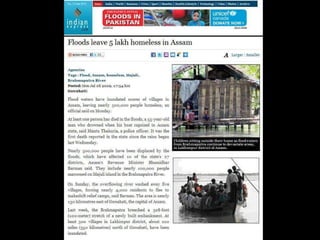
WHO? Families previously living in areas along the Brahmaputra River who have been affected by flooding and relocated to the Sadiya area
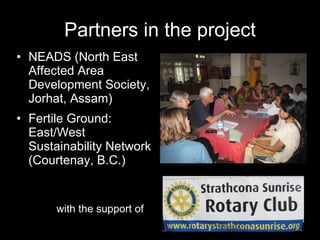
Partners in the project NEADS (North East Affected Area Development Society, Jorhat, Assam) Fertile Ground:  East/West Sustainability Network (Courtenay, B.C.) with the support of
 
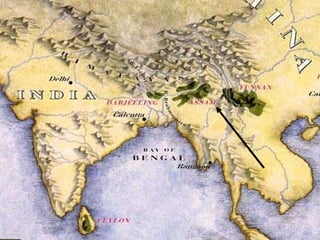
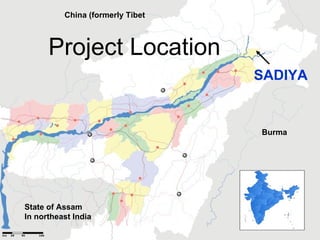
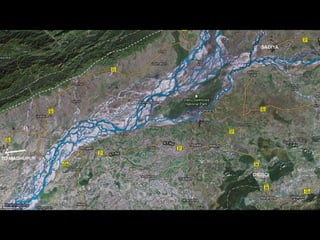
Burma China (formerly Tibet Project Location SADIYA State of Assam In northeast India


NUTRITION LIVESTOCK REARING INCOME/LIVELIHOOD EDUCATION FOOD SECURITY
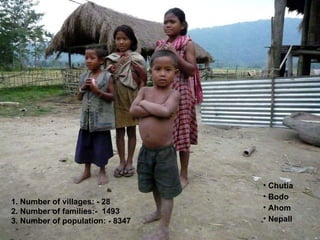
Chutia Bodo Ahom NepalI 1. Number of villages: - 28 2. Number of families:-  1493  3. Number of population: - 8347
“ The Sadiya area, located in the remotest corner of the North East is one of the most neglected areas of Assam.  Govt. has not expended a single penny for infrastructural development.  All the schools are having teachers under the management of village committee. Shockingly, no school is having even a low cost toilet.”
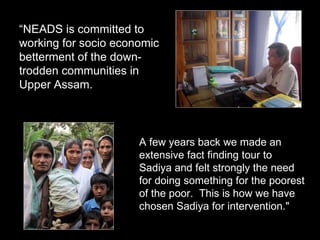
“ “ NEADS is committed to working for socio economic betterment of the down- trodden communities in Upper Assam. A few years back we made an extensive fact finding tour to Sadiya and felt strongly the need for doing something for the poorest of the poor.  This is how we have chosen Sadiya for intervention."
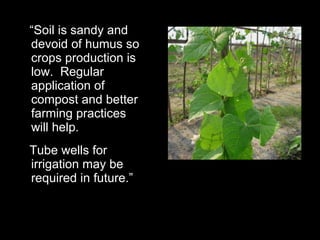
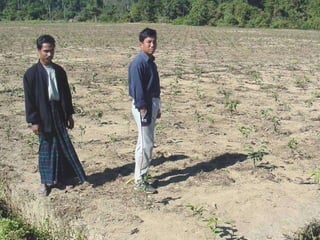
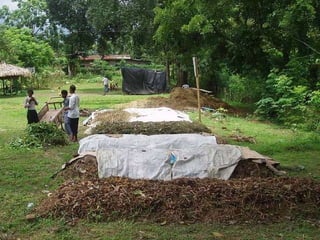
“ Soil is sandy and devoid of humus so crops production is low.  Regular application of compost and better farming practices will help.  Tube wells for irrigation may be required in future.”
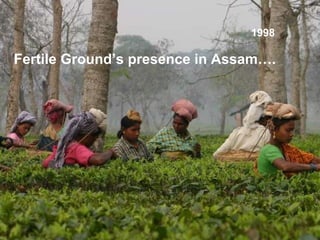
1998 Fertile Ground’s presence in Assam….
 
 
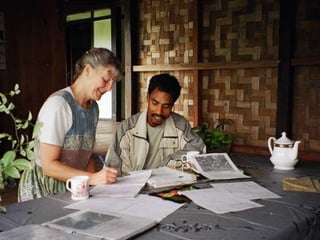
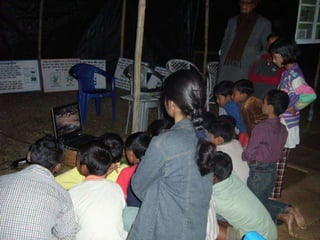
Small growers require commitment, time and resources to learn about and implement  different cultivation and labour practices
 
 
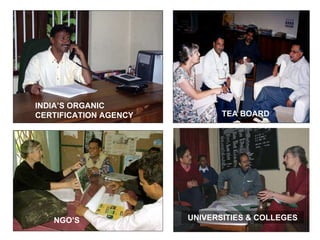
INDIA’S ORGANIC CERTIFICATION AGENCY TEA BOARD UNIVERSITIES & COLLEGES NGO’S
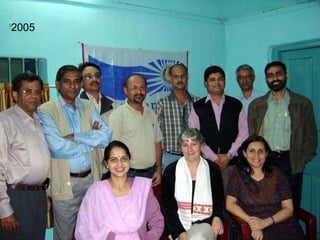
2005
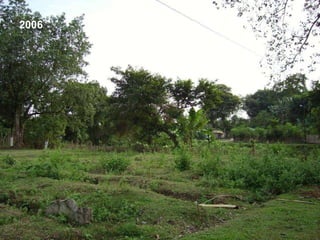
2006


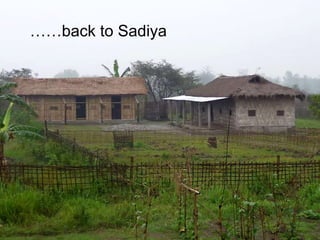
…… back to Sadiya


Phase I Nov. 2010 – April 2011
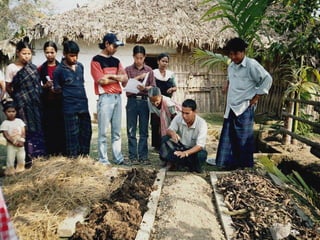
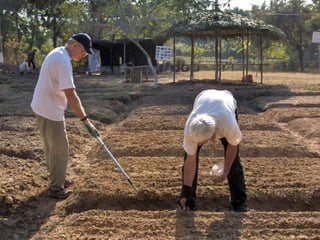
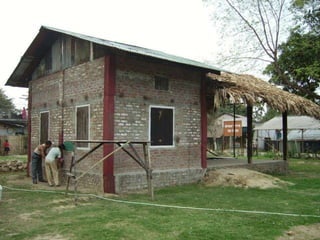
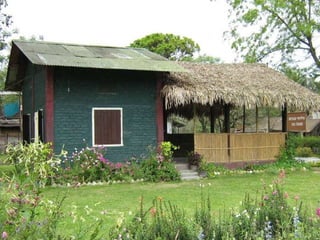
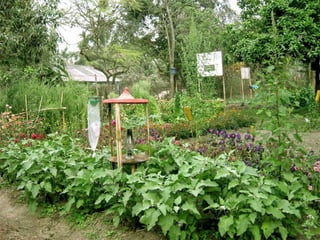
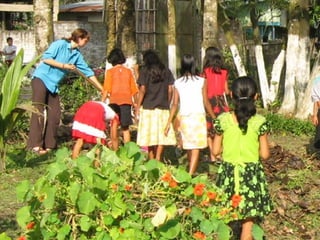
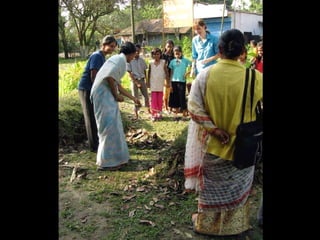
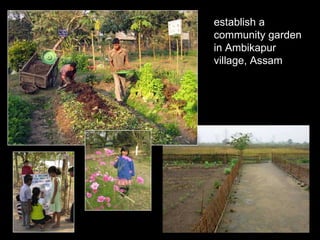
establish a community garden in Ambikapur village, Assam
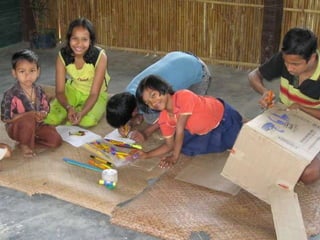
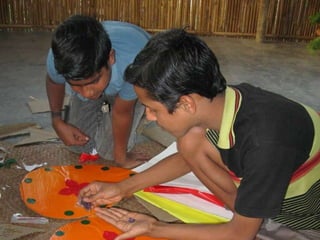
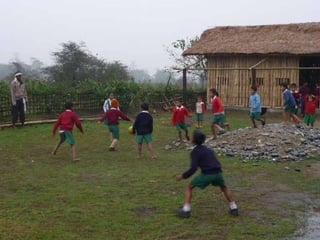
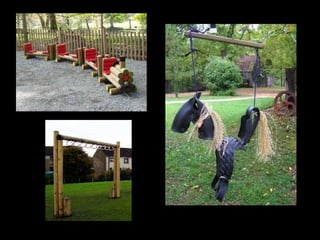
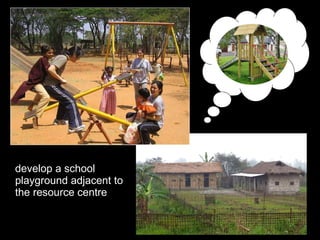
develop a school playground adjacent to the resource centre
 
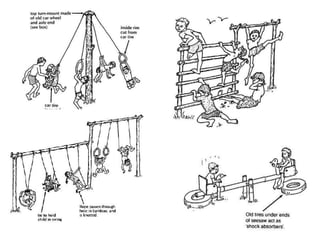
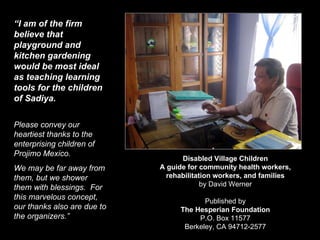
Disabled Village Children A guide for community health workers, rehabilitation workers, and families by David Werner Published by The Hesperian Foundation P.O. Box 11577 Berkeley, CA 94712-2577 “ I am of the firm believe that playground and kitchen gardening would be most ideal as teaching learning tools for the children of Sadiya. Please convey our heartiest thanks to the enterprising children of Projimo Mexico.  We may be far away from them, but we shower them with blessings.  For this marvelous concept, our thanks also are due to the organizers.”
NEXT STEPS…. Next steps…. a network of community gardens and playgrounds adjacent to schools in villages in Ambikapur area
Monitor and evaluate progress of the phase I Work with NEADS staff and village-level animators to develop a plan for implementing similar but more rudimentary centres at schools in the Ambikapur area Provide ongoing training and support to teachers, NEADS’ staff and village-level animators  Research & source curriculum materials (science, history, nutrition, ecology) Continue to develop a volunteer program and to provide internship opportunities for students at Canadian and Indian post-secondary institutions Work with NEADS and Rotary Clubs in Assam to help them identify and access required funding
 
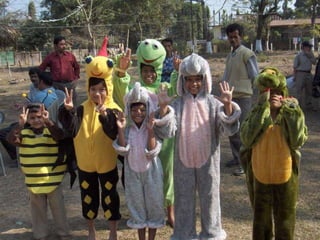
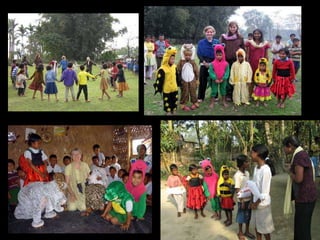
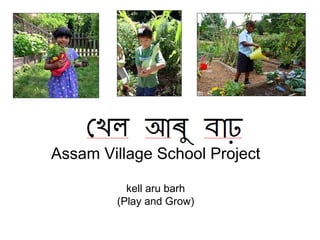
Assam Village School Project kell aru barh (Play and Grow)

Fertile Ground in Sadiya, Assam

  • 1.
  • 2.
    PROJECT GOALS tooffer the knowledge and skills they need to meet nutritional needs of their family members to educate families about health risks associated with pesticide use to provide the means to cultivate and sell agricultural crops as a potential source of income to ensure families have the information they need to avoid taking on debt and loans that they can’t manage
  • 3.
    WHO? Families previouslyliving in areas along the Brahmaputra River who have been affected by flooding and relocated to the Sadiya area
  • 4.
    Partners in theproject NEADS (North East Affected Area Development Society, Jorhat, Assam) Fertile Ground: East/West Sustainability Network (Courtenay, B.C.) with the support of
  • 5.
  • 6.
    Burma China (formerlyTibet Project Location SADIYA State of Assam In northeast India
  • 7.
  • 8.
  • 9.
  • 10.
  • 11.
  • 12.
  • 13.
  • 14.
  • 15.
  • 16.
  • 17.
  • 18.
  • 19.
    NUTRITION LIVESTOCK REARINGINCOME/LIVELIHOOD EDUCATION FOOD SECURITY
  • 20.
    Chutia Bodo AhomNepalI 1. Number of villages: - 28 2. Number of families:- 1493 3. Number of population: - 8347
  • 21.
    “ The Sadiyaarea, located in the remotest corner of the North East is one of the most neglected areas of Assam. Govt. has not expended a single penny for infrastructural development. All the schools are having teachers under the management of village committee. Shockingly, no school is having even a low cost toilet.”
  • 22.
    “ “ NEADSis committed to working for socio economic betterment of the down- trodden communities in Upper Assam. A few years back we made an extensive fact finding tour to Sadiya and felt strongly the need for doing something for the poorest of the poor. This is how we have chosen Sadiya for intervention."
  • 23.
    “ Soil issandy and devoid of humus so crops production is low. Regular application of compost and better farming practices will help. Tube wells for irrigation may be required in future.”
  • 24.
    1998 Fertile Ground’spresence in Assam….
  • 25.
  • 26.
  • 27.
    Small growers requirecommitment, time and resources to learn about and implement different cultivation and labour practices
  • 28.
  • 29.
  • 30.
    INDIA’S ORGANIC CERTIFICATIONAGENCY TEA BOARD UNIVERSITIES & COLLEGES NGO’S
  • 31.
  • 32.
  • 33.
  • 34.
  • 35.
  • 36.
  • 37.
  • 38.
  • 39.
  • 40.
  • 41.
  • 42.
  • 43.
  • 44.
  • 45.
  • 46.
  • 47.
  • 48.
  • 49.
  • 50.
  • 51.
  • 52.
  • 53.
  • 54.
  • 55.
  • 56.
  • 57.
  • 58.
  • 59.
  • 60.
    Phase I Nov.2010 – April 2011
  • 61.
    establish a communitygarden in Ambikapur village, Assam
  • 62.
    develop a schoolplayground adjacent to the resource centre
  • 63.
  • 64.
    Disabled Village ChildrenA guide for community health workers, rehabilitation workers, and families by David Werner Published by The Hesperian Foundation P.O. Box 11577 Berkeley, CA 94712-2577 “ I am of the firm believe that playground and kitchen gardening would be most ideal as teaching learning tools for the children of Sadiya. Please convey our heartiest thanks to the enterprising children of Projimo Mexico. We may be far away from them, but we shower them with blessings. For this marvelous concept, our thanks also are due to the organizers.”
  • 65.
    NEXT STEPS…. Nextsteps…. a network of community gardens and playgrounds adjacent to schools in villages in Ambikapur area
  • 66.
    Monitor and evaluateprogress of the phase I Work with NEADS staff and village-level animators to develop a plan for implementing similar but more rudimentary centres at schools in the Ambikapur area Provide ongoing training and support to teachers, NEADS’ staff and village-level animators Research & source curriculum materials (science, history, nutrition, ecology) Continue to develop a volunteer program and to provide internship opportunities for students at Canadian and Indian post-secondary institutions Work with NEADS and Rotary Clubs in Assam to help them identify and access required funding
  • 67.
  • 68.
    Assam Village SchoolProject kell aru barh (Play and Grow)