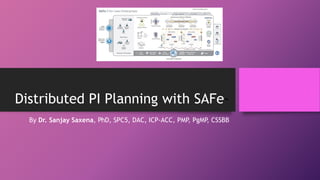
Distributed PI Planning with SAFe-
By Dr. Sanjay Saxena, PhD, SPC5, DAC, ICP-ACC, PMP, PgMP
, CSSBB
Agenda
• PI Planning Overview
• Inputs and Outputs
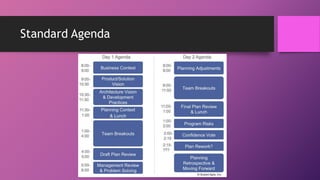
• Standard Agenda
• Why distributed PI Planning is needed
• Planning Locations
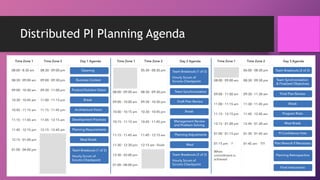
• Distributed PI Planning Agenda
• Facilities
• Working Agreements
• Tooling
• Facilitation
• Event Preparation
• Summary
• Q&A
Source:
https://www.scaledagileframework.com/pi-planning/
https://www.scaledagileframework.com/distributed-pi-planning/
PI Planning Overview
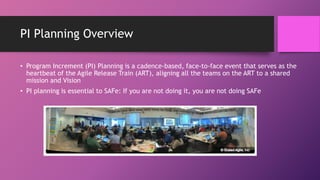
• Program Increment (PI) Planning is a cadence-based, face-to-face event that serves as the
heartbeat of the Agile Release Train (ART), aligning all the teams on the ART to a shared
mission and Vision
• PI planning is essential to SAFe: If you are not doing it, you are not doing SAFe
Inputs and Outputs
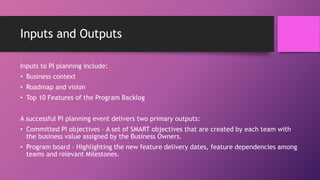
Inputs to PI planning include:
• Business context
• Roadmap and vision
• Top 10 Features of the Program Backlog
A successful PI planning event delivers two primary outputs:
• Committed PI objectives – A set of SMART objectives that are created by each team with
the business value assigned by the Business Owners.
• Program board – Highlighting the new feature delivery dates, feature dependencies among
teams and relevant Milestones.
Standard Agenda
Why distributed PI Planning is needed
• The reasons for a distributed PI planning event can be varied – it may be due to financial
constraints, very large teams in highly distributed locations, extensive travel time and cost
commitments, difficulties with visas, or even as the result of unplanned travel restrictions
such as those being experienced currently with the spread of the Coronavirus
• Regardless of the reasons, every organization adopting SAFe will benefit from having a plan
in place for effectively conducting PI planning with geographically distributed participants
Planning Locations
• Determining the number of planning locations is an important first step
• If each team is together but distributed from the other teams, efforts should still be made to
consolidate the locations. Even something as simple as moving from two offices in two cities
to one office in each city can create material benefits without incurring significant travel
costs. The focus should be on bringing the teams that will have strong dependencies with
one another together at a common location
• Some organizations with distributed teams have key roles such as Business Owners, Product
Management and System Architecture/Engineering in the ‘home’ location with the teams
working remotely. Something that can work well is to reverse the direction of travel and
send these individuals to the remote locations so they can be with the teams in person
Distributed PI Planning Agenda
Facilities
• Every location will need several breakout rooms setup and ready to go. A good starting
point for the number of rooms required is one breakout room per team plus one or two
additional rooms for key stakeholders to utilize and a room for the scrum of scrums. All
regular meetings should be cleared from these rooms for the duration of the PI Planning
event
• For those locations that are working late into the night, make sure that the appropriate
arrangements have been made so that the lights, air conditioning, power and other
facilities will remain on after normal working hours. Similarly, for those starting earlier in
the morning, ensure they can access the offices before a normal working day would have
started.
Facilities
• Since many of the team members will be working late into the evening, consider organizing
transportation to get them home after the event if the public transport they would
normally take is not available or if safety could be a concern. During the event itself make
sure that food is provided, particularly for the teams working well into the evenings when
other options may be limited
• Ensure the facilities and tech-support individuals with necessary skills are dedicated to the
event, with no other commitments during the 2.5 days, and that there is no time when they
are not reachable
Working Agreements
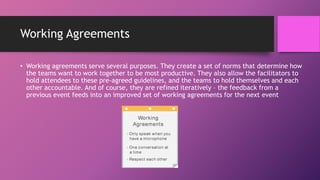
• Working agreements serve several purposes. They create a set of norms that determine how
the teams want to work together to be most productive. They also allow the facilitators to
hold attendees to these pre-agreed guidelines, and the teams to hold themselves and each
other accountable. And of course, they are refined iteratively – the feedback from a
previous event feeds into an improved set of working agreements for the next event
Tooling
Tooling is the cornerstone of distributed PI planning and several different types of tools are
required in combination to support the activities that take place. Although the specific
choice of tools will vary widely from organization to organization, the different tooling
categories are mentioned below
• Information Storage and Distribution
• Instant Messaging and Group Chat
• Video Conferencing
• Collaboration Tools
• Agile Lifecycle Management (ALM) Tools
Facilitation
• Successful facilitation of a distributed PI planning event takes practice and each event is an
opportunity to learn and improve for the next one. However, some common guidelines have
emerged that act as a good starting point
• The first is to have a named facilitator at each location. In some circumstances each
facilitator will be managing large groups of people with multiple presentations taking place
from each site. In other situations, it may just be a Scrum Master sitting with the remote
team. It could also be a team member if the Scrum Master themselves are remote
• It is often the case that a ‘home’ location has most of the attendees with a smaller number
distributed. If this is the case, requiring the RTE to both facilitate the event as well as
monitor requests and issues coming in from the other external facilitators is too much
cognitive load for one person. Have 1 or 2 additional people dedicated to assisting the RTE
at this main location
Event Preparation
• With the additional complexity that a distributed PI planning brings, some prior alignment
around these processes pays off
• The RTE should work with the Scrum Masters in the lead up to the event to clarify all the
aforementioned activities and do a dry-run of the event, considering some of the different
scenarios that might arise and the steps that should be taken to resolve them
• The Scrum Masters play a critical role during these distributed PI planning events and need
to be completely clear on the process, know how to use the tools effectively and have a
good understanding of the locations of every team
Summary
• Although bringing everyone together delivers great benefits, not only just in terms of the
plans that are created, but also in creating and deepening relationships, the reality today
is that many organizations have ARTs that include teams distributed around the globe
• Many organizations have demonstrated that these same benefits can be achieved with
some prior preparation and additional considerations
Q&A

Distributed PI Planning with SAFe.pdf

  • 1.
    Distributed PI Planningwith SAFe- By Dr. Sanjay Saxena, PhD, SPC5, DAC, ICP-ACC, PMP, PgMP , CSSBB
  • 2.
    Agenda • PI PlanningOverview • Inputs and Outputs • Standard Agenda • Why distributed PI Planning is needed • Planning Locations • Distributed PI Planning Agenda • Facilities • Working Agreements • Tooling • Facilitation • Event Preparation • Summary • Q&A Source: https://www.scaledagileframework.com/pi-planning/ https://www.scaledagileframework.com/distributed-pi-planning/
  • 3.
    PI Planning Overview •Program Increment (PI) Planning is a cadence-based, face-to-face event that serves as the heartbeat of the Agile Release Train (ART), aligning all the teams on the ART to a shared mission and Vision • PI planning is essential to SAFe: If you are not doing it, you are not doing SAFe
  • 4.
    Inputs and Outputs Inputsto PI planning include: • Business context • Roadmap and vision • Top 10 Features of the Program Backlog A successful PI planning event delivers two primary outputs: • Committed PI objectives – A set of SMART objectives that are created by each team with the business value assigned by the Business Owners. • Program board – Highlighting the new feature delivery dates, feature dependencies among teams and relevant Milestones.
  • 5.
  • 6.
    Why distributed PIPlanning is needed • The reasons for a distributed PI planning event can be varied – it may be due to financial constraints, very large teams in highly distributed locations, extensive travel time and cost commitments, difficulties with visas, or even as the result of unplanned travel restrictions such as those being experienced currently with the spread of the Coronavirus • Regardless of the reasons, every organization adopting SAFe will benefit from having a plan in place for effectively conducting PI planning with geographically distributed participants
  • 7.
    Planning Locations • Determiningthe number of planning locations is an important first step • If each team is together but distributed from the other teams, efforts should still be made to consolidate the locations. Even something as simple as moving from two offices in two cities to one office in each city can create material benefits without incurring significant travel costs. The focus should be on bringing the teams that will have strong dependencies with one another together at a common location • Some organizations with distributed teams have key roles such as Business Owners, Product Management and System Architecture/Engineering in the ‘home’ location with the teams working remotely. Something that can work well is to reverse the direction of travel and send these individuals to the remote locations so they can be with the teams in person
  • 8.
  • 9.
    Facilities • Every locationwill need several breakout rooms setup and ready to go. A good starting point for the number of rooms required is one breakout room per team plus one or two additional rooms for key stakeholders to utilize and a room for the scrum of scrums. All regular meetings should be cleared from these rooms for the duration of the PI Planning event • For those locations that are working late into the night, make sure that the appropriate arrangements have been made so that the lights, air conditioning, power and other facilities will remain on after normal working hours. Similarly, for those starting earlier in the morning, ensure they can access the offices before a normal working day would have started.
  • 10.
    Facilities • Since manyof the team members will be working late into the evening, consider organizing transportation to get them home after the event if the public transport they would normally take is not available or if safety could be a concern. During the event itself make sure that food is provided, particularly for the teams working well into the evenings when other options may be limited • Ensure the facilities and tech-support individuals with necessary skills are dedicated to the event, with no other commitments during the 2.5 days, and that there is no time when they are not reachable
  • 11.
    Working Agreements • Workingagreements serve several purposes. They create a set of norms that determine how the teams want to work together to be most productive. They also allow the facilitators to hold attendees to these pre-agreed guidelines, and the teams to hold themselves and each other accountable. And of course, they are refined iteratively – the feedback from a previous event feeds into an improved set of working agreements for the next event
  • 12.
    Tooling Tooling is thecornerstone of distributed PI planning and several different types of tools are required in combination to support the activities that take place. Although the specific choice of tools will vary widely from organization to organization, the different tooling categories are mentioned below • Information Storage and Distribution • Instant Messaging and Group Chat • Video Conferencing • Collaboration Tools • Agile Lifecycle Management (ALM) Tools
  • 13.
    Facilitation • Successful facilitationof a distributed PI planning event takes practice and each event is an opportunity to learn and improve for the next one. However, some common guidelines have emerged that act as a good starting point • The first is to have a named facilitator at each location. In some circumstances each facilitator will be managing large groups of people with multiple presentations taking place from each site. In other situations, it may just be a Scrum Master sitting with the remote team. It could also be a team member if the Scrum Master themselves are remote • It is often the case that a ‘home’ location has most of the attendees with a smaller number distributed. If this is the case, requiring the RTE to both facilitate the event as well as monitor requests and issues coming in from the other external facilitators is too much cognitive load for one person. Have 1 or 2 additional people dedicated to assisting the RTE at this main location
  • 14.
    Event Preparation • Withthe additional complexity that a distributed PI planning brings, some prior alignment around these processes pays off • The RTE should work with the Scrum Masters in the lead up to the event to clarify all the aforementioned activities and do a dry-run of the event, considering some of the different scenarios that might arise and the steps that should be taken to resolve them • The Scrum Masters play a critical role during these distributed PI planning events and need to be completely clear on the process, know how to use the tools effectively and have a good understanding of the locations of every team
  • 15.
    Summary • Although bringingeveryone together delivers great benefits, not only just in terms of the plans that are created, but also in creating and deepening relationships, the reality today is that many organizations have ARTs that include teams distributed around the globe • Many organizations have demonstrated that these same benefits can be achieved with some prior preparation and additional considerations
  • 16.