Disney Consumer Products:
Marketing Nutrition to
Children
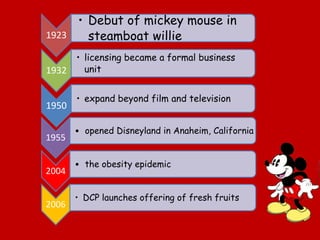
1923
• Debut of mickey mouse in
steamboat willie
1932
• licensing became a formal business
unit
1950
• expand beyond film and television
1955
• opened Disneyland in Anaheim, California
2004
• the obesity epidemic
2006
• DCP launches offering of fresh fruits
By 2006 Walt Disney company was comprised of 4
major business segments:
Media
networks
Parks and
resorts
Studio
entertainment
DCP
Retail stores in Europe and the US stocked the DCP
The main model presupposed getting the license for
the use of Disney brand on quality products made by
other companies
In 1998 - 1999 the sales on US and Japanese markets
decreased by 10% and 15%
Andy Mooney introduce direct to retail(DTR) and DTR
distribution model, and also keep the traditional
licensing model
Business Situation
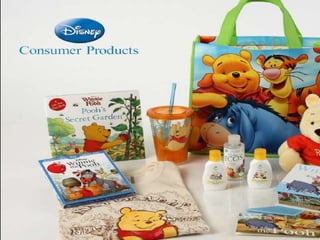
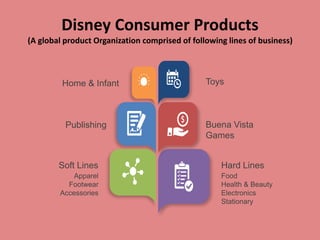
Disney Consumer Products
(A global product Organization comprised of following lines of business)
ToysHome & Infant
Publishing Buena Vista
Games
Food
Health & Beauty
Electronics
Stationary
Hard Lines
Apparel
Footwear
Accessories
Soft Lines
PROBLEM
ANALYSIS
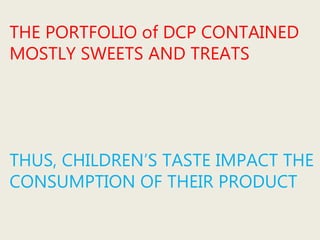
THE PORTFOLIO of DCP CONTAINED
MOSTLY SWEETS AND TREATS
THUS, CHILDREN’S TASTE IMPACT THE
CONSUMPTION OF THEIR PRODUCT
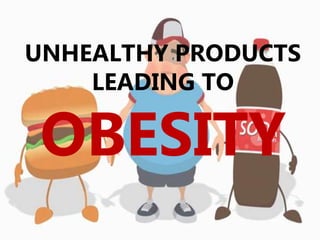
UNHEALTHY PRODUCTS
LEADING TO
OBESITY
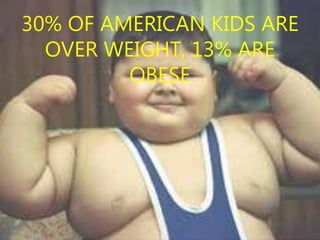
30% OF AMERICAN KIDS ARE
OVER WEIGHT, 13% ARE
OBESE
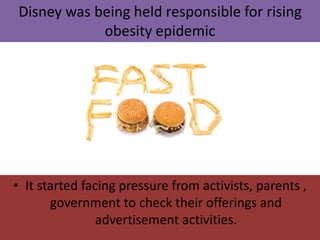
• It started facing pressure from activists, parents ,
government to check their offerings and
advertisement activities.
Disney was being held responsible for rising
obesity epidemic
 With changing licensing models, retail industry
consolidation and the obesity epidemic, DCP saw
this as an opportunity to broaden and rationalize
its product offerings.
In 2004,DCP estimated that its branded food products
accounted for less than 1% of the children’s food market.
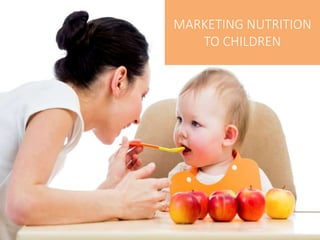
MARKETING NUTRITION
TO CHILDREN
Could Disney use its
“magic” to switch children
from sugary to more
nutritious diet ?
Could they sustain ?
“DCP DISCOVERED THAT
THERE WAS A GAP
BETWEEN FOOD
CHILDREN REQUESTED
AND FOOD THEIR
MOTHERS ARE WILLING
TO BUY FOR THEM”
Product Development
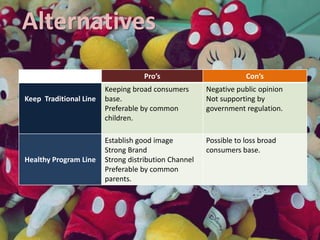
Alternatives
Pro’s Con’s
Keep Traditional Line
Keeping broad consumers
base.
Preferable by common
children.
Negative public opinion
Not supporting by
government regulation.
Healthy Program Line
Establish good image
Strong Brand
Strong distribution Channel
Preferable by common
parents.
Possible to loss broad
consumers base.
SOLUTION?
June 2006, Disney Consumer Products ( DCP ) decided
to change the nutritional content of their product and
introduce new healthy foods for children under the
slogan of “Better for you”
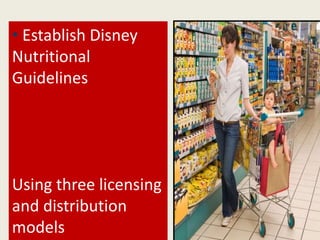
• Establish Disney
Nutritional
Guidelines
Using three licensing
and distribution
models
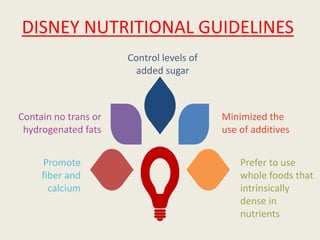
DISNEY NUTRITIONAL GUIDELINES
Control levels of
added sugar
Prefer to use
whole foods that
intrinsically
dense in
nutrients
Promote
fiber and
calcium
Minimized the
use of additives
Contain no trans or
hydrogenated fats
Healthy food campaigns for parents
Parents must also tell their children about the
advantages of healthy foods and give the children
healthy food in right proportions
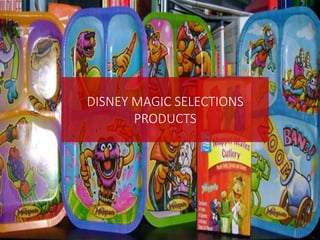
DISNEY MAGIC SELECTIONS
PRODUCTS
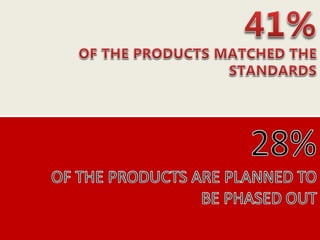
GOAL
• THE COMPANY
PLANNED TO HAVE
ALL ITS PRODUCTS
BROUGHT INTO
COMPLIANCE OR
PHASED OUT BY
2008
DCP’s Three Models
Traditional Licensing Model
Sourcing
(Designed and create products by Disney but manufactured and
marketed by licensee)
Direct-to-retail (DTR)
(Entailed partnering directly with retailers)
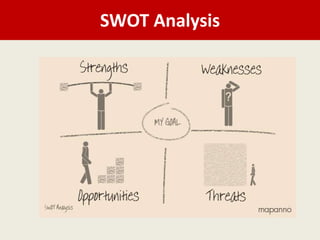
SWOT Analysis
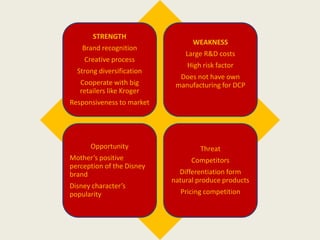
STRENGTH
Brand recognition
Creative process
Strong diversification
Cooperate with big
retailers like Kroger
Responsiveness to market
WEAKNESS
Large R&D costs
High risk factor
Does not have own
manufacturing for DCP
Opportunity
Mother’s positive
perception of the Disney
brand
Disney character’s
popularity
Threat
Competitors
Differentiation form
natural produce products
Pricing competition
Recommendations
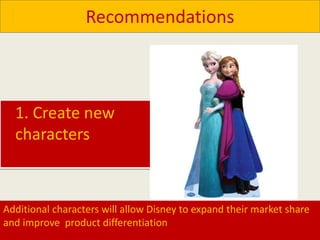
1. Create new
characters
Additional characters will allow Disney to expand their market share
and improve product differentiation
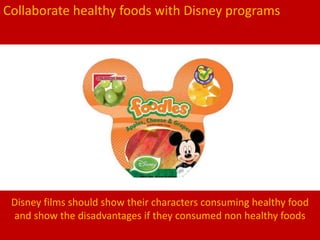
Disney films should show their characters consuming healthy food
and show the disadvantages if they consumed non healthy foods
Collaborate healthy foods with Disney programs
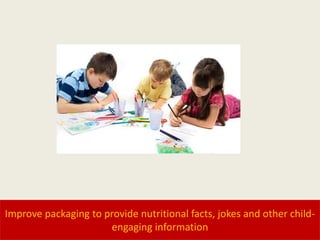
Improve packaging to provide nutritional facts, jokes and other child-
engaging information
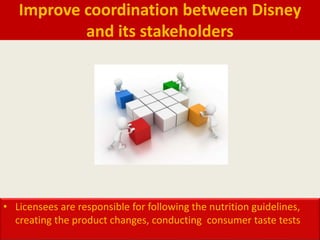
Improve coordination between Disney
and its stakeholders
• Licensees are responsible for following the nutrition guidelines,
creating the product changes, conducting consumer taste tests
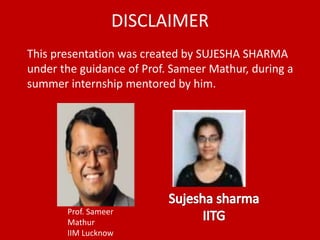
DISCLAIMER
This presentation was created by SUJESHA SHARMA
under the guidance of Prof. Sameer Mathur, during a
summer internship mentored by him.
Prof. Sameer
Mathur
IIM Lucknow

Disney consumer products final

  • 1.
  • 4.
    1923 • Debut ofmickey mouse in steamboat willie 1932 • licensing became a formal business unit 1950 • expand beyond film and television 1955 • opened Disneyland in Anaheim, California 2004 • the obesity epidemic 2006 • DCP launches offering of fresh fruits
  • 5.
    By 2006 WaltDisney company was comprised of 4 major business segments: Media networks Parks and resorts Studio entertainment DCP
  • 6.
    Retail stores inEurope and the US stocked the DCP The main model presupposed getting the license for the use of Disney brand on quality products made by other companies In 1998 - 1999 the sales on US and Japanese markets decreased by 10% and 15% Andy Mooney introduce direct to retail(DTR) and DTR distribution model, and also keep the traditional licensing model Business Situation
  • 7.
    Disney Consumer Products (Aglobal product Organization comprised of following lines of business) ToysHome & Infant Publishing Buena Vista Games Food Health & Beauty Electronics Stationary Hard Lines Apparel Footwear Accessories Soft Lines
  • 9.
  • 10.
    THE PORTFOLIO ofDCP CONTAINED MOSTLY SWEETS AND TREATS THUS, CHILDREN’S TASTE IMPACT THE CONSUMPTION OF THEIR PRODUCT
  • 12.
  • 13.
    30% OF AMERICANKIDS ARE OVER WEIGHT, 13% ARE OBESE
  • 14.
    • It startedfacing pressure from activists, parents , government to check their offerings and advertisement activities. Disney was being held responsible for rising obesity epidemic
  • 15.
     With changinglicensing models, retail industry consolidation and the obesity epidemic, DCP saw this as an opportunity to broaden and rationalize its product offerings. In 2004,DCP estimated that its branded food products accounted for less than 1% of the children’s food market.
  • 16.
  • 17.
    Could Disney useits “magic” to switch children from sugary to more nutritious diet ? Could they sustain ?
  • 18.
    “DCP DISCOVERED THAT THEREWAS A GAP BETWEEN FOOD CHILDREN REQUESTED AND FOOD THEIR MOTHERS ARE WILLING TO BUY FOR THEM”
  • 19.
    Product Development Alternatives Pro’s Con’s KeepTraditional Line Keeping broad consumers base. Preferable by common children. Negative public opinion Not supporting by government regulation. Healthy Program Line Establish good image Strong Brand Strong distribution Channel Preferable by common parents. Possible to loss broad consumers base.
  • 20.
    SOLUTION? June 2006, DisneyConsumer Products ( DCP ) decided to change the nutritional content of their product and introduce new healthy foods for children under the slogan of “Better for you”
  • 21.
    • Establish Disney Nutritional Guidelines Usingthree licensing and distribution models
  • 22.
    DISNEY NUTRITIONAL GUIDELINES Controllevels of added sugar Prefer to use whole foods that intrinsically dense in nutrients Promote fiber and calcium Minimized the use of additives Contain no trans or hydrogenated fats
  • 23.
    Healthy food campaignsfor parents Parents must also tell their children about the advantages of healthy foods and give the children healthy food in right proportions DISNEY MAGIC SELECTIONS PRODUCTS
  • 25.
    GOAL • THE COMPANY PLANNEDTO HAVE ALL ITS PRODUCTS BROUGHT INTO COMPLIANCE OR PHASED OUT BY 2008
  • 26.
    DCP’s Three Models TraditionalLicensing Model Sourcing (Designed and create products by Disney but manufactured and marketed by licensee) Direct-to-retail (DTR) (Entailed partnering directly with retailers)
  • 28.
  • 29.
    STRENGTH Brand recognition Creative process Strongdiversification Cooperate with big retailers like Kroger Responsiveness to market WEAKNESS Large R&D costs High risk factor Does not have own manufacturing for DCP Opportunity Mother’s positive perception of the Disney brand Disney character’s popularity Threat Competitors Differentiation form natural produce products Pricing competition
  • 30.
    Recommendations 1. Create new characters Additionalcharacters will allow Disney to expand their market share and improve product differentiation
  • 31.
    Disney films shouldshow their characters consuming healthy food and show the disadvantages if they consumed non healthy foods Collaborate healthy foods with Disney programs
  • 32.
    Improve packaging toprovide nutritional facts, jokes and other child- engaging information
  • 33.
    Improve coordination betweenDisney and its stakeholders • Licensees are responsible for following the nutrition guidelines, creating the product changes, conducting consumer taste tests
  • 35.
    DISCLAIMER This presentation wascreated by SUJESHA SHARMA under the guidance of Prof. Sameer Mathur, during a summer internship mentored by him. Prof. Sameer Mathur IIM Lucknow