Disc Theory
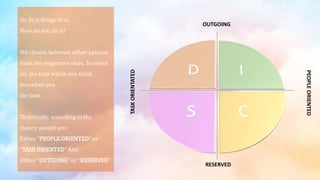
OUTGOING
PEOPLEORIENTED
RESERVED
TASKORIENTATED
So, first things first,
How do you do it?
We choose between either options
from the respective ends. To select
on, the trait which you think
describes you
the best.
Technically, according to the
theory, people are:
Either ”PEOPLE ORIENTED” or
“TASK ORIENTED” And
Either “OUTGOING” or “RESERVED”
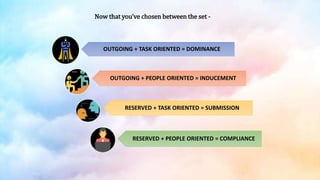
OUTGOING + TASK ORIENTED = DOMINANCE
OUTGOING + PEOPLE ORIENTED = INDUCEMENT
RESERVED + TASK ORIENTED = SUBMISSION
RESERVED + PEOPLE ORIENTED = COMPLIANCE
Now that you’ve chosen between the set -
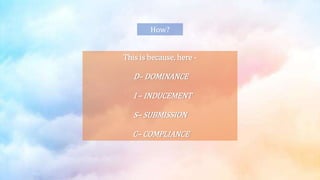
How?
This is because, here -
D– DOMINANCE
I – INDUCEMENT
S– SUBMISSION
C– COMPLIANCE
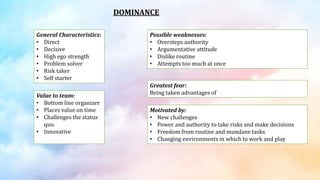
General Characteristics:
• Direct
• Decisive
• High ego strength
• Problem solver
• Risk taker
• Self starter
Value to team:
• Bottom line organizer
• Places value on time
• Challenges the status
quo.
• Innovative
Possible weaknesses:
• Oversteps authority
• Argumentative attitude
• Dislike routine
• Attempts too much at once
Greatest fear:
Being taken advantages of
Motivated by:
• New challenges
• Power and authority to take risks and make decisions
• Freedom from routine and mundane tasks
• Changing environments in which to work and play
DOMINANCE
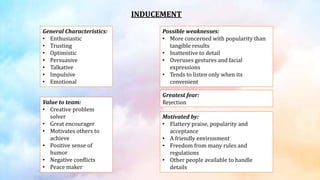
INDUCEMENT
General Characteristics:
• Enthusiastic
• Trusting
• Optimistic
• Persuasive
• Talkative
• Impulsive
• Emotional
Value to team:
• Creative problem
solver
• Great encourager
• Motivates others to
achieve
• Positive sense of
humor
• Negative conflicts
• Peace maker
Possible weaknesses:
• More concerned with popularity than
tangible results
• Inattentive to detail
• Overuses gestures and facial
expressions
• Tends to listen only when its
convenient
Greatest fear:
Rejection
Motivated by:
• Flattery praise, popularity and
acceptance
• A friendly environment
• Freedom from many rules and
regulations
• Other people available to handle
details
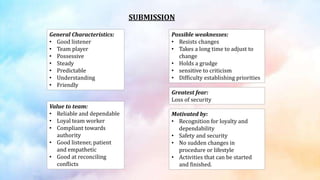
SUBMISSION
General Characteristics:
• Good listener
• Team player
• Possessive
• Steady
• Predictable
• Understanding
• Friendly
Value to team:
• Reliable and dependable
• Loyal team worker
• Compliant towards
authority
• Good listener, patient
and empathetic
• Good at reconciling
conflicts
Possible weaknesses:
• Resists changes
• Takes a long time to adjust to
change
• Holds a grudge
• sensitive to criticism
• Difficulty establishing priorities
Greatest fear:
Loss of security
Motivated by:
• Recognition for loyalty and
dependability
• Safety and security
• No sudden changes in
procedure or lifestyle
• Activities that can be started
and finished.
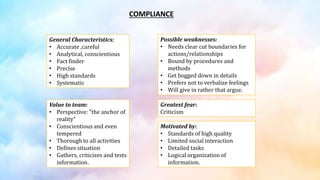
COMPLIANCE
General Characteristics:
• Accurate ,careful
• Analytical, conscientious
• Fact finder
• Precise
• High standards
• Systematic
Value to team:
• Perspective: ”the anchor of
reality”
• Conscientious and even
tempered
• Thorough to all activities
• Defines situation
• Gathers, criticizes and tests
information.
Possible weaknesses:
• Needs clear cut boundaries for
actions/relationships
• Bound by procedures and
methods
• Get bogged down in details
• Prefers not to verbalize feelings
• Will give in rather that argue.
Greatest fear:
Criticism
Motivated by:
• Standards of high quality
• Limited social interaction
• Detailed tasks
• Logical organization of
information.
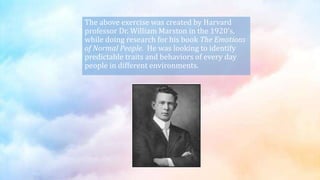
The above exercise was created by Harvard
professor Dr. William Marston in the 1920’s,
while doing research for his book The Emotions
of Normal People. He was looking to identify
predictable traits and behaviors of every day
people in different environments.
Thank youThank you

disc theory

  • 1.
  • 2.
    OUTGOING PEOPLEORIENTED RESERVED TASKORIENTATED So, first thingsfirst, How do you do it? We choose between either options from the respective ends. To select on, the trait which you think describes you the best. Technically, according to the theory, people are: Either ”PEOPLE ORIENTED” or “TASK ORIENTED” And Either “OUTGOING” or “RESERVED”
  • 3.
    OUTGOING + TASKORIENTED = DOMINANCE OUTGOING + PEOPLE ORIENTED = INDUCEMENT RESERVED + TASK ORIENTED = SUBMISSION RESERVED + PEOPLE ORIENTED = COMPLIANCE Now that you’ve chosen between the set -
  • 4.
    How? This is because,here - D– DOMINANCE I – INDUCEMENT S– SUBMISSION C– COMPLIANCE
  • 5.
    General Characteristics: • Direct •Decisive • High ego strength • Problem solver • Risk taker • Self starter Value to team: • Bottom line organizer • Places value on time • Challenges the status quo. • Innovative Possible weaknesses: • Oversteps authority • Argumentative attitude • Dislike routine • Attempts too much at once Greatest fear: Being taken advantages of Motivated by: • New challenges • Power and authority to take risks and make decisions • Freedom from routine and mundane tasks • Changing environments in which to work and play DOMINANCE
  • 6.
    INDUCEMENT General Characteristics: • Enthusiastic •Trusting • Optimistic • Persuasive • Talkative • Impulsive • Emotional Value to team: • Creative problem solver • Great encourager • Motivates others to achieve • Positive sense of humor • Negative conflicts • Peace maker Possible weaknesses: • More concerned with popularity than tangible results • Inattentive to detail • Overuses gestures and facial expressions • Tends to listen only when its convenient Greatest fear: Rejection Motivated by: • Flattery praise, popularity and acceptance • A friendly environment • Freedom from many rules and regulations • Other people available to handle details
  • 7.
    SUBMISSION General Characteristics: • Goodlistener • Team player • Possessive • Steady • Predictable • Understanding • Friendly Value to team: • Reliable and dependable • Loyal team worker • Compliant towards authority • Good listener, patient and empathetic • Good at reconciling conflicts Possible weaknesses: • Resists changes • Takes a long time to adjust to change • Holds a grudge • sensitive to criticism • Difficulty establishing priorities Greatest fear: Loss of security Motivated by: • Recognition for loyalty and dependability • Safety and security • No sudden changes in procedure or lifestyle • Activities that can be started and finished.
  • 8.
    COMPLIANCE General Characteristics: • Accurate,careful • Analytical, conscientious • Fact finder • Precise • High standards • Systematic Value to team: • Perspective: ”the anchor of reality” • Conscientious and even tempered • Thorough to all activities • Defines situation • Gathers, criticizes and tests information. Possible weaknesses: • Needs clear cut boundaries for actions/relationships • Bound by procedures and methods • Get bogged down in details • Prefers not to verbalize feelings • Will give in rather that argue. Greatest fear: Criticism Motivated by: • Standards of high quality • Limited social interaction • Detailed tasks • Logical organization of information.
  • 9.
    The above exercisewas created by Harvard professor Dr. William Marston in the 1920’s, while doing research for his book The Emotions of Normal People. He was looking to identify predictable traits and behaviors of every day people in different environments.
  • 10.