DIRECTING AND
MOTIVATION
BY SHIKHIL MV
MBA 1ST SEM
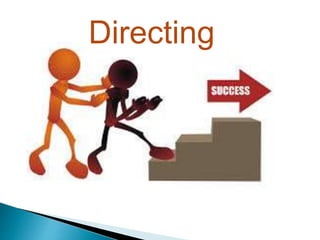
Directing
◦ Direction is a function of management performed by top
level management in order to achieve organizational
goals. It is very important and necessary function of
management.
◦ Management has to undertake various activities like,
guide people, inspire and lead them as well as
supervision of their activity is required in order to
achieve desired results.
 It guides and helps the subordinates to complete the given
task properly and as per schedule.
 It provides the necessary motivation to subordinates to
complete the work satisfactorily and strive to do them best.
 It helps in maintaining discipline and rewarding those who
do well.
 Directing involves supervision, which is essential to make
sure that work is performed according to the orders and
instructions.
 Supervision- implies overseeing the work of subordinates by their superiors. It is
the act of watching & directing work& workers.
 Motivation- means inspiring, stimulating or encouraging the sub-ordinates with
passion to work. Positive, negative, monetary, non-monetary incentives may be
used for this purpose.
 Leadership- may be defined as a process by which manager guides and influences
the work of subordinates in desired direction.
 Communications- is the process of passing information, experience, opinion etc
from one person to another.
 with proper motivation there can be maximum utilization of the
factors of production like men, money, material etc.
 if employees are motivated it will reduce employee turnover and
absenteeism.
 motivation fosters a sense of belongingness among the employees
towards the organization and also improves their morale.
 motivation helps in reducing the number of complaints and
grievances.
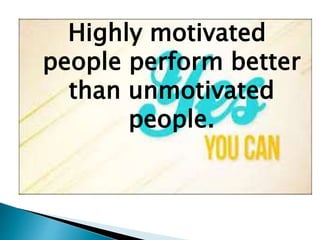
Highly motivated
people perform better
than unmotivated
people.
1. Providing Financial Rewards:
 In most health services, the major part of the current
budget is spent on salaries and staff benefits.
 Even though, most health staff feel unpaid.
 Better financial rewards can be allowed through:
◦ Increasing other benefits (as: House Allowance)
◦ Providing more supportive services (as: free travels, child care
center,….)
◦ Creating opportunities for merit awards (as: training)
2. Meeting the Needs for Recognition and Status:
 Provision of status symbols; office size, furnishing,
vehicle use, …… etc.
 A leave for staff who have satisfactorily completed
the hard work.
 Praise for good work and use words like “Thank you”,
“You did a good job” …… etc.
 Permission to attend training or conferences.
3. Encourage Team Work & Friendships:
 Team learning during training.
 Create work team within organizational units.
 Reward group performance.
 Encourage social activities.
 Positive: It involve proper recognition of
employees efforts and appreciation of
employee contribution towards org goal.
 Negative: Motivation based on fear and
threats. Unfavorable consequences affect
behavioral changes.
 Extrinsic and intrinsic: Motivation that is
induced which are primarily financial in nature,
and state of self actualization in which
satisfaction of accomplishing something.

Directing.ppt

  • 1.
  • 2.
  • 3.
    ◦ Direction isa function of management performed by top level management in order to achieve organizational goals. It is very important and necessary function of management. ◦ Management has to undertake various activities like, guide people, inspire and lead them as well as supervision of their activity is required in order to achieve desired results.
  • 4.
     It guidesand helps the subordinates to complete the given task properly and as per schedule.  It provides the necessary motivation to subordinates to complete the work satisfactorily and strive to do them best.  It helps in maintaining discipline and rewarding those who do well.  Directing involves supervision, which is essential to make sure that work is performed according to the orders and instructions.
  • 5.
     Supervision- impliesoverseeing the work of subordinates by their superiors. It is the act of watching & directing work& workers.  Motivation- means inspiring, stimulating or encouraging the sub-ordinates with passion to work. Positive, negative, monetary, non-monetary incentives may be used for this purpose.  Leadership- may be defined as a process by which manager guides and influences the work of subordinates in desired direction.  Communications- is the process of passing information, experience, opinion etc from one person to another.
  • 6.
     with propermotivation there can be maximum utilization of the factors of production like men, money, material etc.  if employees are motivated it will reduce employee turnover and absenteeism.  motivation fosters a sense of belongingness among the employees towards the organization and also improves their morale.  motivation helps in reducing the number of complaints and grievances.
  • 7.
    Highly motivated people performbetter than unmotivated people.
  • 8.
    1. Providing FinancialRewards:  In most health services, the major part of the current budget is spent on salaries and staff benefits.  Even though, most health staff feel unpaid.  Better financial rewards can be allowed through: ◦ Increasing other benefits (as: House Allowance) ◦ Providing more supportive services (as: free travels, child care center,….) ◦ Creating opportunities for merit awards (as: training)
  • 9.
    2. Meeting theNeeds for Recognition and Status:  Provision of status symbols; office size, furnishing, vehicle use, …… etc.  A leave for staff who have satisfactorily completed the hard work.  Praise for good work and use words like “Thank you”, “You did a good job” …… etc.  Permission to attend training or conferences.
  • 10.
    3. Encourage TeamWork & Friendships:  Team learning during training.  Create work team within organizational units.  Reward group performance.  Encourage social activities.
  • 11.
     Positive: Itinvolve proper recognition of employees efforts and appreciation of employee contribution towards org goal.  Negative: Motivation based on fear and threats. Unfavorable consequences affect behavioral changes.  Extrinsic and intrinsic: Motivation that is induced which are primarily financial in nature, and state of self actualization in which satisfaction of accomplishing something.