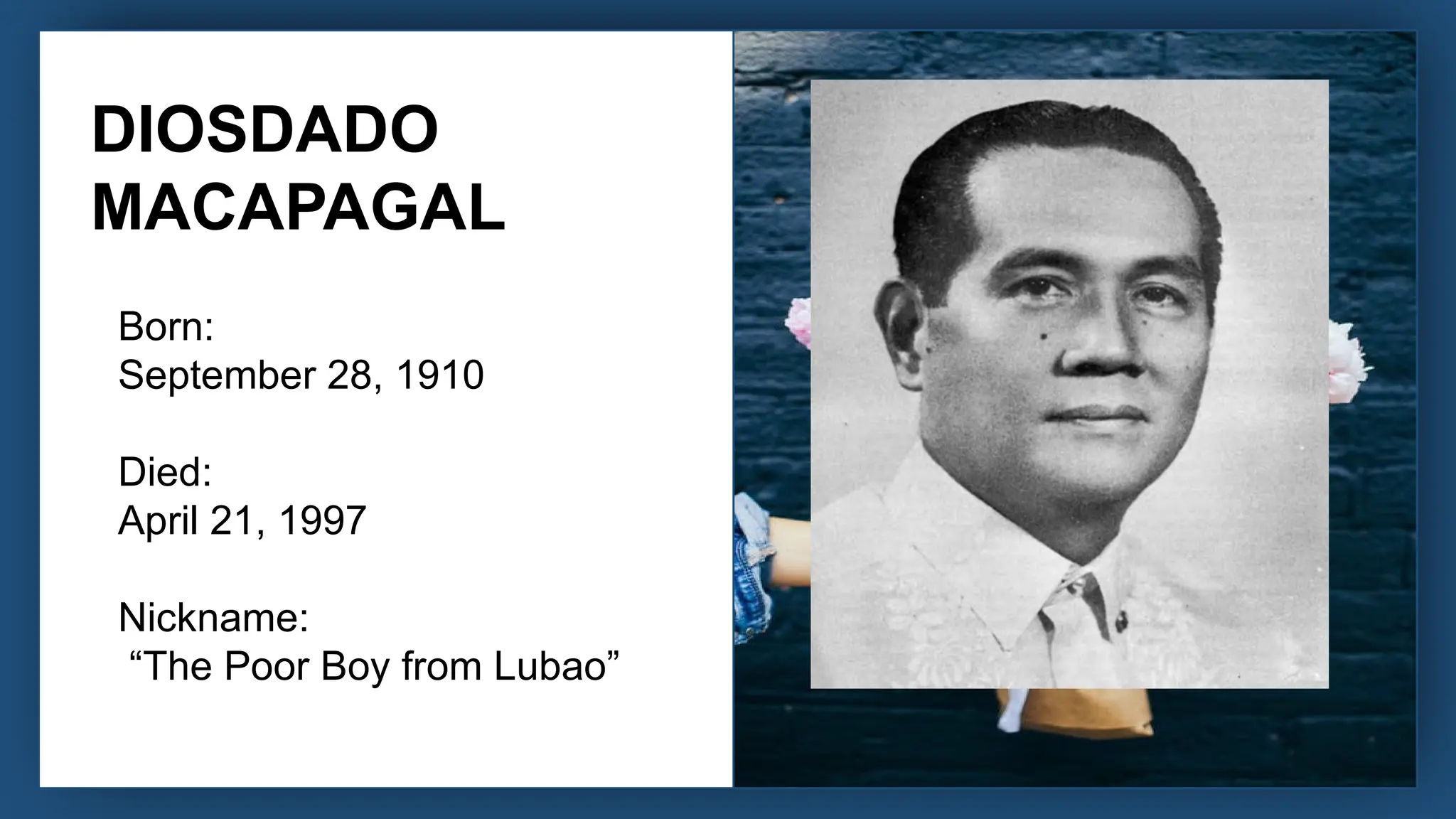
DIOSDADO
MACAPAGAL
Born:
September 28, 1910
Died:
April 21, 1997
Nickname:
“The Poor Boy from Lubao”
WHEN THEY
SERVED
President of the Philippines:
December 30, 1961 – December 30, 1965
Vice President:
1957–1961 under President Carlos P. Garcia
1. Economic Problems:
-Struggled with inflation, trade deficits, and corruption
in government institutions.
- Faced resistance from entrenched elites and
businessmen over economic reforms.
Major Events / Challenges
During Presidency:
2. Hukbalahap Insurgency:
- Continued issues with the communist Huk insurgency, especially in
rural areas.
3. Rising Political Opposition:
- Faced growing criticism from the Nacionalista Party and rising
political star Ferdinand Marcos, who defeated him in 1965.
1. Changed Independence Day:
-Moved the celebration of Philippine Independence from July 4
(American-granted independence) to June 12, to honor Emilio
Aguinaldo’s 1898 declaration of independence from Spain.
2. Anti-Corruption Campaign:
-Pushed for clean government and transparency, although with
mixed results.
🏗 Contributions / Achievements
3. Land Reform Initiatives:
- Introduced the Agricultural Land Reform Code (RA 3844) to promote land
ownership for tenants and abolish share tenancy.
- Faced implementation challenges but laid the foundation for future land reform
programs.
4. Stabilization of the Economy:
- Advocated for a free enterprise economy.
- Decontrolled foreign exchange and devalued the peso to improve the balance
of payments.
•Slow Implementation of Reforms:
-Though progressive in intent, many of his programs like land reform
lacked strong enforcement.
⚖️Controversy / Criticisms:
•Economic Struggles:
- His economic liberalization policies (such as peso
devaluation) hurt some sectors and were unpopular with
certain business groups.
•Defeat by Marcos:
- Seen by some as ineffective in contrast to the more
charismatic and populist Marcos who succeeded him.
•Humble Beginnings:
- Born into poverty in Lubao, Pampanga. He worked his way through school
and became a lawyer and diplomat.
🌟 Interesting Facts / Legacy:
• Father of Gloria Macapagal-Arroyo:
- His daughter, Gloria Macapagal-Arroyo, also became President of the Philippines
(2001–2010).
- Known as “Champion of the Common Man”
- Advocated for the poor and landless, which shaped many of his policies.
• Father of Gloria Macapagal-Arroyo
- His daughter, Gloria Macapagal-Arroyo, also became President of the
Philippines (2001–2010).
- Known as “Champion of the Common Man”
- Advocated for the poor and landless, which shaped many of his policies.
•Literary Talent:
- An accomplished writer and poet in both English and Spanish.
• Legacy:
- Remembered for promoting Filipino nationalism and for restoring historical
consciousness by honoring Philippine independence from Spain.
THANK YOU 😊

Diosdado Macapagal_Lecture Powerpoint.pptx

  • 1.
    DIOSDADO MACAPAGAL Born: September 28, 1910 Died: April21, 1997 Nickname: “The Poor Boy from Lubao”
  • 2.
    WHEN THEY SERVED President ofthe Philippines: December 30, 1961 – December 30, 1965 Vice President: 1957–1961 under President Carlos P. Garcia
  • 3.
    1. Economic Problems: -Struggledwith inflation, trade deficits, and corruption in government institutions. - Faced resistance from entrenched elites and businessmen over economic reforms. Major Events / Challenges During Presidency:
  • 4.
    2. Hukbalahap Insurgency: -Continued issues with the communist Huk insurgency, especially in rural areas. 3. Rising Political Opposition: - Faced growing criticism from the Nacionalista Party and rising political star Ferdinand Marcos, who defeated him in 1965.
  • 5.
    1. Changed IndependenceDay: -Moved the celebration of Philippine Independence from July 4 (American-granted independence) to June 12, to honor Emilio Aguinaldo’s 1898 declaration of independence from Spain. 2. Anti-Corruption Campaign: -Pushed for clean government and transparency, although with mixed results. 🏗 Contributions / Achievements
  • 6.
    3. Land ReformInitiatives: - Introduced the Agricultural Land Reform Code (RA 3844) to promote land ownership for tenants and abolish share tenancy. - Faced implementation challenges but laid the foundation for future land reform programs. 4. Stabilization of the Economy: - Advocated for a free enterprise economy. - Decontrolled foreign exchange and devalued the peso to improve the balance of payments.
  • 7.
    •Slow Implementation ofReforms: -Though progressive in intent, many of his programs like land reform lacked strong enforcement. ⚖️Controversy / Criticisms:
  • 8.
    •Economic Struggles: - Hiseconomic liberalization policies (such as peso devaluation) hurt some sectors and were unpopular with certain business groups. •Defeat by Marcos: - Seen by some as ineffective in contrast to the more charismatic and populist Marcos who succeeded him.
  • 9.
    •Humble Beginnings: - Borninto poverty in Lubao, Pampanga. He worked his way through school and became a lawyer and diplomat. 🌟 Interesting Facts / Legacy:
  • 10.
    • Father ofGloria Macapagal-Arroyo: - His daughter, Gloria Macapagal-Arroyo, also became President of the Philippines (2001–2010). - Known as “Champion of the Common Man” - Advocated for the poor and landless, which shaped many of his policies. • Father of Gloria Macapagal-Arroyo - His daughter, Gloria Macapagal-Arroyo, also became President of the Philippines (2001–2010). - Known as “Champion of the Common Man” - Advocated for the poor and landless, which shaped many of his policies. •Literary Talent: - An accomplished writer and poet in both English and Spanish. • Legacy: - Remembered for promoting Filipino nationalism and for restoring historical consciousness by honoring Philippine independence from Spain.
  • 11.