Digital Marketing
What Is Digital Marketing?
The term digital marketing refers to the use of digital channels to market products and services to consumers. This type
of marketing involves the use of websites, mobile devices, social media, search engines, and other similar channels. Digital
marketing became popular with the advent of the internet in the 1990s.
Digital marketing involves some of the same principles as traditional marketing and is often considered an additional way
for companies to approach consumers and understand their behavior. Companies often combine traditional and digital
marketing techniques in their strategies. But digital marketing comes with its own set of challenges, including implicit bias.
KEY TAKEAWAYS
Digital marketing involves marketing to consumers through digital channels, including websites, mobile devices, and social
media platforms.
This form of marketing is different from internet marketing, which is exclusively done on websites.
Digital marketing relates to attracting customers via email, content marketing, search platforms, social media, and more.
One of the biggest challenges digital marketers face is how to set themselves apart in a world that is oversaturated with
digital marketing ads.
Digital marketing comes with various challenges, including implicit bias.
How Digital Marketing Works
Marketing refers to activities that a company uses to promote its products and
services and to improve its market share. To be successful, it requires a
combination of advertising savvy, sales, and the ability to deliver goods to end-
users. Professionals, known as marketers, take on these tasks either internally at
companies or externally at marketing firms.
Corporations traditionally focused on marketing through print, television, and
radio. Although these options still exist, the internet led to a shift in the way
companies reach consumers. That's where digital marketing came into play. This
form of marketing involves the use of websites, social media, search engines,
and apps—anything that incorporates marketing with customer feedback or a
two-way interaction between the company and its customers.
New technologies and trends forced companies to change their marketing
strategies. Email became a popular marketing tool in the early days of digital
marketing. Then, the focus shifted to search engines like Netscape, which
allowed businesses to tag and keyword items to get themselves noticed. The
development of sites like Facebook made it possible for companies to track data
and cater to consumer trends.
Smartphones and other digital devices now make it easier for companies to
market themselves and their products and services to consumers. Studies show
that people prefer using their phones to go online. In fact, according to a Pew
Research Center study, over 75% of American adults typically make shopping
purchases using their phones.
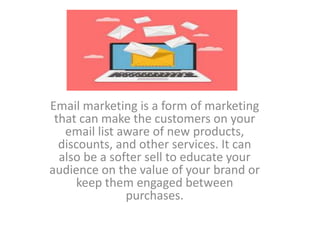
Email marketing is a form of marketing
that can make the customers on your
email list aware of new products,
discounts, and other services. It can
also be a softer sell to educate your
audience on the value of your brand or
keep them engaged between
purchases.

Digital Marketing.pptx

  • 1.
    Digital Marketing What IsDigital Marketing? The term digital marketing refers to the use of digital channels to market products and services to consumers. This type of marketing involves the use of websites, mobile devices, social media, search engines, and other similar channels. Digital marketing became popular with the advent of the internet in the 1990s. Digital marketing involves some of the same principles as traditional marketing and is often considered an additional way for companies to approach consumers and understand their behavior. Companies often combine traditional and digital marketing techniques in their strategies. But digital marketing comes with its own set of challenges, including implicit bias. KEY TAKEAWAYS Digital marketing involves marketing to consumers through digital channels, including websites, mobile devices, and social media platforms. This form of marketing is different from internet marketing, which is exclusively done on websites. Digital marketing relates to attracting customers via email, content marketing, search platforms, social media, and more. One of the biggest challenges digital marketers face is how to set themselves apart in a world that is oversaturated with digital marketing ads. Digital marketing comes with various challenges, including implicit bias. How Digital Marketing Works
  • 2.
    Marketing refers toactivities that a company uses to promote its products and services and to improve its market share. To be successful, it requires a combination of advertising savvy, sales, and the ability to deliver goods to end- users. Professionals, known as marketers, take on these tasks either internally at companies or externally at marketing firms. Corporations traditionally focused on marketing through print, television, and radio. Although these options still exist, the internet led to a shift in the way companies reach consumers. That's where digital marketing came into play. This form of marketing involves the use of websites, social media, search engines, and apps—anything that incorporates marketing with customer feedback or a two-way interaction between the company and its customers. New technologies and trends forced companies to change their marketing strategies. Email became a popular marketing tool in the early days of digital marketing. Then, the focus shifted to search engines like Netscape, which allowed businesses to tag and keyword items to get themselves noticed. The development of sites like Facebook made it possible for companies to track data and cater to consumer trends. Smartphones and other digital devices now make it easier for companies to market themselves and their products and services to consumers. Studies show that people prefer using their phones to go online. In fact, according to a Pew Research Center study, over 75% of American adults typically make shopping purchases using their phones.
  • 3.
    Email marketing isa form of marketing that can make the customers on your email list aware of new products, discounts, and other services. It can also be a softer sell to educate your audience on the value of your brand or keep them engaged between purchases.