
Society for Digital Medicine
Digital Medicine: Year in Review
John Sharp and Ashish Atreja
PCHAlliance/ HIMSS and Mount Sinai
@johnsharp @atreja
Our Approach
• Published in peer-reviewed journals
• Pilot and feasibility studies
• Validation Studies
• RCTs
• Literature reviews and meta-analysis
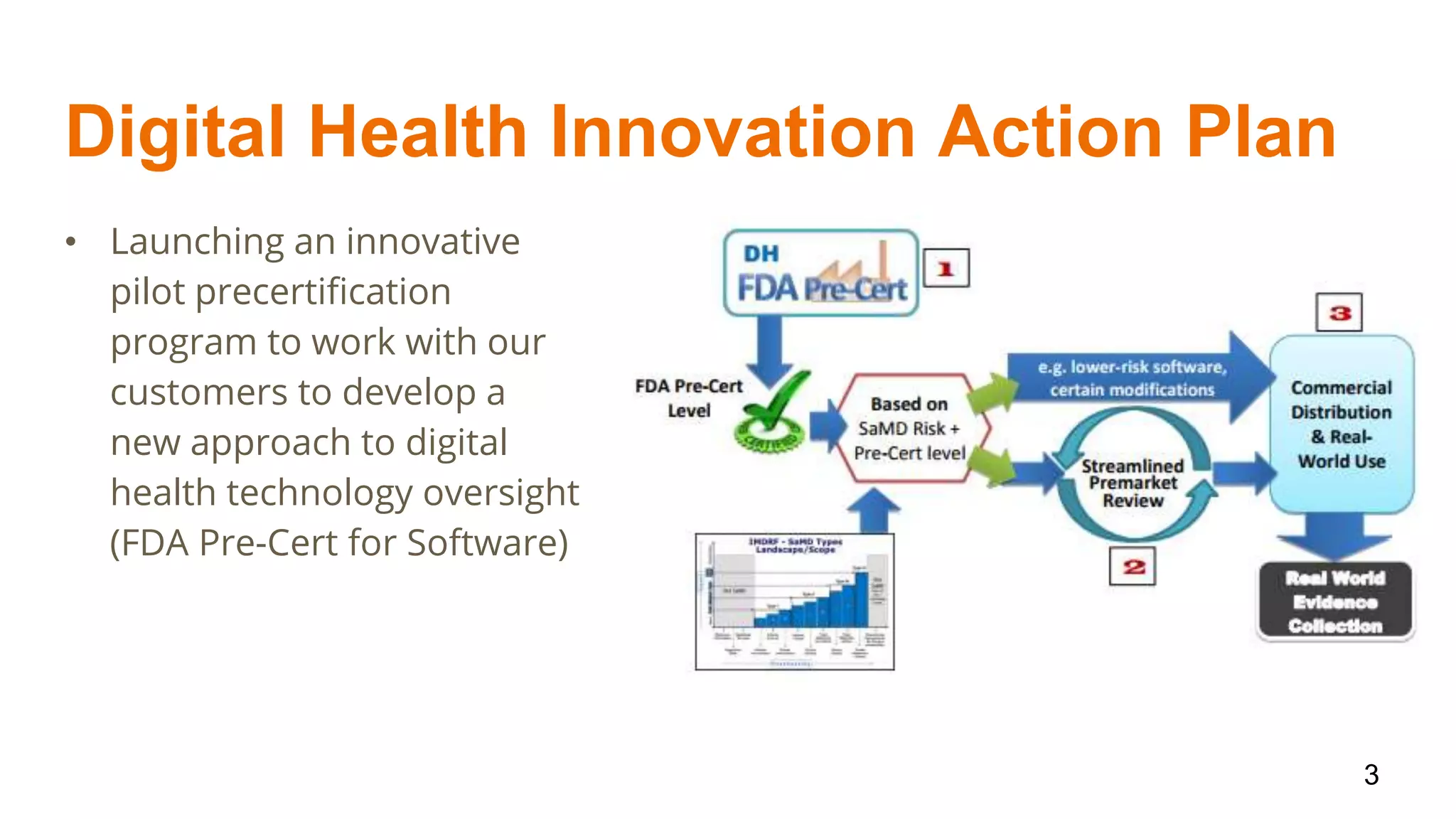
Digital Health Innovation Action Plan
• Launching an innovative
pilot precertification
program to work with our
customers to develop a
new approach to digital
health technology oversight
(FDA Pre-Cert for Software)
3
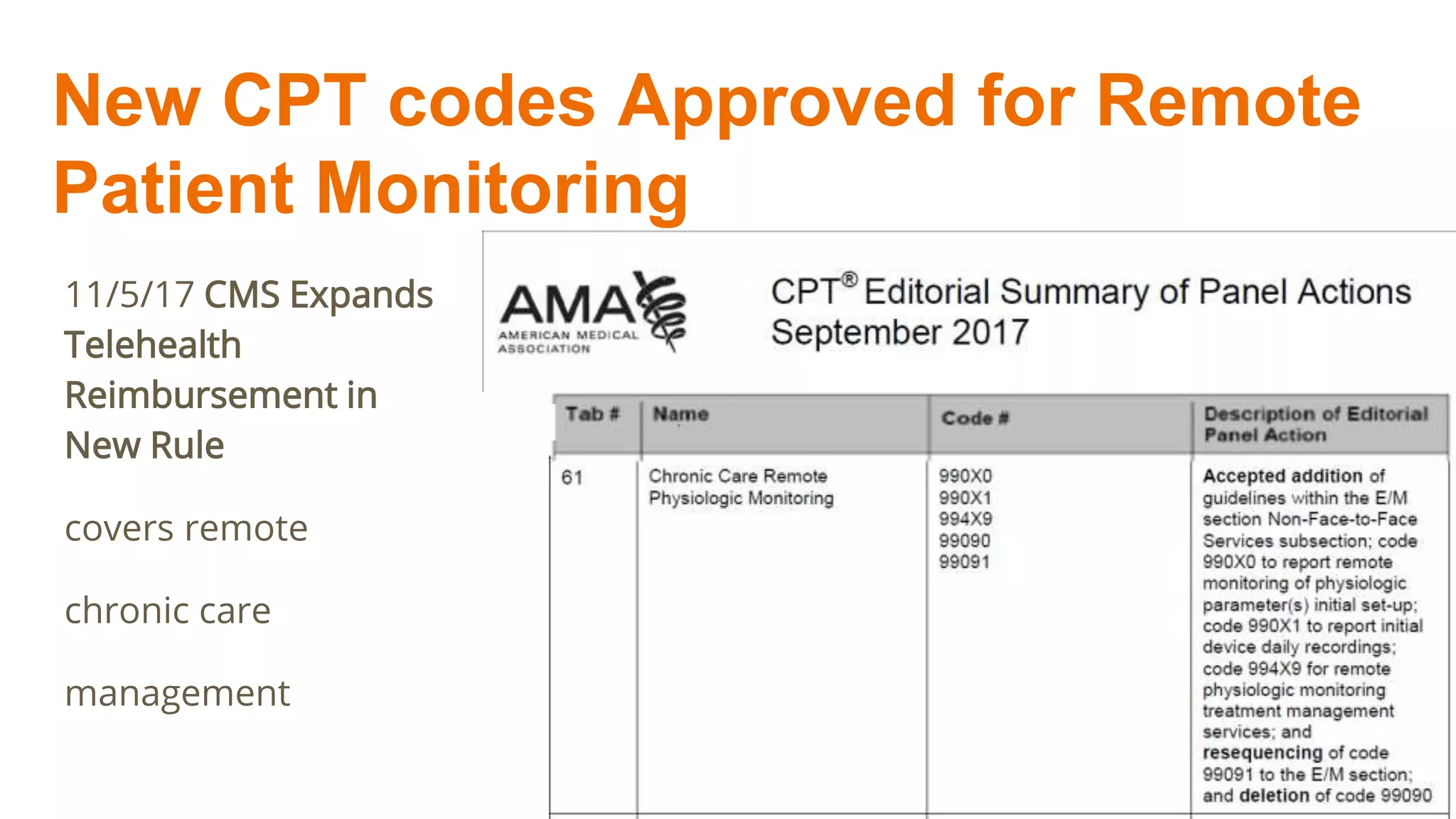
New CPT codes Approved for Remote
Patient Monitoring
11/5/17 CMS Expands
Telehealth
Reimbursement in
New Rule
covers remote
chronic care
management
4
PCHAlliance
White Paper
Including
• review of 34 studies,
• latest evidence by condition
and
• call to action
5
Classic Studies
Problem: Diabetes- chronic disease management
Intervention: Remote Monitoring, connected glucometer with AI
Control: Usual Care, RCT over 12 months
Outcome: 1.9% vs 0.7% mean HbA1c decline in Bluestar arm vs.usual care
NODE Pearl: First App to get FDA approved based on evidence. Still not mainstream due to
transformation challenge
Quinn, C et al, Diabetes Care, 2011
From: Effect of Lifestyle-Focused Text Messaging on Risk Factor Modification in Patients With Coronary Heart
Disease: A Randomized Clinical Trial
JAMA. 2015;314(12):1255-1263. doi:10.1001/jama.2015.10945
Enrollment of Participants in the TEXT-ME Randomized Clinical TrialLDL-C indicates low-density lipoprotein cholesterol.
Figure Legend:
At 6 months, levels of LDL-C were significantly
lower in intervention participants (mean
difference, −5 mg/dL with reductions in systolic
blood pressure (−7.6 mm Hg) and BMI (−1.3),,
and a significant reduction in smoking (26% vs
44%; relative risk, 0.61 [95% CI, 0.48 to
0.76]; P < .001).
The majority reported the text-message program
to be useful (91%), easy to understand (97%),
and appropriate in frequency (86%).
SnowWorld (VR)
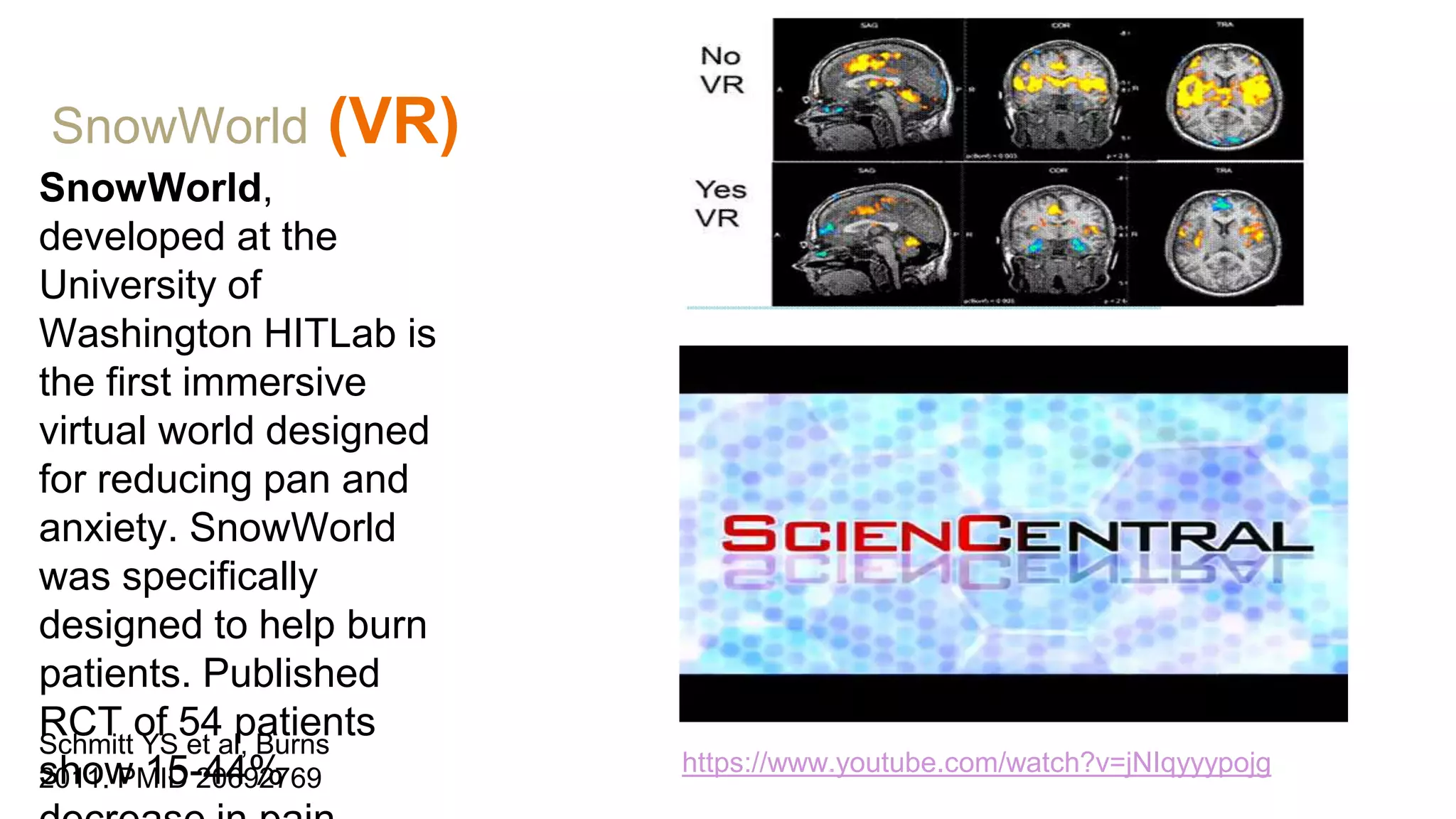
SnowWorld,
developed at the
University of
Washington HITLab is
the first immersive
virtual world designed
for reducing pan and
anxiety. SnowWorld
was specifically
designed to help burn
patients. Published
RCT of 54 patients
show 15-44%
Schmitt YS et al, Burns
2011. PMID 20692769
https://www.youtube.com/watch?v=jNIqyyypojg
https://peerj.com/articles/1554/
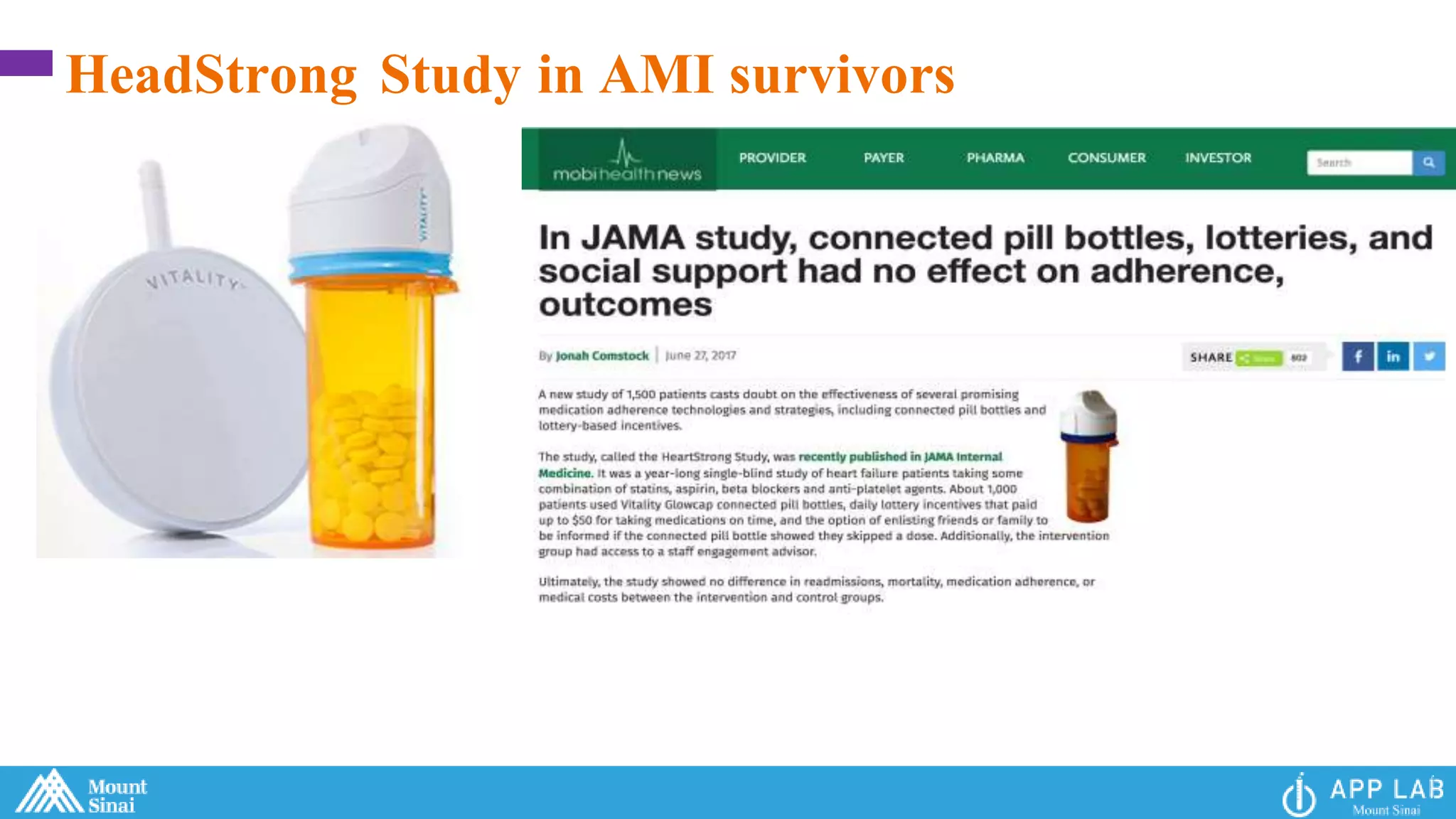
HeadStrong Study in AMI survivors
Year 2017 Summary
Substantial evidence for
• Text messaging and Remote monitoring
• Telemedicine in right setting
Increasing Evidence for
• Wearable devices for right use case
• AI
Need more Evidence
• VR
• Blockchain
Text messaging
Text Messaging and Mobile Phone Apps as Interventions to
Improve Adherence in Adolescents With Chronic Health
Conditions –JMIR 5/17
Problem – Medication adherence is a major challenge in adolescents with chronic
conditions
Research design – meta-analysis of 15 studies, most from US
Outcome - Seven articles reported significant improvement in adherence
NODE Pearl - promising feasibility and acceptability, and there is modest
evidence to support the efficacy of these interventions
14
Remote monitoring
Problem – Is the use of a Blue-tooth enabled inhaler sensor feasible in an elderly
population?
Intervention – use of Propeller Health inhaler sensor, data transmitted via a
wireless hub.
Research design – 198 with COPD, 38 with asthma followed for 12 months.
Outcome – SABA use decreased by 51%, Symptom-free days increased by 28%
NODE Pearl - management of remote monitoring feasible with elderly, COPD
management shows long term improvement.
15
Telemedicine in right setting
Telehealth Interventions to Support Self-Management of
Long-Term Conditions – JMIR 5/17
Problem - Self-management support is one mechanism by which telehealth
interventions have been proposed to facilitate management of long-term
conditions
Research Design - Metareview of Diabetes, Heart Failure, Asthma, Chronic
Obstructive Pulmonary Disease, and Cancer. 53 systematic reviews,
comprising 232 unique RCTs
Outcome – Telehealth self monitoring not superior to usual care except in
heart failure and type 2 diabetes where the practice is more mature. No
reports of harm.
NODE Pearl – Studies to date encouraging but more theory based studies
needed. 16
Wearable devices for right use case
Cardiovascular Risk Stratification Using Off-the-Shelf Wearables and a Multi-
Task Deep Learning Algorithm – 2017 AHA Scientific Session - UCSF
Research Design - 6,115 active users of the Cardiogram app for Apple Watch
- Heart rate and step counts were collected for a period of 1 to 53 weeks
(mean=8.9).
Outcome - Deep Neural Network outperformed a baseline logistic regression
model incorporating age, sex, and beta blocker use, predicting prevalent
hypertension
NODE Pearl – wearables combined with AI demonstrating
usefulness in predicting disease events.
17
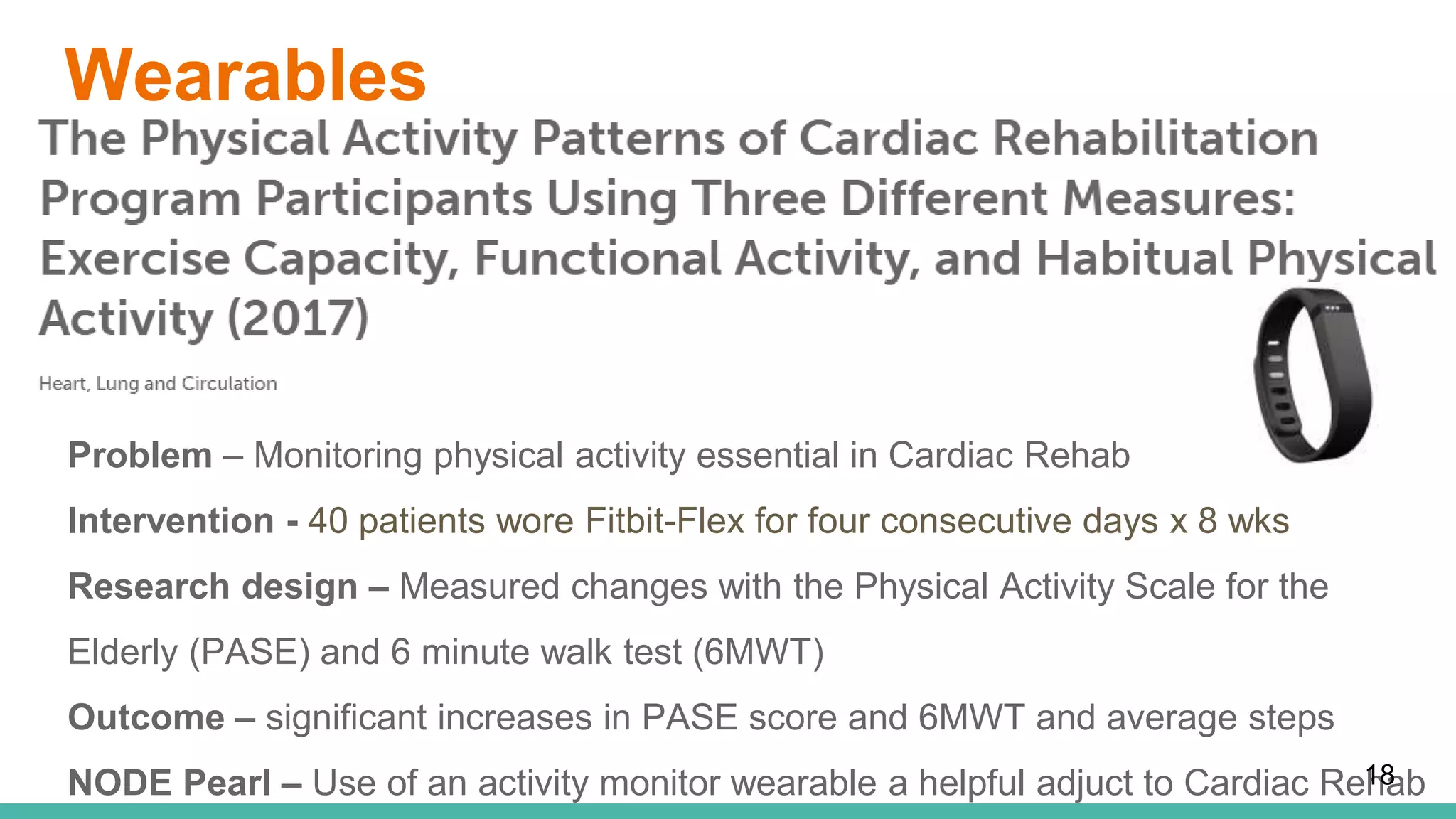
Wearables
Problem – Monitoring physical activity essential in Cardiac Rehab
Intervention - 40 patients wore Fitbit-Flex for four consecutive days x 8 wks
Research design – Measured changes with the Physical Activity Scale for the
Elderly (PASE) and 6 minute walk test (6MWT)
Outcome – significant increases in PASE score and 6MWT and average steps
NODE Pearl – Use of an activity monitor wearable a helpful adjuct to Cardiac Rehab18
Year 2017 Pick
PLEASE ADD PICO details for
1. Google AI Retinopathy
2. OMADA more
3. ALIVE Cor
4. FDA Digital pill approval
5. Telemedicine failure study
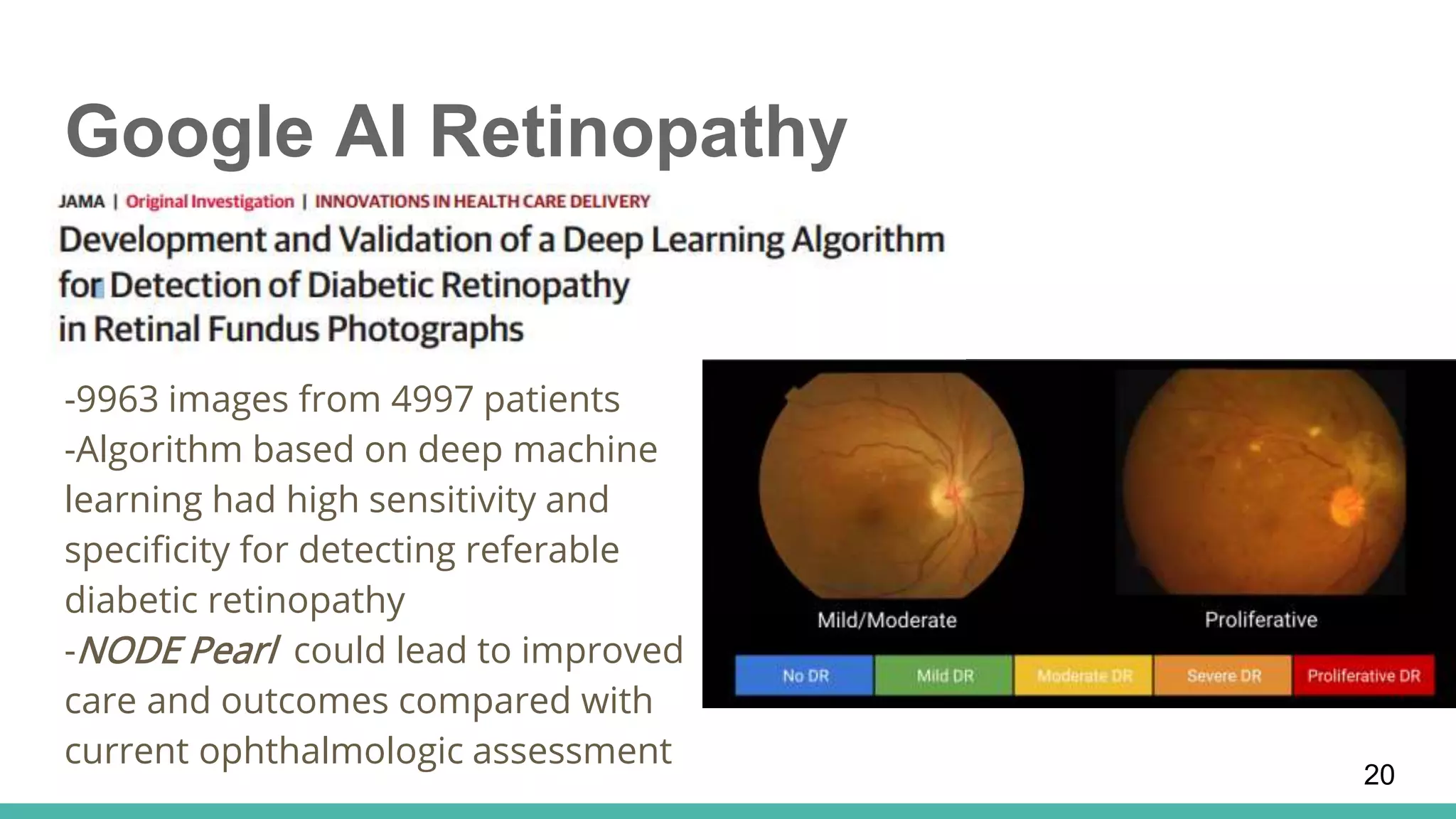
Google AI Retinopathy
-9963 images from 4997 patients
-Algorithm based on deep machine
learning had high sensitivity and
specificity for detecting referable
diabetic retinopathy
-NODE Pearl could lead to improved
care and outcomes compared with
current ophthalmologic assessment
20
Virtual Coaching in Diabetes Prevention Programs
Outcomes of a Digital Health Program With Human Coaching for Diabetes Risk
Reduction in a Medicare Population
Method: People at risk for diabetes enrolled in a program combining digital
health with human coaching (Omada Health)
Outcome: 501 patients, participants lost 7.5% (SD = 7.8%) of initial body
weight, glucose control improved (HbA1c change = −0.14%)
NODE Pearl: Virtual DPP is an
mature intervention which can
be applied to other chronic
conditions
21
Problem -integration of mHealth technology with self-management approaches to
improve the detection and management of atrial fibrillation
Intervention to determine if an FDA approved wireless ECG monitor designed for use with
smartphones (AliveCor™ ECG) could be utilized to detect and manage recurrent AF or other
atrial arrhythmias better than usual medical care
Research design Subjects with documented history of AF and were scheduled to undergo a
cardioversion, intervention group trained in device usage
Outcome no significant differences between groups with respect to the prevalence of coronary
artery disease, stroke/TIA, congestive heart failure, cardiovascular risk factors, or medication
usage.
NODE Pearl – Digital self monitoring of AF equally effective as current standard of care and with
better quality of life.
Journal of AFIB
11/29/17 FIRST APPLE WATCH GADGET CLEARED BY FDA:
AliveCor, the manufacturer of EKG gadgets, has expanded to the Apple Watch
FDA approves pill with sensor that digitally
tracks if patients have ingested their medication
11/13/17 - Abilify MyCite should not be used to track drug ingestion in “real-
time” or during an emergency because detection may be delayed or may not
occur. Proteus Digital Health.
For treatment of Schizophrenia and
Bipolar disorder
Sends a message from the pill’s sensor to a wearable
patch which transmits to a mobile application so that
patients can track the ingestion of the medication
on their smart phone.
NODE Pearl: Encouraging new use of digital in
medication adherence; new category - ingestibles
23
Telemedicine Failure
24
Conclusions (1)
• Evidence in several areas is growing and being featured in major journals:
telehealth and remote monitoring, text messaging, virtual coaching and
some wearables (CGMs, etc.)
• Increasing evidence for use of wearables including for research and AI
• More evidence needed for VR, Blockchain
25
Conclusions (2)
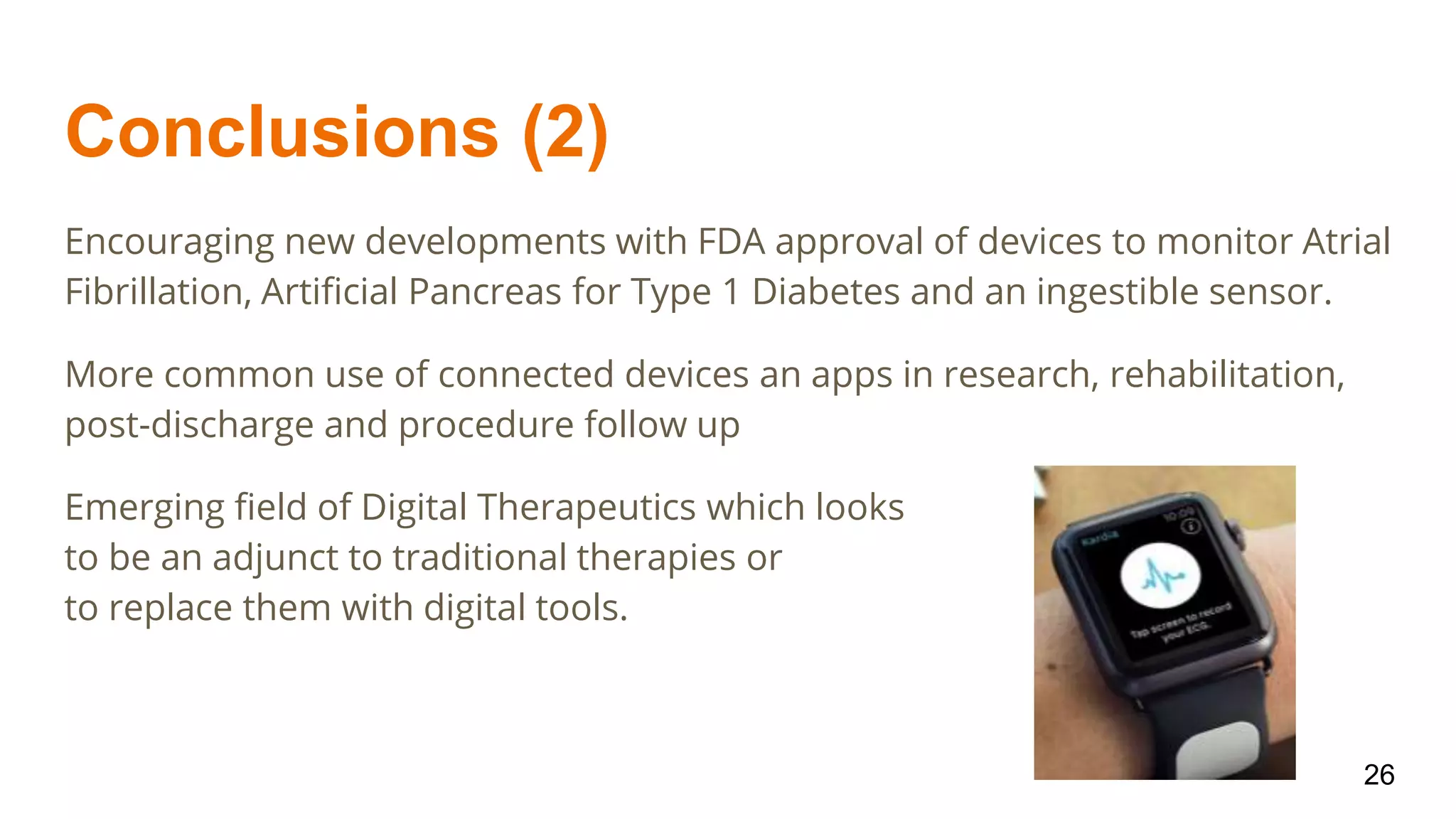
Encouraging new developments with FDA approval of devices to monitor Atrial
Fibrillation, Artificial Pancreas for Type 1 Diabetes and an ingestible sensor.
More common use of connected devices an apps in research, rehabilitation,
post-discharge and procedure follow up
Emerging field of Digital Therapeutics which looks
to be an adjunct to traditional therapies or
to replace them with digital tools.
26

Digital evidence year in review-2017

  • 1.
    Society for DigitalMedicine Digital Medicine: Year in Review John Sharp and Ashish Atreja PCHAlliance/ HIMSS and Mount Sinai @johnsharp @atreja
  • 2.
    Our Approach • Publishedin peer-reviewed journals • Pilot and feasibility studies • Validation Studies • RCTs • Literature reviews and meta-analysis
  • 3.
    Digital Health InnovationAction Plan • Launching an innovative pilot precertification program to work with our customers to develop a new approach to digital health technology oversight (FDA Pre-Cert for Software) 3
  • 4.
    New CPT codesApproved for Remote Patient Monitoring 11/5/17 CMS Expands Telehealth Reimbursement in New Rule covers remote chronic care management 4
  • 5.
    PCHAlliance White Paper Including • reviewof 34 studies, • latest evidence by condition and • call to action 5
  • 6.
  • 7.
    Problem: Diabetes- chronicdisease management Intervention: Remote Monitoring, connected glucometer with AI Control: Usual Care, RCT over 12 months Outcome: 1.9% vs 0.7% mean HbA1c decline in Bluestar arm vs.usual care NODE Pearl: First App to get FDA approved based on evidence. Still not mainstream due to transformation challenge Quinn, C et al, Diabetes Care, 2011
  • 8.
    From: Effect ofLifestyle-Focused Text Messaging on Risk Factor Modification in Patients With Coronary Heart Disease: A Randomized Clinical Trial JAMA. 2015;314(12):1255-1263. doi:10.1001/jama.2015.10945 Enrollment of Participants in the TEXT-ME Randomized Clinical TrialLDL-C indicates low-density lipoprotein cholesterol. Figure Legend: At 6 months, levels of LDL-C were significantly lower in intervention participants (mean difference, −5 mg/dL with reductions in systolic blood pressure (−7.6 mm Hg) and BMI (−1.3),, and a significant reduction in smoking (26% vs 44%; relative risk, 0.61 [95% CI, 0.48 to 0.76]; P < .001). The majority reported the text-message program to be useful (91%), easy to understand (97%), and appropriate in frequency (86%).
  • 9.
    SnowWorld (VR) SnowWorld, developed atthe University of Washington HITLab is the first immersive virtual world designed for reducing pan and anxiety. SnowWorld was specifically designed to help burn patients. Published RCT of 54 patients show 15-44% Schmitt YS et al, Burns 2011. PMID 20692769 https://www.youtube.com/watch?v=jNIqyyypojg
  • 10.
  • 11.
    HeadStrong Study inAMI survivors
  • 13.
    Year 2017 Summary Substantialevidence for • Text messaging and Remote monitoring • Telemedicine in right setting Increasing Evidence for • Wearable devices for right use case • AI Need more Evidence • VR • Blockchain
  • 14.
    Text messaging Text Messagingand Mobile Phone Apps as Interventions to Improve Adherence in Adolescents With Chronic Health Conditions –JMIR 5/17 Problem – Medication adherence is a major challenge in adolescents with chronic conditions Research design – meta-analysis of 15 studies, most from US Outcome - Seven articles reported significant improvement in adherence NODE Pearl - promising feasibility and acceptability, and there is modest evidence to support the efficacy of these interventions 14
  • 15.
    Remote monitoring Problem –Is the use of a Blue-tooth enabled inhaler sensor feasible in an elderly population? Intervention – use of Propeller Health inhaler sensor, data transmitted via a wireless hub. Research design – 198 with COPD, 38 with asthma followed for 12 months. Outcome – SABA use decreased by 51%, Symptom-free days increased by 28% NODE Pearl - management of remote monitoring feasible with elderly, COPD management shows long term improvement. 15
  • 16.
    Telemedicine in rightsetting Telehealth Interventions to Support Self-Management of Long-Term Conditions – JMIR 5/17 Problem - Self-management support is one mechanism by which telehealth interventions have been proposed to facilitate management of long-term conditions Research Design - Metareview of Diabetes, Heart Failure, Asthma, Chronic Obstructive Pulmonary Disease, and Cancer. 53 systematic reviews, comprising 232 unique RCTs Outcome – Telehealth self monitoring not superior to usual care except in heart failure and type 2 diabetes where the practice is more mature. No reports of harm. NODE Pearl – Studies to date encouraging but more theory based studies needed. 16
  • 17.
    Wearable devices forright use case Cardiovascular Risk Stratification Using Off-the-Shelf Wearables and a Multi- Task Deep Learning Algorithm – 2017 AHA Scientific Session - UCSF Research Design - 6,115 active users of the Cardiogram app for Apple Watch - Heart rate and step counts were collected for a period of 1 to 53 weeks (mean=8.9). Outcome - Deep Neural Network outperformed a baseline logistic regression model incorporating age, sex, and beta blocker use, predicting prevalent hypertension NODE Pearl – wearables combined with AI demonstrating usefulness in predicting disease events. 17
  • 18.
    Wearables Problem – Monitoringphysical activity essential in Cardiac Rehab Intervention - 40 patients wore Fitbit-Flex for four consecutive days x 8 wks Research design – Measured changes with the Physical Activity Scale for the Elderly (PASE) and 6 minute walk test (6MWT) Outcome – significant increases in PASE score and 6MWT and average steps NODE Pearl – Use of an activity monitor wearable a helpful adjuct to Cardiac Rehab18
  • 19.
    Year 2017 Pick PLEASEADD PICO details for 1. Google AI Retinopathy 2. OMADA more 3. ALIVE Cor 4. FDA Digital pill approval 5. Telemedicine failure study
  • 20.
    Google AI Retinopathy -9963images from 4997 patients -Algorithm based on deep machine learning had high sensitivity and specificity for detecting referable diabetic retinopathy -NODE Pearl could lead to improved care and outcomes compared with current ophthalmologic assessment 20
  • 21.
    Virtual Coaching inDiabetes Prevention Programs Outcomes of a Digital Health Program With Human Coaching for Diabetes Risk Reduction in a Medicare Population Method: People at risk for diabetes enrolled in a program combining digital health with human coaching (Omada Health) Outcome: 501 patients, participants lost 7.5% (SD = 7.8%) of initial body weight, glucose control improved (HbA1c change = −0.14%) NODE Pearl: Virtual DPP is an mature intervention which can be applied to other chronic conditions 21
  • 22.
    Problem -integration ofmHealth technology with self-management approaches to improve the detection and management of atrial fibrillation Intervention to determine if an FDA approved wireless ECG monitor designed for use with smartphones (AliveCor™ ECG) could be utilized to detect and manage recurrent AF or other atrial arrhythmias better than usual medical care Research design Subjects with documented history of AF and were scheduled to undergo a cardioversion, intervention group trained in device usage Outcome no significant differences between groups with respect to the prevalence of coronary artery disease, stroke/TIA, congestive heart failure, cardiovascular risk factors, or medication usage. NODE Pearl – Digital self monitoring of AF equally effective as current standard of care and with better quality of life. Journal of AFIB 11/29/17 FIRST APPLE WATCH GADGET CLEARED BY FDA: AliveCor, the manufacturer of EKG gadgets, has expanded to the Apple Watch
  • 23.
    FDA approves pillwith sensor that digitally tracks if patients have ingested their medication 11/13/17 - Abilify MyCite should not be used to track drug ingestion in “real- time” or during an emergency because detection may be delayed or may not occur. Proteus Digital Health. For treatment of Schizophrenia and Bipolar disorder Sends a message from the pill’s sensor to a wearable patch which transmits to a mobile application so that patients can track the ingestion of the medication on their smart phone. NODE Pearl: Encouraging new use of digital in medication adherence; new category - ingestibles 23
  • 24.
  • 25.
    Conclusions (1) • Evidencein several areas is growing and being featured in major journals: telehealth and remote monitoring, text messaging, virtual coaching and some wearables (CGMs, etc.) • Increasing evidence for use of wearables including for research and AI • More evidence needed for VR, Blockchain 25
  • 26.
    Conclusions (2) Encouraging newdevelopments with FDA approval of devices to monitor Atrial Fibrillation, Artificial Pancreas for Type 1 Diabetes and an ingestible sensor. More common use of connected devices an apps in research, rehabilitation, post-discharge and procedure follow up Emerging field of Digital Therapeutics which looks to be an adjunct to traditional therapies or to replace them with digital tools. 26

Editor's Notes

  • #9 Non interactive text messages, 352 patients..
  • #10 Send to Burns. 2011 Feb;37(1):61-8. doi: 10.1016/j.burns.2010.07.007. Epub 2010 Aug 7. A randomized, controlled trial of immersive virtual reality analgesia, during physical therapy for pediatric burns. Schmitt YS1, Hoffman HG, Blough DK, Patterson DR, Jensen MP, Soltani M, Carrougher GJ, Nakamura D, Sharar SR. Author information Abstract This randomized, controlled, within-subjects (crossover design) study examined the effects of immersive virtual reality as an adjunctive analgesic technique for hospitalized pediatric burn inpatients undergoing painful physical therapy. Fifty-four subjects (6-19 years old) performed range-of-motion exercises under a therapist's direction for 1-5 days. During each session, subjects spent equivalent time in both the virtual reality and the control conditions (treatment order randomized and counterbalanced). Graphic rating scale scores assessing the sensory, affective, and cognitive components of pain were obtained for each treatment condition. Secondary outcomes assessed subjects' perception of the virtual reality experience and maximum range-of-motion. Results showed that on study day one, subjects reported significant decreases (27-44%) in pain ratings during virtual reality. They also reported improved affect ("fun") during virtual reality. The analgesia and affect improvements were maintained with repeated virtual reality use over multiple therapy sessions. Maximum range-of-motion was not different between treatment conditions, but was significantly greater after the second treatment condition (regardless of treatment order). These results suggest that immersive virtual reality is an effective nonpharmacologic, adjunctive pain reduction technique in the pediatric burn population undergoing painful rehabilitation therapy. The magnitude of the analgesic effect is clinically meaningful and is maintained with repeated use. Copyright © 2010 Elsevier Ltd and ISBI. All rights reserved. PMID: 20692769 PMCID: PMC2980790 DOI: 10.1016/j.burns.2010.07.007 [Indexed for MEDLINE] Free PMC Article
  • #12 What is the effect of wireless technology and behavioral economic approaches on vascular rehospitalization and medication adherence in a health plan–based intervention for acute myocardial infarction survivors? 1500 patients AMI (Heart attack) patients post-discharge from hospital Daily lotteries for financial prizes Connected pill bottles Engagement advisor Family support 12month follow no difference in readmissions, mortality, medication adherence, or medical costs between the intervention and control groups.