Digital Access
BY KENNEDY BISHOP AND JOHN MCDEARMAN
What is Digital Access?
• Full electronic participation in society
• Meaning everyone should have access to digital technology
• Especially when the technology is free (like the Internet)
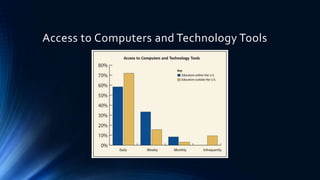
Access to Computers and Technology Tools
• It is called Digital Divide when there is a gap between people who have
access to technology and those who don’t
• Not everyone has the same opportunities when it comes to technology
• It is the starting point of Digital Citizenship
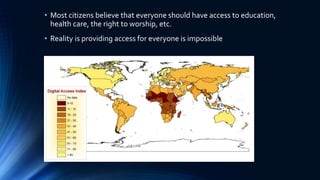
• Most citizens believe that everyone should have access to education,
health care, the right to worship, etc.
• Reality is providing access for everyone is impossible
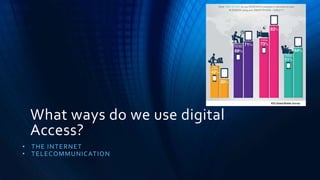
What ways do we use digital
Access?
• THE INTERNET
• TELECOMMUNICATION
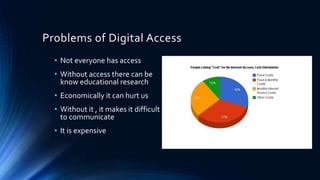
Problems of Digital Access
• Not everyone has access
• Without access there can be
know educational research
• Economically it can hurt us
• Without it , it makes it difficult
to communicate
• It is expensive
Possible Solutions
• There is a project called “One Laptop Per Child”
-The project relies on free software
• They say see it from others points of view
-Meaning a child fromAfrica would use it a lot different
than a child fromAmerica
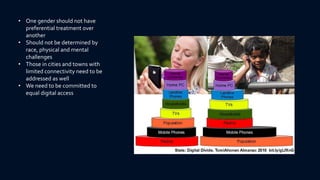
• One gender should not have
preferential treatment over
another
• Should not be determined by
race, physical and mental
challenges
• Those in cities and towns with
limited connectivity need to be
addressed as well
• We need to be committed to
equal digital access
Digital access

Digital access

  • 1.
    Digital Access BY KENNEDYBISHOP AND JOHN MCDEARMAN
  • 2.
    What is DigitalAccess? • Full electronic participation in society • Meaning everyone should have access to digital technology • Especially when the technology is free (like the Internet)
  • 3.
    Access to Computersand Technology Tools
  • 4.
    • It iscalled Digital Divide when there is a gap between people who have access to technology and those who don’t • Not everyone has the same opportunities when it comes to technology • It is the starting point of Digital Citizenship
  • 5.
    • Most citizensbelieve that everyone should have access to education, health care, the right to worship, etc. • Reality is providing access for everyone is impossible
  • 6.
    What ways dowe use digital Access? • THE INTERNET • TELECOMMUNICATION
  • 7.
    Problems of DigitalAccess • Not everyone has access • Without access there can be know educational research • Economically it can hurt us • Without it , it makes it difficult to communicate • It is expensive
  • 8.
    Possible Solutions • Thereis a project called “One Laptop Per Child” -The project relies on free software • They say see it from others points of view -Meaning a child fromAfrica would use it a lot different than a child fromAmerica
  • 9.
    • One gendershould not have preferential treatment over another • Should not be determined by race, physical and mental challenges • Those in cities and towns with limited connectivity need to be addressed as well • We need to be committed to equal digital access