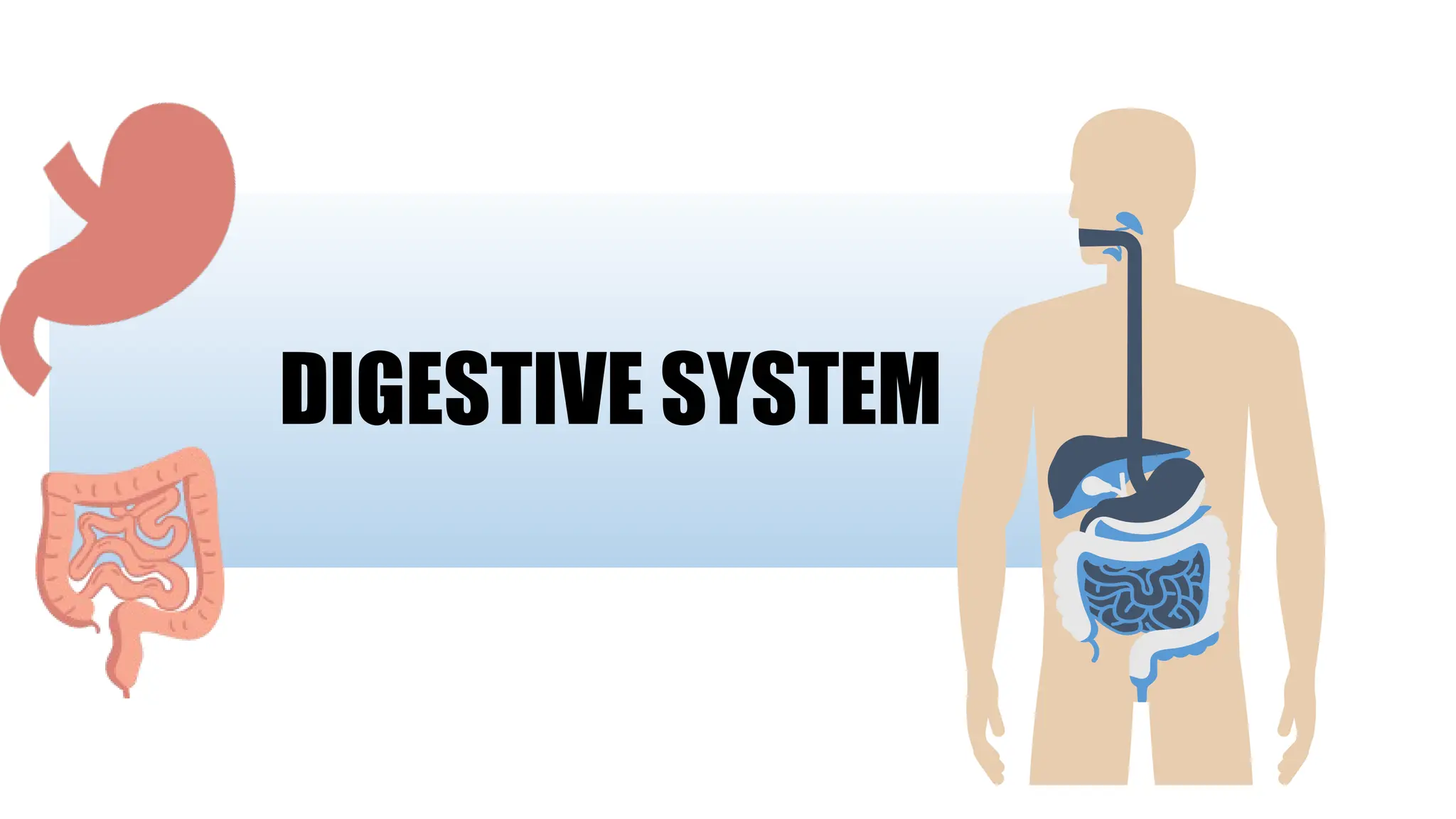
DIGESTIVE SYSTEM
OUR TEAM
MD : Sumon
Id :12315017
Shraboni Saha
ID:12315018
ABDULLAH AL
NOMAN
Id : 12315021
Sumaiya Akter
Id :12315023
Md:YEASIN
ID:12315020
MD Sumon
Id: 12315017
Department 0f pharmacy
Comilla university
Presented by Tables of content
 Structure of different parts of
alimentary system
 Gastrointestinal molility and its control
Digestive system
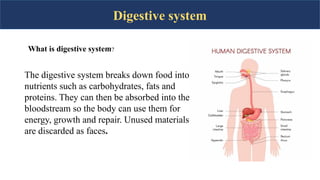
The digestive system breaks down food into
nutrients such as carbohydrates, fats and
proteins. They can then be absorbed into the
bloodstream so the body can use them for
energy, growth and repair. Unused materials
are discarded as faces.
What is digestive system?
Structure Of Different Part Of Alimentary System
MOUTH
 ESOPHAGUS
STOMACH
SMALL INTESTINE
LARGE INTESTINE
LIVER
PANCREAS
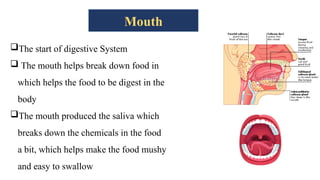
Mouth
The start of digestive System
 The mouth helps break down food in
which helps the food to be digest in the
body
The mouth produced the saliva which
breaks down the chemicals in the food
a bit, which helps make the food mushy
and easy to swallow
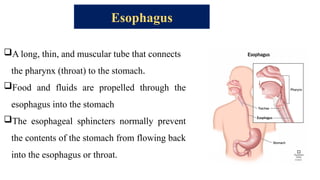
Esophagus
A long, thin, and muscular tube that connects
the pharynx (throat) to the stomach.
Food and fluids are propelled through the
esophagus into the stomach
The esophageal sphincters normally prevent
the contents of the stomach from flowing back
into the esophagus or throat.
Stomach
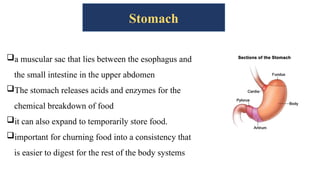
a muscular sac that lies between the esophagus and
the small intestine in the upper abdomen
The stomach releases acids and enzymes for the
chemical breakdown of food
it can also expand to temporarily store food.
important for churning food into a consistency that
is easier to digest for the rest of the body systems
Pancreas
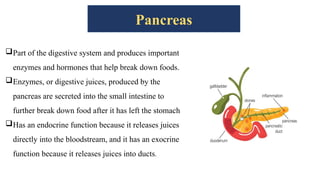
Part of the digestive system and produces important
enzymes and hormones that help break down foods.
Enzymes, or digestive juices, produced by the
pancreas are secreted into the small intestine to
further break down food after it has left the stomach
Has an endocrine function because it releases juices
directly into the bloodstream, and it has an exocrine
function because it releases juices into ducts.
Liver
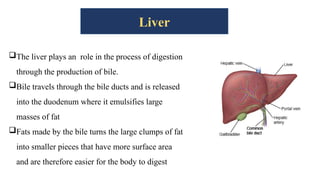
The liver plays an role in the process of digestion
through the production of bile.
Bile travels through the bile ducts and is released
into the duodenum where it emulsifies large
masses of fat
Fats made by the bile turns the large clumps of fat
into smaller pieces that have more surface area
and are therefore easier for the body to digest
Small intestine
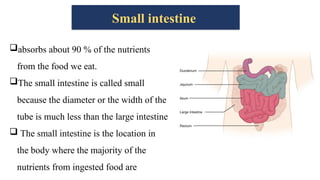
absorbs about 90 % of the nutrients
from the food we eat.
The small intestine is called small
because the diameter or the width of the
tube is much less than the large intestine
 The small intestine is the location in
the body where the majority of the
nutrients from ingested food are
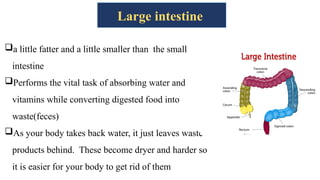
Large intestine
a little fatter and a little smaller than the small
intestine
Performs the vital task of absorbing water and
vitamins while converting digested food into
waste(feces)
As your body takes back water, it just leaves waste
products behind. These become dryer and harder so
it is easier for your body to get rid of them
Gastrointestinal motility
What is gastrointestinal motility?
 Gastrointestinal motility is defined as the
coordinated contractions and relaxations of the
muscles of the GI tracts necessary to move contents
from the mouth to the anus
 peristalsis is the result of a series of local reflexes
 Contraction of intestinal muscle above an
intraluminal stimulus associated with simultaneous
relaxation of muscle below the stimulus
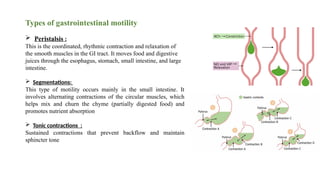
Types of gastrointestinal motility
 Peristalsis :
This is the coordinated, rhythmic contraction and relaxation of
the smooth muscles in the GI tract. It moves food and digestive
juices through the esophagus, stomach, small intestine, and large
intestine.
 Segmentations:
This type of motility occurs mainly in the small intestine. It
involves alternating contractions of the circular muscles, which
helps mix and churn the chyme (partially digested food) and
promotes nutrient absorption
 Tonic contractions :
Sustained contractions that prevent backflow and maintain
sphincter tone
Controls of gastrointestinal
 The gastrointestinal (GI) tract is controlled by the nervous system and hormones
The nervous system
The autonomic nervous system and the enteric nervous system (ENS) are both involved
in regulating the GI tract. The ENS is a complex network of neurons located throughout
the GI tract, and it regulates esophageal peristalsis. The autonomic nervous system also
includes the vagus and splanchnic nerves, which are located outside the gut wall.
Hormonal control
The GI tract produces many mediators that regulate its functions, including hormones
such as gastrin, glucagon, somatostatin, cholecystokinin, and secretin.
Thank you

Digestive System powerpoint presentation

  • 1.
  • 2.
    OUR TEAM MD :Sumon Id :12315017 Shraboni Saha ID:12315018 ABDULLAH AL NOMAN Id : 12315021 Sumaiya Akter Id :12315023 Md:YEASIN ID:12315020
  • 3.
    MD Sumon Id: 12315017 Department0f pharmacy Comilla university Presented by Tables of content  Structure of different parts of alimentary system  Gastrointestinal molility and its control
  • 4.
    Digestive system The digestivesystem breaks down food into nutrients such as carbohydrates, fats and proteins. They can then be absorbed into the bloodstream so the body can use them for energy, growth and repair. Unused materials are discarded as faces. What is digestive system?
  • 5.
    Structure Of DifferentPart Of Alimentary System MOUTH  ESOPHAGUS STOMACH SMALL INTESTINE LARGE INTESTINE LIVER PANCREAS
  • 6.
    Mouth The start ofdigestive System  The mouth helps break down food in which helps the food to be digest in the body The mouth produced the saliva which breaks down the chemicals in the food a bit, which helps make the food mushy and easy to swallow
  • 7.
    Esophagus A long, thin,and muscular tube that connects the pharynx (throat) to the stomach. Food and fluids are propelled through the esophagus into the stomach The esophageal sphincters normally prevent the contents of the stomach from flowing back into the esophagus or throat.
  • 8.
    Stomach a muscular sacthat lies between the esophagus and the small intestine in the upper abdomen The stomach releases acids and enzymes for the chemical breakdown of food it can also expand to temporarily store food. important for churning food into a consistency that is easier to digest for the rest of the body systems
  • 9.
    Pancreas Part of thedigestive system and produces important enzymes and hormones that help break down foods. Enzymes, or digestive juices, produced by the pancreas are secreted into the small intestine to further break down food after it has left the stomach Has an endocrine function because it releases juices directly into the bloodstream, and it has an exocrine function because it releases juices into ducts.
  • 10.
    Liver The liver playsan role in the process of digestion through the production of bile. Bile travels through the bile ducts and is released into the duodenum where it emulsifies large masses of fat Fats made by the bile turns the large clumps of fat into smaller pieces that have more surface area and are therefore easier for the body to digest
  • 11.
    Small intestine absorbs about90 % of the nutrients from the food we eat. The small intestine is called small because the diameter or the width of the tube is much less than the large intestine  The small intestine is the location in the body where the majority of the nutrients from ingested food are
  • 12.
    Large intestine a littlefatter and a little smaller than the small intestine Performs the vital task of absorbing water and vitamins while converting digested food into waste(feces) As your body takes back water, it just leaves waste products behind. These become dryer and harder so it is easier for your body to get rid of them
  • 13.
    Gastrointestinal motility What isgastrointestinal motility?  Gastrointestinal motility is defined as the coordinated contractions and relaxations of the muscles of the GI tracts necessary to move contents from the mouth to the anus  peristalsis is the result of a series of local reflexes  Contraction of intestinal muscle above an intraluminal stimulus associated with simultaneous relaxation of muscle below the stimulus
  • 14.
    Types of gastrointestinalmotility  Peristalsis : This is the coordinated, rhythmic contraction and relaxation of the smooth muscles in the GI tract. It moves food and digestive juices through the esophagus, stomach, small intestine, and large intestine.  Segmentations: This type of motility occurs mainly in the small intestine. It involves alternating contractions of the circular muscles, which helps mix and churn the chyme (partially digested food) and promotes nutrient absorption  Tonic contractions : Sustained contractions that prevent backflow and maintain sphincter tone
  • 15.
    Controls of gastrointestinal The gastrointestinal (GI) tract is controlled by the nervous system and hormones The nervous system The autonomic nervous system and the enteric nervous system (ENS) are both involved in regulating the GI tract. The ENS is a complex network of neurons located throughout the GI tract, and it regulates esophageal peristalsis. The autonomic nervous system also includes the vagus and splanchnic nerves, which are located outside the gut wall. Hormonal control The GI tract produces many mediators that regulate its functions, including hormones such as gastrin, glucagon, somatostatin, cholecystokinin, and secretin.
  • 16.