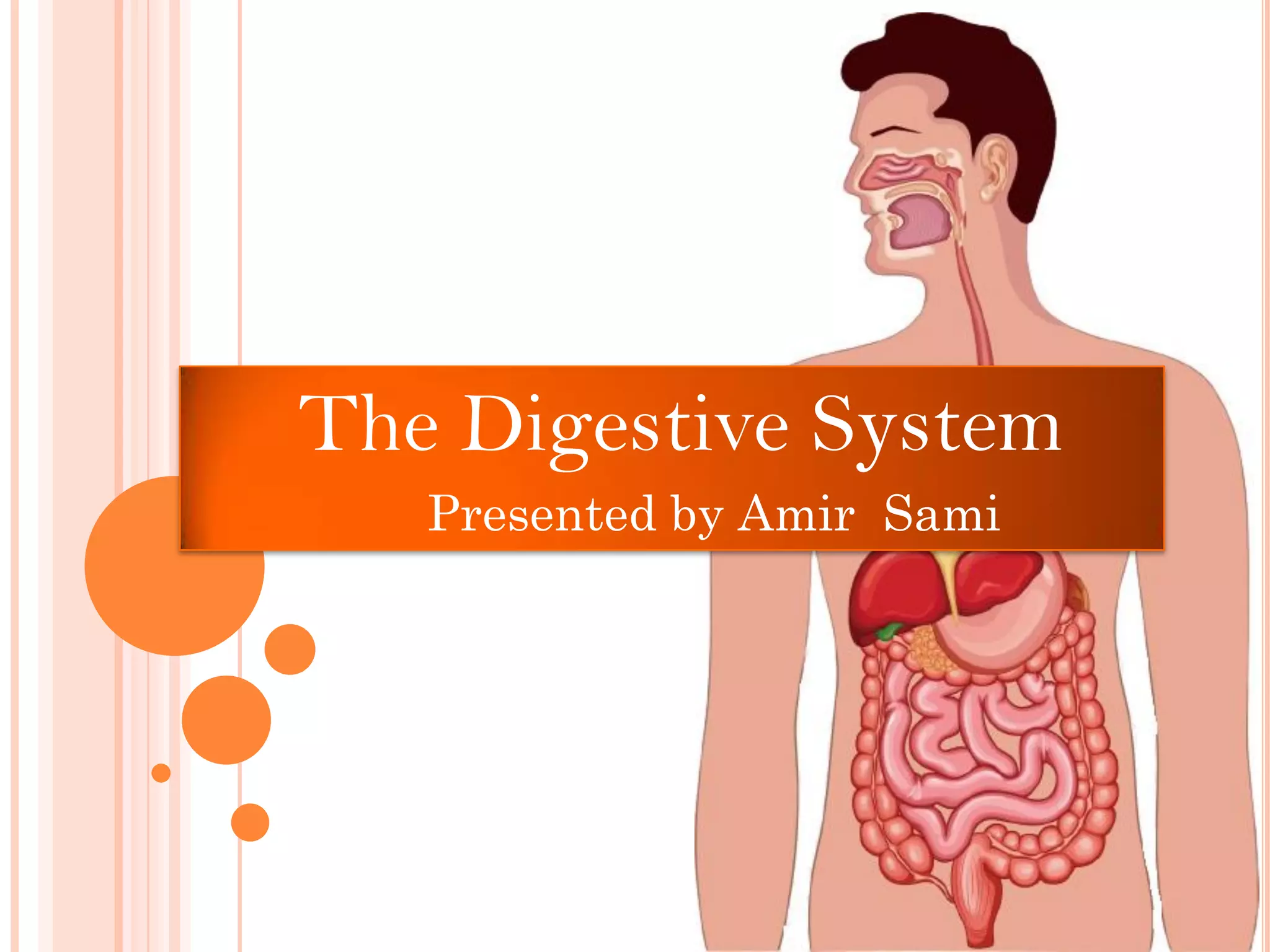
The Digestive System
Presented by Amir Sami
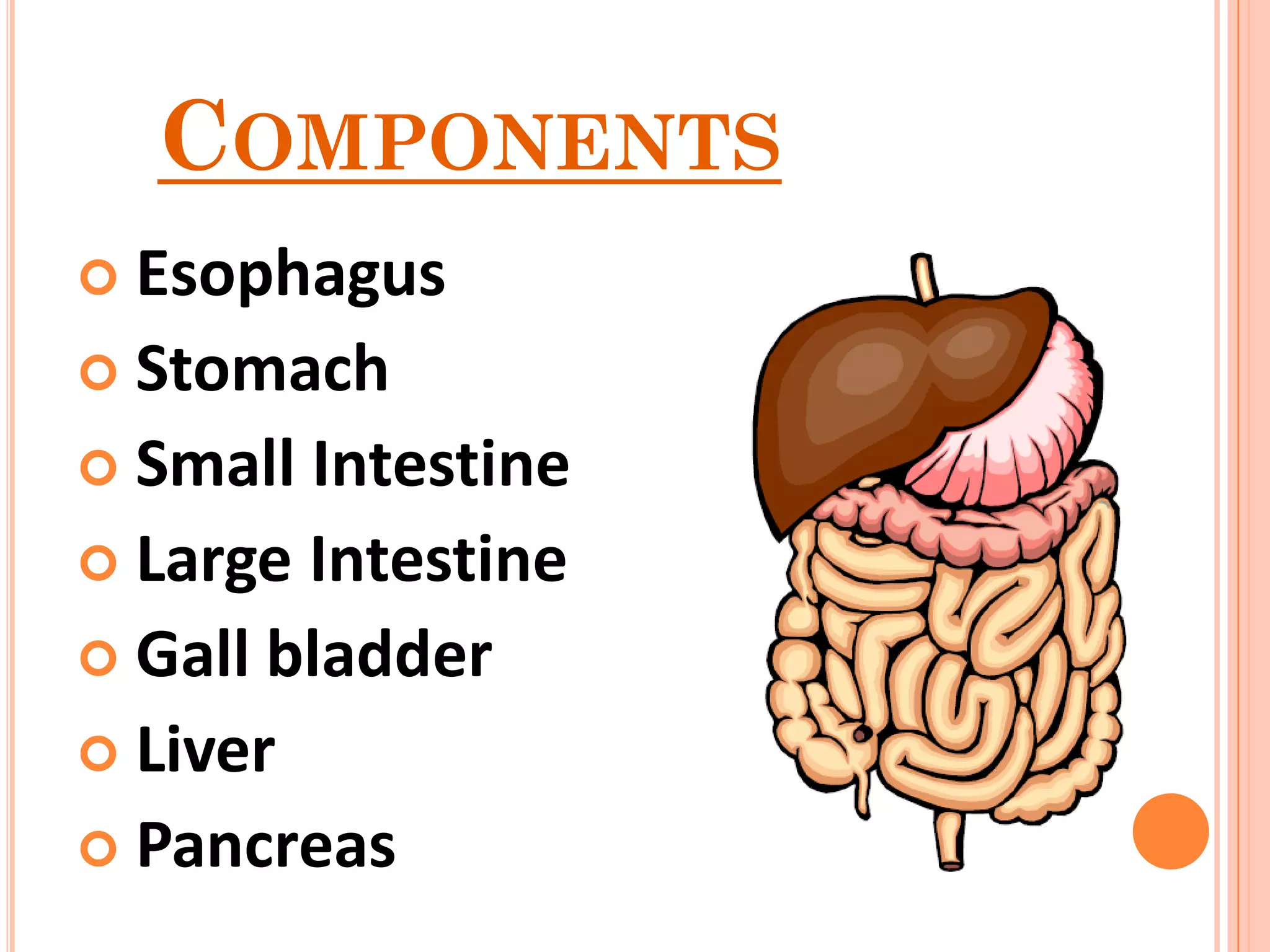
COMPONENTS
 Esophagus
 Stomach
 Small Intestine
 Large Intestine
 Gall bladder
 Liver
 Pancreas
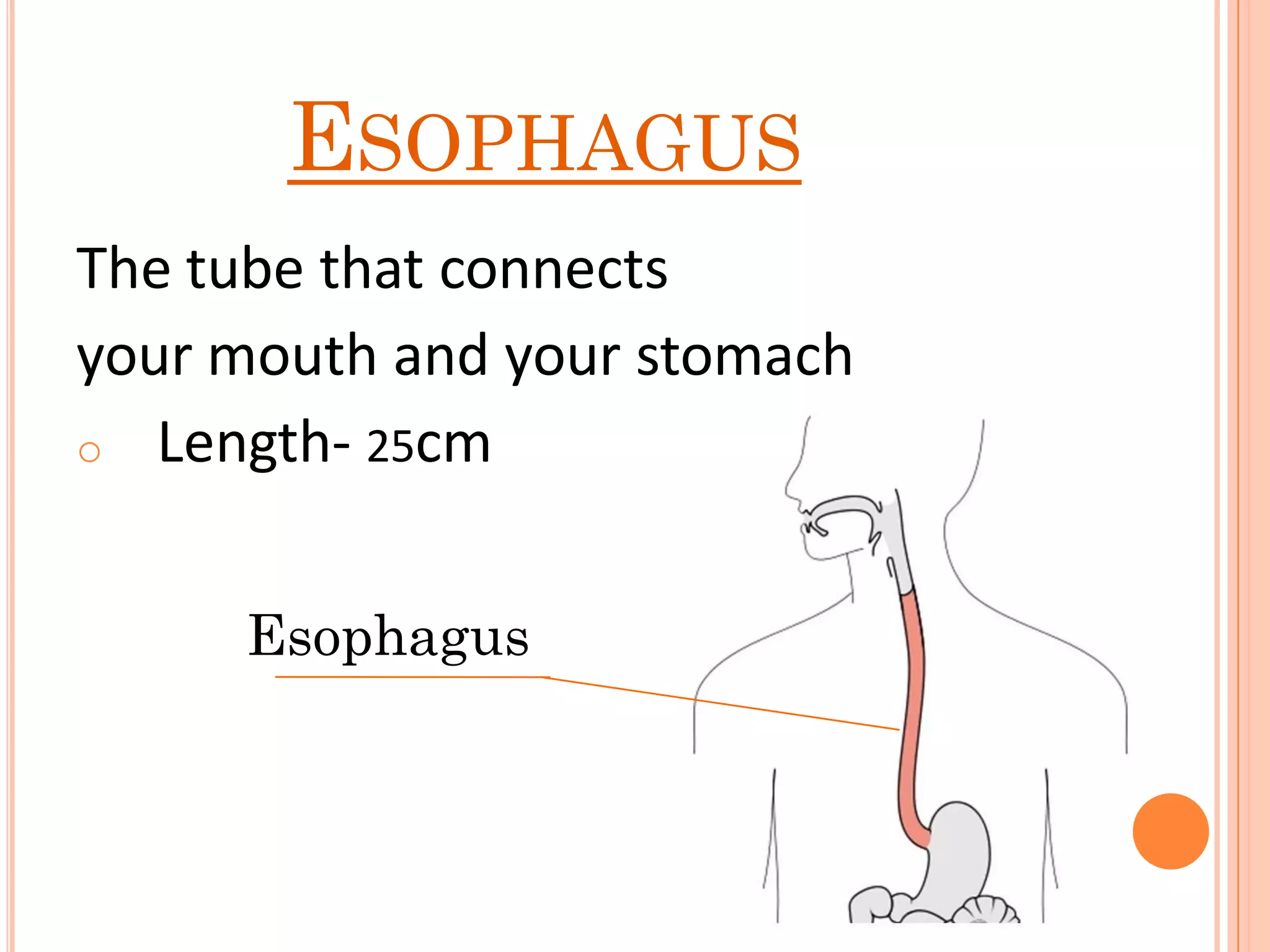
ESOPHAGUS
The tube that connects
your mouth and your stomach
o Length- 25cm
Esophagus
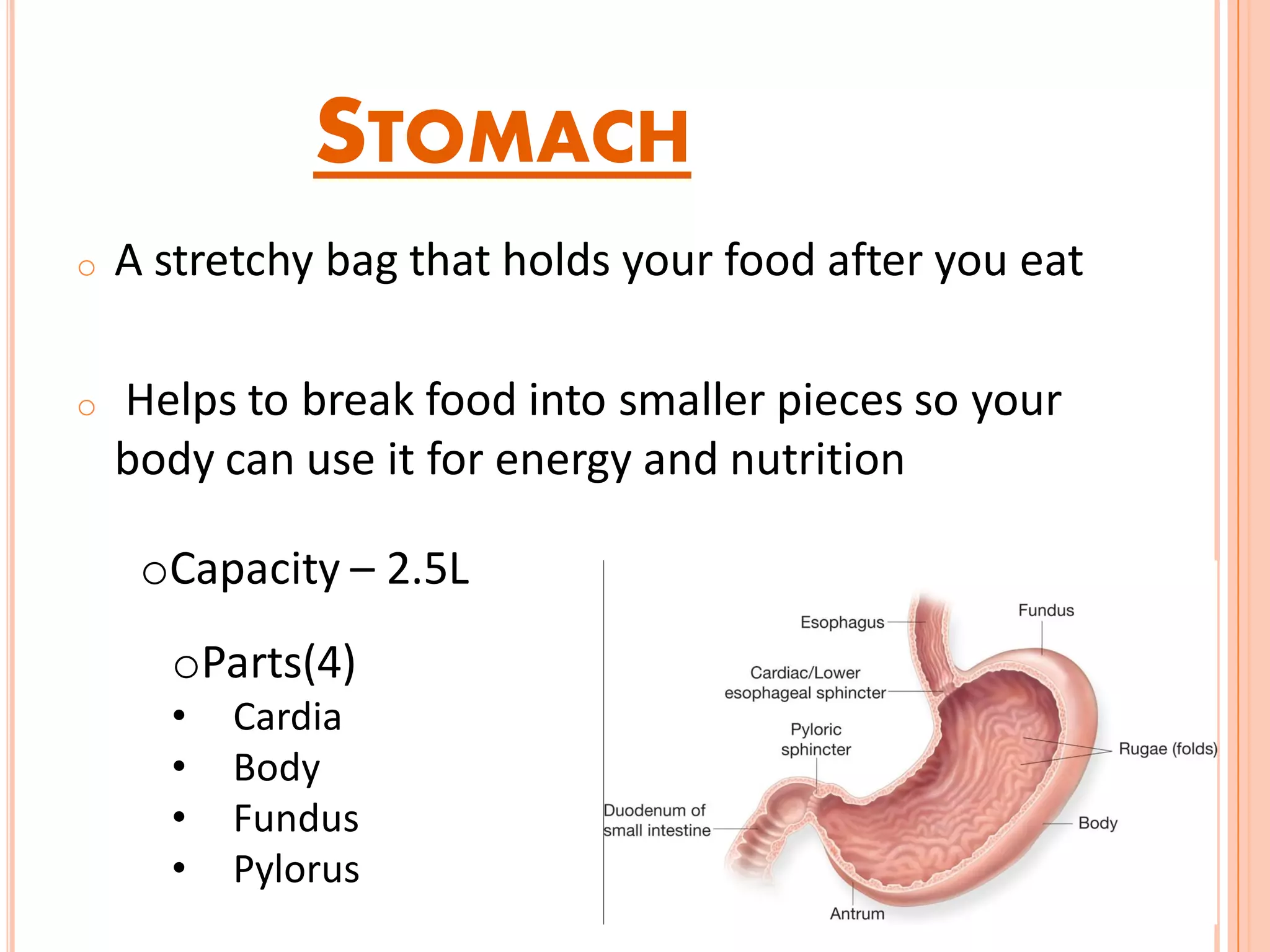
STOMACH
o A stretchy bag that holds your food after you eat
o Helps to break food into smaller pieces so your
body can use it for energy and nutrition
oCapacity – 2.5L
oParts(4)
• Cardia
• Body
• Fundus
• Pylorus
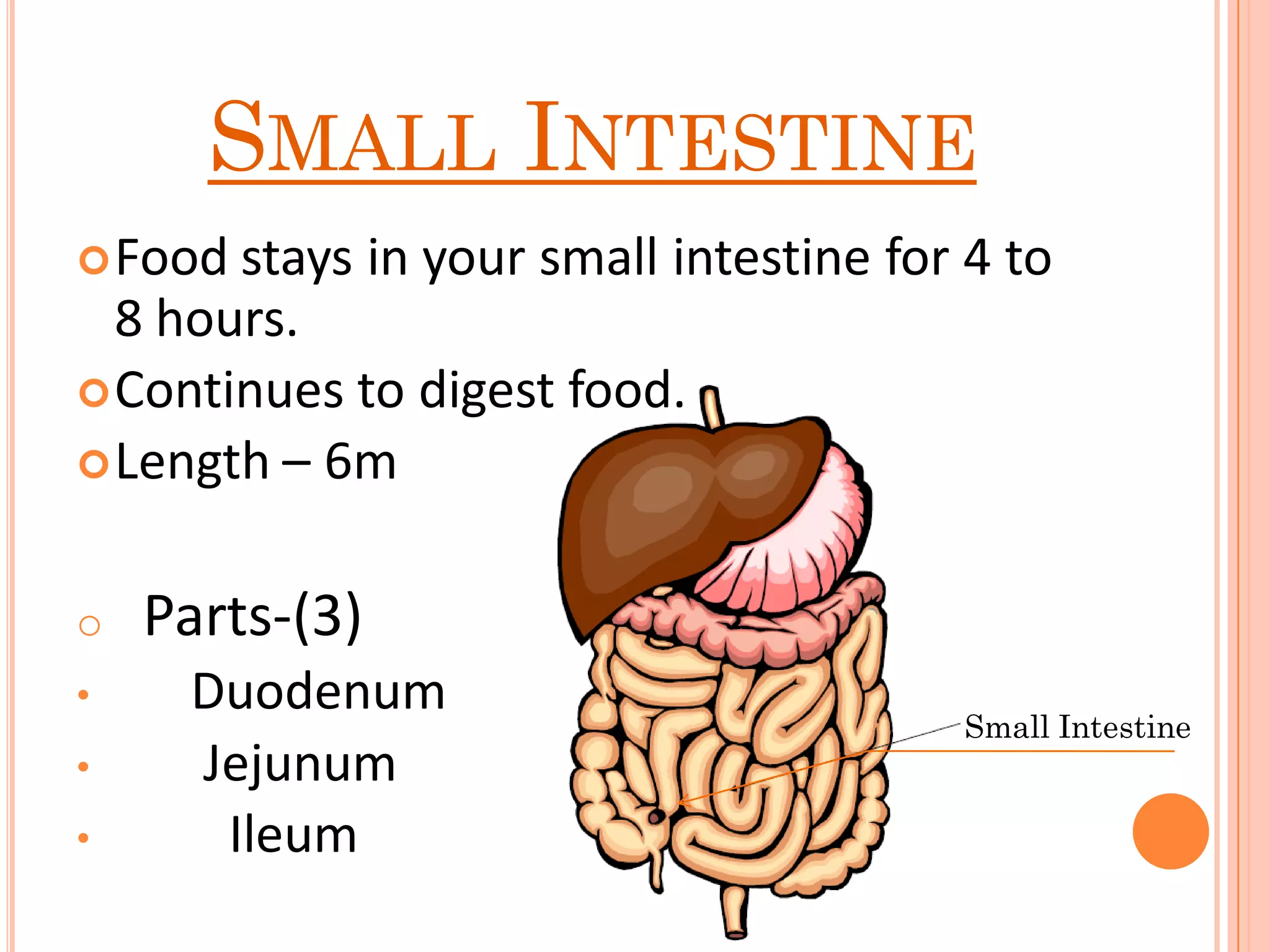
SMALL INTESTINE
Food stays in your small intestine for 4 to
8 hours.
Continues to digest food.
Length – 6m
o Parts-(3)
• Duodenum
• Jejunum
• Ileum
Small Intestine
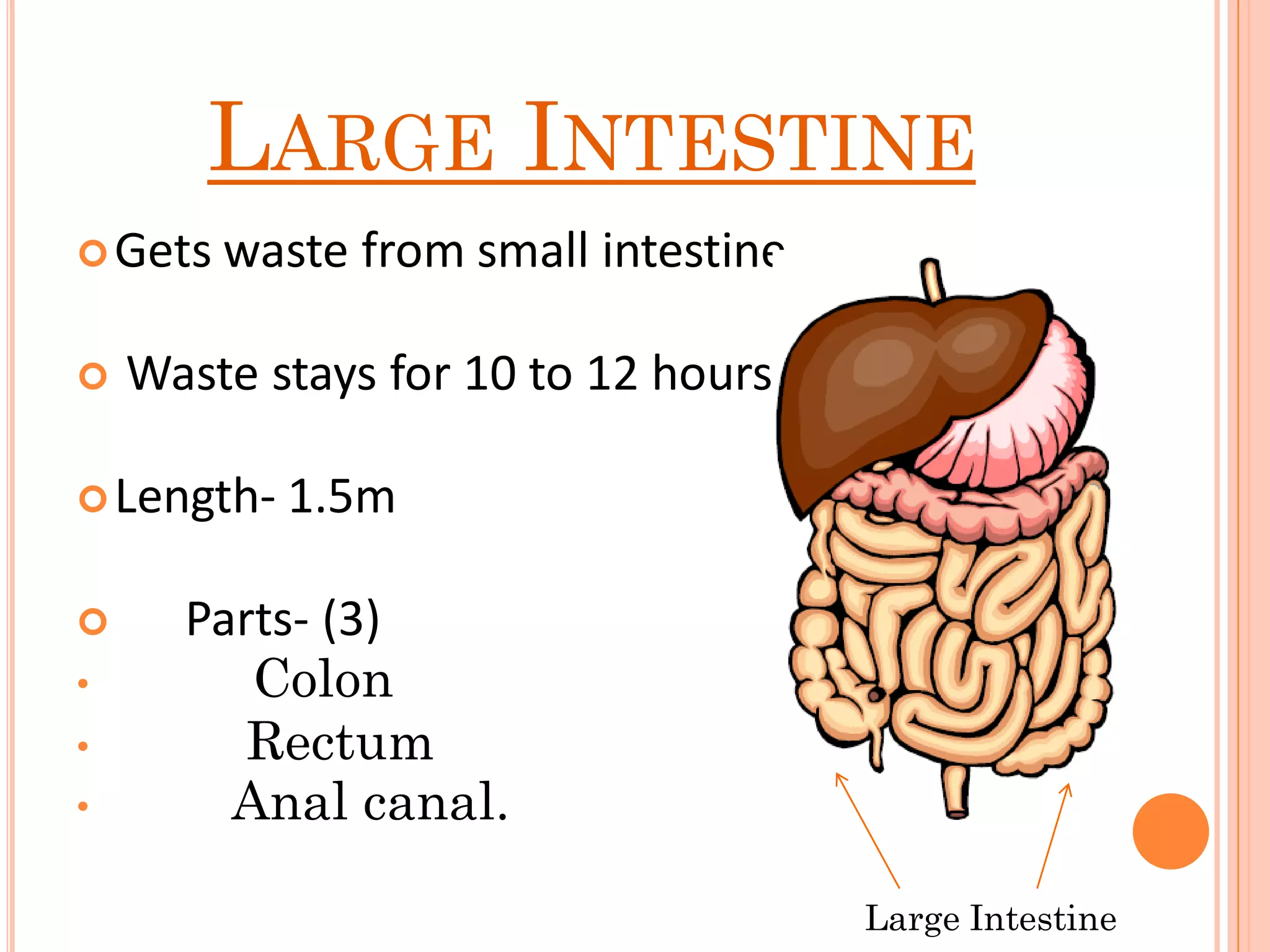
LARGE INTESTINE
Gets waste from small intestine
 Waste stays for 10 to 12 hours
Length- 1.5m
 Parts- (3)
• Colon
• Rectum
• Anal canal.
Large Intestine
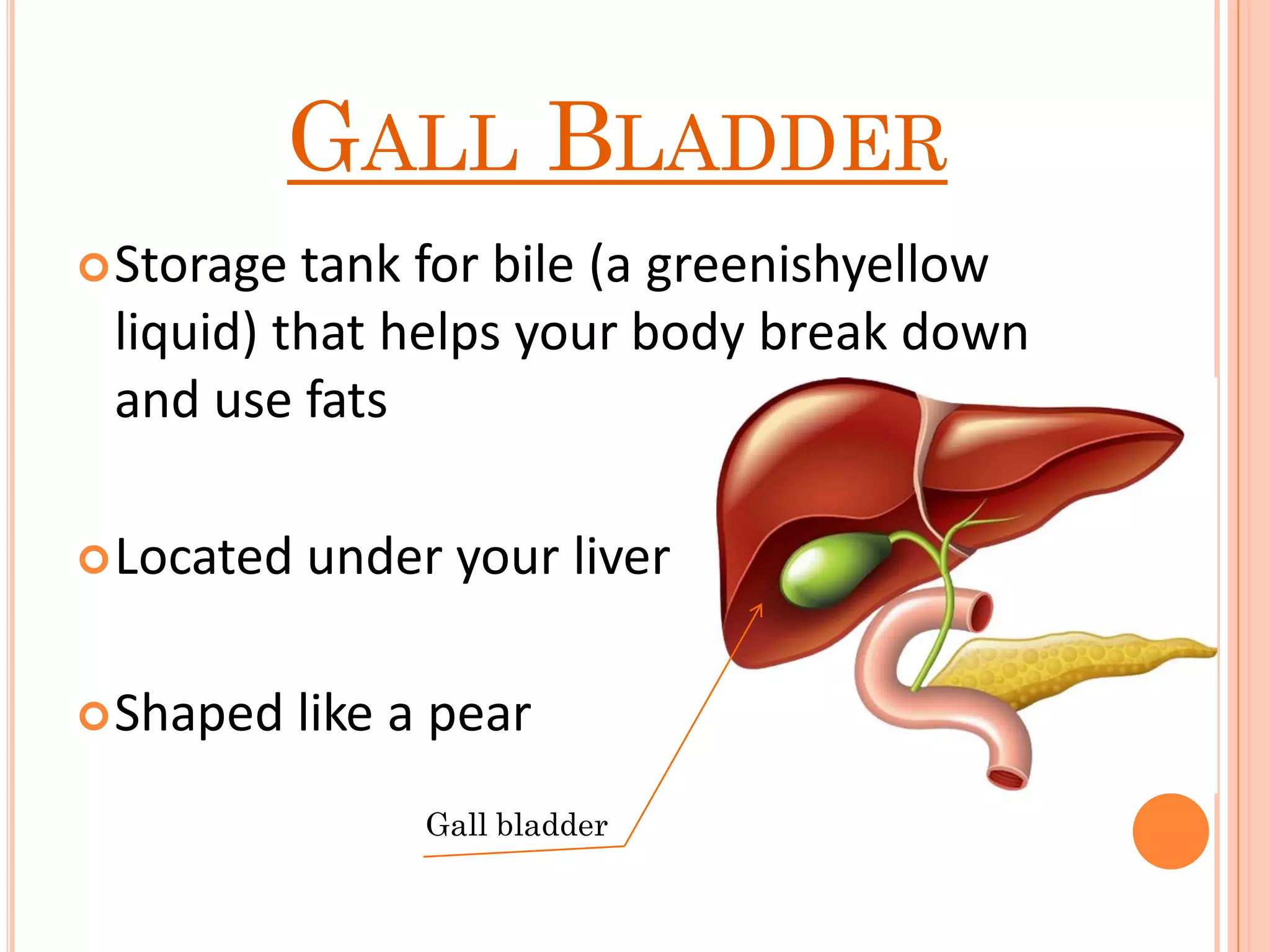
GALL BLADDER
Storage tank for bile (a greenishyellow
liquid) that helps your body break down
and use fats
Located under your liver
Shaped like a pear
Gall bladder
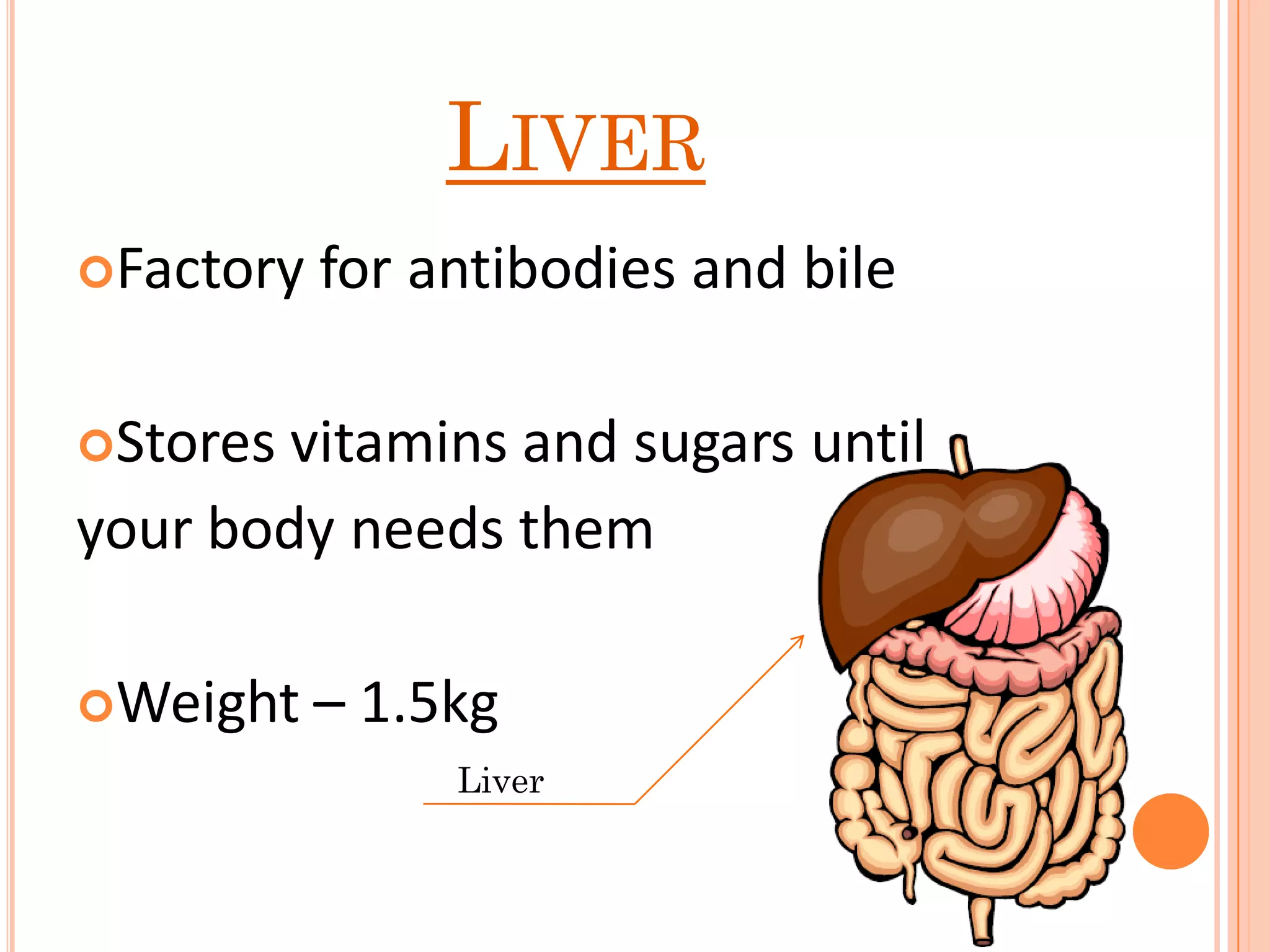
LIVER
Factory for antibodies and bile
Stores vitamins and sugars until
your body needs them
Weight – 1.5kg
Liver
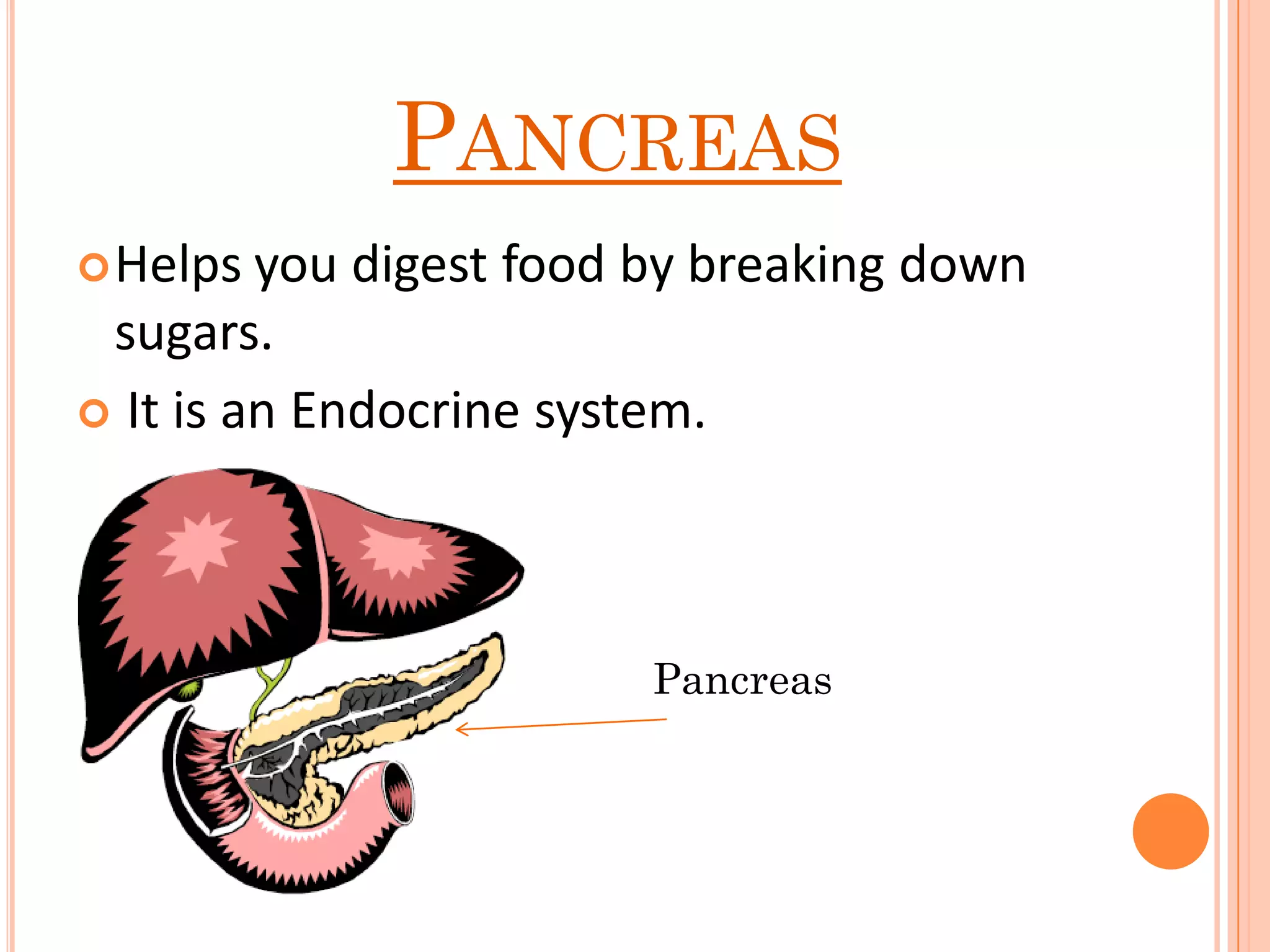
PANCREAS
Helps you digest food by breaking down
sugars.
 It is an Endocrine system.
Pancreas
FUNCTIONS
Digest the food we eat.
Take the nutrients out of your food so
your body can use it.
HEALTHY HABITS
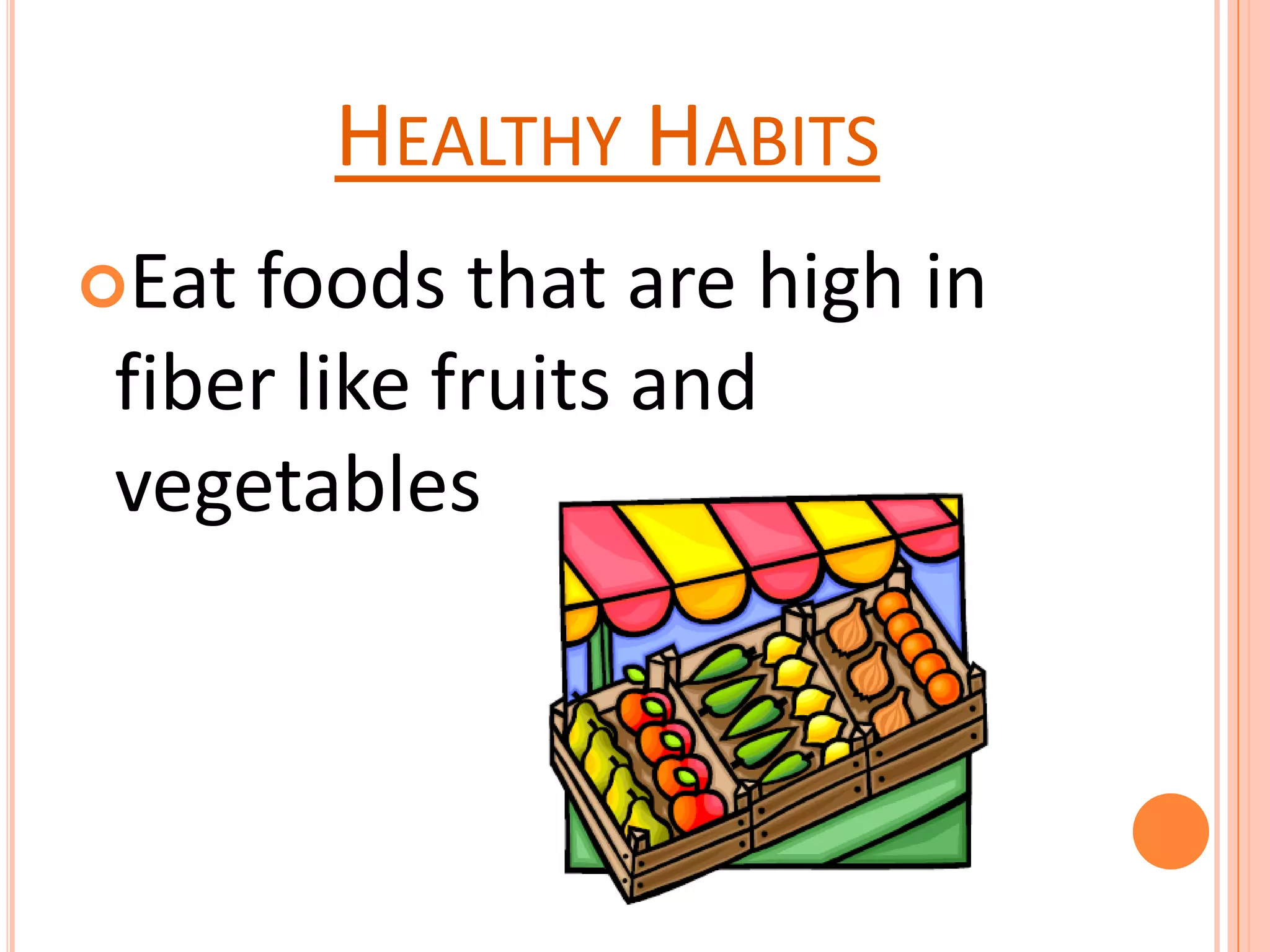
Eat foods that are high in
fiber like fruits and
vegetables
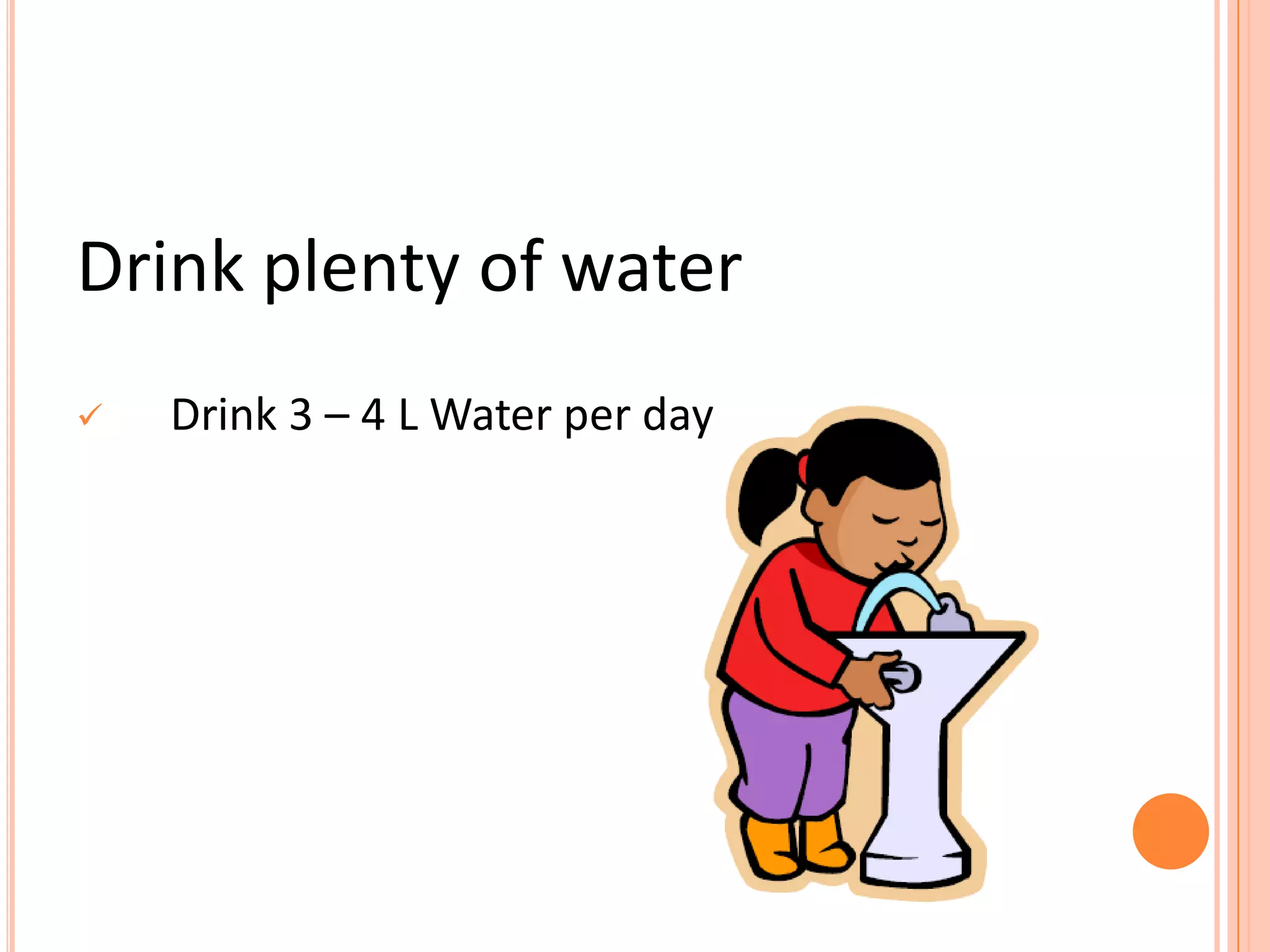
Drink plenty of water
 Drink 3 – 4 L Water per day
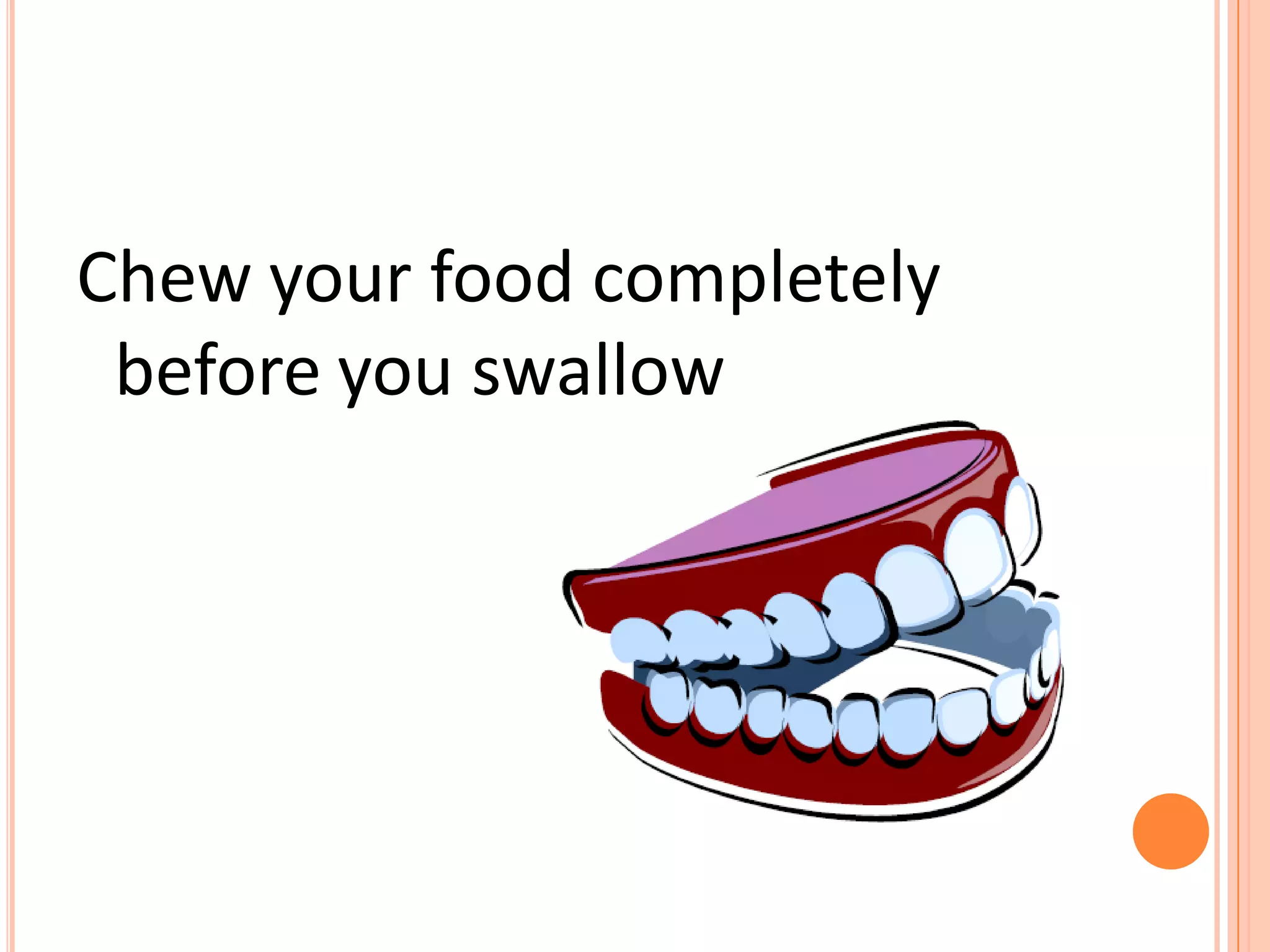
Chew your food completely
before you swallow
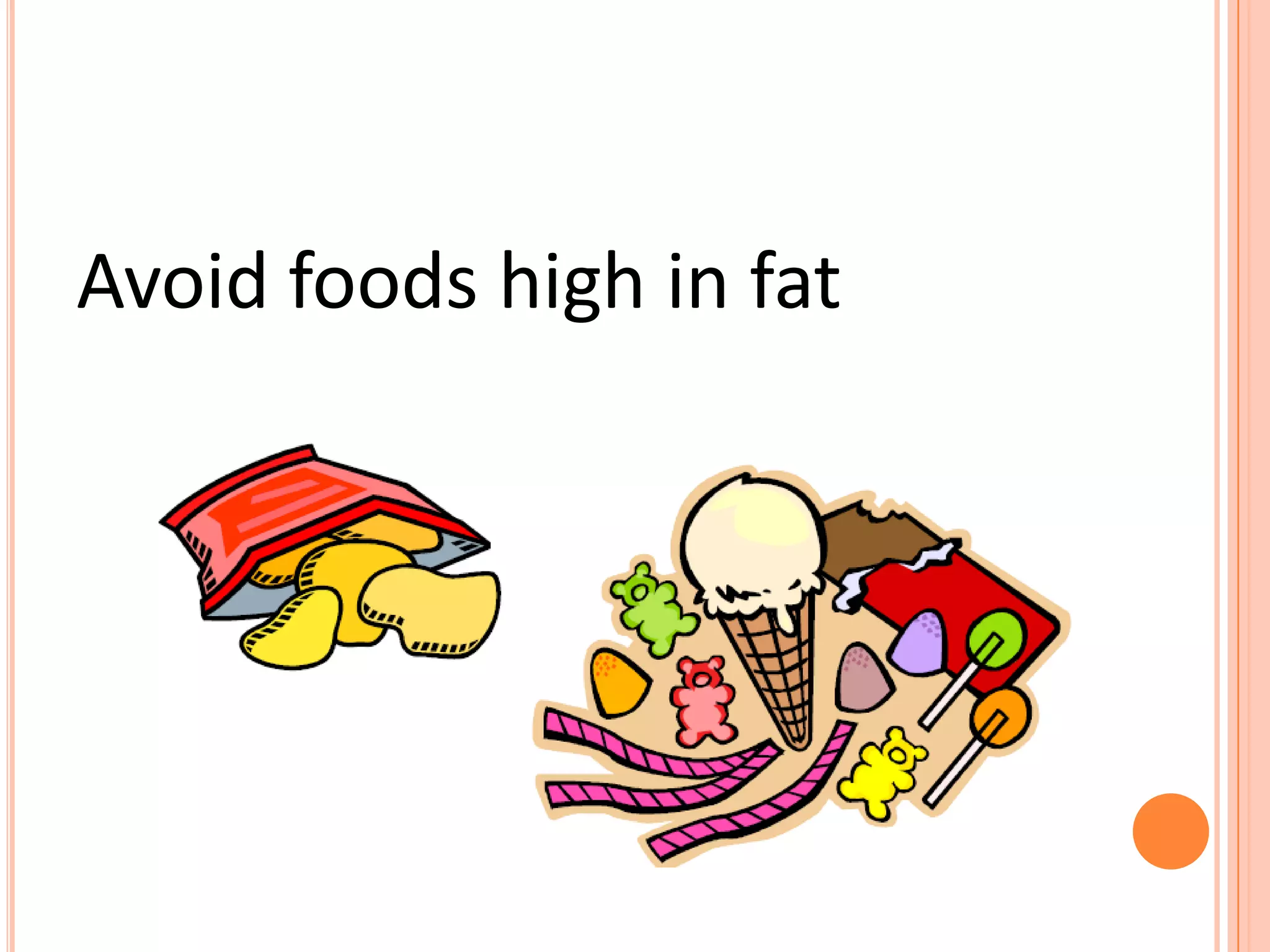
Avoid foods high in fat
INTERESTING
Food is in your digestive
system for about 24 hours
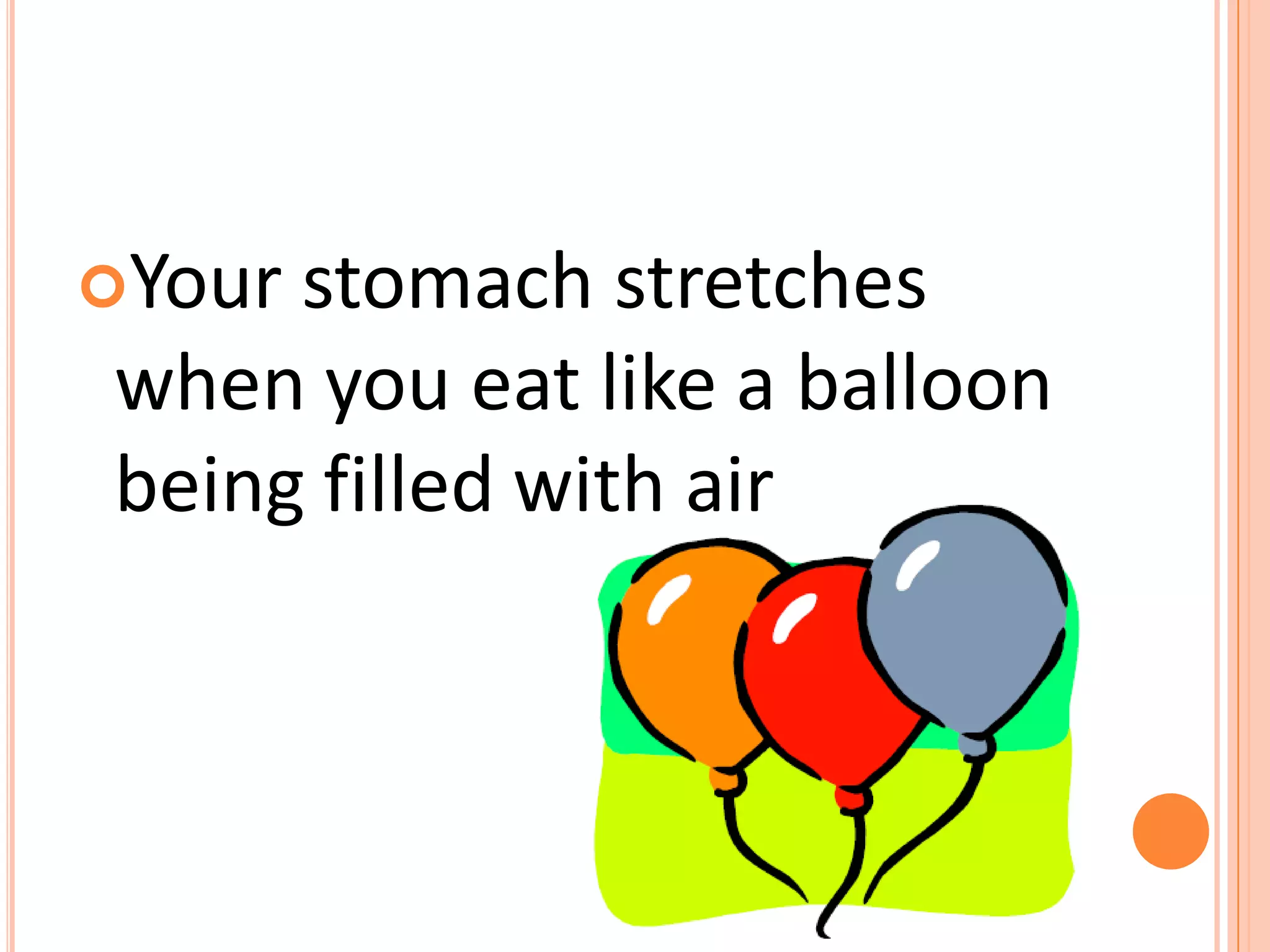
Your stomach stretches
when you eat like a balloon
being filled with air
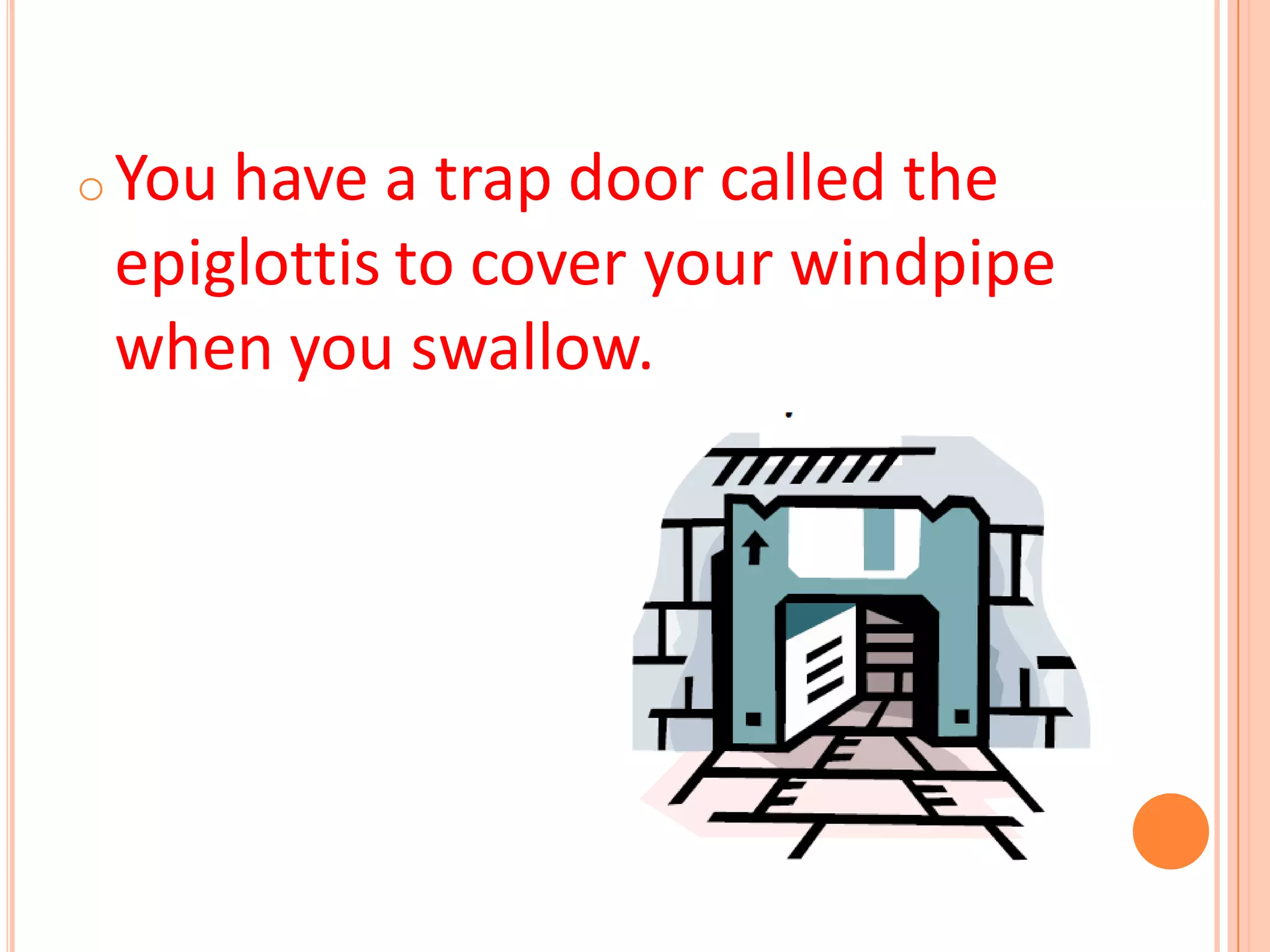
o You have a trap door called the
epiglottis to cover your windpipe
when you swallow.
digestive system .pdf

digestive system .pdf