Ferudun Kandemir
05.06.2014
Differentiating the generics in
emerging markets
1. How are generic products perceived in emerging
markets?
2. What are the key points in order to create a good
product strategy?
3. What is customer oriented contextual segmentation?
4. How do you examine current dynamics to create
preferable generics in emerging markets?
Key Points
How are the generic products perceived
in emerging markets?
• Prices of generics are low when compared with originals
• Equivalent to the original or same as the original
• Adequately exists
• Matured products
• Out products
• Products that original branding is not possible
• Products that marketing is not easy
• Having important competitors
• Products that brings the comment of «me too»
• …
Some pointed out in activities
•Campaigns,
•Arrangements in trade conditions,
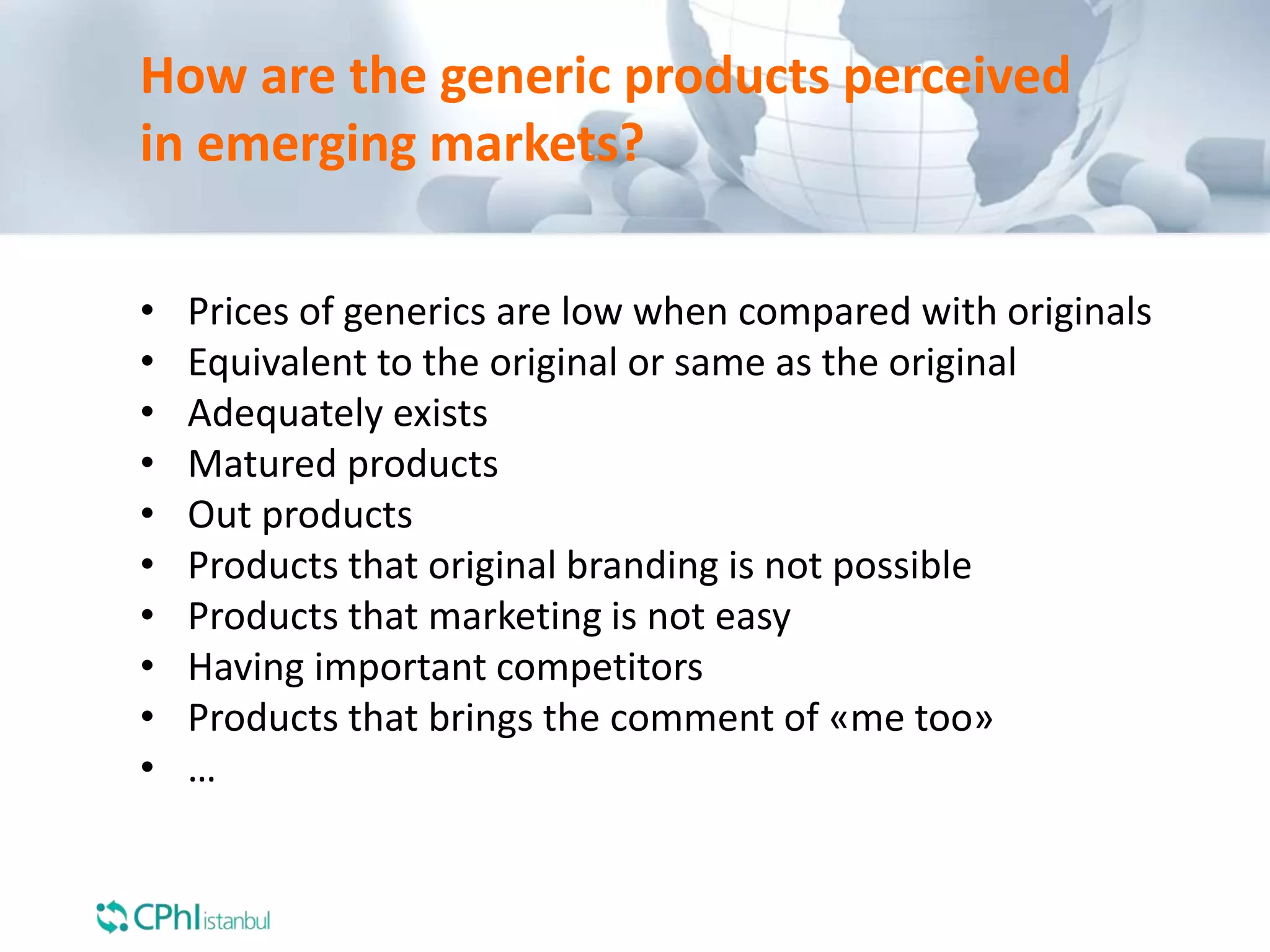
•Frequent doctor and pharmacy visits with
unnecessary sales staff
•Control instead of performance management
•Materialistic approaches,
•Pressures on prescription or sales,
…
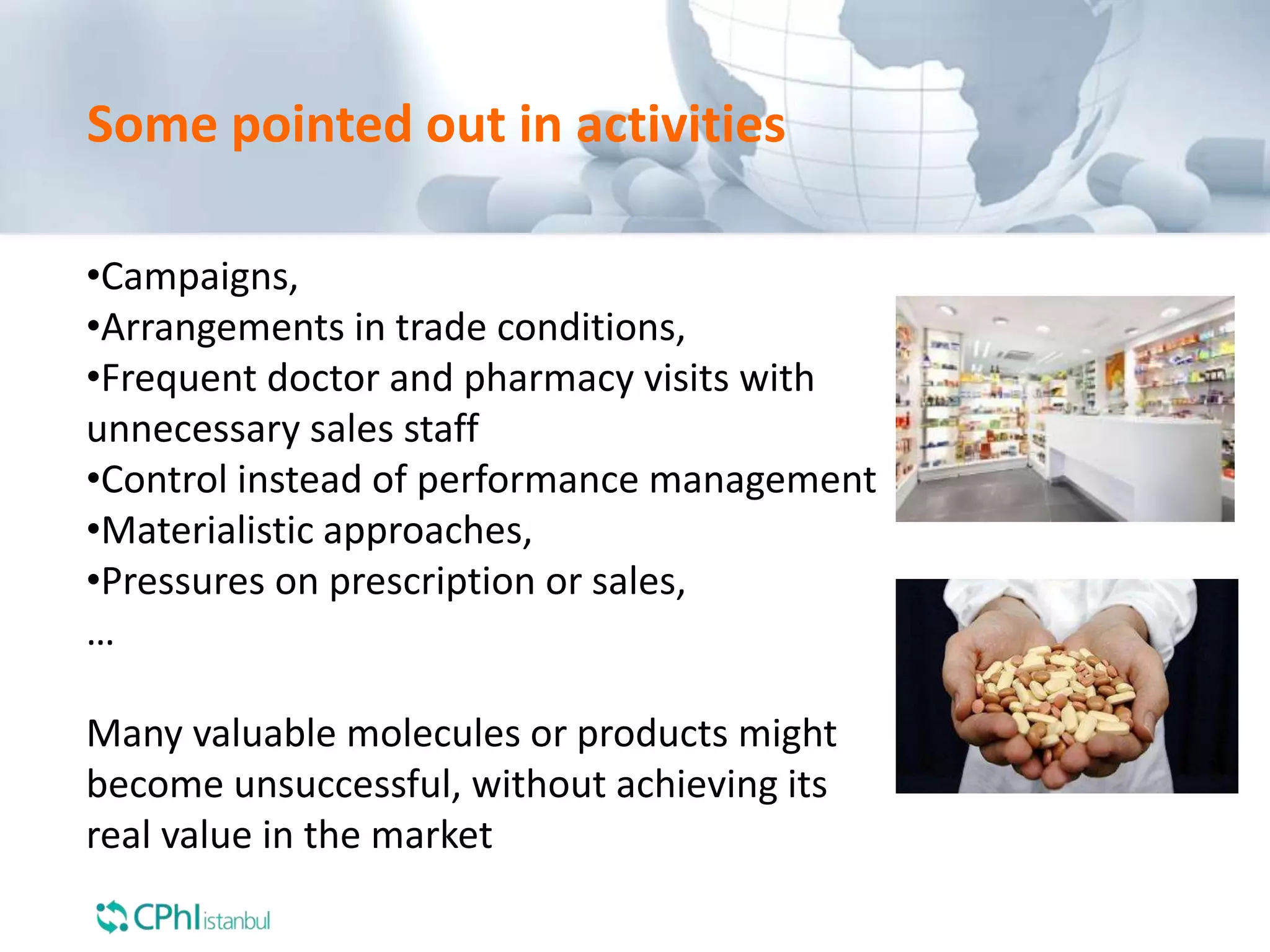
Many valuable molecules or products might
become unsuccessful, without achieving its
real value in the market
How we can be proactive and
foresee the challenges, and
enable solutions before
entering into this vicious cycle?
What are the key points in
order to create a successful
generics strategy?
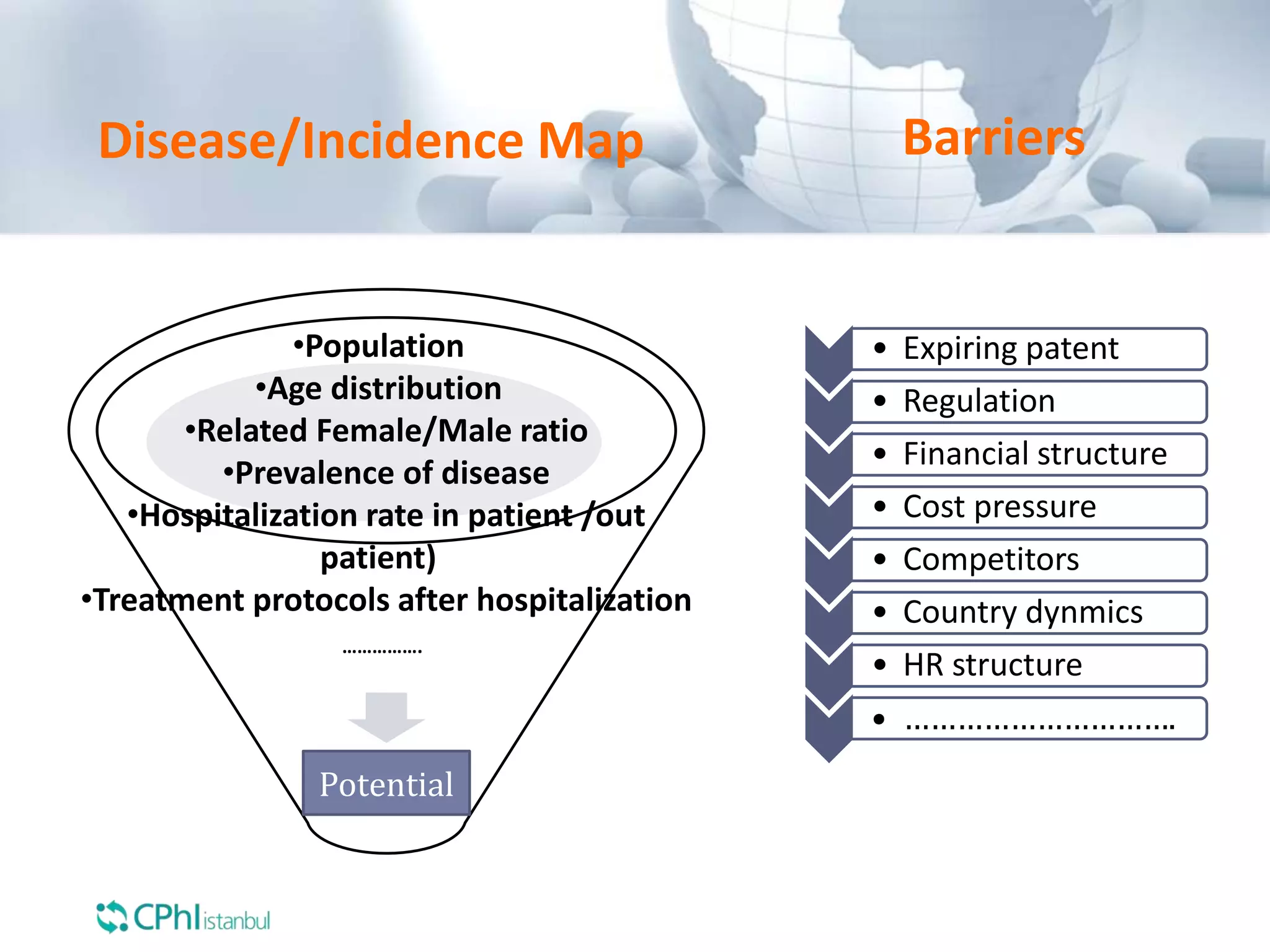
•Population
•Age distribution
•Related Female/Male ratio
•Prevalence of disease
•Hospitalization rate in patient /out
patient)
•Treatment protocols after hospitalization
…………….
Disease/Incidence Map
• Expiring patent
• Regulation
• Financial structure
• Cost pressure
• Competitors
• Country dynmics
• HR structure
• ………………………….
Barriers
Potential
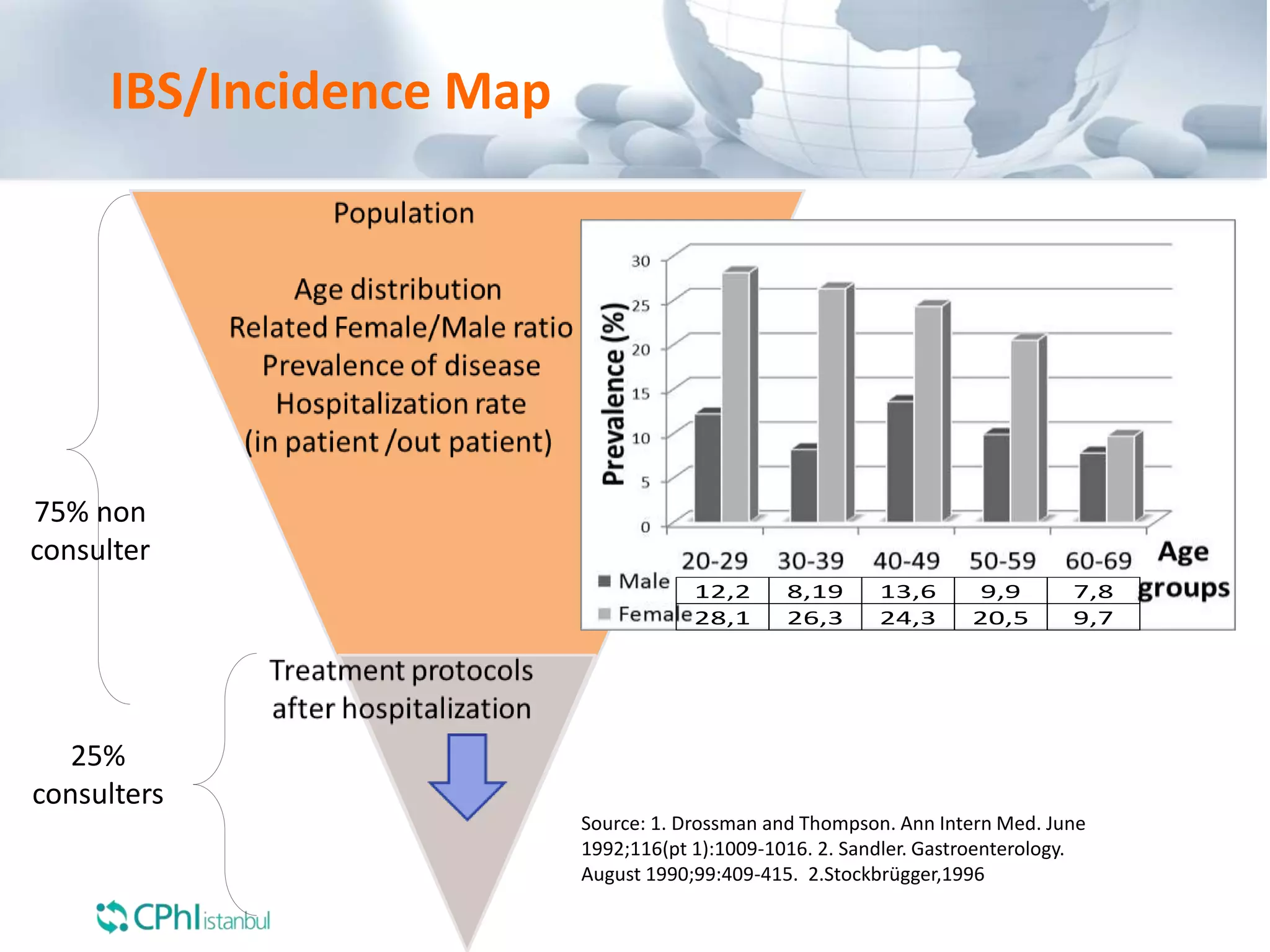
IBS/Incidence Map
12,2 8,19 13,6 9,9 7,8
28,1 26,3 24,3 20,5 9,7
75% non
consulter
25%
consulters
Source: 1. Drossman and Thompson. Ann Intern Med. June
1992;116(pt 1):1009-1016. 2. Sandler. Gastroenterology.
August 1990;99:409-415. 2.Stockbrügger,1996
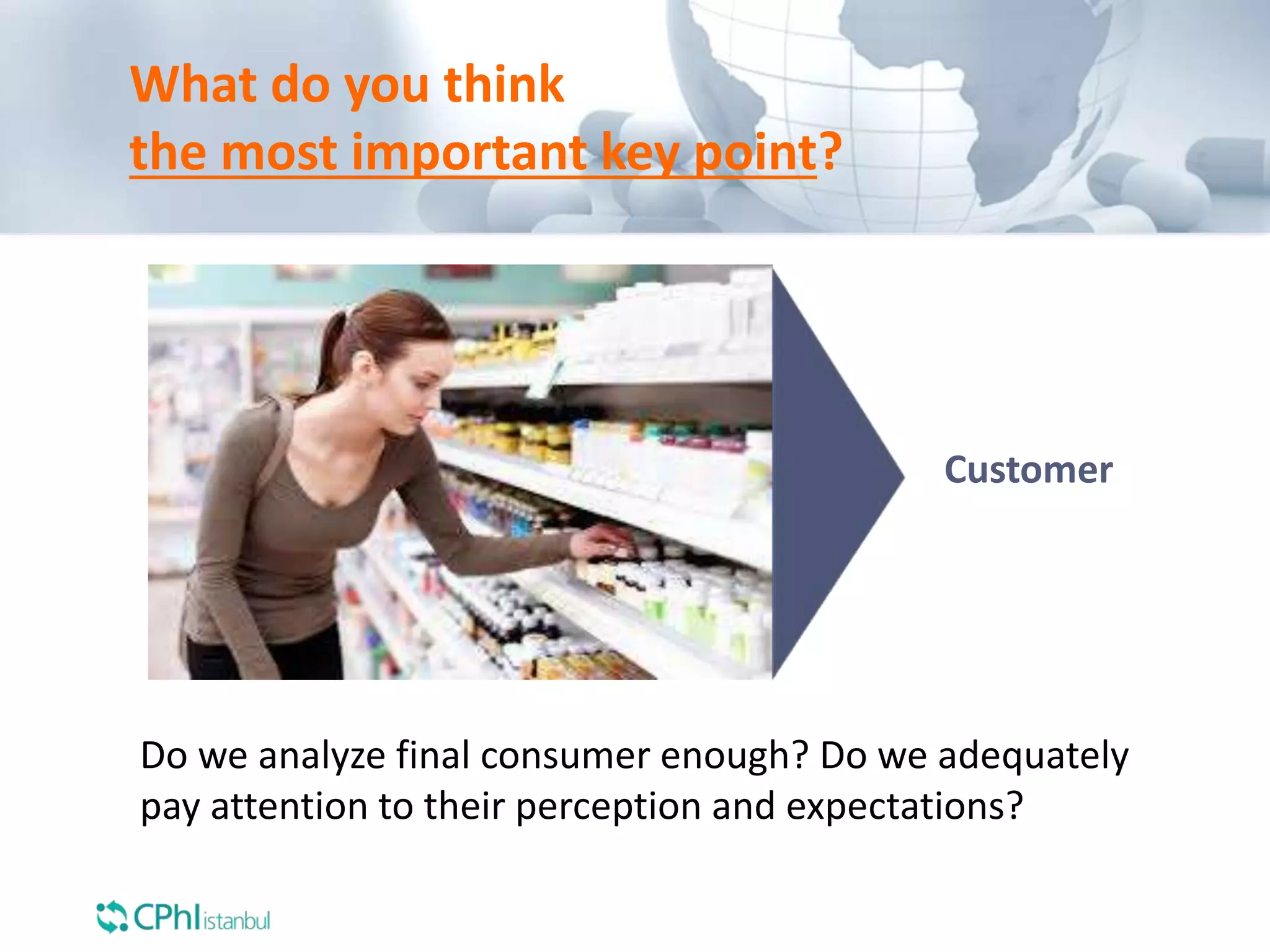
What do you think
the most important key point?
Customer
Do we analyze final consumer enough? Do we adequately
pay attention to their perception and expectations?
Product
Place
Price
Promotion
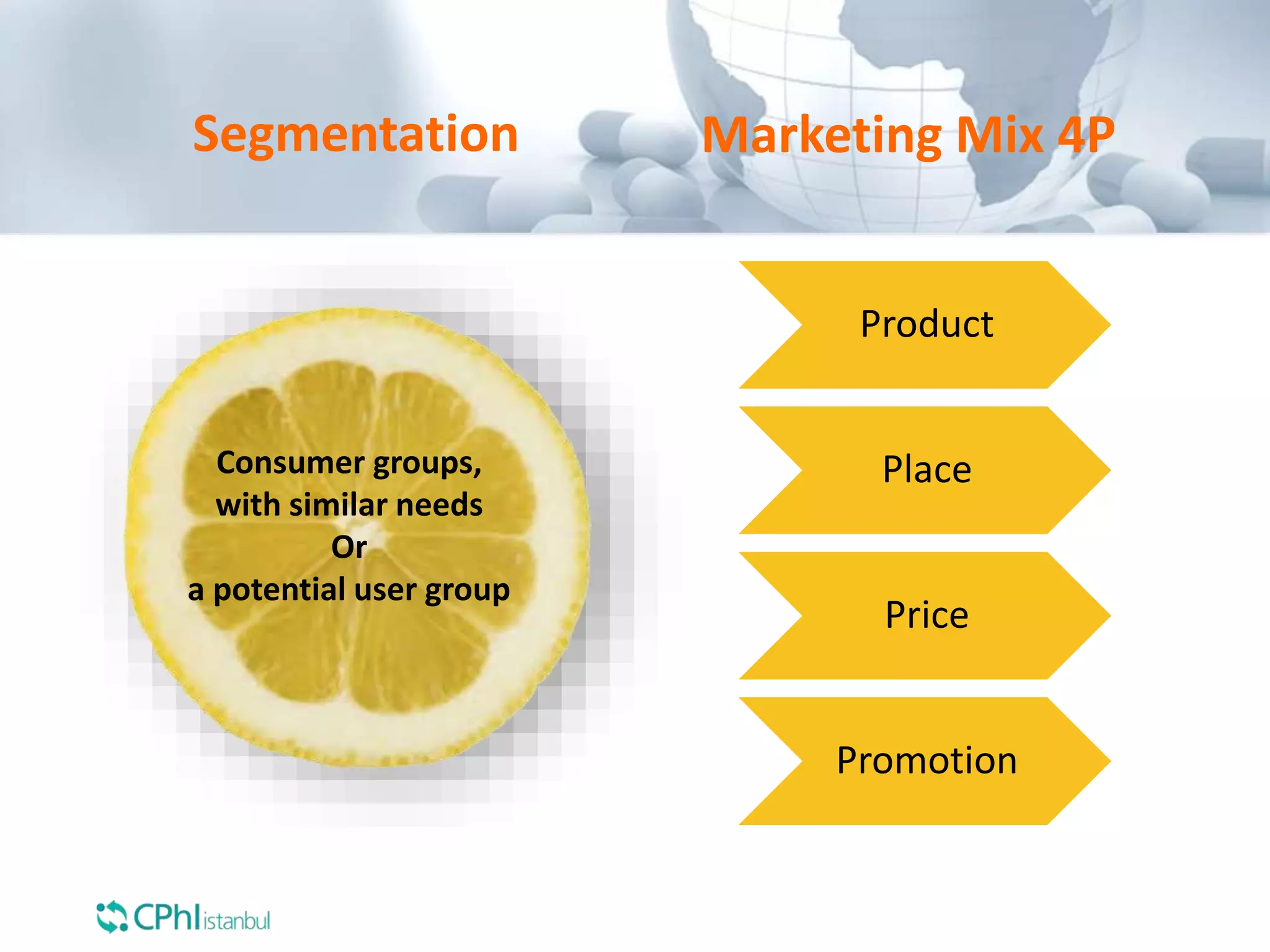
Marketing Mix 4PSegmentation
Consumer groups,
with similar needs
Or
a potential user group
Is it possible with the given conditions to understand end
user’s perception and expectation closer while using those
methods?
How can we get closer to the patient?
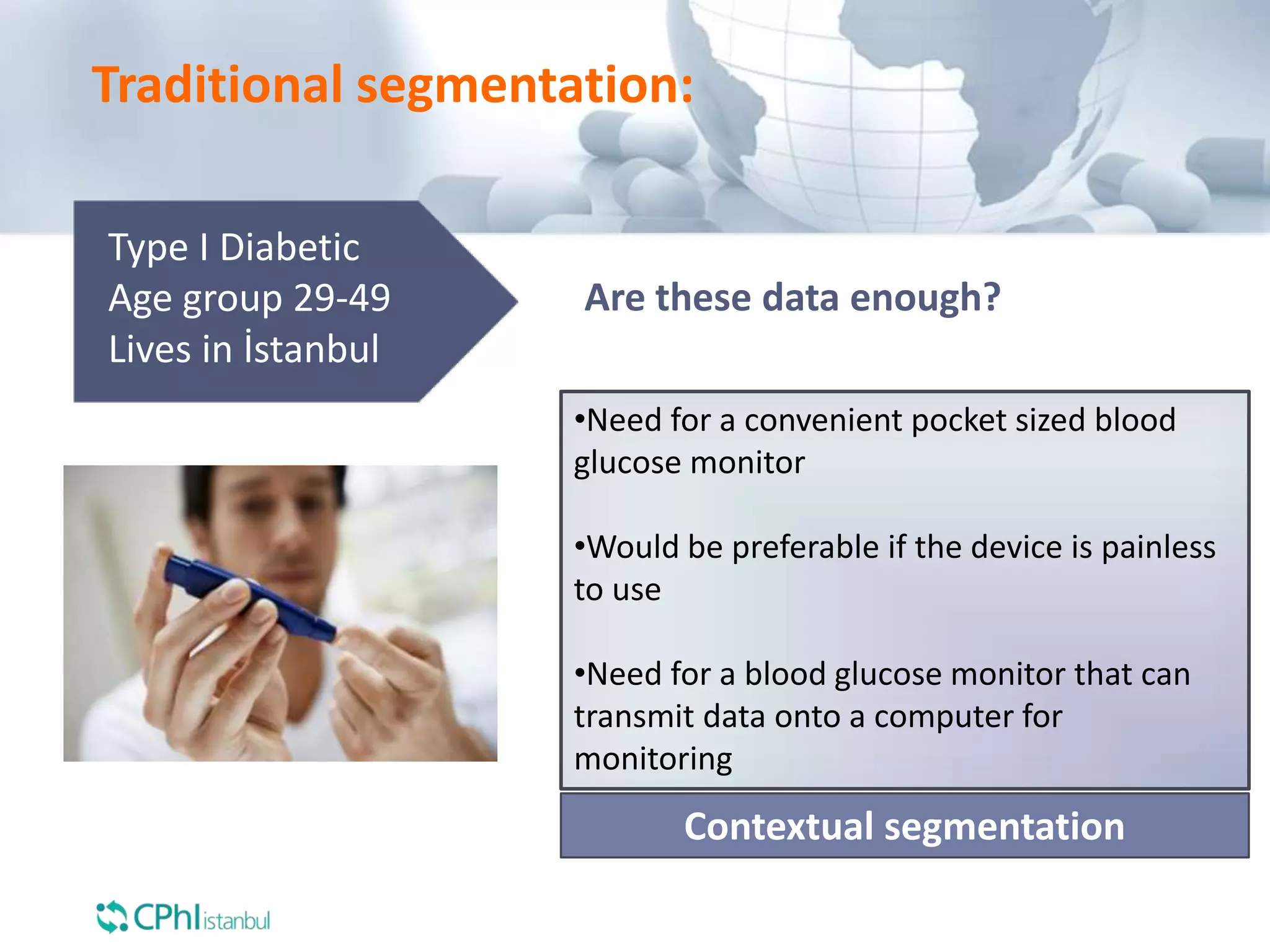
Type I Diabetic
Age group 29-49
Lives in İstanbul
Are these data enough?
•Need for a convenient pocket sized blood
glucose monitor
•Would be preferable if the device is painless
to use
•Need for a blood glucose monitor that can
transmit data onto a computer for
monitoring
Contextual segmentation
Traditional segmentation:
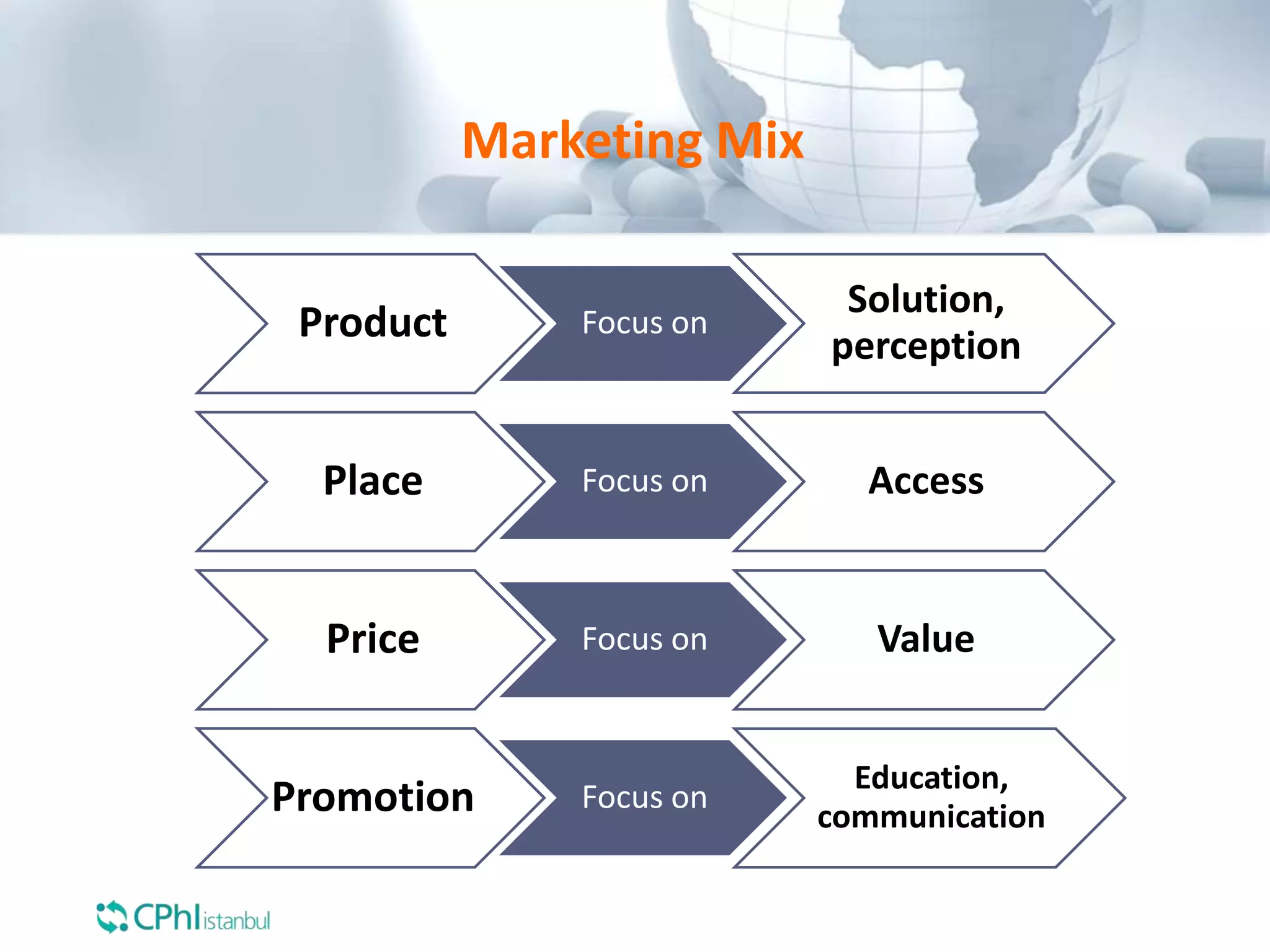
Product Focus on
Place Focus on
Price Focus on
Promotion Focus on
Marketing Mix
Solution,
perception
Access
Value
Education,
communication
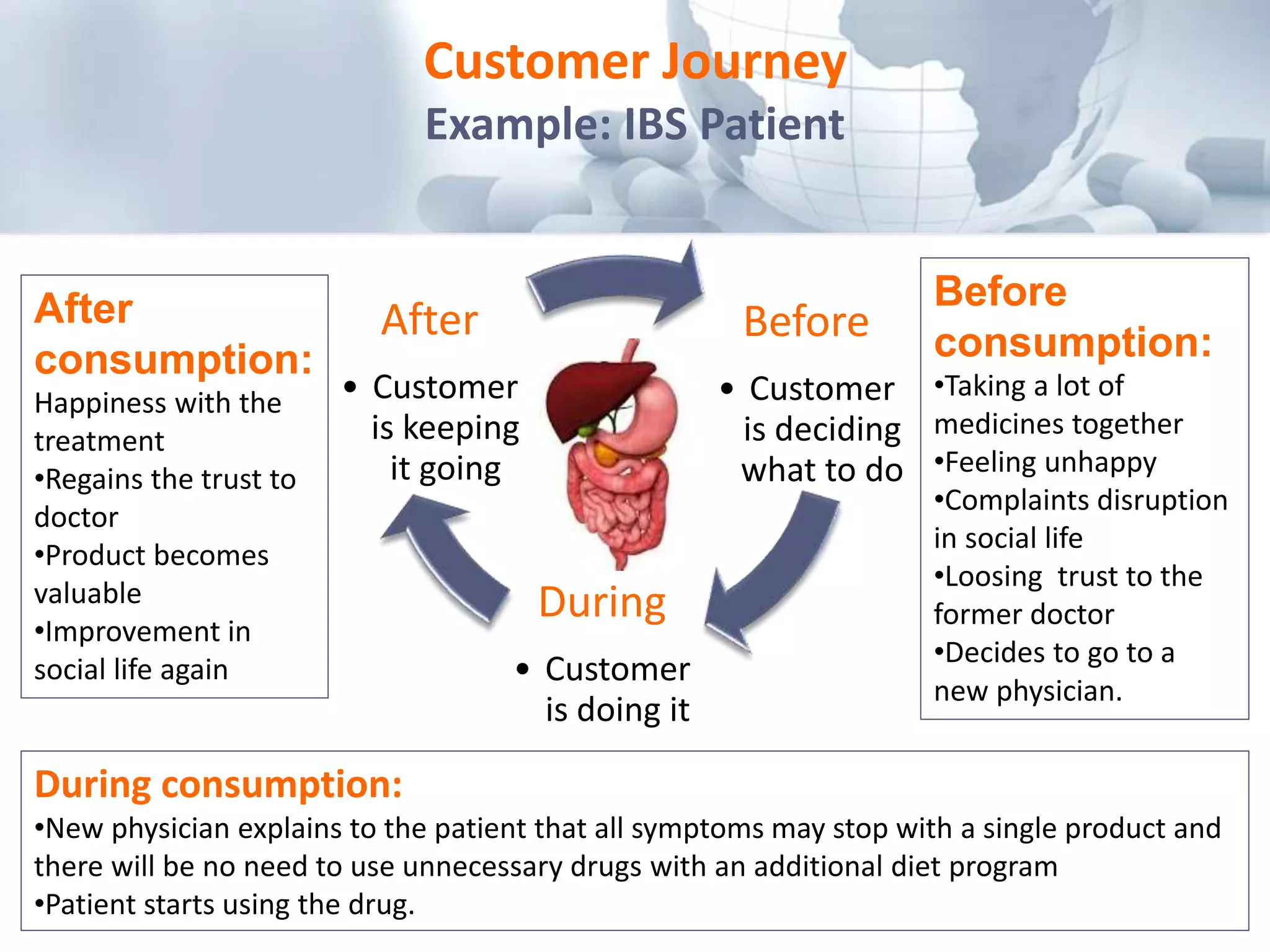
Before
• Customer
is deciding
what to do
During
• Customer
is doing it
After
• Customer
is keeping
it going
Before
consumption:
•Taking a lot of
medicines together
•Feeling unhappy
•Complaints disruption
in social life
•Loosing trust to the
former doctor
•Decides to go to a
new physician.
After
consumption:
Happiness with the
treatment
•Regains the trust to
doctor
•Product becomes
valuable
•Improvement in
social life again
During consumption:
•New physician explains to the patient that all symptoms may stop with a single product and
there will be no need to use unnecessary drugs with an additional diet program
•Patient starts using the drug.
Customer Journey
Example: IBS Patient
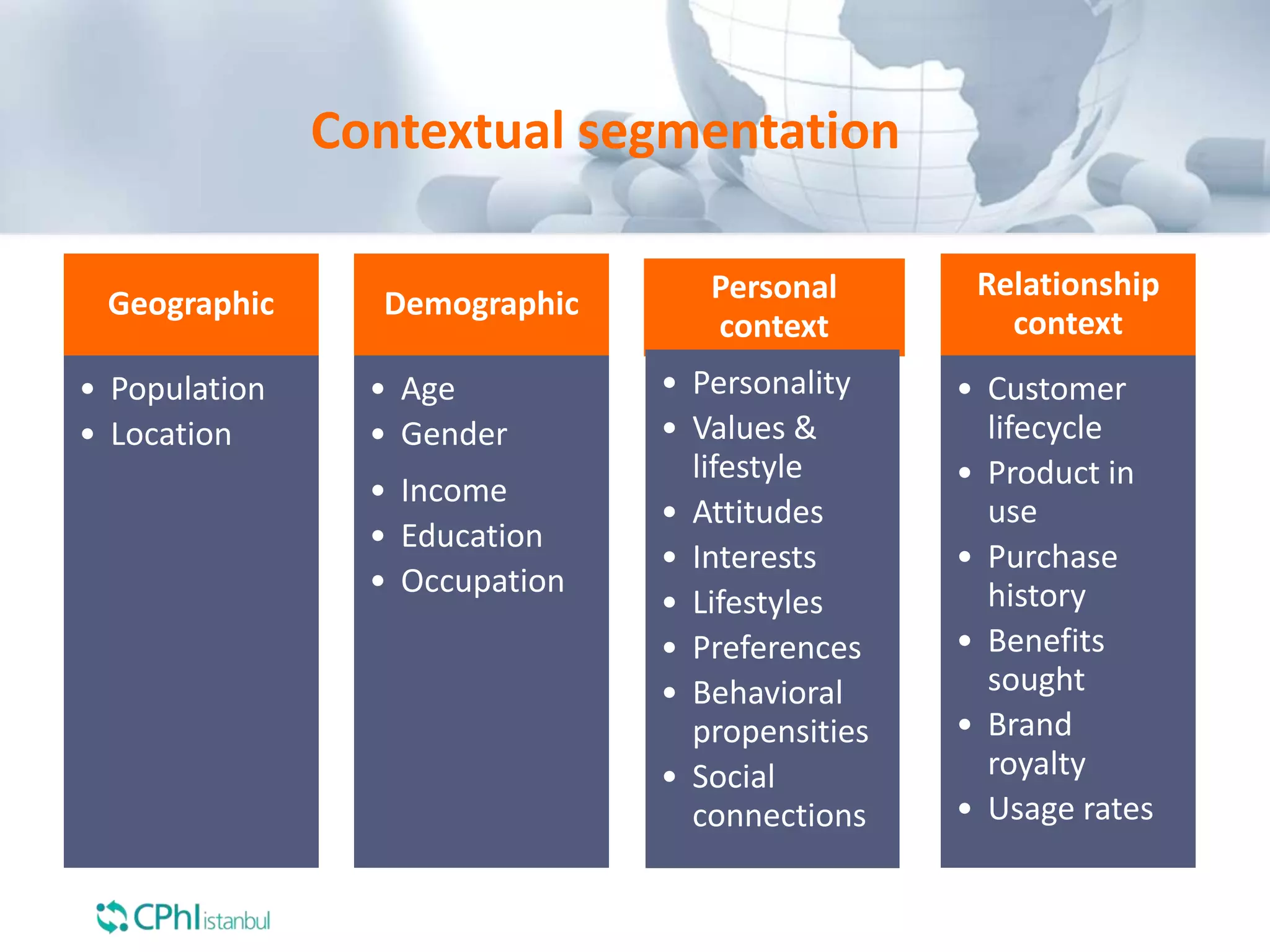
Contextual segmentation
Geographic
• Population
• Location
Demographic
• Age
• Gender
• Income
• Education
• Occupation
Personal
context
• Personality
• Values &
lifestyle
• Attitudes
• Interests
• Lifestyles
• Preferences
• Behavioral
propensities
• Social
connections
Relationship
context
• Customer
lifecycle
• Product in
use
• Purchase
history
• Benefits
sought
• Brand
royalty
• Usage rates
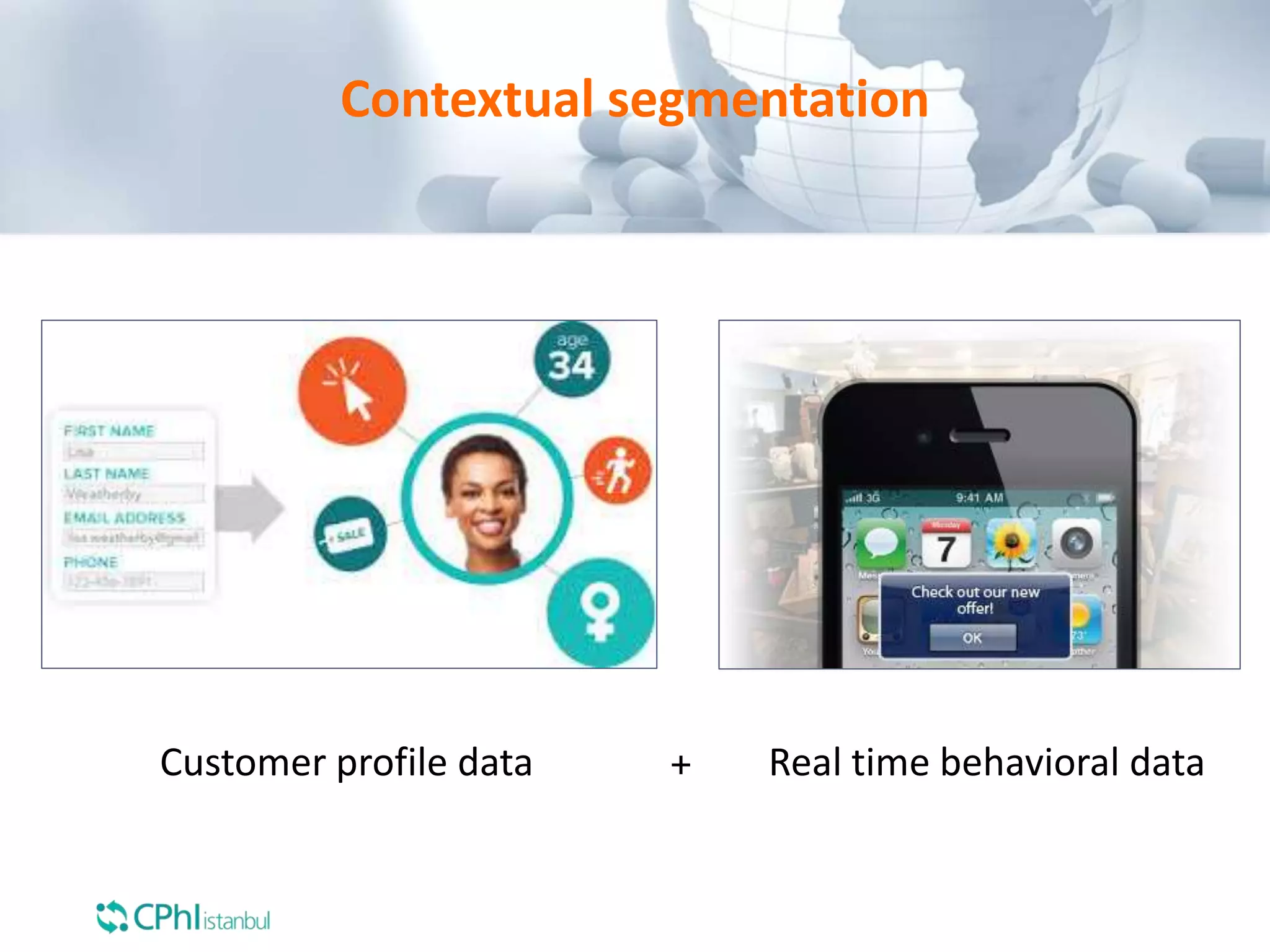
Contextual segmentation
Customer profile data Real time behavioral data+
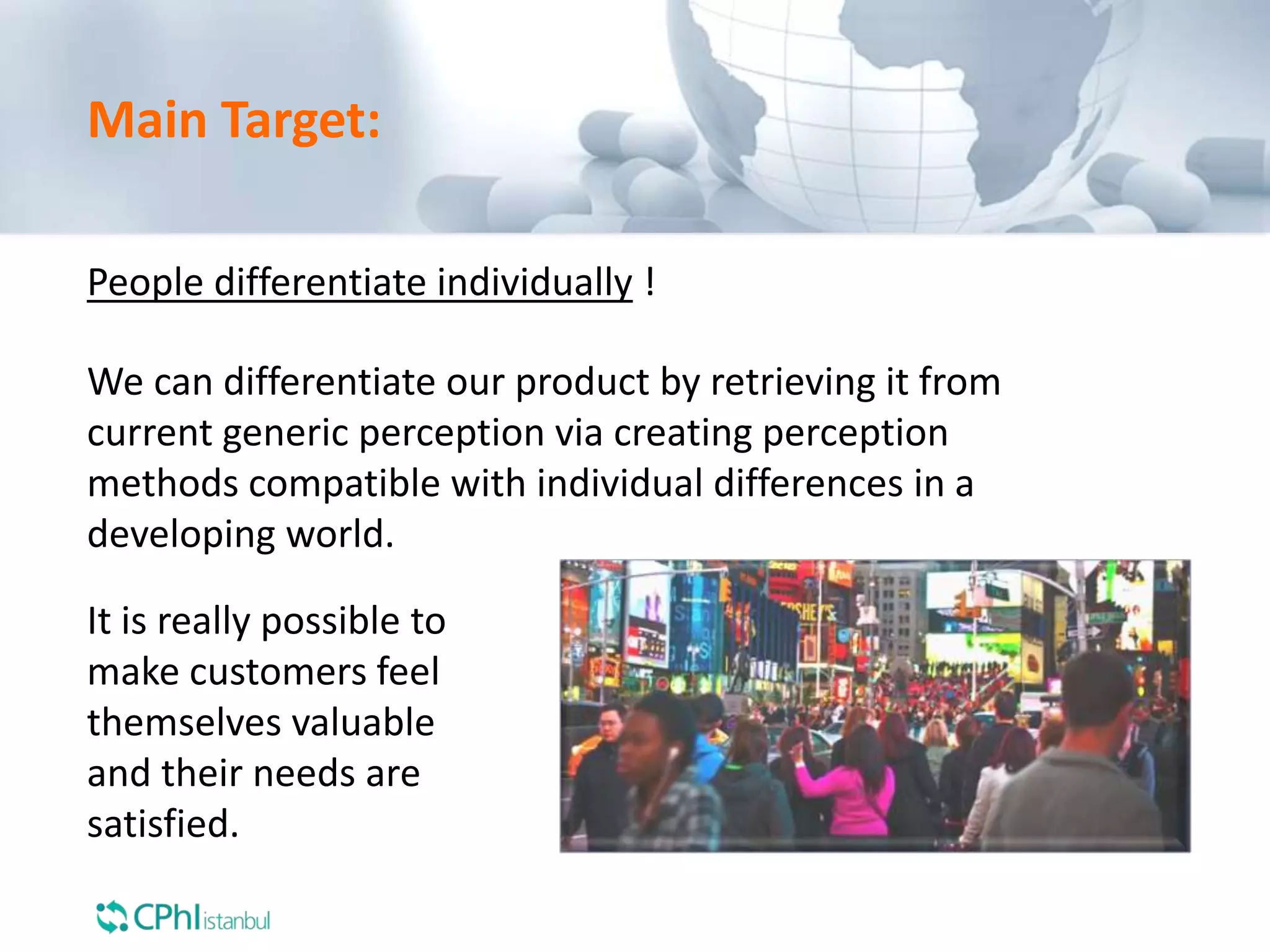
It is really possible to
make customers feel
themselves valuable
and their needs are
satisfied.
Main Target:
People differentiate individually !
We can differentiate our product by retrieving it from
current generic perception via creating perception
methods compatible with individual differences in a
developing world.
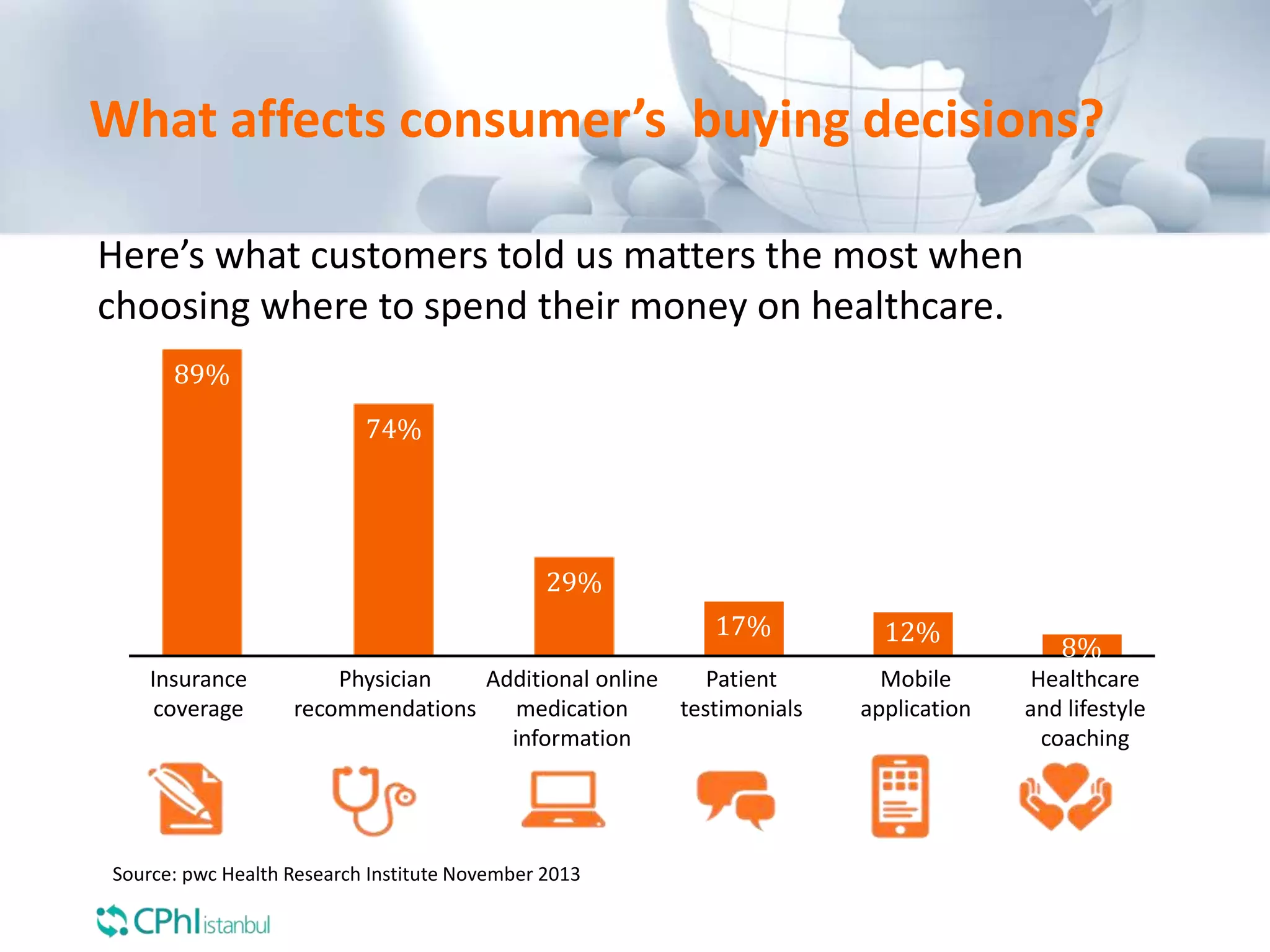
Here’s what customers told us matters the most when
choosing where to spend their money on healthcare.
What affects consumer’s buying decisions?
89%
74%
29%
17% 12%
8%
Insurance
coverage
Physician
recommendations
Additional online
medication
information
Patient
testimonials
Mobile
application
Healthcare
and lifestyle
coaching
Source: pwc Health Research Institute November 2013
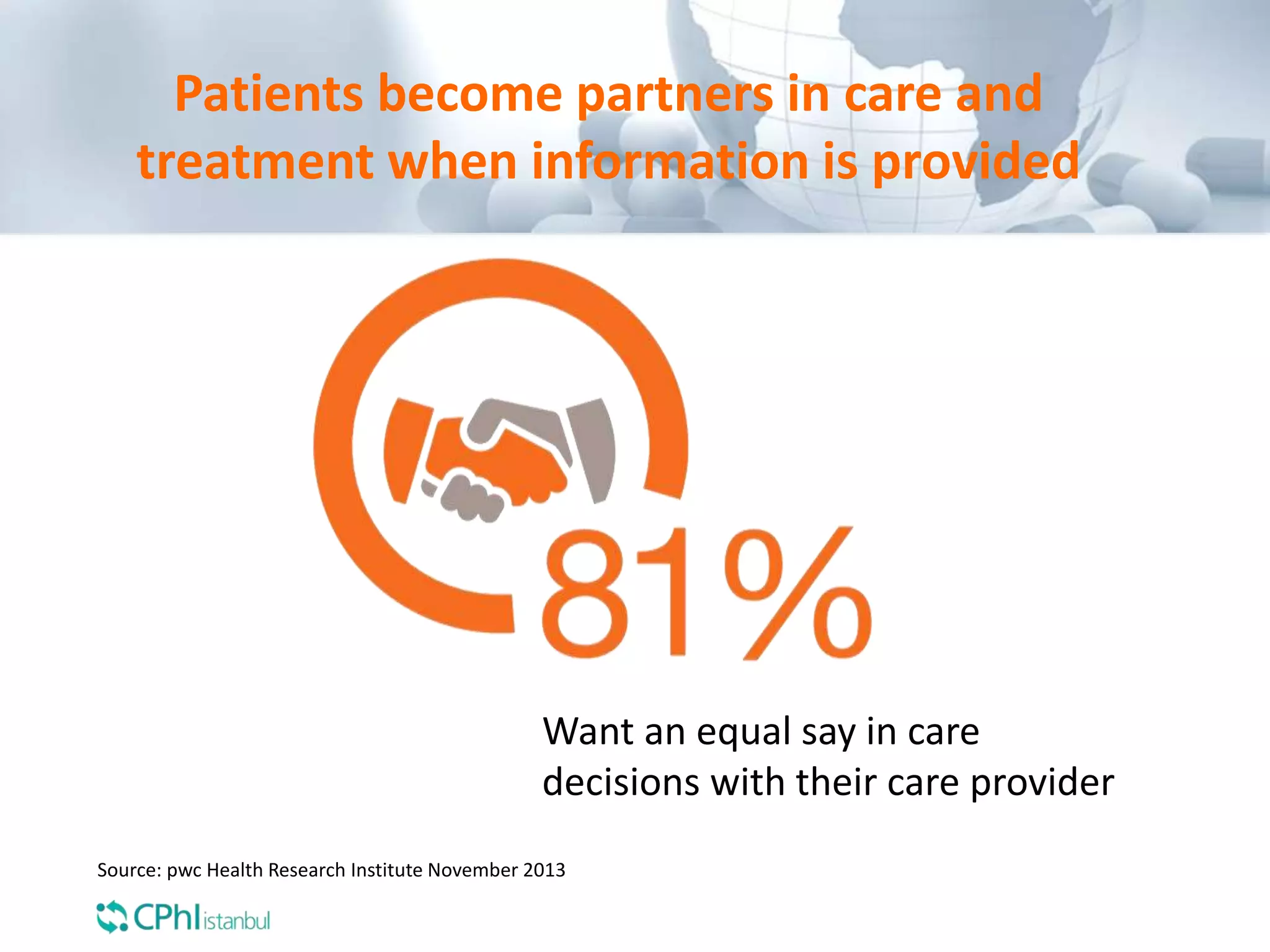
Patients become partners in care and
treatment when information is provided
Want an equal say in care
decisions with their care provider
Why do customers buy pregnancy test kit?
If someone is pregnant or not by using a simple pregnancy test kit.
She may buy that kit, apply it and easily see whether she is pregnant or not
with a positive or negative test result derived from
Is that so?
Why do customers buy pregnancy test kit?
“Test kits used in a medical center or used because it is medically prescribed”
“Test kits used at home, directly bought without a physician approval or
recommendation”.
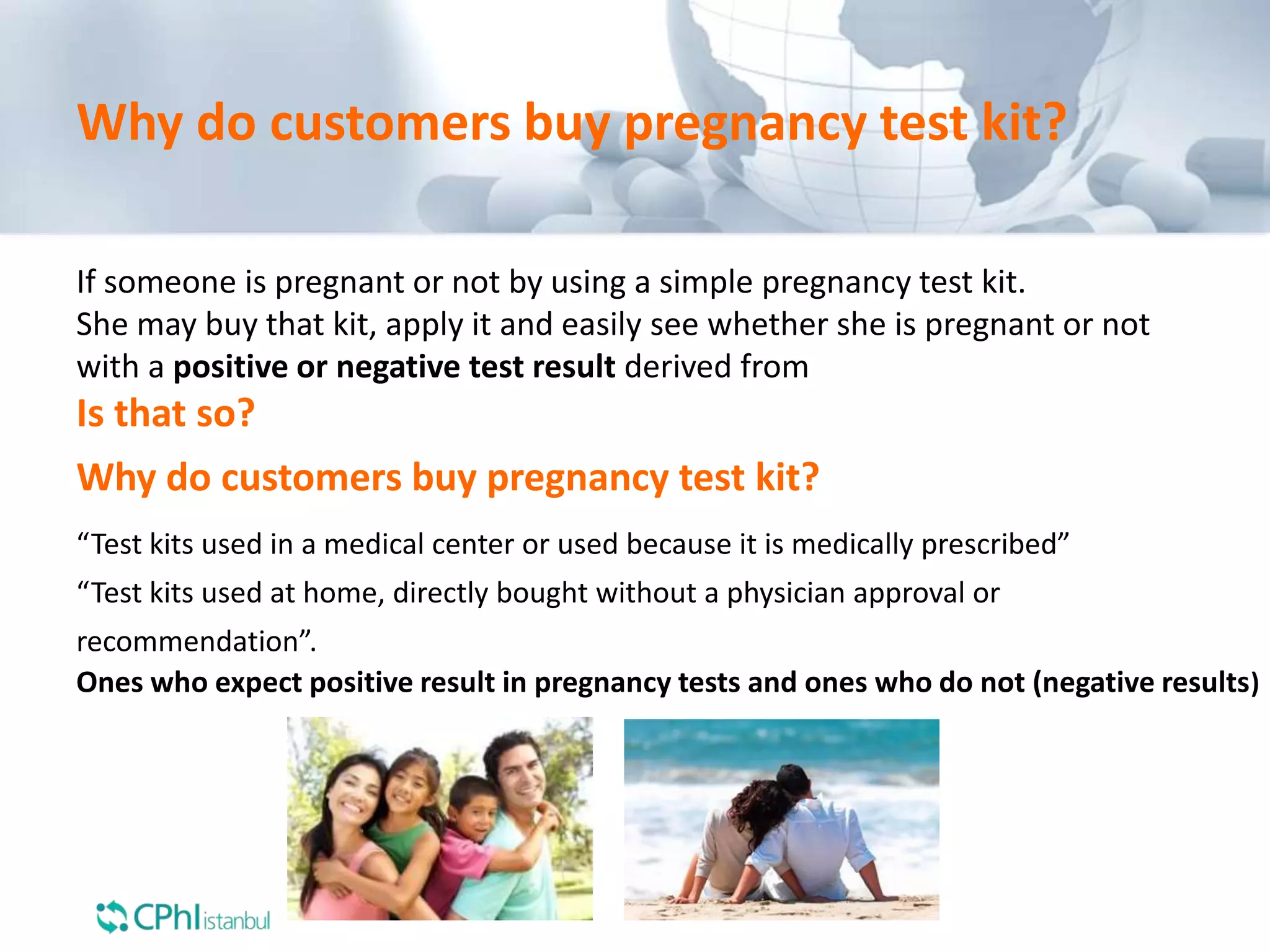
Ones who expect positive result in pregnancy tests and ones who do not (negative results)
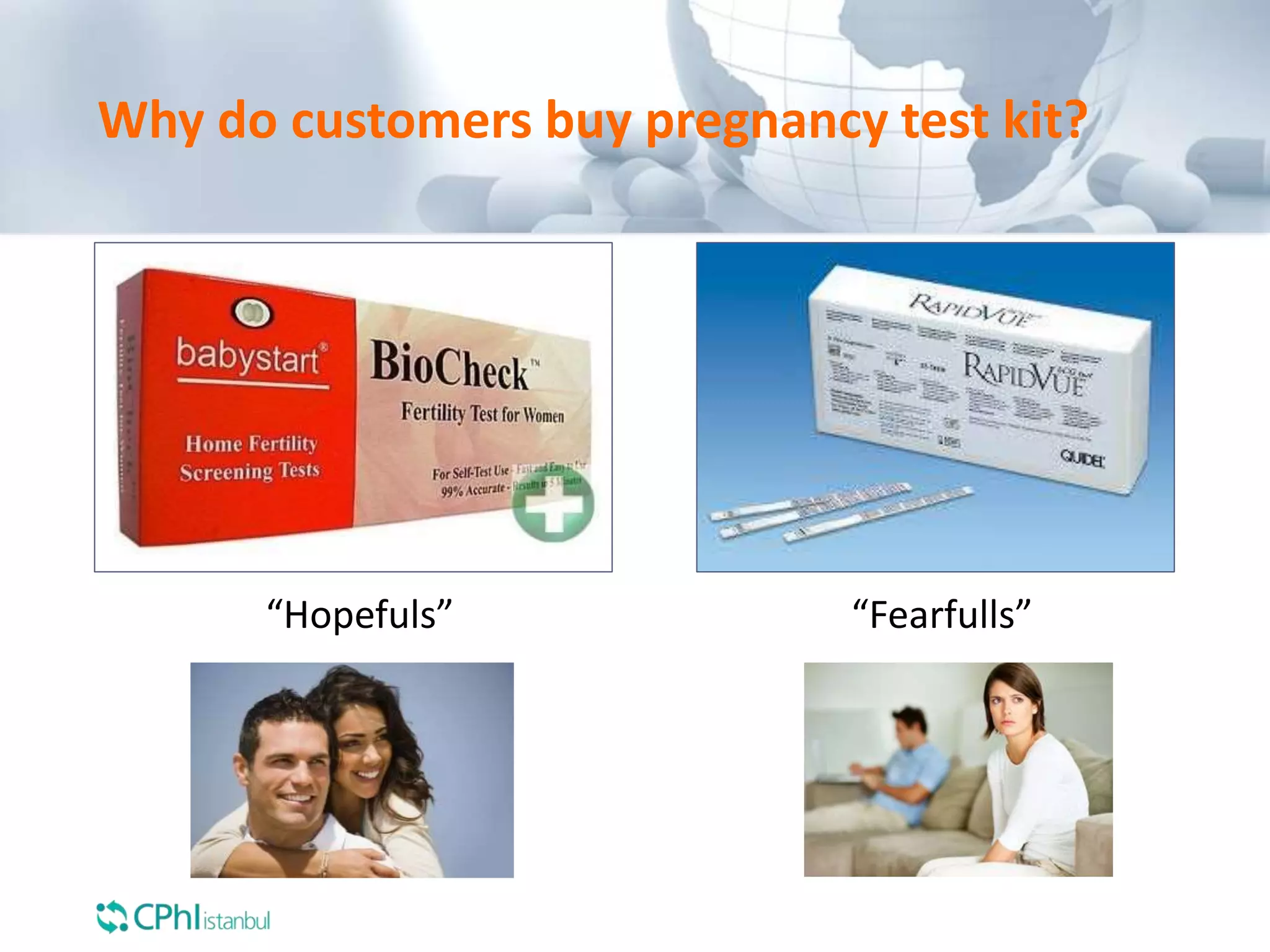
Why do customers buy pregnancy test kit?
“Fearfulls”“Hopefuls”
While examining country dynamics
of an emerging markets
 The potential of a group targeted by the product should
carefully be examined
 And, general incidence and prevalence of the disease
 Hospitalization rates for current prevalence
 Treatment protocols in each hospitalization may give us real
numeric potential that we will target.
While examining country dynamics
of an emerging markets
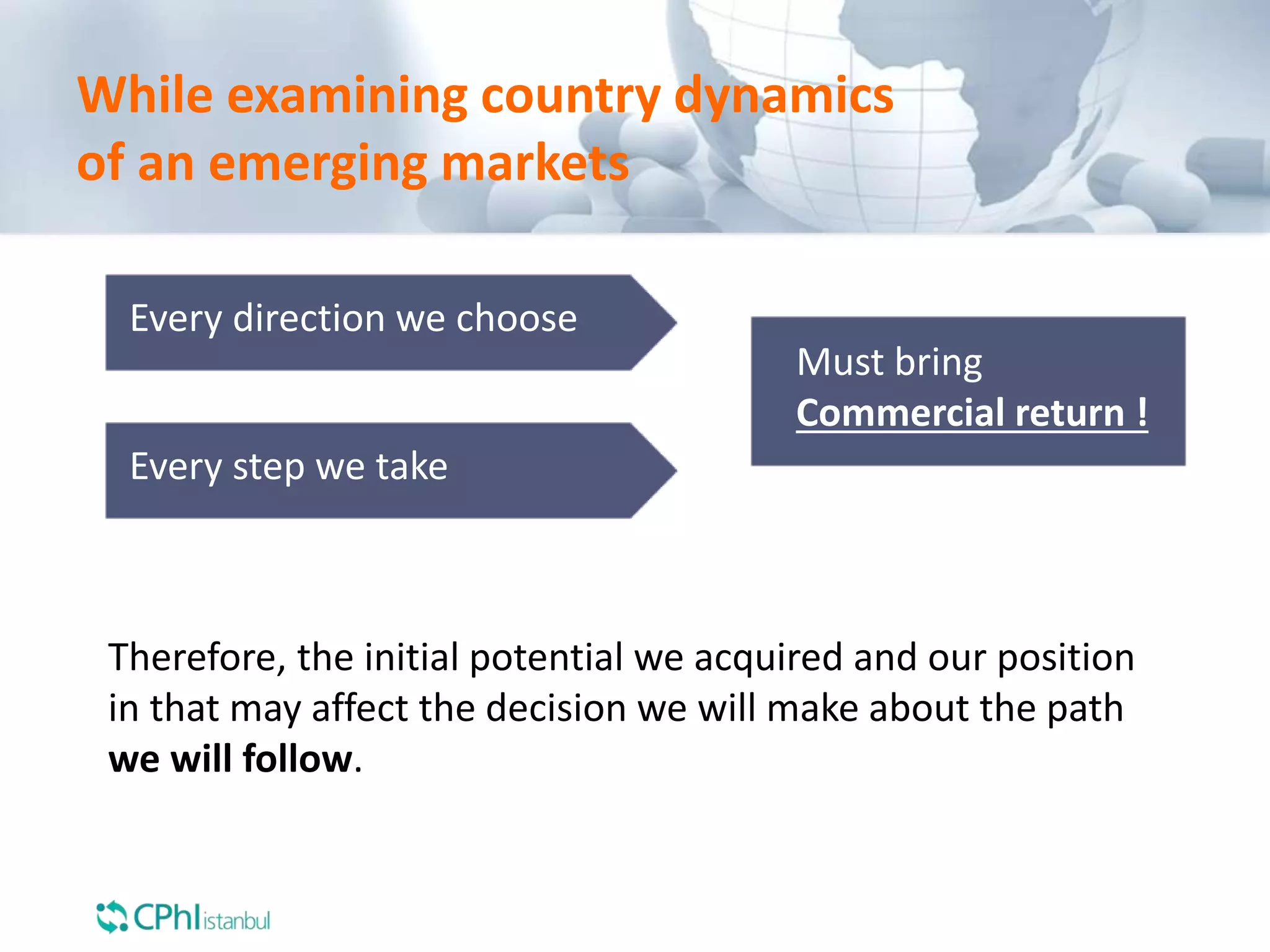
Every direction we choose
Must bring
Commercial return !
Therefore, the initial potential we acquired and our position
in that may affect the decision we will make about the path
we will follow.
Every step we take
In this context, it is important to consider the following in
emerging markets,
 Country dynamics,
 Reachable potential
 Challenges we will face in order to reach that potential
 Resources needed to reach to that target point
 Determination of our consumer oriented needs
 Following with strategies and tactics compatible with those
needs
 Required organization and cooperation structure while
following those needs.
It is, of course, required to take country dynamics into account.
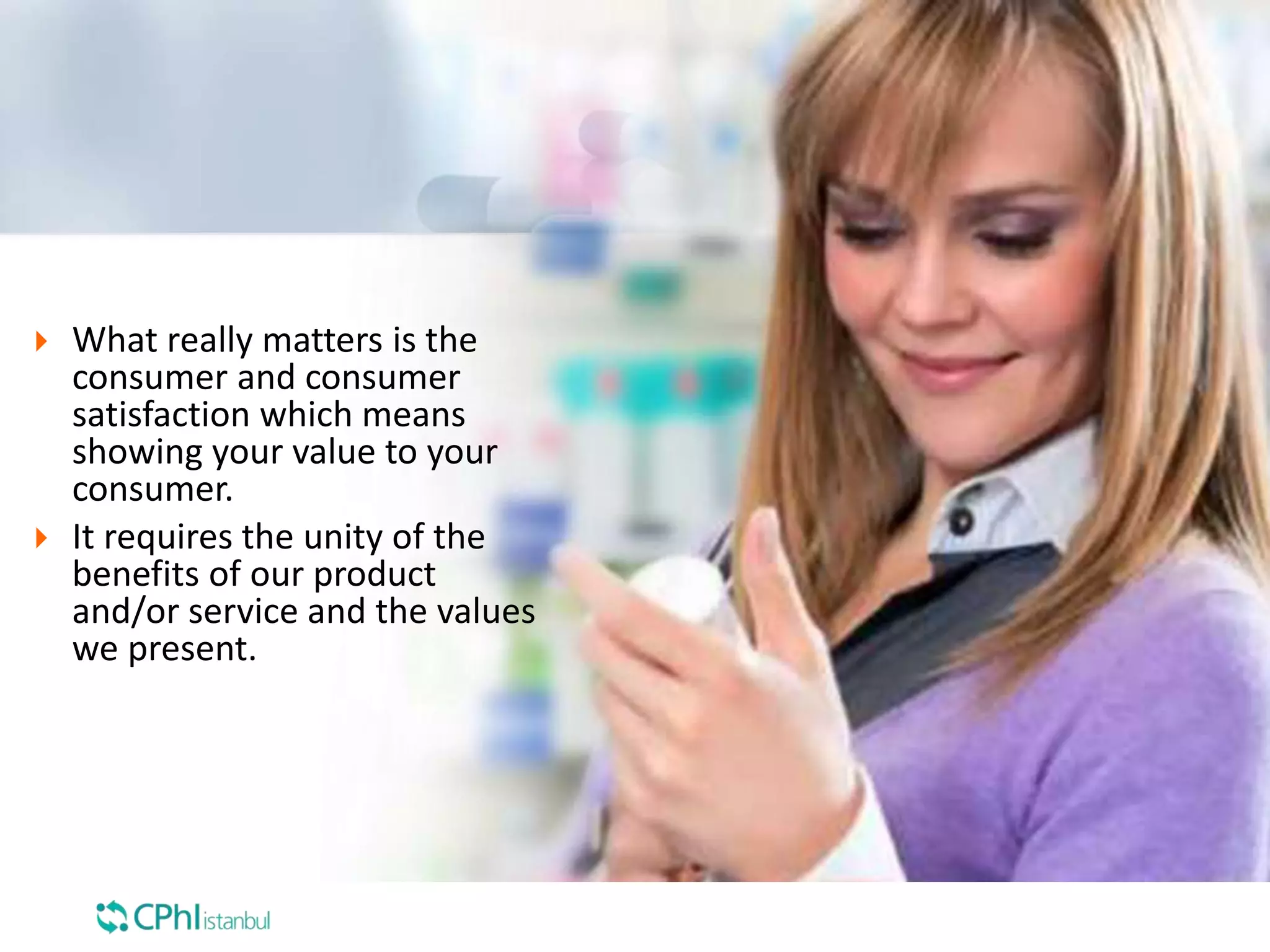
 What really matters is the
consumer and consumer
satisfaction which means
showing your value to your
consumer.
 It requires the unity of the
benefits of our product
and/or service and the values
we present.
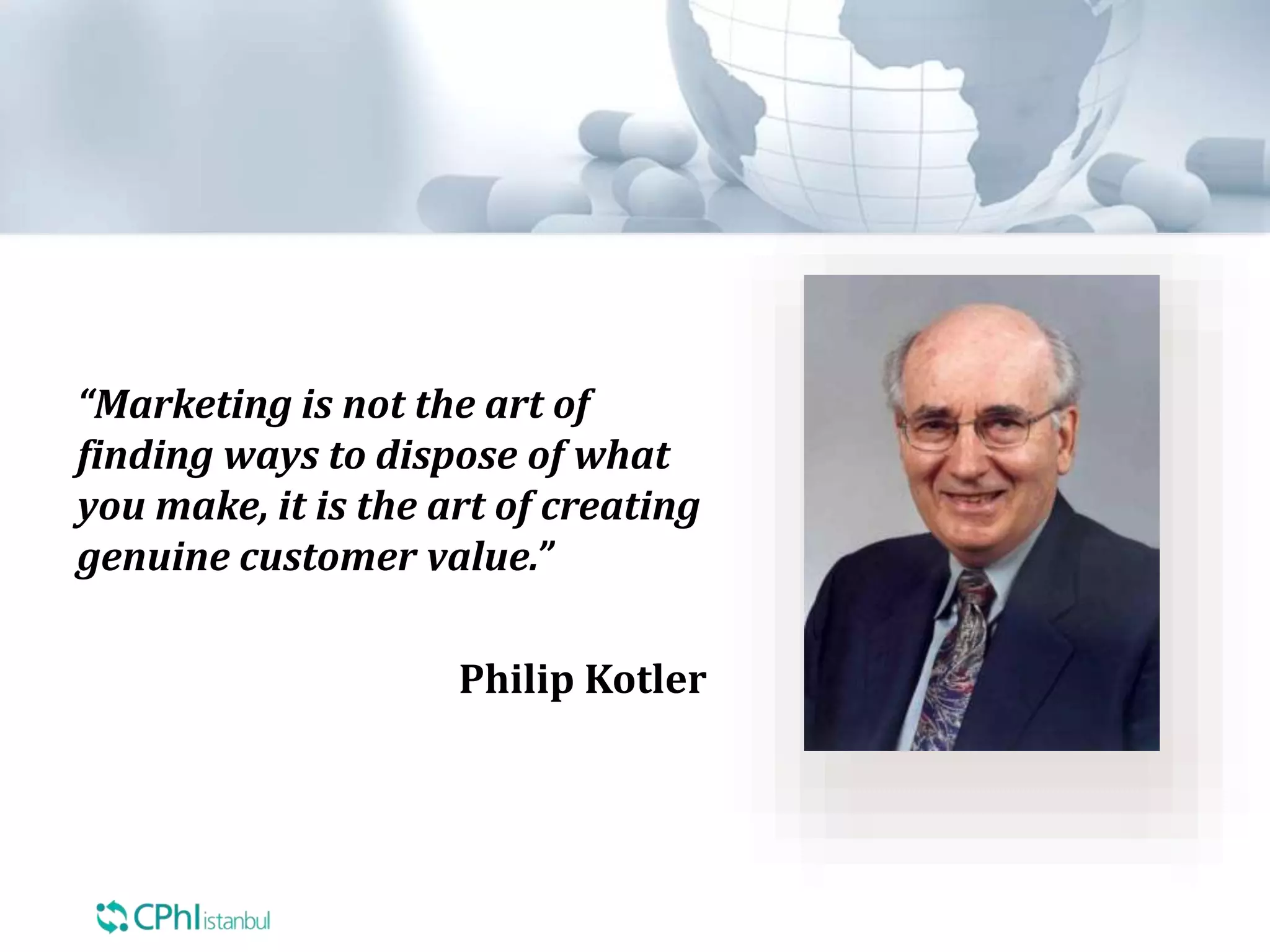
“Marketing is not the art of
finding ways to dispose of what
you make, it is the art of creating
genuine customer value.”
Philip Kotler
Thank you!

"Differentiating the generics in emerging markets"

  • 1.
  • 2.
    1. How aregeneric products perceived in emerging markets? 2. What are the key points in order to create a good product strategy? 3. What is customer oriented contextual segmentation? 4. How do you examine current dynamics to create preferable generics in emerging markets? Key Points
  • 3.
    How are thegeneric products perceived in emerging markets? • Prices of generics are low when compared with originals • Equivalent to the original or same as the original • Adequately exists • Matured products • Out products • Products that original branding is not possible • Products that marketing is not easy • Having important competitors • Products that brings the comment of «me too» • …
  • 4.
    Some pointed outin activities •Campaigns, •Arrangements in trade conditions, •Frequent doctor and pharmacy visits with unnecessary sales staff •Control instead of performance management •Materialistic approaches, •Pressures on prescription or sales, … Many valuable molecules or products might become unsuccessful, without achieving its real value in the market
  • 5.
    How we canbe proactive and foresee the challenges, and enable solutions before entering into this vicious cycle? What are the key points in order to create a successful generics strategy?
  • 6.
    •Population •Age distribution •Related Female/Maleratio •Prevalence of disease •Hospitalization rate in patient /out patient) •Treatment protocols after hospitalization ……………. Disease/Incidence Map • Expiring patent • Regulation • Financial structure • Cost pressure • Competitors • Country dynmics • HR structure • …………………………. Barriers Potential
  • 7.
    IBS/Incidence Map 12,2 8,1913,6 9,9 7,8 28,1 26,3 24,3 20,5 9,7 75% non consulter 25% consulters Source: 1. Drossman and Thompson. Ann Intern Med. June 1992;116(pt 1):1009-1016. 2. Sandler. Gastroenterology. August 1990;99:409-415. 2.Stockbrügger,1996
  • 8.
    What do youthink the most important key point? Customer Do we analyze final consumer enough? Do we adequately pay attention to their perception and expectations?
  • 9.
    Product Place Price Promotion Marketing Mix 4PSegmentation Consumergroups, with similar needs Or a potential user group
  • 10.
    Is it possiblewith the given conditions to understand end user’s perception and expectation closer while using those methods? How can we get closer to the patient?
  • 11.
    Type I Diabetic Agegroup 29-49 Lives in İstanbul Are these data enough? •Need for a convenient pocket sized blood glucose monitor •Would be preferable if the device is painless to use •Need for a blood glucose monitor that can transmit data onto a computer for monitoring Contextual segmentation Traditional segmentation:
  • 12.
    Product Focus on PlaceFocus on Price Focus on Promotion Focus on Marketing Mix Solution, perception Access Value Education, communication
  • 14.
    Before • Customer is deciding whatto do During • Customer is doing it After • Customer is keeping it going Before consumption: •Taking a lot of medicines together •Feeling unhappy •Complaints disruption in social life •Loosing trust to the former doctor •Decides to go to a new physician. After consumption: Happiness with the treatment •Regains the trust to doctor •Product becomes valuable •Improvement in social life again During consumption: •New physician explains to the patient that all symptoms may stop with a single product and there will be no need to use unnecessary drugs with an additional diet program •Patient starts using the drug. Customer Journey Example: IBS Patient
  • 15.
    Contextual segmentation Geographic • Population •Location Demographic • Age • Gender • Income • Education • Occupation Personal context • Personality • Values & lifestyle • Attitudes • Interests • Lifestyles • Preferences • Behavioral propensities • Social connections Relationship context • Customer lifecycle • Product in use • Purchase history • Benefits sought • Brand royalty • Usage rates
  • 16.
    Contextual segmentation Customer profiledata Real time behavioral data+
  • 17.
    It is reallypossible to make customers feel themselves valuable and their needs are satisfied. Main Target: People differentiate individually ! We can differentiate our product by retrieving it from current generic perception via creating perception methods compatible with individual differences in a developing world.
  • 18.
    Here’s what customerstold us matters the most when choosing where to spend their money on healthcare. What affects consumer’s buying decisions? 89% 74% 29% 17% 12% 8% Insurance coverage Physician recommendations Additional online medication information Patient testimonials Mobile application Healthcare and lifestyle coaching Source: pwc Health Research Institute November 2013
  • 19.
    Source: pwc HealthResearch Institute November 2013 Patients become partners in care and treatment when information is provided Want an equal say in care decisions with their care provider
  • 20.
    Why do customersbuy pregnancy test kit? If someone is pregnant or not by using a simple pregnancy test kit. She may buy that kit, apply it and easily see whether she is pregnant or not with a positive or negative test result derived from Is that so? Why do customers buy pregnancy test kit? “Test kits used in a medical center or used because it is medically prescribed” “Test kits used at home, directly bought without a physician approval or recommendation”. Ones who expect positive result in pregnancy tests and ones who do not (negative results)
  • 21.
    Why do customersbuy pregnancy test kit? “Fearfulls”“Hopefuls”
  • 22.
    While examining countrydynamics of an emerging markets  The potential of a group targeted by the product should carefully be examined  And, general incidence and prevalence of the disease  Hospitalization rates for current prevalence  Treatment protocols in each hospitalization may give us real numeric potential that we will target.
  • 23.
    While examining countrydynamics of an emerging markets Every direction we choose Must bring Commercial return ! Therefore, the initial potential we acquired and our position in that may affect the decision we will make about the path we will follow. Every step we take
  • 24.
    In this context,it is important to consider the following in emerging markets,  Country dynamics,  Reachable potential  Challenges we will face in order to reach that potential  Resources needed to reach to that target point  Determination of our consumer oriented needs  Following with strategies and tactics compatible with those needs  Required organization and cooperation structure while following those needs. It is, of course, required to take country dynamics into account.
  • 25.
     What reallymatters is the consumer and consumer satisfaction which means showing your value to your consumer.  It requires the unity of the benefits of our product and/or service and the values we present.
  • 26.
    “Marketing is notthe art of finding ways to dispose of what you make, it is the art of creating genuine customer value.” Philip Kotler
  • 27.