TYPES OF
TOURISM
United Nations Nations Unies
Forms of tourism
UNSD/UNWTO Workshop
Madrid 17/20 July 2006
Update of the formulation
REC’00
• Domestic tourism: is the tourism of resident visitors within
the economic territory of the country of reference.
• Inbound tourism: is the tourism of non-resident visitors
within the economic territory of the country of reference.
• Outbound tourism: is the tourism of resident visitors outside
the economic territory of the country of reference.
• Internal tourism: is the tourism of visitors, both resident and
non-resident, within the economic territory of the country of
reference.
• National tourism: is the tourism of resident visitors, within
and outside the economic territory of the country of
reference.
Measurement of inbound tourism
• When crossing national borders:
• Administrative registers (Immigration data, E/D cards)
• Surveys
• When staying in accommodation establishments:
• Surveys
• Combination of sources
Measurement of domestic tourism
• Specific survey to resident households
• Modules to be included in general households surveys
Measurement of outbound tourism
• When crossing national borders:
• Administrative registers (E/D cards)
• Surveys
• Surveys to resident households
• Mirror statistics
BUSINESS TOURISM
• TRAVEL TO COMPLETE A BUSINESS TRANSACTION OR ATTEND A
BUSINESS EVENT.
• EXAMPLES
conventions
sales meetings
trade shows
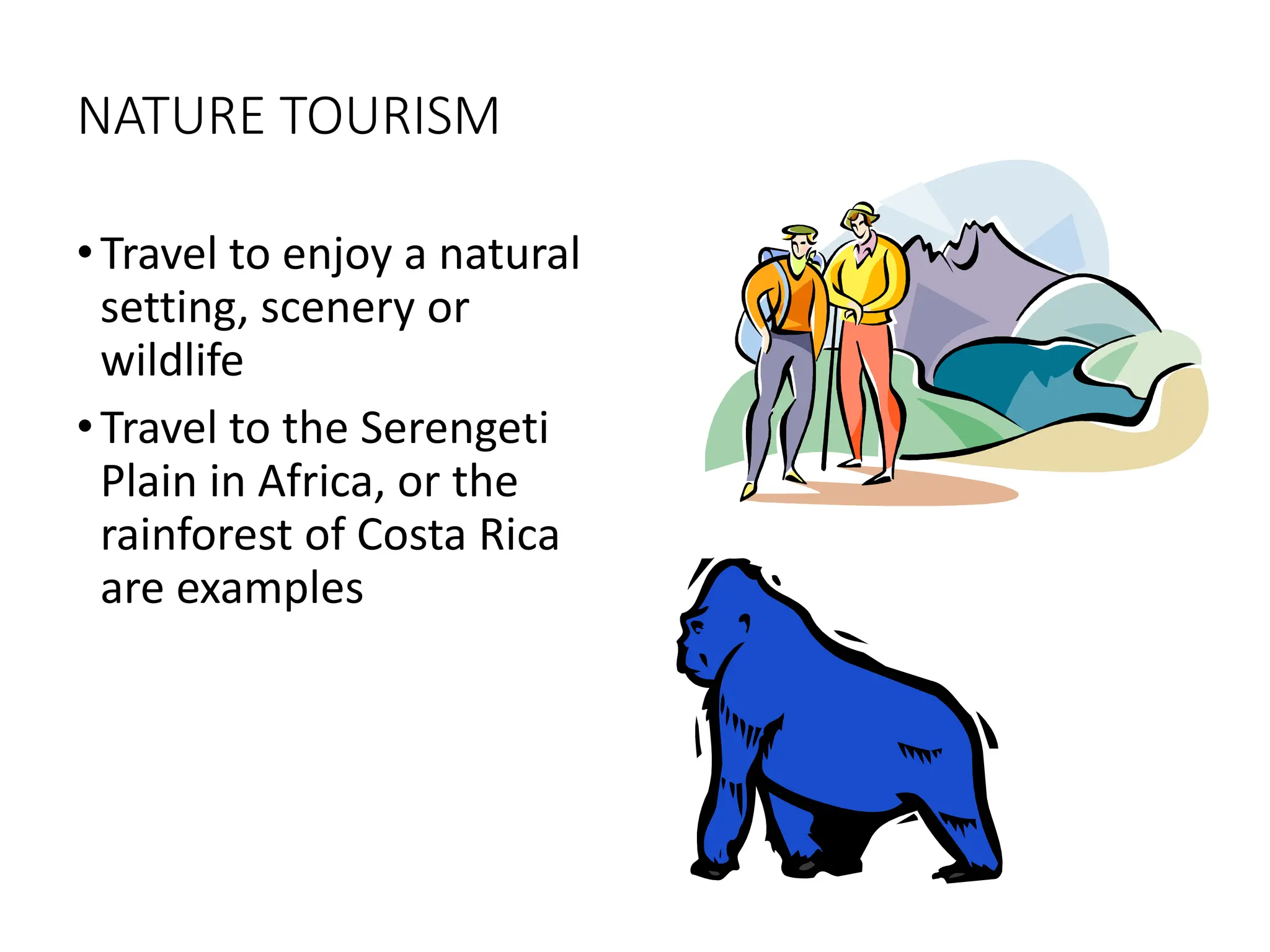
NATURE TOURISM
•Travel to enjoy a natural
setting, scenery or
wildlife
•Travel to the Serengeti
Plain in Africa, or the
rainforest of Costa Rica
are examples
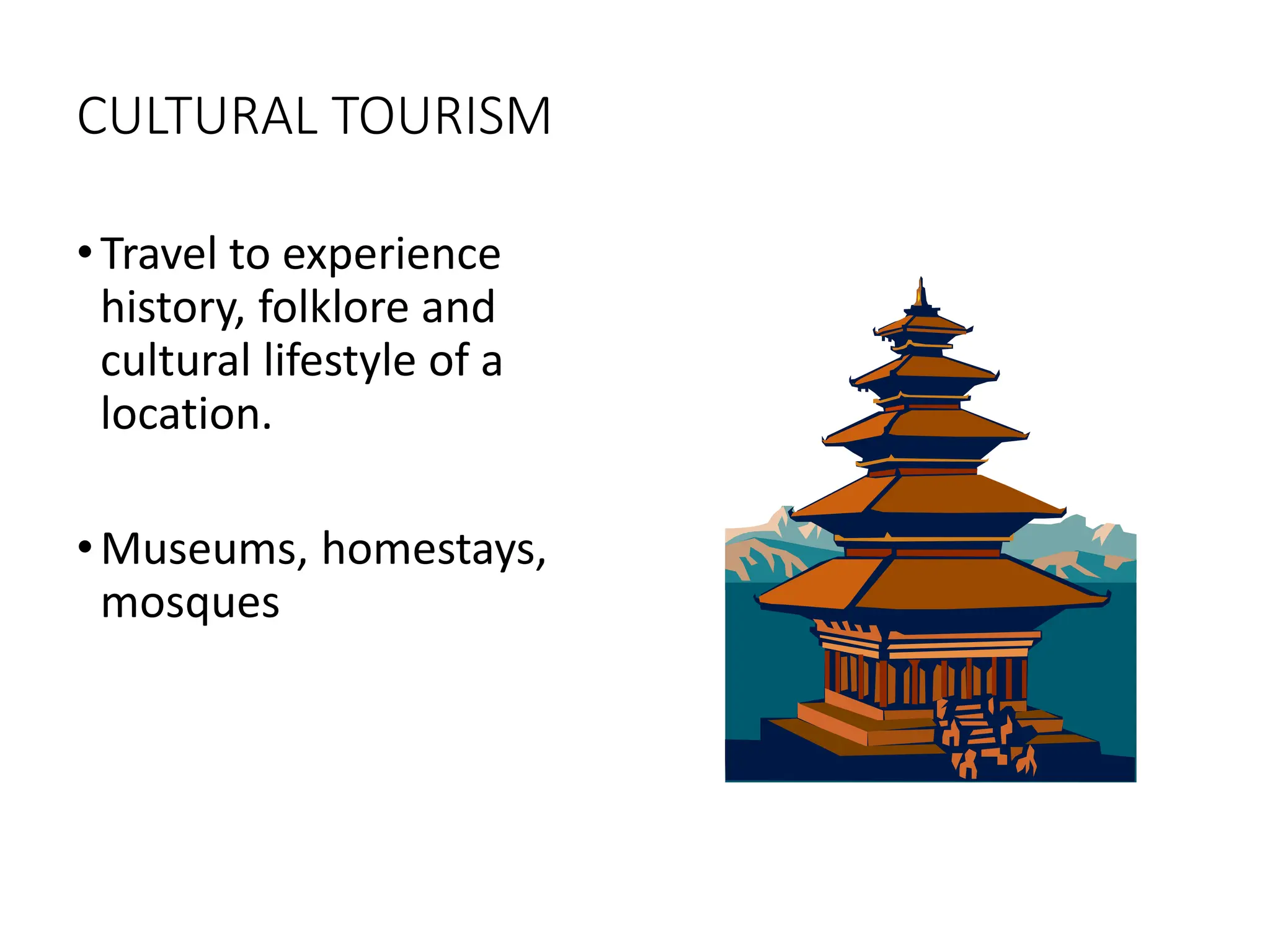
CULTURAL TOURISM
•Travel to experience
history, folklore and
cultural lifestyle of a
location.
•Museums, homestays,
mosques
SOCIAL TOURISM
•Travel which involves the
company of others.
•This may include travel
by tour bus and family
visits.
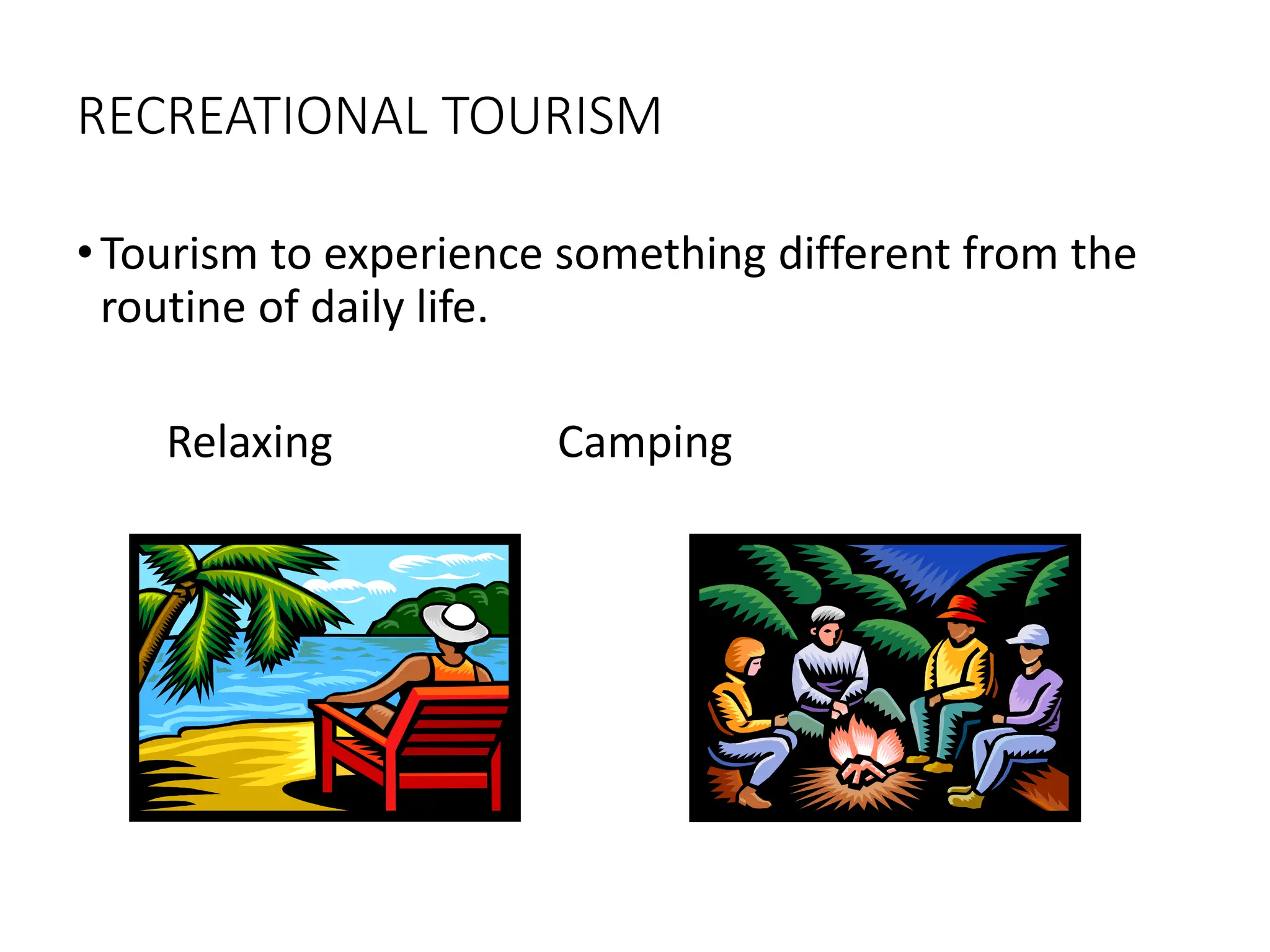
RECREATIONAL TOURISM
•Tourism to experience something different from the
routine of daily life.
Relaxing Camping
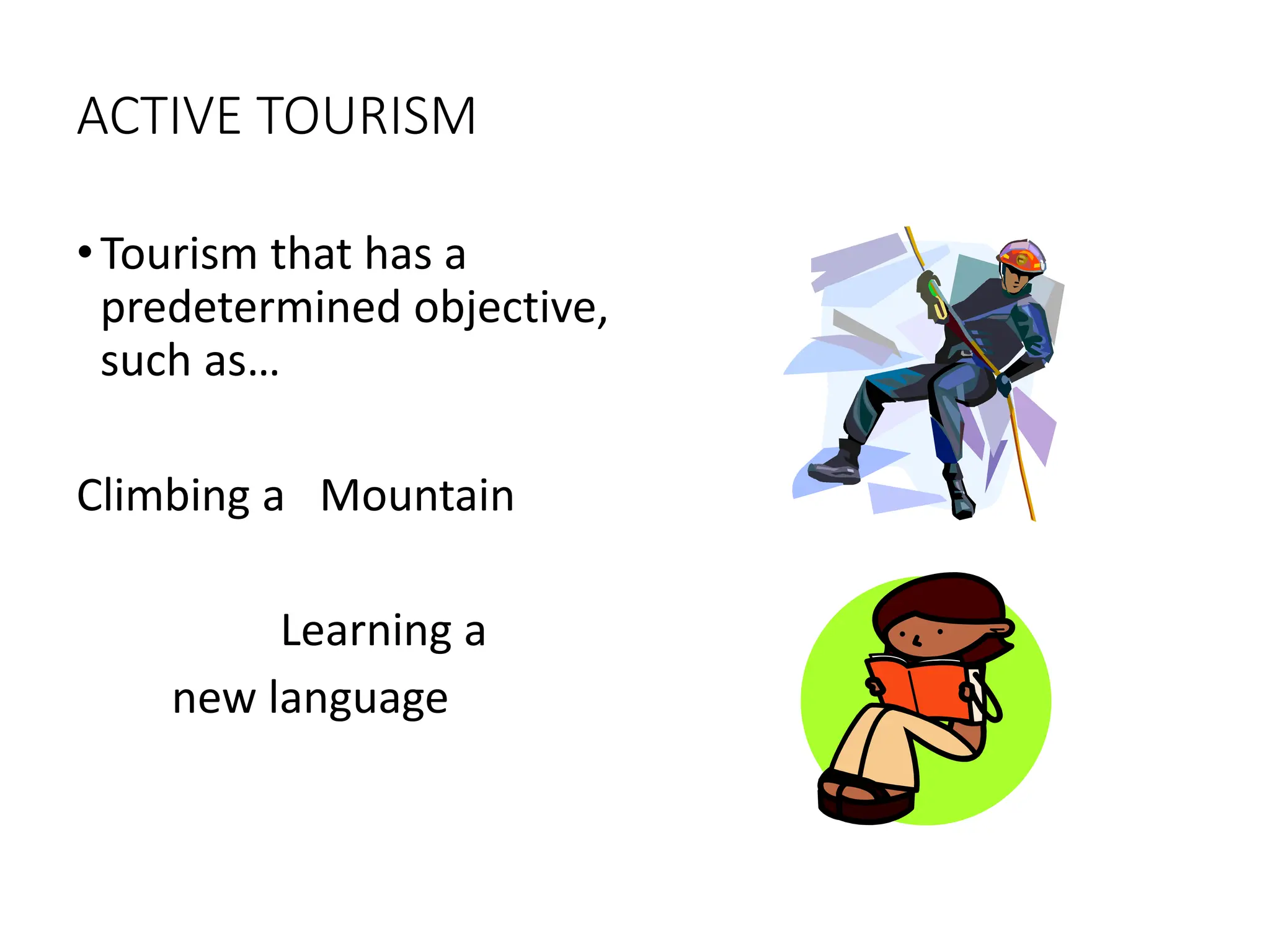
ACTIVE TOURISM
•Tourism that has a
predetermined objective,
such as…
Climbing a Mountain
Learning a
new language
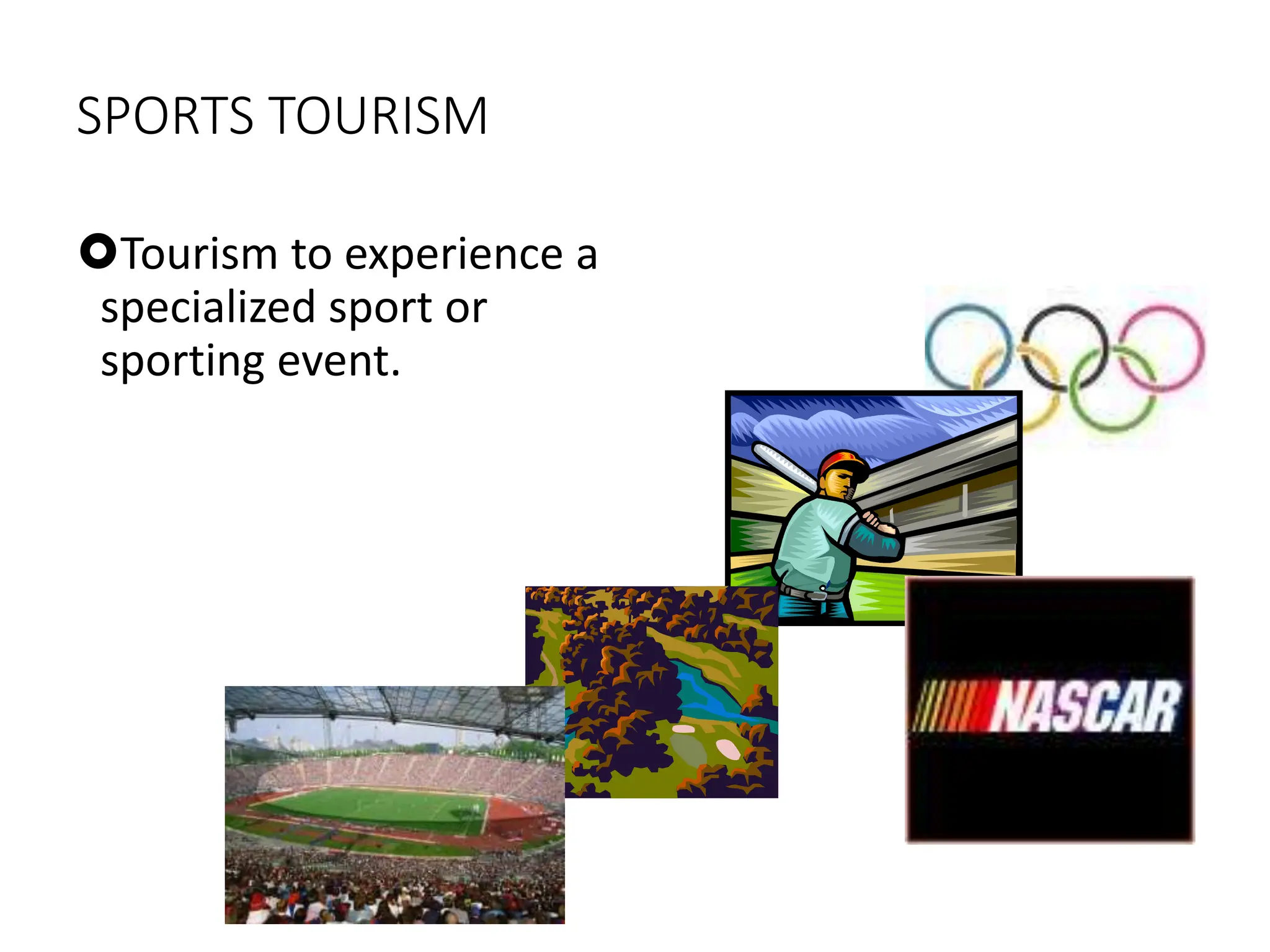
SPORTS TOURISM
Tourism to experience a
specialized sport or
sporting event.
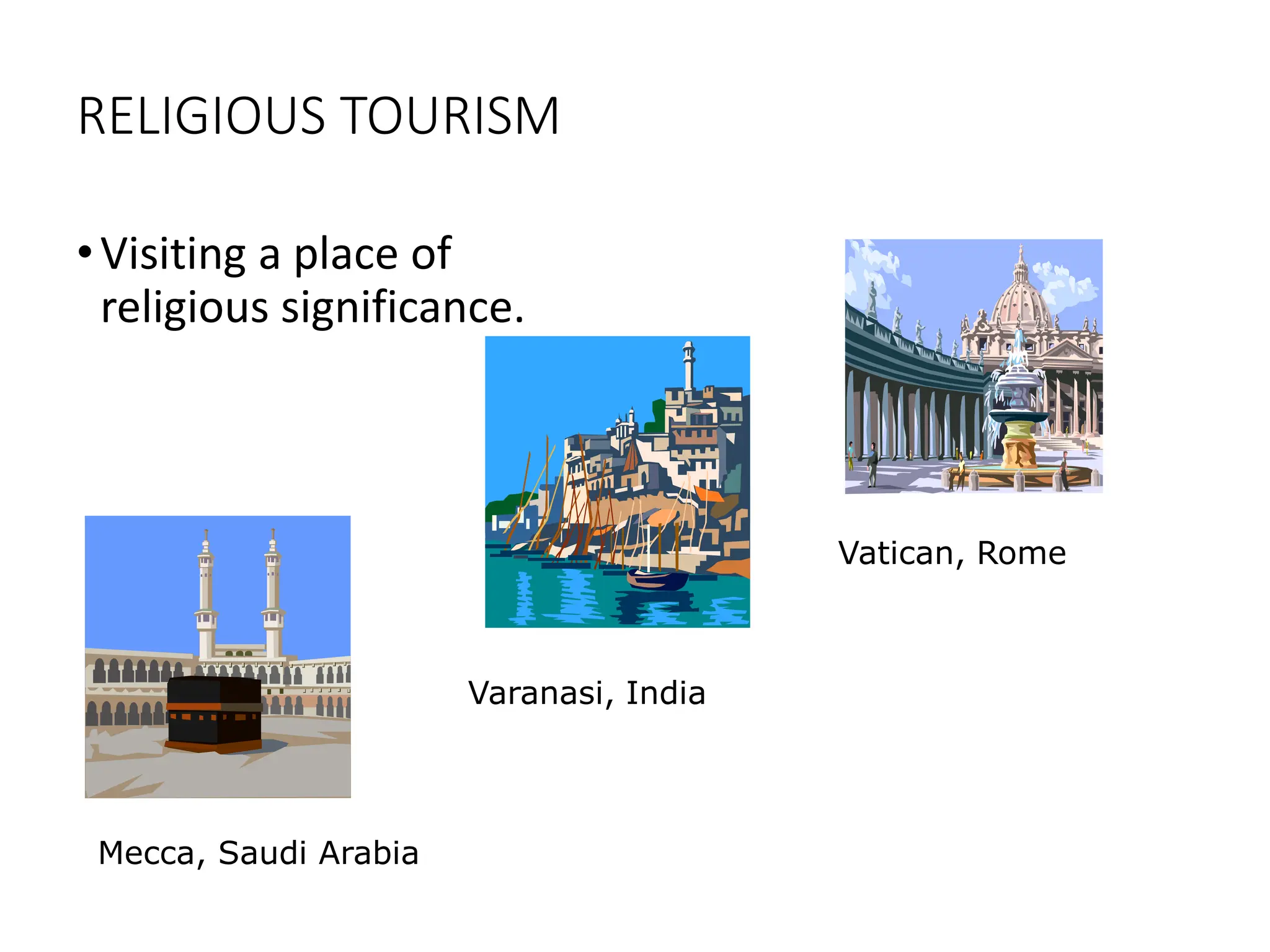
RELIGIOUS TOURISM
•Visiting a place of
religious significance.
Vatican, Rome
Varanasi, India
Mecca, Saudi Arabia
HEALTH TOURISM
•Tourism to improve one’s
health
Spas
Weight Loss Camps
Surgery
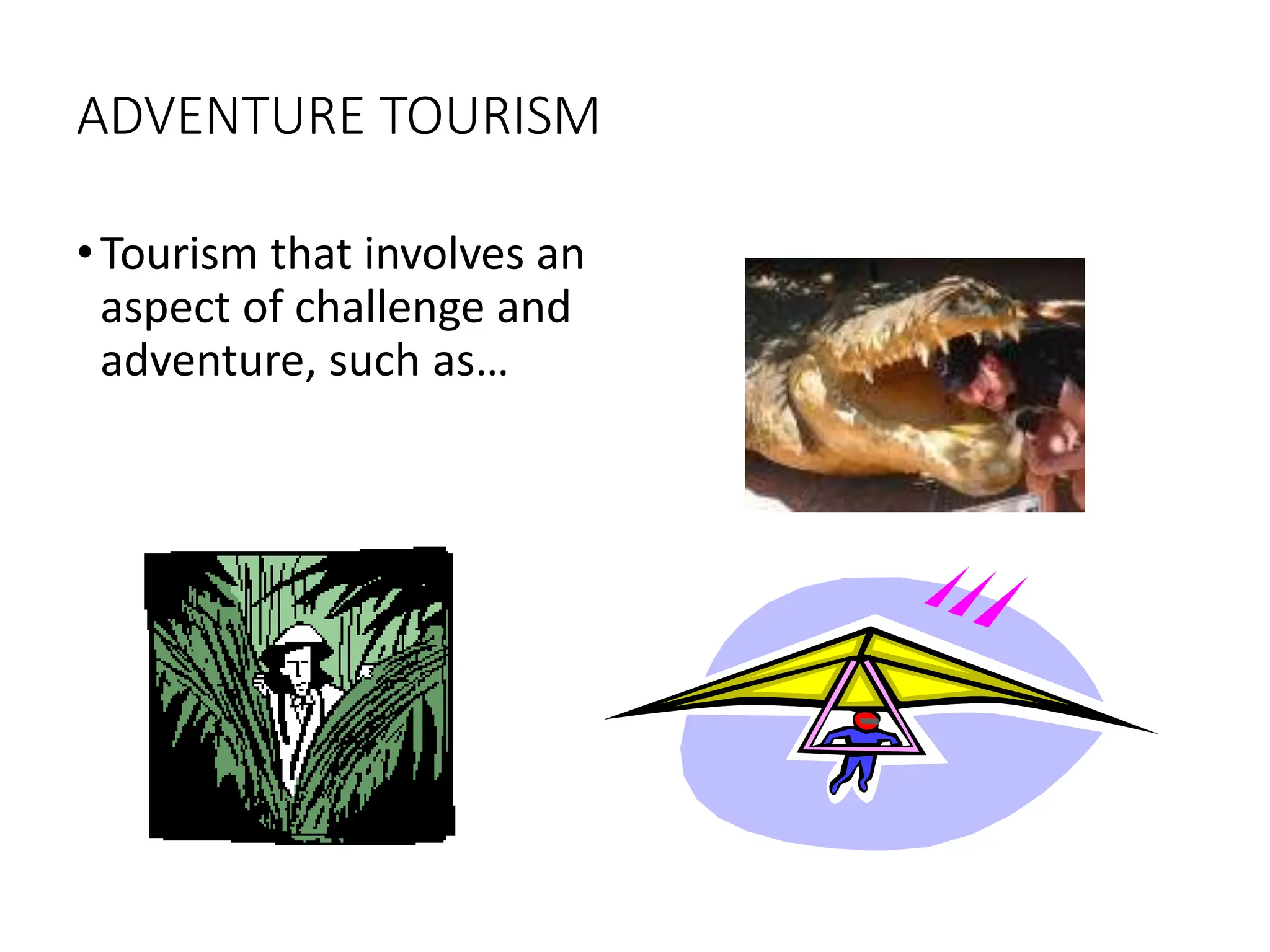
ADVENTURE TOURISM
•Tourism that involves an
aspect of challenge and
adventure, such as…
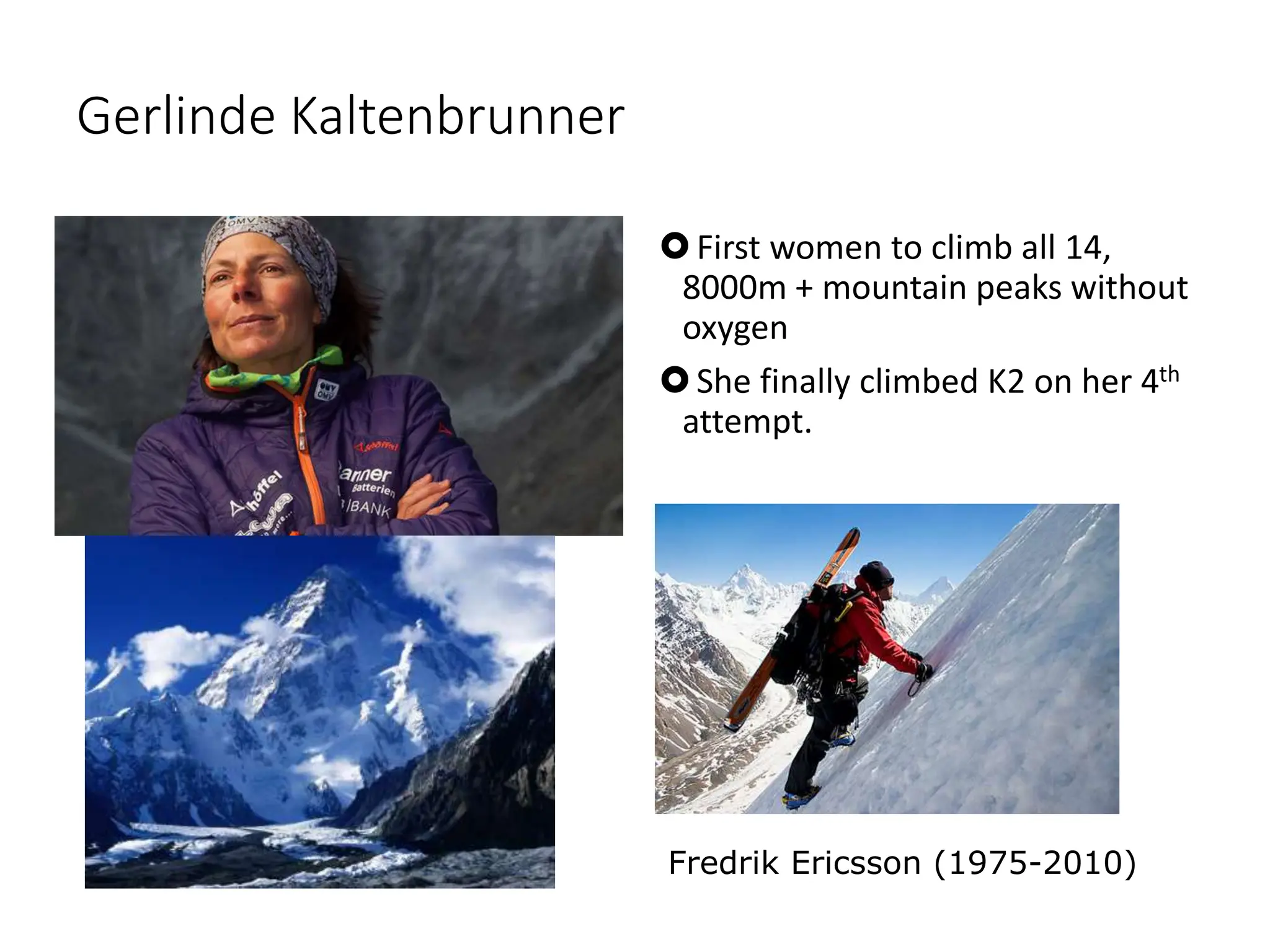
Gerlinde Kaltenbrunner
First women to climb all 14,
8000m + mountain peaks without
oxygen
She finally climbed K2 on her 4th
attempt.
Fredrik Ericsson (1975-2010)
The Top Mountain Peaks in the World
• Please write down
ECOTOURISM/WILDERNESS
•Low impact adventure in a natural setting – in
harmony with nature.
•This involves few people in remote places being
environmentally responsible.
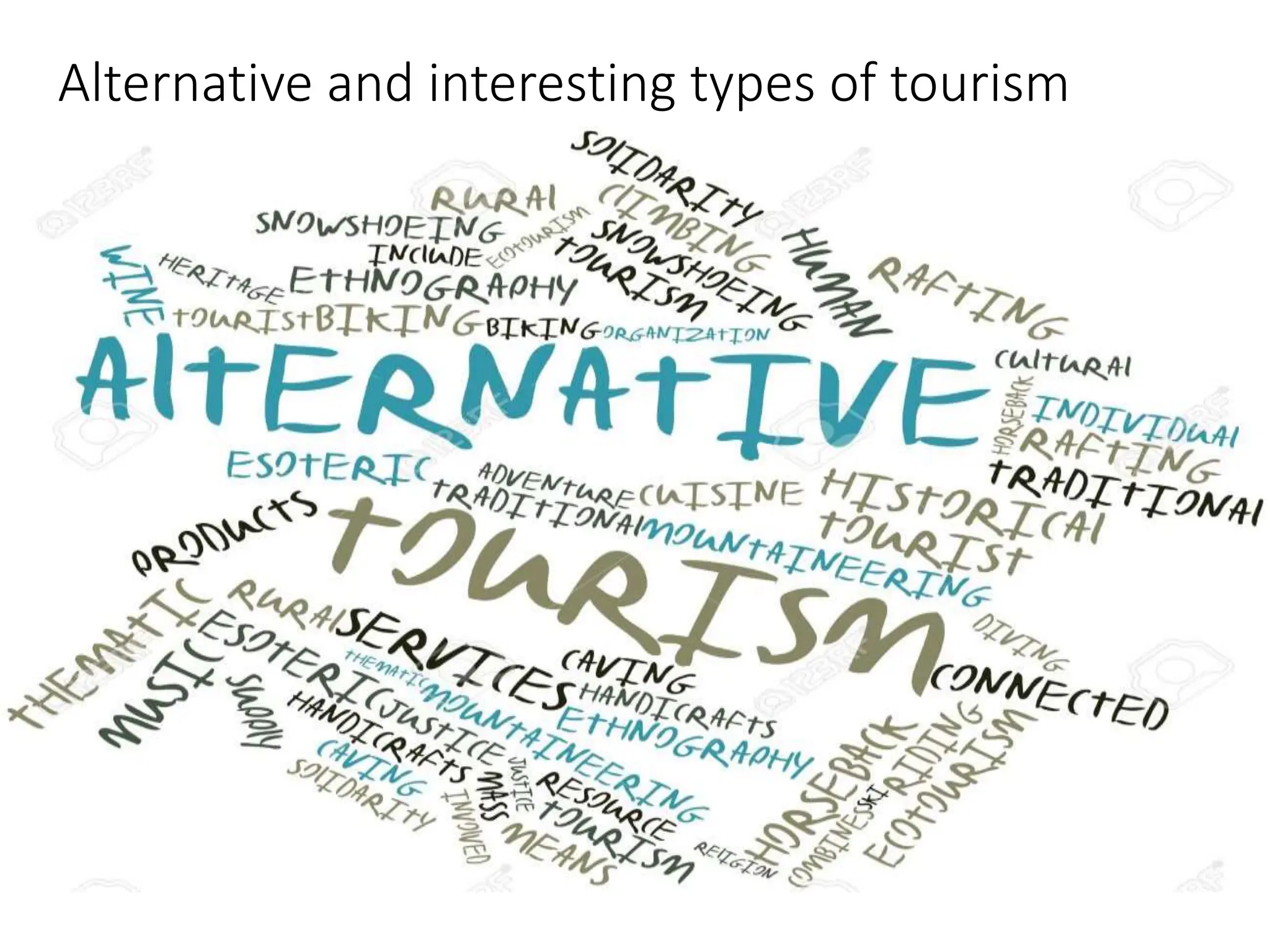
Alternative and interesting types of tourism
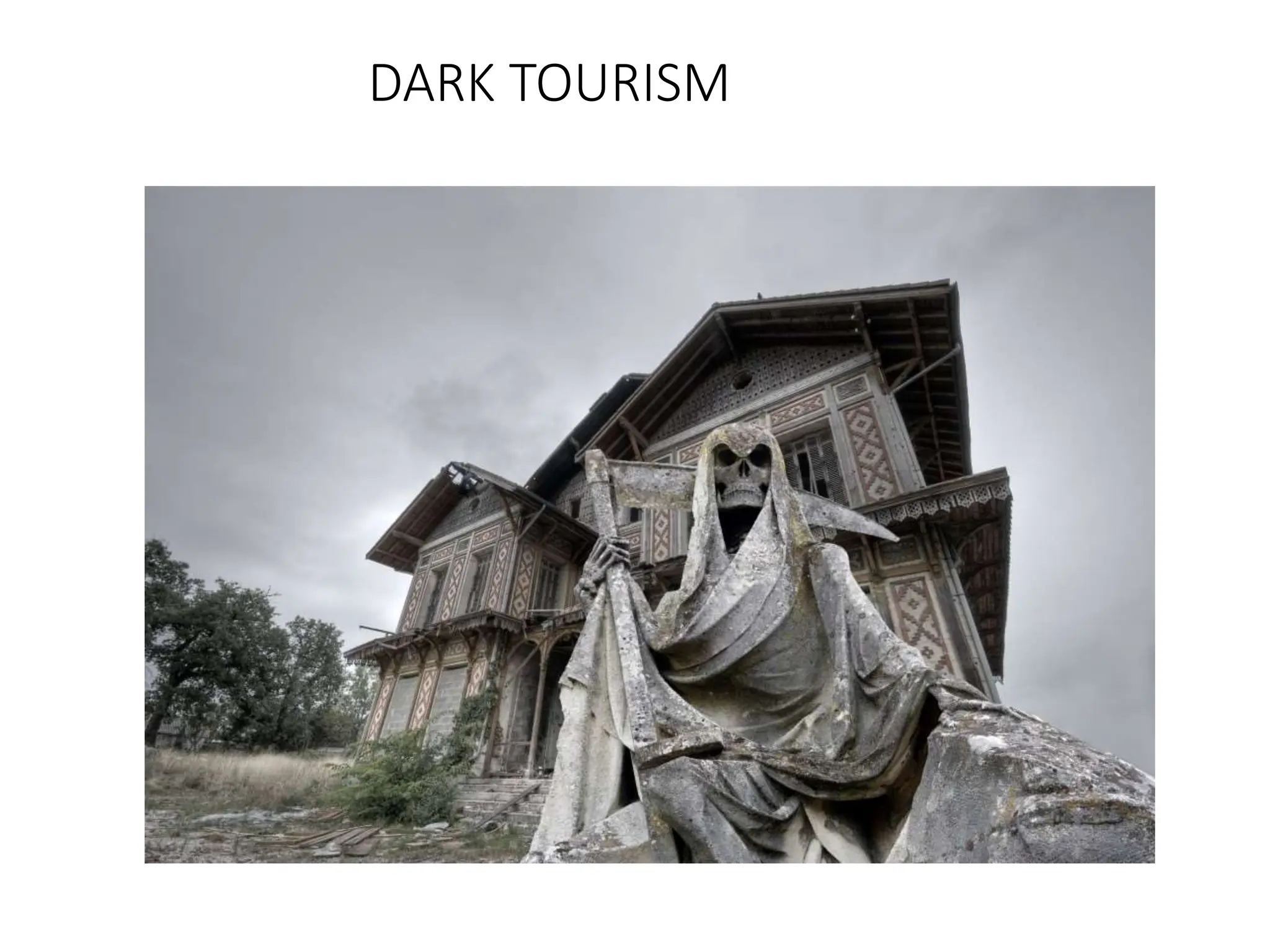
DARK TOURISM
DARK TOURİSM
• A kind of tourism that involves travelling to places associated with death
and suffering.
• It is also known as black tourism or grief tourism.
• Dark tourism is not a new phenomenon. For many years now dark
tourism has been part of our fascination, dating back to the pilgrims.
• Battlefields, concentration camps, dungeons, prisons, or graveyards. But
it is also about locations where the pain is not so much physical as
economic.
• People visit these dark tourism locations to remember what happened in
the past, why people died etc. and mostly visited by family&friends.
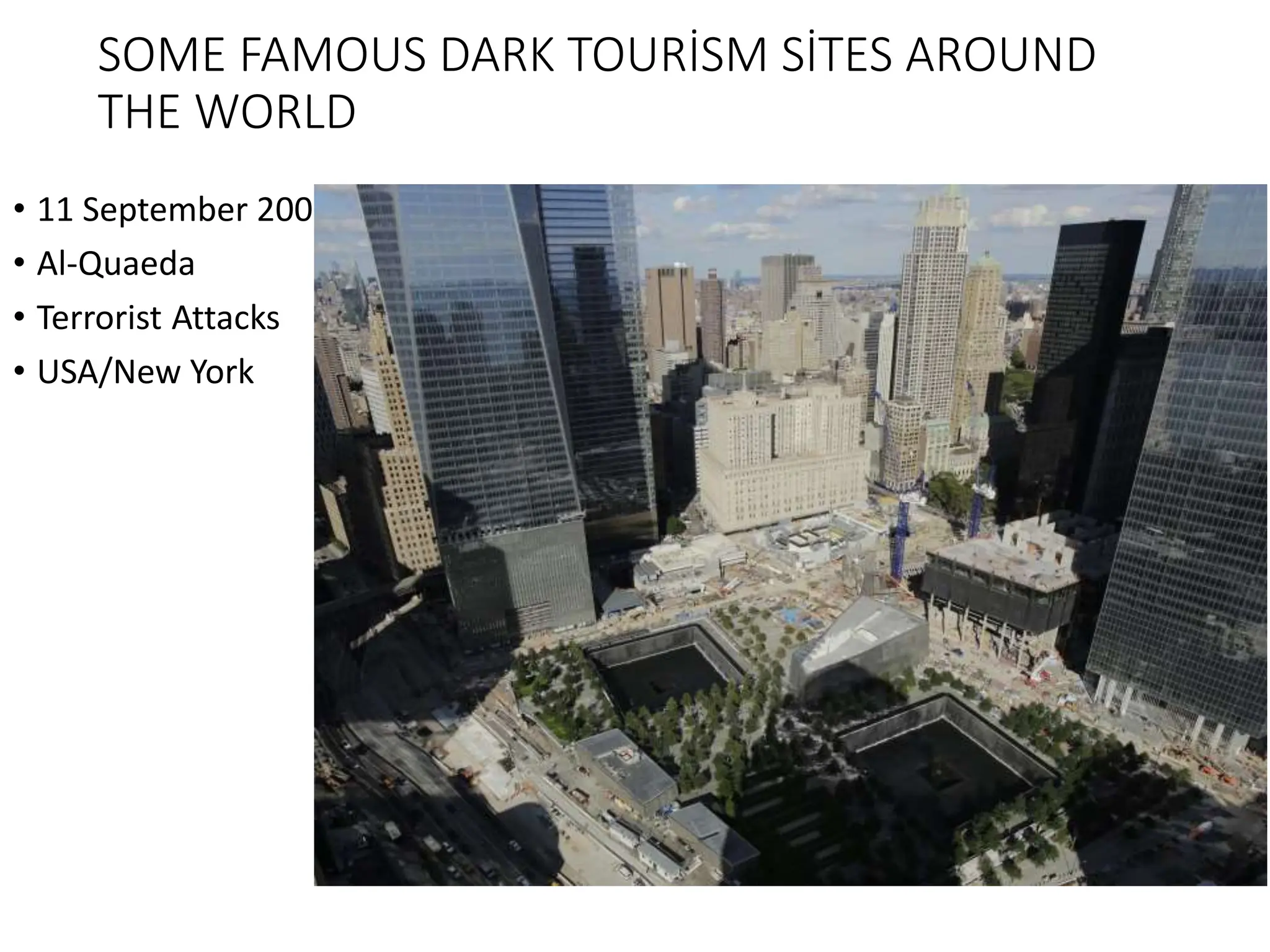
SOME FAMOUS DARK TOURİSM SİTES AROUND
THE WORLD
• 11 September 2001
• Al-Quaeda
• Terrorist Attacks
• USA/New York
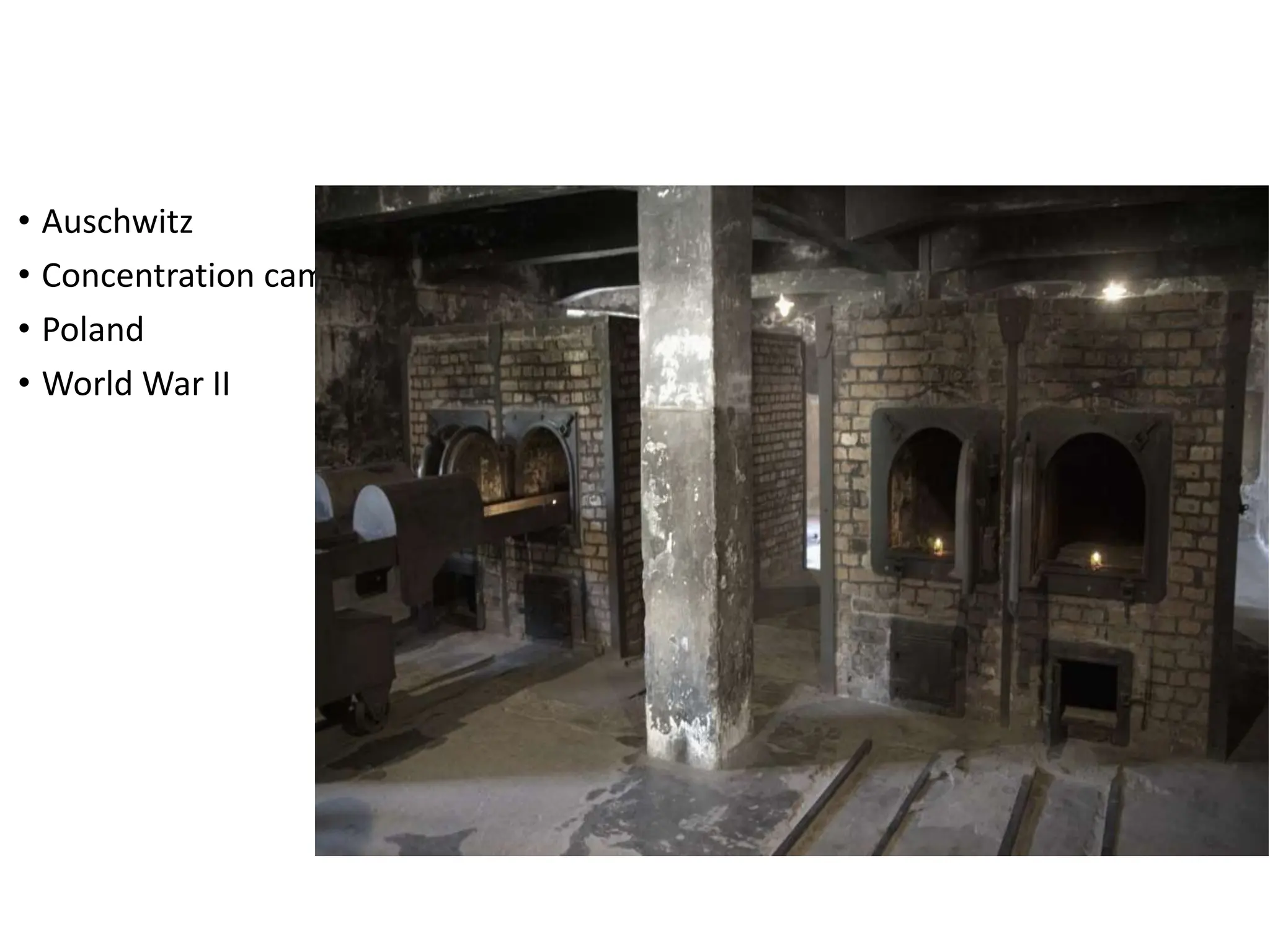
• Auschwitz
• Concentration camp
• Poland
• World War II
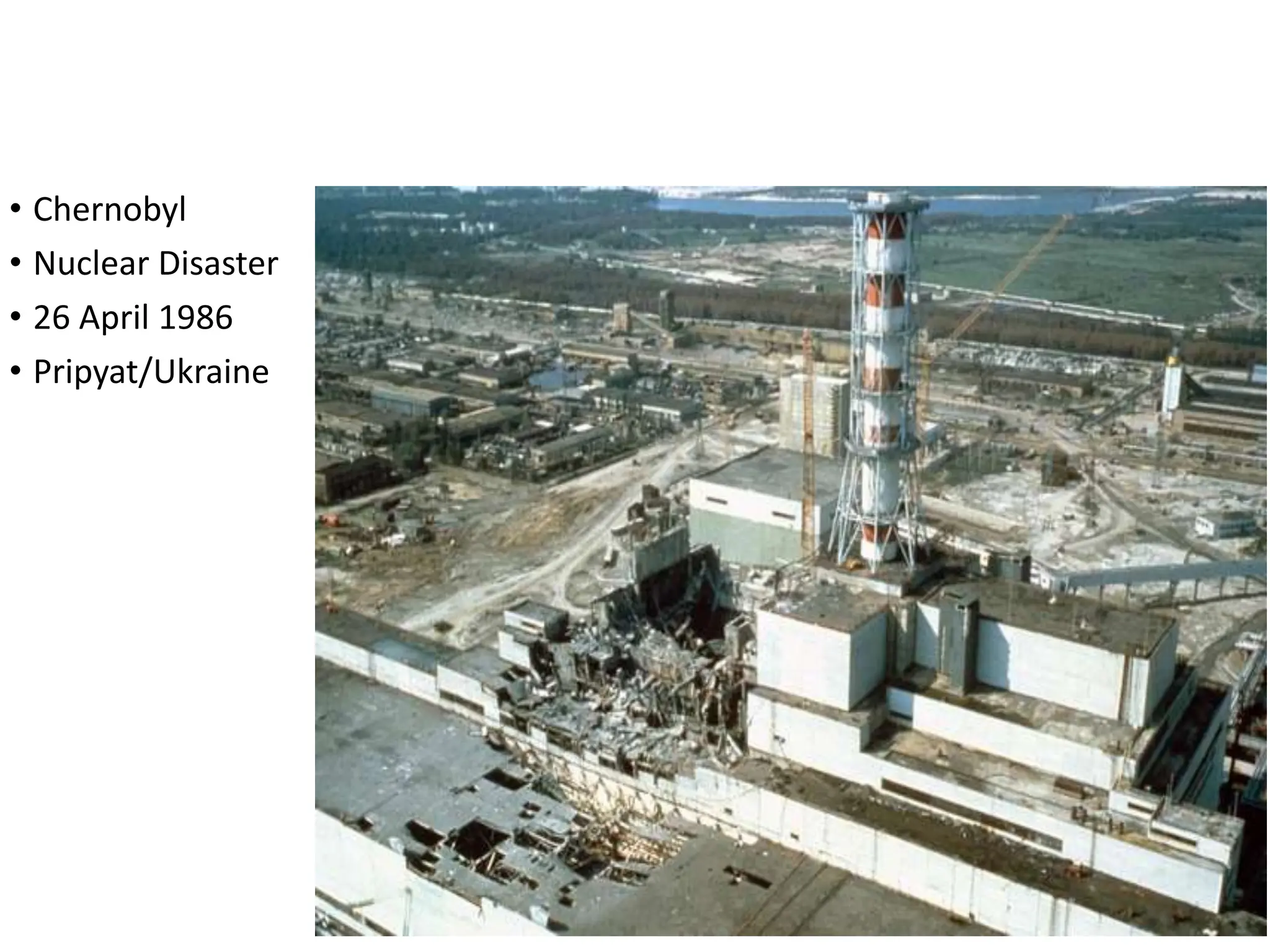
• Chernobyl
• Nuclear Disaster
• 26 April 1986
• Pripyat/Ukraine
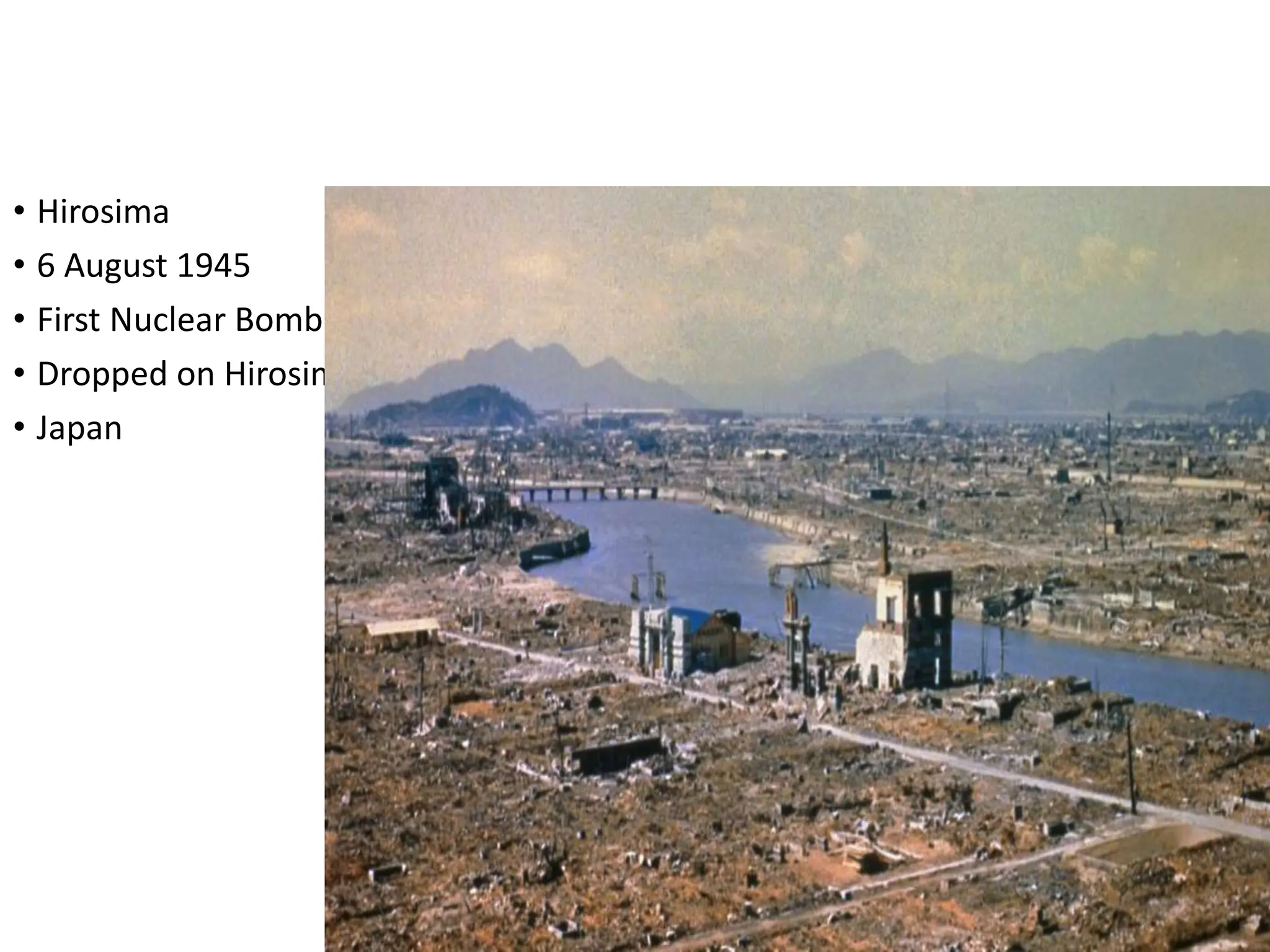
• Hirosima
• 6 August 1945
• First Nuclear Bomb
• Dropped on Hirosima
• Japan
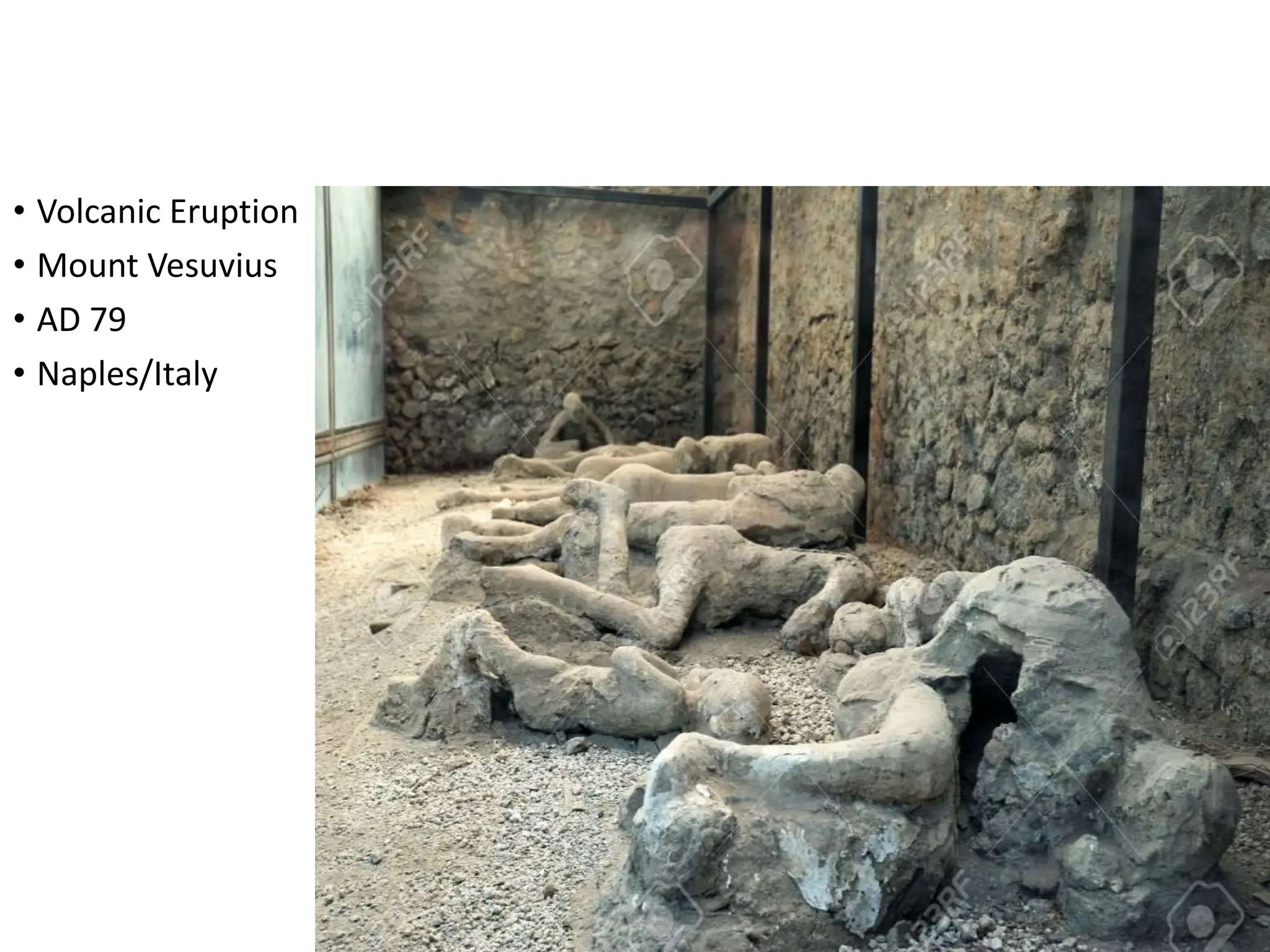
• Volcanic Eruption
• Mount Vesuvius
• AD 79
• Naples/Italy
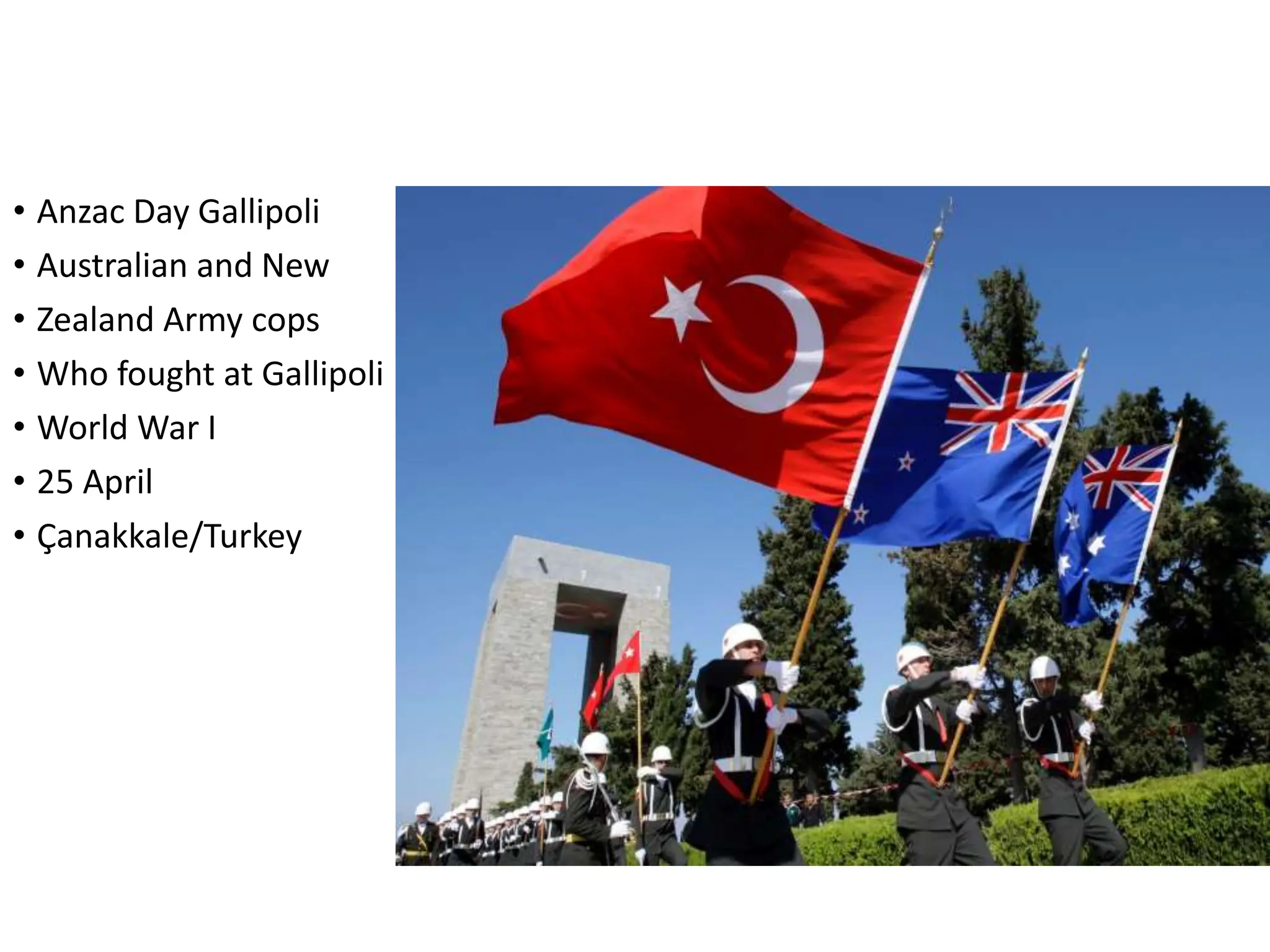
• Anzac Day Gallipoli
• Australian and New
• Zealand Army cops
• Who fought at Gallipoli
• World War I
• 25 April
• Çanakkale/Turkey
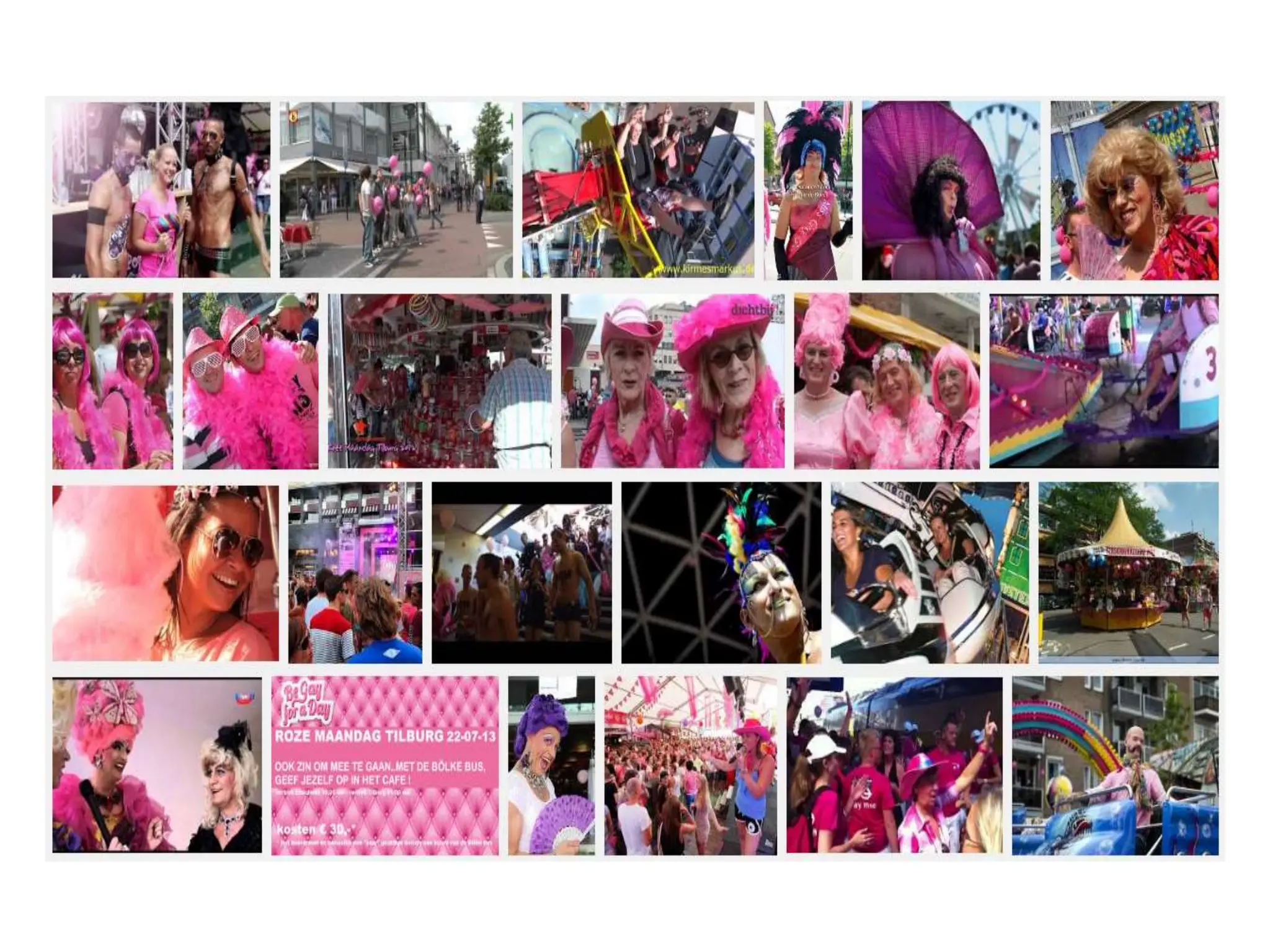
PINK
TOURSIM
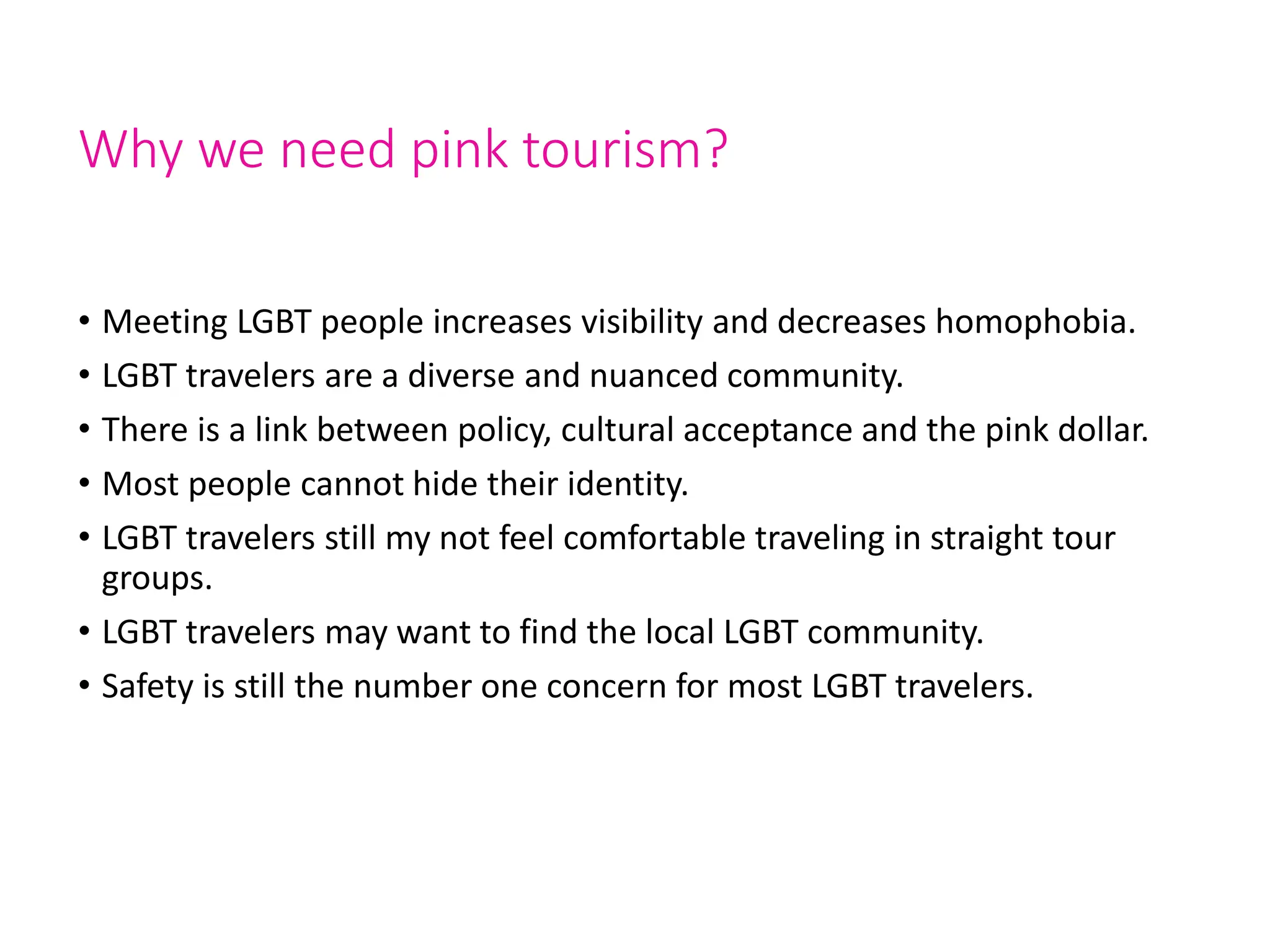
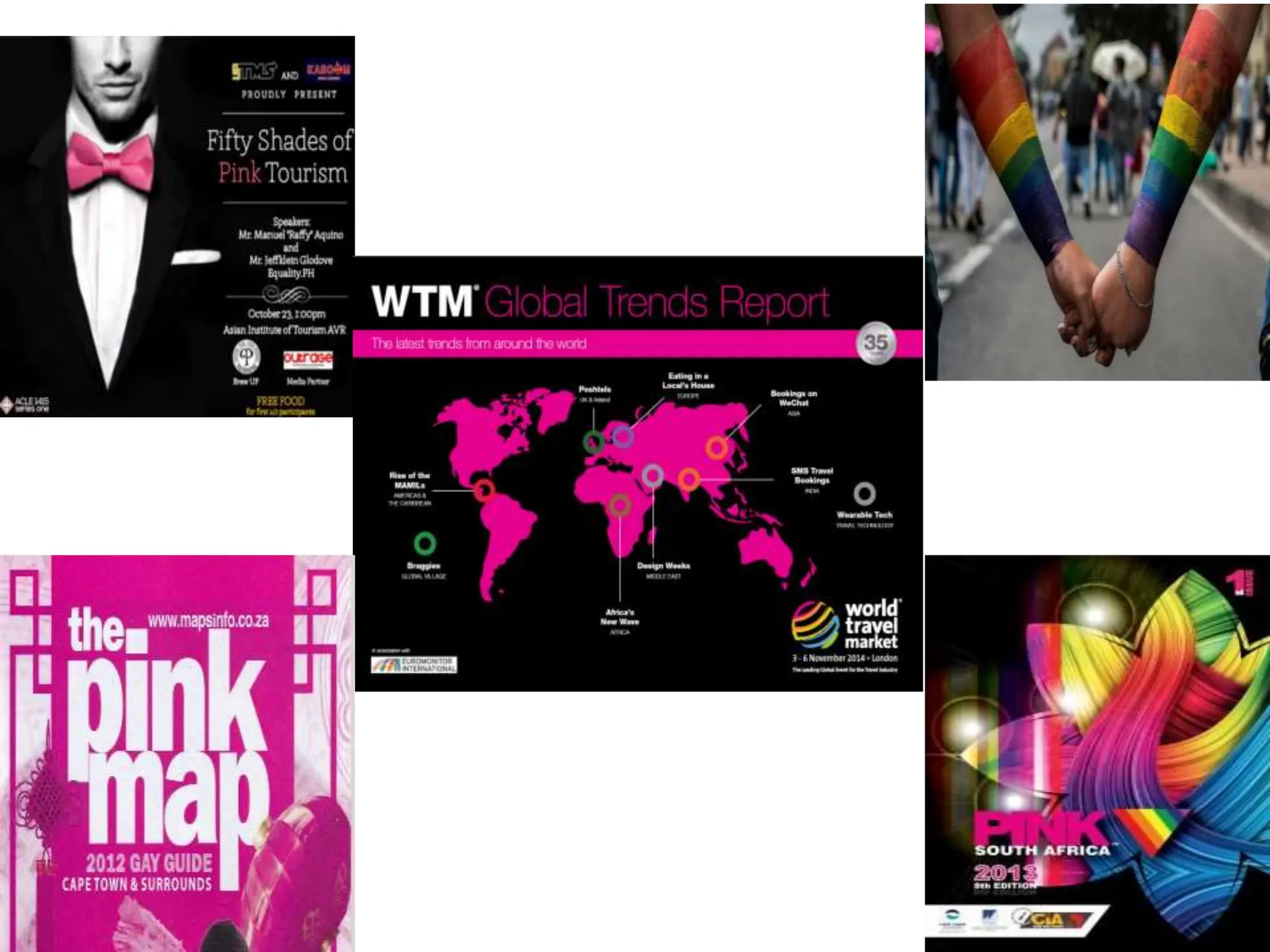
What is pink tourism?
• A form of tourism marketed to gay, lesbian, bisexual, and transgender
(LGBT) people.
• Research released a little over a year ago by Out Now Consulting at
World Travel Market forecasted that the global potential value of the
lesbian, gay, bisexual and transgender (LGBT) leisure travel market was
set to reach a record in 2013. The U.S. LGBT market was expected to take
the lion’s share at $52.3 billion, or 28.9%, with Brazil, Japan, France and
the UK following behind.
• Although the economics of the LGBT tourism market have been known
for some time, and even the UNWTO (United Nations World Tourism
Organization) published its first report on LGBT Tourism in 2012, only a
few destinations have understood the enormous opportunity and have
put in place strategies, plans, operations and budgets to make it happen.
Destinations
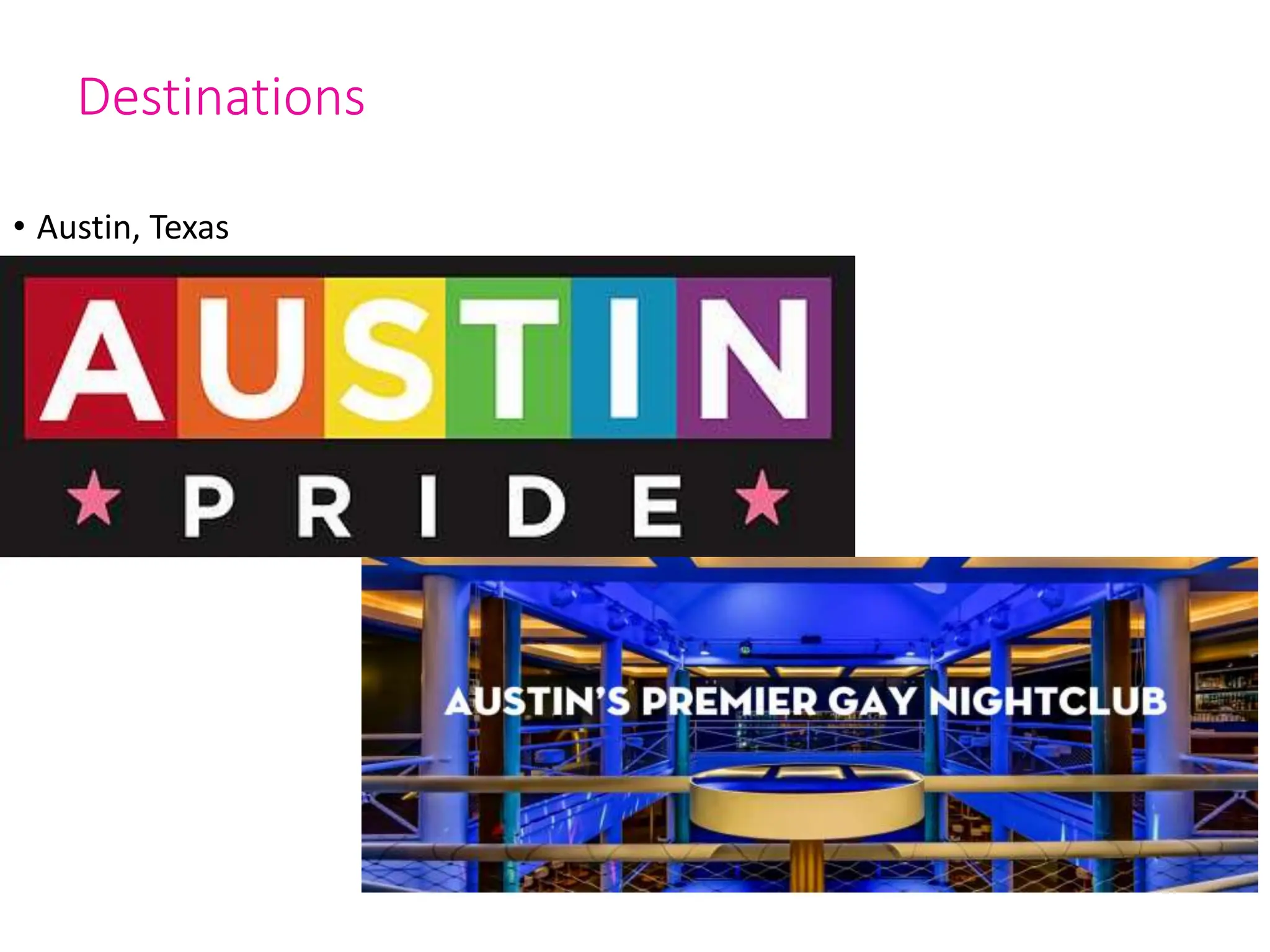
• Austin, Texas
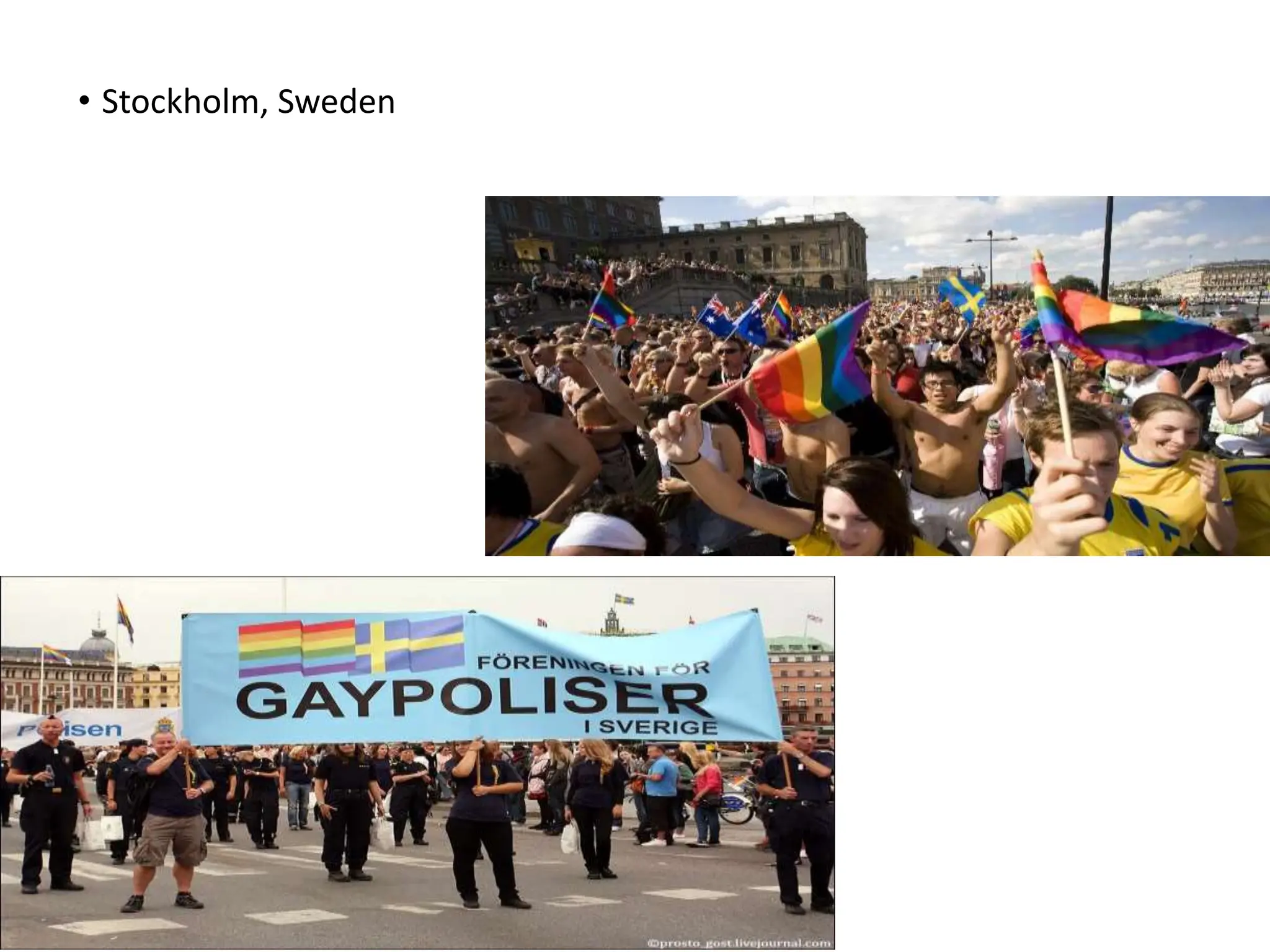
• Stockholm, Sweden
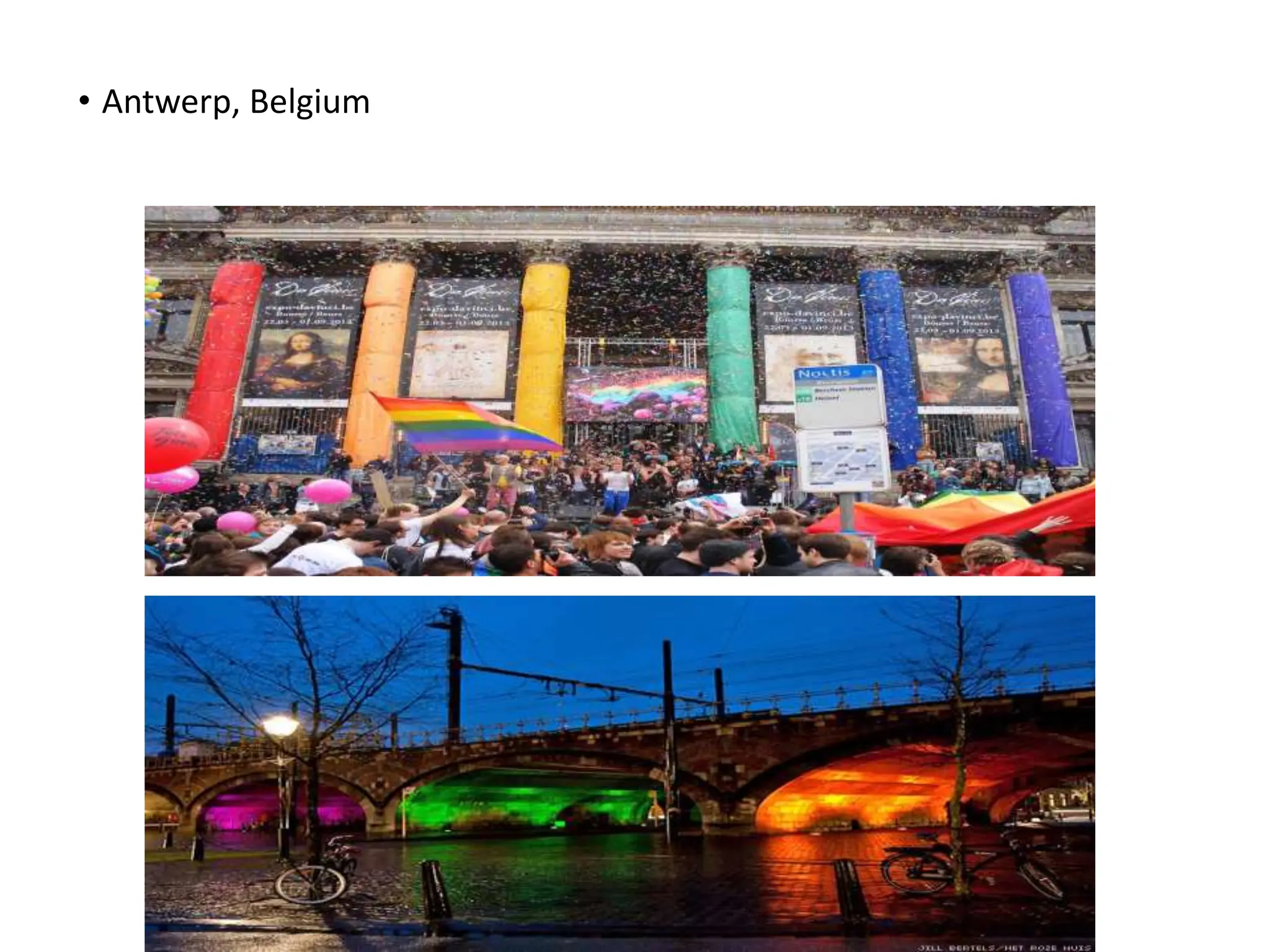
• Antwerp, Belgium
Push Factors
• Escape from heterosexual society
• Spend time with partner
• Escape from discrimination
Pull Factors
• Exploration of an open-minded society
• Experience new cultures
Why we need pink tourism?
• Meeting LGBT people increases visibility and decreases homophobia.
• LGBT travelers are a diverse and nuanced community.
• There is a link between policy, cultural acceptance and the pink dollar.
• Most people cannot hide their identity.
• LGBT travelers still my not feel comfortable traveling in straight tour
groups.
• LGBT travelers may want to find the local LGBT community.
• Safety is still the number one concern for most LGBT travelers.
Cultural aspects
• Pink money phenomenon can be seen in many parts of the
Western World.
• Attitudes towards homosexuality vary greatly in different
cultures.
• Homosexuality is illegal in 80 countries around the world.
• Religions have also a huge influence.
• The world has changed to more and more tolerant all the time.
YOUTH TOURİSM
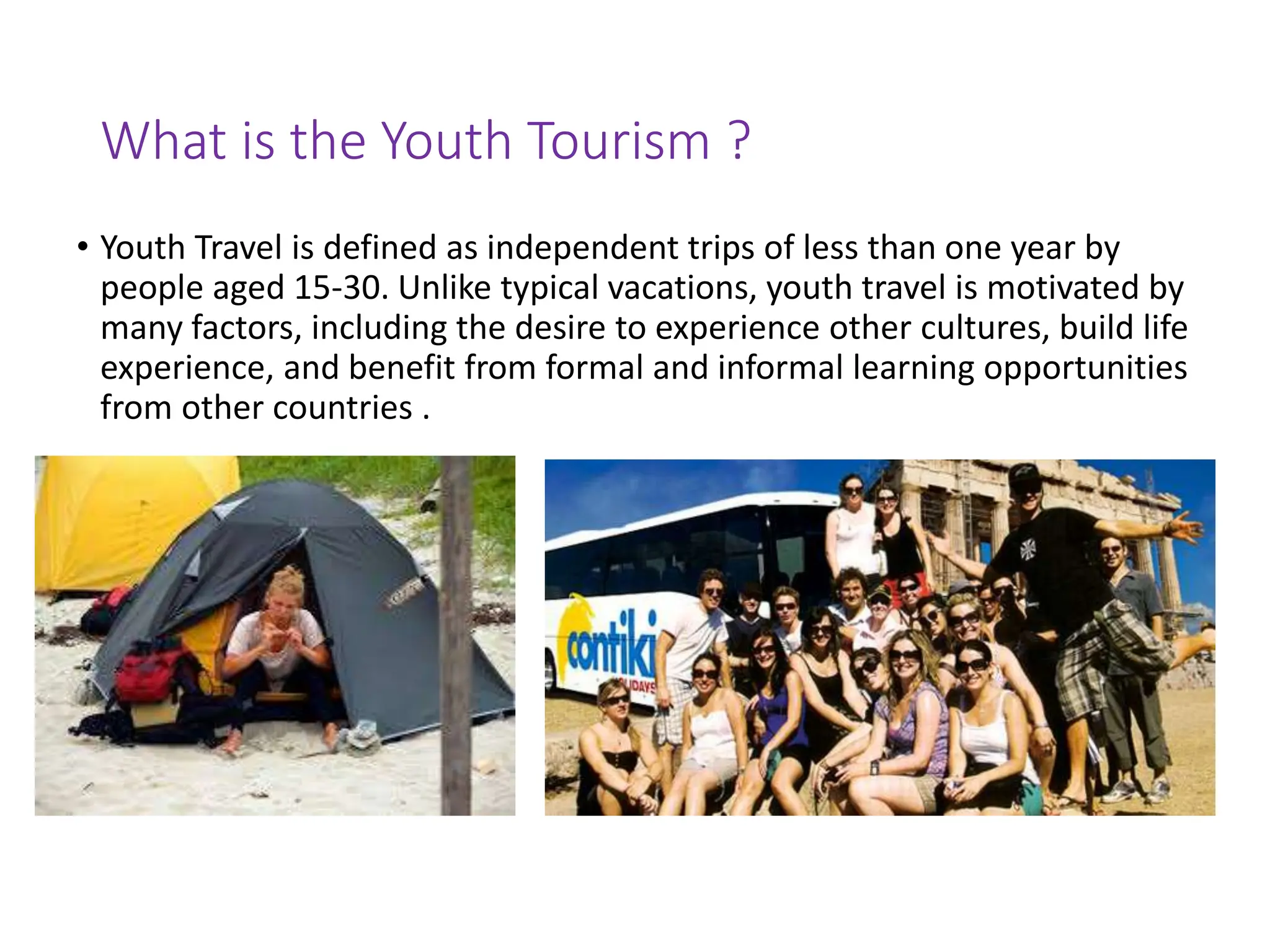
What is the Youth Tourism ?
• Youth Travel is defined as independent trips of less than one year by
people aged 15-30. Unlike typical vacations, youth travel is motivated by
many factors, including the desire to experience other cultures, build life
experience, and benefit from formal and informal learning opportunities
from other countries .
• The youth tourism industry is divided in two categories: the qualitative
and quantitative aspects. The qualitative aspect concerns the aspects
linked to quality, security, flexibility and access. The quantitative aspect
concerns the growth in youth tourism, its importance in relation to
international tourism and the travel expenses of young people.
Youth Tourism
Accommodation
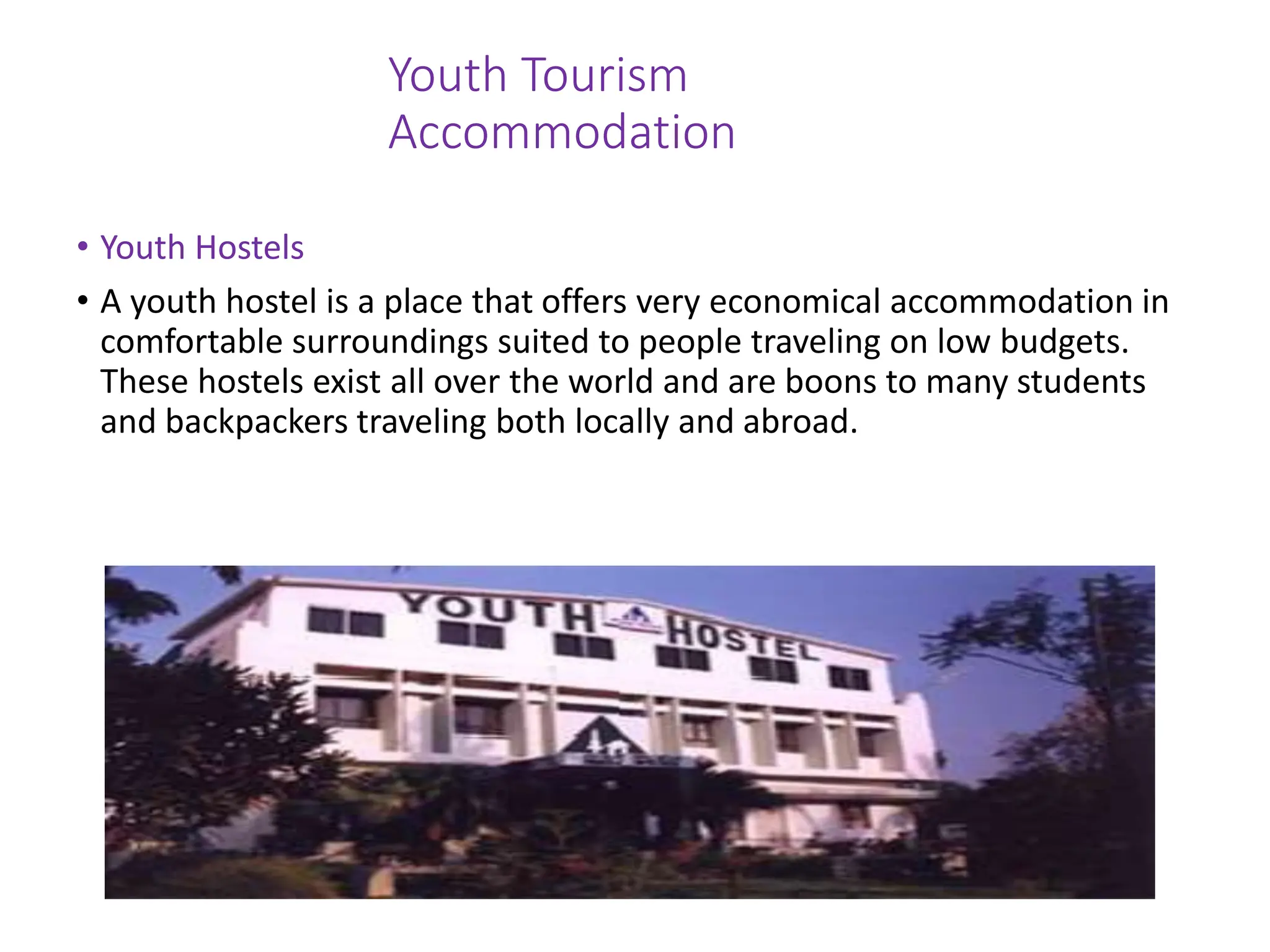
• Youth Hostels
• A youth hostel is a place that offers very economical accommodation in
comfortable surroundings suited to people traveling on low budgets.
These hostels exist all over the world and are boons to many students
and backpackers traveling both locally and abroad.
• Camping
• Camping is an outdoor recreational activity. Camping may
involve the use of a tent, caravan,motorhome, a primitive
structure, sporting camp or no shelter at all.
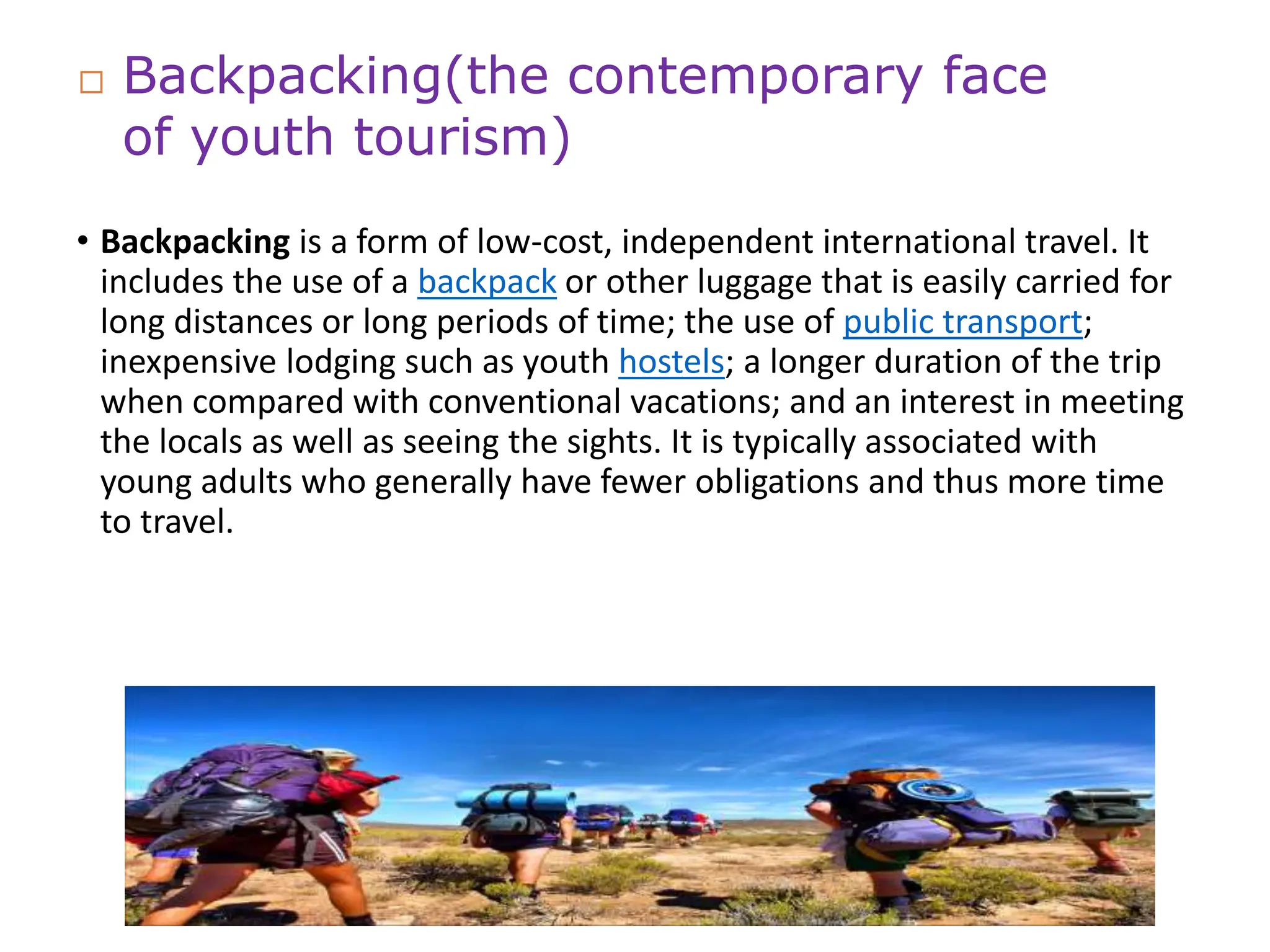
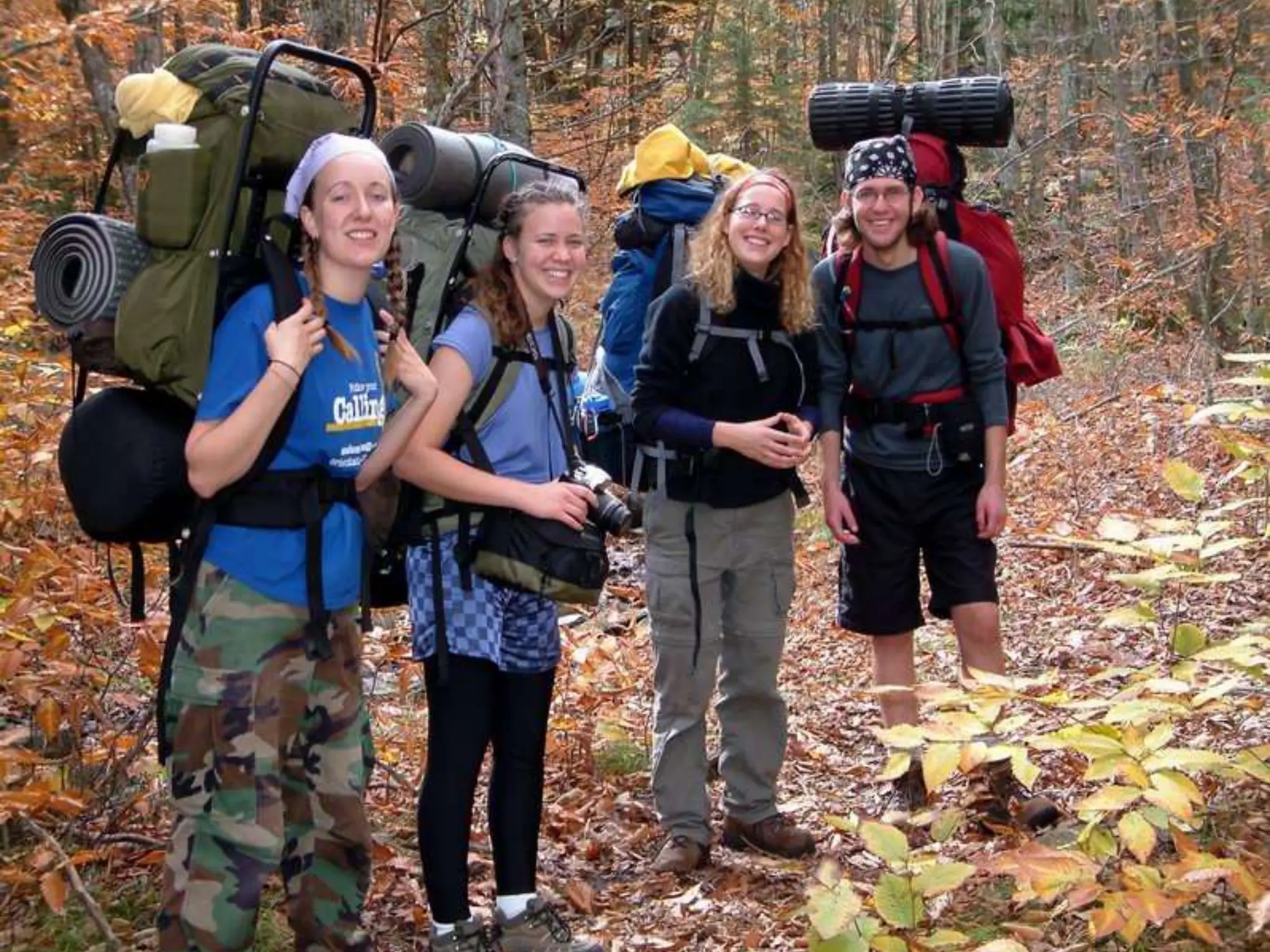
• Backpacking is a form of low-cost, independent international travel. It
includes the use of a backpack or other luggage that is easily carried for
long distances or long periods of time; the use of public transport;
inexpensive lodging such as youth hostels; a longer duration of the trip
when compared with conventional vacations; and an interest in meeting
the locals as well as seeing the sights. It is typically associated with
young adults who generally have fewer obligations and thus more time
to travel.
 Backpacking(the contemporary face
of youth tourism)
Youth Tourism in Turkey
• In Turkey, young people are really encourage to travel because it is
one of the effective ways to improve and develop their personalities, a
chance to visit new places, faces, lives and cultures.
• Youth tourism in Turkey ensures learning while travelling. There are
various organizations which aim to facilitate temporary
accommodations for local and foreign young people.
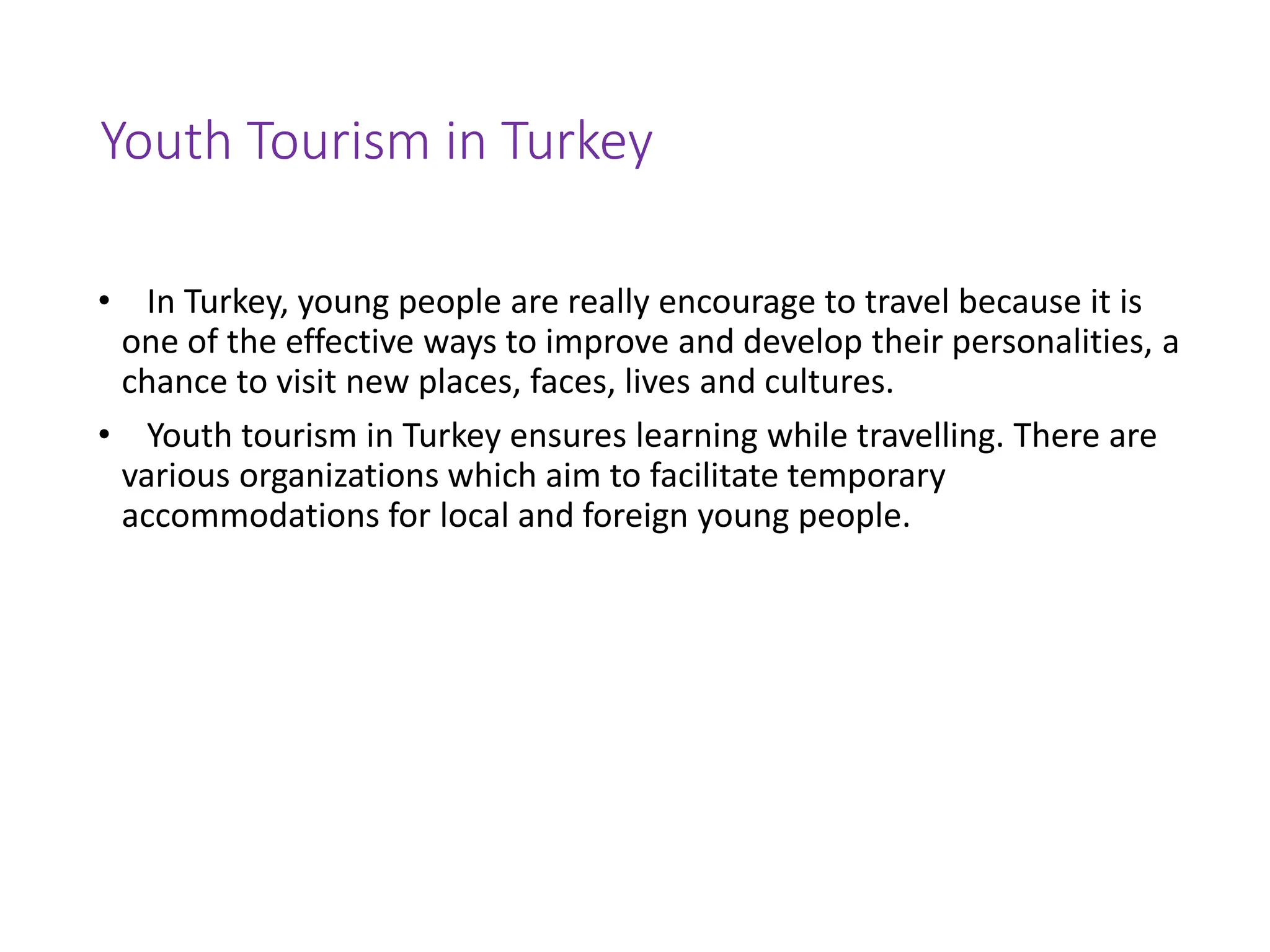
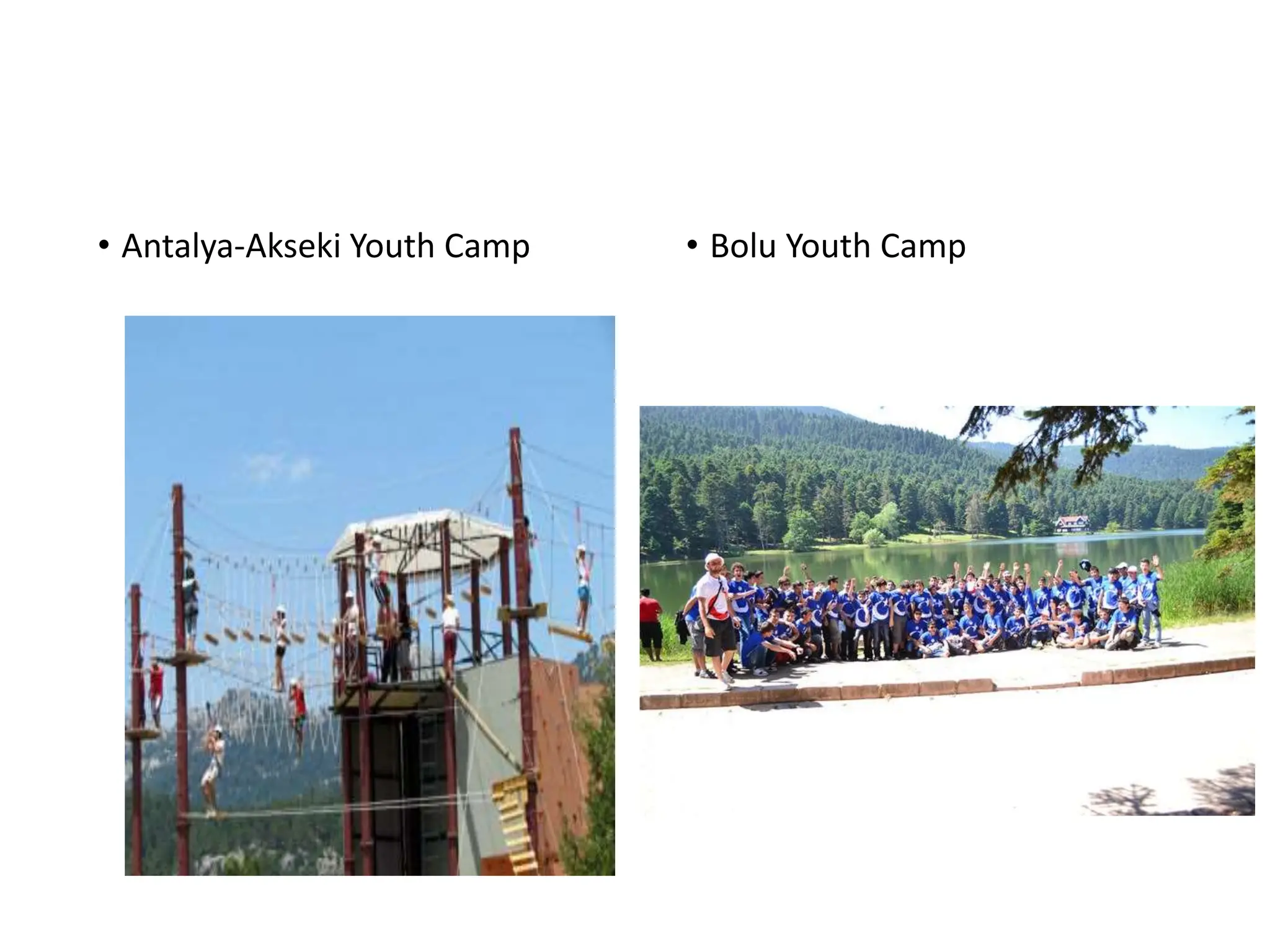
• Antalya-Akseki Youth Camp • Bolu Youth Camp
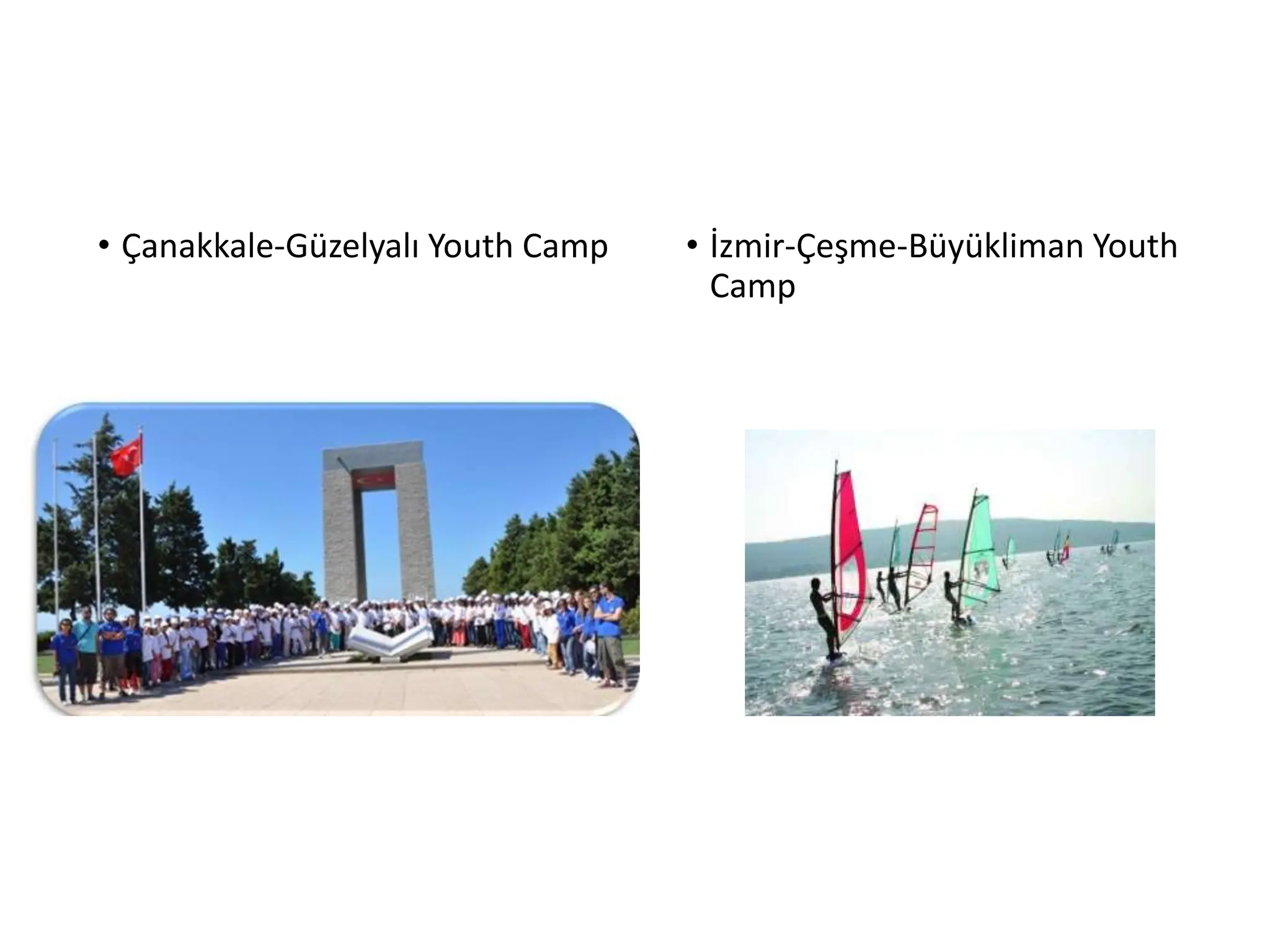
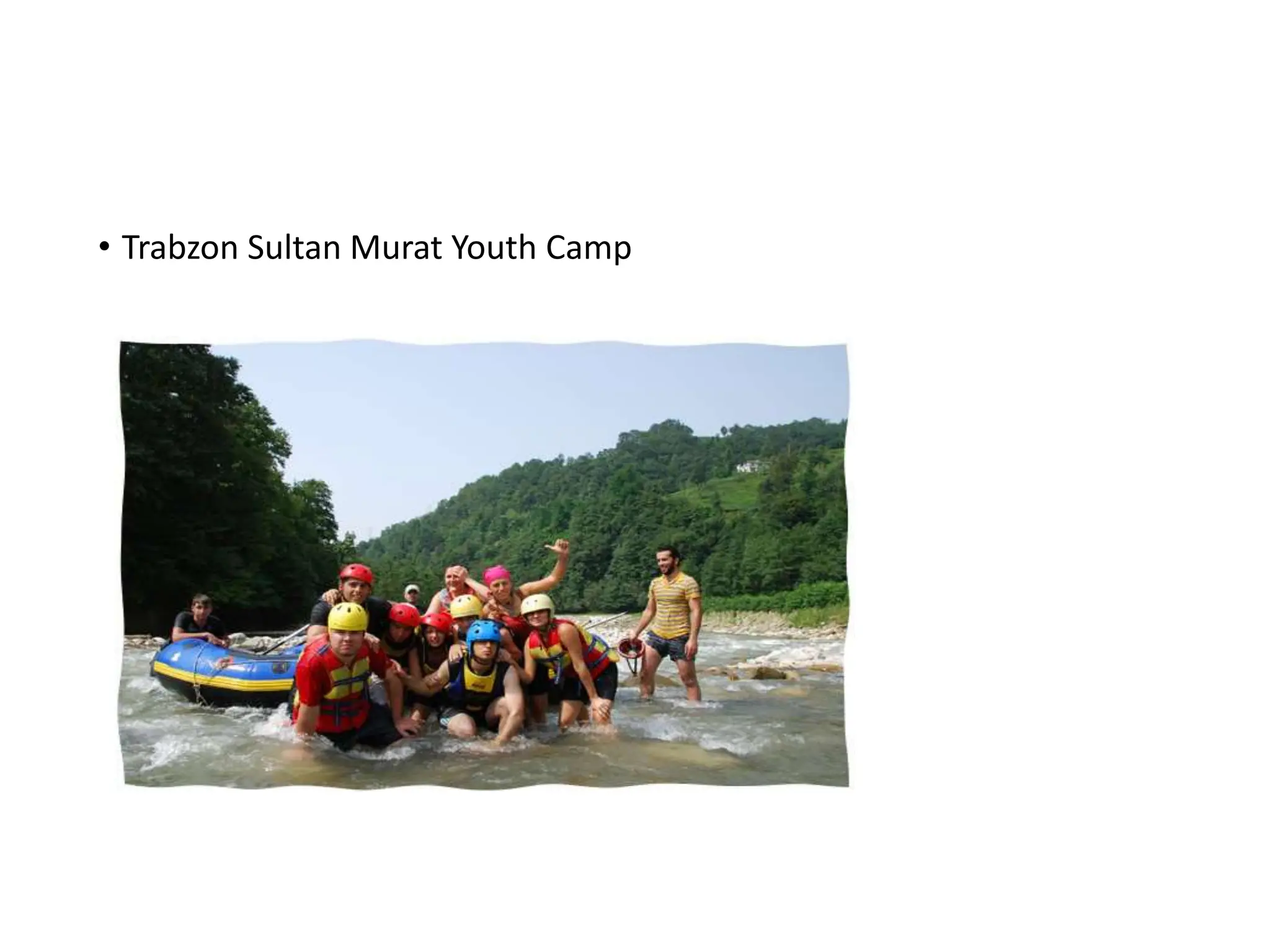
• Çanakkale-Güzelyalı Youth Camp • İzmir-Çeşme-Büyükliman Youth
Camp
• Trabzon Sultan Murat Youth Camp
World Examples
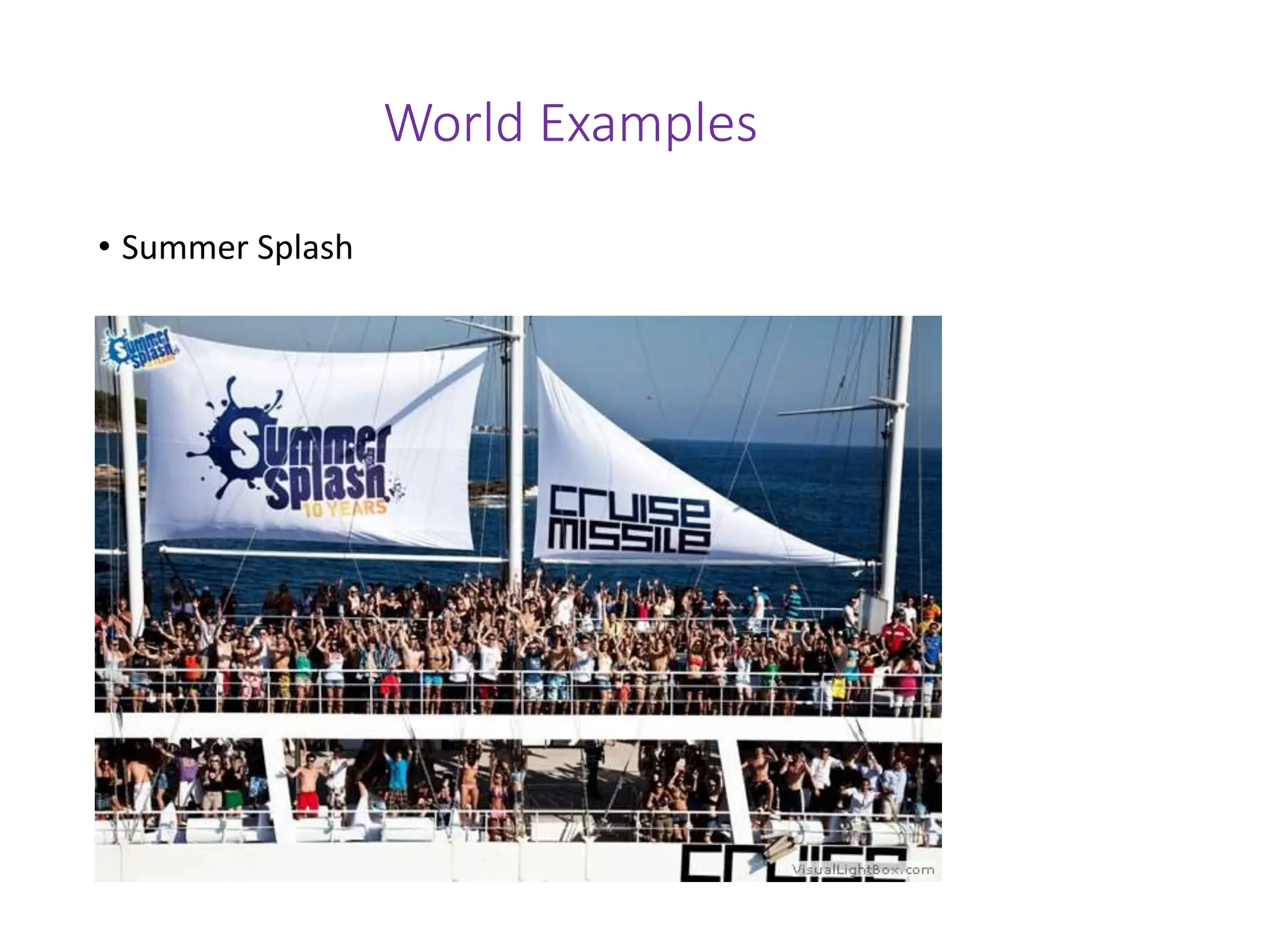
• Summer Splash
• This story started 15 years ago.
• Firstly, story was a Austria graduation trip but now it’s the largest
graduation trip o all Europan.
• Summer Splash was held in Antalya on 2013.
• http://www.youtube.com/watch?v=DY2_Gso9G5s
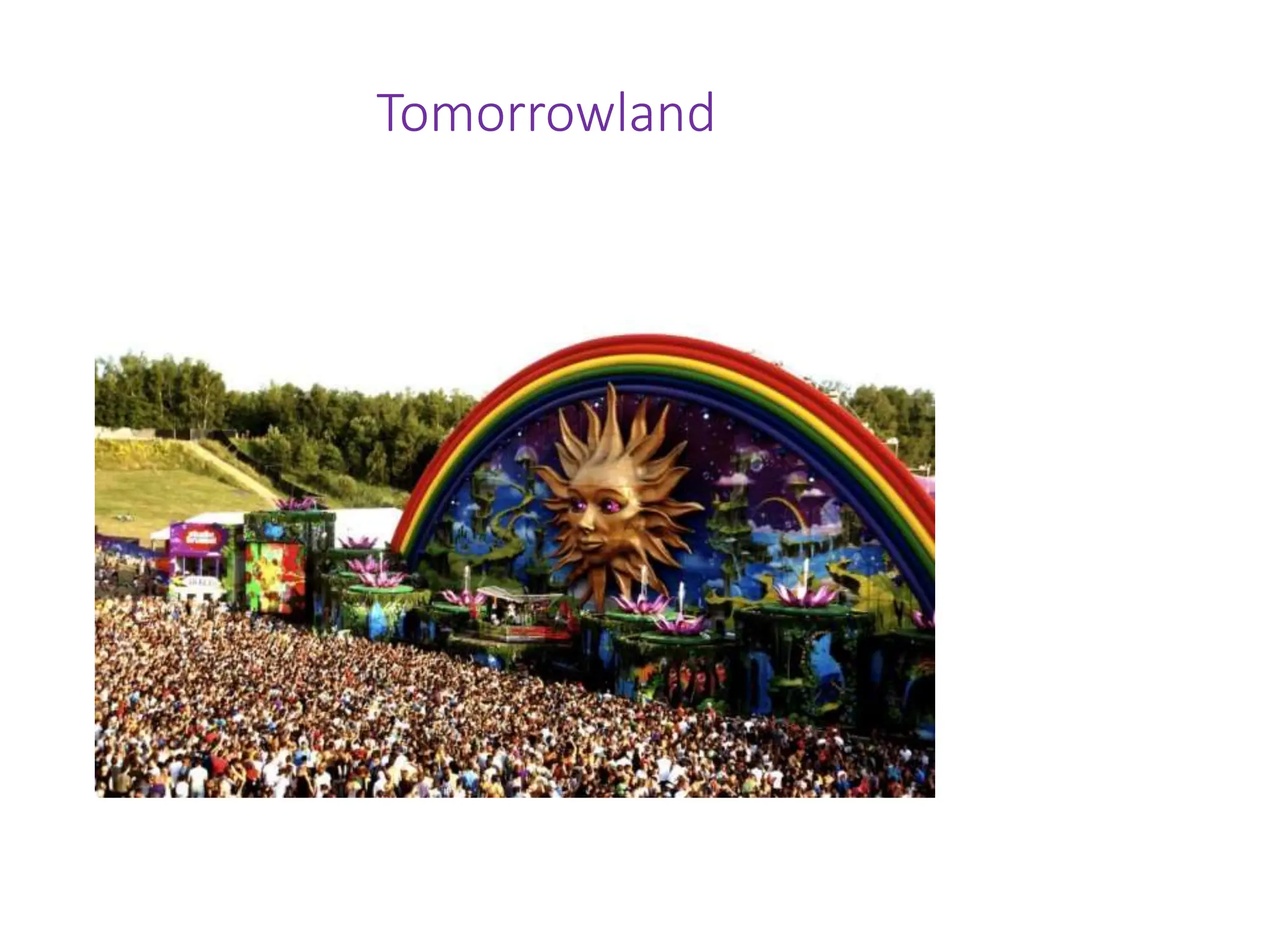
Tomorrowland
• http://www.youtube.com/watch?v=U-DGAQZsgIE
• Tomorrowland is a large electronic music festival held in Belgium.
• The festival takes place in the town of Boom, Belgium and has been
organized since 2005. It has since become one of the most notable
global music festivals.
Wine Tourism
Definition
• "visitation to vineyards, wineries, wine festivals, and wine shows for
which grape wine tasting and/or experiencing the attributes of a grape
wine region are the prime motivating factors for visitors."
• Wine tourism is part of agri-tourism, and can also be a part of eco-
tourism and of sustainable tourism.
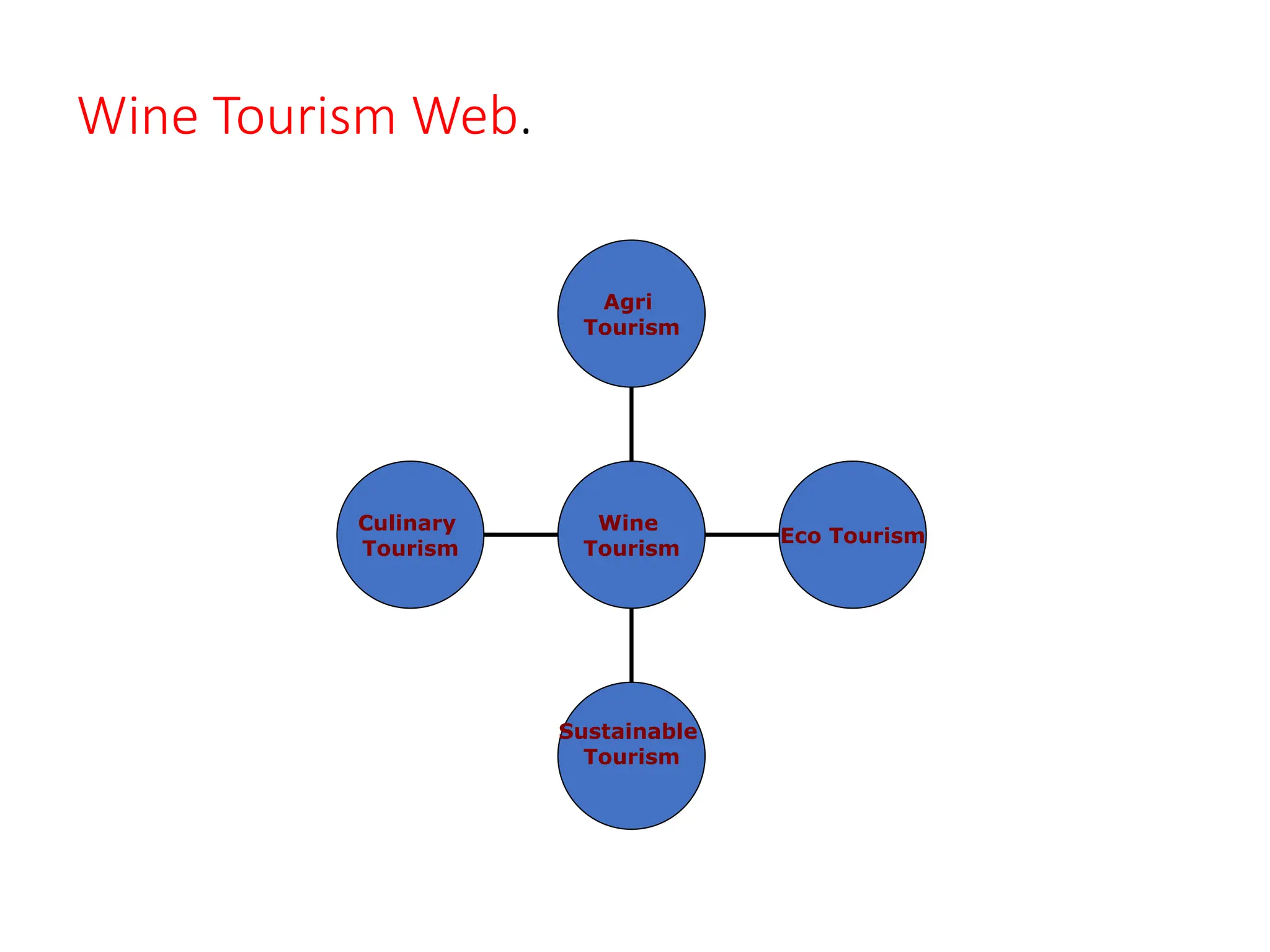
Wine Tourism Web.
Culinary
Tourism
Sustainable
Tourism
Eco Tourism
Agri
Tourism
Wine
Tourism
Agritourism
• Agritourism is the act of visiting a working farm or any agricultural,
horticultural or agri-business operation
• for the purpose of enjoyment,
• education
• or active involvement in the activities of the farm or operation.
Ecotourism
•Ecotourism is
•"responsible travel (Tourism which operates in such a way as to
minimize negative impacts on the environment )
•to natural areas
•that conserves the environment and
•improves the well-being of local people."
Sustainable tourism.
• Any form of tourism that
• does not reduce the availability of resources and,
• does not inhibit future travelers from enjoying the same experience.
Where in the world can you enjoy Wine
Tourism?
• New world wine regions.
• The US
• Canada
• Australia
• New Zealand
• South Africa
• Latin America
• Mexico, Central America and the Caribbean
• Argentina, Chile and the rest of South America
• Old World wine regions.
•France:
• Burgundy, Northeast France, Rhone, Southe of France,
Bordeaux and Southwest France, Loire.
•Spain:
• Northern Spain, East coast and the Balearic Islands,
central and southern Spain.
•Portugal (northern Portugal, southern Portugal and
Madeira)
The Old World wine regions
•Italy (northwest Italy, Northeast Italy, Central Italy
(Tuscany), Mezzogiorno)
•Germany
•Northern, Eastern and southeastern Europe
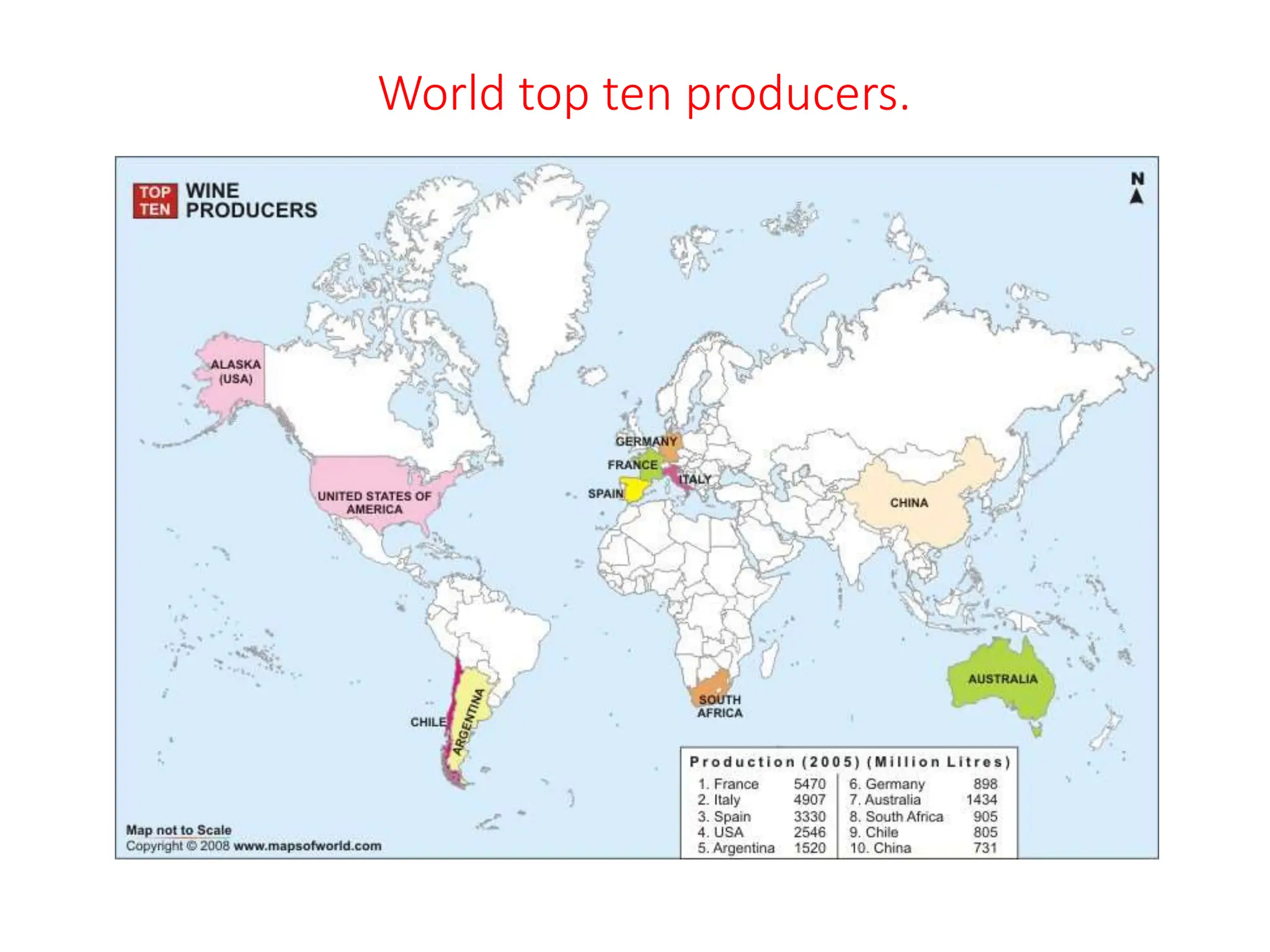
World top ten producers.
What are the motivations of wine tourists?
• They can be different based on:
•Age
•Interest
•Nationality.
The 10 major motivations.
• 1) to taste wine,
•2) to gain wine knowledge,
•3) to experience the wine setting, (e.g. meet the
winemaker; tour cellars & vineyards),
•4) to be in a rural setting (beauty of vineyards; learn about
farming, agri-tourism),
The 10 major motivations.
• 5) to match food and wine--culinary tourism (food and wine pairing),
• 6) to have fun (wine festivals and events),
• 7) to enjoy wine culture (romance and elegance),
• 8) to appreciate the architecture,
• 9) to learn about the "green" aspects and eco-tourism,
• 10) to enjoy the health aspects of wine.
Why is there a growing interest in Wine Tourism?
• Government or regional strategy to promote or increase wine tourism
for the economic returns it provides.
• Growing interest in environmental issues (growth in agri- and eco-
tourism that encompasses vineyards).
• Growing interest in dining and cooking.
• In some regions, increase in the number of wineries (US)
What are the benefits of Wine Tourism?
• Increased sales (at least 50% of the time, the visitor will purchase at
least one item).
• Higher margins (direct sale).
• Visitor can provide direct feedback
(the tasting room becomes a customer research lab).
• Increased revenues for stores, restaurants, hotels, and the local
community.
Wine Tourism:
the basics and the new trends
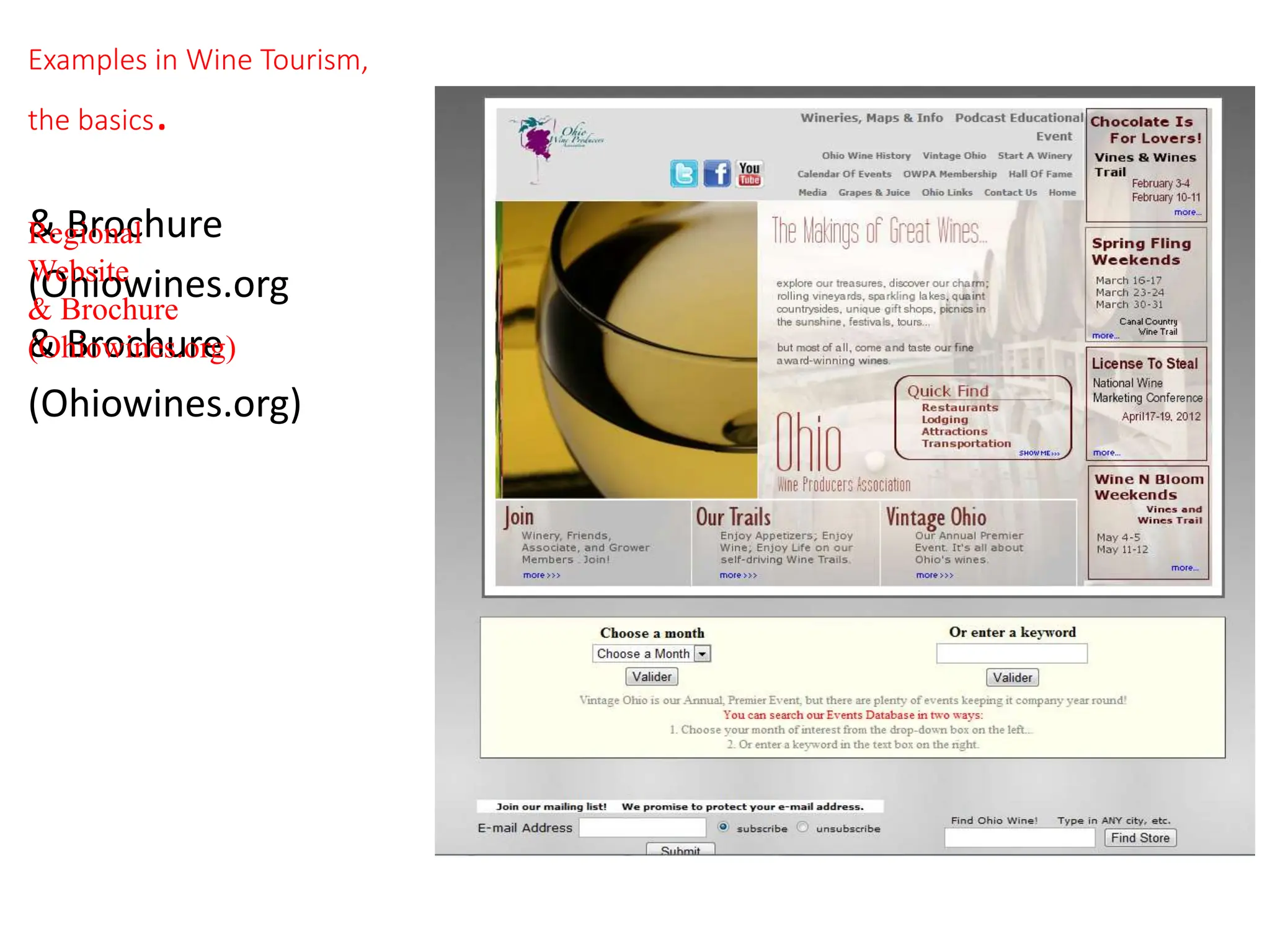
Examples in Wine Tourism,
the basics.
& Brochure
(Ohiowines.org
& Brochure
(Ohiowines.org)
Regional
Website
& Brochure
(Ohiowines.org)
New trends.
• Experiential programs: participation in the grape growing or
winemaking process
• blending seminar,
• winemaker’s boot camps (camp d’entraînement), ex. Hall Wines in Napa Valley.
• personal membership program and ownership opportunities.
• Wine villages/education centers (includes the development of wine education
centers or museums.)
New trends.
• Innovative wine events:
• wine and wildlife,
• wine and wool gathering festival,
• wine and culinary tourism events, like wine and food pairing (Pasta and Wine
Week-End)
• But also, especially in off-season:
• a Murder Mystery Tour (visitors pick up clues at different wineries to unravel the
solution to a crime)
• Bargain Bash (a "spring cleaning, garage sale" of wine and related items)
New trends.
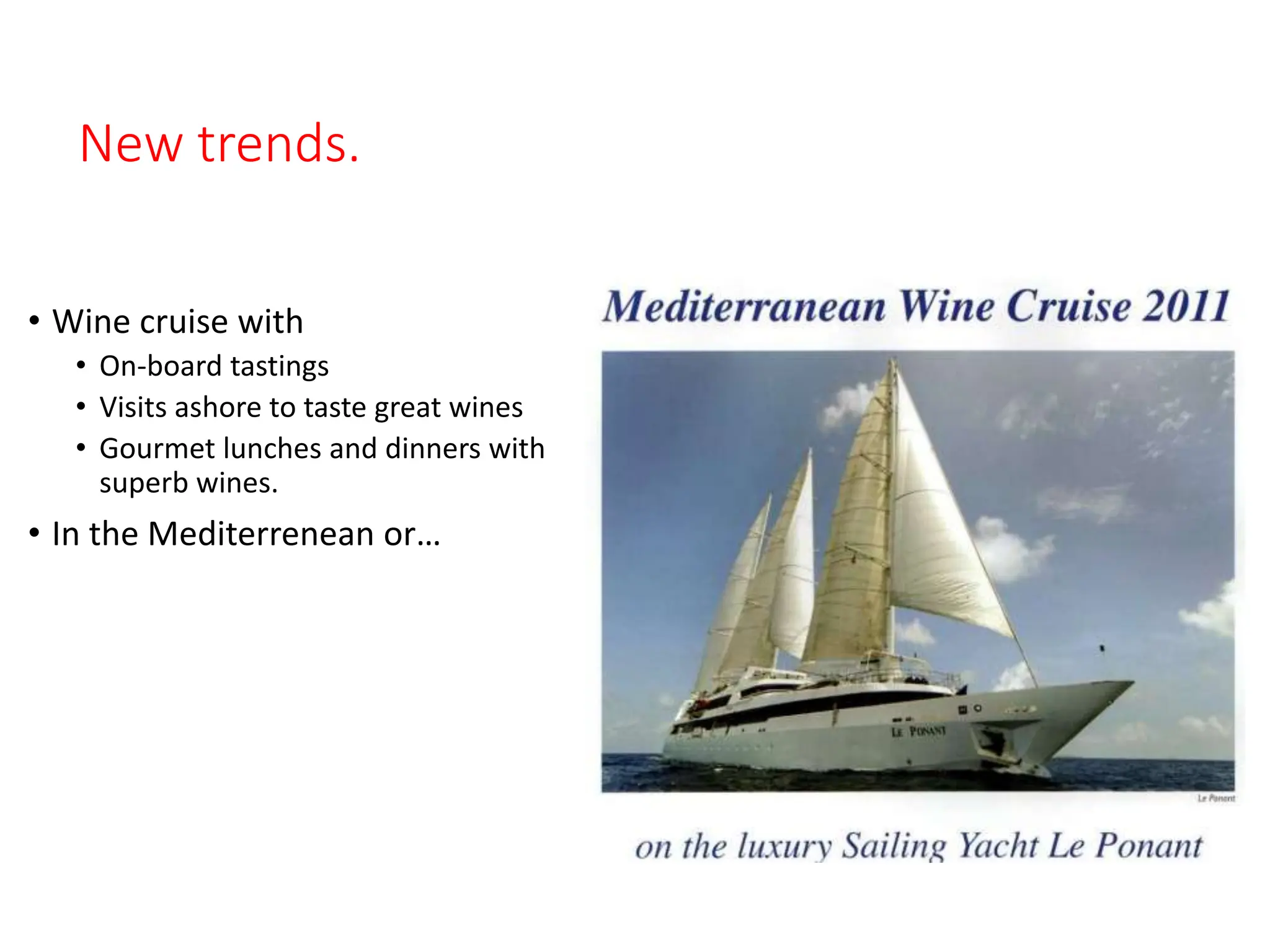
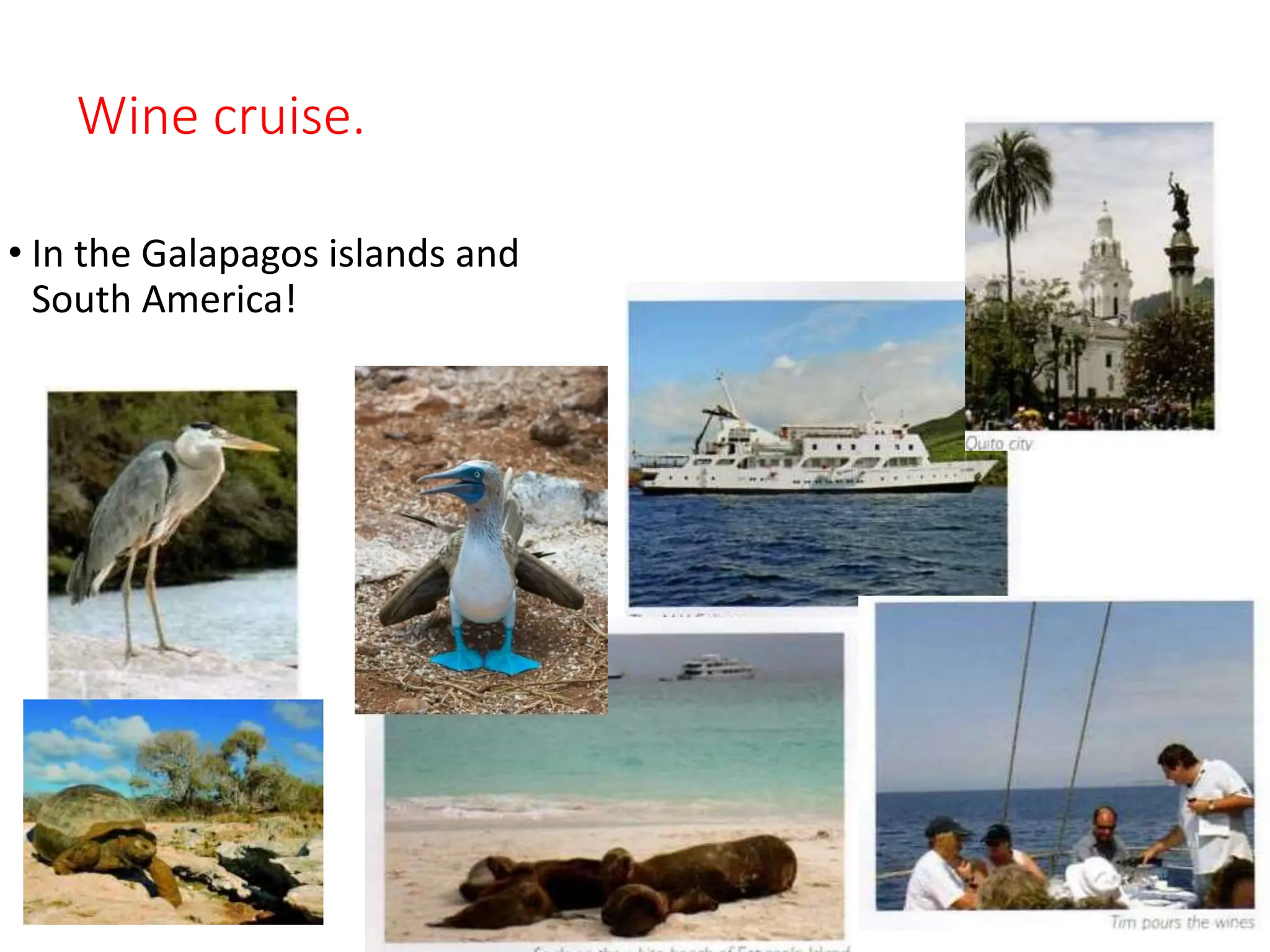
• Wine cruise with
• On-board tastings
• Visits ashore to taste great wines
• Gourmet lunches and dinners with
superb wines.
• In the Mediterrenean or…
Wine cruise.
• In the Galapagos islands and
South America!
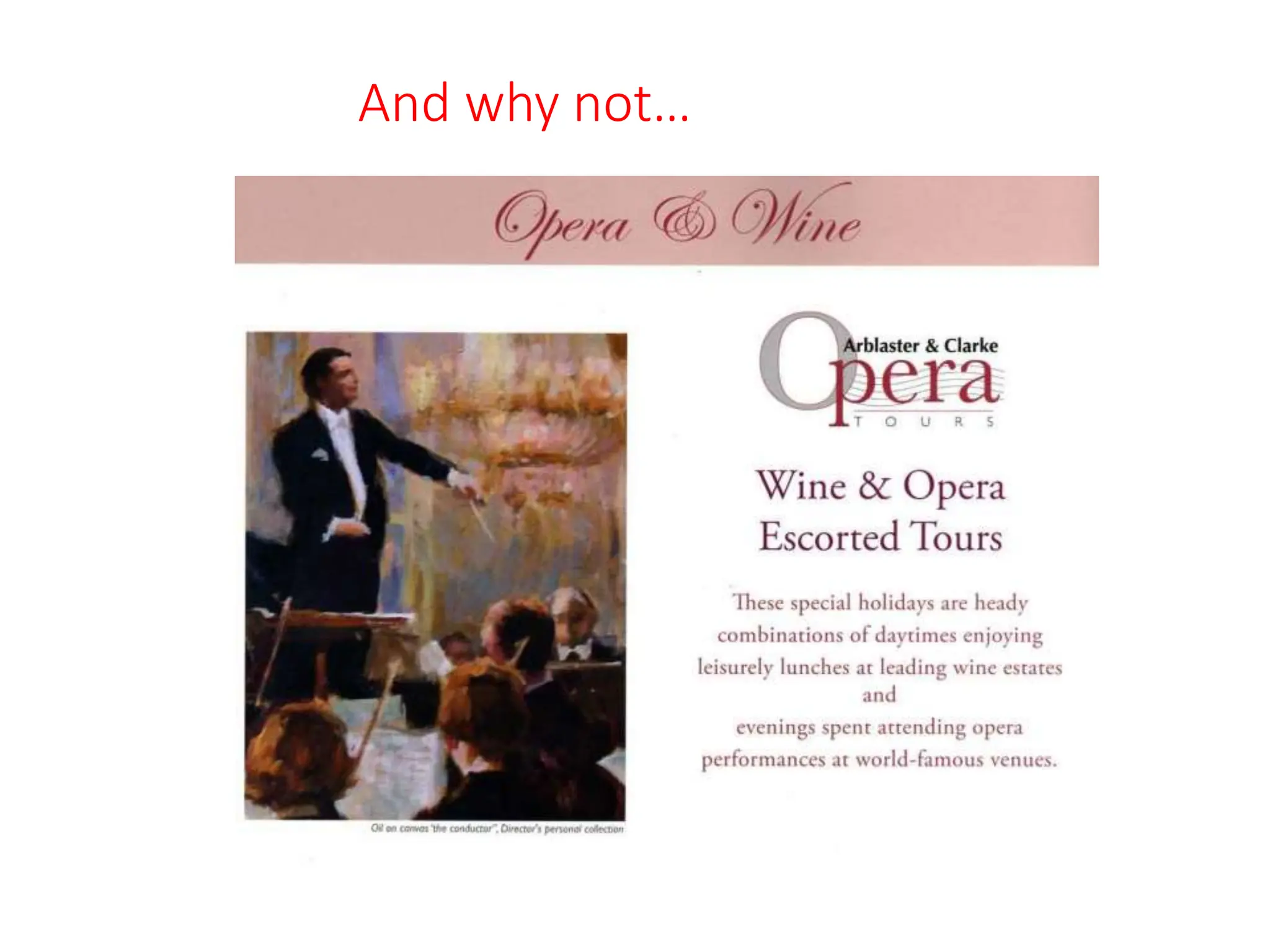
And why not…
New trends.
• New types of partnership: with golf resorts, spas, cooking schools…
• Innovative collaboration:
• partner hotels and restaurants offering discount coupons for visitors to go to
wineries and receive a free tasting or discount on wine.
• Likewise, partner wineries will offer visitors coupons for the local restaurants and
hotels.
• It creates an atmosphere of warmth that is appealing to visitors.
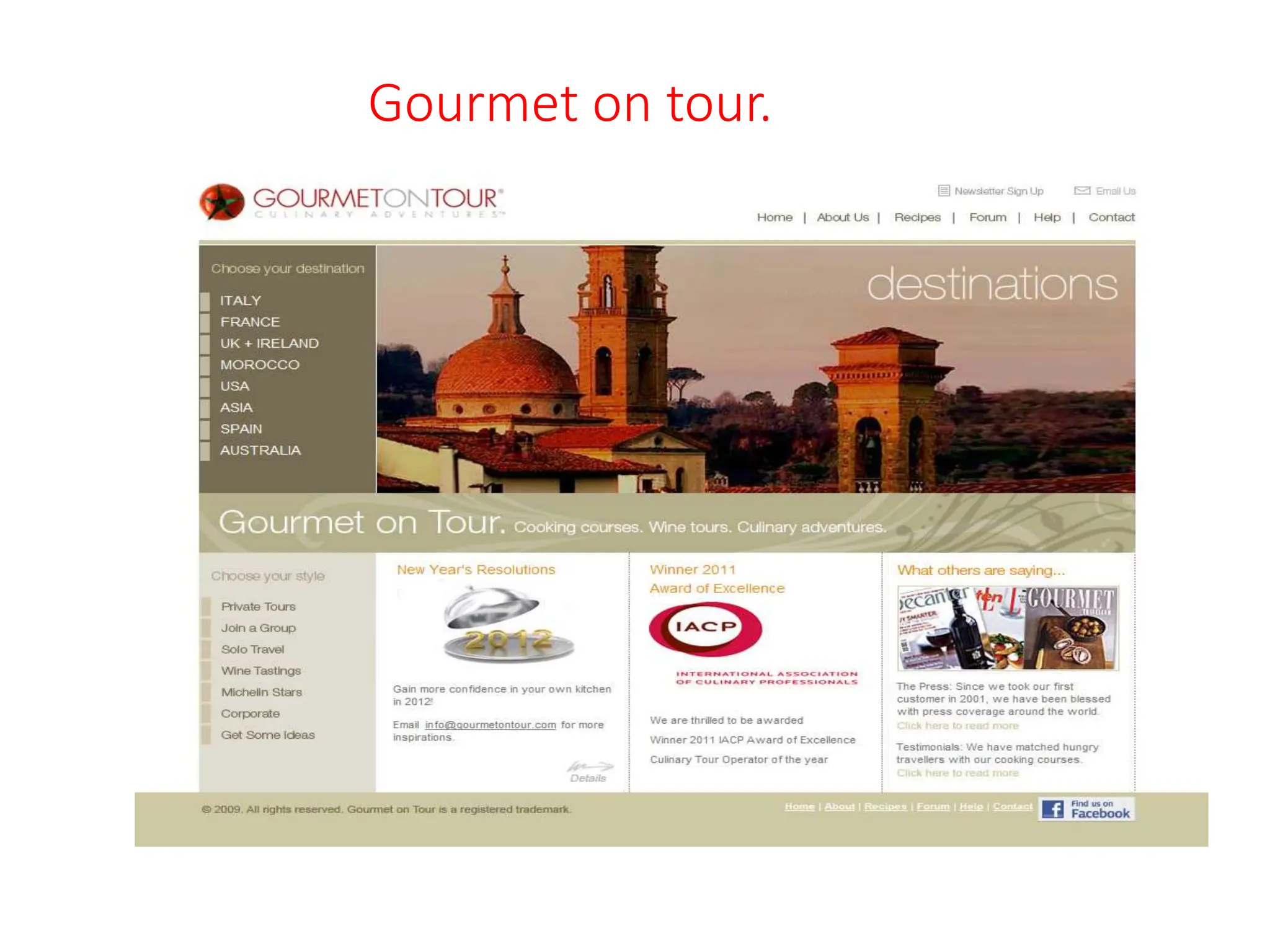
Gourmet on tour.
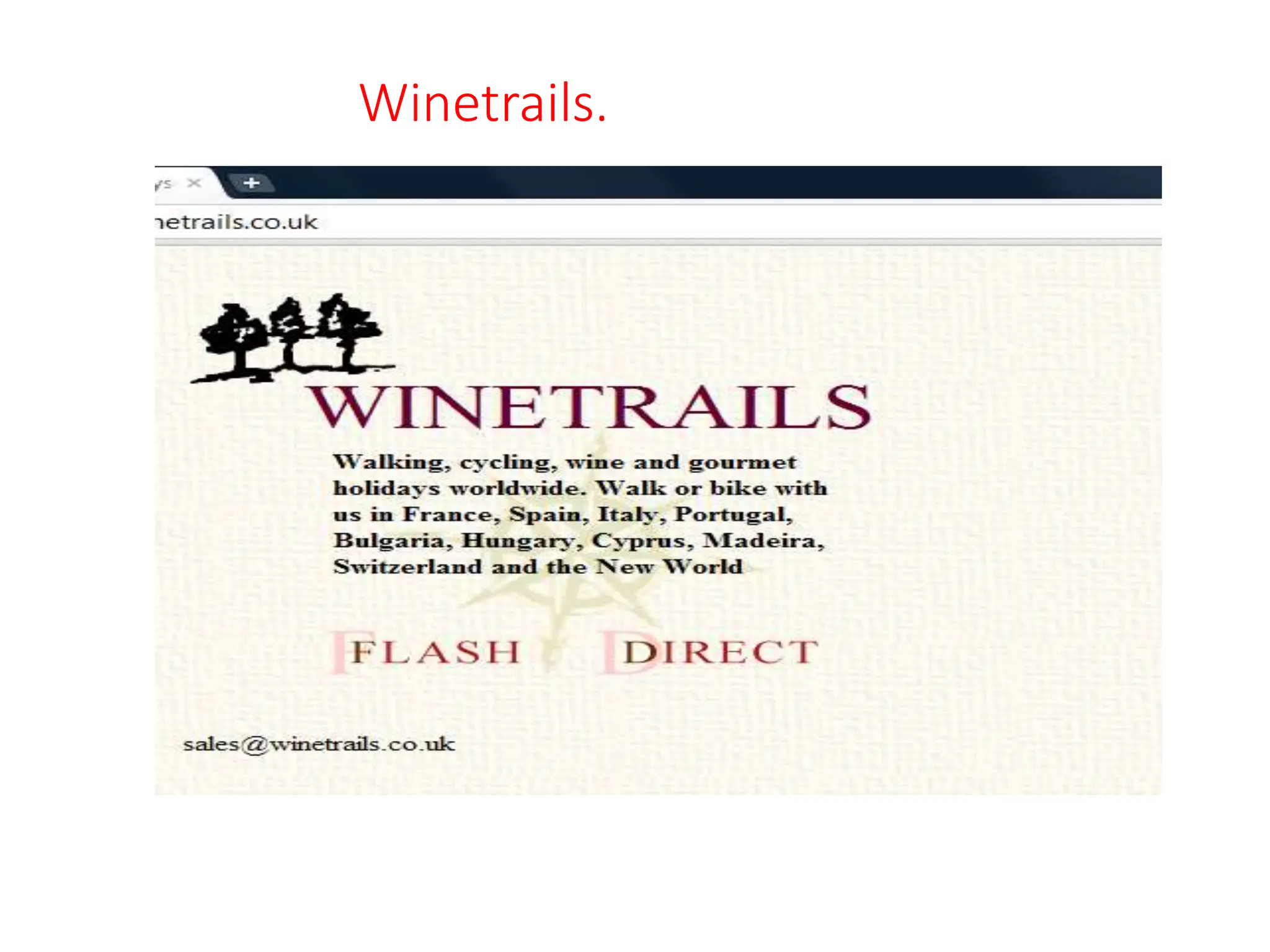
Winetrails.
Frontier Tourism
Places that no one or very few people have ever
seen
People are lured by being one of the 1st ever to
see/do something.
Antarctica, Mt. Everest
Space – 7 tourists have been to the international
space station.
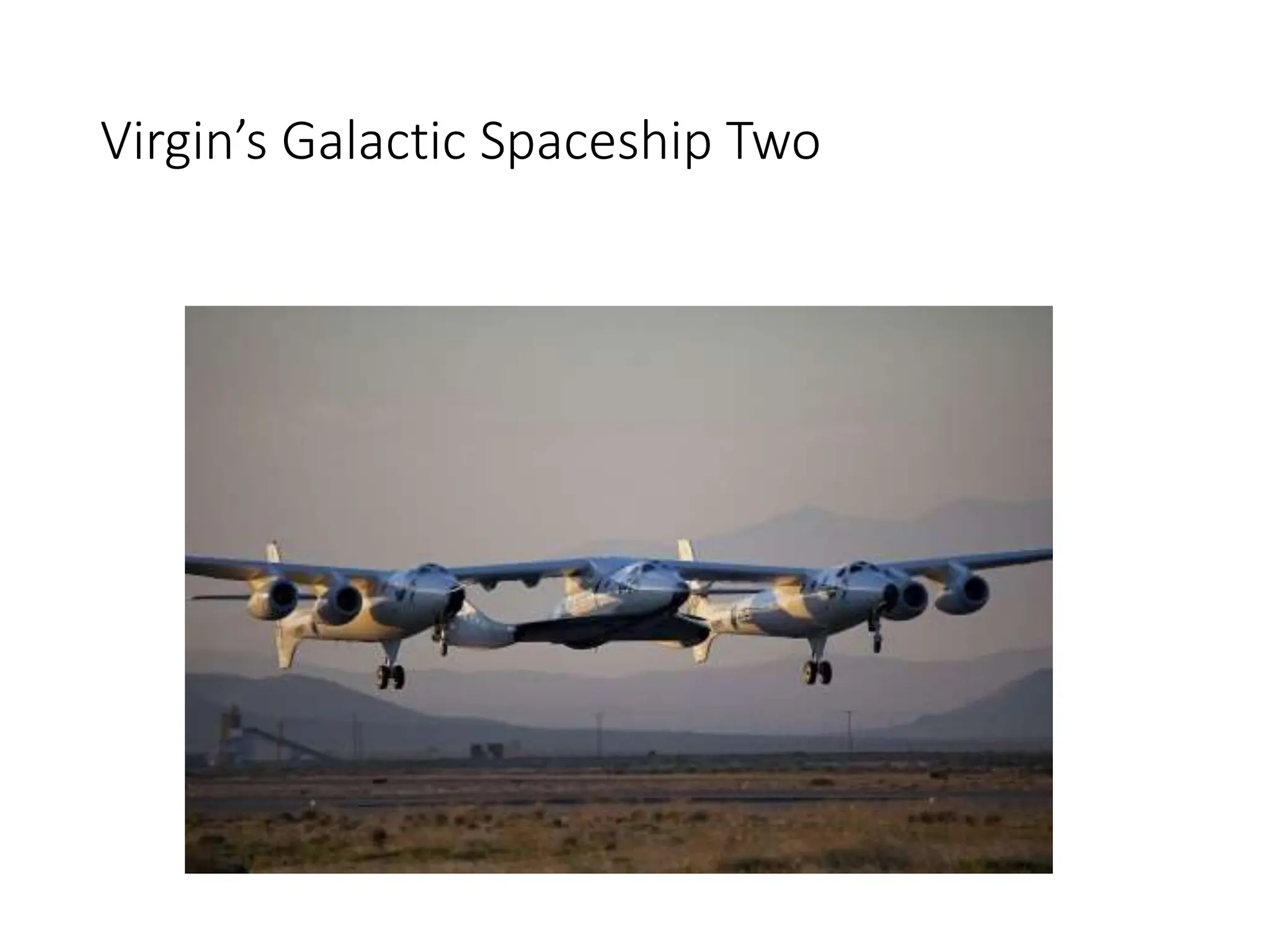
Virgin’s Galactic Spaceship Two
• Going to be the 1st commercially operating space flight
• Launch from another aircraft and spend 2.5 hours in space
• 5 –10 minutes of weightlessness at 360 000 feet (110 km)
• only for $ 200 000.00
Virgin’s Galactic Spaceship Two
1 Name types of tourism
2 Top mountain peaks
3 Work with map

Different types of tourism and their features

  • 1.
  • 2.
    United Nations NationsUnies Forms of tourism UNSD/UNWTO Workshop Madrid 17/20 July 2006
  • 3.
    Update of theformulation REC’00 • Domestic tourism: is the tourism of resident visitors within the economic territory of the country of reference. • Inbound tourism: is the tourism of non-resident visitors within the economic territory of the country of reference. • Outbound tourism: is the tourism of resident visitors outside the economic territory of the country of reference. • Internal tourism: is the tourism of visitors, both resident and non-resident, within the economic territory of the country of reference. • National tourism: is the tourism of resident visitors, within and outside the economic territory of the country of reference.
  • 4.
    Measurement of inboundtourism • When crossing national borders: • Administrative registers (Immigration data, E/D cards) • Surveys • When staying in accommodation establishments: • Surveys • Combination of sources
  • 5.
    Measurement of domestictourism • Specific survey to resident households • Modules to be included in general households surveys
  • 6.
    Measurement of outboundtourism • When crossing national borders: • Administrative registers (E/D cards) • Surveys • Surveys to resident households • Mirror statistics
  • 7.
    BUSINESS TOURISM • TRAVELTO COMPLETE A BUSINESS TRANSACTION OR ATTEND A BUSINESS EVENT. • EXAMPLES conventions sales meetings trade shows
  • 8.
    NATURE TOURISM •Travel toenjoy a natural setting, scenery or wildlife •Travel to the Serengeti Plain in Africa, or the rainforest of Costa Rica are examples
  • 9.
    CULTURAL TOURISM •Travel toexperience history, folklore and cultural lifestyle of a location. •Museums, homestays, mosques
  • 10.
    SOCIAL TOURISM •Travel whichinvolves the company of others. •This may include travel by tour bus and family visits.
  • 11.
    RECREATIONAL TOURISM •Tourism toexperience something different from the routine of daily life. Relaxing Camping
  • 12.
    ACTIVE TOURISM •Tourism thathas a predetermined objective, such as… Climbing a Mountain Learning a new language
  • 13.
    SPORTS TOURISM Tourism toexperience a specialized sport or sporting event.
  • 14.
    RELIGIOUS TOURISM •Visiting aplace of religious significance. Vatican, Rome Varanasi, India Mecca, Saudi Arabia
  • 15.
    HEALTH TOURISM •Tourism toimprove one’s health Spas Weight Loss Camps Surgery
  • 16.
    ADVENTURE TOURISM •Tourism thatinvolves an aspect of challenge and adventure, such as…
  • 17.
    Gerlinde Kaltenbrunner First womento climb all 14, 8000m + mountain peaks without oxygen She finally climbed K2 on her 4th attempt. Fredrik Ericsson (1975-2010)
  • 18.
    The Top MountainPeaks in the World • Please write down
  • 19.
    ECOTOURISM/WILDERNESS •Low impact adventurein a natural setting – in harmony with nature. •This involves few people in remote places being environmentally responsible.
  • 20.
  • 21.
  • 22.
    DARK TOURİSM • Akind of tourism that involves travelling to places associated with death and suffering. • It is also known as black tourism or grief tourism. • Dark tourism is not a new phenomenon. For many years now dark tourism has been part of our fascination, dating back to the pilgrims. • Battlefields, concentration camps, dungeons, prisons, or graveyards. But it is also about locations where the pain is not so much physical as economic. • People visit these dark tourism locations to remember what happened in the past, why people died etc. and mostly visited by family&friends.
  • 23.
    SOME FAMOUS DARKTOURİSM SİTES AROUND THE WORLD • 11 September 2001 • Al-Quaeda • Terrorist Attacks • USA/New York
  • 24.
    • Auschwitz • Concentrationcamp • Poland • World War II
  • 25.
    • Chernobyl • NuclearDisaster • 26 April 1986 • Pripyat/Ukraine
  • 26.
    • Hirosima • 6August 1945 • First Nuclear Bomb • Dropped on Hirosima • Japan
  • 27.
    • Volcanic Eruption •Mount Vesuvius • AD 79 • Naples/Italy
  • 28.
    • Anzac DayGallipoli • Australian and New • Zealand Army cops • Who fought at Gallipoli • World War I • 25 April • Çanakkale/Turkey
  • 29.
  • 30.
    What is pinktourism? • A form of tourism marketed to gay, lesbian, bisexual, and transgender (LGBT) people.
  • 31.
    • Research releaseda little over a year ago by Out Now Consulting at World Travel Market forecasted that the global potential value of the lesbian, gay, bisexual and transgender (LGBT) leisure travel market was set to reach a record in 2013. The U.S. LGBT market was expected to take the lion’s share at $52.3 billion, or 28.9%, with Brazil, Japan, France and the UK following behind. • Although the economics of the LGBT tourism market have been known for some time, and even the UNWTO (United Nations World Tourism Organization) published its first report on LGBT Tourism in 2012, only a few destinations have understood the enormous opportunity and have put in place strategies, plans, operations and budgets to make it happen.
  • 32.
  • 33.
  • 34.
  • 35.
    Push Factors • Escapefrom heterosexual society • Spend time with partner • Escape from discrimination
  • 36.
    Pull Factors • Explorationof an open-minded society • Experience new cultures
  • 38.
    Why we needpink tourism? • Meeting LGBT people increases visibility and decreases homophobia. • LGBT travelers are a diverse and nuanced community. • There is a link between policy, cultural acceptance and the pink dollar. • Most people cannot hide their identity. • LGBT travelers still my not feel comfortable traveling in straight tour groups. • LGBT travelers may want to find the local LGBT community. • Safety is still the number one concern for most LGBT travelers.
  • 40.
    Cultural aspects • Pinkmoney phenomenon can be seen in many parts of the Western World. • Attitudes towards homosexuality vary greatly in different cultures. • Homosexuality is illegal in 80 countries around the world. • Religions have also a huge influence. • The world has changed to more and more tolerant all the time.
  • 41.
  • 42.
    What is theYouth Tourism ? • Youth Travel is defined as independent trips of less than one year by people aged 15-30. Unlike typical vacations, youth travel is motivated by many factors, including the desire to experience other cultures, build life experience, and benefit from formal and informal learning opportunities from other countries .
  • 43.
    • The youthtourism industry is divided in two categories: the qualitative and quantitative aspects. The qualitative aspect concerns the aspects linked to quality, security, flexibility and access. The quantitative aspect concerns the growth in youth tourism, its importance in relation to international tourism and the travel expenses of young people.
  • 44.
    Youth Tourism Accommodation • YouthHostels • A youth hostel is a place that offers very economical accommodation in comfortable surroundings suited to people traveling on low budgets. These hostels exist all over the world and are boons to many students and backpackers traveling both locally and abroad.
  • 45.
    • Camping • Campingis an outdoor recreational activity. Camping may involve the use of a tent, caravan,motorhome, a primitive structure, sporting camp or no shelter at all.
  • 46.
    • Backpacking isa form of low-cost, independent international travel. It includes the use of a backpack or other luggage that is easily carried for long distances or long periods of time; the use of public transport; inexpensive lodging such as youth hostels; a longer duration of the trip when compared with conventional vacations; and an interest in meeting the locals as well as seeing the sights. It is typically associated with young adults who generally have fewer obligations and thus more time to travel.  Backpacking(the contemporary face of youth tourism)
  • 48.
    Youth Tourism inTurkey • In Turkey, young people are really encourage to travel because it is one of the effective ways to improve and develop their personalities, a chance to visit new places, faces, lives and cultures. • Youth tourism in Turkey ensures learning while travelling. There are various organizations which aim to facilitate temporary accommodations for local and foreign young people.
  • 49.
    • Antalya-Akseki YouthCamp • Bolu Youth Camp
  • 50.
    • Çanakkale-Güzelyalı YouthCamp • İzmir-Çeşme-Büyükliman Youth Camp
  • 51.
    • Trabzon SultanMurat Youth Camp
  • 52.
  • 53.
    • This storystarted 15 years ago. • Firstly, story was a Austria graduation trip but now it’s the largest graduation trip o all Europan. • Summer Splash was held in Antalya on 2013. • http://www.youtube.com/watch?v=DY2_Gso9G5s
  • 54.
  • 55.
    • Tomorrowland isa large electronic music festival held in Belgium. • The festival takes place in the town of Boom, Belgium and has been organized since 2005. It has since become one of the most notable global music festivals.
  • 56.
  • 57.
    Definition • "visitation tovineyards, wineries, wine festivals, and wine shows for which grape wine tasting and/or experiencing the attributes of a grape wine region are the prime motivating factors for visitors." • Wine tourism is part of agri-tourism, and can also be a part of eco- tourism and of sustainable tourism.
  • 58.
  • 59.
    Agritourism • Agritourism isthe act of visiting a working farm or any agricultural, horticultural or agri-business operation • for the purpose of enjoyment, • education • or active involvement in the activities of the farm or operation.
  • 60.
    Ecotourism •Ecotourism is •"responsible travel(Tourism which operates in such a way as to minimize negative impacts on the environment ) •to natural areas •that conserves the environment and •improves the well-being of local people."
  • 61.
    Sustainable tourism. • Anyform of tourism that • does not reduce the availability of resources and, • does not inhibit future travelers from enjoying the same experience.
  • 62.
    Where in theworld can you enjoy Wine Tourism? • New world wine regions. • The US • Canada • Australia • New Zealand • South Africa • Latin America • Mexico, Central America and the Caribbean • Argentina, Chile and the rest of South America
  • 63.
    • Old Worldwine regions. •France: • Burgundy, Northeast France, Rhone, Southe of France, Bordeaux and Southwest France, Loire. •Spain: • Northern Spain, East coast and the Balearic Islands, central and southern Spain. •Portugal (northern Portugal, southern Portugal and Madeira)
  • 64.
    The Old Worldwine regions •Italy (northwest Italy, Northeast Italy, Central Italy (Tuscany), Mezzogiorno) •Germany •Northern, Eastern and southeastern Europe
  • 65.
    World top tenproducers.
  • 66.
    What are themotivations of wine tourists? • They can be different based on: •Age •Interest •Nationality.
  • 67.
    The 10 majormotivations. • 1) to taste wine, •2) to gain wine knowledge, •3) to experience the wine setting, (e.g. meet the winemaker; tour cellars & vineyards), •4) to be in a rural setting (beauty of vineyards; learn about farming, agri-tourism),
  • 68.
    The 10 majormotivations. • 5) to match food and wine--culinary tourism (food and wine pairing), • 6) to have fun (wine festivals and events), • 7) to enjoy wine culture (romance and elegance), • 8) to appreciate the architecture, • 9) to learn about the "green" aspects and eco-tourism, • 10) to enjoy the health aspects of wine.
  • 69.
    Why is therea growing interest in Wine Tourism? • Government or regional strategy to promote or increase wine tourism for the economic returns it provides. • Growing interest in environmental issues (growth in agri- and eco- tourism that encompasses vineyards). • Growing interest in dining and cooking. • In some regions, increase in the number of wineries (US)
  • 70.
    What are thebenefits of Wine Tourism? • Increased sales (at least 50% of the time, the visitor will purchase at least one item). • Higher margins (direct sale). • Visitor can provide direct feedback (the tasting room becomes a customer research lab). • Increased revenues for stores, restaurants, hotels, and the local community.
  • 71.
    Wine Tourism: the basicsand the new trends
  • 72.
    Examples in WineTourism, the basics. & Brochure (Ohiowines.org & Brochure (Ohiowines.org) Regional Website & Brochure (Ohiowines.org)
  • 73.
    New trends. • Experientialprograms: participation in the grape growing or winemaking process • blending seminar, • winemaker’s boot camps (camp d’entraînement), ex. Hall Wines in Napa Valley. • personal membership program and ownership opportunities. • Wine villages/education centers (includes the development of wine education centers or museums.)
  • 74.
    New trends. • Innovativewine events: • wine and wildlife, • wine and wool gathering festival, • wine and culinary tourism events, like wine and food pairing (Pasta and Wine Week-End) • But also, especially in off-season: • a Murder Mystery Tour (visitors pick up clues at different wineries to unravel the solution to a crime) • Bargain Bash (a "spring cleaning, garage sale" of wine and related items)
  • 75.
    New trends. • Winecruise with • On-board tastings • Visits ashore to taste great wines • Gourmet lunches and dinners with superb wines. • In the Mediterrenean or…
  • 76.
    Wine cruise. • Inthe Galapagos islands and South America!
  • 77.
  • 78.
    New trends. • Newtypes of partnership: with golf resorts, spas, cooking schools… • Innovative collaboration: • partner hotels and restaurants offering discount coupons for visitors to go to wineries and receive a free tasting or discount on wine. • Likewise, partner wineries will offer visitors coupons for the local restaurants and hotels. • It creates an atmosphere of warmth that is appealing to visitors.
  • 79.
  • 80.
  • 81.
    Frontier Tourism Places thatno one or very few people have ever seen People are lured by being one of the 1st ever to see/do something. Antarctica, Mt. Everest Space – 7 tourists have been to the international space station.
  • 82.
    Virgin’s Galactic SpaceshipTwo • Going to be the 1st commercially operating space flight • Launch from another aircraft and spend 2.5 hours in space • 5 –10 minutes of weightlessness at 360 000 feet (110 km) • only for $ 200 000.00
  • 83.
  • 84.
    1 Name typesof tourism 2 Top mountain peaks 3 Work with map