Different types of
tea around the
world
Yerba Mate
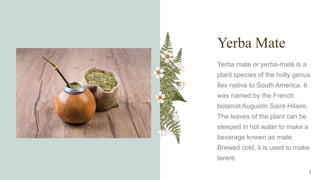
Yerba mate or yerba-maté is a
plant species of the holly genus
Ilex native to South America. It
was named by the French
botanist Augustin Saint-Hilaire.
The leaves of the plant can be
steeped in hot water to make a
beverage known as mate.
Brewed cold, it is used to make
tereré.
2
Rooibos
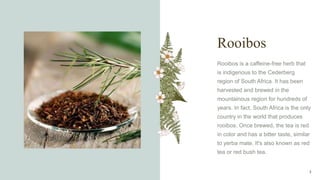
Rooibos is a caffeine-free herb that
is indigenous to the Cederberg
region of South Africa. It has been
harvested and brewed in the
mountainous region for hundreds of
years. In fact, South Africa is the only
country in the world that produces
rooibos. Once brewed, the tea is red
in color and has a bitter taste, similar
to yerba mate. It's also known as red
tea or red bush tea.
3
Bubble Tea
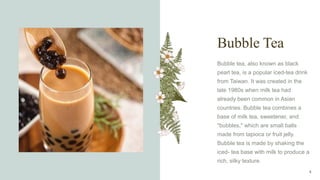
Bubble tea, also known as black
pearl tea, is a popular iced-tea drink
from Taiwan. It was created in the
late 1980s when milk tea had
already been common in Asian
countries. Bubble tea combines a
base of milk tea, sweetener, and
"bubbles," which are small balls
made from tapioca or fruit jelly.
Bubble tea is made by shaking the
iced- tea base with milk to produce a
rich, silky texture.
4
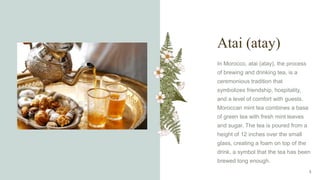
Atai (atay)
In Morocco, atai (atay), the process
of brewing and drinking tea, is a
ceremonious tradition that
symbolizes friendship, hospitality,
and a level of comfort with guests.
Moroccan mint tea combines a base
of green tea with fresh mint leaves
and sugar. The tea is poured from a
height of 12 inches over the small
glass, creating a foam on top of the
drink, a symbol that the tea has been
brewed long enough.
5
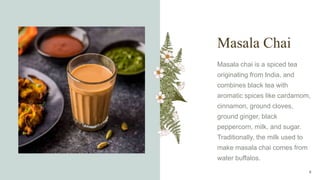
Masala Chai
Masala chai is a spiced tea
originating from India, and
combines black tea with
aromatic spices like cardamom,
cinnamon, ground cloves,
ground ginger, black
peppercorn, milk, and sugar.
Traditionally, the milk used to
make masala chai comes from
water buffalos.
6
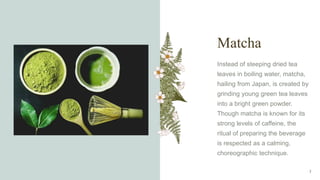
Matcha
Instead of steeping dried tea
leaves in boiling water, matcha,
hailing from Japan, is created by
grinding young green tea leaves
into a bright green powder.
Though matcha is known for its
strong levels of caffeine, the
ritual of preparing the beverage
is respected as a calming,
choreographic technique.
7
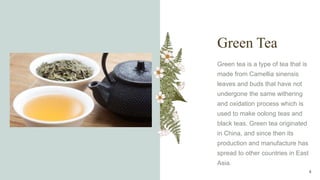
Green Tea
Green tea is a type of tea that is
made from Camellia sinensis
leaves and buds that have not
undergone the same withering
and oxidation process which is
used to make oolong teas and
black teas. Green tea originated
in China, and since then its
production and manufacture has
spread to other countries in East
Asia.
8
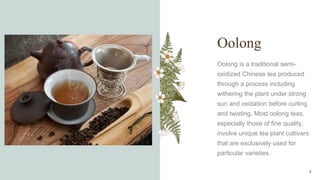
Oolong
Oolong is a traditional semi-
oxidized Chinese tea produced
through a process including
withering the plant under strong
sun and oxidation before curling
and twisting. Most oolong teas,
especially those of fine quality,
involve unique tea plant cultivars
that are exclusively used for
particular varieties.
9
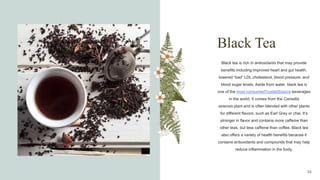
Black Tea
Black tea is rich in antioxidants that may provide
benefits including improved heart and gut health,
lowered “bad” LDL cholesterol, blood pressure, and
blood sugar levels. Aside from water, black tea is
one of the most consumedTrustedSource beverages
in the world. It comes from the Camellia
sinensis plant and is often blended with other plants
for different flavors, such as Earl Grey or chai. It’s
stronger in flavor and contains more caffeine than
other teas, but less caffeine than coffee. Black tea
also offers a variety of health benefits because it
contains antioxidants and compounds that may help
reduce inflammation in the body.
10
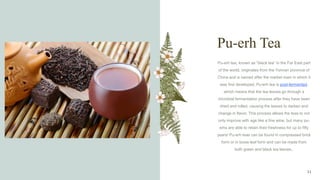
Pu-erh Tea
Pu-erh tea, known as “black tea” in the Far East part
of the world, originates from the Yunnan province of
China and is named after the market town in which it
was first developed. Pu-erh tea is post-fermented,
which means that the tea leaves go through a
microbial fermentation process after they have been
dried and rolled, causing the leaves to darken and
change in flavor. This process allows the teas to not
only improve with age like a fine wine, but many pu-
erhs are able to retain their freshness for up to fifty
years! Pu-erh teas can be found in compressed brick
form or in loose leaf form and can be made from
both green and black tea leaves..
11

Different types of tea-1.pptx

  • 1.
    Different types of teaaround the world
  • 2.
    Yerba Mate Yerba mateor yerba-maté is a plant species of the holly genus Ilex native to South America. It was named by the French botanist Augustin Saint-Hilaire. The leaves of the plant can be steeped in hot water to make a beverage known as mate. Brewed cold, it is used to make tereré. 2
  • 3.
    Rooibos Rooibos is acaffeine-free herb that is indigenous to the Cederberg region of South Africa. It has been harvested and brewed in the mountainous region for hundreds of years. In fact, South Africa is the only country in the world that produces rooibos. Once brewed, the tea is red in color and has a bitter taste, similar to yerba mate. It's also known as red tea or red bush tea. 3
  • 4.
    Bubble Tea Bubble tea,also known as black pearl tea, is a popular iced-tea drink from Taiwan. It was created in the late 1980s when milk tea had already been common in Asian countries. Bubble tea combines a base of milk tea, sweetener, and "bubbles," which are small balls made from tapioca or fruit jelly. Bubble tea is made by shaking the iced- tea base with milk to produce a rich, silky texture. 4
  • 5.
    Atai (atay) In Morocco,atai (atay), the process of brewing and drinking tea, is a ceremonious tradition that symbolizes friendship, hospitality, and a level of comfort with guests. Moroccan mint tea combines a base of green tea with fresh mint leaves and sugar. The tea is poured from a height of 12 inches over the small glass, creating a foam on top of the drink, a symbol that the tea has been brewed long enough. 5
  • 6.
    Masala Chai Masala chaiis a spiced tea originating from India, and combines black tea with aromatic spices like cardamom, cinnamon, ground cloves, ground ginger, black peppercorn, milk, and sugar. Traditionally, the milk used to make masala chai comes from water buffalos. 6
  • 7.
    Matcha Instead of steepingdried tea leaves in boiling water, matcha, hailing from Japan, is created by grinding young green tea leaves into a bright green powder. Though matcha is known for its strong levels of caffeine, the ritual of preparing the beverage is respected as a calming, choreographic technique. 7
  • 8.
    Green Tea Green teais a type of tea that is made from Camellia sinensis leaves and buds that have not undergone the same withering and oxidation process which is used to make oolong teas and black teas. Green tea originated in China, and since then its production and manufacture has spread to other countries in East Asia. 8
  • 9.
    Oolong Oolong is atraditional semi- oxidized Chinese tea produced through a process including withering the plant under strong sun and oxidation before curling and twisting. Most oolong teas, especially those of fine quality, involve unique tea plant cultivars that are exclusively used for particular varieties. 9
  • 10.
    Black Tea Black teais rich in antioxidants that may provide benefits including improved heart and gut health, lowered “bad” LDL cholesterol, blood pressure, and blood sugar levels. Aside from water, black tea is one of the most consumedTrustedSource beverages in the world. It comes from the Camellia sinensis plant and is often blended with other plants for different flavors, such as Earl Grey or chai. It’s stronger in flavor and contains more caffeine than other teas, but less caffeine than coffee. Black tea also offers a variety of health benefits because it contains antioxidants and compounds that may help reduce inflammation in the body. 10
  • 11.
    Pu-erh Tea Pu-erh tea,known as “black tea” in the Far East part of the world, originates from the Yunnan province of China and is named after the market town in which it was first developed. Pu-erh tea is post-fermented, which means that the tea leaves go through a microbial fermentation process after they have been dried and rolled, causing the leaves to darken and change in flavor. This process allows the teas to not only improve with age like a fine wine, but many pu- erhs are able to retain their freshness for up to fifty years! Pu-erh teas can be found in compressed brick form or in loose leaf form and can be made from both green and black tea leaves.. 11