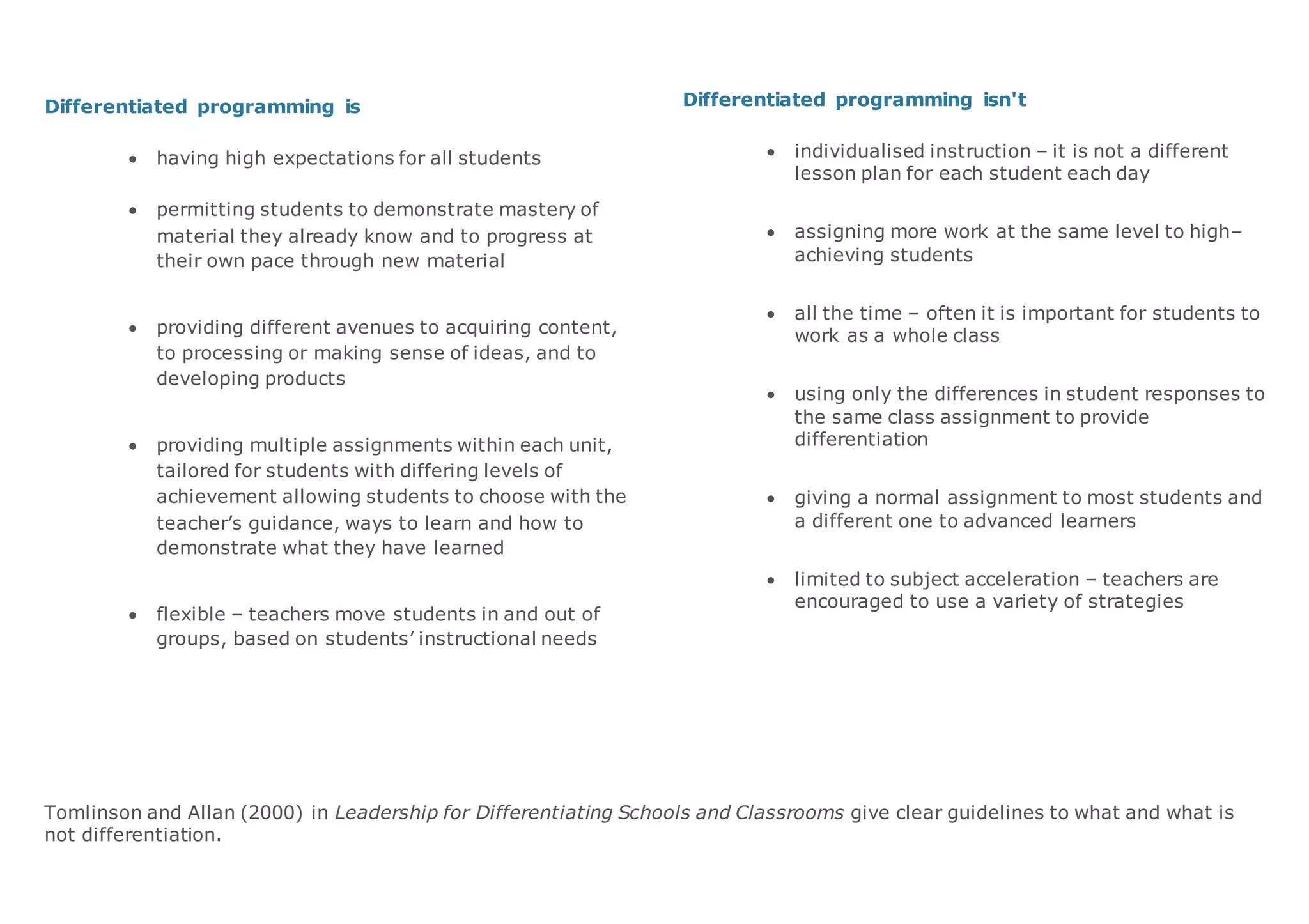
Differentiated programming is 
 having high expectations for all students 
 permitting students to demonstrate mastery of 
material they already know and to progress at 
their own pace through new material 
 providing different avenues to acquiring content, 
to processing or making sense of ideas, and to 
developing products 
 providing multiple assignments within each unit, 
tailored for students with differing levels of 
achievement allowing students to choose with the 
teacher’s guidance, ways to learn and how to 
demonstrate what they have learned 
 flexible – teachers move students in and out of 
groups, based on students’ instructional needs 
Differentiated programming isn't 
 individualised instruction – it is not a different 
lesson plan for each student each day 
 assigning more work at the same level to high– 
achieving students 
 all the time – often it is important for students to 
work as a whole class 
 using only the differences in student responses to 
the same class assignment to provide 
differentiation 
 giving a normal assignment to most students and 
a different one to advanced learners 
 limited to subject acceleration – teachers are 
encouraged to use a variety of strategies 
Tomlinson and Allan (2000) in Leadership for Differentiating Schools and Classrooms give clear guidelines to what and what is 
not differentiation.

effective questioning

  • 1.
    Differentiated programming is  having high expectations for all students  permitting students to demonstrate mastery of material they already know and to progress at their own pace through new material  providing different avenues to acquiring content, to processing or making sense of ideas, and to developing products  providing multiple assignments within each unit, tailored for students with differing levels of achievement allowing students to choose with the teacher’s guidance, ways to learn and how to demonstrate what they have learned  flexible – teachers move students in and out of groups, based on students’ instructional needs Differentiated programming isn't  individualised instruction – it is not a different lesson plan for each student each day  assigning more work at the same level to high– achieving students  all the time – often it is important for students to work as a whole class  using only the differences in student responses to the same class assignment to provide differentiation  giving a normal assignment to most students and a different one to advanced learners  limited to subject acceleration – teachers are encouraged to use a variety of strategies Tomlinson and Allan (2000) in Leadership for Differentiating Schools and Classrooms give clear guidelines to what and what is not differentiation.