Vanessa Garcia
  03/13/2013
 Subject: Science & Geography
 Grade level: 3rd grade
 Length of Session: 4 hours
 Field trip: Diamond Valley lake museum
 Life   Science:
   (3) Adaptations in physical structure or behavior
    may improve an organisms chance for survival. As
    a basis for understanding this concept:
   (d) Student know when the environment changes,
    some plants and animals survive and reproduce;
    others die or move to new locations.
   (e) Student know that some kind of organism that
    once live on Earth have completely disappeared
    and that some of those resembled others that are
    alive today.
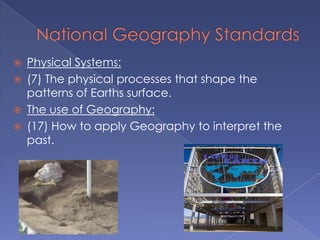
   Physical Systems:
   (7) The physical processes that shape the
    patterns of Earths surface.
   The use of Geography:
   (17) How to apply Geography to interpret the
    past.
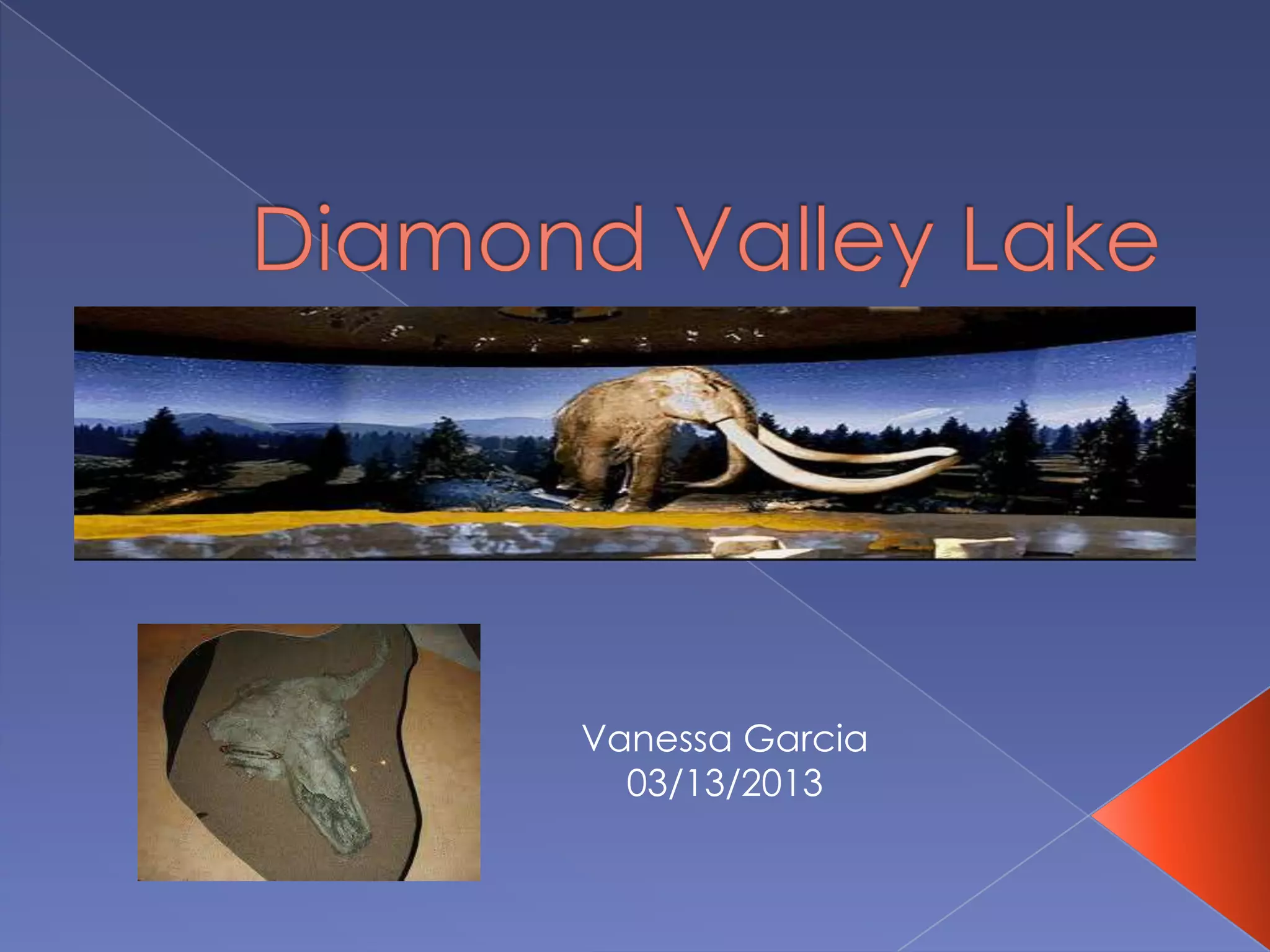
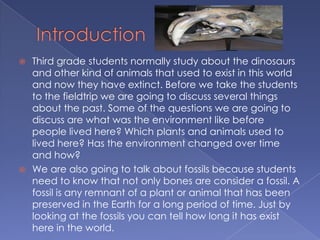
 Third grade students normally study about the dinosaurs
  and other kind of animals that used to exist in this world
  and now they have extinct. Before we take the students
  to the fieldtrip we are going to discuss several things
  about the past. Some of the questions we are going to
  discuss are what was the environment like before
  people lived here? Which plants and animals used to
  lived here? Has the environment changed over time
  and how?
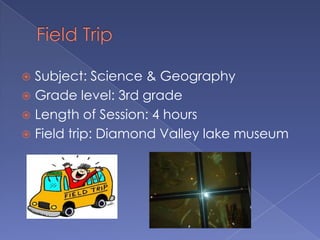
 We are also going to talk about fossils because students
  need to know that not only bones are consider a fossil. A
  fossil is any remnant of a plant or animal that has been
  preserved in the Earth for a long period of time. Just by
  looking at the fossils you can tell how long it has exist
  here in the world.
 Note book
 Pencil
 Lunch
 Money (Not required)
 Map of the museum
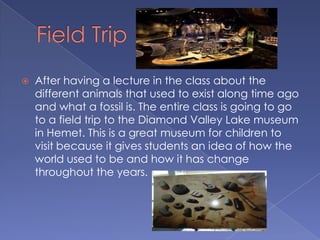
   After having a lecture in the class about the
    different animals that used to exist along time ago
    and what a fossil is. The entire class is going to go
    to a field trip to the Diamond Valley Lake museum
    in Hemet. This is a great museum for children to
    visit because it gives students an idea of how the
    world used to be and how it has change
    throughout the years.
   For the next day of class students are going to talk
    about everything they saw and what they learn after
    looking to all those stuff in the museum. Then, the
    students are going to take out their notebook in
    where they took notes and in small groups they are
    going to work in a worksheet that has different
    questions about the museum.
   Then for homework each student is going to try their
    best and draw a map of the entire museum or just
    how to get to their favorite part of the museum. And
    at the bottom of the map they are going to write a
    paragraph of why that part was their favorite.
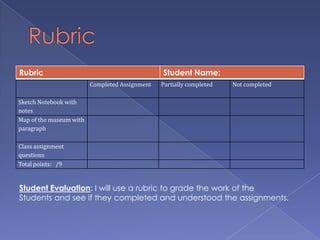
Rubric                                          Student Name:
                         Completed Assignment   Partially completed   Not completed

Sketch Notebook with
notes
Map of the museum with
paragraph

Class assignment
questions
Total points: /9


Student Evaluation: I will use a rubric to grade the work of the
Students and see if they completed and understood the assignments.

Diamond valley lake2

  • 1.
    Vanessa Garcia 03/13/2013
  • 2.
     Subject: Science& Geography  Grade level: 3rd grade  Length of Session: 4 hours  Field trip: Diamond Valley lake museum
  • 3.
     Life Science:  (3) Adaptations in physical structure or behavior may improve an organisms chance for survival. As a basis for understanding this concept:  (d) Student know when the environment changes, some plants and animals survive and reproduce; others die or move to new locations.  (e) Student know that some kind of organism that once live on Earth have completely disappeared and that some of those resembled others that are alive today.
  • 4.
    Physical Systems:  (7) The physical processes that shape the patterns of Earths surface.  The use of Geography:  (17) How to apply Geography to interpret the past.
  • 5.
     Third gradestudents normally study about the dinosaurs and other kind of animals that used to exist in this world and now they have extinct. Before we take the students to the fieldtrip we are going to discuss several things about the past. Some of the questions we are going to discuss are what was the environment like before people lived here? Which plants and animals used to lived here? Has the environment changed over time and how?  We are also going to talk about fossils because students need to know that not only bones are consider a fossil. A fossil is any remnant of a plant or animal that has been preserved in the Earth for a long period of time. Just by looking at the fossils you can tell how long it has exist here in the world.
  • 6.
     Note book Pencil  Lunch  Money (Not required)  Map of the museum
  • 7.
    After having a lecture in the class about the different animals that used to exist along time ago and what a fossil is. The entire class is going to go to a field trip to the Diamond Valley Lake museum in Hemet. This is a great museum for children to visit because it gives students an idea of how the world used to be and how it has change throughout the years.
  • 8.
    For the next day of class students are going to talk about everything they saw and what they learn after looking to all those stuff in the museum. Then, the students are going to take out their notebook in where they took notes and in small groups they are going to work in a worksheet that has different questions about the museum.  Then for homework each student is going to try their best and draw a map of the entire museum or just how to get to their favorite part of the museum. And at the bottom of the map they are going to write a paragraph of why that part was their favorite.
  • 9.
    Rubric Student Name: Completed Assignment Partially completed Not completed Sketch Notebook with notes Map of the museum with paragraph Class assignment questions Total points: /9 Student Evaluation: I will use a rubric to grade the work of the Students and see if they completed and understood the assignments.