Student Name : Ganesh Guturu
Roll No : 20BF1F0037
Seminar Title : Diabetes prediction system
( Python, Django and Machine Learning )
Guide Name : P. Ravindra
MCA IV Semester Project I Review Presentation
ABSTRACT
-> Diabetes mellitus is the most common disease worldwide and keeps increasing
everyday due to changing lifestyles, unhealthy food habits and over weight
problems.
-> In the proposed system, an efficient way of detecting diabetes is proposed
through machine learning and deep leaning. Under machine learning, we used the
classification algorithm Support Vector machine (SVM) and neural network (NN) for
deep learning algorithm.
-> The experiment results shows that the prediction of diabetes done at high
accuracy.
Diabetes mellitus is a chronic, lifelong disease caused by excessively high blood sugar
levels. Diabetes is a disease that affects the body's ability to produce the hormone
insulin, thereby making carbohydrate metabolism abnormal and raising blood sugar
levels. As reported by the World Health Organization in 2020 were 463 millions are
with diabetes, 1.5 million deaths, the report indicates that is not difficult to guess how
much diabetes is very serious and chronic.
Many researchers conduct experiments to diagnose diseases using different machine
learning approach classification algorithms such as K-Nearest Neighbor (KNN), Logistic
Regression (LR), Decision Tree (DT), Support Vector Machine (SVM), Gradient Boosting
(GB) and Random Forest (RF) because researchers have proven demonstrated that
machine learning algorithms are more effective.
Introduction
Doctors rely on common knowledge for treatment. When common knowledge is
lacking, studies are summarized after some number of cases have been studied. But
this process takes time,
whereas if machine learning is used
-> the patterns can be identified earlier.
-> For using machine learning, a huge amount of data is required. There is very
limited amount of data available depending on the disease. Also,
-> The number of samples having no diseases is very high compared to number of
samples actually having the disease.
Problem Statement
-> Data mining approach like clustering, classification were studied in existing system.
-> Diabetes prediction using algorithms such as k- Nearest Neighbour (k-NN), k-
means, branch and bound algorithm was proposed.
-> A basic diabetic dataset is chosen for carrying out the comparative analysis.
-> The importance of feature analysis for predicting diabetes by employing machine
learning technique is discussed.
Existing system
-> The proposed system study is classification of Indian PIMA dataset for diabetes as
binary classification problem.
-> This is proposed to achieve through machine learning and deep learning
classification algorithm.
-> For machine learning, SVM algorithm is proposed
-> For deep learning, Neural network is used.
-> The proposed system improves accuracy of prediction through deep learning
techniques.
Proposed system
1. Windows 9 or higher
2. Python 3.9 and related libraries
3. Anaconda
4. IDE ( PyCharm )
5. Web Browser
Software Requirements
DELL Inspiron 15 3000 laptop (Intel)
Processor : 11th Gen Intel® Core™ i3-1115G4
Display : 15.6", FHD 1920x1080
Memory : 8 GB, 1 x 8 GB, DDR4, 2666 MHz
Hard Drive : 512 GB, M.2, PCIe NVMe, SSD
Input device : Standard Keyboard and Mouse
Hardware Requirements
System Design and Development :
1. The System’s Requirements and Design Analysis
-> Scheduling and reminding diabetic patients to take their medication and blood
glucose readings,
-> recommending healthy meals for diabetics to keep their blood glucose levels in
check, and
-> encouraging and tracking the activity of diabetic patients,
-> providing a visual interface to help them make meaning of their readings and
establishing a sufficient connection between the doctor and the diabetic patient using
e-mail.
Modules
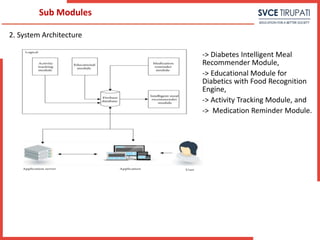
2. System Architecture
Sub Modules
-> Diabetes Intelligent Meal
Recommender Module,
-> Educational Module for
Diabetics with Food Recognition
Engine,
-> Activity Tracking Module, and
-> Medication Reminder Module.
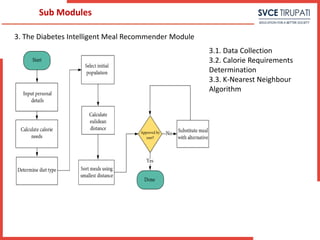
3. The Diabetes Intelligent Meal Recommender Module
Sub Modules
3.1. Data Collection
3.2. Calorie Requirements
Determination
3.3. K-Nearest Neighbour
Algorithm
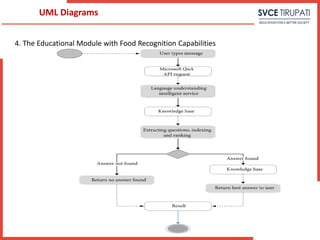
4. The Educational Module with Food Recognition Capabilities
UML Diagrams
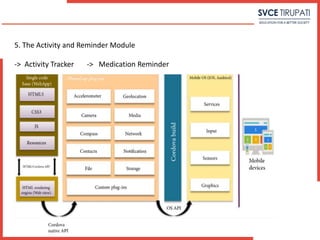
5. The Activity and Reminder Module
-> Activity Tracker -> Medication Reminder
The testing results are categorized into
(1) Diabetes Intelligent Meal Recommender Module results,
(2) Educational Module for Diabetics with Food Recognition Engine results,
(3) Activity Tracking Module results, and
(4) Medication Reminder Module results.
Testing Strategies
Thank you

DiabetesPPT.pptx

  • 1.
    Student Name :Ganesh Guturu Roll No : 20BF1F0037 Seminar Title : Diabetes prediction system ( Python, Django and Machine Learning ) Guide Name : P. Ravindra MCA IV Semester Project I Review Presentation
  • 2.
    ABSTRACT -> Diabetes mellitusis the most common disease worldwide and keeps increasing everyday due to changing lifestyles, unhealthy food habits and over weight problems. -> In the proposed system, an efficient way of detecting diabetes is proposed through machine learning and deep leaning. Under machine learning, we used the classification algorithm Support Vector machine (SVM) and neural network (NN) for deep learning algorithm. -> The experiment results shows that the prediction of diabetes done at high accuracy.
  • 3.
    Diabetes mellitus isa chronic, lifelong disease caused by excessively high blood sugar levels. Diabetes is a disease that affects the body's ability to produce the hormone insulin, thereby making carbohydrate metabolism abnormal and raising blood sugar levels. As reported by the World Health Organization in 2020 were 463 millions are with diabetes, 1.5 million deaths, the report indicates that is not difficult to guess how much diabetes is very serious and chronic. Many researchers conduct experiments to diagnose diseases using different machine learning approach classification algorithms such as K-Nearest Neighbor (KNN), Logistic Regression (LR), Decision Tree (DT), Support Vector Machine (SVM), Gradient Boosting (GB) and Random Forest (RF) because researchers have proven demonstrated that machine learning algorithms are more effective. Introduction
  • 4.
    Doctors rely oncommon knowledge for treatment. When common knowledge is lacking, studies are summarized after some number of cases have been studied. But this process takes time, whereas if machine learning is used -> the patterns can be identified earlier. -> For using machine learning, a huge amount of data is required. There is very limited amount of data available depending on the disease. Also, -> The number of samples having no diseases is very high compared to number of samples actually having the disease. Problem Statement
  • 5.
    -> Data miningapproach like clustering, classification were studied in existing system. -> Diabetes prediction using algorithms such as k- Nearest Neighbour (k-NN), k- means, branch and bound algorithm was proposed. -> A basic diabetic dataset is chosen for carrying out the comparative analysis. -> The importance of feature analysis for predicting diabetes by employing machine learning technique is discussed. Existing system
  • 6.
    -> The proposedsystem study is classification of Indian PIMA dataset for diabetes as binary classification problem. -> This is proposed to achieve through machine learning and deep learning classification algorithm. -> For machine learning, SVM algorithm is proposed -> For deep learning, Neural network is used. -> The proposed system improves accuracy of prediction through deep learning techniques. Proposed system
  • 7.
    1. Windows 9or higher 2. Python 3.9 and related libraries 3. Anaconda 4. IDE ( PyCharm ) 5. Web Browser Software Requirements
  • 8.
    DELL Inspiron 153000 laptop (Intel) Processor : 11th Gen Intel® Core™ i3-1115G4 Display : 15.6", FHD 1920x1080 Memory : 8 GB, 1 x 8 GB, DDR4, 2666 MHz Hard Drive : 512 GB, M.2, PCIe NVMe, SSD Input device : Standard Keyboard and Mouse Hardware Requirements
  • 9.
    System Design andDevelopment : 1. The System’s Requirements and Design Analysis -> Scheduling and reminding diabetic patients to take their medication and blood glucose readings, -> recommending healthy meals for diabetics to keep their blood glucose levels in check, and -> encouraging and tracking the activity of diabetic patients, -> providing a visual interface to help them make meaning of their readings and establishing a sufficient connection between the doctor and the diabetic patient using e-mail. Modules
  • 10.
    2. System Architecture SubModules -> Diabetes Intelligent Meal Recommender Module, -> Educational Module for Diabetics with Food Recognition Engine, -> Activity Tracking Module, and -> Medication Reminder Module.
  • 11.
    3. The DiabetesIntelligent Meal Recommender Module Sub Modules 3.1. Data Collection 3.2. Calorie Requirements Determination 3.3. K-Nearest Neighbour Algorithm
  • 12.
    4. The EducationalModule with Food Recognition Capabilities UML Diagrams
  • 13.
    5. The Activityand Reminder Module -> Activity Tracker -> Medication Reminder
  • 14.
    The testing resultsare categorized into (1) Diabetes Intelligent Meal Recommender Module results, (2) Educational Module for Diabetics with Food Recognition Engine results, (3) Activity Tracking Module results, and (4) Medication Reminder Module results. Testing Strategies
  • 15.