Ruqaya Anani
DEXILANT ®
(Dexlansoprazole)
Introduction
Gastroesophageal reflux disease is a common,
chronic disease worldwide.
The weekly prevalence of reflux in developed
countries is 10% to 48%. It has previously been
reported as 5% in Asian countries, but new reports
show a higher level in both Asian and Arab
countries.
Lots of people are intimately familiar
with acid reflux symptoms. More than
60 million Americans experience acid
reflux at least once a month.
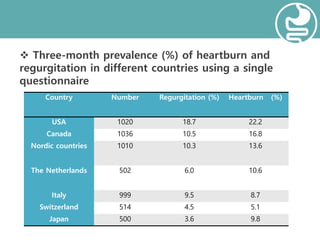
 Three-month prevalence (%) of heartburn and
regurgitation in different countries using a single
questionnaire
Country Number Regurgitation (%) Heartburn (%)
USA 1020 18.7 22.2
Canada 1036 10.5 16.8
Nordic countries 1010 10.3 13.6
The Netherlands 502 6.0 10.6
Italy 999 9.5 8.7
Switzerland 514 4.5 5.1
Japan 500 3.6 9.8
The problem
So how we can treat this problem
The Solution
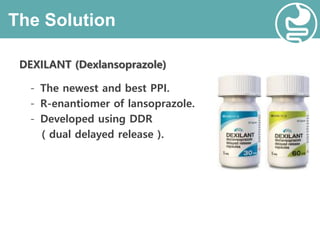
DEXILANT (Dexlansoprazole)
- The newest and best PPI.
- R-enantiomer of lansoprazole.
- Developed using DDR
( dual delayed release ).
pellets
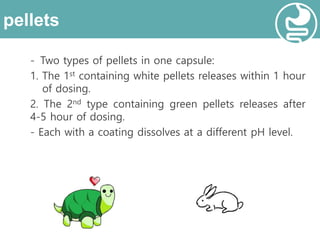
- Two types of pellets in one capsule:
1. The 1st containing white pellets releases within 1 hour
of dosing.
2. The 2nd type containing green pellets releases after
4-5 hour of dosing.
- Each with a coating dissolves at a different pH level.
Indications and uses
1. Healing of all grades of erosive
esophagitis (EE).
2. Maintaining healing of EE and relief of
heartburn.
3. Treating heartburn associated with
symptomatic non-erosive gastroesophageal
reflux disease (GERD).
Dosage forms & strengths
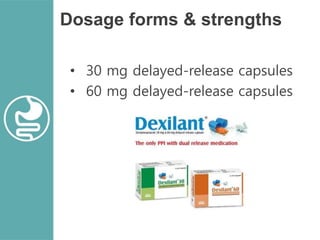
• 30 mg delayed-release capsules
• 60 mg delayed-release capsules
Advantages
• Pregnancy category: B.
• May take with or without food.
• Dexilant had no clinically important
effect on Plavix active metabolite
pharmacodynamics.
Other uses
Potential off-label uses include healing and maint
enance of duodenal ulcers, H.pylori eradication,
healing of NSAID related and non-NSAID related
gastric ulcers, prevention of NSAID associated
gastric ulcers and pathological hypersecretory
conditions such as Zollinger-Ellison syndrome.
Side effects
• Gas
• Nausea
• Vomiting
Dexlansoprazole (video)
Questions ?

Dexilant (Dexlansoprazole)

  • 1.
  • 2.
    Introduction Gastroesophageal reflux diseaseis a common, chronic disease worldwide. The weekly prevalence of reflux in developed countries is 10% to 48%. It has previously been reported as 5% in Asian countries, but new reports show a higher level in both Asian and Arab countries.
  • 3.
    Lots of peopleare intimately familiar with acid reflux symptoms. More than 60 million Americans experience acid reflux at least once a month.
  • 4.
     Three-month prevalence(%) of heartburn and regurgitation in different countries using a single questionnaire Country Number Regurgitation (%) Heartburn (%) USA 1020 18.7 22.2 Canada 1036 10.5 16.8 Nordic countries 1010 10.3 13.6 The Netherlands 502 6.0 10.6 Italy 999 9.5 8.7 Switzerland 514 4.5 5.1 Japan 500 3.6 9.8
  • 5.
    The problem So howwe can treat this problem
  • 6.
    The Solution DEXILANT (Dexlansoprazole) -The newest and best PPI. - R-enantiomer of lansoprazole. - Developed using DDR ( dual delayed release ).
  • 7.
    pellets - Two typesof pellets in one capsule: 1. The 1st containing white pellets releases within 1 hour of dosing. 2. The 2nd type containing green pellets releases after 4-5 hour of dosing. - Each with a coating dissolves at a different pH level.
  • 9.
    Indications and uses 1.Healing of all grades of erosive esophagitis (EE). 2. Maintaining healing of EE and relief of heartburn. 3. Treating heartburn associated with symptomatic non-erosive gastroesophageal reflux disease (GERD).
  • 10.
    Dosage forms &strengths • 30 mg delayed-release capsules • 60 mg delayed-release capsules
  • 11.
    Advantages • Pregnancy category:B. • May take with or without food. • Dexilant had no clinically important effect on Plavix active metabolite pharmacodynamics.
  • 12.
    Other uses Potential off-labeluses include healing and maint enance of duodenal ulcers, H.pylori eradication, healing of NSAID related and non-NSAID related gastric ulcers, prevention of NSAID associated gastric ulcers and pathological hypersecretory conditions such as Zollinger-Ellison syndrome.
  • 13.
    Side effects • Gas •Nausea • Vomiting
  • 14.
  • 15.