DevOps
Mohamed Said
• What’s DevOps?
• DevOps Concepts
• DevOps Driven by Agile
• DevOps Models
• DevOps tools
• Source Control
• Containers platforms
• Configuration Management: CI/CD
• Pipelines
• Get Started with Jenkins
Agenda
DevOps
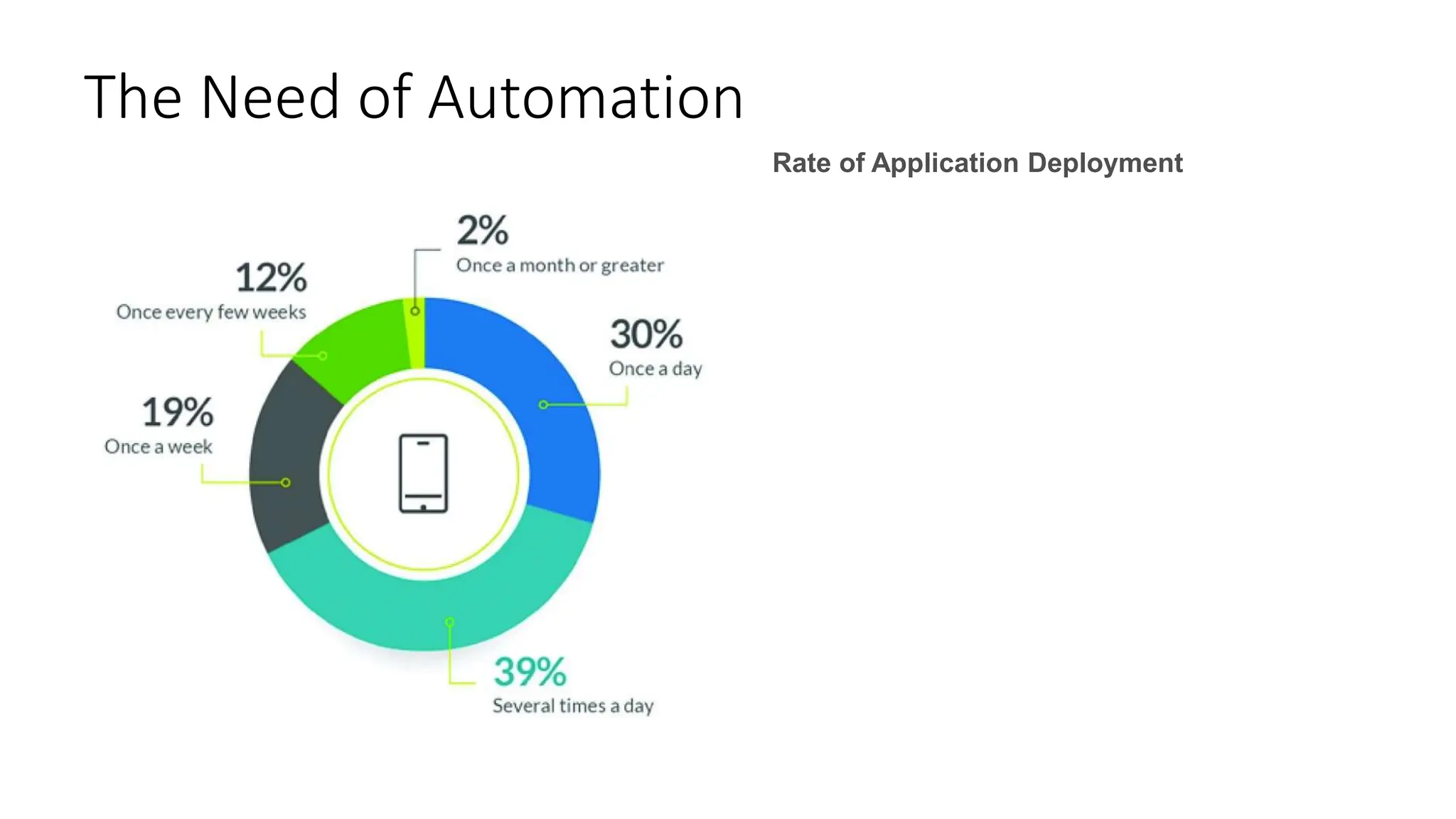
The Need of Automation
Rate of Application Deployment
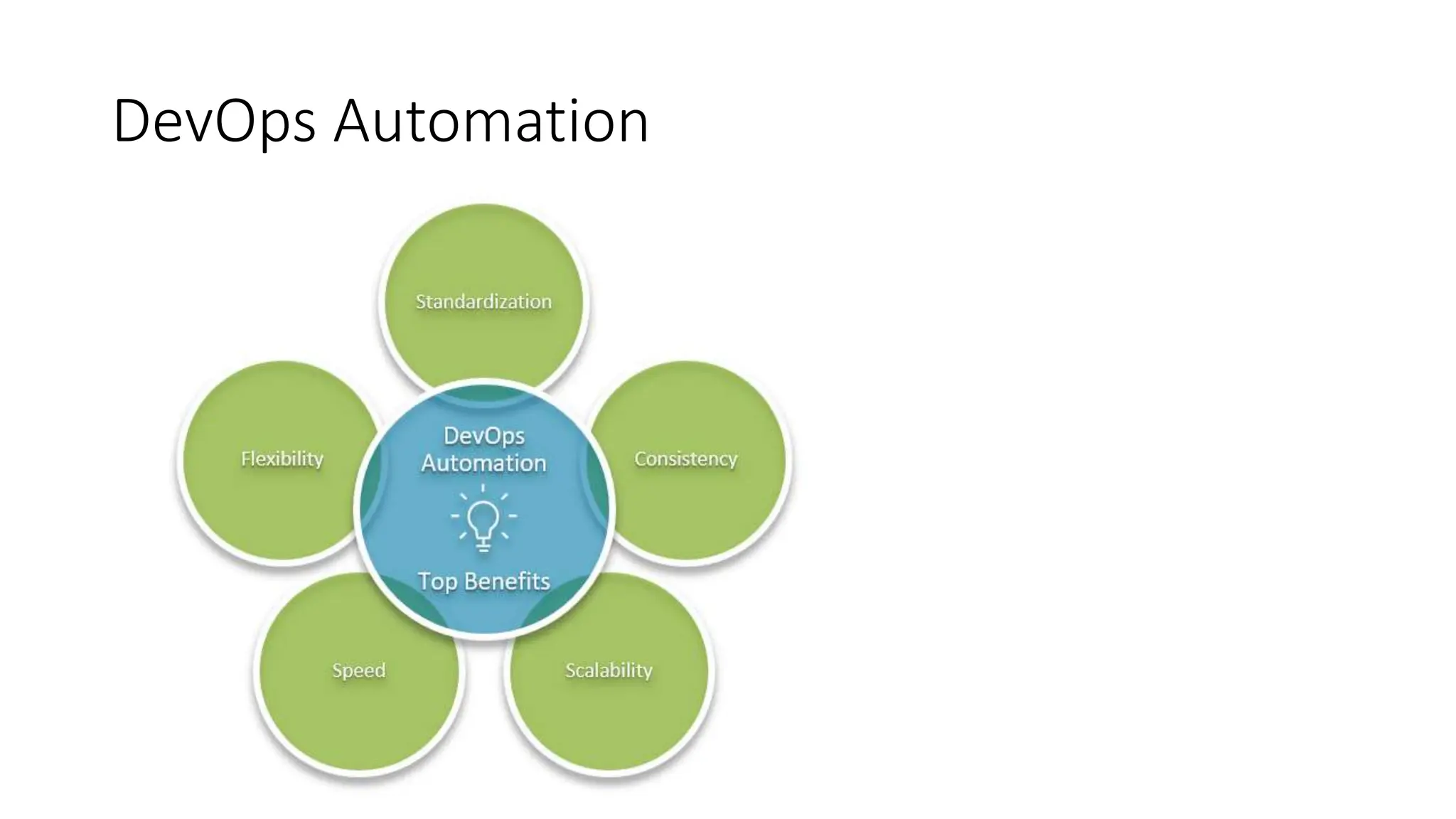
DevOps Automation
Agile Principles drive DevOps
• Early and continuous delivery of high-value software.
• Welcome to change
• Working software is the primary method of tracking progress.
• Frequently deliver software.
• Continuous attention to achieving technical excellence and great design.
• Developers and business leaders must collaborate daily.
• Simplicity, or finding the value in saving workers from performing extra work.
• Self-organizing teams are the foundation for the best architectures, designs, and requirements.
• Face-to-face communications are the most effective way to share information.
• At routine intervals, teams reflect on how they can improve the product
DevOps
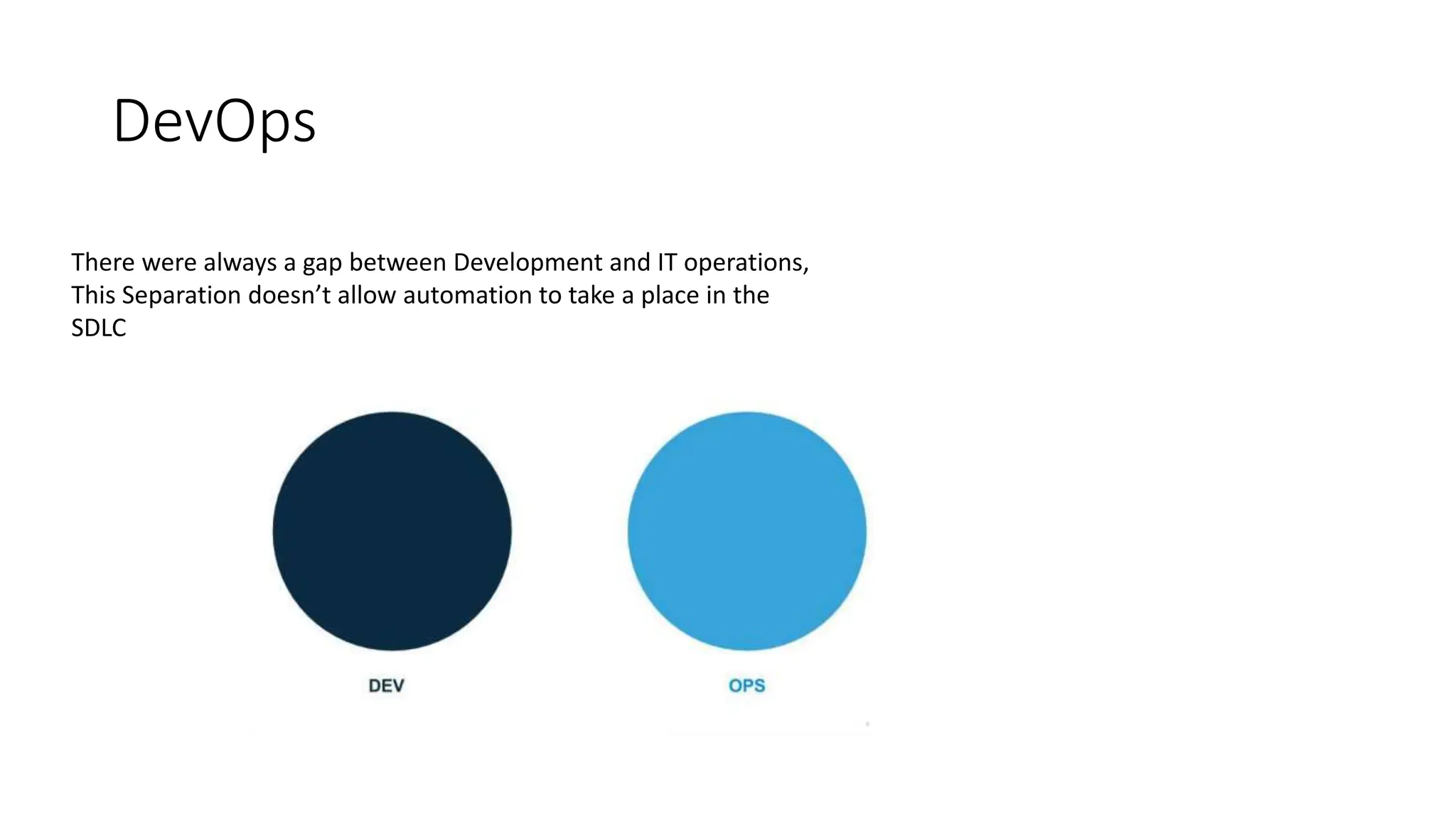
There were always a gap between Development and IT operations,
This Separation doesn’t allow automation to take a place in the
SDLC
DevOps
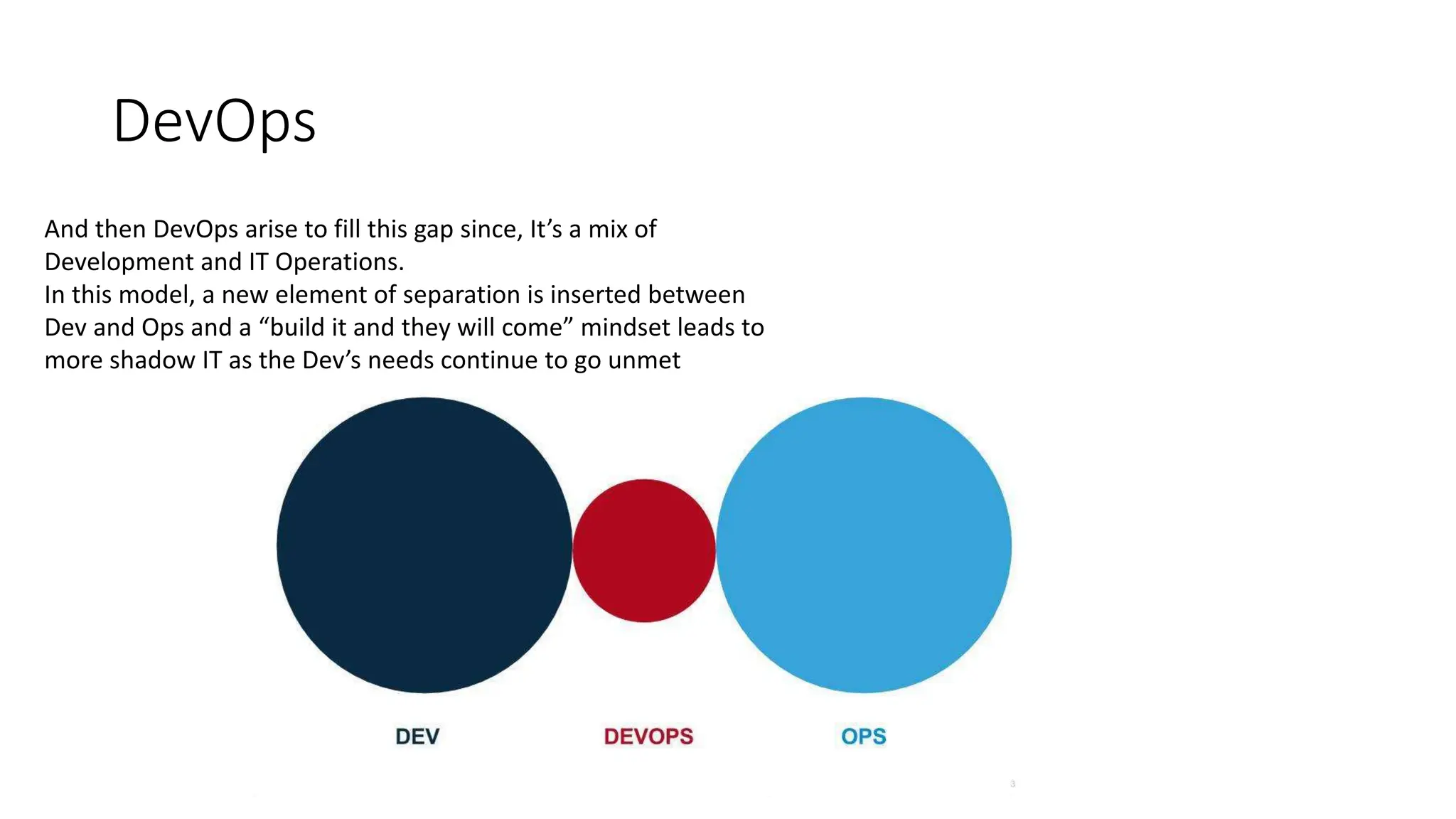
And then DevOps arise to fill this gap since, It’s a mix of
Development and IT Operations.
In this model, a new element of separation is inserted between
Dev and Ops and a “build it and they will come” mindset leads to
more shadow IT as the Dev’s needs continue to go unmet
Dev/No Ops Model
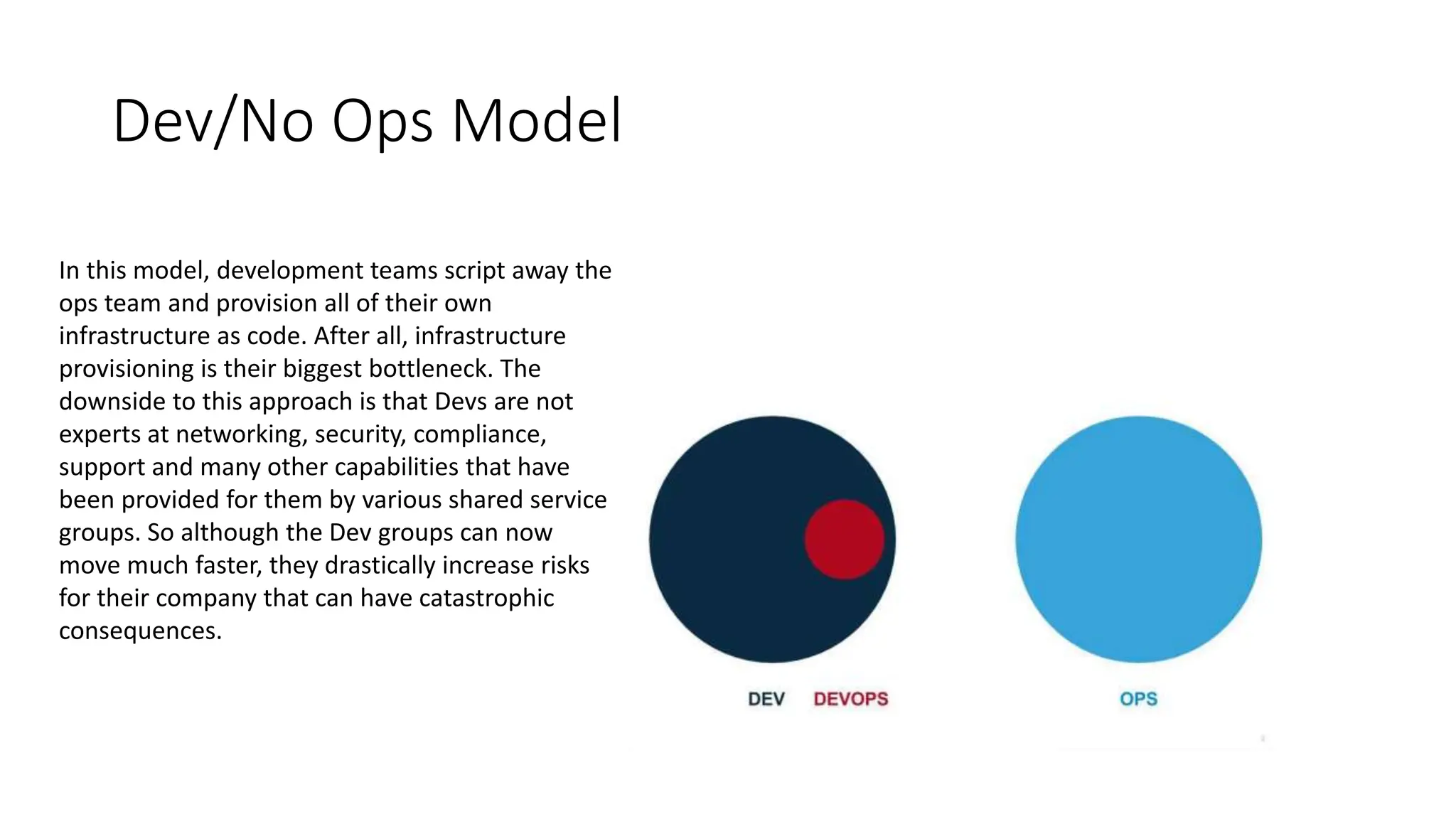
In this model, development teams script away the
ops team and provision all of their own
infrastructure as code. After all, infrastructure
provisioning is their biggest bottleneck. The
downside to this approach is that Devs are not
experts at networking, security, compliance,
support and many other capabilities that have
been provided for them by various shared service
groups. So although the Dev groups can now
move much faster, they drastically increase risks
for their company that can have catastrophic
consequences.
Rebranding Sys admins as DevOps Engineers
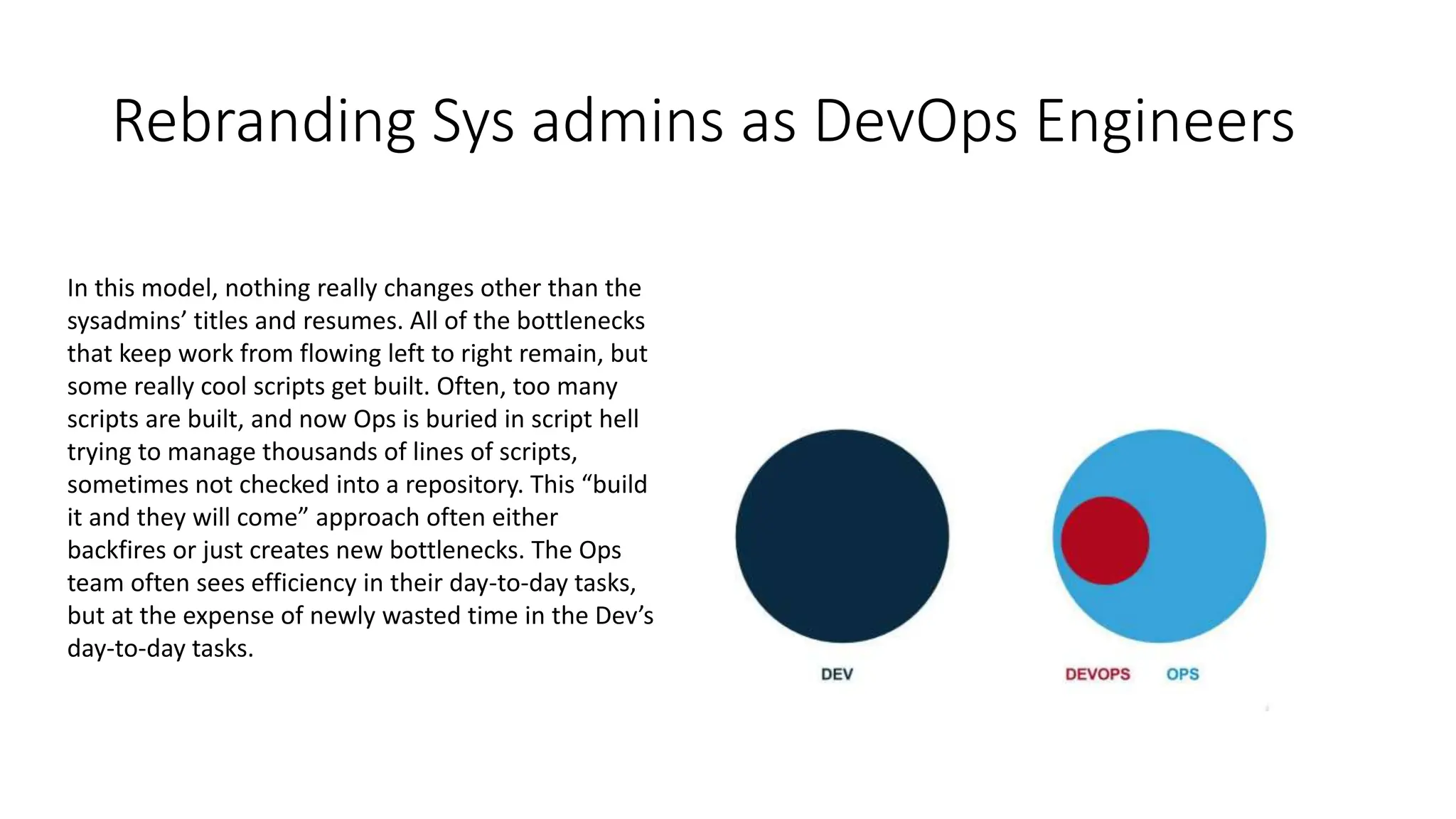
In this model, nothing really changes other than the
sysadmins’ titles and resumes. All of the bottlenecks
that keep work from flowing left to right remain, but
some really cool scripts get built. Often, too many
scripts are built, and now Ops is buried in script hell
trying to manage thousands of lines of scripts,
sometimes not checked into a repository. This “build
it and they will come” approach often either
backfires or just creates new bottlenecks. The Ops
team often sees efficiency in their day-to-day tasks,
but at the expense of newly wasted time in the Dev’s
day-to-day tasks.
DevOps Correct Model
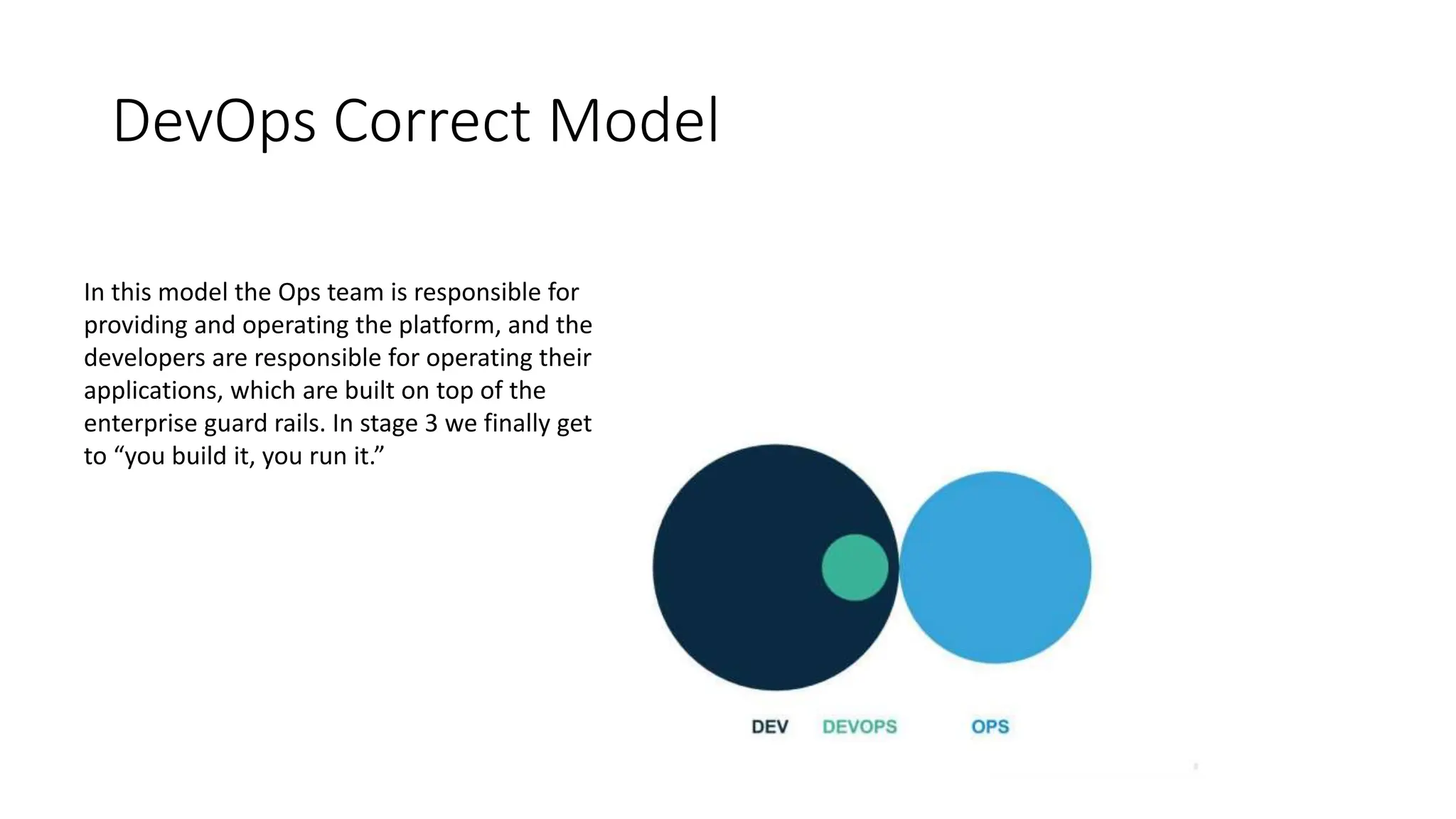
In this model the Ops team is responsible for
providing and operating the platform, and the
developers are responsible for operating their
applications, which are built on top of the
enterprise guard rails. In stage 3 we finally get
to “you build it, you run it.”
DevOps Simple definition
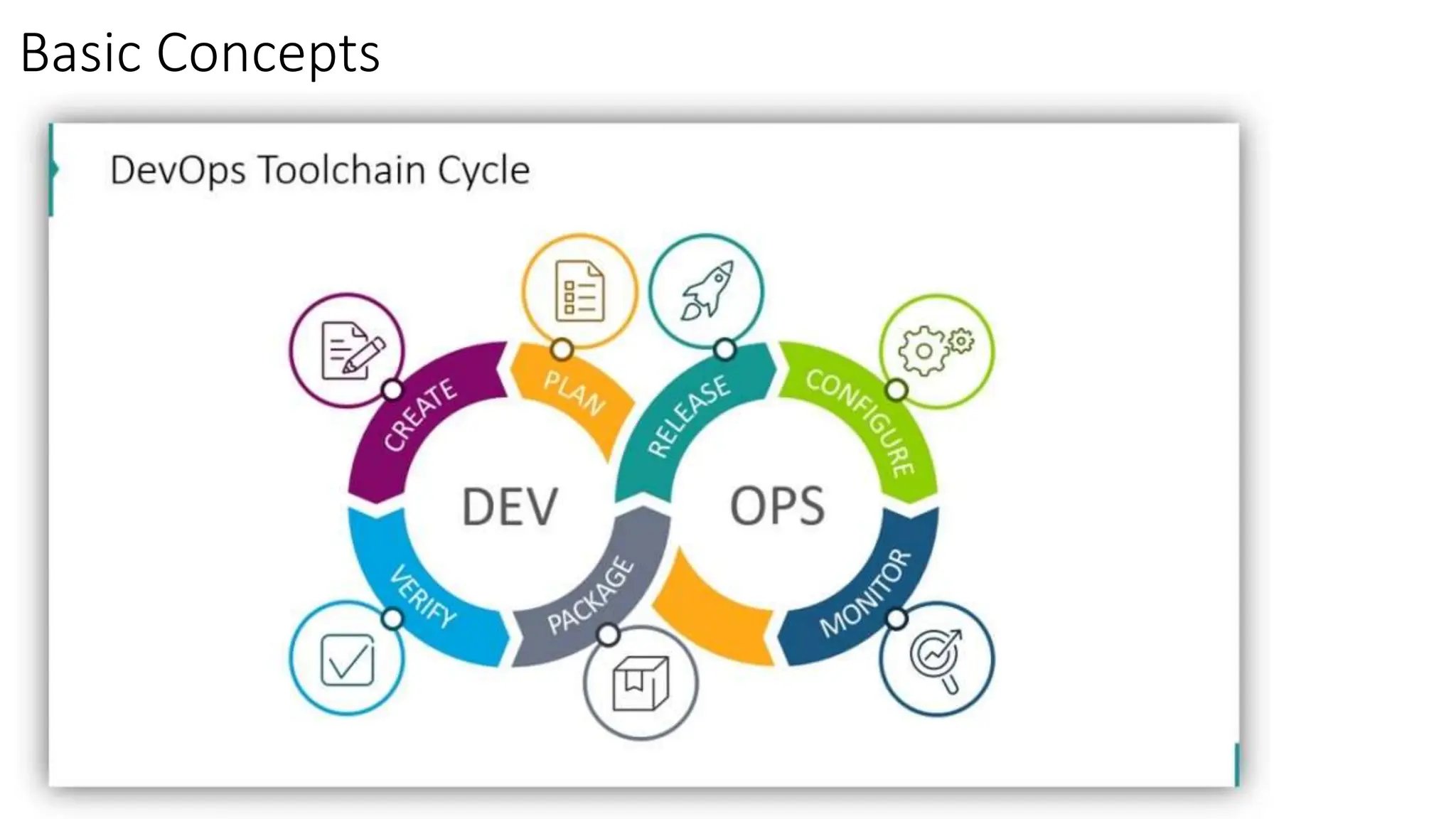
Basic Concepts
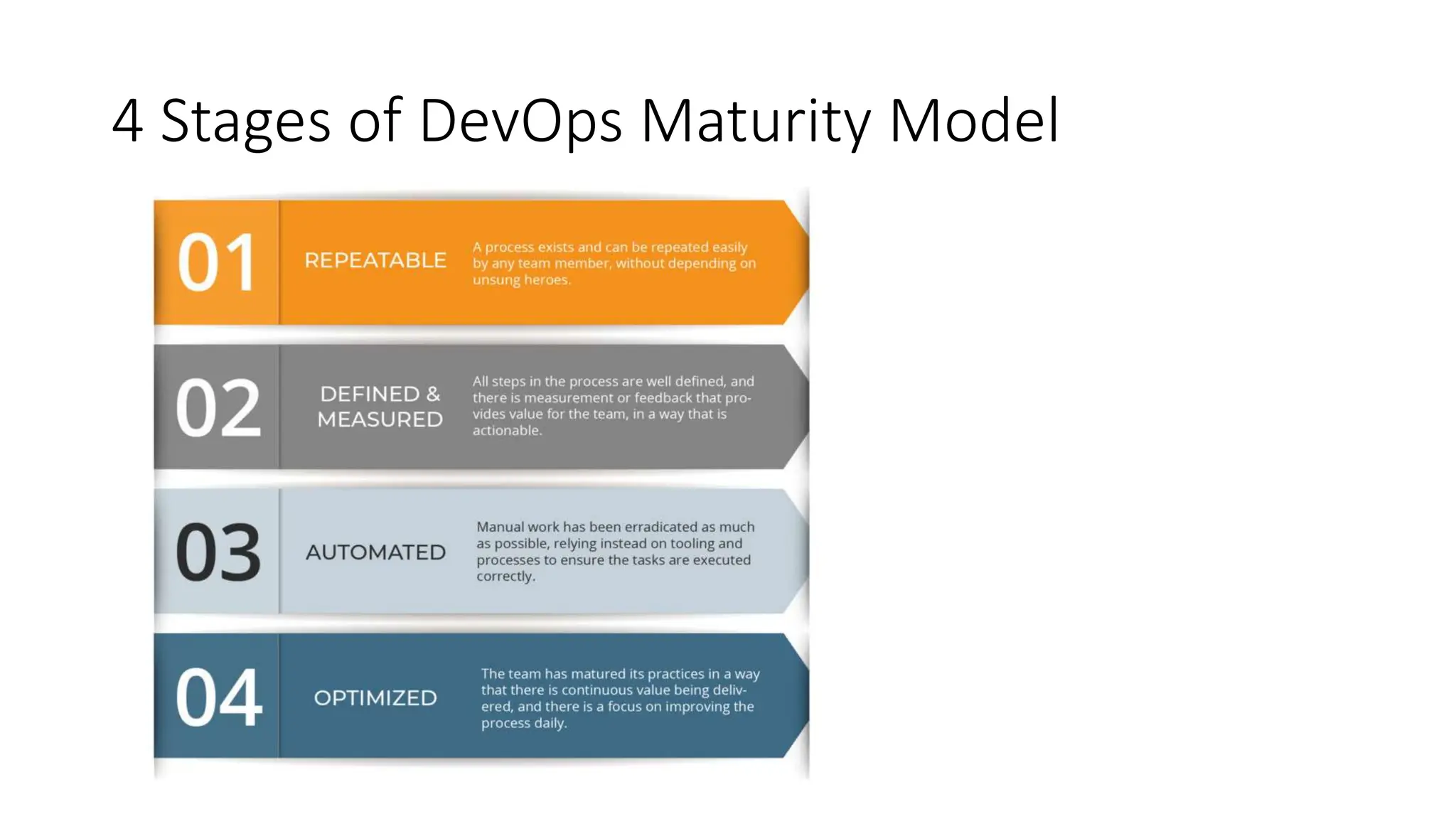
4 Stages of DevOps Maturity Model
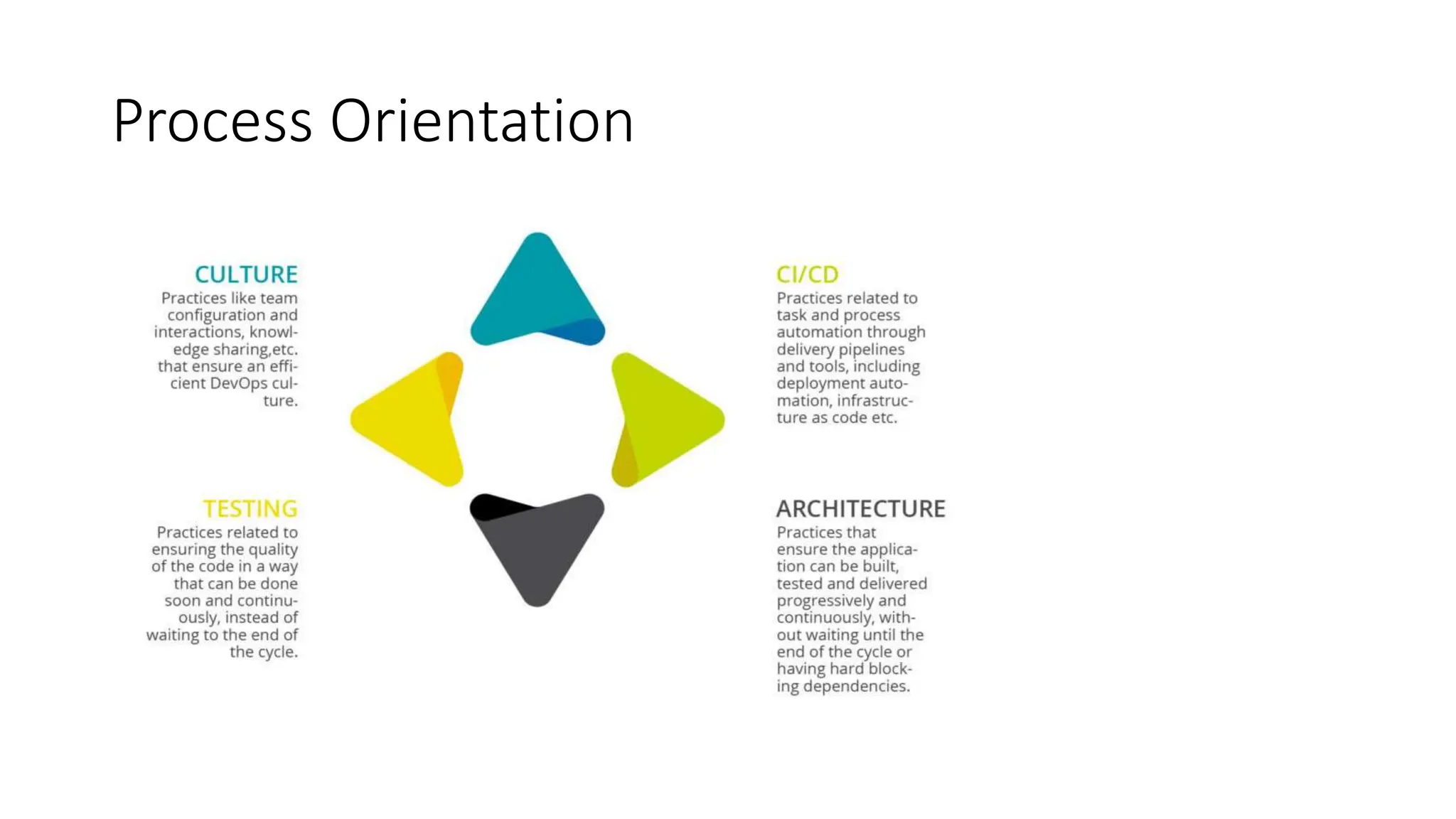
Process Orientation
DevOps Tools
Source code control
DevOps CI/CD and configuration management tools
DevOps Tools Cont’ : Container platforms
The use and implementation of container platforms and microservices. Whether
you choose Kubernetes or Docker Swarm as your container orchestration tool,
your choice is dependent on your architecture and the goals you’re trying to
achieve by containerizing applications or services. Breaking large applications
and products into microservices running on containers can greatly benefit
development speed as well as reliability through limited blast radiuses.
Jenkins CI/CD
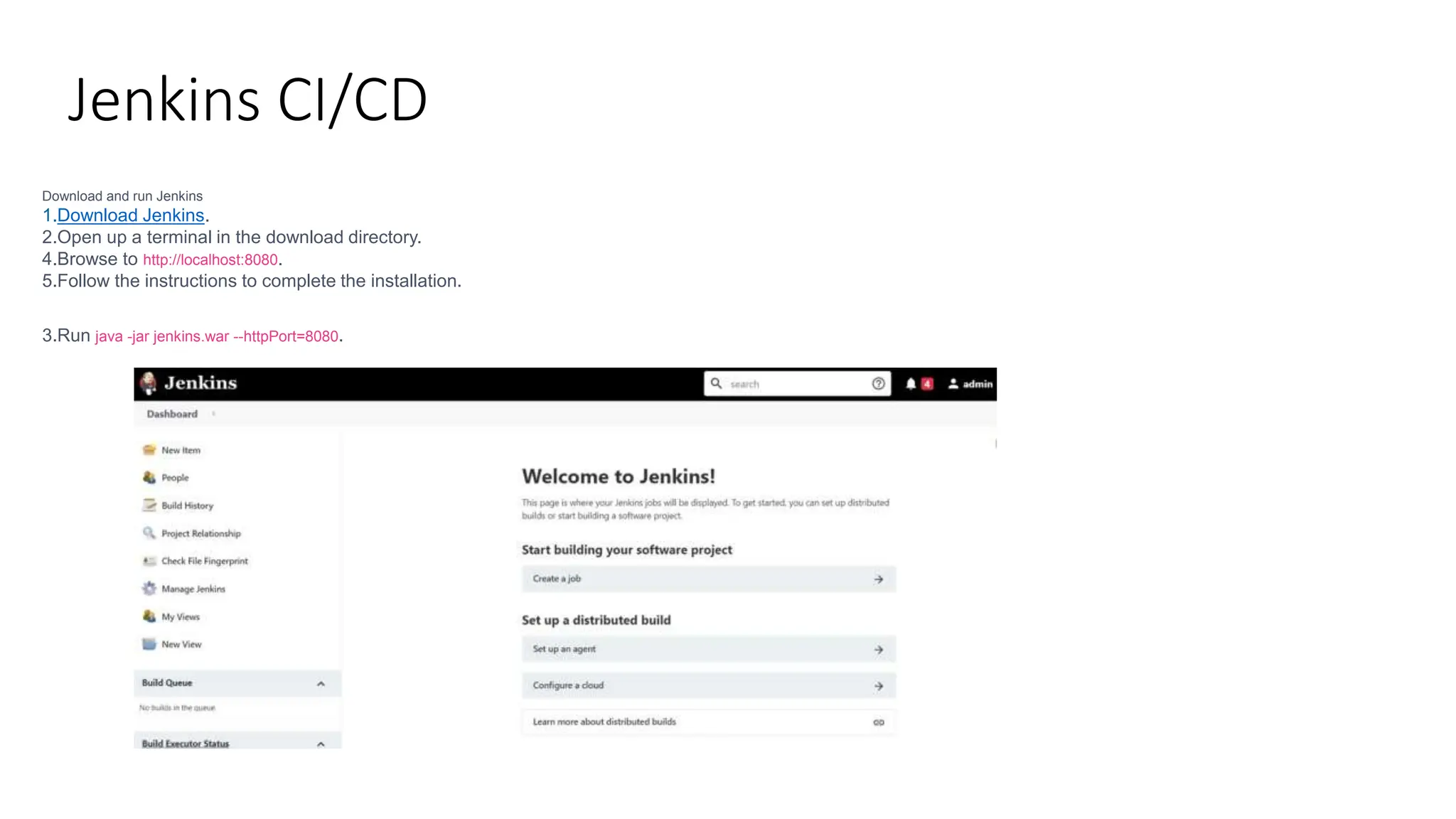
Download and run Jenkins
1.Download Jenkins.
2.Open up a terminal in the download directory.
4.Browse to http://localhost:8080.
5.Follow the instructions to complete the installation.
3.Run java -jar jenkins.war --httpPort=8080.
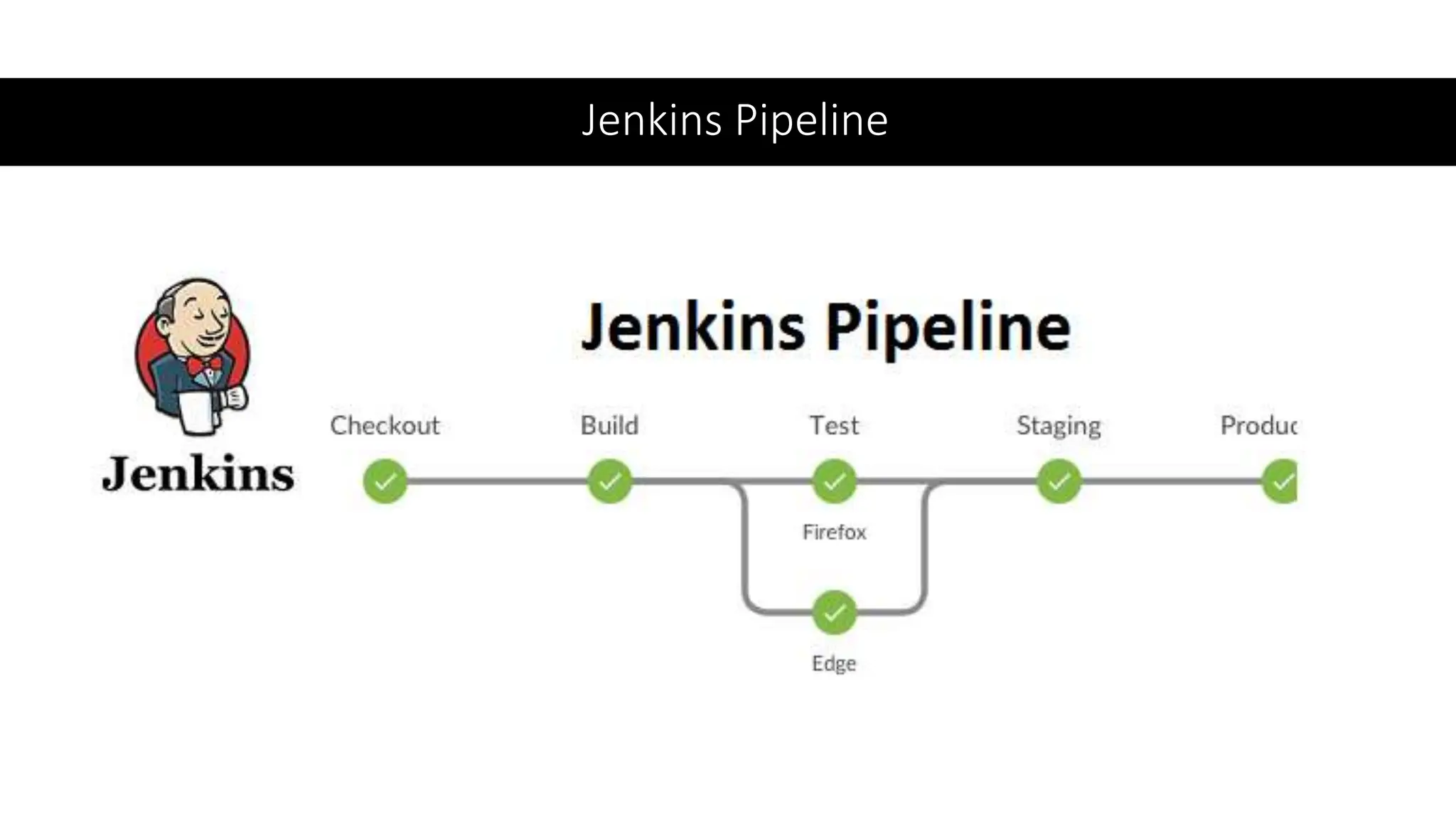
Jenkins Pipeline
Thank you.

DevOps.pptx

  • 1.
  • 2.
    • What’s DevOps? •DevOps Concepts • DevOps Driven by Agile • DevOps Models • DevOps tools • Source Control • Containers platforms • Configuration Management: CI/CD • Pipelines • Get Started with Jenkins Agenda
  • 3.
  • 4.
    The Need ofAutomation Rate of Application Deployment
  • 5.
  • 6.
    Agile Principles driveDevOps • Early and continuous delivery of high-value software. • Welcome to change • Working software is the primary method of tracking progress. • Frequently deliver software. • Continuous attention to achieving technical excellence and great design. • Developers and business leaders must collaborate daily. • Simplicity, or finding the value in saving workers from performing extra work. • Self-organizing teams are the foundation for the best architectures, designs, and requirements. • Face-to-face communications are the most effective way to share information. • At routine intervals, teams reflect on how they can improve the product
  • 7.
    DevOps There were alwaysa gap between Development and IT operations, This Separation doesn’t allow automation to take a place in the SDLC
  • 8.
    DevOps And then DevOpsarise to fill this gap since, It’s a mix of Development and IT Operations. In this model, a new element of separation is inserted between Dev and Ops and a “build it and they will come” mindset leads to more shadow IT as the Dev’s needs continue to go unmet
  • 9.
    Dev/No Ops Model Inthis model, development teams script away the ops team and provision all of their own infrastructure as code. After all, infrastructure provisioning is their biggest bottleneck. The downside to this approach is that Devs are not experts at networking, security, compliance, support and many other capabilities that have been provided for them by various shared service groups. So although the Dev groups can now move much faster, they drastically increase risks for their company that can have catastrophic consequences.
  • 10.
    Rebranding Sys adminsas DevOps Engineers In this model, nothing really changes other than the sysadmins’ titles and resumes. All of the bottlenecks that keep work from flowing left to right remain, but some really cool scripts get built. Often, too many scripts are built, and now Ops is buried in script hell trying to manage thousands of lines of scripts, sometimes not checked into a repository. This “build it and they will come” approach often either backfires or just creates new bottlenecks. The Ops team often sees efficiency in their day-to-day tasks, but at the expense of newly wasted time in the Dev’s day-to-day tasks.
  • 12.
    DevOps Correct Model Inthis model the Ops team is responsible for providing and operating the platform, and the developers are responsible for operating their applications, which are built on top of the enterprise guard rails. In stage 3 we finally get to “you build it, you run it.”
  • 13.
  • 14.
  • 16.
    4 Stages ofDevOps Maturity Model
  • 17.
  • 18.
    DevOps Tools Source codecontrol DevOps CI/CD and configuration management tools
  • 19.
    DevOps Tools Cont’: Container platforms The use and implementation of container platforms and microservices. Whether you choose Kubernetes or Docker Swarm as your container orchestration tool, your choice is dependent on your architecture and the goals you’re trying to achieve by containerizing applications or services. Breaking large applications and products into microservices running on containers can greatly benefit development speed as well as reliability through limited blast radiuses.
  • 20.
    Jenkins CI/CD Download andrun Jenkins 1.Download Jenkins. 2.Open up a terminal in the download directory. 4.Browse to http://localhost:8080. 5.Follow the instructions to complete the installation. 3.Run java -jar jenkins.war --httpPort=8080.
  • 21.
  • 22.