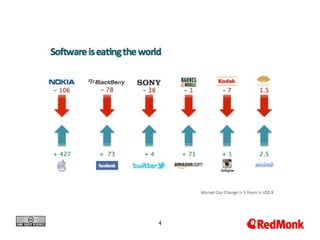
10.20.2005
DevOps Market / Opportunity for Ansible & Partners
James Governor, analyst and founder
Ansible Partner Summit, February 2016
2
About Me
@monkchips
3
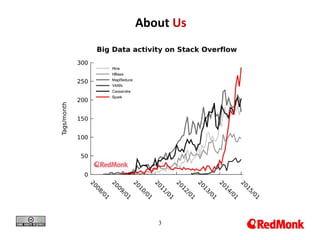
About Us
4
5
Disruption!
6
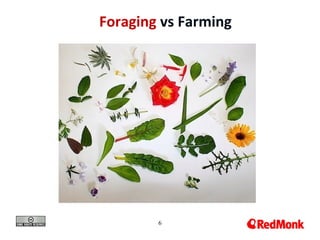
Foraging vs Farming
7
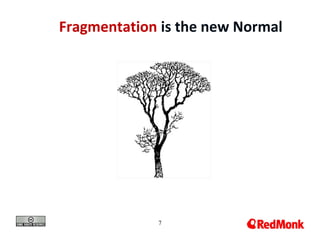
Fragmentation is the new Normal
8
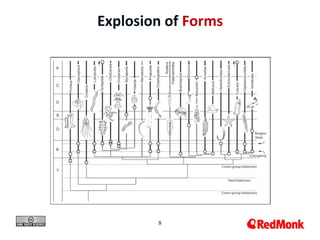
Explosion of Forms
9
10
Cloud Natives Invented DevOps
So Learn From Them
11
Conway’s Law
"Any organization that designs a system (defined more broadly here than just
information systems) will inevitably produce a design whose structure is a copy of the
organization's communication structure."
12
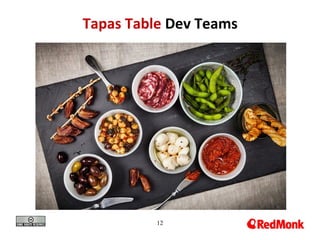
Tapas Table Dev Teams
13
Continuous Integration
14
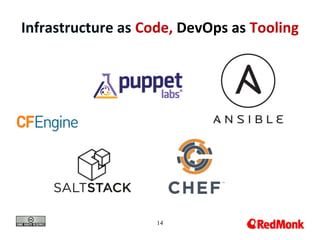
Infrastructure as Code, DevOps as Tooling
15
16
Immutable Infrastructure Use Cases
builds
cloud native as a thing
configuring databases - Big Data
provisioning cloud and virtual infrastructure
Provisioning servers
deploying application code
managing SSH keys
patching
setting up web servers
testing changes
17
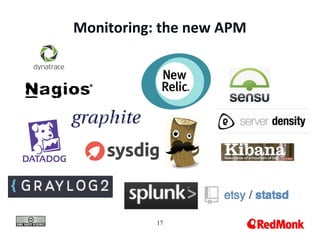
Monitoring: the new APM
18
DevOps Enterprise-Defined
“DevOps is a way to make the developer experience better. How can we help
developers to build better apps? It’s about putting more power in the hands of
the developer via automation.”
Jay Snyder, Aetna director of platform engineering
19
PaaS – Enterprise Defined
People make the difference. either in successfully utilising available
technology, they sharpen available services within the framework to better
serve the customer.
We changed the DNA of the people, their attitude and styles.
PaaS means a standardised reliable predictable platform - allowing
developers to shorten the delivery cycle. We hire people with the right
sparkle in their eyes."
- Mark Willemse, ING Bank
20
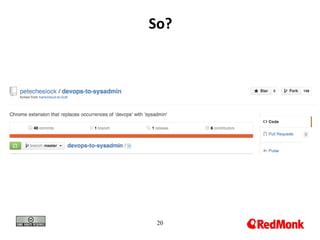
So?
21
The Rise of Micro-services
“The microservice architectural style is an approach to developing a single application
as a suite of small services, each running in its own process and communicating with
lightweight mechanisms, often an HTTP resource API. These services are built around
business capabilities and independently deployable by fully automated deployment
machinery. There is a bare minimum of centralized management of these services,
which may be written in different programming languages and use different data
storage technologies.”
Martin Fowler, Thoughtworks, March 2014
22
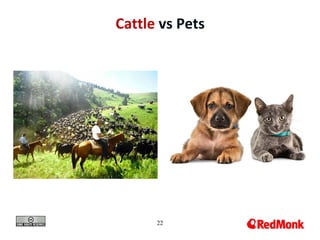
Cattle vs Pets
23
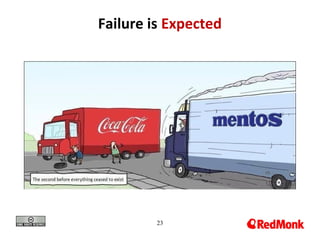
Failure is Expected
24
Containers
Convenient
Composable
Disposable
Immutable
Standard - OCF
Production Ready?
25
Orchestration
26
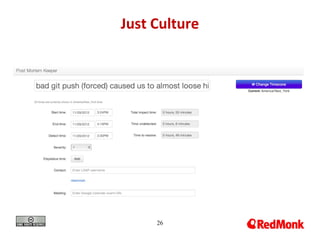
Just Culture
27
With Responsibility
28
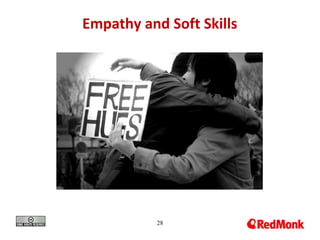
Empathy and Soft Skills
29
ALL THE ENTRY POINTS!
Agile
Big Data
CI
Cloud Enablement – refactoring and onboarding
Culture. DevOps is a Reorg. The Classic 1:10
A Seat at the Tapas Table
DevOps
Docker
Microservices
PaaS – container mixed messages
Security through immutability
Selling into the Red Hat base
VMware – embrace and extend. Containers again!

Devops market opportunity

Editor's Notes

  • #15 CFEngine: 1993 (2.0 in 2002: ML, anomaly, security) Puppet: 2005 Chef: 2009 Salt: 2011 Ansible: 2012 OpenLMI: Standards in fast-moving tech
  • #16 CFEngine: 1993 (2.0 in 2002: ML, anomaly, security) Puppet: 2005 Chef: 2009 Salt: 2011 Ansible: 2012 OpenLMI: Standards in fast-moving tech
  • #18 Nagios: released in 1999 as NetSaint Graphite: Side project out of Orbitz (Chris Davis) Stores data, renders graphs StatsD (Etsy): Node.js Receives via UDP, flushes to graphite Sensu Tasseo/Descartes (Jason Dixon): GitHub, Dyn Use Postgres/Redis as stores D3.js/Rickshaw (Shutterstock) for graphs
  • #26 CFEngine: 1993 (2.0 in 2002: ML, anomaly, security) Puppet: 2005 Chef: 2009 Salt: 2011 Ansible: 2012 OpenLMI: Standards in fast-moving tech