DESTRUCTORS
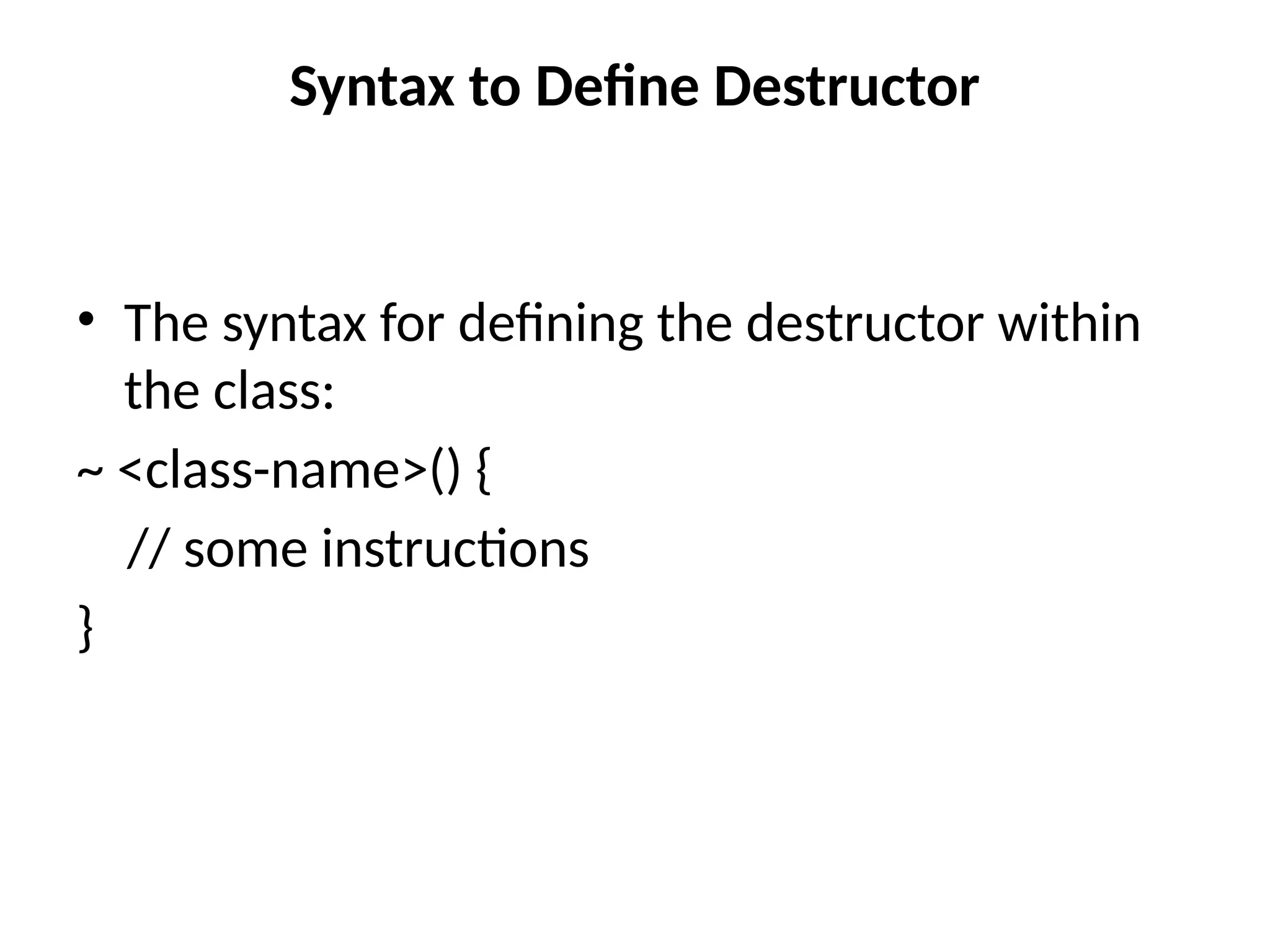
Syntax to Define Destructor
• The syntax for defining the destructor within
the class:
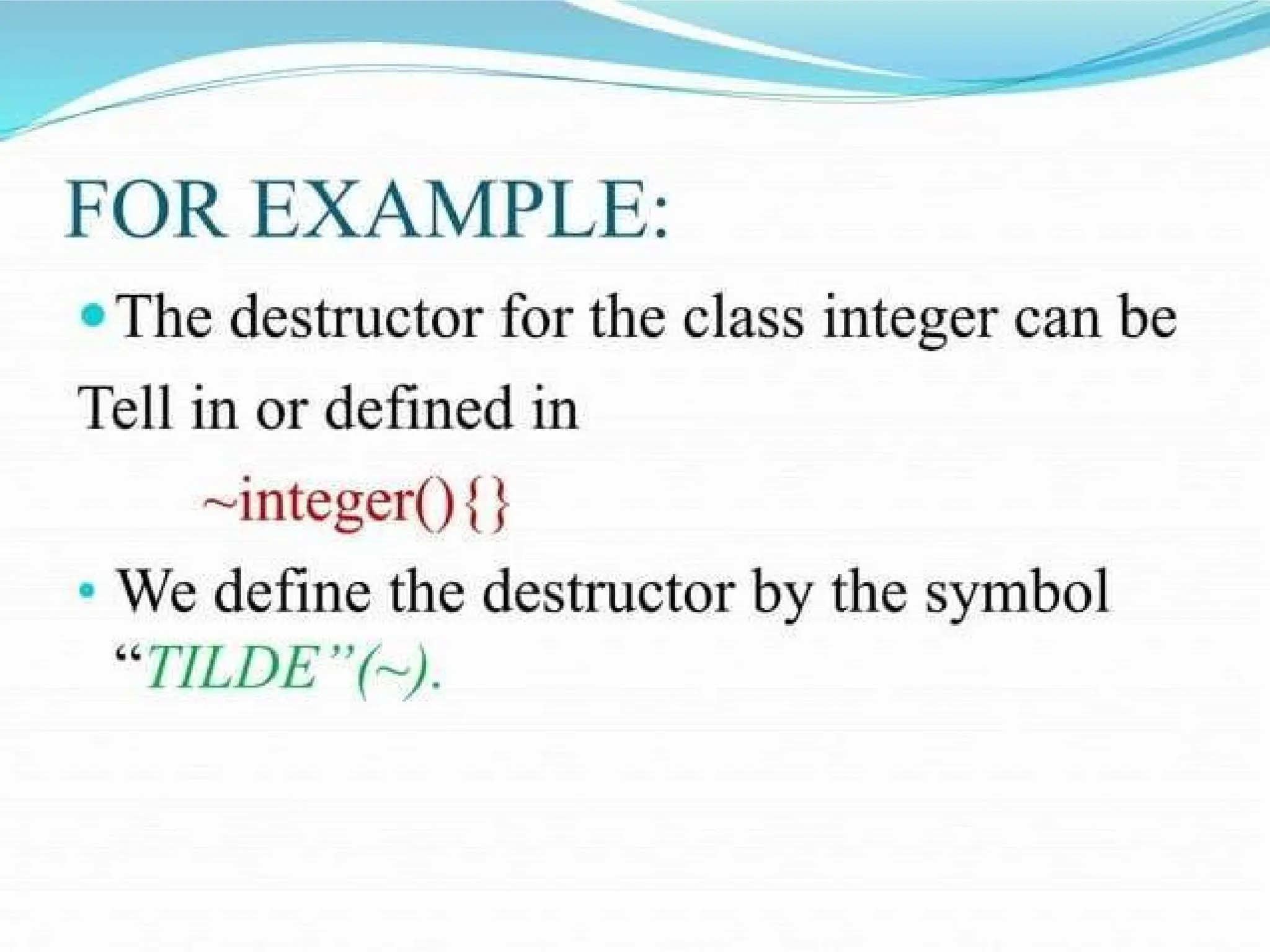
~ <class-name>() {
// some instructions
}
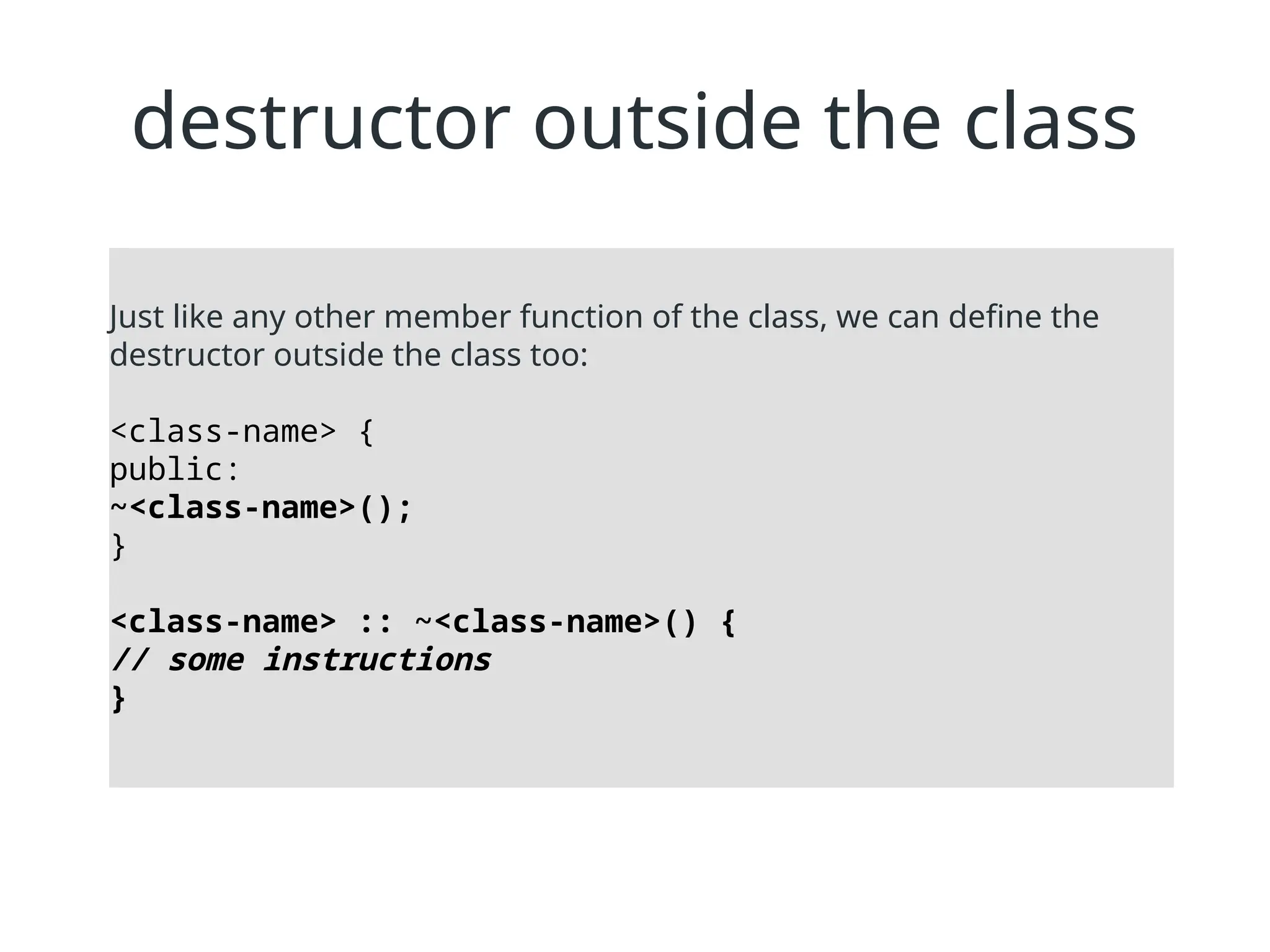
destructor outside the class
Just like any other member function of the class, we can define the
destructor outside the class too:
<class-name> {
public:
~<class-name>();
}
<class-name> :: ~<class-name>() {
// some instructions
}
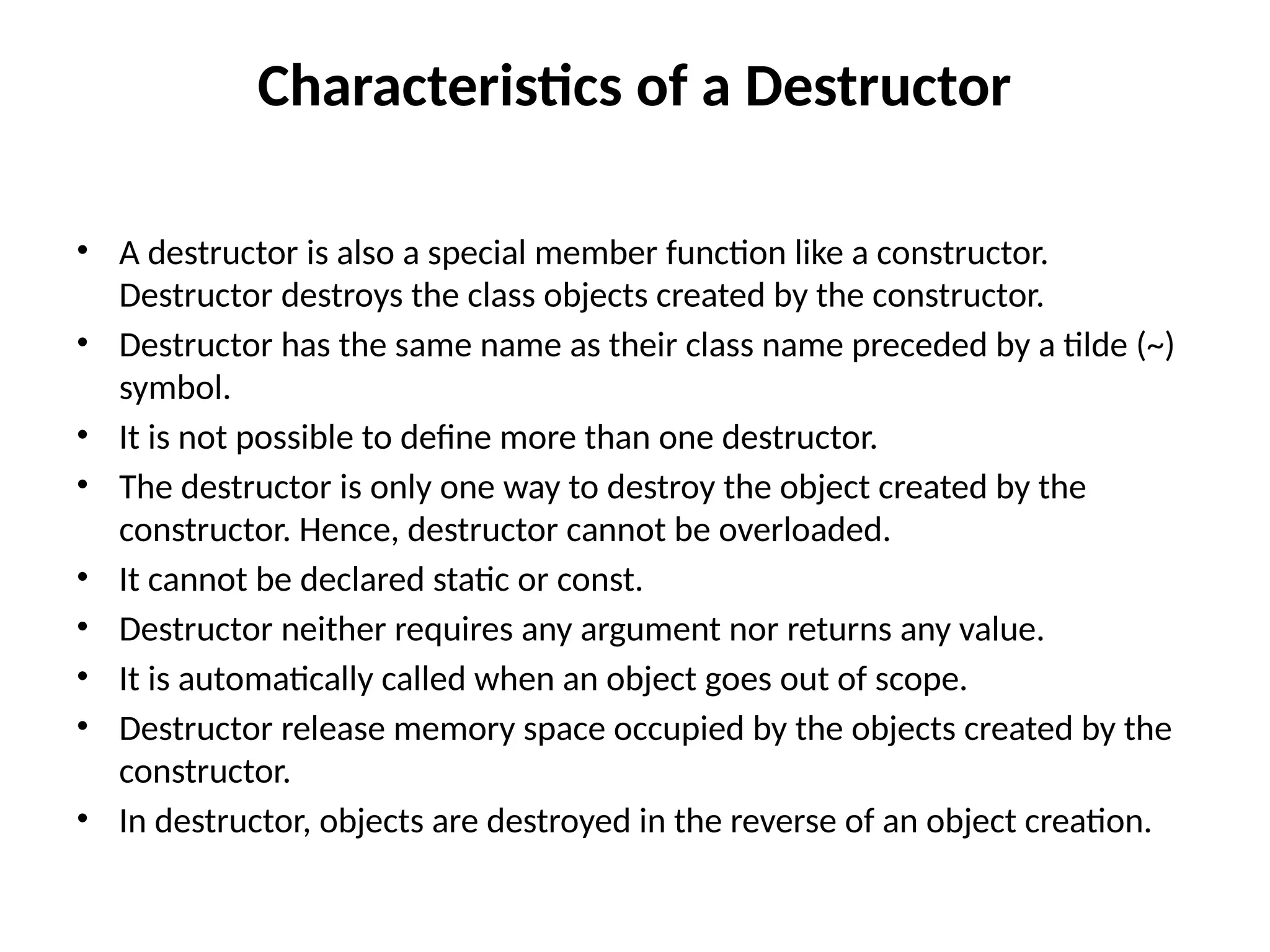
Characteristics of a Destructor
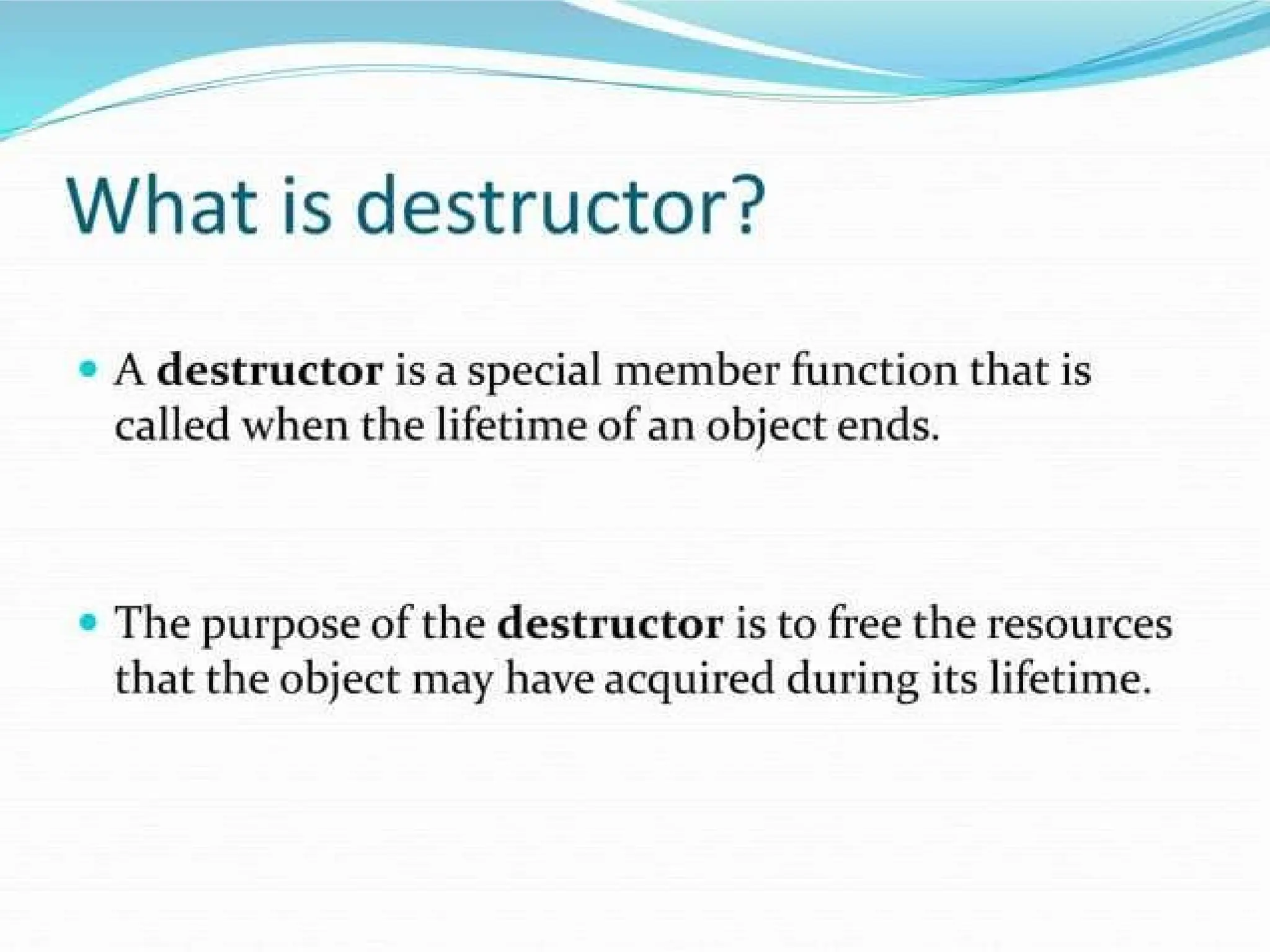
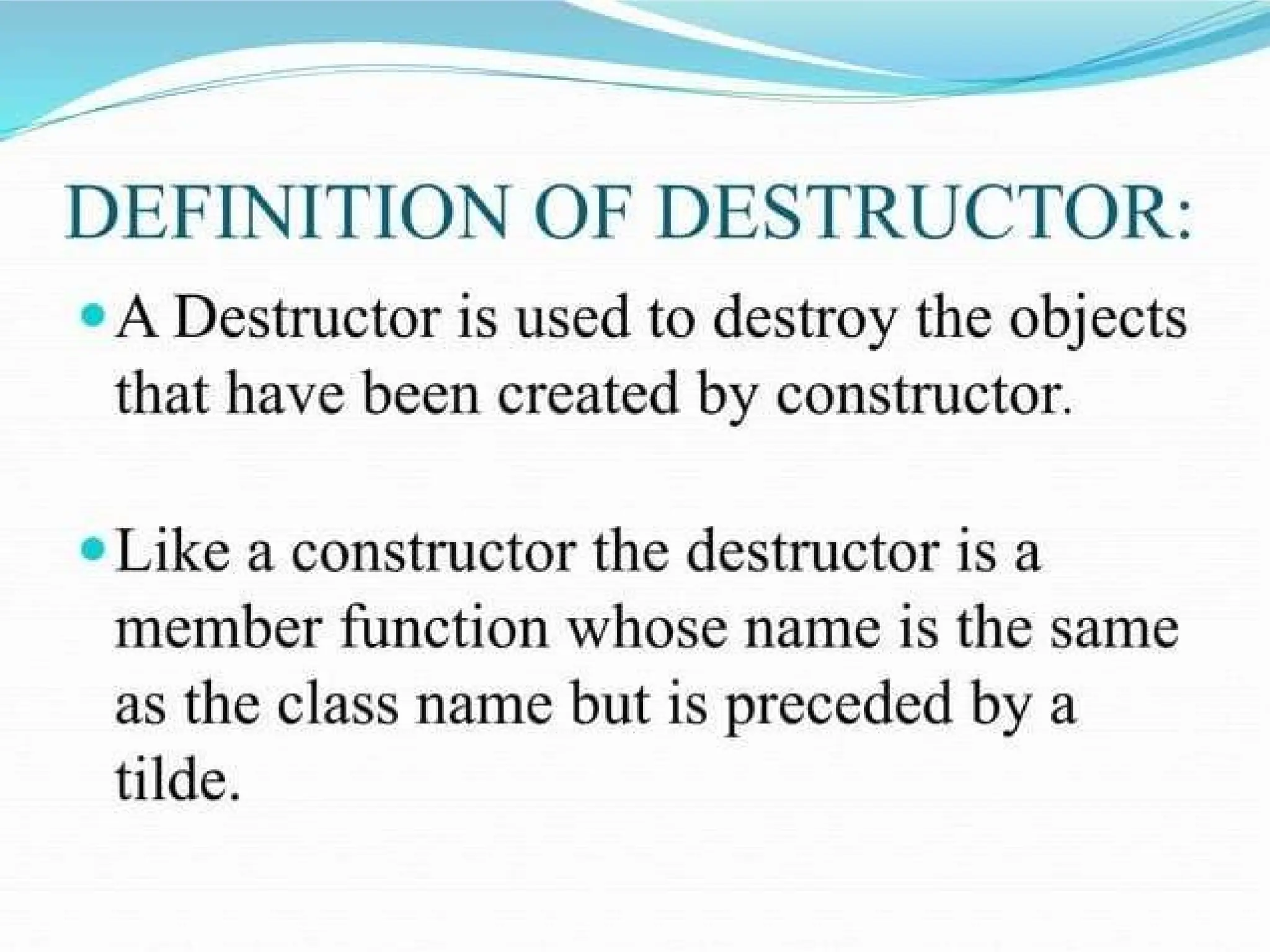
• A destructor is also a special member function like a constructor.
Destructor destroys the class objects created by the constructor.
• Destructor has the same name as their class name preceded by a tilde (~)
symbol.
• It is not possible to define more than one destructor.
• The destructor is only one way to destroy the object created by the
constructor. Hence, destructor cannot be overloaded.
• It cannot be declared static or const.
• Destructor neither requires any argument nor returns any value.
• It is automatically called when an object goes out of scope.
• Destructor release memory space occupied by the objects created by the
constructor.
• In destructor, objects are destroyed in the reverse of an object creation.
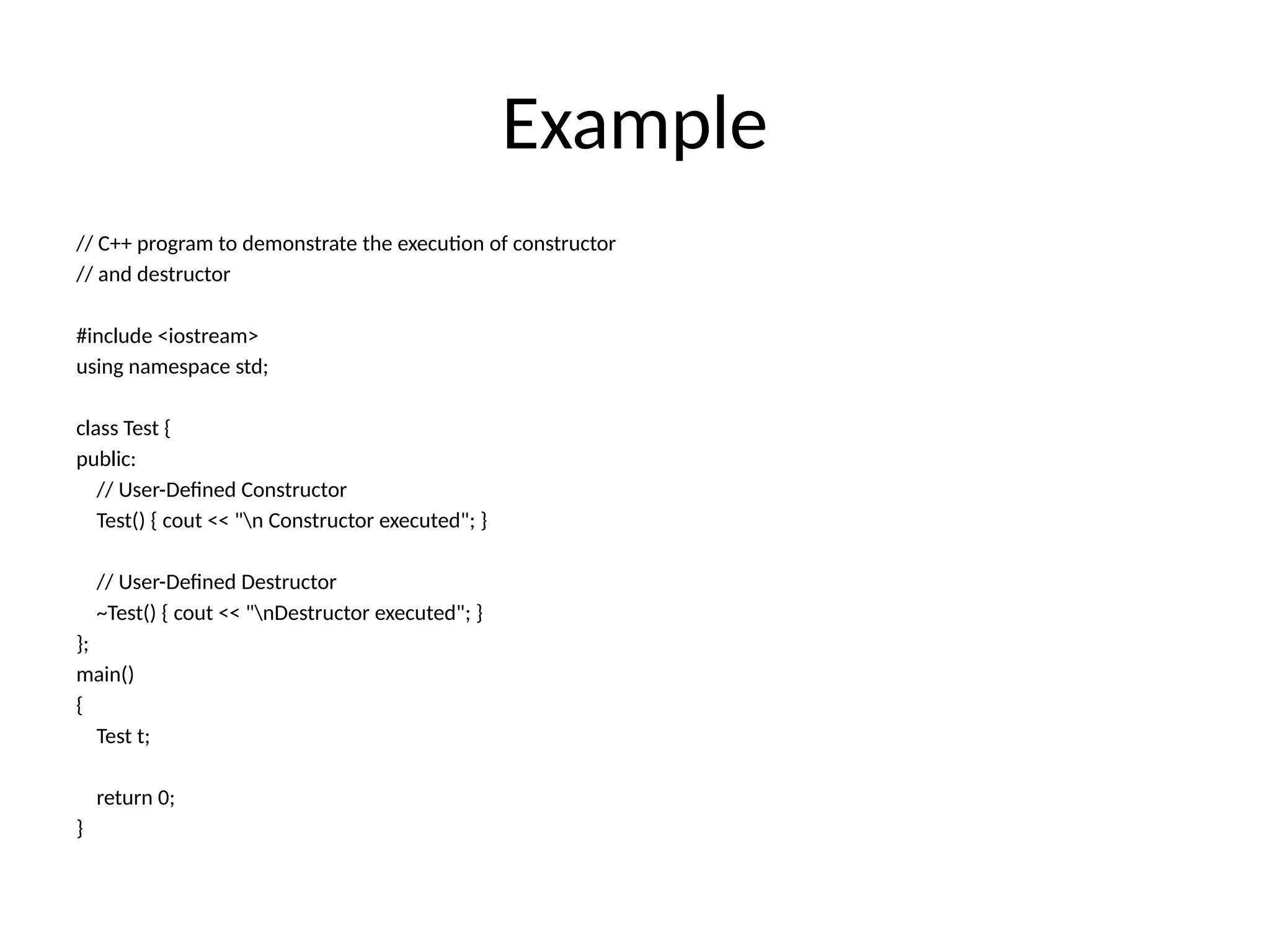
Example
// C++ program to demonstrate the execution of constructor
// and destructor
#include <iostream>
using namespace std;
class Test {
public:
// User-Defined Constructor
Test() { cout << "n Constructor executed"; }
// User-Defined Destructor
~Test() { cout << "nDestructor executed"; }
};
main()
{
Test t;
return 0;
}

Destructors for object oriented c++ pptx

  • 1.
  • 5.
    Syntax to DefineDestructor • The syntax for defining the destructor within the class: ~ <class-name>() { // some instructions }
  • 6.
    destructor outside theclass Just like any other member function of the class, we can define the destructor outside the class too: <class-name> { public: ~<class-name>(); } <class-name> :: ~<class-name>() { // some instructions }
  • 7.
    Characteristics of aDestructor • A destructor is also a special member function like a constructor. Destructor destroys the class objects created by the constructor. • Destructor has the same name as their class name preceded by a tilde (~) symbol. • It is not possible to define more than one destructor. • The destructor is only one way to destroy the object created by the constructor. Hence, destructor cannot be overloaded. • It cannot be declared static or const. • Destructor neither requires any argument nor returns any value. • It is automatically called when an object goes out of scope. • Destructor release memory space occupied by the objects created by the constructor. • In destructor, objects are destroyed in the reverse of an object creation.
  • 8.
    Example // C++ programto demonstrate the execution of constructor // and destructor #include <iostream> using namespace std; class Test { public: // User-Defined Constructor Test() { cout << "n Constructor executed"; } // User-Defined Destructor ~Test() { cout << "nDestructor executed"; } }; main() { Test t; return 0; }