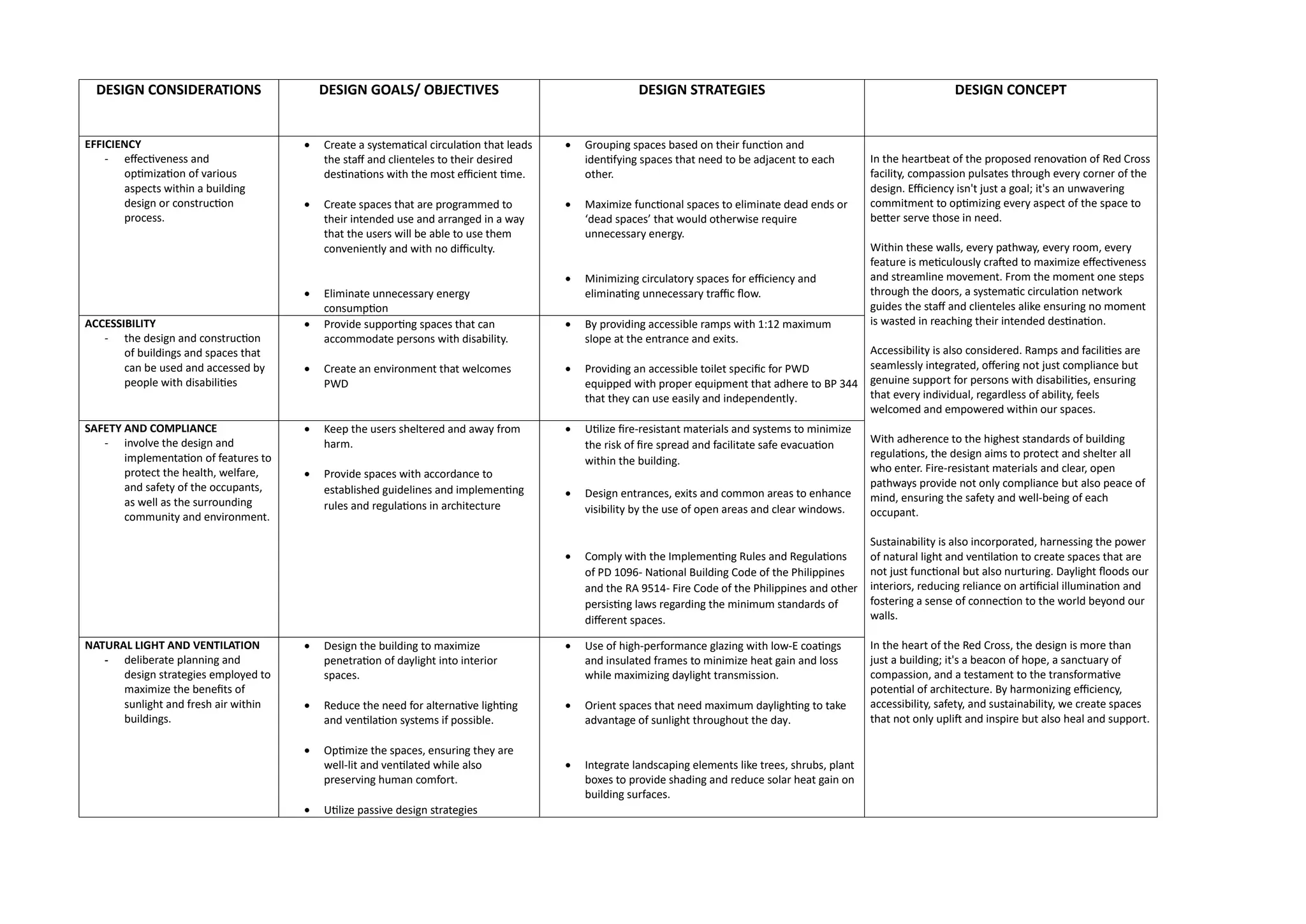
DESIGN CONSIDERATIONS DESIGN GOALS/ OBJECTIVES DESIGN STRATEGIES DESIGN CONCEPT
EFFICIENCY
- effectiveness and
optimization of various
aspects within a building
design or construction
process.
 Create a systematical circulation that leads
the staff and clienteles to their desired
destinations with the most efficient time.
 Create spaces that are programmed to
their intended use and arranged in a way
that the users will be able to use them
conveniently and with no difficulty.
 Eliminate unnecessary energy
consumption
 Grouping spaces based on their function and
identifying spaces that need to be adjacent to each
other.
 Maximize functional spaces to eliminate dead ends or
‘dead spaces’ that would otherwise require
unnecessary energy.
 Minimizing circulatory spaces for efficiency and
eliminating unnecessary traffic flow.
In the heartbeat of the proposed renovation of Red Cross
facility, compassion pulsates through every corner of the
design. Efficiency isn't just a goal; it's an unwavering
commitment to optimizing every aspect of the space to
better serve those in need.
Within these walls, every pathway, every room, every
feature is meticulously crafted to maximize effectiveness
and streamline movement. From the moment one steps
through the doors, a systematic circulation network
guides the staff and clienteles alike ensuring no moment
is wasted in reaching their intended destination.
Accessibility is also considered. Ramps and facilities are
seamlessly integrated, offering not just compliance but
genuine support for persons with disabilities, ensuring
that every individual, regardless of ability, feels
welcomed and empowered within our spaces.
With adherence to the highest standards of building
regulations, the design aims to protect and shelter all
who enter. Fire-resistant materials and clear, open
pathways provide not only compliance but also peace of
mind, ensuring the safety and well-being of each
occupant.
Sustainability is also incorporated, harnessing the power
of natural light and ventilation to create spaces that are
not just functional but also nurturing. Daylight floods our
interiors, reducing reliance on artificial illumination and
fostering a sense of connection to the world beyond our
walls.
In the heart of the Red Cross, the design is more than
just a building; it's a beacon of hope, a sanctuary of
compassion, and a testament to the transformative
potential of architecture. By harmonizing efficiency,
accessibility, safety, and sustainability, we create spaces
that not only uplift and inspire but also heal and support.
ACCESSIBILITY
- the design and construction
of buildings and spaces that
can be used and accessed by
people with disabilities
 Provide supporting spaces that can
accommodate persons with disability.
 Create an environment that welcomes
PWD
 By providing accessible ramps with 1:12 maximum
slope at the entrance and exits.
 Providing an accessible toilet specific for PWD
equipped with proper equipment that adhere to BP 344
that they can use easily and independently.
SAFETY AND COMPLIANCE
- involve the design and
implementation of features to
protect the health, welfare,
and safety of the occupants,
as well as the surrounding
community and environment.
 Keep the users sheltered and away from
harm.
 Provide spaces with accordance to
established guidelines and implementing
rules and regulations in architecture
 Utilize fire-resistant materials and systems to minimize
the risk of fire spread and facilitate safe evacuation
within the building.
 Design entrances, exits and common areas to enhance
visibility by the use of open areas and clear windows.
 Comply with the Implementing Rules and Regulations
of PD 1096- National Building Code of the Philippines
and the RA 9514- Fire Code of the Philippines and other
persisting laws regarding the minimum standards of
different spaces.
NATURAL LIGHT AND VENTILATION
- deliberate planning and
design strategies employed to
maximize the benefits of
sunlight and fresh air within
buildings.
 Design the building to maximize
penetration of daylight into interior
spaces.
 Reduce the need for alternative lighting
and ventilation systems if possible.
 Optimize the spaces, ensuring they are
well-lit and ventilated while also
preserving human comfort.
 Utilize passive design strategies
 Use of high-performance glazing with low-E coatings
and insulated frames to minimize heat gain and loss
while maximizing daylight transmission.
 Orient spaces that need maximum daylighting to take
advantage of sunlight throughout the day.
 Integrate landscaping elements like trees, shrubs, plant
boxes to provide shading and reduce solar heat gain on
building surfaces.

DESIGN CONSIDERATIONS.docx

  • 1.
    DESIGN CONSIDERATIONS DESIGNGOALS/ OBJECTIVES DESIGN STRATEGIES DESIGN CONCEPT EFFICIENCY - effectiveness and optimization of various aspects within a building design or construction process.  Create a systematical circulation that leads the staff and clienteles to their desired destinations with the most efficient time.  Create spaces that are programmed to their intended use and arranged in a way that the users will be able to use them conveniently and with no difficulty.  Eliminate unnecessary energy consumption  Grouping spaces based on their function and identifying spaces that need to be adjacent to each other.  Maximize functional spaces to eliminate dead ends or ‘dead spaces’ that would otherwise require unnecessary energy.  Minimizing circulatory spaces for efficiency and eliminating unnecessary traffic flow. In the heartbeat of the proposed renovation of Red Cross facility, compassion pulsates through every corner of the design. Efficiency isn't just a goal; it's an unwavering commitment to optimizing every aspect of the space to better serve those in need. Within these walls, every pathway, every room, every feature is meticulously crafted to maximize effectiveness and streamline movement. From the moment one steps through the doors, a systematic circulation network guides the staff and clienteles alike ensuring no moment is wasted in reaching their intended destination. Accessibility is also considered. Ramps and facilities are seamlessly integrated, offering not just compliance but genuine support for persons with disabilities, ensuring that every individual, regardless of ability, feels welcomed and empowered within our spaces. With adherence to the highest standards of building regulations, the design aims to protect and shelter all who enter. Fire-resistant materials and clear, open pathways provide not only compliance but also peace of mind, ensuring the safety and well-being of each occupant. Sustainability is also incorporated, harnessing the power of natural light and ventilation to create spaces that are not just functional but also nurturing. Daylight floods our interiors, reducing reliance on artificial illumination and fostering a sense of connection to the world beyond our walls. In the heart of the Red Cross, the design is more than just a building; it's a beacon of hope, a sanctuary of compassion, and a testament to the transformative potential of architecture. By harmonizing efficiency, accessibility, safety, and sustainability, we create spaces that not only uplift and inspire but also heal and support. ACCESSIBILITY - the design and construction of buildings and spaces that can be used and accessed by people with disabilities  Provide supporting spaces that can accommodate persons with disability.  Create an environment that welcomes PWD  By providing accessible ramps with 1:12 maximum slope at the entrance and exits.  Providing an accessible toilet specific for PWD equipped with proper equipment that adhere to BP 344 that they can use easily and independently. SAFETY AND COMPLIANCE - involve the design and implementation of features to protect the health, welfare, and safety of the occupants, as well as the surrounding community and environment.  Keep the users sheltered and away from harm.  Provide spaces with accordance to established guidelines and implementing rules and regulations in architecture  Utilize fire-resistant materials and systems to minimize the risk of fire spread and facilitate safe evacuation within the building.  Design entrances, exits and common areas to enhance visibility by the use of open areas and clear windows.  Comply with the Implementing Rules and Regulations of PD 1096- National Building Code of the Philippines and the RA 9514- Fire Code of the Philippines and other persisting laws regarding the minimum standards of different spaces. NATURAL LIGHT AND VENTILATION - deliberate planning and design strategies employed to maximize the benefits of sunlight and fresh air within buildings.  Design the building to maximize penetration of daylight into interior spaces.  Reduce the need for alternative lighting and ventilation systems if possible.  Optimize the spaces, ensuring they are well-lit and ventilated while also preserving human comfort.  Utilize passive design strategies  Use of high-performance glazing with low-E coatings and insulated frames to minimize heat gain and loss while maximizing daylight transmission.  Orient spaces that need maximum daylighting to take advantage of sunlight throughout the day.  Integrate landscaping elements like trees, shrubs, plant boxes to provide shading and reduce solar heat gain on building surfaces.