X. Desertification
A. Deserts:areas of low rainfall…..
Arid: less than 10 cm (4 in)
Semi-arid: less than 25 cm (10 inches)
2
3.
X. Desertification
A. Deserts
B.Drylands: What life cares about.
Effective Moisture: the ratio of precipitation
(PPT) to potential evapo-transpiration (PET).
Hyperarid: PPT/PET <0.05
Arid: PPT/PET 0.05 to 0.20
Semi-arid: PPT/PET 0.20 to 0.5
Dry sub-humid: 0.5 to 0.65
Humid: PPT/PET >1
3
4.
X. Desertification
A. Deserts
B.Drylands
C. Distribution
1. Sunbelt
2. Rainshadow
3. Continental interior
4. Coastal
Adjacent to these real deserts are the
sensitive drylands.
4
5.
X. Desertification
A. Deserts
B.Drylands
C. Distribution
D. Desertification:the degradation of land
in arid, semi-arid, and dry sub-humid
areas.
Can be caused by human activity or
climate change.
5
6.
X. Desertification
D. Desertification:thedegradation of land in
arid, semi-arid, and dry sub-humid areas.
1. Causes of Desertification: Complex
interplay of physical and ecological
processes, and developmental and socio-
economic forces. For example:
a. brief period of excess rainfall
“the rain follows the
plow”
b. over irrigation (salanization)
c. ground-water depletion
6
7.
X. Desertification
D. Desertification:the degradation of land
in arid, semi-arid, and dry sub-humid areas.
1. Causes of Desertification: Complex
interplay of physical and ecological
processes, and developmental and socio-
economic forces. For example:
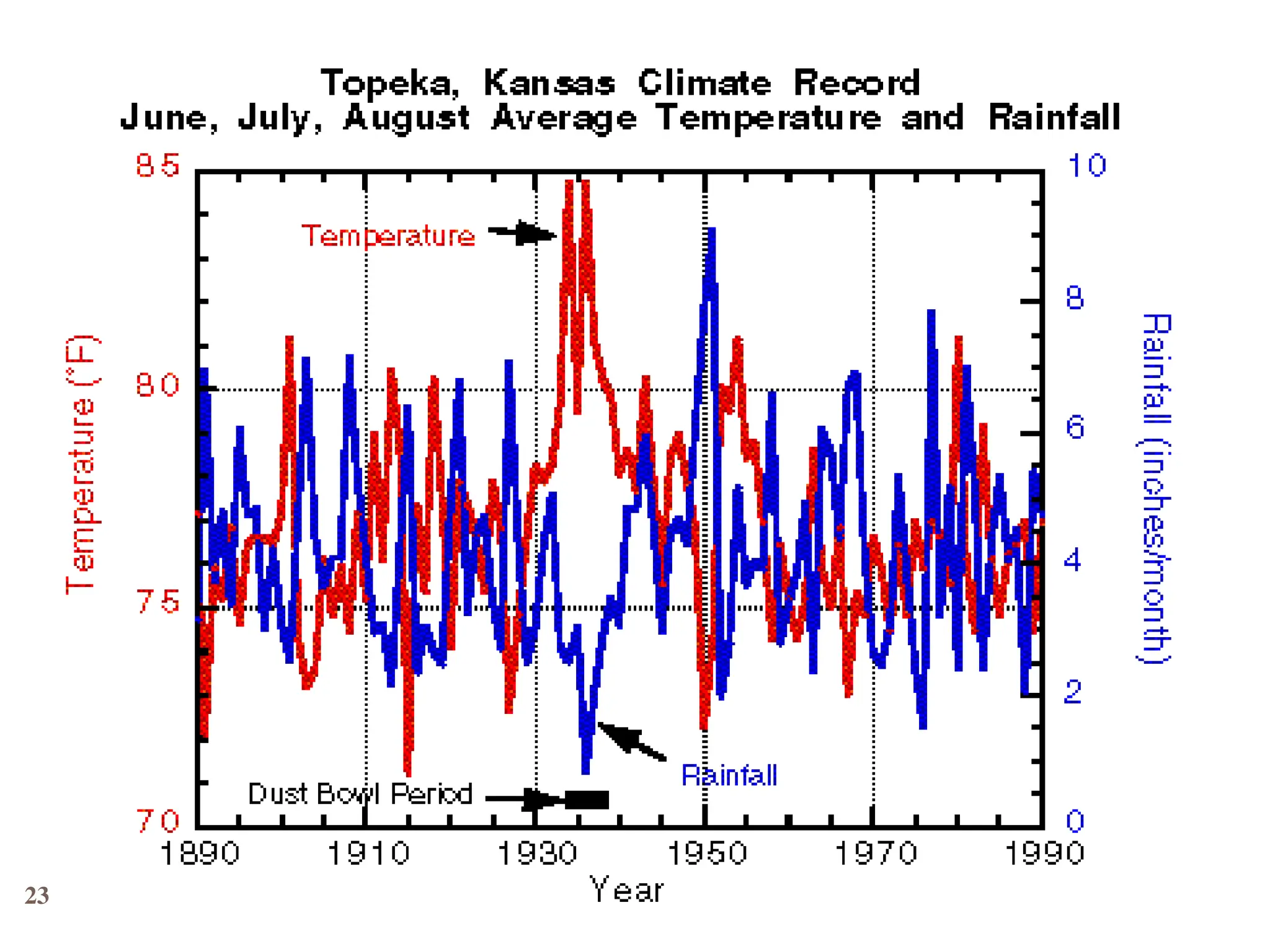
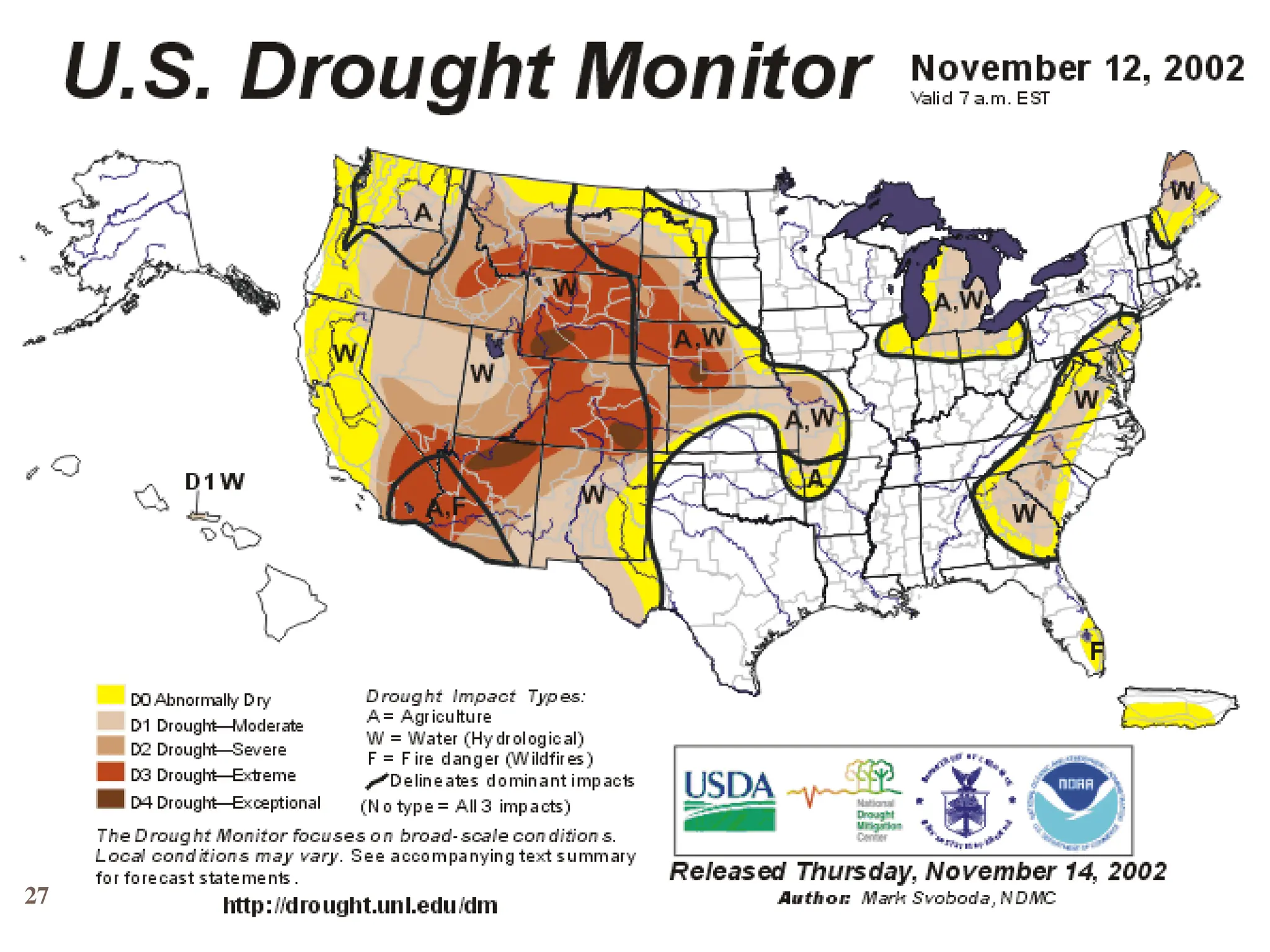
2. Drought: rainfall significantly below
normal for an extended period.
several years
more than 25% less than normal
7
8.
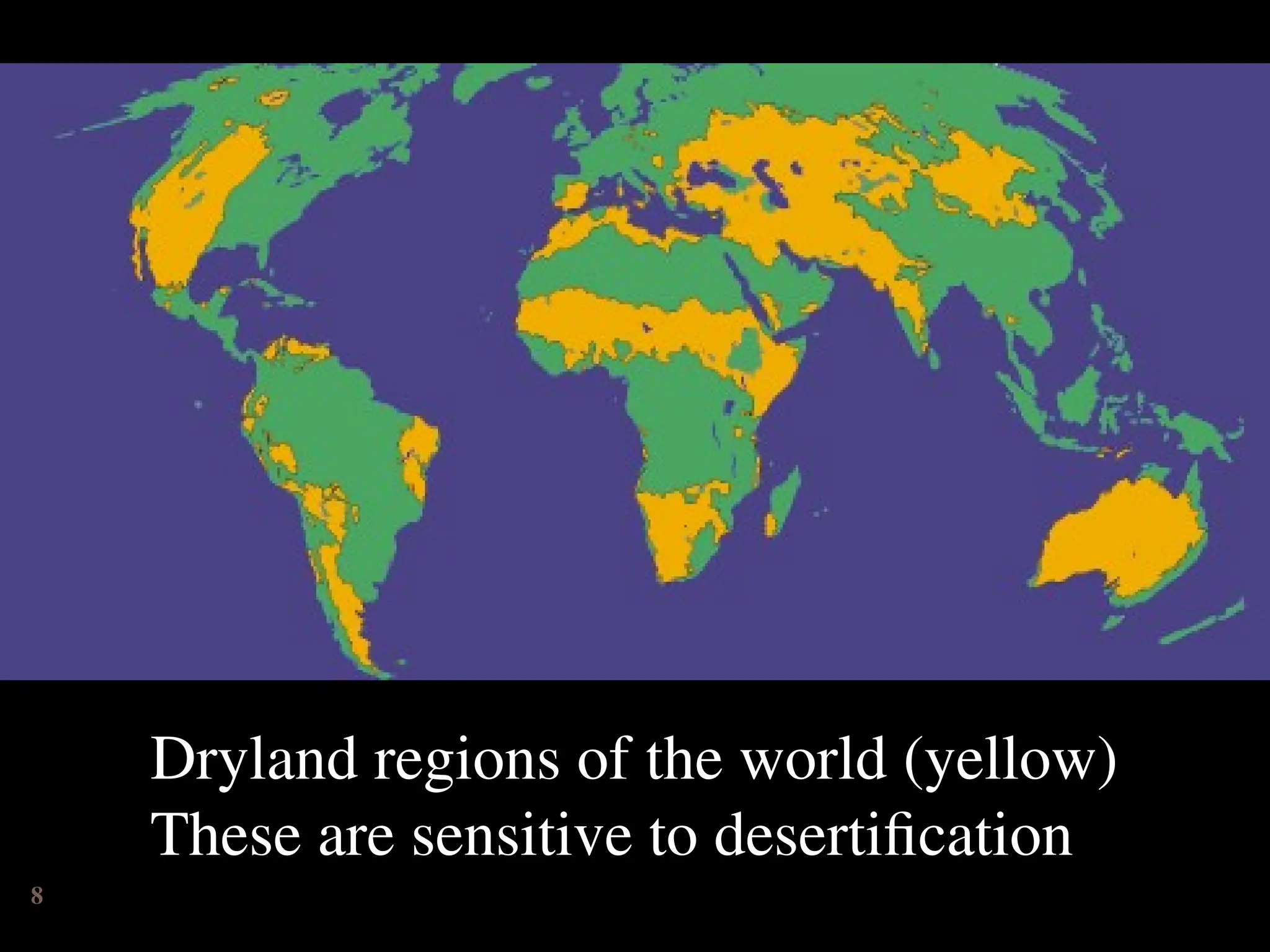
Dryland regions ofthe world (yellow)
These are sensitive to desertification
8
9.
D. Desertification:
4. TheSahel as an example
climate
climate change
agricultural practices
political process
population
9
10.
D. Desertification:
3. TheSahel as an example
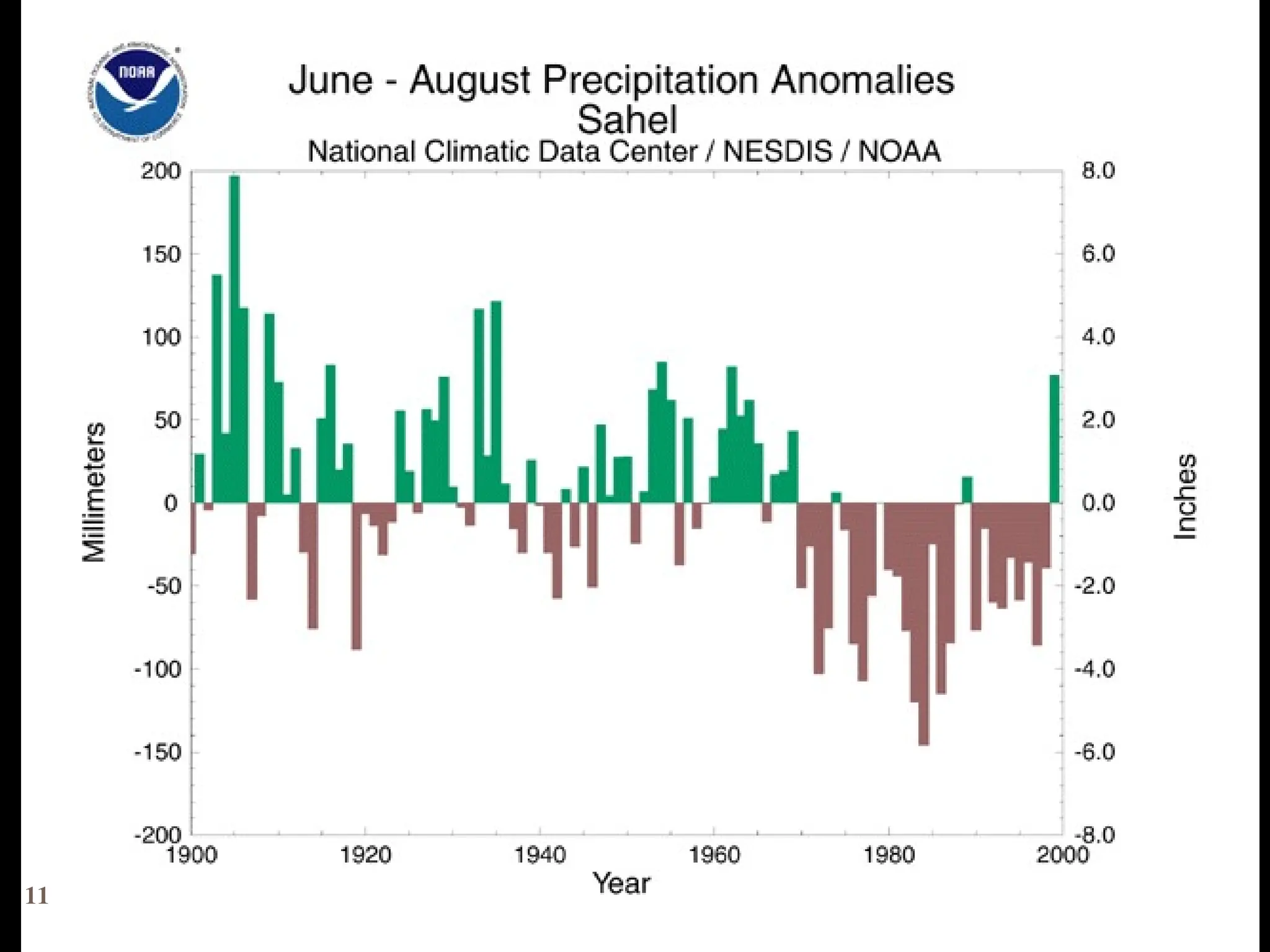
a. Sub-saharan rainfall index
shows drought from 1970 to 2000.
b. Impact on human activity in the
Sahel.
10
D. Desertification:
3. TheSahel as an example
a. Sub-saharan rainfall index
shows drought from 1970 to 2000.
b. Impact on human activity in the
Sahel.
c. Possible explanations for the
Sahel
12
13.
Remember what drivesthe monsoon circulation.
• Strong seasonal pressure gradient between land
and sea (hot land mass)
• Warm oceans to supply moisture.
• Sufficient recycling of rainfall by plants
(evapotranspiration) to allow moisture to
reach deep into the interior.
13
14.
D. Desertification:
c. Possibleexplanations for the Sahel
• Natural climate variability:
Monsoon activity controled by sea surface
temperatures, related to ENSO variability.
• Inappropriate technology/misguided foreign
aid.
• Aerosols produced by industrialization in
Europe cool Sahel, reducing strength of the
African Monsoon.
d. Positive feedbacks
14
15.
D. Desertification:
c. Possibleexplanations for the Sahel
d. Positive feedbacks
Fuel wood gathering and stock overgrazing
reduces vegetation cover. Two impacts:
Albedo increases: cooling the region in summer
and weakening monsoon circulation.
Less vegetation = less evapotranspiration. So less
water vapor in the atmosphere to fuel the monsoon
and deliver precipitation over the Sahel region.
15
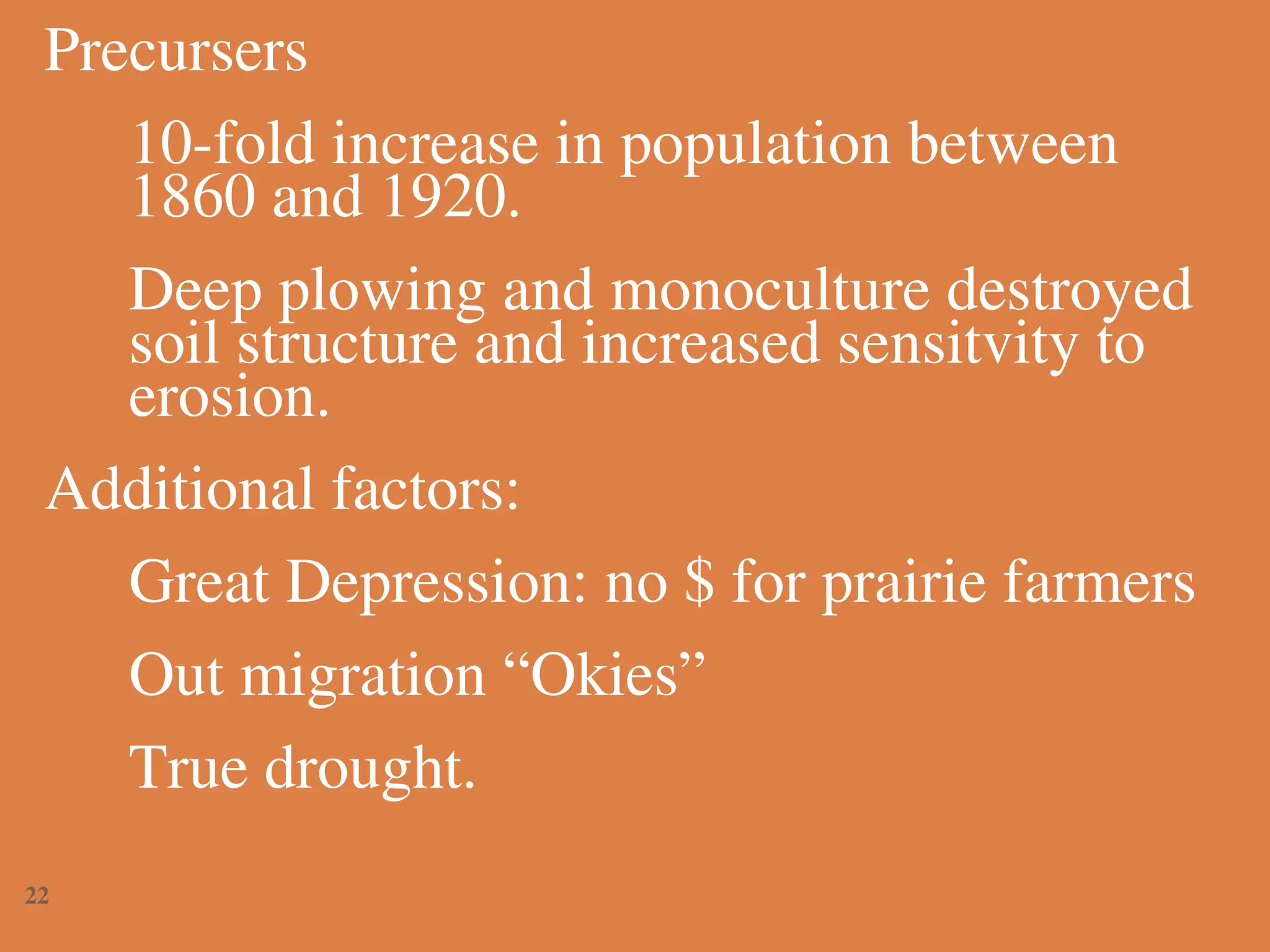
Precursers
10-fold increase inpopulation between
1860 and 1920.
Deep plowing and monoculture destroyed
soil structure and increased sensitvity to
erosion.
Additional factors:
Great Depression: no $ for prairie farmers
Out migration “Okies”
True drought.
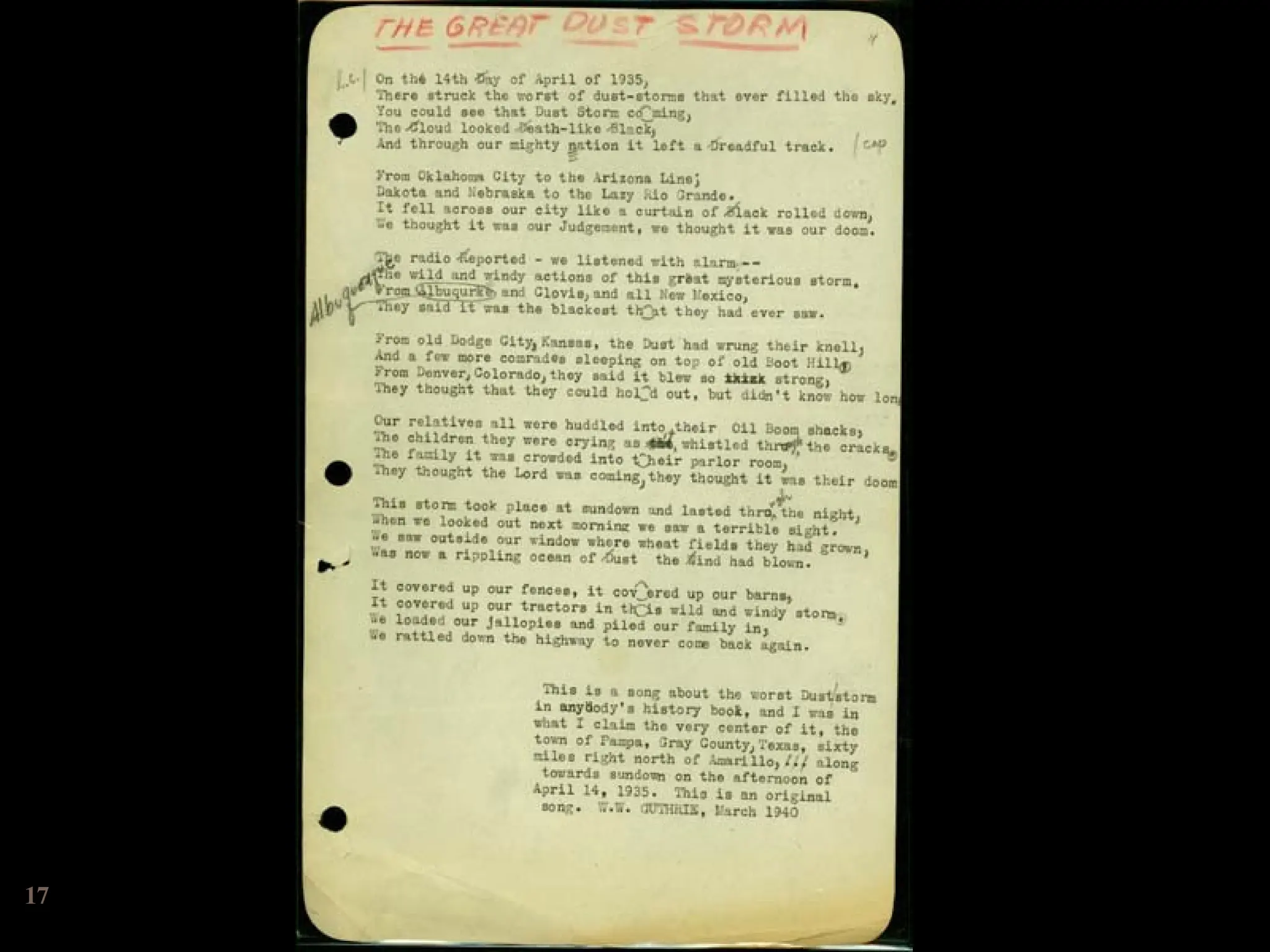
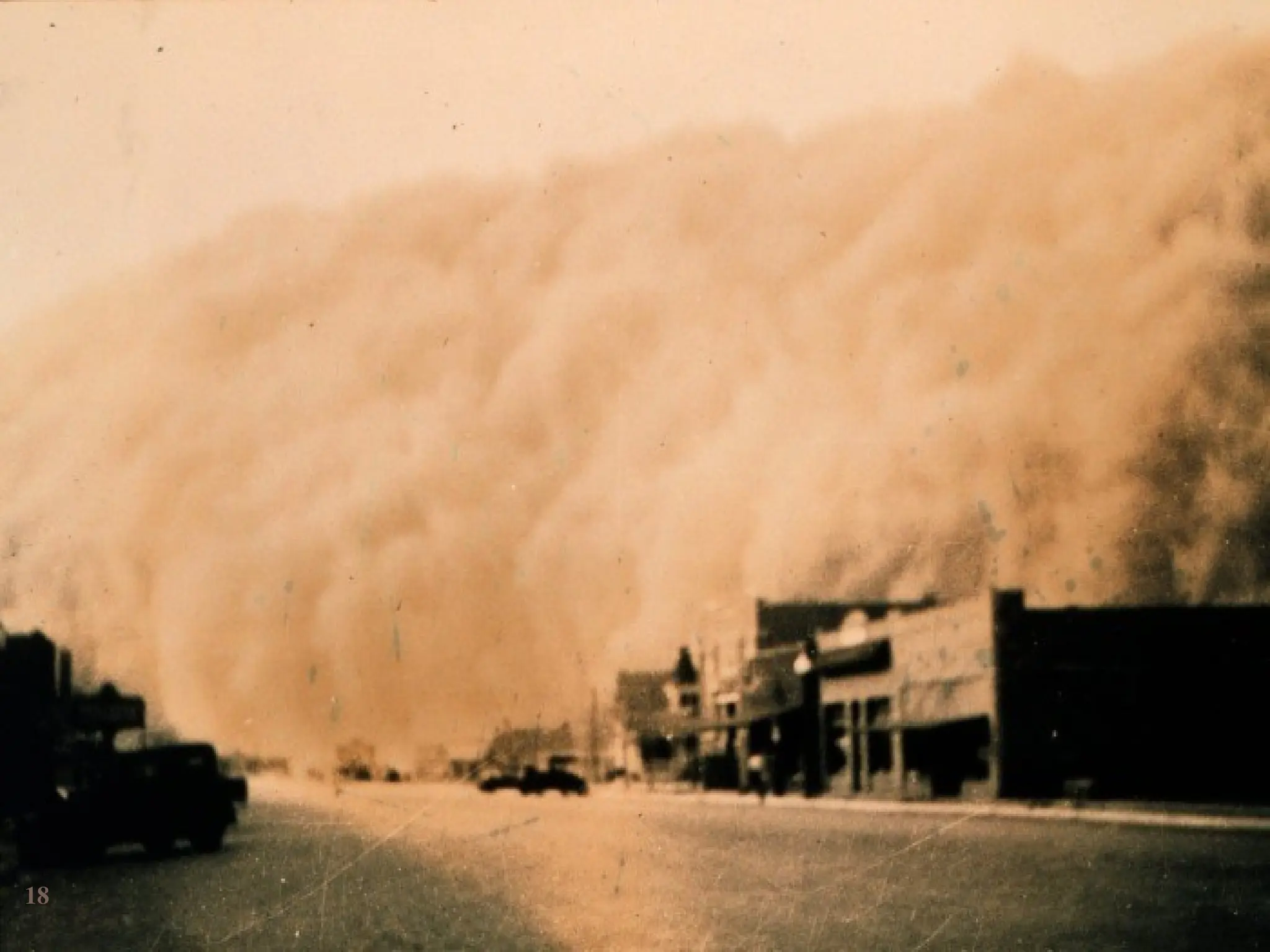
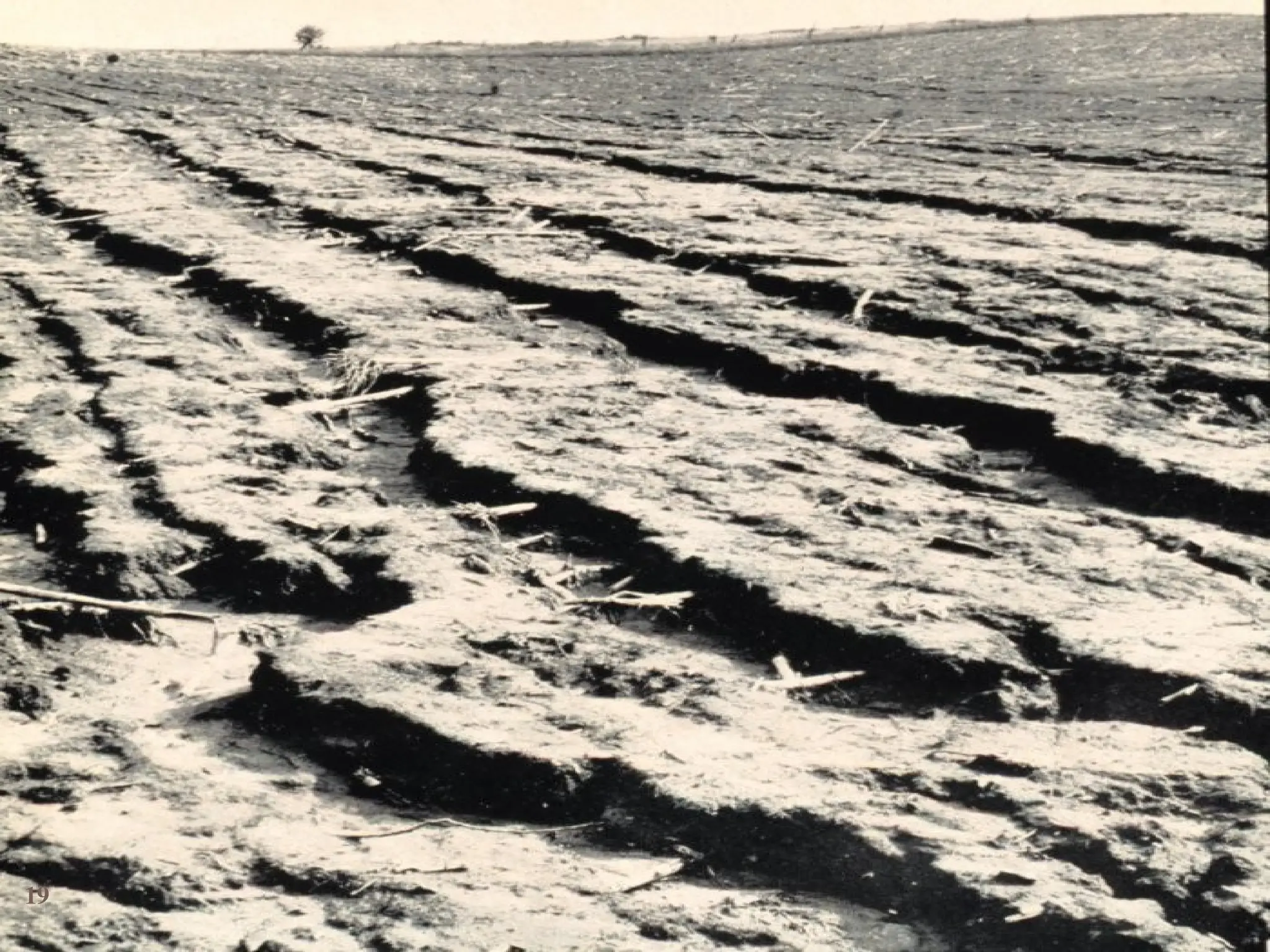
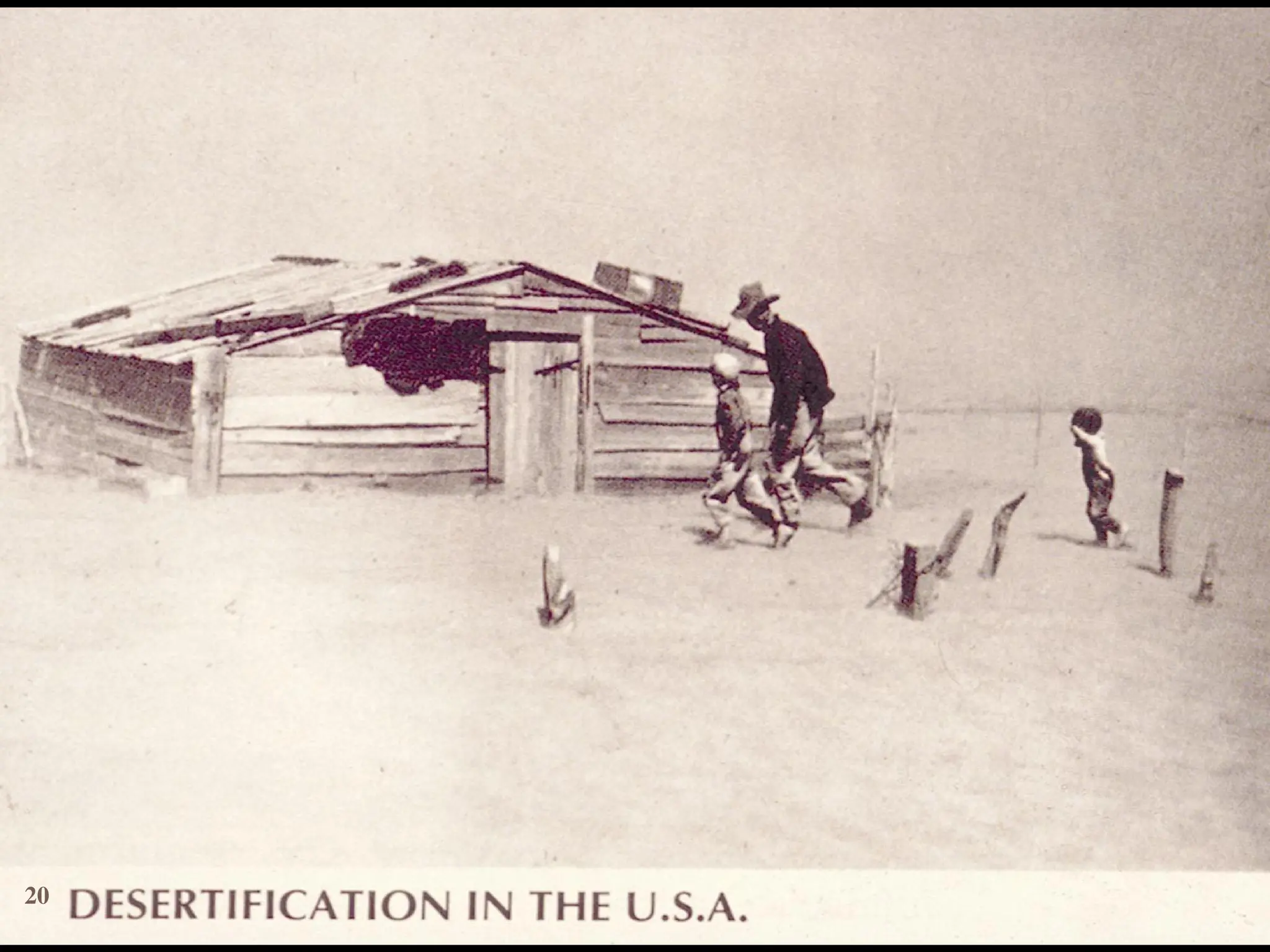
22
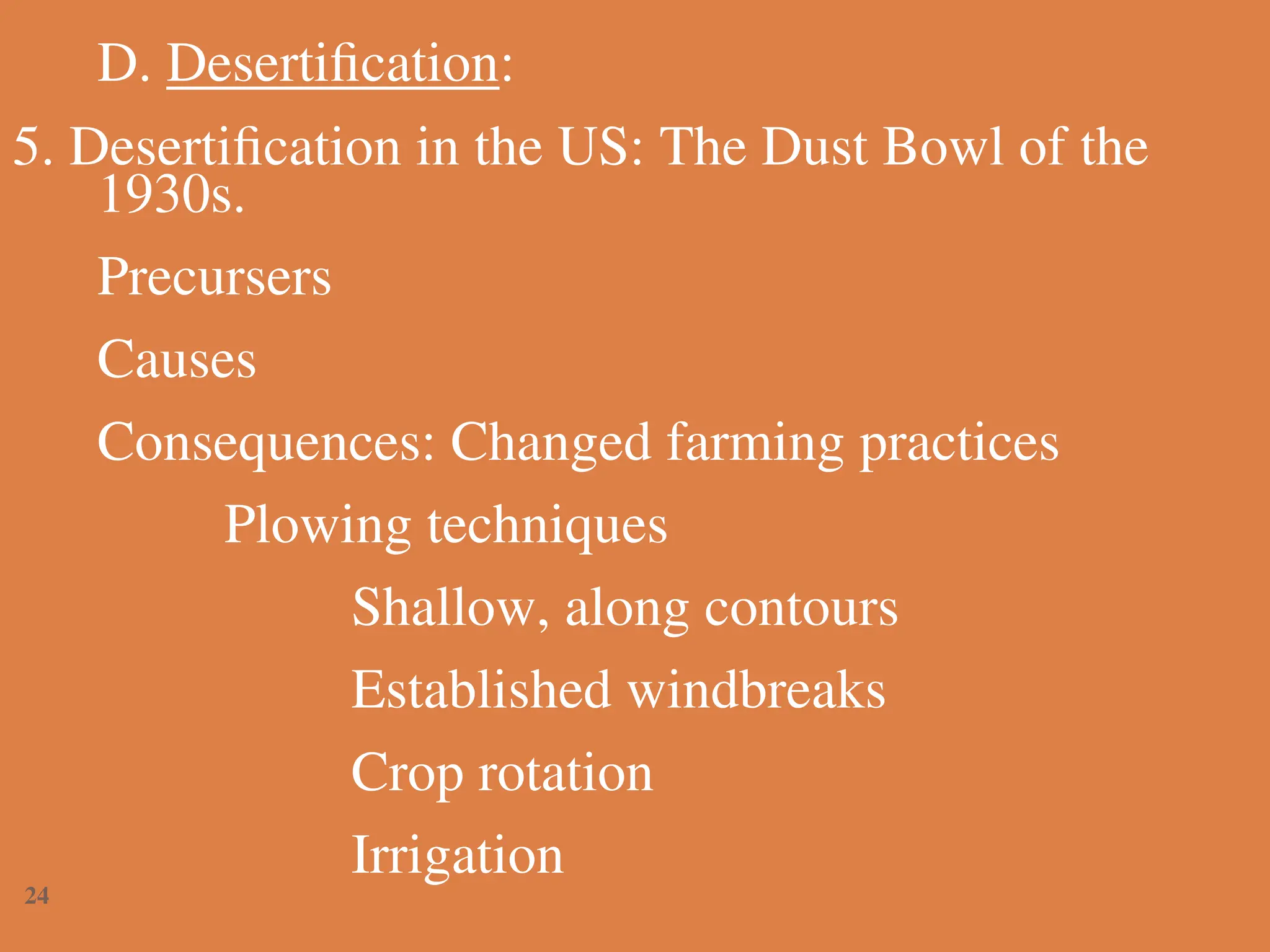
D. Desertification:
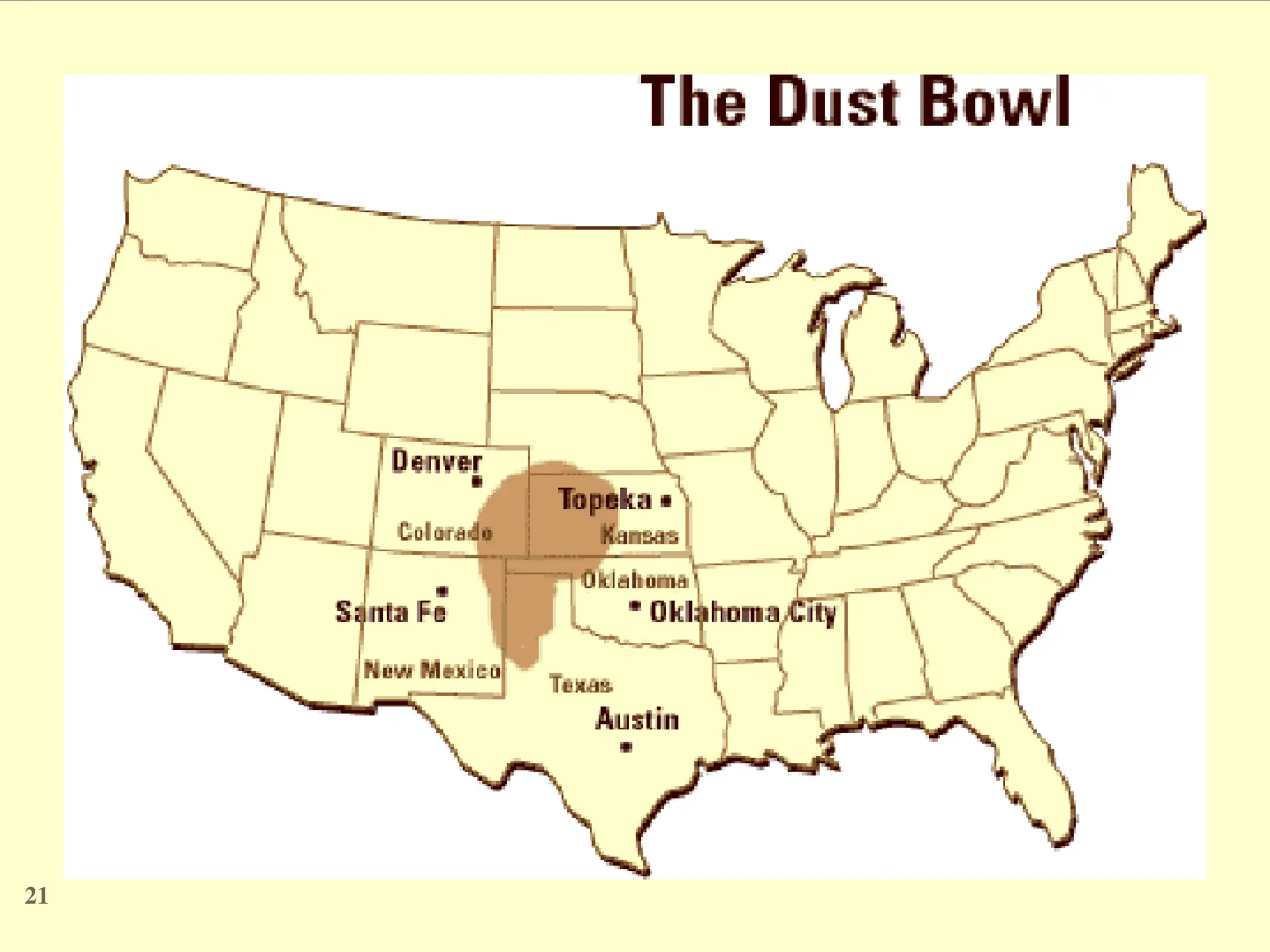
5. Desertificationin the US: The Dust Bowl of the
1930s.
Precursers
Causes
Consequences: Changed farming practices
Plowing techniques
Shallow, along contours
Established windbreaks
Crop rotation
Irrigation
24
25.
D. Desertification:
5. Desertificationin the US: The Dust Bowl of
the 1930s.
Precursers
Causes
Consequences: Changed farming practices
Better? Yes, but….
25