dermatosis
[der″mah-to´sis] (pl. dermato
´ses)Anynoninflammatory disorder of the skin.
lichenoid dermatosis any skin disorder characterized by thickening and
hardening of the skin.
precancerous dermatosis any skin condition in which the lesions, such
as warts, nevi, or other excrescences, are likely to undergo malignant deg
eneration.
91.
• Dermatosis isa term that refers to diseases of the integumentary
system.
• This classification includes everything on the surface of the body:
skin, nails, and hair.
• Any condition affecting the skin could be categorized a dermatosis.
• This doesn’t include skin conditions that involve inflammation (that
would be dermatitis).
• skin is the largest organ on your body. Thousands of documented
conditions can affect the skin, hair, and nails.
92.
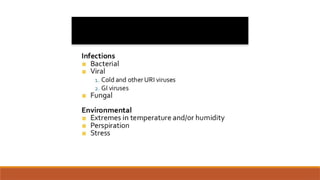
Common causes ofdermatosis
Dermatosis is caused by a number of different reasons.
Still, the origins of some skins conditions are unknown. The most common causes of
dermatosis include:
•AUTOIMMUNE DISORDERS: This occurs when a person’s body starts to attack itself and
can cause skin conditions to develop such as vitiligo, lupus, and alopecia areata.
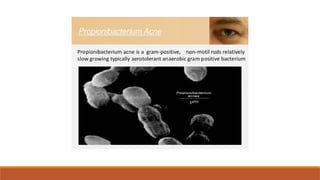
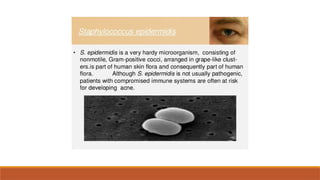
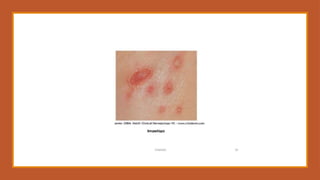
•BACTERIA: The bacteria Staphylococcus aureus and Streptococcus pyogenes can cause
skin infections such as impetigo.
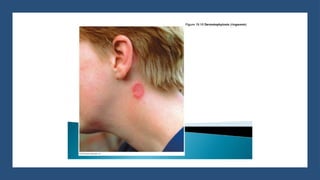
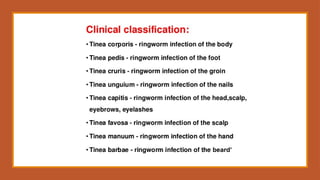
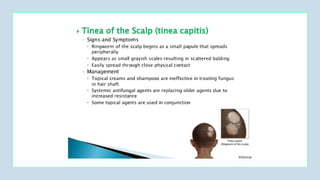
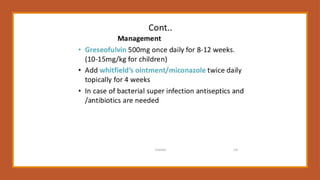
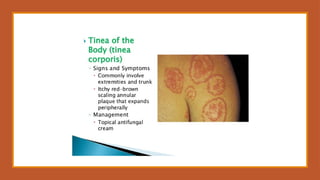
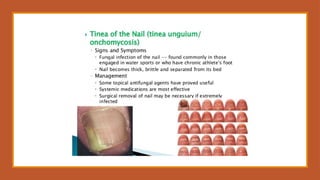
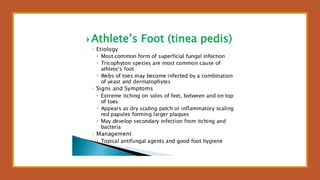
•FUNGUS: The tinea fungus can cause skin infections, such as athlete’s foot.
•GENETIC SUSCEPTIBILITY: For example, people with the gene HLA-DR4 have a higher
risk of experiencing dermatosis than those who do not.
•VIRUSES: The HIV/AIDS virus is a common cause of ashy dermatosis.
93.
Depending on specificdermatosis, some of the following treatments
may be recommended:
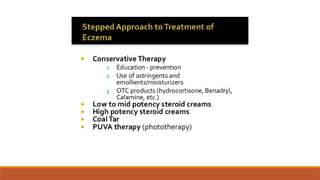
•Apply a corticosteroid ointment (hydrocortisone), to the affected areas
to reduce dermatosis symptoms
•Take or apply medications, such as antibiotics or antifungals, as
prescribed by a doctor
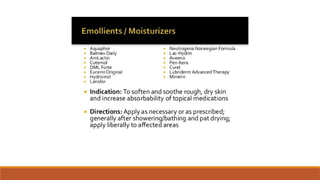
•Apply a soothing ointment, such as coconut oil or aloe, to reduce skin
dryness
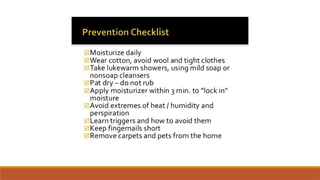
•Keep the affected area clean and dry
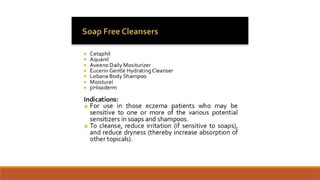
•Wash the skin regularly with an antibacterial soap that doesn’t have
harsh fragrances or dyes

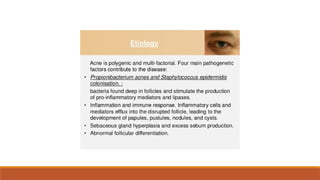


![dermatosis
[der″mah-to´sis] (pl. dermato
´ses)Any noninflammatory disorder of the skin.
lichenoid dermatosis any skin disorder characterized by thickening and
hardening of the skin.
precancerous dermatosis any skin condition in which the lesions, such
as warts, nevi, or other excrescences, are likely to undergo malignant deg
eneration.](https://image.slidesharecdn.com/dermatitis-250217041132-caf765af/85/DERMATITIS-nursing-management-nursing-students-90-320.jpg)