Defect Manager
Presenting By: ganesan.v
Objective
• The main object of the project is to send and receive information’s
through Intranet or Internet. This is the Server based web project in which
it is implemented in .Net environment.
The task under this project has been broadly divided into three parts
Part 1. Administrator Activities
Part 2. Programmer Activities
Part 3. Tester Activities
Administrator under this project is chiefly concerned with the
overall performance of the Programmers and Testers. The various
module Information's forwarded by the Administrator to the
Programmers, which in turn are sent to the Testers for correctness through
a pivotol program known as DEFECT MANAGER.
Objective
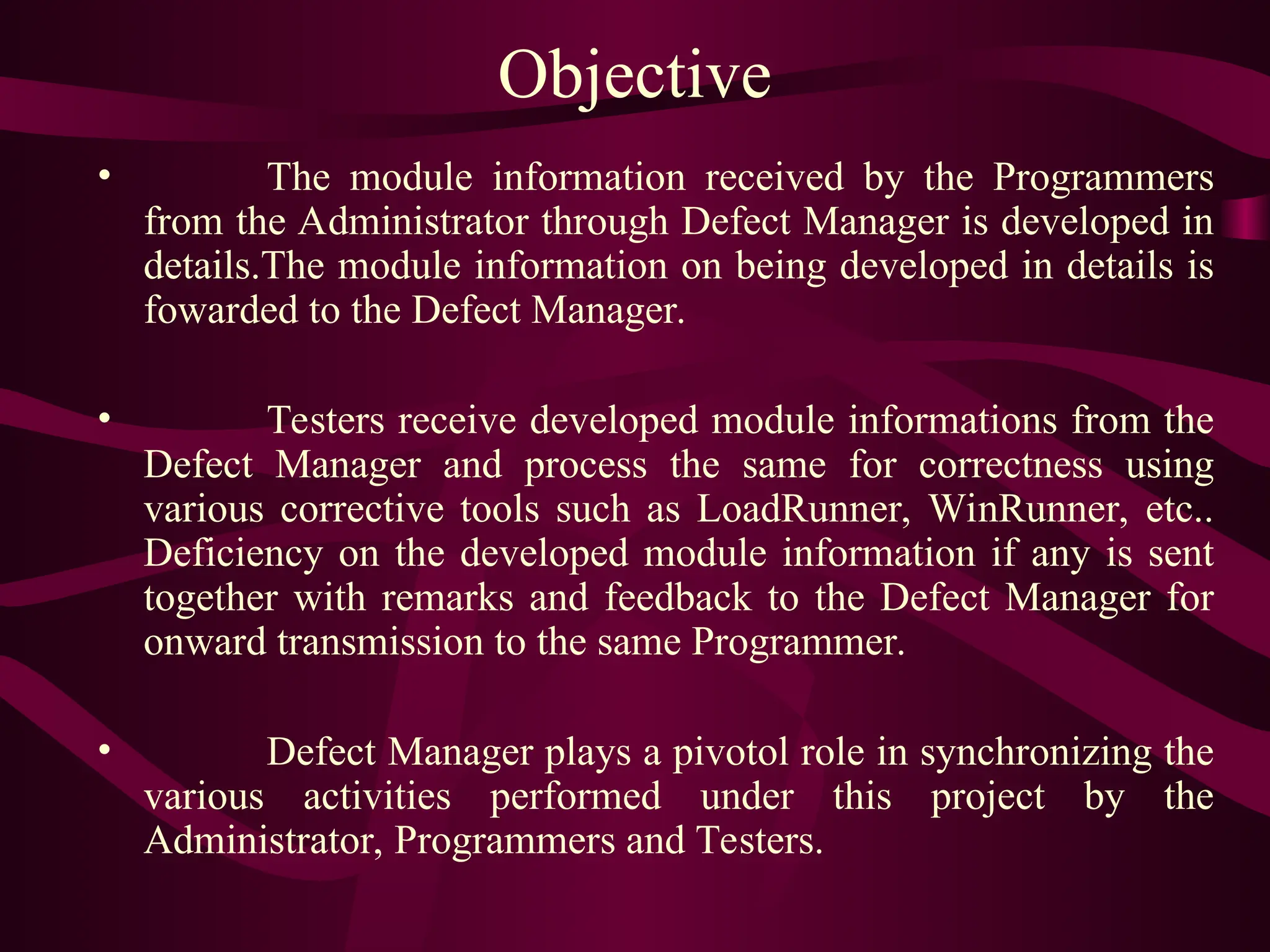
• The module information received by the Programmers
from the Administrator through Defect Manager is developed in
details.The module information on being developed in details is
fowarded to the Defect Manager.
• Testers receive developed module informations from the
Defect Manager and process the same for correctness using
various corrective tools such as LoadRunner, WinRunner, etc..
Deficiency on the developed module information if any is sent
together with remarks and feedback to the Defect Manager for
onward transmission to the same Programmer.
• Defect Manager plays a pivotol role in synchronizing the
various activities performed under this project by the
Administrator, Programmers and Testers.
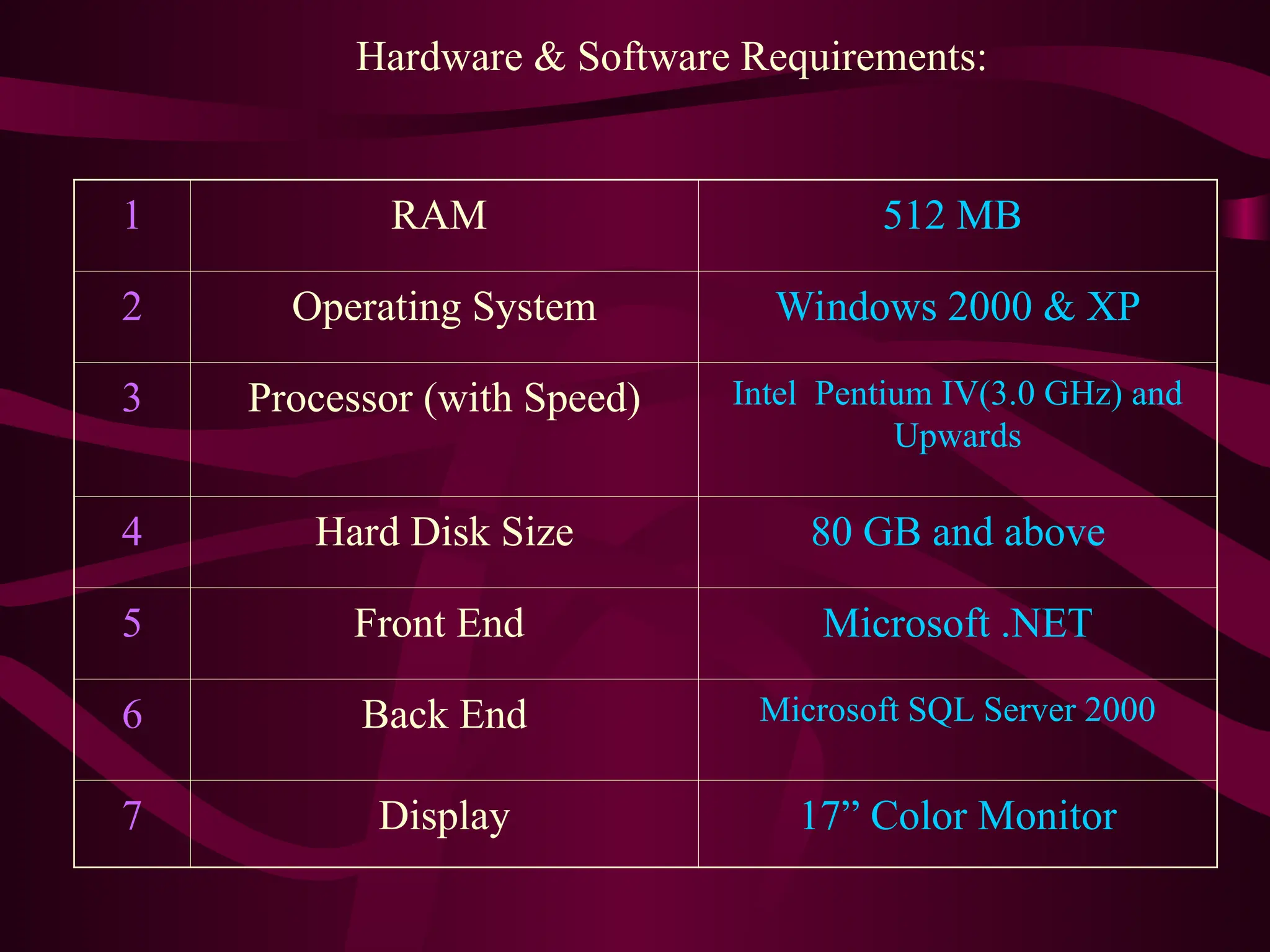
Hardware & Software Requirements:
1 RAM 512 MB
2 Operating System Windows 2000 & XP
3 Processor (with Speed) Intel Pentium IV(3.0 GHz) and
Upwards
4 Hard Disk Size 80 GB and above
5 Front End Microsoft .NET
6 Back End Microsoft SQL Server 2000
7 Display 17” Color Monitor
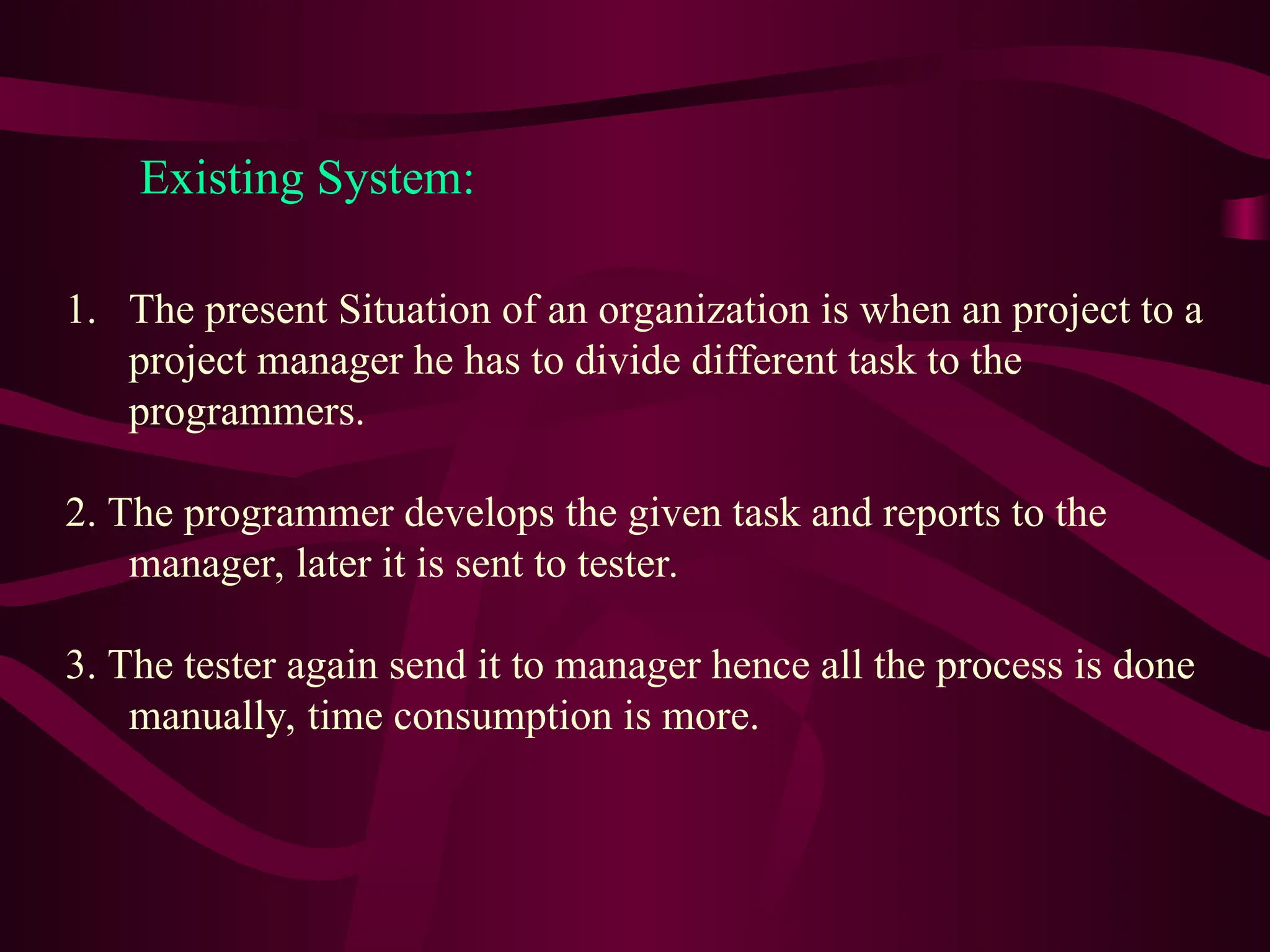
Existing System:
1. The present Situation of an organization is when an project to a
project manager he has to divide different task to the
programmers.
2. The programmer develops the given task and reports to the
manager, later it is sent to tester.
3. The tester again send it to manager hence all the process is done
manually, time consumption is more.
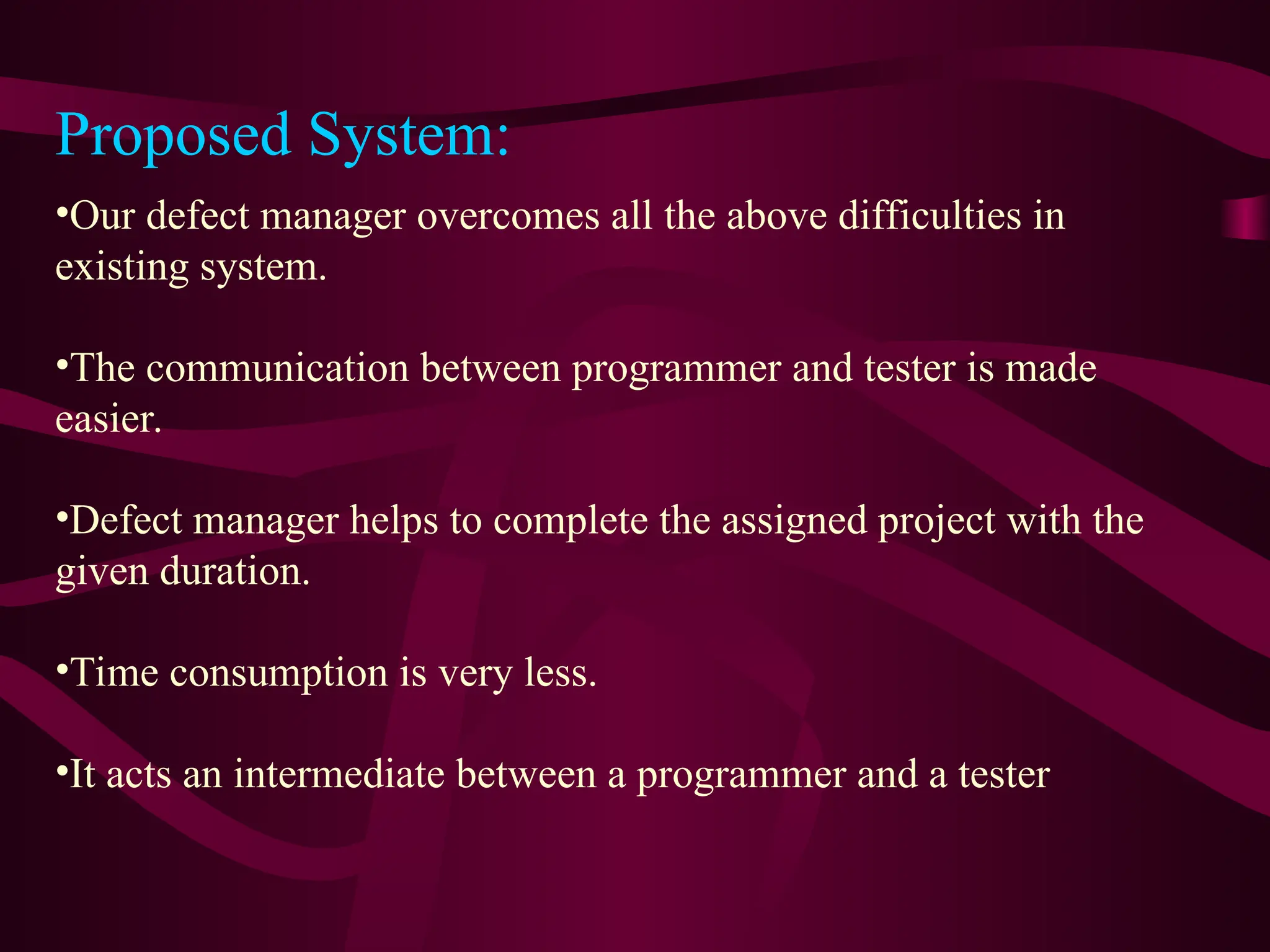
•Our defect manager overcomes all the above difficulties in
existing system.
•The communication between programmer and tester is made
easier.
•Defect manager helps to complete the assigned project with the
given duration.
•Time consumption is very less.
•It acts an intermediate between a programmer and a tester
Proposed System:
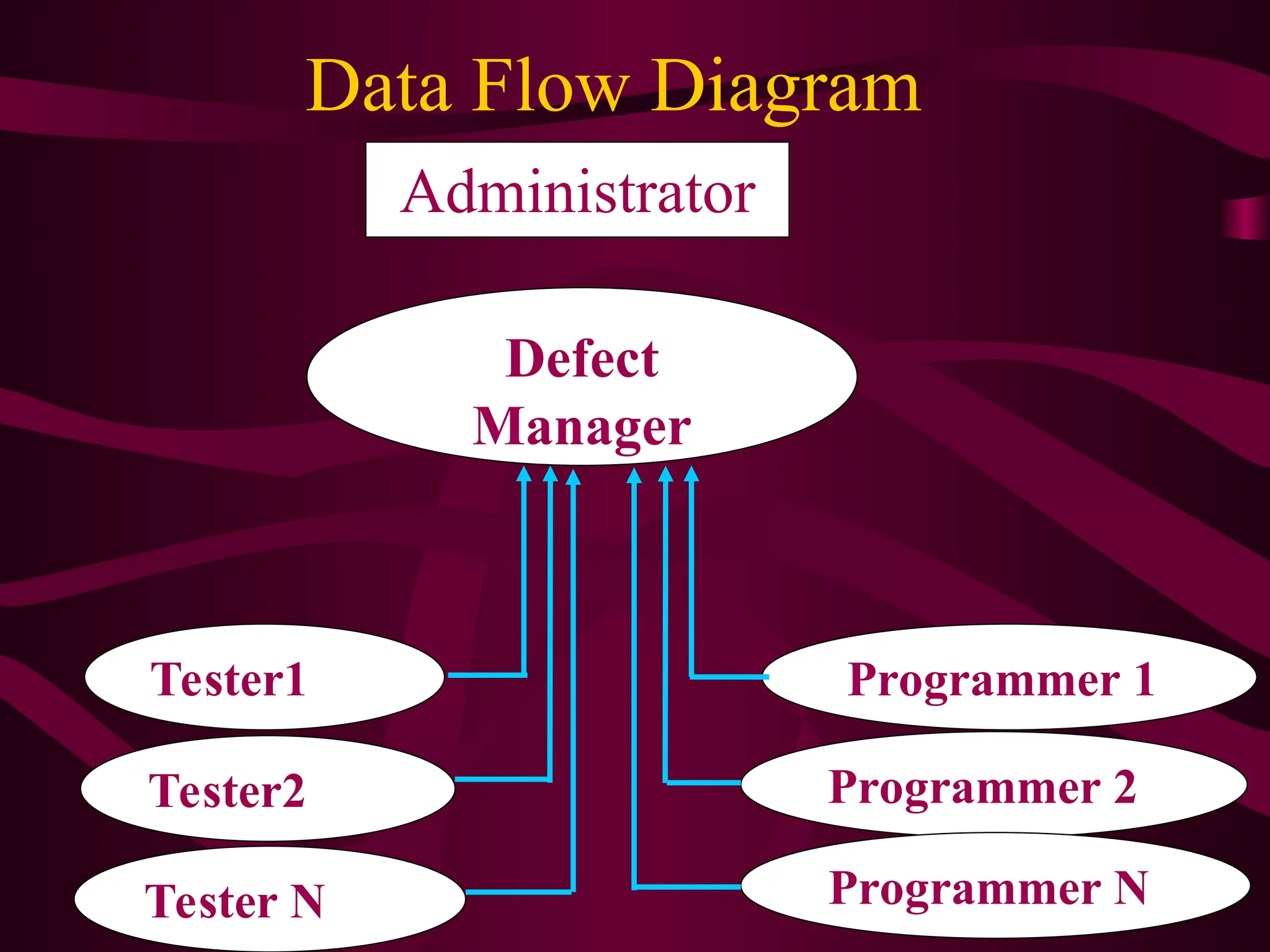
Data Flow Diagram
Administrator
Defect
Manager
Tester1
Tester N
Tester2
Programmer 1
Programmer 2
Programmer N
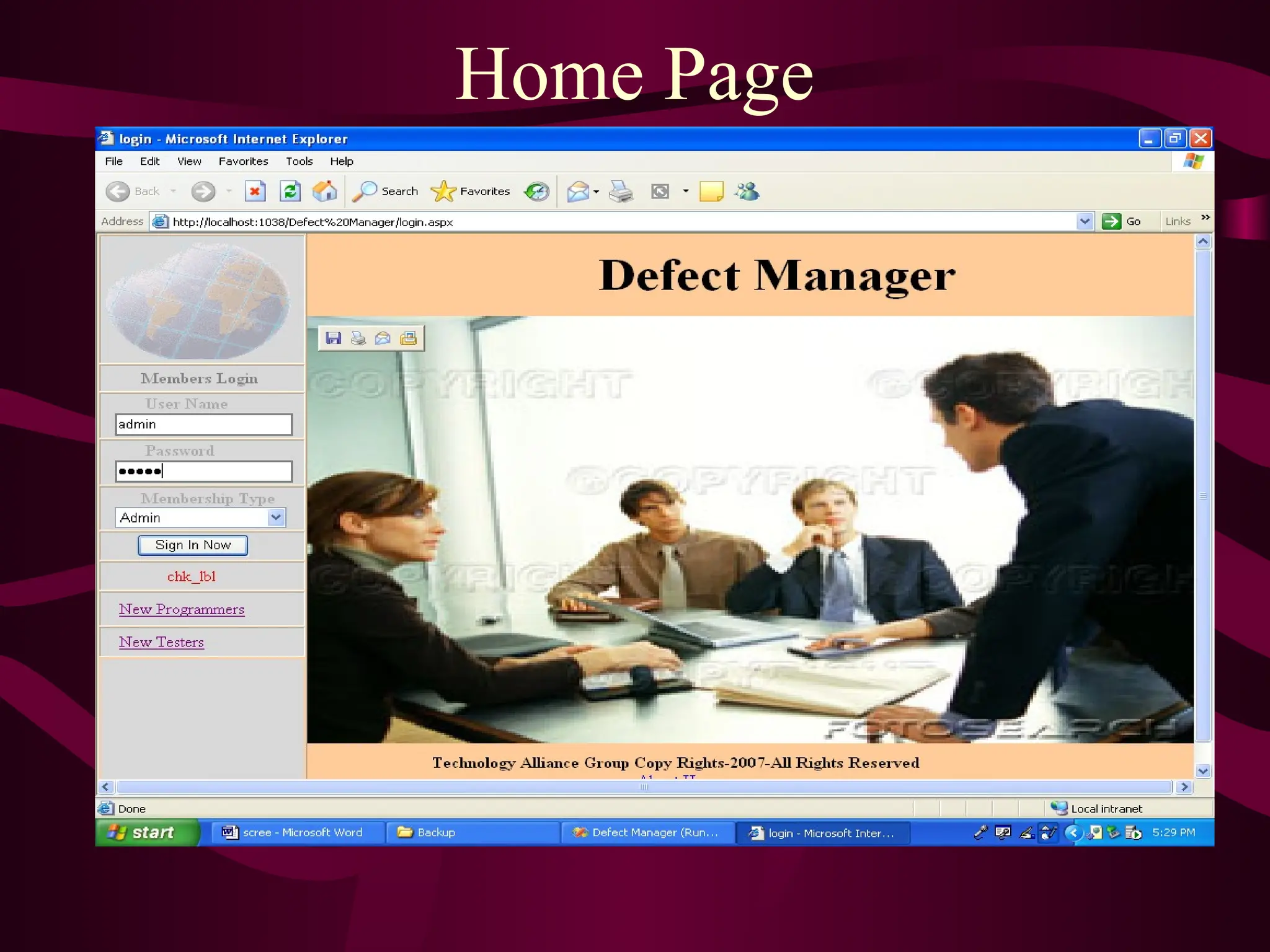
Home Page
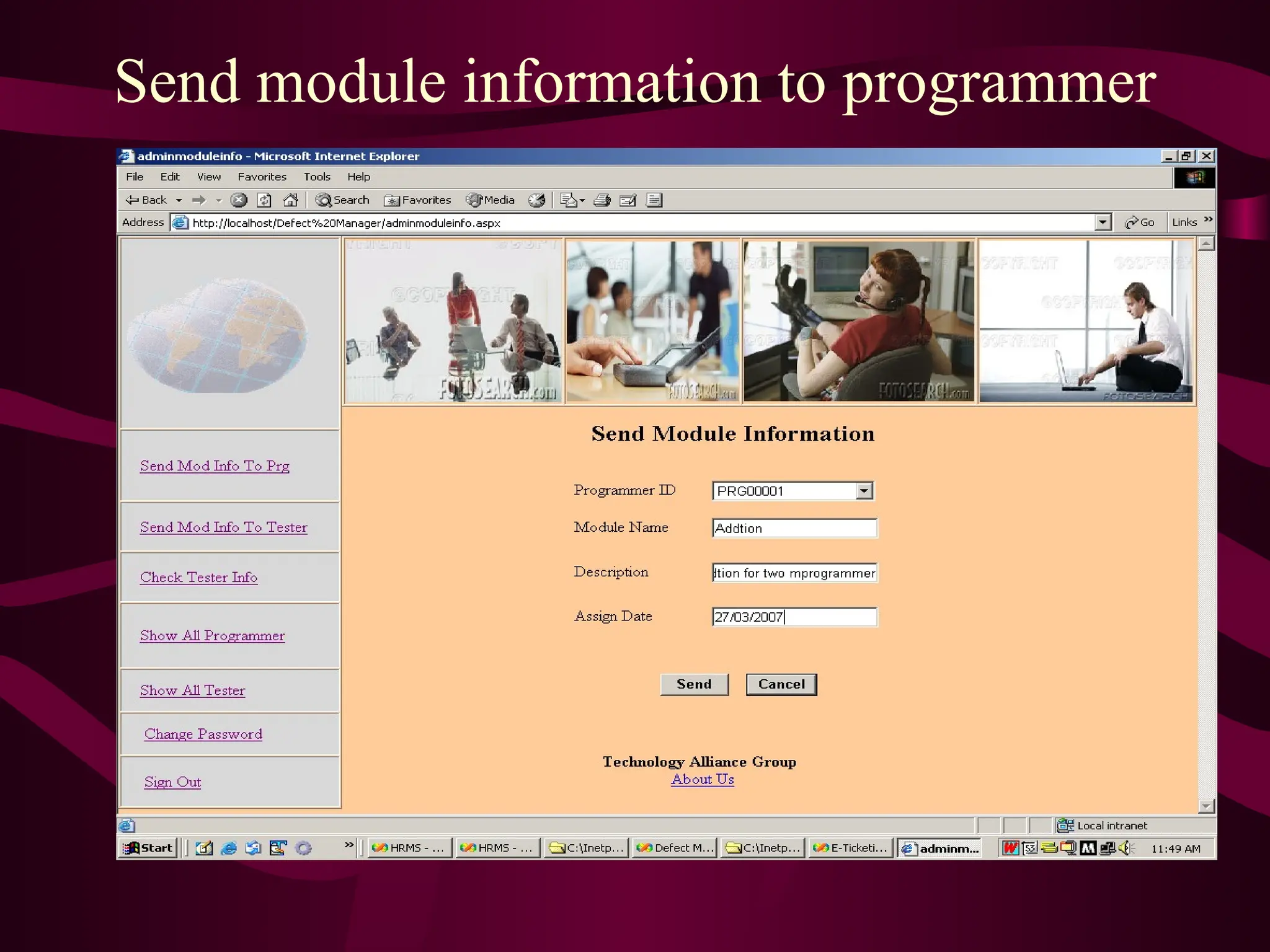
Send module information to programmer
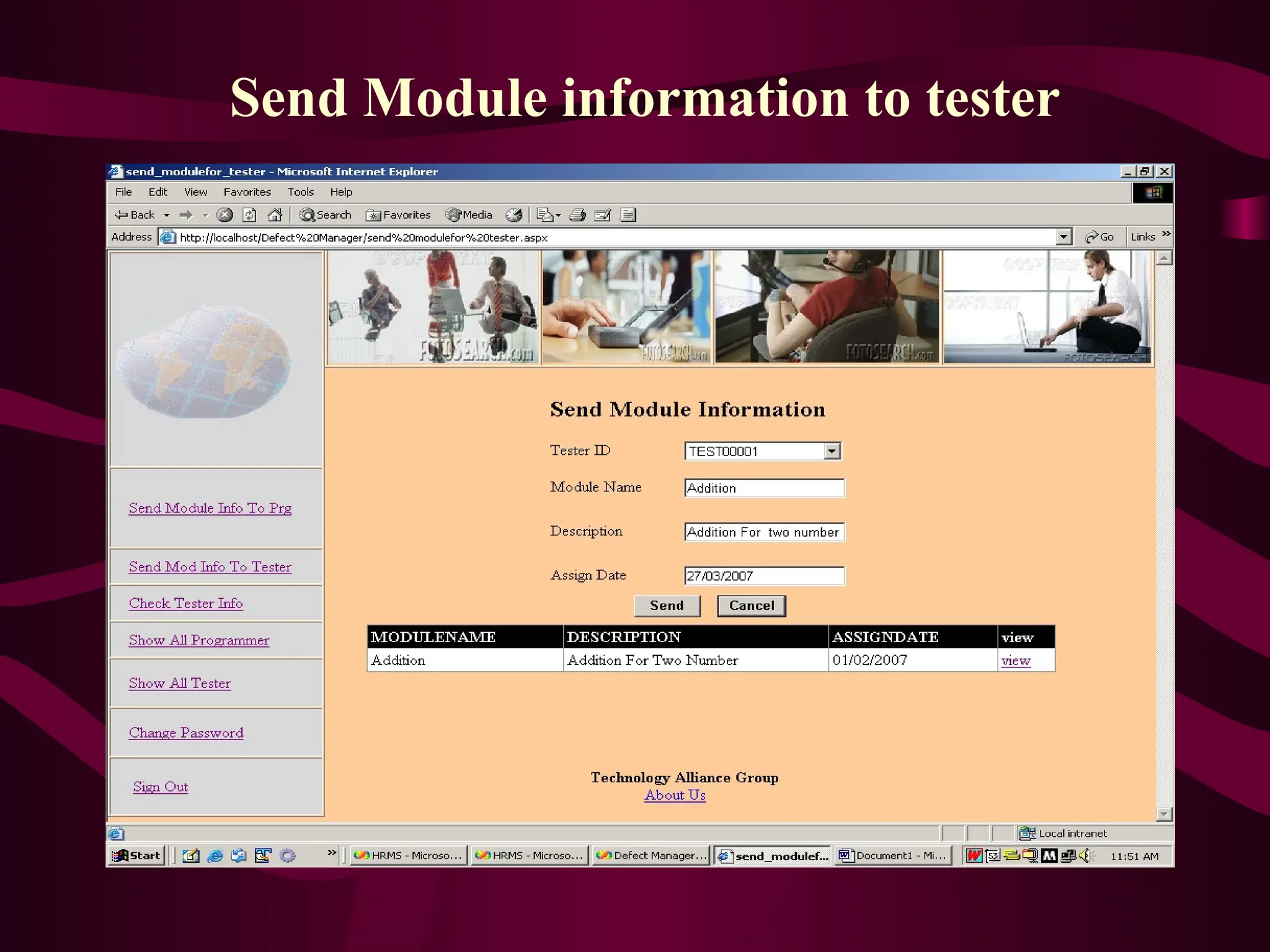
Send Module information to tester
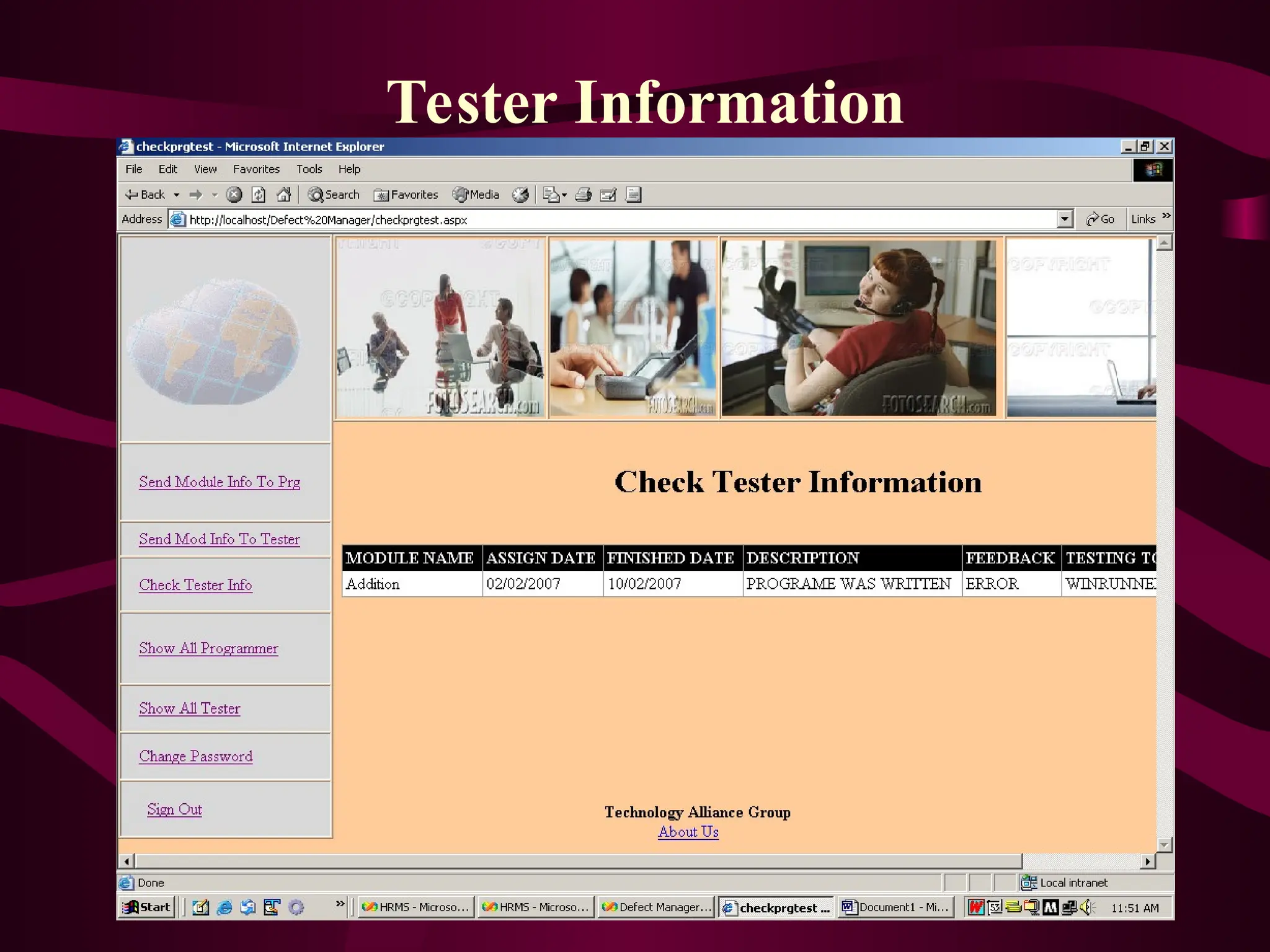
Tester Information
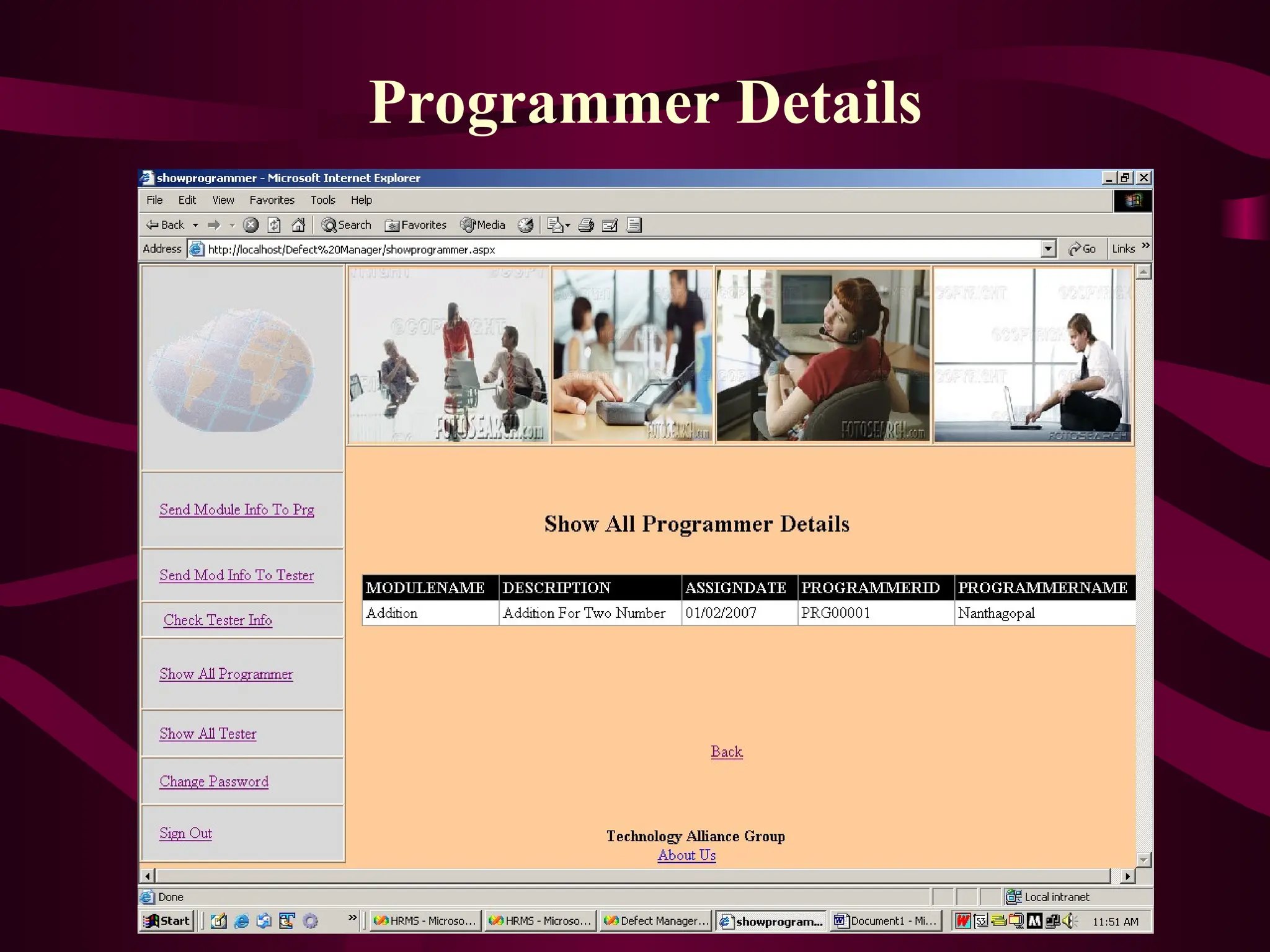
Programmer Details
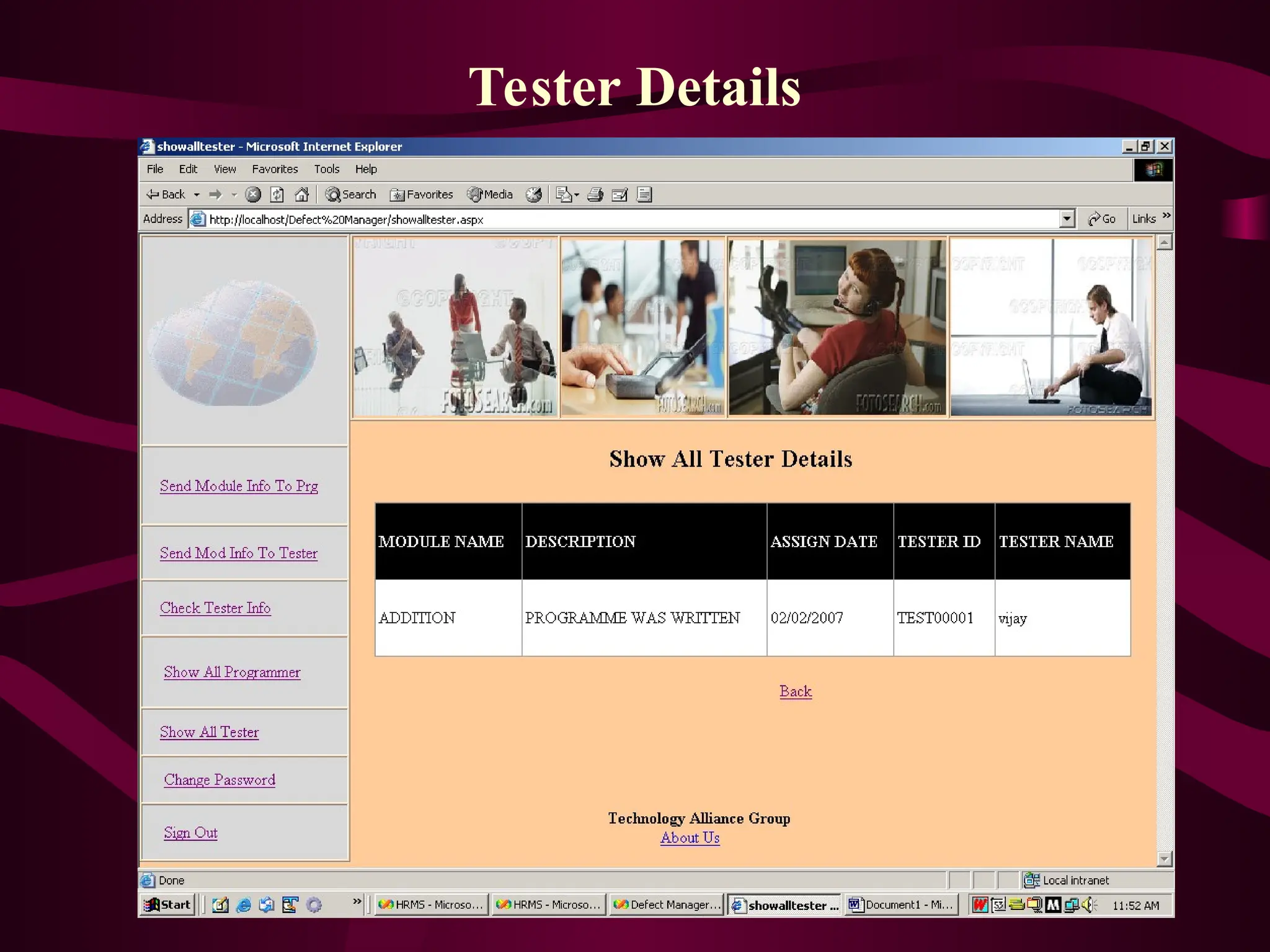
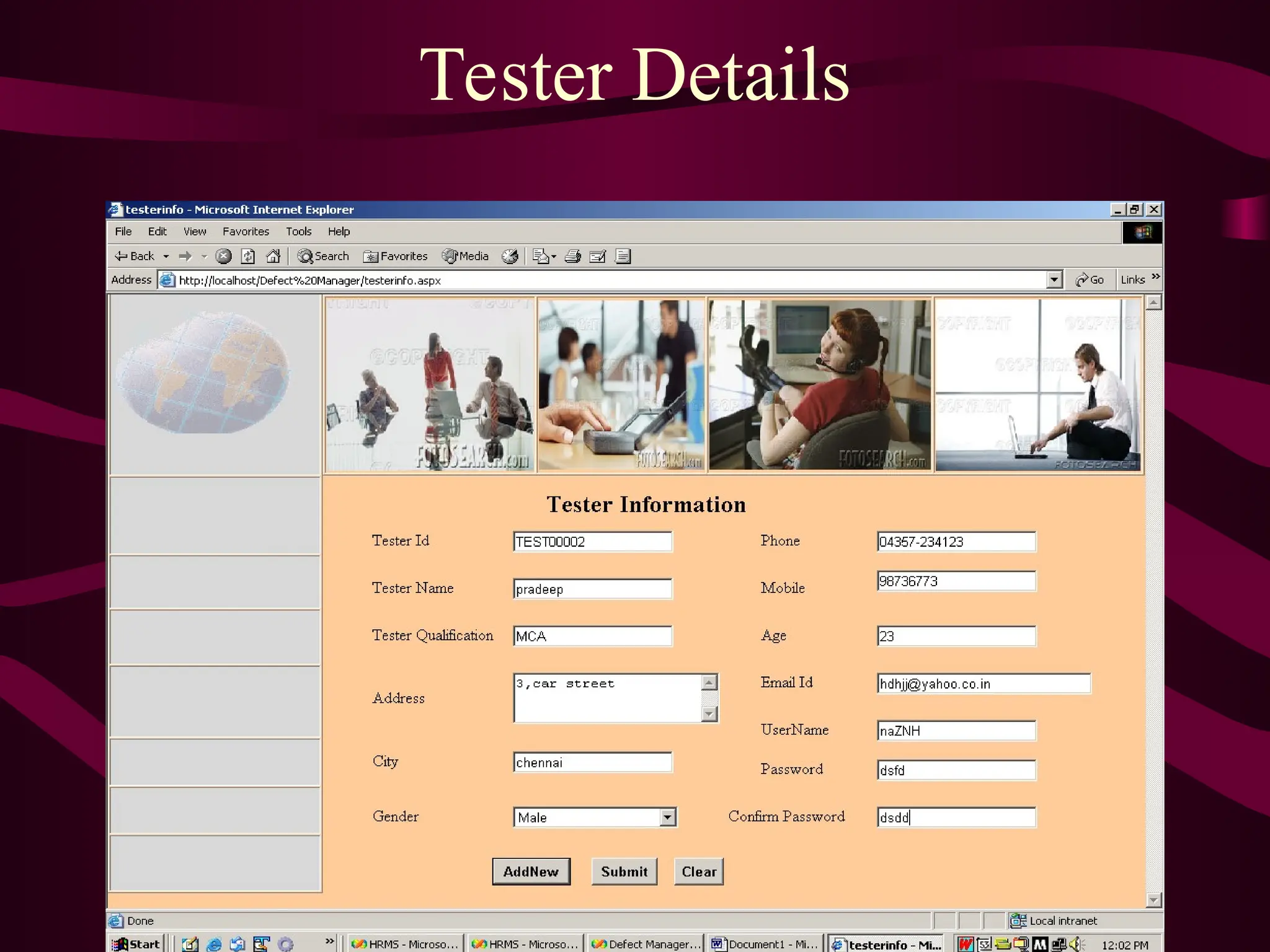
Tester Details
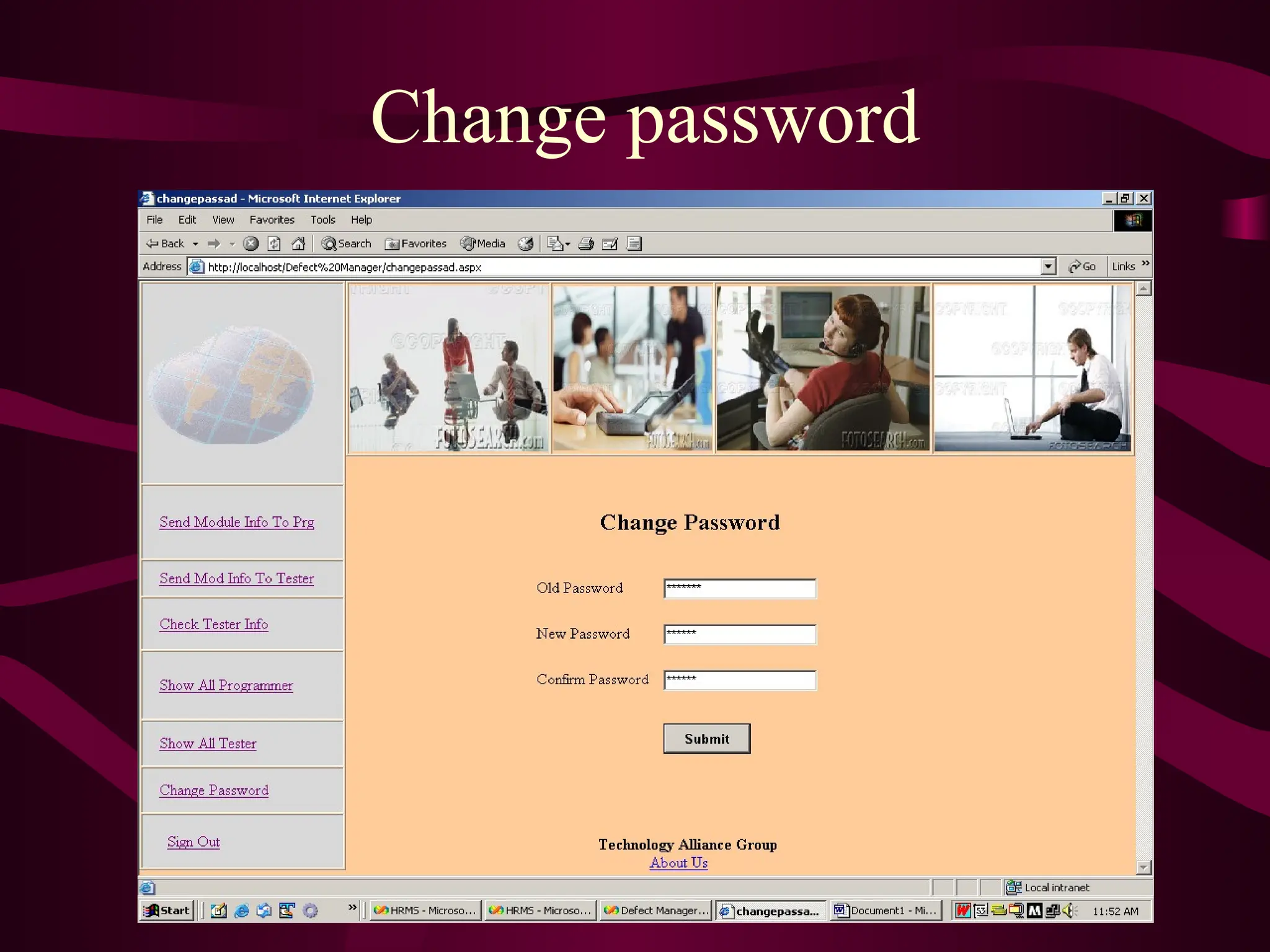
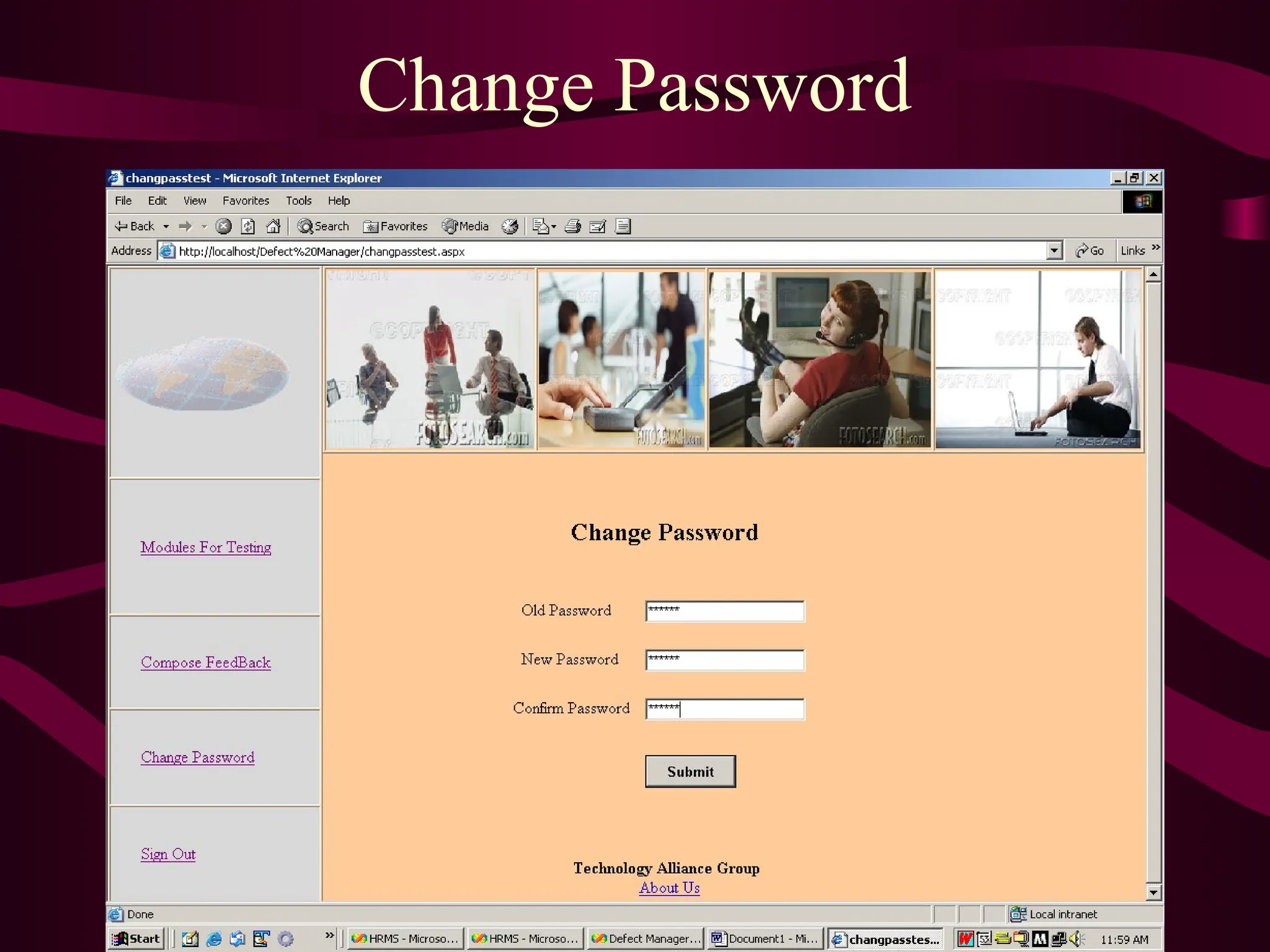
Change password
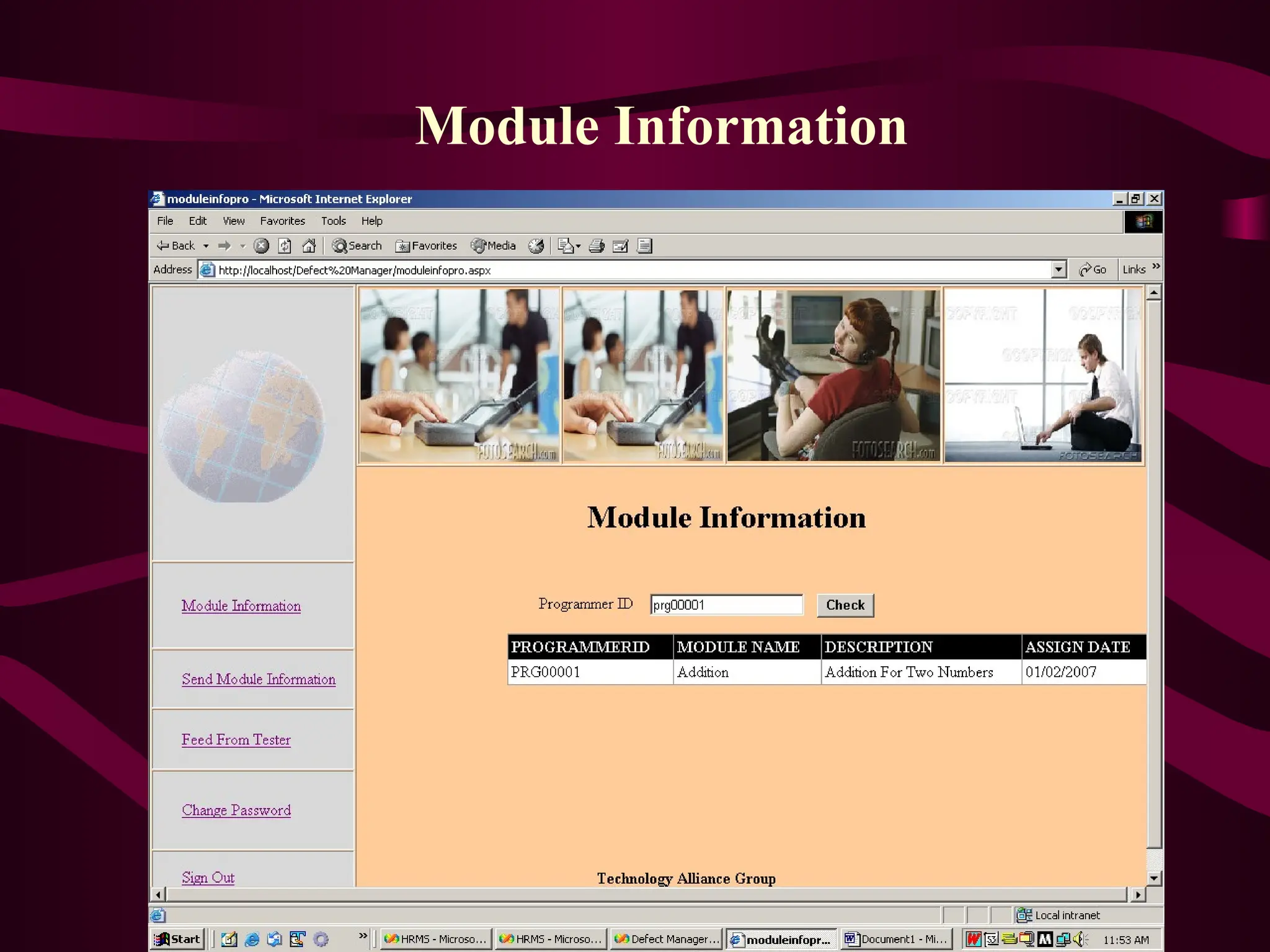
Module Information
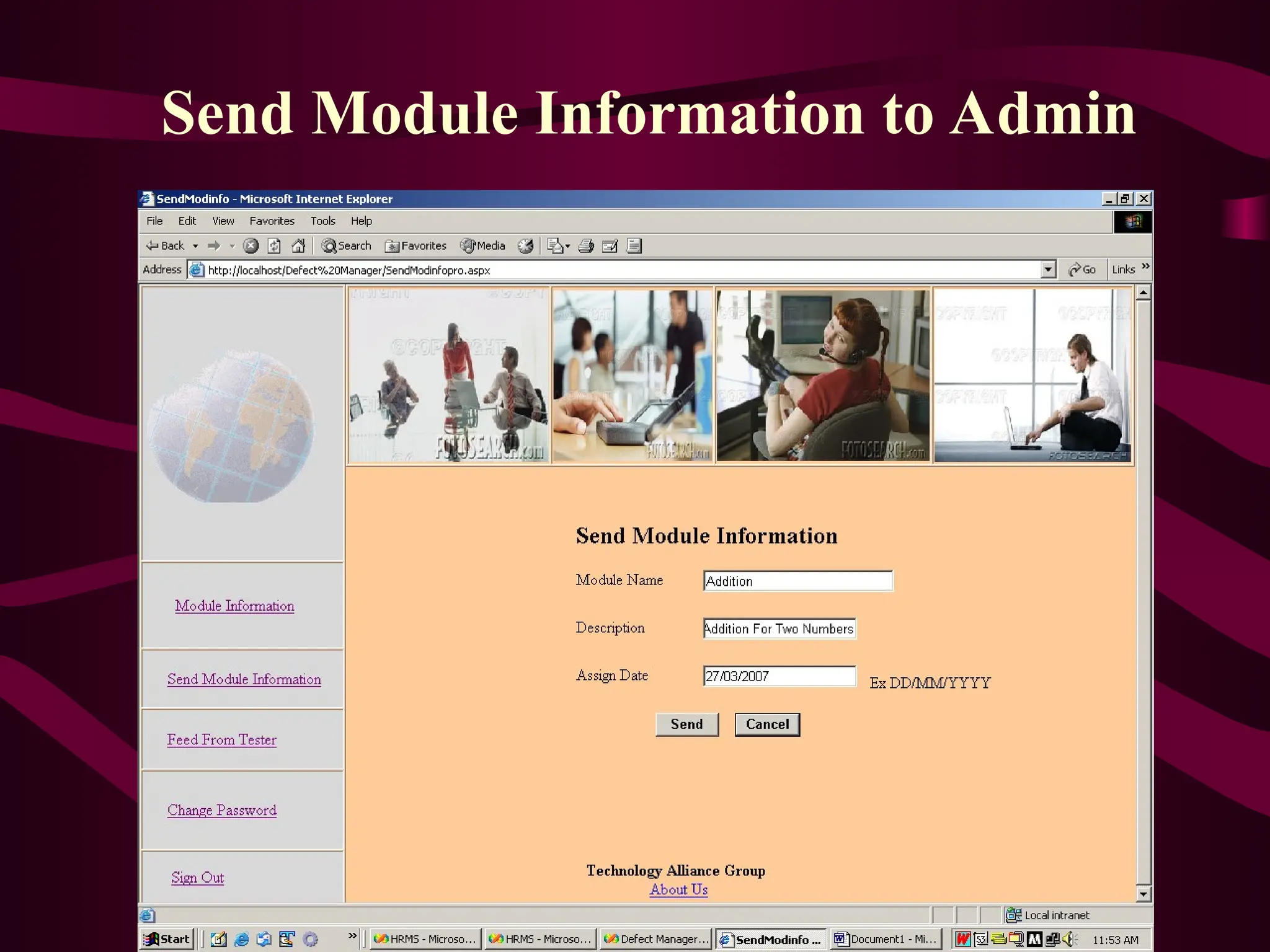
Send Module Information to Admin
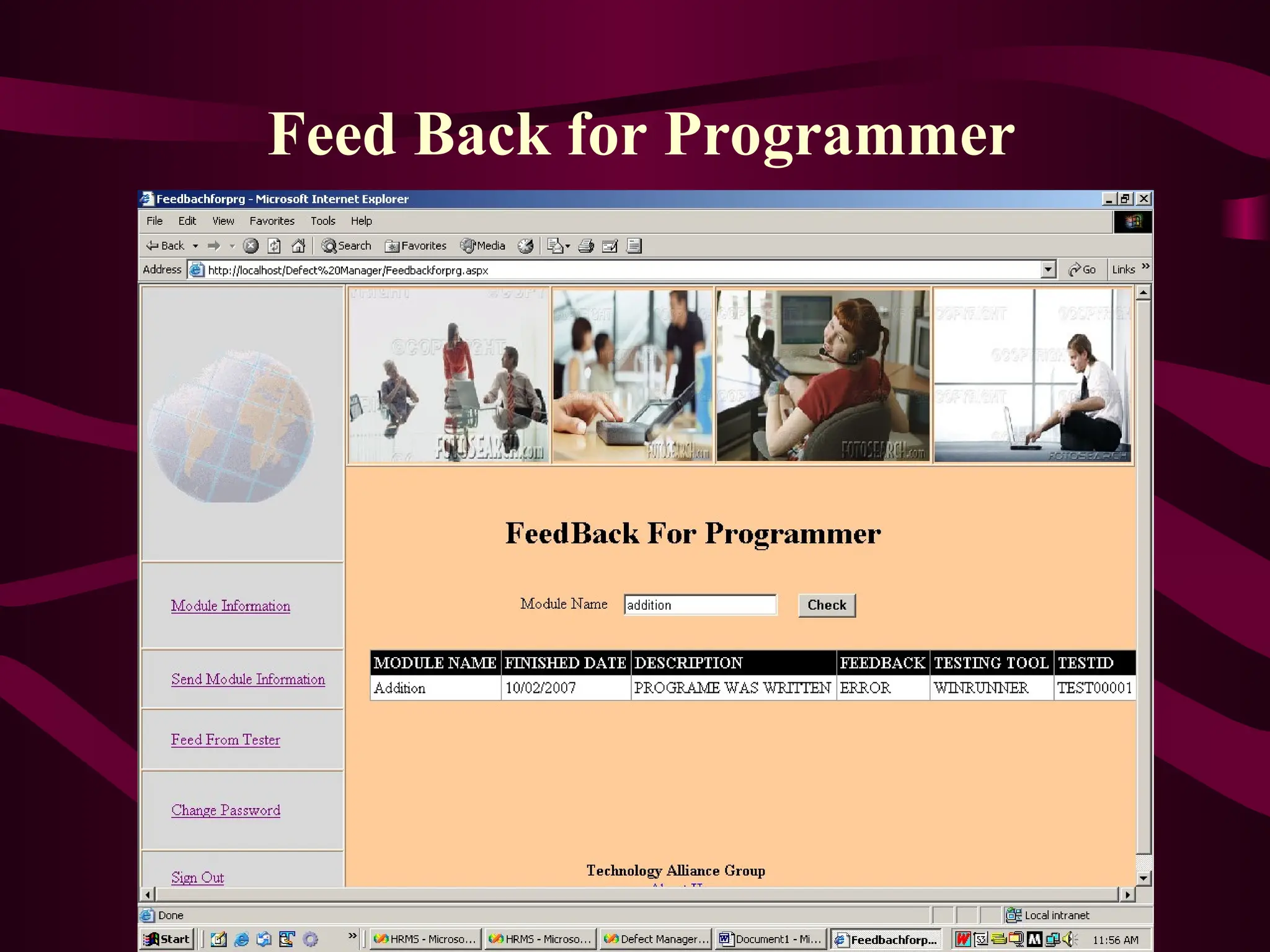
Feed Back for Programmer
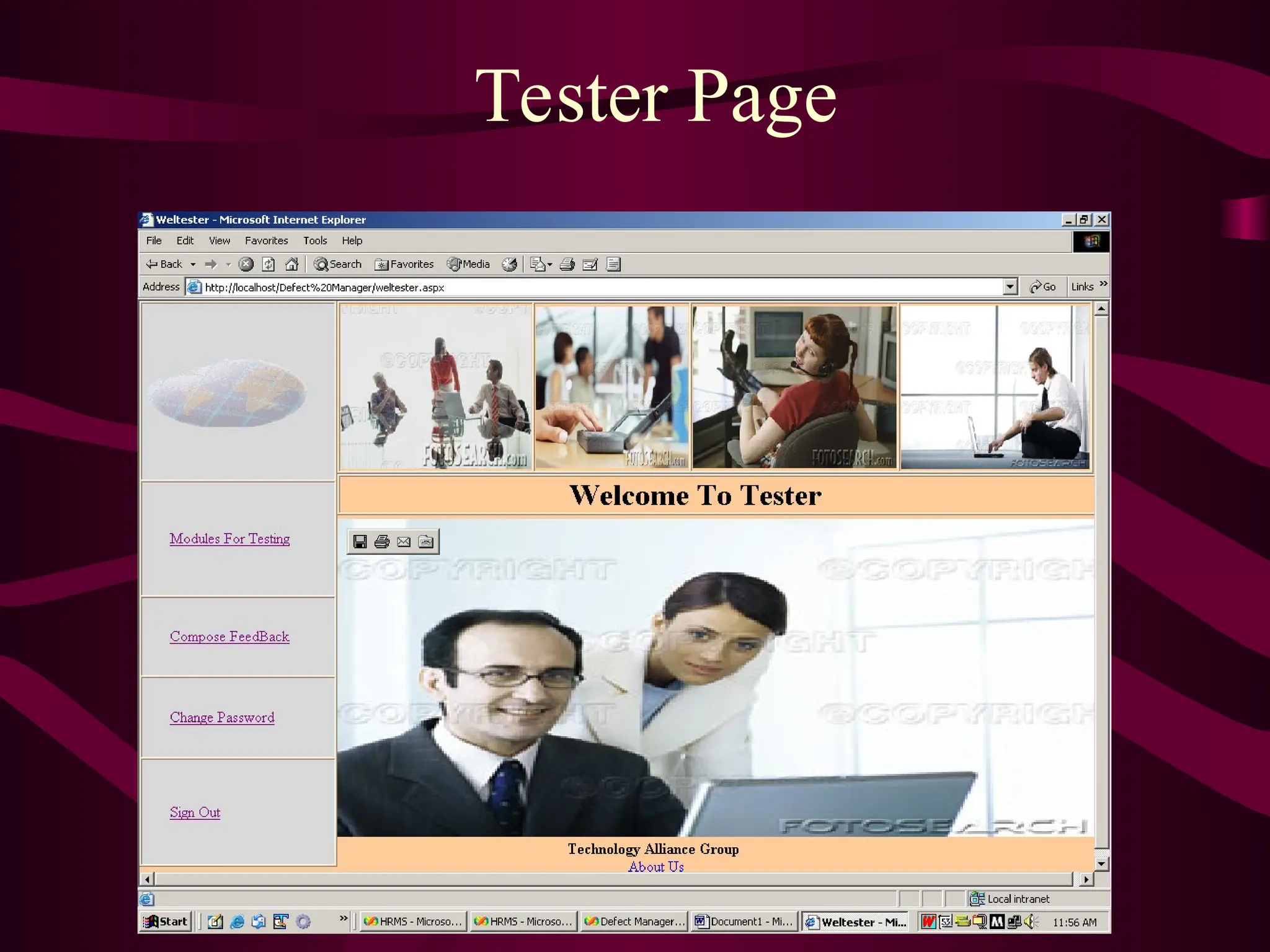
Tester Page
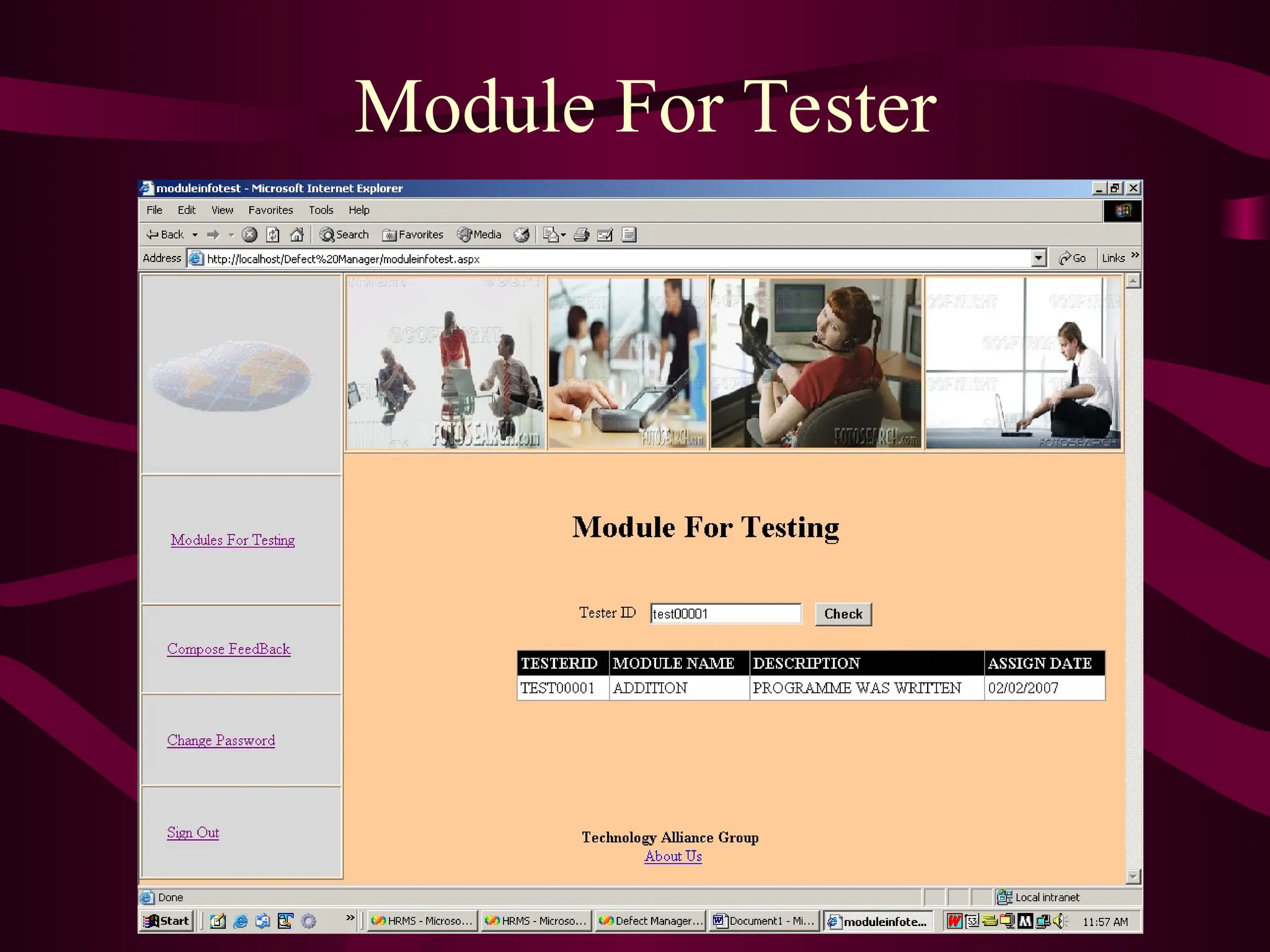
Module For Tester
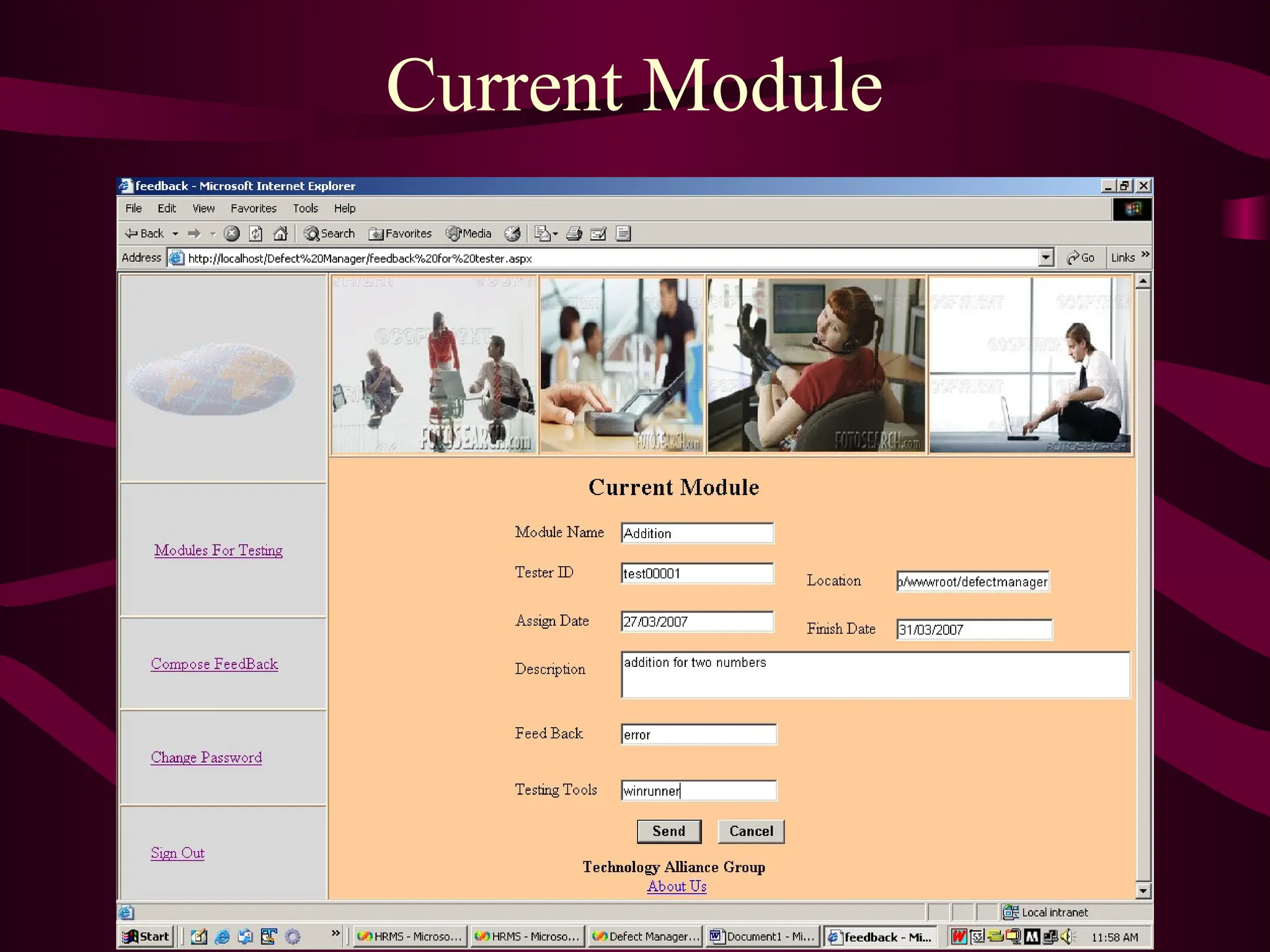
Current Module
Change Password
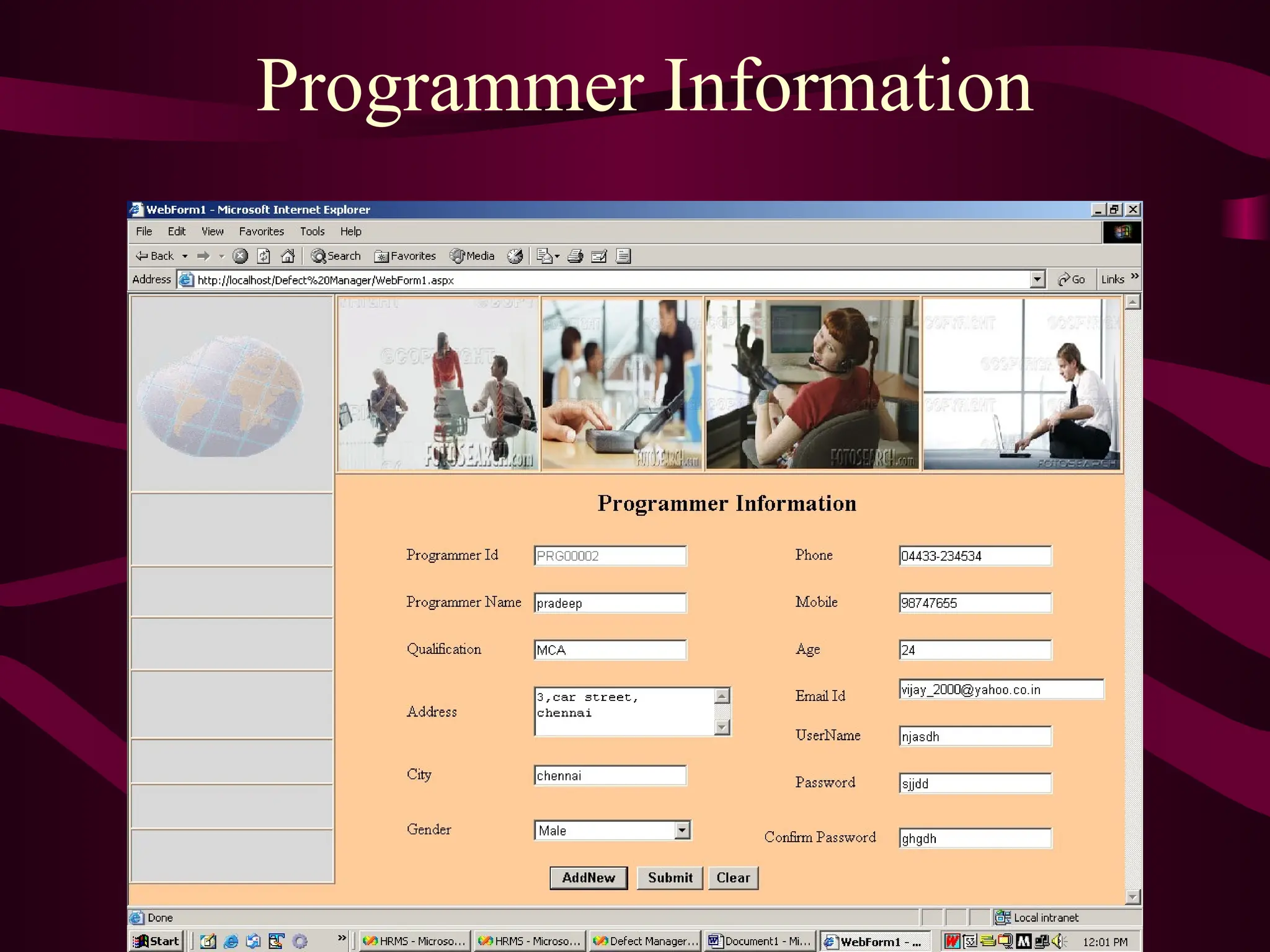
Programmer Information
Tester Details
Conclusion
• Implementation is the stage of the project when the
theoretical design is turned into a working system.
Implementation is the process of having the system
into use, training the user and installing the new
application.
• The system implementation involves careful
planning, investigation of the current system and its
constraints on implementation, design method to
achieve the change over and evaluation.
• During implementation, the maintenance issues were
considered and the benefits of using the
computerized system over the manual system were
discussed. Verifications and validations were done in
a stimulated environment.
Thank You

Defect manager presentation made with a concern of the user

  • 1.
  • 2.
    Objective • The mainobject of the project is to send and receive information’s through Intranet or Internet. This is the Server based web project in which it is implemented in .Net environment. The task under this project has been broadly divided into three parts Part 1. Administrator Activities Part 2. Programmer Activities Part 3. Tester Activities Administrator under this project is chiefly concerned with the overall performance of the Programmers and Testers. The various module Information's forwarded by the Administrator to the Programmers, which in turn are sent to the Testers for correctness through a pivotol program known as DEFECT MANAGER.
  • 3.
    Objective • The moduleinformation received by the Programmers from the Administrator through Defect Manager is developed in details.The module information on being developed in details is fowarded to the Defect Manager. • Testers receive developed module informations from the Defect Manager and process the same for correctness using various corrective tools such as LoadRunner, WinRunner, etc.. Deficiency on the developed module information if any is sent together with remarks and feedback to the Defect Manager for onward transmission to the same Programmer. • Defect Manager plays a pivotol role in synchronizing the various activities performed under this project by the Administrator, Programmers and Testers.
  • 4.
    Hardware & SoftwareRequirements: 1 RAM 512 MB 2 Operating System Windows 2000 & XP 3 Processor (with Speed) Intel Pentium IV(3.0 GHz) and Upwards 4 Hard Disk Size 80 GB and above 5 Front End Microsoft .NET 6 Back End Microsoft SQL Server 2000 7 Display 17” Color Monitor
  • 5.
    Existing System: 1. Thepresent Situation of an organization is when an project to a project manager he has to divide different task to the programmers. 2. The programmer develops the given task and reports to the manager, later it is sent to tester. 3. The tester again send it to manager hence all the process is done manually, time consumption is more.
  • 6.
    •Our defect managerovercomes all the above difficulties in existing system. •The communication between programmer and tester is made easier. •Defect manager helps to complete the assigned project with the given duration. •Time consumption is very less. •It acts an intermediate between a programmer and a tester Proposed System:
  • 7.
    Data Flow Diagram Administrator Defect Manager Tester1 TesterN Tester2 Programmer 1 Programmer 2 Programmer N
  • 8.
  • 9.
  • 10.
  • 11.
  • 12.
  • 13.
  • 14.
  • 15.
  • 16.
  • 17.
    Feed Back forProgrammer
  • 18.
  • 19.
  • 20.
  • 21.
  • 22.
  • 23.
  • 24.
    Conclusion • Implementation isthe stage of the project when the theoretical design is turned into a working system. Implementation is the process of having the system into use, training the user and installing the new application. • The system implementation involves careful planning, investigation of the current system and its constraints on implementation, design method to achieve the change over and evaluation. • During implementation, the maintenance issues were considered and the benefits of using the computerized system over the manual system were discussed. Verifications and validations were done in a stimulated environment.
  • 25.