Download to read offline
![Deep Learning Analysis for Estimating Sleep Syndrome Detection Utilizing the Twin Convolutional Model FTC2 15
8 to 13 Hz) is present in the occipital cortex when a person
is resting with their eyes closed & goes away when they
wake up or fall asleep. Theta activity (4 to 7 Hz) is the most
common frequency during sleep. Delta activity is known as
slow-wave activity (0,5 to 2/4 Hz) with higher amplitudes
& is mostly present in the frontal areas of the cortex. Sleep
spindles (11 to 16 Hz) normally indicate stage 2 of NREM
sleep, with a duration of 2–3 seconds. K complexes are
most common in stage 2 of NREM Their amplitude is not
specified, while the time span must be at least 0.5 seconds.
Sleep stages are regulated by individual neurotransmitters.
Wakefulness is a heterogeneous state, maintained by
neurotransmitters acetylcholine, serotonin, norepineph-
rine, histamine, dopamine, hypocretin, & glutamate.
NREM is initialized by GABA & adenosine, while acetyl-
choline also sends signals for REMonset. Interactions
between neurotransmitters determine behavioral states at
any given time. During sleep, they define muscle tone,
eye movements & EEG activity. The same neurotransmitter
can have opposite effects during wakefulness & sleep &
in different brain regions. The preoptic area of the brain
(anterior hypothalamus) is known to act as a sleep center,
while the posterior hypothalamus acts as a wakefulness
center. Electrical stimulation of the preoptic area, therefore,
has the ability to initiate sleep. Apart from the objective
reasons for not sleeping long enough (the recommended
8 hours, for obtaining full sleep cycles), there are also
multiple sleeping disorders present in today’s society.
Sleeping disorder is usually a composition of multiple
neurological modifications that may be caused by exter-
nal or internal factors. These factors include our lifestyle,
genetics, associated diseases, psychiatric disorders, & so
on. Disordered sleeping is alarmingly common in modern
society. In the field of various disorders, the most common
persist to stay the following: insomnia, sleep-disordered
breathing (obstructive sleep apnea, hyperventilation), cen-
tral disorders of hypersomnolence (narcolepsy, idiopathic
hypersomnia, Kleine-Levin Syndrome), circadian rhythm
disorders, parasomnias (sleepwalking, terrors, sleep eat-
ing disorders, sleep enuresis) & sleep-related movement
disorders (restless leg syndrome, periodic limb movement
disorder). Insomnia & other disorders that result in trouble
sleeping are often associated with multiple chronic health
conditions. They have an impact on blood pressure &
blood sugar levels, therefore they put us at risk of coronary
diseases & metabolic imbalances. Middle-aged/older parts
of the population & obese individuals are at grater risk
of developing these issues. In addition, sex also plays
a role in developing some sleeping disorders males are
more likely to develop obstructive sleep apnea, while
women are predisposed to insomnia. The first step for
identifying problems with sleep is by clinical approach
with ESS (Epworth Sleepiness Scale) [1]. Insomnia can arise
as chronic insomnia or in a short-term form. Its typical
symptoms are problems initiating or maintaining sleep,
non-restorative sleep, & waking too early which result
in daily distress. These issues occur due to the brain’s
arousal systems which are not turning off. It is diagnosed
in a laboratory with polysomnography. It can be a cause
for endothelial dysfunction, oxidative stress, inflammation,
hypertension, & even stroke in severe cases. Normally, it is
treated with CPAP (continuous positive airway pressure).
We intend to use these findings along with the FTC2
model for sleep staging predictions to predict onset of
sleep syndromes. We firmly believe these methods strongly
correlate to the modern sleep issues thus enhancing the
medical procedure & diagnosis.
METHODOLOGY
For the purpose of this paper, we have used the following
methods: Ceemdan, Fast Fourier Transform, Convolutional
Neural Networks, LSTM (Long Short-Term Networks),
Savitzky-Golay filter, Welch Power Spectrum.
Event Detection During Sleep
Although detecting periods of raised or lowered activity
during sleep is an appealing task, it is rather interesting
to detect transient, short signals. Furthermore, we can
identify events such as QRS complexes in the ECG or
EEG events such as slow waves (single waves of around
0.5–2 Hz with a high amplitude of about 75 uV), sleep spin-
dles, & other sleep-related events during sleep (transient
waxing & waning events of about 0.5–2 seconds duration
& 15–50 uV maximal amplitude). For the sake of this study
& simplicity, we do not distinguish between slow waves,
K-complexes, & slow oscillations, but instead group them
all together.
Detailed Description of the Methodology
CEEMDAN preprocessing
We used the complete ensemble empirical mode decompo-
sition with adaptive noise (CEEMDAN) as a noise aided
EMD approach for the preprocessing. In recent years, a
number of signal processing approaches have been created.
The Fast Fourier Transform is the foundation of standard
signal processing methods. However, this approach cannot
concurrently yield time-domain & frequency-domain eval-
uated findings. Many time-frequency analysis approaches,
such as the Wigner-Ville distribution (WWD) introduced
in, have been used to diagnose vibration signals [2]. This
approach computes the analytic signal corresponding to
the input signal, constructs a weighted kernel function,
then analyses the kernel using a Discrete Fourier Transform
(DFT). According to [3], when evaluating the analytic
signal needed by the algorithm, the time domain defini-
tion implemented as a finite impulse response (FIR) filter
is more practical & efficient than the frequency domain
definition. The wavelet transform ([4, 5]) utilizes the Fast](https://image.slidesharecdn.com/bijiam20221103-220808112542-5c8d1700/95/Deep-Learning-Analysis-for-Estimating-Sleep-Syndrome-Detection-Utilizing-the-Twin-Convolutional-Model-FTC2-2-638.jpg)
![16 Tim Cvetko and Tinkara Robek
Fourier Transform to extract frequency based wavelets.
One of the most potent signal processing techniques for
defect diagnostics is empirical mode composition. The
intrinsic mode function is derived from a signal’s local
characteristic timings & can deconstruct the signal into a
series of full & nearly orthogonal components (IMF). The
IMFs represent the signal’s inherent oscillation mode & act
as basis functions, which are defined by the signal rather
than by predetermined kernels. As a result, it is a self-
adaptive signal processing approach ideal for nonlinear
& nonstationary processes, as well as for defect feature
extraction in spiral-bevel gears. According to [5], CEEM-
DAN has been demonstrated to be a successful approach
for evaluating nonstationary signals that are followed by
high noise. The raw vibration signal is first decomposed
using the CEEMDAN technique to get a set of intrinsic
modal functions (IMFs). Based on the correlation coeffi-
cient, the IMFs that incorporated the most defect informa-
tion were chosen as the ideal IMFs. Following that, the
optimum IMFs’ permutation entropy values are computed.
The overlapping parameter approach is used to optimise
the two main parameters, embedding dimension & delay
time, in order to achieve correct permutation entropy val-
ues. The support vector machine (SVM) is employed as
the classifier for failure mode detection in order to check
the sensibility of the permutation entropy features, & the
diagnostic accuracy can validate its sensibility.
FTC2 model architecture
The standard practice for image recognition, computer
vision & more are deep convolutional neural networks.
Models like, LeNet [7], AlexNet [8], ImageNet [9] & more
work exclusively on 2D data. They are also referred to as
2D CNNs. With the same idea in mind, 1D CNN have
been developed. Despite the obvious fact, that the 1D
CNNs apply a 1D kernel to data, some of the advantages
are: 1D CNNs don’t require heavy matrix operations (nor
at the forward pass or the backpropagation). Potentially,
what this means is that they are, compared to their 2D
counterparts, computionally less complex & can run on
CPU hardware.
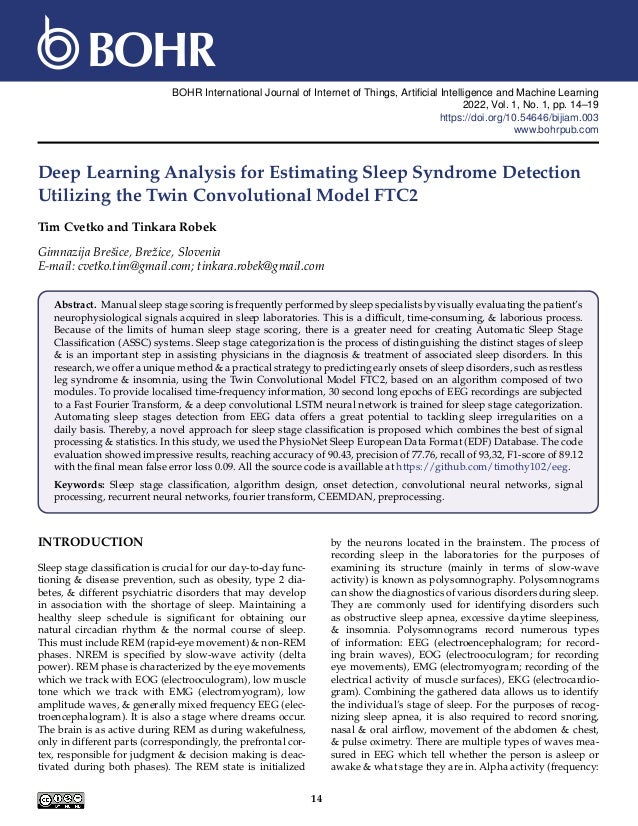
The FTC2 is passed through a Leaky Rectified Linear
Unit for nonlinearity purposes. The input signal then
passes a max-pooling layer with the stride of 2, following
that is batch normalization layer & finally the Bidirec-
tional layer. Each twin structure contains three such blocks.
The outputs of the convolutional-LSTM blocks are then
concatenated across axis 1 in order to be finally passed
through a fully connected 64 unit dense layer. We use
the softmax activation to recieve the final scores for each
sleep stage. The CNN consists of three different-sized
filters with the idea in mind being that small filters extract
temporal information & large filters to extract frequency
information. The idea behind using variable filter widths
originates from the signal processing field to have a trade-
off between extracting time domain & frequency domain
characteristics [6]. This allows you to benefit from both
temporal & frequency domain data in the classification
process. The feature map generated from the 1D con-
catenated output from the twin convolutional blocks are
intertwined with long short-term memory (LSTM) units
to capture the complex context dependencies between the
inputs & the targets.
Utilizing the Conv-1D & the Bidirectional LSTM
The Conv-LSTM network combines the best of both
worlds, one-dimensional convolutional layers handles spa-
tial data using a kernel to train a set of filters that best repre-
sent the hyperplane & the LSTM which encodes temporal
inputs using cell state memory. To put it differently, Conv-
LSTM predicts the future state of a cell given vectors on
a spatial grid & past states of neighbours. Convolutional-
LSTM layer works by passing the 1D kernel over a set of
training points & its result a.k.a feature map is passed onto
the LSTM cell. In this project, Instead of using the typical
LSTM cell, we used a bidirectional recurrent neural net-
work. Put simply, this was enabled due to the limitations
of LSTM having the limitation of being restricted from
processing previous input state. Given the inputs x = x0,
xN, which are single dimensional data of a 30-second clip,
which should assure stability & little overlap, these inputs
are passed into the twin architecture.
Loss Calculation
Sleep stage classification encounters the class imbalance
issue which we have addressed accordingly. Such imbal-
ancy will have had severe tendency to bias the better rep-
resented part of the dataset. To alleviate this we have taken
both the extended mean false error (MFE) & the mean
squared false error (MSFE) for multiclass classification.
MFEL =
q
1
N ∑i=1 C(xi − x̂)2
Unsupervised Method for Detecting
Onsets of Sleep Syndromes
Syndromes in question are restless leg syndrome (RLS),
rapid Eye Movement (REM) sleep behaviour disorder,
insomnia, sleep apnea & narcolepsy. In attempt to detect
these complex syndromes through EEG data, we have
come up with the following: Each of the syndromes will
be followed with a explainable paragraph, respectively.
Restless leg syndrome
Lisuride, a dopaminergic medication, showed a rise in
alpha, a decrease in beta, & delayed actions on brain
function as evaluated by computerised EEG. It was](https://image.slidesharecdn.com/bijiam20221103-220808112542-5c8d1700/95/Deep-Learning-Analysis-for-Estimating-Sleep-Syndrome-Detection-Utilizing-the-Twin-Convolutional-Model-FTC2-3-638.jpg)
![18 Tim Cvetko and Tinkara Robek
band-limited signals for apnea diagnosis. As a result,
instead of analysing full-b& EEG data for apnea event
identification, features of band-limited signals are utilised.
EEG signal is partitioned into five frequency bands [10]
including delta (0.25 to 4 Hz), theta (4 to 8 Hz), alpha
(8 to 12 Hz), sigma (12 to 16 Hz) & beta (16 to 40 Hz).
Spectral filtering is done in fast Fourier transform domain
to achieve this division.
In order to attain a relative score for approximating
sleep apnea possibility, we have adopted the method
proposed in [7]. This suggested technique introduces a
subject-specific classification framework based on feature
for the categorization of apnea & non-apnea occurrences.
The feature is considered to be the inter-b& energy
ratio of a band-limited EEG signal, which is believed to
have discriminating characteristics for apnea & non-apnea
episodes. Energy contents in various frequency bands alter
dramatically during sleep apnea compared to non-apnea
occurrences.
REM behaviour sleep disorder
Despite what was presented in [9], we have come about
a rather simple, but clever way of detecting the REM
instability score. A relative score was calculated by using
a greedy algorithm for longest continuing sequence [10] to
obtain a value that should correspond to the disturbance of
REM sleep in an individual.
Narcolepsy
Patients with narcolepsy had lower alpha power, greater
delta & theta power during alertness, & higher alpha
& beta power during rapid eye movement (REM) sleep,
according to [11]. The former two groups also had reduced
sleep efficiency & a greater percentage of positive for REM-
related symptoms than the other two groups. In light of
this, we integrated the REM instability score & the acquired
frequency range with wavelet transform on the initial &
final 10% of sleep, suggesting worse sleep-to-wake transi-
tions or vice versa.
Insomnia
Insomnia, often known as insomnia, is a sleep condition
characterised by an inability to fall or stay asleep for as long
as desired. Following the previous work done by Mohd
Maroof Siddiqui, Geetika Srivastava, & Syed Hasan Saeed
in [11]. Because the majority of EEG signals are constrained
within the range of 25 Hz, each clipped signal is now
preprocessed & then run through the Hanning window
low pass filter to remove the high frequency components
that eventually suggest noise. Hence, the filter based in
FIR filter design of order 200 with cut off frequency of
25 Hz with shape of hanning window. At this stage, we
adopt a method for extracting frequency length windows
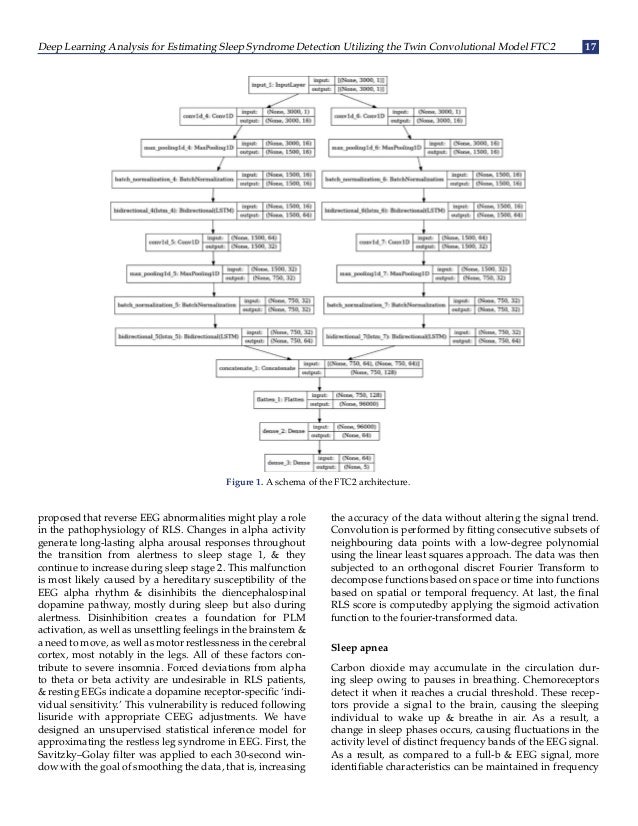
Figure 2. Polysomnography plot for a single patient. Picture was
generated with the MNE Python library.
via the Welch Power Spectrum [12]. This score, obtained
with softmax & the REM instability score combine for the
insomnia score.
Sleep depth
Given a great sleep stage classifier, we concluded to not
only move in the direction of detecting abnormalities, but
to also quantify sleep depth. First, the raw records are
pushed through a Savgol filter to noise filtering. Further-
more, a Fast Fourier Transform has given us a distribution
of frequencies. At this stage, we evaluted the FFT distribu-
tion to obtain the sleep depth score along with the REM
instability score.
REM Sleep
Syndromes RLS disorder Apnea Narcolepsy Insomnia depth
Total 177983 6674 8899 4449 48945 164738
Percent 7.80 0.29 0.41 3.0 22 74.0
NHCS 7–10 0.5–1 0.5 3–7 10–30 66
Percent
EXPERIMENTAL RESULTS
Data
The Physionet Sleep-EDF dataset was utilised for the objec-
tives of this study. The sleep-edf database comprises 197
PolySomnoGraphic sleep recordings from the whole night,
including EEG, EOG, chin EMG, & event markers. Some
recordings additionally include information about breath-
ing & body temperature. The Sleep-EDF dataset comprises
two studies: one on the effects of age on sleep in healthy
people (SC = Sleep Cassette) & another on the effects of
temazepam on sleep (ST = Sleep Telemetry). The dataset
contains sleep recordings of whole-night polysomnograms
(PSGs) with a sampling rate of 100 Hz. EEG (from the
Fpz-Cz & Pz-Oz electrode sites), EOG, chin electromyo-
graphy (EMG), & event markers are all included in each](https://image.slidesharecdn.com/bijiam20221103-220808112542-5c8d1700/95/Deep-Learning-Analysis-for-Estimating-Sleep-Syndrome-Detection-Utilizing-the-Twin-Convolutional-Model-FTC2-5-638.jpg)
![Deep Learning Analysis for Estimating Sleep Syndrome Detection Utilizing the Twin Convolutional Model FTC2 19
record. Fewer records frequently include oro-nasal respi-
ration & rectal body temperature. The hypnograms (sleep
phases; 30-second epochs) were identified manually by
well-trained personnel in accordance with the Rechtschaf-
fen & Kales standard. Each level was assigned to a distinct
class (stage). The classes include W, REM, N1, N2, N3, N4,
M. Data syndrome comparison was done according to [13].
Dataset W N1 N2 N3–N4 REM Total
Sleep-EDF-13 8285 2804 17799 5703 7717 42308
Sleep-EDF-18 65951 21522 96132 13039 25835 222479
It is worth noting that the sleep stages in the Physionet’s
Sleep-EDF database are not normally distributed. There is
a significantly higher number of W & N2 stages than others
which is causing class imbalance. We have discussed this at
Loss calculation.
The model was trained for 20 epochs. We used the Adam
optimizer to minimize the MFE loss with a batch size of
16 & a learning rate alpha = 0.001. We also added the L2
regularization penalty with beta being = 0.001 to mitigate
the overfitting. For this goal, we used Python as the pro-
gramming language & TensorFlow as the framework.
By employing the Conv-1D & the Bidirectional LSTM
twin network, we have succesfully taken advantage of
the temporal & spatial component of the signal process-
ing nature. To reduce the class imbalances problem, we
adopted the weighted MFE loss.
Accuracy Precision Recall F1-score Final MFE
90.43 77.76 93.32 89.12 0.09
CONCLUSION & FUTURE WORK
In this paper, we have successfully proposed a new deep
learning approach to the challenging problem of sleep
stage classification that is essential for further analysis of
the human brain activity. We utilized a two-part convolu-
tional – LSTM block along with a multi-layer perceptron
to classify sleep stages from EEG data with the accuracy
of. By incoorporating a vastly important CEEM-DAN pre-
processing method, we build a more stable & noise-free
variant of our data, which enabled building an end-to-
end trainable model for not only classifying sleep stages,
but also detect early onsets of frequently occuring sleep
syndroms. Our algorithm takes advantage of both the
spatial & temporal dimension of signal processing, as
well as statistical analysis to come up with a score that
represents the sleep stage the most. As a limitation, we
would like to add that no data is known to bare diluted
patients. For future work, given proper data, we would
like to do a follow-up. In the future, we intend to extent
this using multimodal polysomnography to enhance the
model’s performance & usability. Following our work, we
will investigate how these syndrome predictions/scores
align with actual scores & will hopefully serve as a profes-
sional service for automatic sleep stage & syndrome onset
detection.
REFERENCES
[1] https://epworthsleepinessscale.com/about-the-ess/
[2] Shie Qian and Dapang Chen, “Decomposition of the Wigner-Ville
distribution and time-frequency distribution series,” in IEEE Trans-
actions on Signal Processing, vol. 42, no. 10, pp. 2836–2842, Oct. 1994,
doi: 10.1109/78.324750.
[3] B. Boashash and P. Black, “An efficient real-time implementation of
the Wigner-Ville distribution,” in IEEE Transactions on Acoustics,
Speech, and Signal Processing, vol. 35, no. 11, pp. 1611–1618, Novem-
ber 1987, doi: 10.1109/TASSP.1987.1165070.
[4] Katsuhiro Inoue, Akihiko Takajo, Makoto Maeda and Shigeaki
Matsuoka, “Tuning method of modified wavelet transform in
human sleep EEG analysis,” 2007 International Conference on
Control, Automation and Systems, 2007, pp. 2784–2789, doi:
10.1109/ICCAS.2007.4406842.
[5] Xujing Yao, Ji Han, COVID-19 Detection via Wavelet Entropy and
Biogeography-Based Optimization, COVID-19: Prediction, Decision-
Making, and its Impacts, doi: 10.1007/978-981-15-9682-7-8, (69–76),
(2021).
[6] https://www.hindawi.com/journals/sv/2019/7806015/.
[7] Deep Convolutional Neural Networks for Image Classification:
A Comprehensive Review – Scientific Figure on ResearchGate. Avail-
able from: https://www.researchgate.net/figure/Architecture-of-
LeNet-5-LeCun-et-al-1998-fig2-317496930 [accessed 3 May, 2021].
[8] M. X. Cohen, Analyzing neural time series data: theory and practice.
MIT press, 2014.
[9] Krizhevsky, A., Sutskever, I. and Hinton, G. E. (2012). ImageNet Clas-
sification with Deep Convolutional Neural Networks. In F. Pereira,
C.J.C. Burges, L. Bottou and K.Q. Weinberger (ed.), Advances in
Neural Information Processing Systems 25 (pp. 1097–1105). Curran
Associates, Inc.
[10] Saha S, Bhattacharjee A, Fattah SA. Automatic detection of sleep
apnea events based on inter-band energy ratio obtained from multi-
band EEG signal. Healthc Technol Lett. 2019;6(3):82–86. Published
2019 Jun 3. doi: 10.1049/htl.2018.5101.
[11] J. Deng, W. Dong, R. Socher, L. Li, Kai Li and Li Fei-Fei, “ImageNet:
A large-scale hierarchical image database,” 2009 IEEE Conference on
Computer Vision and Pattern Recognition, 2009, pp. 248–255, doi:
10.1109/CVPR.2009.5206848.
[12] Ferri R, Rundo F, Silvani A, Zucconi M, Bruni O, Ferini-Strambi
L, Plazzi G, Manconi M. REM Sleep EEG Instability in REM Sleep
Behavior Disorder and Clonazepam Effects. Sleep. 2017 Aug 1;40(8).
doi: 10.1093/sleep/zsx080. PMID: 28482056.
[13] Schensted, C. (1961). Longest Increasing and Decreasing Sub-
sequences. Canadian Journal of Mathematics, 13, 179–191. doi:
10.4153/CJM-1961-015-3.
[14] Sasai-Sakuma T, Inoue Y. Differences in electroencephalographic
findings among categories of narcolepsy-spectrum disorders. Sleep
Med. 2015 Aug;16(8):999–1005. doi: 10.1016/j.sleep.2015.01.022.
Epub 2015 Apr 1. PMID: 26026626.
[15] Siddiqui MM, Srivastava G, Saeed SH. Diagnosis of insom-
nia sleep disorder using short time frequency analysis of PSD
approach applied on EEG signal using channel ROC-LOC. Sleep Sci.
2016;9(3):186–191. doi: 10.1016/j.slsci.2016.07.002.
[16] Zhao, Li and He, Yang. (2013). Power Spectrum Estimation of
the Welch Method Based on Imagery EEG. Applied Mechanics
and Materials. 278–280. 1260–1264. doi: 10.4028/www.scientific.net/
AMM.278-280.1260.
[17] https://www.cdc.gov/nchs/nvss/index.html [Accessed 4.5. 2021].](https://image.slidesharecdn.com/bijiam20221103-220808112542-5c8d1700/95/Deep-Learning-Analysis-for-Estimating-Sleep-Syndrome-Detection-Utilizing-the-Twin-Convolutional-Model-FTC2-6-638.jpg)

Manual sleep stage scoring is frequently performed by sleep specialists by visually evaluating the patient’s neurophysiological signals acquired in sleep laboratories. This is a difficult, time-consuming, & laborious process. Because of the limits of human sleep stage scoring, there is a greater need for creating Automatic Sleep Stage Classification (ASSC) systems. Sleep stage categorization is the process of distinguishing the distinct stages of sleep & is an important step in assisting physicians in the diagnosis & treatment of associated sleep disorders. In this research, we offer a unique method & a practical strategy to predicting early onsets of sleep disorders, such as restless leg syndrome & insomnia, using the Twin Convolutional Model FTC2, based on an algorithm composed of two modules. To provide localised time-frequency information, 30 second long epochs of EEG recordings are subjected to a Fast Fourier Transform, & a deep convolutional LSTM neural network is trained for sleep stage categorization. Automating sleep stages detection from EEG data offers a great potential to tackling sleep irregularities on a daily basis. Thereby, a novel approach for sleep stage classification is proposed which combines the best of signal processing & statistics. In this study, we used the PhysioNet Sleep European Data Format (EDF) Database. The code evaluation showed impressive results, reaching accuracy of 90.43, precision of 77.76, recall of 93,32, F1-score of 89.12 with the final mean false error loss 0.09. All the source code is availlable at https://github.com/timothy102/eeg.


