Download to read offline

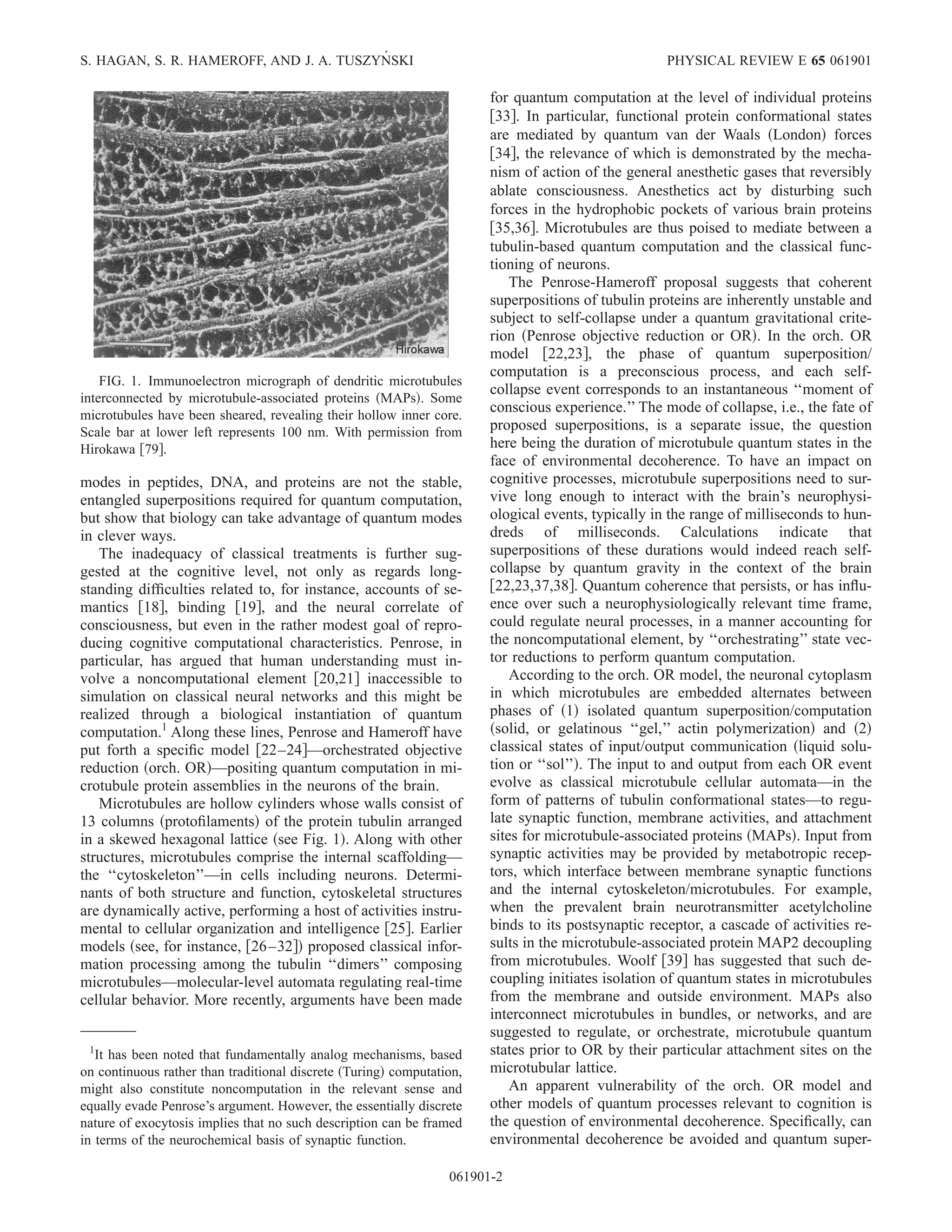
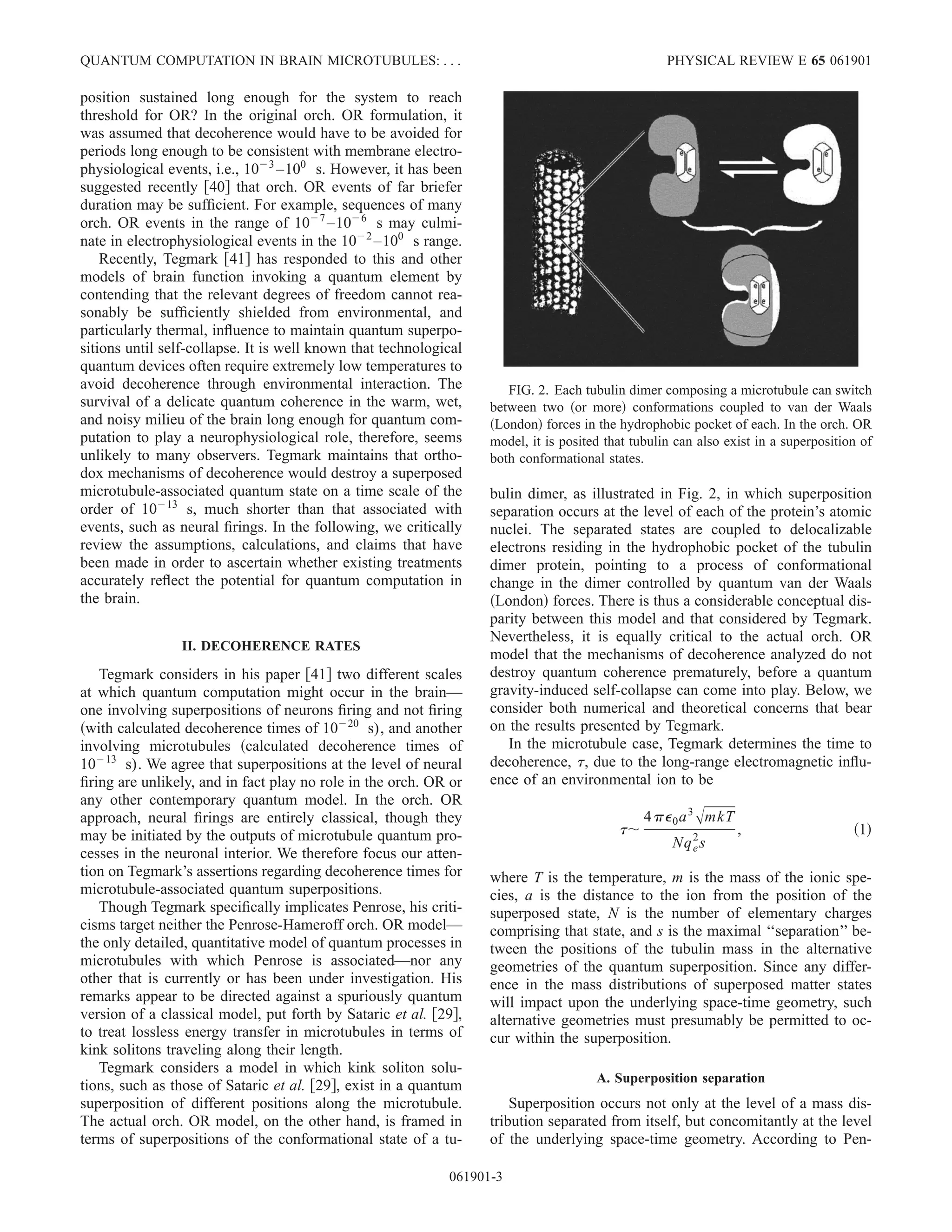


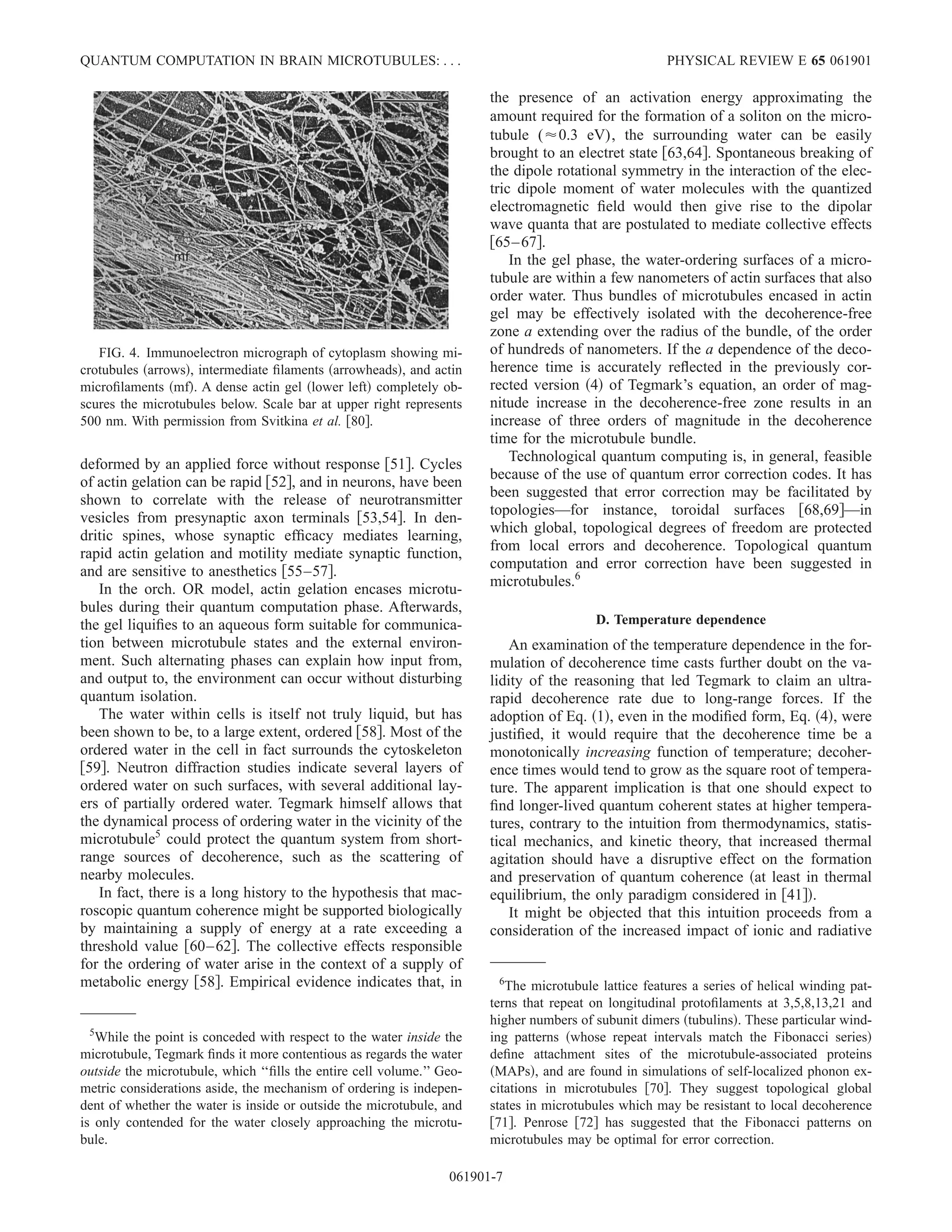


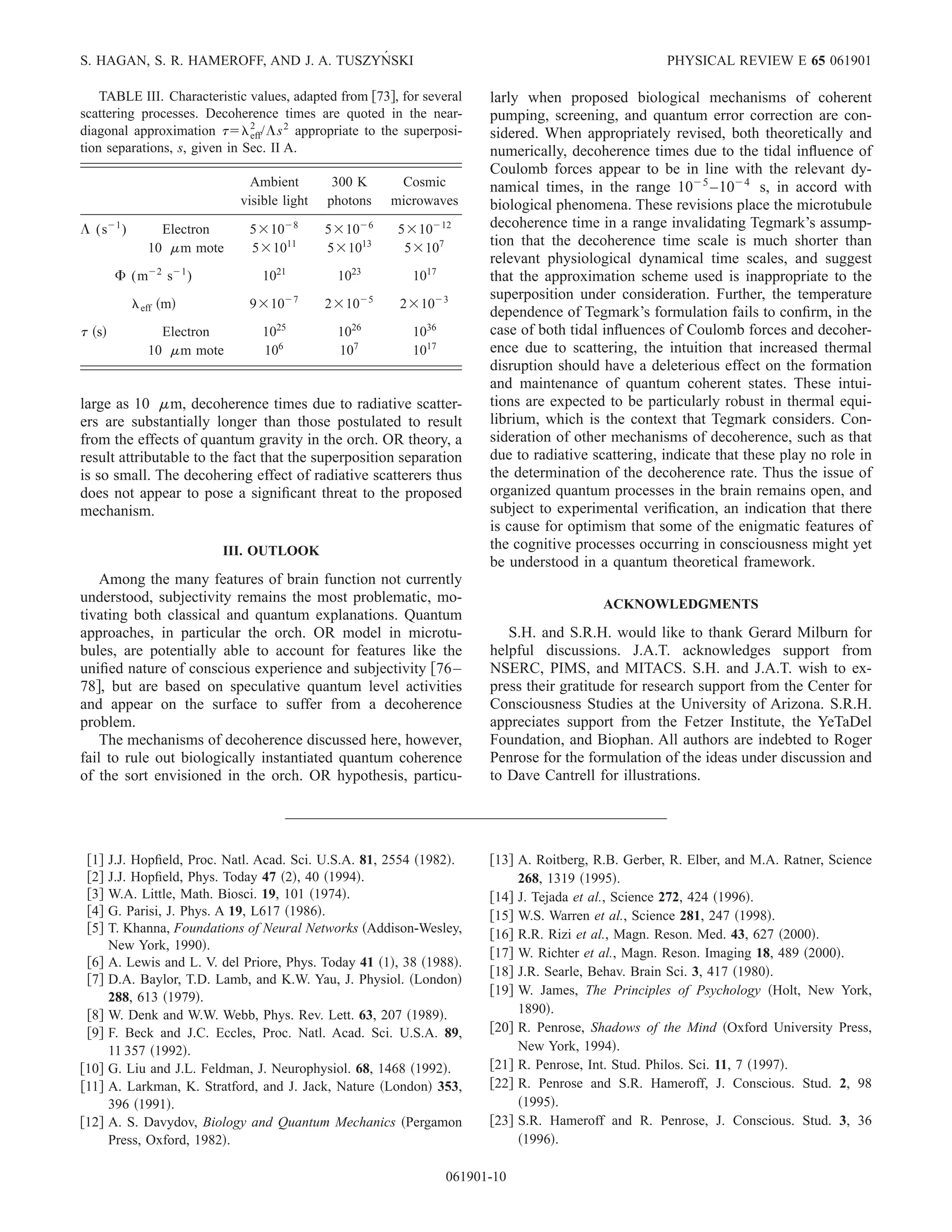


This document discusses a model proposed by Penrose and Hameroff that assigns a cognitive role to quantum computations occurring in microtubules within brain neurons. It summarizes the key points of criticism against this model, particularly regarding the issue of environmental decoherence destroying any quantum superpositions before they could be relevant for cognition. The document then examines these criticisms in more detail, finding issues with the assumptions and calculations in the previous analyses. It argues that under a corrected analysis, microtubules could potentially maintain quantum coherence for microseconds to milliseconds, long enough to be neurophysiologically significant. It also proposes additional mechanisms by which microtubules may be further isolated from decoherence effects in their biological environment.


