

ERS Vienna 2009 Congress
                   September 12–16, 2009


 PG1 – EU GRACE Network Full-day Course:
Vaccination and preventive measures for LRTIs in
          the community: what’s new?


        Thank you for viewing this document.
 We would like to remind you that this material is the
property of the author. It is provided to you by the ERS
for your personal use only, as submitted by the author.

                  © 2009 by the author


                 Saturday, September 12, 2009
                         09:30–17:30
                       Room Schubert 5
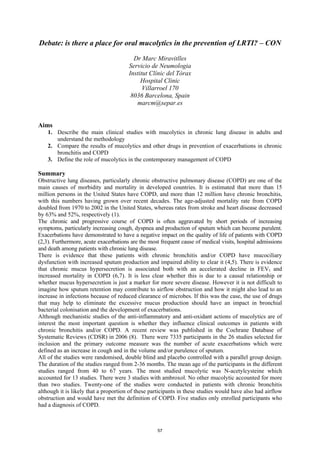
Debate: is there a place for oral mucolytics in the prevention of LRTI? – CON

                                         Dr Marc Miravitlles
                                       Servicio de Neumologia
                                       Institut Clínic del Tòrax
                                            Hospital Clinic
                                             Villarroel 170
                                        8036 Barcelona, Spain
                                          marcm@separ.es


Aims
    1. Describe the main clinical studies with mucolytics in chronic lung disease in adults and
       understand the methodology
    2. Compare the results of mucolytics and other drugs in prevention of exacerbations in chronic
       bronchitis and COPD
    3. Define the role of mucolytics in the contemporary management of COPD

Summary
Obstructive lung diseases, particularly chronic obstructive pulmonary disease (COPD) are one of the
main causes of morbidity and mortality in developed countries. It is estimated that more than 15
million persons in the United States have COPD, and more than 12 million have chronic bronchitis,
with this numbers having grown over recent decades. The age-adjusted mortality rate from COPD
doubled from 1970 to 2002 in the United States, whereas rates from stroke and heart disease decreased
by 63% and 52%, respectively (1).
The chronic and progressive course of COPD is often aggravated by short periods of increasing
symptoms, particularly increasing cough, dyspnea and production of sputum which can become purulent.
Exacerbations have demonstrated to have a negative impact on the quality of life of patients with COPD
(2,3). Furthermore, acute exacerbations are the most frequent cause of medical visits, hospital admissions
and death among patients with chronic lung disease.
There is evidence that these patients with chronic bronchitis and/or COPD have mucociliary
dysfunction with increased sputum production and impaired ability to clear it (4,5). There is evidence
that chronic mucus hypersecretion is associated both with an accelerated decline in FEV1 and
increased mortality in COPD (6,7). It is less clear whether this is due to a causal relationship or
whether mucus hypersecretion is just a marker for more severe disease. However it is not difficult to
imagine how sputum retention may contribute to airflow obstruction and how it might also lead to an
increase in infections because of reduced clearance of microbes. If this was the case, the use of drugs
that may help to eliminate the excessive mucus production should have an impact in bronchial
bacterial colonisation and the development of exacerbations.
Although mechanistic studies of the anti-inflammatory and anti-oxidant actions of mucolytics are of
interest the most important question is whether they influence clinical outcomes in patients with
chronic bronchitis and/or COPD. A recent review was published in the Cochrane Database of
Systematic Reviews (CDSR) in 2006 (8). There were 7335 participants in the 26 studies selected for
inclusion and the primary outcome measure was the number of acute exacerbations which were
defined as an increase in cough and in the volume and/or purulence of sputum.
All of the studies were randomised, double blind and placebo controlled with a parallel group design.
The duration of the studies ranged from 2-36 months. The mean age of the participants in the different
studies ranged from 40 to 67 years. The most studied mucolytic was N-acetylcysteine which
accounted for 13 studies. There were 3 studies with ambroxol. No other mucolytic accounted for more
than two studies. Twenty-one of the studies were conducted in patients with chronic bronchitis
although it is likely that a proportion of these participants in these studies would have also had airflow
obstruction and would have met the definition of COPD. Five studies only enrolled participants who
had a diagnosis of COPD.


                                                   57
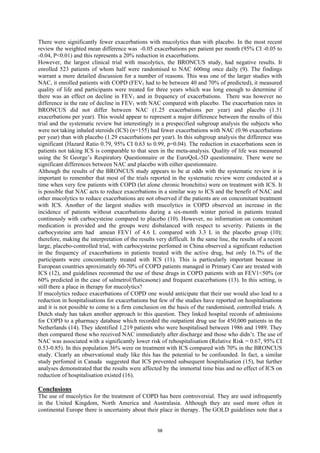
There were significantly fewer exacerbations with mucolytics than with placebo. In the most recent
review the weighted mean difference was -0.05 exacerbations per patient per month (95% CI -0.05 to
-0.04, P<0.01) and this represents a 20% reduction in exacerbations.
However, the largest clinical trial with mucolytics, the BRONCUS study, had negative results. It
enrolled 523 patients of whom half were randomised to NAC 600mg once daily (9). The findings
warrant a more detailed discussion for a number of reasons. This was one of the larger studies with
NAC, it enrolled patients with COPD (FEV1 had to be between 40 and 70% of predicted), it measured
quality of life and participants were treated for three years which was long enough to determine if
there was an effect on decline in FEV1 and in frequency of exacerbations. There was however no
difference in the rate of decline in FEV1 with NAC compared with placebo. The exacerbation rates in
BRONCUS did not differ between NAC (1.25 exacerbations per year) and placebo (1.31
exacerbations per year). This would appear to represent a major difference between the results of this
trial and the systematic review but interestingly in a prespecified subgroup analysis the subjects who
were not taking inhaled steroids (ICS) (n=155) had fewer exacerbations with NAC (0.96 exacerbations
per year) than with placebo (1.29 exacerbations per year). In this subgroup analysis the difference was
significant (Hazard Ratio 0.79, 95% CI 0.63 to 0.99, p=0.04). The reduction in exacerbations seen in
patients not taking ICS is comparable to that seen in the meta-analysis. Quality of life was measured
using the St George’s Respiratory Questionnaire or the EuroQoL-5D questionnaire. There were no
significant differences between NAC and placebo with either questionnaire.
Although the results of the BRONCUS study appears to be at odds with the systematic review it is
important to remember that most of the trials reported in the systematic review were conducted at a
time when very few patients with COPD (let alone chronic bronchitis) were on treatment with ICS. It
is possible that NAC acts to reduce exacerbations in a similar way to ICS and the benefit of NAC and
other mucolytics to reduce exacerbations are not observed if the patients are on concomitant treatment
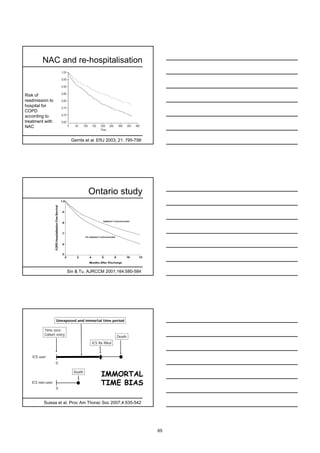
with ICS. Another of the largest studies with mucolytics in COPD observed an increase in the
incidence of patients without exacerbations during a six-month winter period in patients treated
continously with carbocysteine compared to placebo (10). However, no information on concomitant
medication is provided and the groups were disbalanced with respect to severity. Patients in the
carbocysteine arm had amean FEV1 of 4.6 L compared with 3.3 L in the placebo group (10);
therefore, making the interpretation of the results very difficult. In the same line, the results of a recent
large, placebo-controlled trial, with carbocysteine perfomed in China observed a significant reduction
in the frequency of exacerbations in patients treated with the active drug, but only 16.7% of the
participants were concomitantly treated with ICS (11). This is particularly important because in
European countries aproximately 60-70% of COPD patients managed in Primary Care are treated with
ICS (12), and guidelines recommed the use of these drugs in COPD patients with an FEV1<50% (or
60% predicted in the case of salmetrol/fluticasone) and frequent exacerbations (13). In this setting, is
still there a place in therapy for mucolytics?
If mucolytics reduce exacerbations of COPD one would anticipate that their use would also lead to a
reduction in hospitalisations for exacerbations but few of the studies have reported on hospitalisations
and it is not possible to come to a firm conclusion on the basis of the randomised, controlled trials. A
Dutch study has taken another approach to this question. They linked hospital records of admissions
for COPD to a pharmacy database which recorded the outpatient drug use for 450,000 patients in the
Netherlands (14). They identified 1,219 patients who were hospitalised between 1986 and 1989. They
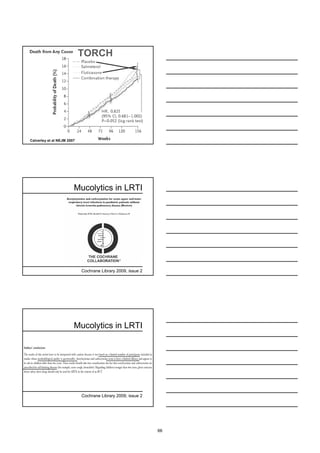
then compared those who received NAC immediately after discharge and those who didn’t. The use of
NAC was associated with a significantly lower risk of rehospitalisation (Relative Risk = 0.67, 95% CI
0.53-0.85). In this population 36% were on treatment with ICS compared with 70% in the BRONCUS
study. Clearly an observational study like this has the potential to be confounded. In fact, a similar
study perfomed in Canada suggested that ICS prevented subsequent hospitalisation (15), but further
analyses demonstrated that the results were affected by the immortal time bias and no effect of ICS on
reduction of hospitalisation existed (16).

Conclusions
The use of mucolytics for the treatment of COPD has been controversial. They are used infrequently
in the United Kingdom, North America and Australasia. Although they are used more often in
continental Europe there is uncertainty about their place in therapy. The GOLD guidelines note that a


                                                     58
reduction in exacerbations has been observed with mucolytics but they did not feel that the evidence
warranted the use of mucolytics as part of the standard management of COPD (13). The BRONCUS
study which is perhaps the best conducted study failed to confirm the effect of NAC on exacerbations.
Nonetheless in the BRONCUS study a reduction in exacerbations was seen in the subgroup of patients
who were not using ICS. In the current situation in which up to 70% of patients with COPD
(particularly those with frequent exacerbations) are treated with ICS (12,17), the role of mucolytics in
the management of COPD is not clear or even unnecesary.

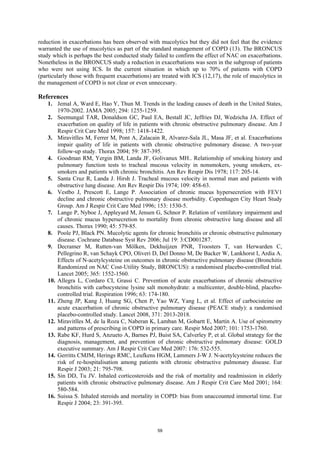
References
    1. Jemal A, Ward E, Hao Y, Thun M. Trends in the leading causes of death in the United States,
        1970-2002. JAMA 2005; 294: 1255-1259.
    2. Seemungal TAR, Donaldson GC, Paul EA, Bestall JC, Jeffries DJ, Wedzicha JA. Effect of
        exacerbation on quality of life in patients with chronic obstructive pulmonary disease. Am J
        Respir Crit Care Med 1998; 157: 1418-1422.
    3. Miravitlles M, Ferrer M, Pont A, Zalacain R, Alvarez-Sala JL, Masa JF, et al. Exacerbations
        impair quality of life in patients with chronic obstructive pulmonary disease. A two-year
        follow-up study. Thorax 2004; 59: 387-395.
    4. Goodman RM, Yergin BM, Landa JF, Golivanux MH.. Relationship of smoking history and
        pulmonary function tests to tracheal mucous velocity in nonsmokers, young smokers, ex-
        smokers and patients with chronic bronchitis. Am Rev Respir Dis 1978; 117: 205-14.
    5. Santa Cruz R, Landa J. Hirsh J. Tracheal mucous velocity in normal man and patients with
        obstructive lung disease. Am Rev Respir Dis 1974; 109: 458-63.
    6. Vestbo J, Prescott E, Lange P. Association of chronic mucus hypersecretion with FEV1
        decline and chronic obstructive pulmonary disease morbidity. Copenhagen City Heart Study
        Group. Am J Respir Crit Care Med 1996; 153: 1530-5.
    7. Lange P, Nyboe J, Appleyard M, Jensen G, Schnor P. Relation of ventilatory impairment and
        of chronic mucus hypersecretion to mortality from chronic obstructive lung disease and all
        causes. Thorax 1990; 45: 579-85.
    8. Poole PJ, Black PN. Mucolytic agents for chronic bronchitis or chronic obstructive pulmonary
        disease. Cochrane Database Syst Rev 2006; Jul 19: 3:CD001287.
    9. Decramer M, Rutten-van Mölken, Dekhuijzen PNR, Troosters T, van Herwarden C,
        Pellegrino R, van Schayk CPO, Oliveri D, Del Donno M, De Backer W, Lankhorst I, Ardia A.
        Effects of N-acetylcysteine on outcomes in chronic obstructive pulmonary disease (Bronchitis
        Randomized on NAC Cost-Utility Study, BRONCUS): a randomised placebo-controlled trial.
        Lancet 2005; 365: 1552-1560.
    10. Allegra L, Cordaro CI, Grassi C. Prevention of acute exacerbations of chronic obstructive
        bronchitis with carbocysteine lysine salt monohydrate: a multicenter, double-blind, placebo-
        controlled trial. Respiration 1996; 63: 174-180.
    11. Zheng JP, Kang J, Huang SG, Chen P, Yao WZ, Yang L, et al. Effect of carbocisteine on
        acute exacerbation of chronic obstructive pulmonary disease (PEACE study): a randomised
        placebo-controlled study. Lancet 2008, 371: 2013-2018.
    12. Miravitlles M, de la Roza C, Naberan K, Lamban M, Gobartt E, Martín A. Use of spirometry
        and patterns of prescribing in COPD in primary care. Respir Med 2007; 101: 1753-1760.
    13. Rabe KF, Hurd S, Anzueto A, Barnes PJ, Buist SA, Calverley P, et al. Global strategy for the
        diagnosis, management, and prevention of chronic obstructive pulmonary disease: GOLD
        executive summary. Am J Respir Crit Care Med 2007: 176: 532-555.
    14. Gerritts CMJM, Herings RMC, Leufkens HGM, Lammers J-W J. N-acetylcysteine reduces the
        risk of re-hospitalisation among patients with chronic obstructive pulmonary disease. Eur
        Respir J 2003; 21: 795-798.
    15. Sin DD, Tu JV. Inhaled corticosteroids and the risk of mortality and readmission in elderly
        patients with chronic obstructive pulmonary disease. Am J Respir Crit Care Med 2001; 164:
        580-584.
    16. Suissa S. Inhaled steroids and mortality in COPD: bias from unaccounted immortal time. Eur
        Respir J 2004; 23: 391-395.


                                                  59
17. Miravitlles M, Murio C, Tirado-Conde G, Levy G, Muellerova H, Soriano JB, Ramirez-
       Venegas A, Ko FWS, Canelos-Estrella B, Giugno E, Bergna M, Chérrez I, Anzueto A.
       Geographic differences in clinical characteristics and management of COPD: the EPOCA
       study. Int J COPD 2008; 3: 803-814.

Evaluation
   1. Which of the following is false regarding clinical trials with mucolytics:
         a. They consistently show a reduction in hospitalisations compared with placebo
         b. There is a reduction in exacerbations with mucolytics in patients not treated with
             inhaled corticosteroids
         c. Mucolytics are well tolerated
         d. There is no signficant difference in results between NAC and carbocysteine

   2. The BROCHUS trial with NAC versus placebo:
         a. Followed more than 500 patients for 4 years
         b. Demonstrated a reduction in the rate of decline of FEV1 in patients treated with NAC
         c. Did not show any difference in the rate of exacerbations between the 2 treatment arms
         d. Patients with concomitant teratment with theophyllines showed a trend towards a
            reduction in exacerbations in the NAC arm

   3. Which is the role of mucolytics in COPD:
         a. Should be used in moderate to severe patients not treated with inhaled corticosteroids
             and with frequent exacerbations.
         b. Should be used in moderate to severe patients with frequent exacerbations irrespective
             of concomitant medication.
         c. Should be used in early disease irrespective of the frequency of exacerbations
         d. They have no role in COPD treatment

Answers on page 109


                                               60
Oral mucolytics in COPD:
                          CON
                                 Marc Miravitlles
                        Servicio de Neumología
                       Hospital Clínic. Barcelona
                           marcm@clinic.ub.es


                            IJCP 2008;62:585-592


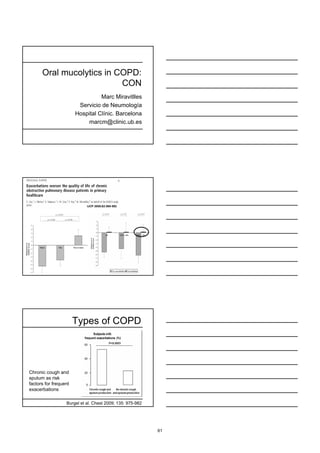
                       Types of COPD


Chronic cough and
sputum as risk
factors for frequent
exacerbations

                  Burgel et al. Chest 2009; 135: 975-982


                                                           61
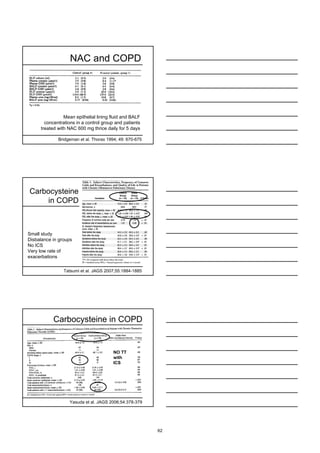
NAC and COPD


                Mean epithelial lining fluid and BALF
       concentrations in a control group and patients
     treated with NAC 600 mg thrice daily for 5 days

             Bridgeman et al. Thorax 1994; 49: 670-675


Carbocysteine
     in COPD


Small study
Disbalance in groups
No ICS
Very low rate of
exacerbations

                Tatsumi et al. JAGS 2007;55:1884-1885


           Carbocysteine in COPD


                                        NO TT
                                        with
                                        ICS


                  Yasuda et al. JAGS 2006;54:378-379


                                                         62
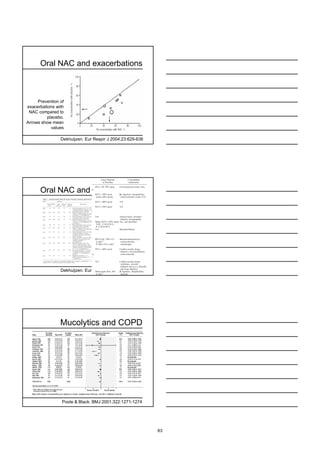
Oral NAC and exacerbations


     Prevention of
exacerbations with
 NAC compared to
         placebo.
Arrows show mean
           values

                Dekhuijzen. Eur Respir J 2004;23:629-636


      Oral NAC and exacerbations


                Dekhuijzen. Eur Respir J 2004;23:629-636


                Mucolytics and COPD


                 Poole & Black. BMJ 2001;322:1271-1274


                                                           63
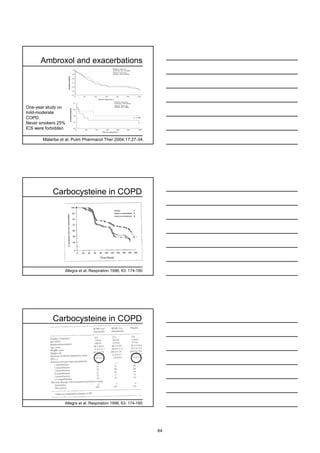
Ambroxol and exacerbations


One-year study on
mild-moderate
COPD.
Never smokers 25%
ICS were forbidden

       Malerba et al. Pulm Pharmacol Ther 2004;17:27-34.


            Carbocysteine in COPD


                 Allegra et al. Respiration 1996; 63: 174-180


            Carbocysteine in COPD


                 Allegra et al. Respiration 1996; 63: 174-180


                                                                64
NAC and re-hospitalisation


Risk of
readmission to
hospital for
COPD
according to
treatment with
NAC


                          Gerrits et al. ERJ 2003; 21: 795-798


                                   Ontario study


                         Sin & Tu. AJRCCM 2001;164:580-584


                  Unexposed and immortal time period

          Time zero:
          Cohort entry
                                                    Death
                                    ICS Rx filled


   ICS user
                  0

                           Death
                                          IMMORTAL
   ICS non-user                           TIME BIAS
                  0


         Suissa et al. Proc Am Thorac Soc 2007;4:535-542


                                                                 65
TORCH


Calverley et al NEJM 2007


                        Mucolytics in LRTI


                            Cochrane Library 2009, issue 2


                        Mucolytics in LRTI


                            Cochrane Library 2009, issue 2


                                                             66
Mucolytics in LRTI


                         Cochrane Library 2009, issue 2


                       Mucolytics in LRTI


                         Cochrane Library 2009, issue 2


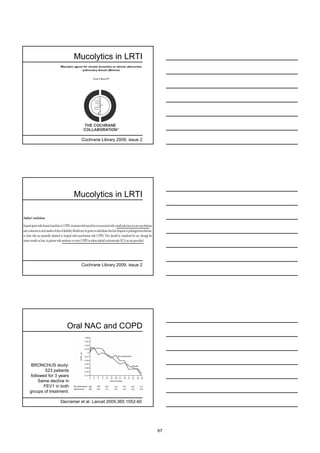
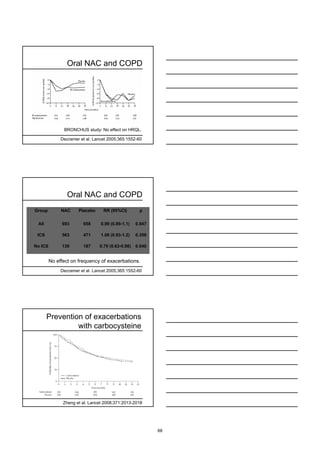
                  Oral NAC and COPD


 BRONCHUS study:
        523 patients
followed for 3 years
    Same decline in
       FEV1 in both
groups of treatment.

               Decramer et al. Lancet 2005;365:1552-60


                                                          67
Oral NAC and COPD


               BRONCHUS study: No effect on HRQL.

              Decramer et al. Lancet 2005;365:1552-60


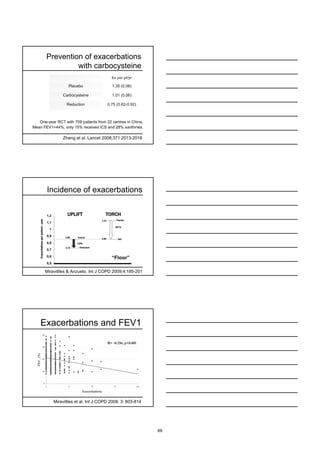
                 Oral NAC and COPD
Group         NAC     Placebo     RR (95%CI)        p


 All          693       658      0.99 (0.89-1.1)   0.847

 ICS          563       471      1.06 (0.93-1.2)   0.359

No ICS        130       187     0.79 (0.63-0.98)   0.040


         No effect on frequency of exacerbations.
              Decramer et al. Lancet 2005;365:1552-60


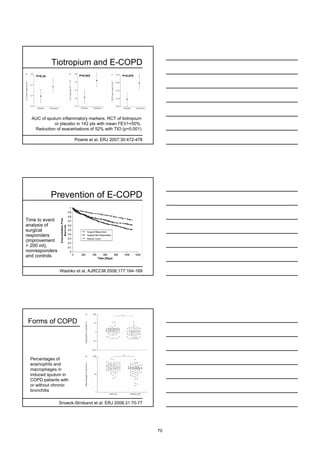
       Prevention of exacerbations
                with carbocysteine


               Zheng et al. Lancet 2008;371:2013-2018


                                                           68
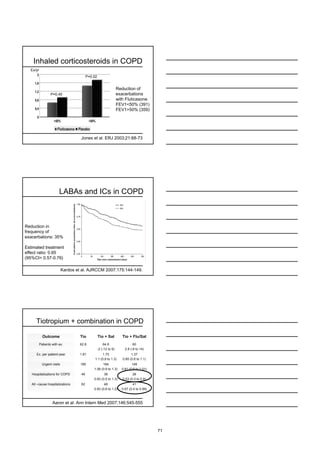
Prevention of exacerbations
                                               with carbocysteine
                                                                                 Ex per pt/yr

                                                    Placebo                      1.35 (0.06)

                                                Carbocysteine                    1.01 (0.06)

                                                   Reduction                   0.75 (0.62-0.92)


   One-year RCT with 709 patients from 22 centres in China.
Mean FEV1=44%, only 15% received ICS and 28% xanthines.

                                                 Zheng et al. Lancet 2008;371:2013-2018


                                      Incidence of exacerbations


                                      1,2          UPLIFT                  TORCH
   Exacerbations per patient - year


                                                                        1.13        Placebo
                                      1,1
                                                                                   - 25 %
                                        1

                                      0,9         0.85    Control
                                                                        0.85          SFC
                                      0,8                - 14%
                                                  0.73     Tiotropium
                                      0,7

                                      0,6
                                                                                 “Floor”
                                      0,5

                                      Miravitlles & Anzueto. Int J COPD 2009;4:185-201


        Exacerbations and FEV1

                                                                               R= -0.256; p<0.001


                                            Miravitlles et al. Int J COPD 2008; 3: 803-814


                                                                                                    69
Tiotropium and E-COPD
    P=0.34               P=0.043              P=0.079


  AUC of sputum inflammatory markers. RCT of tiotropium
             or placebo in 142 pts with mean FEV1=50%.
   Reduction of exacerbations of 52% with TIO (p=0.001)

                       Powrie et al. ERJ 2007;30:472-478


             Prevention of E-COPD

Time to event
analysis of
surgical
responders
(improvement
> 200 ml),
nonresponders
and controls


                Washko et al. AJRCCM 2008;177:164-169


Forms of COPD


 Percentages of
 eosinophils and
 macrophages in
 induced sputum in
 COPD patients with
 or without chronic
 bronchitis

                Snoeck-Stroband et al. ERJ 2008;31:70-77


                                                           70
Inhaled corticosteroids in COPD
  Ex/yr
      2
                                           P=0.02
     1,6
                                                                    Reduction of
     1,2
                   P=0.45                                           exacerbations
     0,8                                                            with Fluticasone.
                                                                    FEV1<50% (391)
     0,4                                                            FEV1>50% (359)
      0
                     >50%                    <50%

                        Fluticasona Placebo

                                      Jones et al. ERJ 2003;21:68-73


                         LABAs and ICs in COPD


Reduction in
frequency of
exacerbations: 35%

Estimated treatment
effect ratio: 0.65
(95%CI= 0.57-0.76)

                             Kardos et al. AJRCCM 2007;175:144-149.


      Tiotropium + combination in COPD

             Outcome                  Tio           Tio + Sal          Tio + Flu/Sal
           Patients with ex.          62.8              64.8                   60
                                                    -2 (-12 to 9)        2.8 (-8 to 14)
      Ex. per patient-year            1.61           1.75                    1.37
                                                1.1 (0.8 to 1.3)       0.85 (0.6 to 1.1)
             Urgent visits            185             184                     149
                                                1.06 (0.9 to 1.3)      0.81 (0.6 to 1.01)
   Hospitalizations for COPD          49               38                     26
                                                0.83 (0.5 to 1.3)      0.53 (0.3 to 0.8)
   All –cause hospitalizations        62               48                     41
                                                0.83 (0.6 to 1.2)      0.67 (0.4 to 0.99)


                    Aaron et al. Ann Intern Med 2007;146:545-555


                                                                                            71
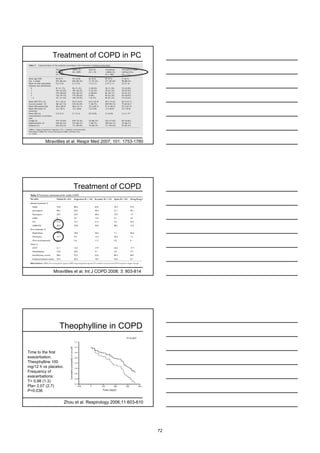
Treatment of COPD in PC


         Miravitlles et al. Respir Med 2007; 101: 1753-1760


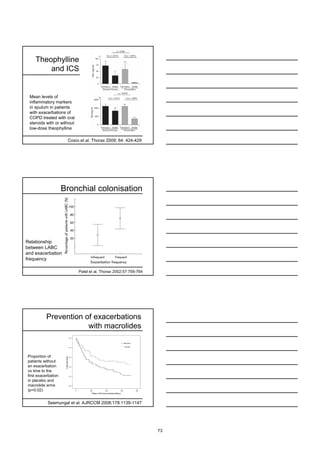
                          Treatment of COPD


             Miravitlles et al. Int J COPD 2008; 3: 803-814


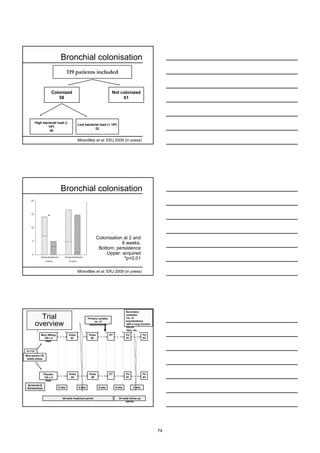
                Theophylline in COPD

Time to the first
exacerbation.
Theophylline 100
mg/12 h vs placebo.
Frequency of
exacerbations:
T= 0.98 (1.3)
Pla= 2.07 (2.7)
P=0.036

                      Zhou et al. Respirology 2006;11:603-610


                                                                72
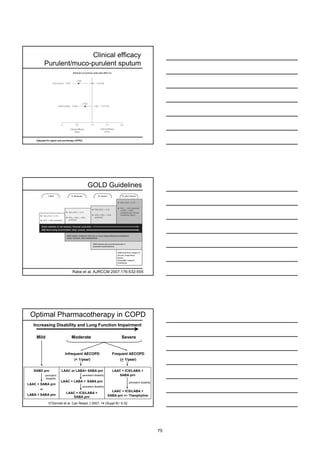
Theophylline
        and ICS


 Mean levels of
 inflammatory markers
 in sputum in patients
 with exacerbations of
 COPD treated with oral
 steroids with or without
 low-dose theophylline

                      Cosío et al. Thorax 2009; 64: 424-429


                     Bronchial colonisation


Relationship
between LABC
and exacerbation
frequency

                            Patel et al. Thorax 2002;57:759-764


          Prevention of exacerbations
                      with macrolides


Proportion of
patients without
an exacerbation
vs time to the
first exacerbation
in placebo and
macrolide arms
(p=0.02)


           Seemungal et al. AJRCCM 2008;178:1139-1147


                                                                  73
Bronchial colonisation
                                  119 patients included


                    Colonized                                           Not colonized
                       58                                                    61


         High bacterial load (≥
                                           Low bacterial load (< 106)
                 106)
                                                      22
                  36

                                           Miravitlles et al. ERJ 2009 (in press)


                           Bronchial colonisation


                                                           Colonisation at 2 and
                                                                       8 weeks.
                                                            Bottom: persistence
                                                                Upper: acquired
                                                                        *p<0.01

                                           Miravitlles et al. ERJ 2009 (in press)


                                                                                    Secondary

           Trial                                   Primary variable:
                                                                                    variables:
                                                                                    •no. of
                                                                                    exacerbations
         overview                                       no. of
                                                    exacerbations                   •diff in lung function
                                                                                    •HEOR
                                                                                    •QoL, etc.
             Moxi 400mg           Pulse            Pulse               ET           FU            FU
               OD x 5              #2               #6                              #1            #3
               days


N=1132

Mod-severe CB
 stable phase


              Placebo              Pulse            Pulse              ET           FU            FU
               OD x 5               #2               #6                             #1            #3
               days
 Screened &
 Randomized               8 wks            8 wks            8 wks           8 wks         8 wks


                             48 week treatment period                         24 week follow-up
                                                                                   period


                                                                                                             74
Clinical efficacy
            Purulent/muco-purulent sputum


    *adjusted for region and pre-therapy %PFEV1


                                                   GOLD Guidelines


                                     Rabe et al. AJRCCM 2007;176:532-555


 Optimal Pharmacotherapy in COPD
   Increasing Disability and Lung Function Impairment

    Mild                            Moderate                                  Severe


                              Infrequent AECOPD                         Frequent AECOPD
                                      (< 1/year)                             (> 1/year)


   SABD prn                LAAC or LABA+ SABA prn                       LAAC + ICS/LABA +
            persistent                        persistent disability        SABA prn
            disability
                          LAAC + LABA + SABA prn                                  persistent disability
LAAC + SABA prn
                                              persistent disability
       or
                                                                        LAAC + ICS/LABA +
                               LAAC + ICS/LABA +
LABA + SABA prn                                                       SABA prn +/- Theophyline
                                  SABA prn
               O’Donnell et al. Can Respir J 2007; 14 (Suppl B): 5-32


                                                                                                          75
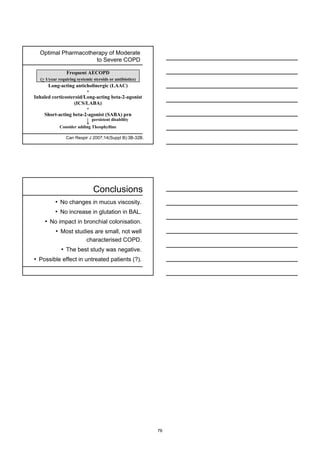
Optimal Pharmacotherapy of Moderate
                     to Severe COPD

                Frequent AECOPD
  (> 1/year requiring systemic steroids or antibiotics)
      Long-acting anticholinergic (LAAC)
                           +
Inhaled corticosteroid/Long-acting beta-2-agonist
                   (ICS/LABA)
                           +
    Short-acting beta-2-agonist (SABA) prn
                               persistent disability
            Consider adding Theophylline

                Can Respir J 2007;14(Suppl B):3B-32B.


                               Conclusions
          • No changes in mucus viscosity.
          • No increase in glutation in BAL.
    • No impact in bronchial colonisation.
          • Most studies are small, not well
                           characterised COPD.
             • The best study was negative.
• Possible effect in untreated patients (?).


                                                          76
Answers to evaluation questions

Debate: is there a place for oral mucolytics in the prevention of LRTI? – CON
   1. b
   2. c
   3. a


                                          109
Faculty disclosure forms
Marc Miravitlles has received honoraria for consultancy and lecturing from Bayer Schering.

Wisia Wedzicha is the advisory board member of GSK, Astra Zeneca, Boehringer Ingelheim, Pfizer
and Novartis. He has received lecture fee from GSK, Astra Zeneca, Boehringer Ingelheim, Pfizer and
Novartis.


                                                111

Debate on mucolytics

  • 1.
    ERS Vienna 2009Congress September 12–16, 2009 PG1 – EU GRACE Network Full-day Course: Vaccination and preventive measures for LRTIs in the community: what’s new? Thank you for viewing this document. We would like to remind you that this material is the property of the author. It is provided to you by the ERS for your personal use only, as submitted by the author. © 2009 by the author Saturday, September 12, 2009 09:30–17:30 Room Schubert 5
  • 2.
    Debate: is therea place for oral mucolytics in the prevention of LRTI? – CON Dr Marc Miravitlles Servicio de Neumologia Institut Clínic del Tòrax Hospital Clinic Villarroel 170 8036 Barcelona, Spain marcm@separ.es Aims 1. Describe the main clinical studies with mucolytics in chronic lung disease in adults and understand the methodology 2. Compare the results of mucolytics and other drugs in prevention of exacerbations in chronic bronchitis and COPD 3. Define the role of mucolytics in the contemporary management of COPD Summary Obstructive lung diseases, particularly chronic obstructive pulmonary disease (COPD) are one of the main causes of morbidity and mortality in developed countries. It is estimated that more than 15 million persons in the United States have COPD, and more than 12 million have chronic bronchitis, with this numbers having grown over recent decades. The age-adjusted mortality rate from COPD doubled from 1970 to 2002 in the United States, whereas rates from stroke and heart disease decreased by 63% and 52%, respectively (1). The chronic and progressive course of COPD is often aggravated by short periods of increasing symptoms, particularly increasing cough, dyspnea and production of sputum which can become purulent. Exacerbations have demonstrated to have a negative impact on the quality of life of patients with COPD (2,3). Furthermore, acute exacerbations are the most frequent cause of medical visits, hospital admissions and death among patients with chronic lung disease. There is evidence that these patients with chronic bronchitis and/or COPD have mucociliary dysfunction with increased sputum production and impaired ability to clear it (4,5). There is evidence that chronic mucus hypersecretion is associated both with an accelerated decline in FEV1 and increased mortality in COPD (6,7). It is less clear whether this is due to a causal relationship or whether mucus hypersecretion is just a marker for more severe disease. However it is not difficult to imagine how sputum retention may contribute to airflow obstruction and how it might also lead to an increase in infections because of reduced clearance of microbes. If this was the case, the use of drugs that may help to eliminate the excessive mucus production should have an impact in bronchial bacterial colonisation and the development of exacerbations. Although mechanistic studies of the anti-inflammatory and anti-oxidant actions of mucolytics are of interest the most important question is whether they influence clinical outcomes in patients with chronic bronchitis and/or COPD. A recent review was published in the Cochrane Database of Systematic Reviews (CDSR) in 2006 (8). There were 7335 participants in the 26 studies selected for inclusion and the primary outcome measure was the number of acute exacerbations which were defined as an increase in cough and in the volume and/or purulence of sputum. All of the studies were randomised, double blind and placebo controlled with a parallel group design. The duration of the studies ranged from 2-36 months. The mean age of the participants in the different studies ranged from 40 to 67 years. The most studied mucolytic was N-acetylcysteine which accounted for 13 studies. There were 3 studies with ambroxol. No other mucolytic accounted for more than two studies. Twenty-one of the studies were conducted in patients with chronic bronchitis although it is likely that a proportion of these participants in these studies would have also had airflow obstruction and would have met the definition of COPD. Five studies only enrolled participants who had a diagnosis of COPD. 57
  • 3.
    There were significantlyfewer exacerbations with mucolytics than with placebo. In the most recent review the weighted mean difference was -0.05 exacerbations per patient per month (95% CI -0.05 to -0.04, P<0.01) and this represents a 20% reduction in exacerbations. However, the largest clinical trial with mucolytics, the BRONCUS study, had negative results. It enrolled 523 patients of whom half were randomised to NAC 600mg once daily (9). The findings warrant a more detailed discussion for a number of reasons. This was one of the larger studies with NAC, it enrolled patients with COPD (FEV1 had to be between 40 and 70% of predicted), it measured quality of life and participants were treated for three years which was long enough to determine if there was an effect on decline in FEV1 and in frequency of exacerbations. There was however no difference in the rate of decline in FEV1 with NAC compared with placebo. The exacerbation rates in BRONCUS did not differ between NAC (1.25 exacerbations per year) and placebo (1.31 exacerbations per year). This would appear to represent a major difference between the results of this trial and the systematic review but interestingly in a prespecified subgroup analysis the subjects who were not taking inhaled steroids (ICS) (n=155) had fewer exacerbations with NAC (0.96 exacerbations per year) than with placebo (1.29 exacerbations per year). In this subgroup analysis the difference was significant (Hazard Ratio 0.79, 95% CI 0.63 to 0.99, p=0.04). The reduction in exacerbations seen in patients not taking ICS is comparable to that seen in the meta-analysis. Quality of life was measured using the St George’s Respiratory Questionnaire or the EuroQoL-5D questionnaire. There were no significant differences between NAC and placebo with either questionnaire. Although the results of the BRONCUS study appears to be at odds with the systematic review it is important to remember that most of the trials reported in the systematic review were conducted at a time when very few patients with COPD (let alone chronic bronchitis) were on treatment with ICS. It is possible that NAC acts to reduce exacerbations in a similar way to ICS and the benefit of NAC and other mucolytics to reduce exacerbations are not observed if the patients are on concomitant treatment with ICS. Another of the largest studies with mucolytics in COPD observed an increase in the incidence of patients without exacerbations during a six-month winter period in patients treated continously with carbocysteine compared to placebo (10). However, no information on concomitant medication is provided and the groups were disbalanced with respect to severity. Patients in the carbocysteine arm had amean FEV1 of 4.6 L compared with 3.3 L in the placebo group (10); therefore, making the interpretation of the results very difficult. In the same line, the results of a recent large, placebo-controlled trial, with carbocysteine perfomed in China observed a significant reduction in the frequency of exacerbations in patients treated with the active drug, but only 16.7% of the participants were concomitantly treated with ICS (11). This is particularly important because in European countries aproximately 60-70% of COPD patients managed in Primary Care are treated with ICS (12), and guidelines recommed the use of these drugs in COPD patients with an FEV1<50% (or 60% predicted in the case of salmetrol/fluticasone) and frequent exacerbations (13). In this setting, is still there a place in therapy for mucolytics? If mucolytics reduce exacerbations of COPD one would anticipate that their use would also lead to a reduction in hospitalisations for exacerbations but few of the studies have reported on hospitalisations and it is not possible to come to a firm conclusion on the basis of the randomised, controlled trials. A Dutch study has taken another approach to this question. They linked hospital records of admissions for COPD to a pharmacy database which recorded the outpatient drug use for 450,000 patients in the Netherlands (14). They identified 1,219 patients who were hospitalised between 1986 and 1989. They then compared those who received NAC immediately after discharge and those who didn’t. The use of NAC was associated with a significantly lower risk of rehospitalisation (Relative Risk = 0.67, 95% CI 0.53-0.85). In this population 36% were on treatment with ICS compared with 70% in the BRONCUS study. Clearly an observational study like this has the potential to be confounded. In fact, a similar study perfomed in Canada suggested that ICS prevented subsequent hospitalisation (15), but further analyses demonstrated that the results were affected by the immortal time bias and no effect of ICS on reduction of hospitalisation existed (16). Conclusions The use of mucolytics for the treatment of COPD has been controversial. They are used infrequently in the United Kingdom, North America and Australasia. Although they are used more often in continental Europe there is uncertainty about their place in therapy. The GOLD guidelines note that a 58
  • 4.
    reduction in exacerbationshas been observed with mucolytics but they did not feel that the evidence warranted the use of mucolytics as part of the standard management of COPD (13). The BRONCUS study which is perhaps the best conducted study failed to confirm the effect of NAC on exacerbations. Nonetheless in the BRONCUS study a reduction in exacerbations was seen in the subgroup of patients who were not using ICS. In the current situation in which up to 70% of patients with COPD (particularly those with frequent exacerbations) are treated with ICS (12,17), the role of mucolytics in the management of COPD is not clear or even unnecesary. References 1. Jemal A, Ward E, Hao Y, Thun M. Trends in the leading causes of death in the United States, 1970-2002. JAMA 2005; 294: 1255-1259. 2. Seemungal TAR, Donaldson GC, Paul EA, Bestall JC, Jeffries DJ, Wedzicha JA. Effect of exacerbation on quality of life in patients with chronic obstructive pulmonary disease. Am J Respir Crit Care Med 1998; 157: 1418-1422. 3. Miravitlles M, Ferrer M, Pont A, Zalacain R, Alvarez-Sala JL, Masa JF, et al. Exacerbations impair quality of life in patients with chronic obstructive pulmonary disease. A two-year follow-up study. Thorax 2004; 59: 387-395. 4. Goodman RM, Yergin BM, Landa JF, Golivanux MH.. Relationship of smoking history and pulmonary function tests to tracheal mucous velocity in nonsmokers, young smokers, ex- smokers and patients with chronic bronchitis. Am Rev Respir Dis 1978; 117: 205-14. 5. Santa Cruz R, Landa J. Hirsh J. Tracheal mucous velocity in normal man and patients with obstructive lung disease. Am Rev Respir Dis 1974; 109: 458-63. 6. Vestbo J, Prescott E, Lange P. Association of chronic mucus hypersecretion with FEV1 decline and chronic obstructive pulmonary disease morbidity. Copenhagen City Heart Study Group. Am J Respir Crit Care Med 1996; 153: 1530-5. 7. Lange P, Nyboe J, Appleyard M, Jensen G, Schnor P. Relation of ventilatory impairment and of chronic mucus hypersecretion to mortality from chronic obstructive lung disease and all causes. Thorax 1990; 45: 579-85. 8. Poole PJ, Black PN. Mucolytic agents for chronic bronchitis or chronic obstructive pulmonary disease. Cochrane Database Syst Rev 2006; Jul 19: 3:CD001287. 9. Decramer M, Rutten-van Mölken, Dekhuijzen PNR, Troosters T, van Herwarden C, Pellegrino R, van Schayk CPO, Oliveri D, Del Donno M, De Backer W, Lankhorst I, Ardia A. Effects of N-acetylcysteine on outcomes in chronic obstructive pulmonary disease (Bronchitis Randomized on NAC Cost-Utility Study, BRONCUS): a randomised placebo-controlled trial. Lancet 2005; 365: 1552-1560. 10. Allegra L, Cordaro CI, Grassi C. Prevention of acute exacerbations of chronic obstructive bronchitis with carbocysteine lysine salt monohydrate: a multicenter, double-blind, placebo- controlled trial. Respiration 1996; 63: 174-180. 11. Zheng JP, Kang J, Huang SG, Chen P, Yao WZ, Yang L, et al. Effect of carbocisteine on acute exacerbation of chronic obstructive pulmonary disease (PEACE study): a randomised placebo-controlled study. Lancet 2008, 371: 2013-2018. 12. Miravitlles M, de la Roza C, Naberan K, Lamban M, Gobartt E, Martín A. Use of spirometry and patterns of prescribing in COPD in primary care. Respir Med 2007; 101: 1753-1760. 13. Rabe KF, Hurd S, Anzueto A, Barnes PJ, Buist SA, Calverley P, et al. Global strategy for the diagnosis, management, and prevention of chronic obstructive pulmonary disease: GOLD executive summary. Am J Respir Crit Care Med 2007: 176: 532-555. 14. Gerritts CMJM, Herings RMC, Leufkens HGM, Lammers J-W J. N-acetylcysteine reduces the risk of re-hospitalisation among patients with chronic obstructive pulmonary disease. Eur Respir J 2003; 21: 795-798. 15. Sin DD, Tu JV. Inhaled corticosteroids and the risk of mortality and readmission in elderly patients with chronic obstructive pulmonary disease. Am J Respir Crit Care Med 2001; 164: 580-584. 16. Suissa S. Inhaled steroids and mortality in COPD: bias from unaccounted immortal time. Eur Respir J 2004; 23: 391-395. 59
  • 5.
    17. Miravitlles M,Murio C, Tirado-Conde G, Levy G, Muellerova H, Soriano JB, Ramirez- Venegas A, Ko FWS, Canelos-Estrella B, Giugno E, Bergna M, Chérrez I, Anzueto A. Geographic differences in clinical characteristics and management of COPD: the EPOCA study. Int J COPD 2008; 3: 803-814. Evaluation 1. Which of the following is false regarding clinical trials with mucolytics: a. They consistently show a reduction in hospitalisations compared with placebo b. There is a reduction in exacerbations with mucolytics in patients not treated with inhaled corticosteroids c. Mucolytics are well tolerated d. There is no signficant difference in results between NAC and carbocysteine 2. The BROCHUS trial with NAC versus placebo: a. Followed more than 500 patients for 4 years b. Demonstrated a reduction in the rate of decline of FEV1 in patients treated with NAC c. Did not show any difference in the rate of exacerbations between the 2 treatment arms d. Patients with concomitant teratment with theophyllines showed a trend towards a reduction in exacerbations in the NAC arm 3. Which is the role of mucolytics in COPD: a. Should be used in moderate to severe patients not treated with inhaled corticosteroids and with frequent exacerbations. b. Should be used in moderate to severe patients with frequent exacerbations irrespective of concomitant medication. c. Should be used in early disease irrespective of the frequency of exacerbations d. They have no role in COPD treatment Answers on page 109 60
  • 6.
    Oral mucolytics inCOPD: CON Marc Miravitlles Servicio de Neumología Hospital Clínic. Barcelona marcm@clinic.ub.es IJCP 2008;62:585-592 Types of COPD Chronic cough and sputum as risk factors for frequent exacerbations Burgel et al. Chest 2009; 135: 975-982 61
  • 7.
    NAC and COPD Mean epithelial lining fluid and BALF concentrations in a control group and patients treated with NAC 600 mg thrice daily for 5 days Bridgeman et al. Thorax 1994; 49: 670-675 Carbocysteine in COPD Small study Disbalance in groups No ICS Very low rate of exacerbations Tatsumi et al. JAGS 2007;55:1884-1885 Carbocysteine in COPD NO TT with ICS Yasuda et al. JAGS 2006;54:378-379 62
  • 8.
    Oral NAC andexacerbations Prevention of exacerbations with NAC compared to placebo. Arrows show mean values Dekhuijzen. Eur Respir J 2004;23:629-636 Oral NAC and exacerbations Dekhuijzen. Eur Respir J 2004;23:629-636 Mucolytics and COPD Poole & Black. BMJ 2001;322:1271-1274 63
  • 9.
    Ambroxol and exacerbations One-yearstudy on mild-moderate COPD. Never smokers 25% ICS were forbidden Malerba et al. Pulm Pharmacol Ther 2004;17:27-34. Carbocysteine in COPD Allegra et al. Respiration 1996; 63: 174-180 Carbocysteine in COPD Allegra et al. Respiration 1996; 63: 174-180 64
  • 10.
    NAC and re-hospitalisation Riskof readmission to hospital for COPD according to treatment with NAC Gerrits et al. ERJ 2003; 21: 795-798 Ontario study Sin & Tu. AJRCCM 2001;164:580-584 Unexposed and immortal time period Time zero: Cohort entry Death ICS Rx filled ICS user 0 Death IMMORTAL ICS non-user TIME BIAS 0 Suissa et al. Proc Am Thorac Soc 2007;4:535-542 65
  • 11.
    TORCH Calverley et alNEJM 2007 Mucolytics in LRTI Cochrane Library 2009, issue 2 Mucolytics in LRTI Cochrane Library 2009, issue 2 66
  • 12.
    Mucolytics in LRTI Cochrane Library 2009, issue 2 Mucolytics in LRTI Cochrane Library 2009, issue 2 Oral NAC and COPD BRONCHUS study: 523 patients followed for 3 years Same decline in FEV1 in both groups of treatment. Decramer et al. Lancet 2005;365:1552-60 67
  • 13.
    Oral NAC andCOPD BRONCHUS study: No effect on HRQL. Decramer et al. Lancet 2005;365:1552-60 Oral NAC and COPD Group NAC Placebo RR (95%CI) p All 693 658 0.99 (0.89-1.1) 0.847 ICS 563 471 1.06 (0.93-1.2) 0.359 No ICS 130 187 0.79 (0.63-0.98) 0.040 No effect on frequency of exacerbations. Decramer et al. Lancet 2005;365:1552-60 Prevention of exacerbations with carbocysteine Zheng et al. Lancet 2008;371:2013-2018 68
  • 14.
    Prevention of exacerbations with carbocysteine Ex per pt/yr Placebo 1.35 (0.06) Carbocysteine 1.01 (0.06) Reduction 0.75 (0.62-0.92) One-year RCT with 709 patients from 22 centres in China. Mean FEV1=44%, only 15% received ICS and 28% xanthines. Zheng et al. Lancet 2008;371:2013-2018 Incidence of exacerbations 1,2 UPLIFT TORCH Exacerbations per patient - year 1.13 Placebo 1,1 - 25 % 1 0,9 0.85 Control 0.85 SFC 0,8 - 14% 0.73 Tiotropium 0,7 0,6 “Floor” 0,5 Miravitlles & Anzueto. Int J COPD 2009;4:185-201 Exacerbations and FEV1 R= -0.256; p<0.001 Miravitlles et al. Int J COPD 2008; 3: 803-814 69
  • 15.
    Tiotropium and E-COPD P=0.34 P=0.043 P=0.079 AUC of sputum inflammatory markers. RCT of tiotropium or placebo in 142 pts with mean FEV1=50%. Reduction of exacerbations of 52% with TIO (p=0.001) Powrie et al. ERJ 2007;30:472-478 Prevention of E-COPD Time to event analysis of surgical responders (improvement > 200 ml), nonresponders and controls Washko et al. AJRCCM 2008;177:164-169 Forms of COPD Percentages of eosinophils and macrophages in induced sputum in COPD patients with or without chronic bronchitis Snoeck-Stroband et al. ERJ 2008;31:70-77 70
  • 16.
    Inhaled corticosteroids inCOPD Ex/yr 2 P=0.02 1,6 Reduction of 1,2 P=0.45 exacerbations 0,8 with Fluticasone. FEV1<50% (391) 0,4 FEV1>50% (359) 0 >50% <50% Fluticasona Placebo Jones et al. ERJ 2003;21:68-73 LABAs and ICs in COPD Reduction in frequency of exacerbations: 35% Estimated treatment effect ratio: 0.65 (95%CI= 0.57-0.76) Kardos et al. AJRCCM 2007;175:144-149. Tiotropium + combination in COPD Outcome Tio Tio + Sal Tio + Flu/Sal Patients with ex. 62.8 64.8 60 -2 (-12 to 9) 2.8 (-8 to 14) Ex. per patient-year 1.61 1.75 1.37 1.1 (0.8 to 1.3) 0.85 (0.6 to 1.1) Urgent visits 185 184 149 1.06 (0.9 to 1.3) 0.81 (0.6 to 1.01) Hospitalizations for COPD 49 38 26 0.83 (0.5 to 1.3) 0.53 (0.3 to 0.8) All –cause hospitalizations 62 48 41 0.83 (0.6 to 1.2) 0.67 (0.4 to 0.99) Aaron et al. Ann Intern Med 2007;146:545-555 71
  • 17.
    Treatment of COPDin PC Miravitlles et al. Respir Med 2007; 101: 1753-1760 Treatment of COPD Miravitlles et al. Int J COPD 2008; 3: 803-814 Theophylline in COPD Time to the first exacerbation. Theophylline 100 mg/12 h vs placebo. Frequency of exacerbations: T= 0.98 (1.3) Pla= 2.07 (2.7) P=0.036 Zhou et al. Respirology 2006;11:603-610 72
  • 18.
    Theophylline and ICS Mean levels of inflammatory markers in sputum in patients with exacerbations of COPD treated with oral steroids with or without low-dose theophylline Cosío et al. Thorax 2009; 64: 424-429 Bronchial colonisation Relationship between LABC and exacerbation frequency Patel et al. Thorax 2002;57:759-764 Prevention of exacerbations with macrolides Proportion of patients without an exacerbation vs time to the first exacerbation in placebo and macrolide arms (p=0.02) Seemungal et al. AJRCCM 2008;178:1139-1147 73
  • 19.
    Bronchial colonisation 119 patients included Colonized Not colonized 58 61 High bacterial load (≥ Low bacterial load (< 106) 106) 22 36 Miravitlles et al. ERJ 2009 (in press) Bronchial colonisation Colonisation at 2 and 8 weeks. Bottom: persistence Upper: acquired *p<0.01 Miravitlles et al. ERJ 2009 (in press) Secondary Trial Primary variable: variables: •no. of exacerbations overview no. of exacerbations •diff in lung function •HEOR •QoL, etc. Moxi 400mg Pulse Pulse ET FU FU OD x 5 #2 #6 #1 #3 days N=1132 Mod-severe CB stable phase Placebo Pulse Pulse ET FU FU OD x 5 #2 #6 #1 #3 days Screened & Randomized 8 wks 8 wks 8 wks 8 wks 8 wks 48 week treatment period 24 week follow-up period 74
  • 20.
    Clinical efficacy Purulent/muco-purulent sputum *adjusted for region and pre-therapy %PFEV1 GOLD Guidelines Rabe et al. AJRCCM 2007;176:532-555 Optimal Pharmacotherapy in COPD Increasing Disability and Lung Function Impairment Mild Moderate Severe Infrequent AECOPD Frequent AECOPD (< 1/year) (> 1/year) SABD prn LAAC or LABA+ SABA prn LAAC + ICS/LABA + persistent persistent disability SABA prn disability LAAC + LABA + SABA prn persistent disability LAAC + SABA prn persistent disability or LAAC + ICS/LABA + LAAC + ICS/LABA + LABA + SABA prn SABA prn +/- Theophyline SABA prn O’Donnell et al. Can Respir J 2007; 14 (Suppl B): 5-32 75
  • 21.
    Optimal Pharmacotherapy ofModerate to Severe COPD Frequent AECOPD (> 1/year requiring systemic steroids or antibiotics) Long-acting anticholinergic (LAAC) + Inhaled corticosteroid/Long-acting beta-2-agonist (ICS/LABA) + Short-acting beta-2-agonist (SABA) prn persistent disability Consider adding Theophylline Can Respir J 2007;14(Suppl B):3B-32B. Conclusions • No changes in mucus viscosity. • No increase in glutation in BAL. • No impact in bronchial colonisation. • Most studies are small, not well characterised COPD. • The best study was negative. • Possible effect in untreated patients (?). 76
  • 22.
    Answers to evaluationquestions Debate: is there a place for oral mucolytics in the prevention of LRTI? – CON 1. b 2. c 3. a 109
  • 23.
    Faculty disclosure forms MarcMiravitlles has received honoraria for consultancy and lecturing from Bayer Schering. Wisia Wedzicha is the advisory board member of GSK, Astra Zeneca, Boehringer Ingelheim, Pfizer and Novartis. He has received lecture fee from GSK, Astra Zeneca, Boehringer Ingelheim, Pfizer and Novartis. 111