Deadlock in Operating
Systems
This presentation explores the critical concept of deadlock within
operating systems.
What is Deadlock?
Definition
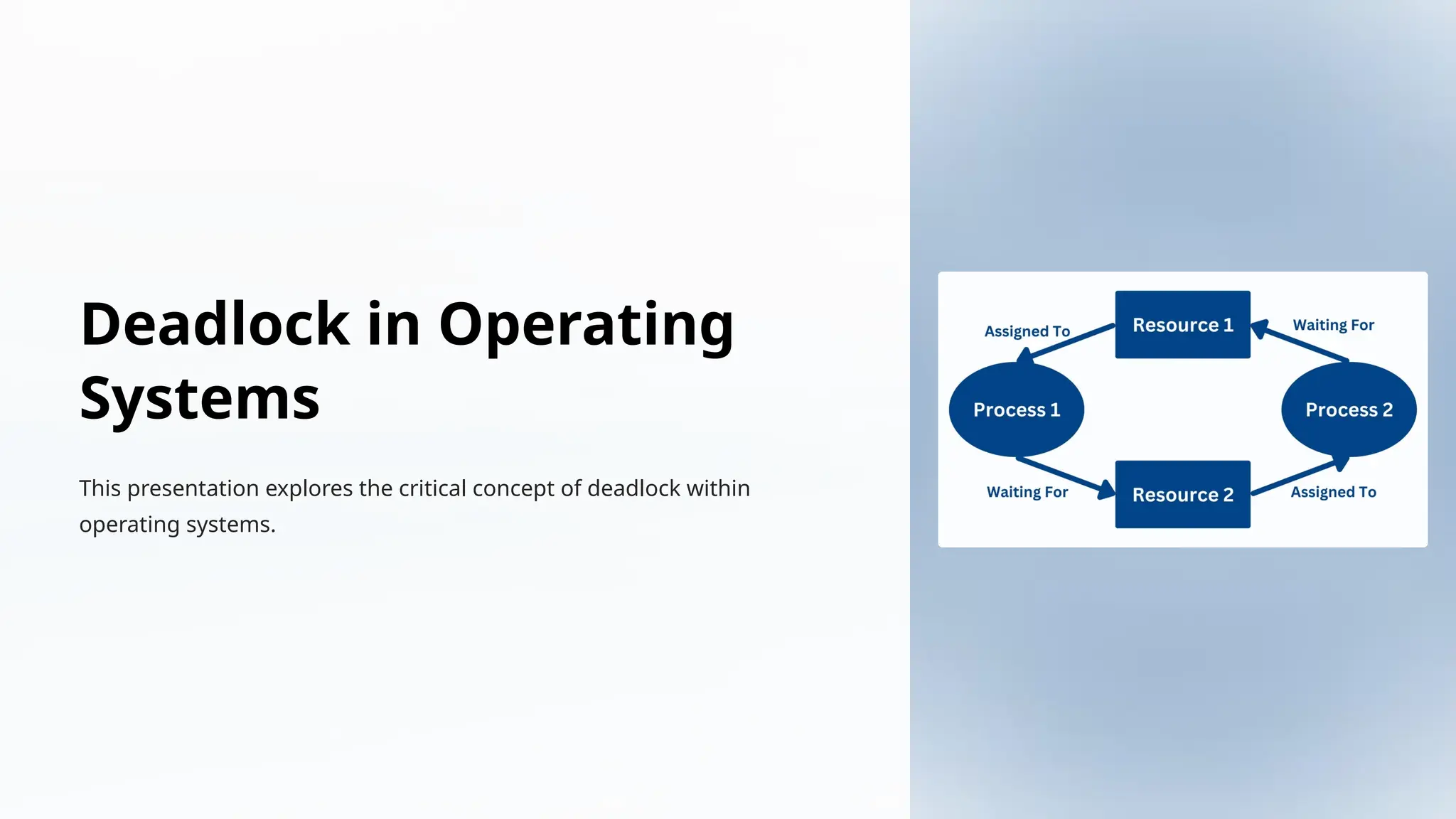
A deadlock occurs when two or more processes are
blocked, each waiting for a resource held by another
process.
Example
Scenario: Process A holds a printer and waits for a scanner,
while Process B holds the scanner and waits for the printer.
Result: Neither process can proceed, leading to a deadlock
as both are waiting indefinitely for resources held by the
other.
Necessary Conditions for Deadlock
1 Mutual Exclusion
Only one process can access a
resource at a time.
2 Hold and Wait
A process holding a resource can
request another resource held
by another process.
3 No Preemption
Resources can't be forcibly taken
from a process holding it.
4 Circular Wait
A circular chain of processes exists, where each process waits for a resource held by the next process in the chain.
Deadlock Prevention
Prevent Mutual
Exclusion
Share resources, but this may
not be feasible for all
resources.
Prevent Hold and Wait
A process must request all
resources it needs upfront.
Prevent No Preemption
Allow resources to be taken
away from processes if
necessary.
Prevent Circular Wait
Establish a linear order for
resource requests.
Deadlock Avoidance
Resource Allocation Graph
A graphical representation of processes and resources to
detect potential deadlocks.
Banker's Algorithm
A resource allocation algorithm that ensures safe states by
preventing deadlocks from occurring.
Deadlock Recovery
1 Process Termination
Terminate processes involved in the deadlock.
2 Resource Preemption
Take away resources from processes involved in the deadlock.
3 Rollback
Restore processes to a previous safe state and restart them.

Deadlock-in-Operating-Systems.pptx os os

  • 1.
    Deadlock in Operating Systems Thispresentation explores the critical concept of deadlock within operating systems.
  • 2.
    What is Deadlock? Definition Adeadlock occurs when two or more processes are blocked, each waiting for a resource held by another process. Example Scenario: Process A holds a printer and waits for a scanner, while Process B holds the scanner and waits for the printer. Result: Neither process can proceed, leading to a deadlock as both are waiting indefinitely for resources held by the other.
  • 3.
    Necessary Conditions forDeadlock 1 Mutual Exclusion Only one process can access a resource at a time. 2 Hold and Wait A process holding a resource can request another resource held by another process. 3 No Preemption Resources can't be forcibly taken from a process holding it. 4 Circular Wait A circular chain of processes exists, where each process waits for a resource held by the next process in the chain.
  • 4.
    Deadlock Prevention Prevent Mutual Exclusion Shareresources, but this may not be feasible for all resources. Prevent Hold and Wait A process must request all resources it needs upfront. Prevent No Preemption Allow resources to be taken away from processes if necessary. Prevent Circular Wait Establish a linear order for resource requests.
  • 5.
    Deadlock Avoidance Resource AllocationGraph A graphical representation of processes and resources to detect potential deadlocks. Banker's Algorithm A resource allocation algorithm that ensures safe states by preventing deadlocks from occurring.
  • 6.
    Deadlock Recovery 1 ProcessTermination Terminate processes involved in the deadlock. 2 Resource Preemption Take away resources from processes involved in the deadlock. 3 Rollback Restore processes to a previous safe state and restart them.