Nisarg Patel 12202080601096
Vansh Patel 12202080601135
Zeel Goyani 12202080601142
Introduction to
Deadlock
Deadlock is a critical system failure that occurs when two or more
processes or threads are waiting for each other to release resources,
leading to a complete standstill. Understanding the causes and prevention
of deadlocks is essential for building robust and reliable software
systems.
Definition of Deadlock
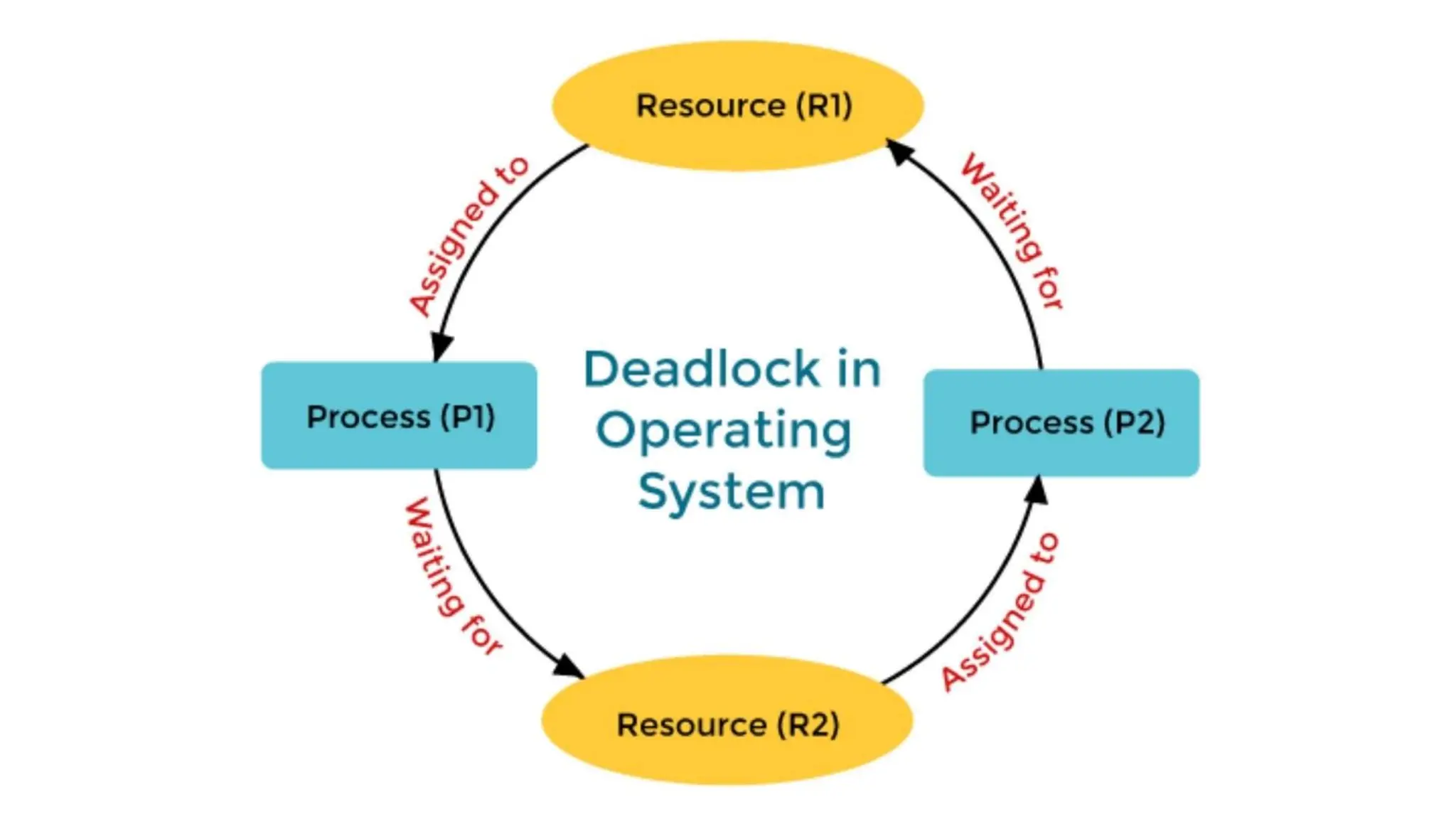
Deadlock is a situation that can occur in concurrent systems where two or
more processes are blocked, each holding a resource that is being
requested by another process. This creates a circular dependency,
preventing any of the processes from making progress.
Deadlocks can arise when four necessary conditions are met: mutual
exclusion, hold and wait, no preemption, and circular wait. Understanding
these conditions is crucial for identifying and resolving deadlock scenarios
in complex systems.
Necessary Conditions for Deadlock
1. Mutual Exclusion: At least one resource must be non-shareable, meaning only one process can
use the resource at a time.
2. Hold and Wait: A process is holding at least one resource and is waiting to acquire additional
resources held by other processes.
3. No Preemption: Resources can only be released voluntarily by the process holding them, not
taken away.
4. Circular Wait: There is a circular chain of two or more processes, each holding one or more
resources that are being requested by the next process in the chain.
Resource Allocation Graphs
Resource Allocation Graphs (RAGs) are a powerful visual tool used to model and analyze deadlock
situations in computer systems. These directed graphs depict the relationship between resources and
processes, helping system administrators identify potential deadlock scenarios.
In a RAG, each resource is represented as a node, and processes requesting or holding those resources
are denoted by directed edges. By analyzing the structure of the graph, system administrators can detect
circular wait conditions, a key characteristic of deadlocks.
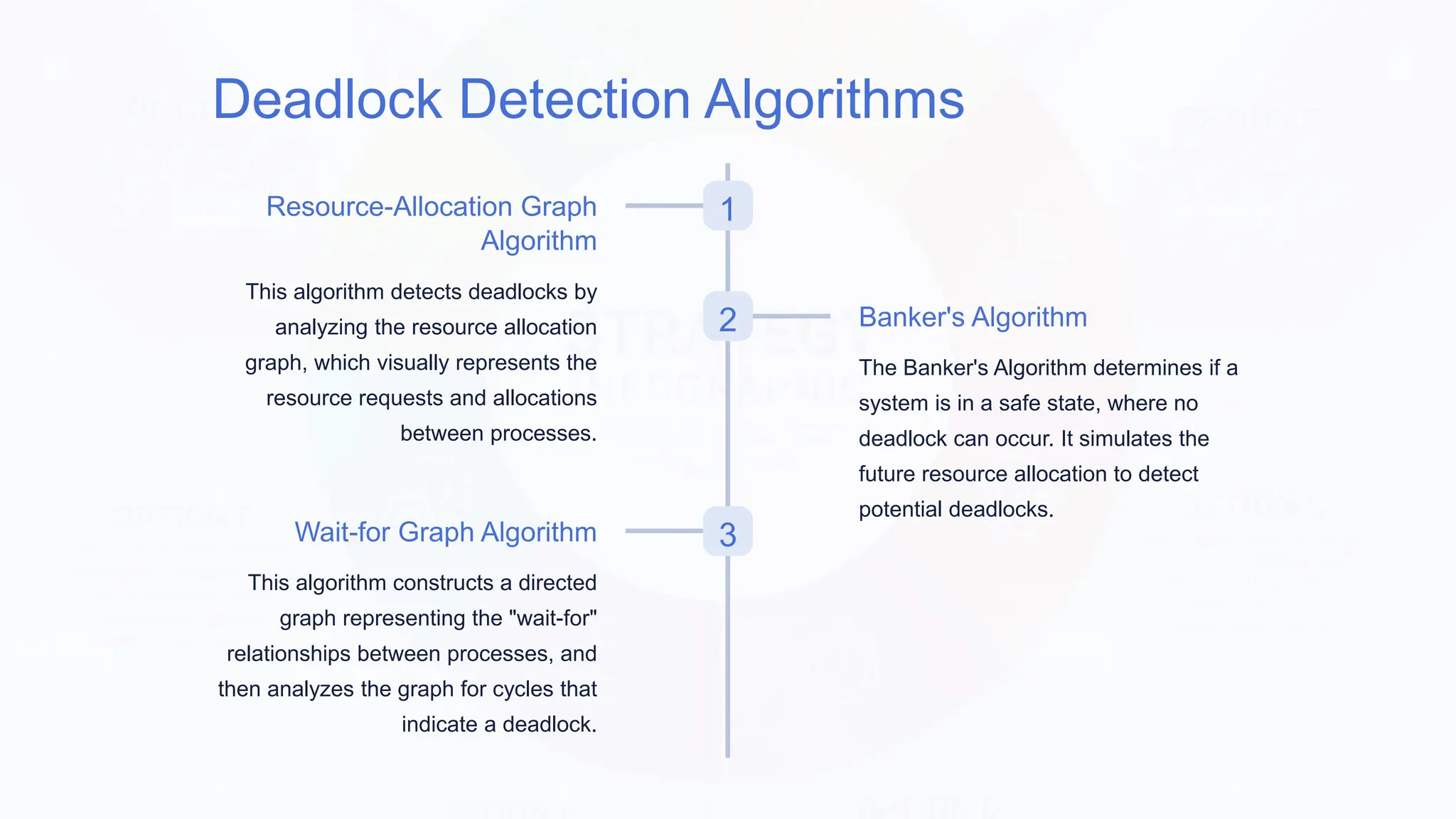
Deadlock Detection Algorithms
1
Resource-Allocation Graph
Algorithm
This algorithm detects deadlocks by
analyzing the resource allocation
graph, which visually represents the
resource requests and allocations
between processes.
2 Banker's Algorithm
The Banker's Algorithm determines if a
system is in a safe state, where no
deadlock can occur. It simulates the
future resource allocation to detect
potential deadlocks.
3
Wait-for Graph Algorithm
This algorithm constructs a directed
graph representing the "wait-for"
relationships between processes, and
then analyzes the graph for cycles that
indicate a deadlock.
Deadlock Prevention Techniques
Resource
Allocation
Careful
management of
resource allocation
can prevent
deadlocks by
ensuring that
resources are
released in the
proper order and
that no processes
are left waiting
indefinitely for a
resource.
Process
Termination
Terminating
processes that are
involved in a
deadlock can break
the circular wait and
resolve the issue.
However, this
approach should be
used with caution to
avoid unintended
consequences.
Circular Wait
Prevention
Implementing a
strict resource
ordering policy,
where processes
can only request
resources in a
predetermined
order, can eliminate
the circular wait
condition and
prevent deadlocks
from occurring.
Mutual
Exclusion
Avoidance
Avoiding the mutual
exclusion
requirement for
certain resources,
such as using
semaphores or
other
synchronization
mechanisms, can
help prevent
deadlocks by
eliminating the need
for shared access.
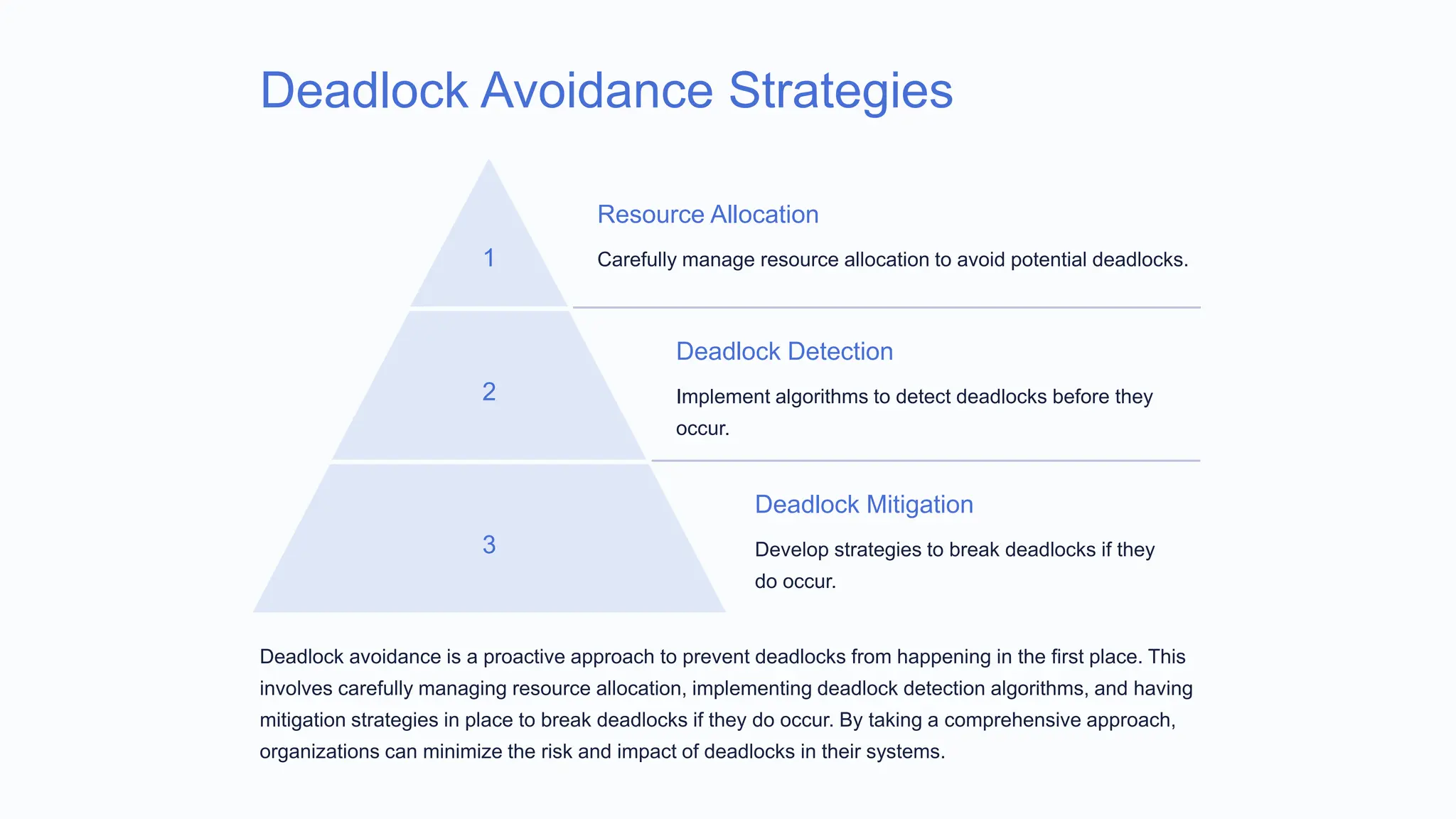
Deadlock Avoidance Strategies
1
Resource Allocation
Carefully manage resource allocation to avoid potential deadlocks.
2
Deadlock Detection
Implement algorithms to detect deadlocks before they
occur.
3
Deadlock Mitigation
Develop strategies to break deadlocks if they
do occur.
Deadlock avoidance is a proactive approach to prevent deadlocks from happening in the first place. This
involves carefully managing resource allocation, implementing deadlock detection algorithms, and having
mitigation strategies in place to break deadlocks if they do occur. By taking a comprehensive approach,
organizations can minimize the risk and impact of deadlocks in their systems.
Dealing with Deadlocks in
Operating Systems
Operating systems employ sophisticated techniques to detect and resolve
deadlocks. They monitor resource allocation, maintain wait-for graphs,
and implement algorithms to identify and break deadlock cycles.
Proactive prevention strategies, such as resource ordering and deadlock
avoidance, help avoid deadlocks altogether.
When deadlocks occur, operating systems can terminate processes,
preempt resources, or rollback transactions to resolve the issue. They
also provide tools for system administrators to diagnose, analyze, and
mitigate deadlocks in complex, real-world applications.
Real-World Examples of Deadlocks
Airline Reservation
Systems
Deadlocks can occur in airline
reservation systems when
multiple passengers try to book
the last available seat on a
flight, leading to a standstill in
the booking process.
Database Management
Deadlocks are common in
database management
systems when multiple
transactions try to access the
same set of resources in a
conflicting manner, causing the
system to freeze.
Operating System
Kernels
Kernel-level deadlocks can
happen when multiple
processes or threads compete
for system resources, leading
to a standstill in the operating
system's functionality.
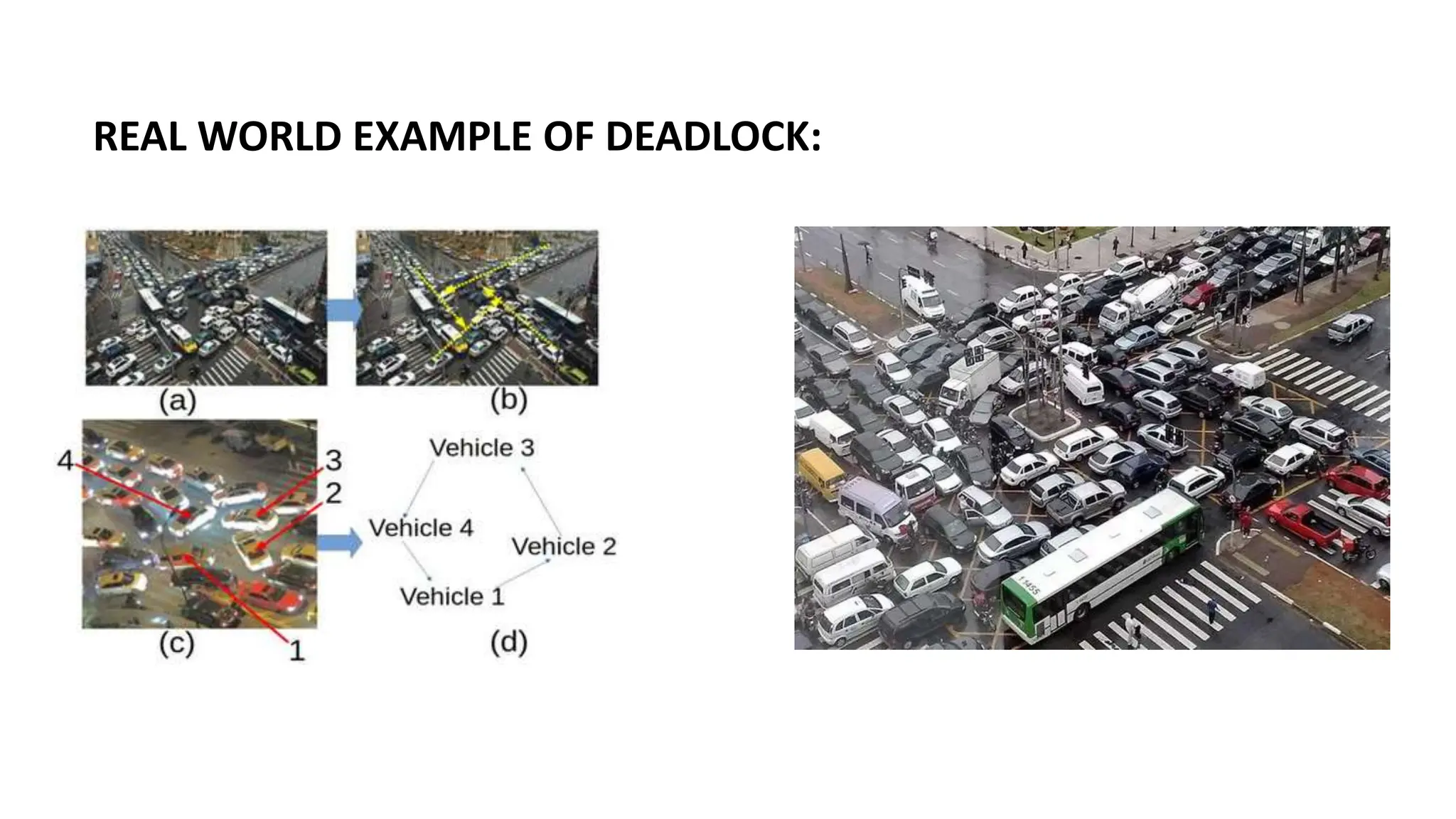
REAL WORLD EXAMPLE OF DEADLOCK:
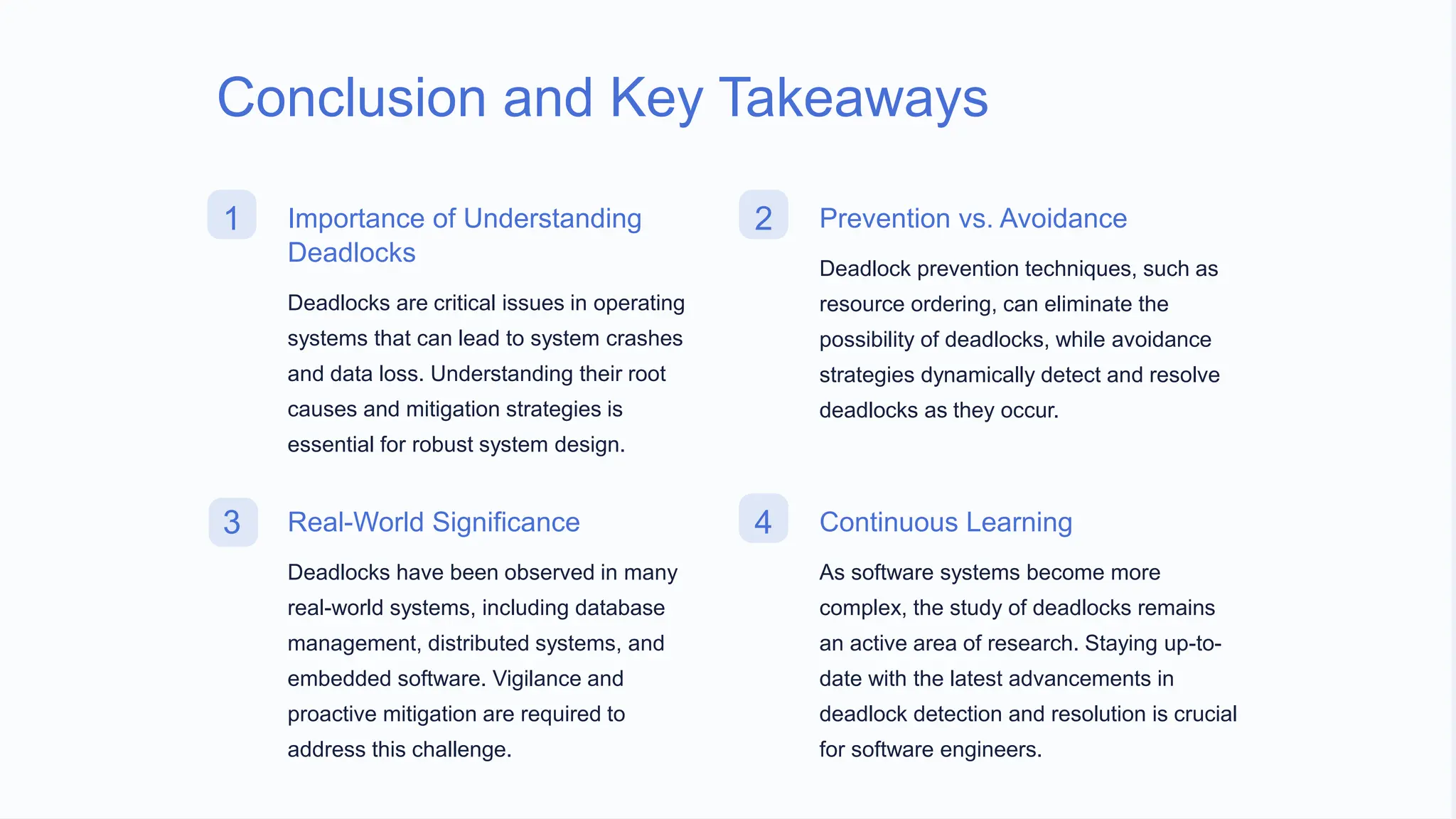
Conclusion and Key Takeaways
1 Importance of Understanding
Deadlocks
Deadlocks are critical issues in operating
systems that can lead to system crashes
and data loss. Understanding their root
causes and mitigation strategies is
essential for robust system design.
2 Prevention vs. Avoidance
Deadlock prevention techniques, such as
resource ordering, can eliminate the
possibility of deadlocks, while avoidance
strategies dynamically detect and resolve
deadlocks as they occur.
3 Real-World Significance
Deadlocks have been observed in many
real-world systems, including database
management, distributed systems, and
embedded software. Vigilance and
proactive mitigation are required to
address this challenge.
4 Continuous Learning
As software systems become more
complex, the study of deadlocks remains
an active area of research. Staying up-to-
date with the latest advancements in
deadlock detection and resolution is crucial
for software engineers.
Thank you

Os presentation final.pptxjjjjjdakajwsjjdhdfjff

  • 1.
    Nisarg Patel 12202080601096 VanshPatel 12202080601135 Zeel Goyani 12202080601142
  • 2.
    Introduction to Deadlock Deadlock isa critical system failure that occurs when two or more processes or threads are waiting for each other to release resources, leading to a complete standstill. Understanding the causes and prevention of deadlocks is essential for building robust and reliable software systems.
  • 3.
    Definition of Deadlock Deadlockis a situation that can occur in concurrent systems where two or more processes are blocked, each holding a resource that is being requested by another process. This creates a circular dependency, preventing any of the processes from making progress. Deadlocks can arise when four necessary conditions are met: mutual exclusion, hold and wait, no preemption, and circular wait. Understanding these conditions is crucial for identifying and resolving deadlock scenarios in complex systems.
  • 4.
    Necessary Conditions forDeadlock 1. Mutual Exclusion: At least one resource must be non-shareable, meaning only one process can use the resource at a time. 2. Hold and Wait: A process is holding at least one resource and is waiting to acquire additional resources held by other processes. 3. No Preemption: Resources can only be released voluntarily by the process holding them, not taken away. 4. Circular Wait: There is a circular chain of two or more processes, each holding one or more resources that are being requested by the next process in the chain.
  • 5.
    Resource Allocation Graphs ResourceAllocation Graphs (RAGs) are a powerful visual tool used to model and analyze deadlock situations in computer systems. These directed graphs depict the relationship between resources and processes, helping system administrators identify potential deadlock scenarios. In a RAG, each resource is represented as a node, and processes requesting or holding those resources are denoted by directed edges. By analyzing the structure of the graph, system administrators can detect circular wait conditions, a key characteristic of deadlocks.
  • 6.
    Deadlock Detection Algorithms 1 Resource-AllocationGraph Algorithm This algorithm detects deadlocks by analyzing the resource allocation graph, which visually represents the resource requests and allocations between processes. 2 Banker's Algorithm The Banker's Algorithm determines if a system is in a safe state, where no deadlock can occur. It simulates the future resource allocation to detect potential deadlocks. 3 Wait-for Graph Algorithm This algorithm constructs a directed graph representing the "wait-for" relationships between processes, and then analyzes the graph for cycles that indicate a deadlock.
  • 7.
    Deadlock Prevention Techniques Resource Allocation Careful managementof resource allocation can prevent deadlocks by ensuring that resources are released in the proper order and that no processes are left waiting indefinitely for a resource. Process Termination Terminating processes that are involved in a deadlock can break the circular wait and resolve the issue. However, this approach should be used with caution to avoid unintended consequences. Circular Wait Prevention Implementing a strict resource ordering policy, where processes can only request resources in a predetermined order, can eliminate the circular wait condition and prevent deadlocks from occurring. Mutual Exclusion Avoidance Avoiding the mutual exclusion requirement for certain resources, such as using semaphores or other synchronization mechanisms, can help prevent deadlocks by eliminating the need for shared access.
  • 8.
    Deadlock Avoidance Strategies 1 ResourceAllocation Carefully manage resource allocation to avoid potential deadlocks. 2 Deadlock Detection Implement algorithms to detect deadlocks before they occur. 3 Deadlock Mitigation Develop strategies to break deadlocks if they do occur. Deadlock avoidance is a proactive approach to prevent deadlocks from happening in the first place. This involves carefully managing resource allocation, implementing deadlock detection algorithms, and having mitigation strategies in place to break deadlocks if they do occur. By taking a comprehensive approach, organizations can minimize the risk and impact of deadlocks in their systems.
  • 9.
    Dealing with Deadlocksin Operating Systems Operating systems employ sophisticated techniques to detect and resolve deadlocks. They monitor resource allocation, maintain wait-for graphs, and implement algorithms to identify and break deadlock cycles. Proactive prevention strategies, such as resource ordering and deadlock avoidance, help avoid deadlocks altogether. When deadlocks occur, operating systems can terminate processes, preempt resources, or rollback transactions to resolve the issue. They also provide tools for system administrators to diagnose, analyze, and mitigate deadlocks in complex, real-world applications.
  • 11.
    Real-World Examples ofDeadlocks Airline Reservation Systems Deadlocks can occur in airline reservation systems when multiple passengers try to book the last available seat on a flight, leading to a standstill in the booking process. Database Management Deadlocks are common in database management systems when multiple transactions try to access the same set of resources in a conflicting manner, causing the system to freeze. Operating System Kernels Kernel-level deadlocks can happen when multiple processes or threads compete for system resources, leading to a standstill in the operating system's functionality.
  • 12.
    REAL WORLD EXAMPLEOF DEADLOCK:
  • 14.
    Conclusion and KeyTakeaways 1 Importance of Understanding Deadlocks Deadlocks are critical issues in operating systems that can lead to system crashes and data loss. Understanding their root causes and mitigation strategies is essential for robust system design. 2 Prevention vs. Avoidance Deadlock prevention techniques, such as resource ordering, can eliminate the possibility of deadlocks, while avoidance strategies dynamically detect and resolve deadlocks as they occur. 3 Real-World Significance Deadlocks have been observed in many real-world systems, including database management, distributed systems, and embedded software. Vigilance and proactive mitigation are required to address this challenge. 4 Continuous Learning As software systems become more complex, the study of deadlocks remains an active area of research. Staying up-to- date with the latest advancements in deadlock detection and resolution is crucial for software engineers.
  • 15.