DILATED CARDIOMYOPATHY secondary to
HYPOTHYROIDISM
CERES PAULINO-CANTO, MD, FPPS, FPSPC, FPSE
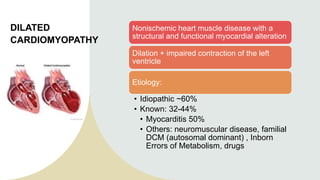
Nonischemic heart muscle disease with a
structural and functional myocardial alteration
Dilation + impaired contraction of the left
ventricle
Etiology:
• Idiopathic ~60%
• Known: 32-44%
• Myocarditis 50%
• Others: neuromuscular disease, familial
DCM (autosomal dominant) , Inborn
Errors of Metabolism, drugs
DILATED
CARDIOMYOPATHY
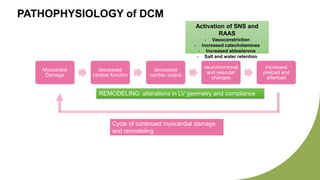
PATHOPHYSIOLOGY of DCM
Myocardial
Damage
decreased
cardiac function
decreased
cardiac output
neurohormonal
and vascular
changes
increased
preload and
afterload
Cycle of continued myocardial damage
and remodeling
Activation of SNS and
RAAS
- Vasoconstriction
- Increased catecholamines
- Increased aldosterone
- Salt and water retention
REMODELING: alterations in LV geometry and compliance
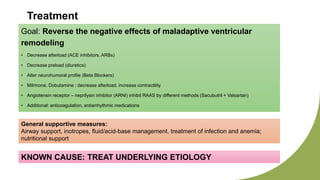
Treatment
Goal: Reverse the negative effects of maladaptive ventricular
remodeling
• Decrease afterload (ACE inhibitors, ARBs)
• Decrease preload (diuretics)
• Alter neurohumoral profile (Beta Blockers)
• Milrinone, Dobutamine : decrease afterload, increase contractility
• Angiotensin receptor – neprilysin inhibitor (ARNI) inhibit RAAS by different methods (Sacubutril + Valsartan)
• Additional: anticoagulation, antiarrhythmic medications
KNOWN CAUSE: TREAT UNDERLYING ETIOLOGY
General supportive measures:
Airway support, inotropes, fluid/acid-base management, treatment of infection and anemia;
nutritional support
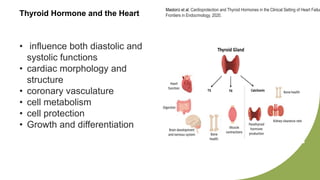
Thyroid Hormone and the Heart
Mastorci et al. Cardioprotection and Thyroid Hormones in the Clinical Setting of Heart Failur
Frontiers in Endocrinology, 2020.
• influence both diastolic and
systolic functions
• cardiac morphology and
structure
• coronary vasculature
• cell metabolism
• cell protection
• Growth and differentiation
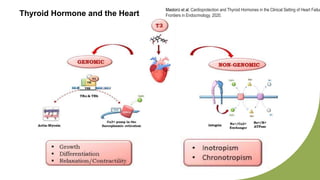
Thyroid Hormone and the Heart
Mastorci et al. Cardioprotection and Thyroid Hormones in the Clinical Setting of Heart Failur
Frontiers in Endocrinology, 2020.
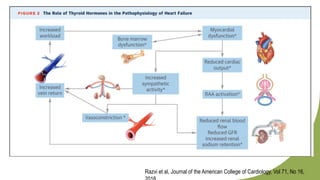
Razvi et al, Journal of the American College of Cardiology, Vol 71, No 16,
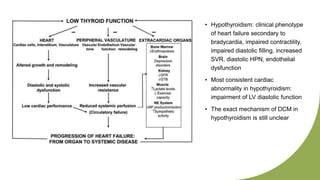
• Hypothyroidism: clinical phenotype
of heart failure secondary to
bradycardia, impaired contractility,
impaired diastolic filling, increased
SVR, diastolic HPN, endothelial
dysfunction
• Most consistent cardiac
abnormality in hypothyroidism:
impairment of LV diastolic function
• The exact mechanism of DCM in
hypothyroidism is still unclear
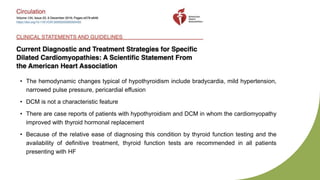
• The hemodynamic changes typical of hypothyroidism include bradycardia, mild hypertension,
narrowed pulse pressure, pericardial effusion
• DCM is not a characteristic feature
• There are case reports of patients with hypothyroidism and DCM in whom the cardiomyopathy
improved with thyroid hormonal replacement
• Because of the relative ease of diagnosing this condition by thyroid function testing and the
availability of definitive treatment, thyroid function tests are recommended in all patients
presenting with HF
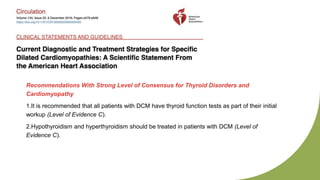
Recommendations With Strong Level of Consensus for Thyroid Disorders and
Cardiomyopathy
1.It is recommended that all patients with DCM have thyroid function tests as part of their initial
workup (Level of Evidence C).
2.Hypothyroidism and hyperthyroidism should be treated in patients with DCM (Level of
Evidence C).
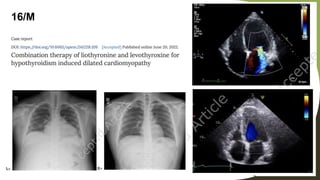
16/M
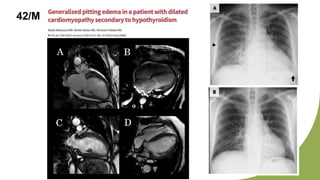
42/M
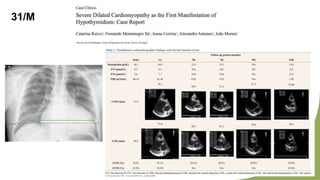
31/M
CONCLUSION
• DCM is frequently of unknown etiology and marked by
progressive LV dysfunction and irreversible poor outcome
• Hypothyroidism is a rare cause of DCM
• Hormonal replacement treatment causes improvement in
patients with DCM secondary to hypothyroidism
• Thyroid function testing is an important part of initial
assessment of DCM
THANK YOU

DCM hypothyroidism .pptx

  • 1.
    DILATED CARDIOMYOPATHY secondaryto HYPOTHYROIDISM CERES PAULINO-CANTO, MD, FPPS, FPSPC, FPSE
  • 2.
    Nonischemic heart muscledisease with a structural and functional myocardial alteration Dilation + impaired contraction of the left ventricle Etiology: • Idiopathic ~60% • Known: 32-44% • Myocarditis 50% • Others: neuromuscular disease, familial DCM (autosomal dominant) , Inborn Errors of Metabolism, drugs DILATED CARDIOMYOPATHY
  • 3.
    PATHOPHYSIOLOGY of DCM Myocardial Damage decreased cardiacfunction decreased cardiac output neurohormonal and vascular changes increased preload and afterload Cycle of continued myocardial damage and remodeling Activation of SNS and RAAS - Vasoconstriction - Increased catecholamines - Increased aldosterone - Salt and water retention REMODELING: alterations in LV geometry and compliance
  • 5.
    Treatment Goal: Reverse thenegative effects of maladaptive ventricular remodeling • Decrease afterload (ACE inhibitors, ARBs) • Decrease preload (diuretics) • Alter neurohumoral profile (Beta Blockers) • Milrinone, Dobutamine : decrease afterload, increase contractility • Angiotensin receptor – neprilysin inhibitor (ARNI) inhibit RAAS by different methods (Sacubutril + Valsartan) • Additional: anticoagulation, antiarrhythmic medications KNOWN CAUSE: TREAT UNDERLYING ETIOLOGY General supportive measures: Airway support, inotropes, fluid/acid-base management, treatment of infection and anemia; nutritional support
  • 6.
    Thyroid Hormone andthe Heart Mastorci et al. Cardioprotection and Thyroid Hormones in the Clinical Setting of Heart Failur Frontiers in Endocrinology, 2020. • influence both diastolic and systolic functions • cardiac morphology and structure • coronary vasculature • cell metabolism • cell protection • Growth and differentiation
  • 7.
    Thyroid Hormone andthe Heart Mastorci et al. Cardioprotection and Thyroid Hormones in the Clinical Setting of Heart Failur Frontiers in Endocrinology, 2020.
  • 8.
    Razvi et al,Journal of the American College of Cardiology, Vol 71, No 16,
  • 9.
    • Hypothyroidism: clinicalphenotype of heart failure secondary to bradycardia, impaired contractility, impaired diastolic filling, increased SVR, diastolic HPN, endothelial dysfunction • Most consistent cardiac abnormality in hypothyroidism: impairment of LV diastolic function • The exact mechanism of DCM in hypothyroidism is still unclear
  • 10.
    • The hemodynamicchanges typical of hypothyroidism include bradycardia, mild hypertension, narrowed pulse pressure, pericardial effusion • DCM is not a characteristic feature • There are case reports of patients with hypothyroidism and DCM in whom the cardiomyopathy improved with thyroid hormonal replacement • Because of the relative ease of diagnosing this condition by thyroid function testing and the availability of definitive treatment, thyroid function tests are recommended in all patients presenting with HF
  • 11.
    Recommendations With StrongLevel of Consensus for Thyroid Disorders and Cardiomyopathy 1.It is recommended that all patients with DCM have thyroid function tests as part of their initial workup (Level of Evidence C). 2.Hypothyroidism and hyperthyroidism should be treated in patients with DCM (Level of Evidence C).
  • 13.
  • 14.
  • 15.
  • 16.
    CONCLUSION • DCM isfrequently of unknown etiology and marked by progressive LV dysfunction and irreversible poor outcome • Hypothyroidism is a rare cause of DCM • Hormonal replacement treatment causes improvement in patients with DCM secondary to hypothyroidism • Thyroid function testing is an important part of initial assessment of DCM
  • 17.

Editor's Notes

  • #7 Triiodothyronine (T3) and thyroxine (T4), produced by the thyroid gland, have multiple effects on the heart. Whether circulating T4 originates from the thyroid, T3 is produced peripherically by T4 5′-monodeiodination. Thyroid hormones (THs) influence both diastolic and systolic functions and have relevant effects on cardiac morphology and structure, coronary vasculature, cell metabolism, and cell protection, growth, and differentiation. As shown in Figure 1, the multiple effects of TH on the heart are mediated by different signaling pathways that have been clustered into genomic and non-genomic actions: THs regulate gene expression through specific nuclear α and βTH receptors (TRs) and regulate genes involved in metabolism, cell growth and differentiation. THs also exert non-genomic actions via interactions with cytoplasmic and membrane-associated TRs, such as integrin αvβ3, that mediate TH action on the transport of ions across the plasma membrane and glucose and amino acid transport. THs act directly on the myocardial structure, regulating the interstitial collagen content within the myocardium, favor the development of coronary angiogenesis, thus increasing coronary flow reserve, and regulate cardiac function through chronotropic, inotropic, and dromotropic effects. Furthermore, THs also act through synergistic actions with inflammatory and neuroendocrine systems, as well as oxidative stress machinery, through direct action on the mitochondria. The high level of TH signaling integration with other systems is particularly relevant in HF. In fact, TH has an initial protective role, and its continuous activation results in toxic effects on all the systems implicated in HF pathophysiology.
  • #8 Triiodothyronine (T3) and thyroxine (T4), produced by the thyroid gland, have multiple effects on the heart. Whether circulating T4 originates from the thyroid, T3 is produced peripherically by T4 5′-monodeiodination. Thyroid hormones (THs) influence both diastolic and systolic functions and have relevant effects on cardiac morphology and structure, coronary vasculature, cell metabolism, and cell protection, growth, and differentiation. As shown in Figure 1, the multiple effects of TH on the heart are mediated by different signaling pathways that have been clustered into genomic and non-genomic actions: THs regulate gene expression through specific nuclear α and βTH receptors (TRs) and regulate genes involved in metabolism, cell growth and differentiation. THs also exert non-genomic actions via interactions with cytoplasmic and membrane-associated TRs, such as integrin αvβ3, that mediate TH action on the transport of ions across the plasma membrane and glucose and amino acid transport. THs act directly on the myocardial structure, regulating the interstitial collagen content within the myocardium, favor the development of coronary angiogenesis, thus increasing coronary flow reserve, and regulate cardiac function through chronotropic, inotropic, and dromotropic effects. Furthermore, THs also act through synergistic actions with inflammatory and neuroendocrine systems, as well as oxidative stress machinery, through direct action on the mitochondria. The high level of TH signaling integration with other systems is particularly relevant in HF. In fact, TH has an initial protective role, and its continuous activation results in toxic effects on all the systems implicated in HF pathophysiology.
  • #9 Low thyroid function reduces cardiac function and induces morphological, molecular, and structural changes of the myocardium. Low thyroid function also increases peripheral vascular resistance, plasma noradrenaline concentrations, and plasma renin activity, and reduces eryth- ropoietin. Hypothyroidism can produce clinical phenotype of heart failure from a number of diverse mechanisms which include: bradycardia, impaired contractility, impaired diastolic filling, increased systemic vascular resistance, diastolic hypertension, and endothelial dysfunction *Critical points where low thyroid state (function) may contribute to the progression and worsening of heart failure. GFR ¼ glomerular filtration rate; HF ¼ heart failure; RAA ¼ renin-angiotensin-aldosterone axis; TH ¼ thyroid hormones. J A C C V O L . 7 1 , N O . 1 6 , 2 0 1 8 Razvi et al. A P R I L 2 4 , 2 0 1 8 : 1 7 8 1 – 9 6 Thyroid Hormones and the Cardiovascular System 1785 The exact mechanism of developing dilated cardiomyopathy DCM in hypothyroidism is still unclear Marovic found that 18%-49% of patients with dilated cardiomyopathy had an associated disorder in their thyroid gland
  • #10 Hypothyroidism can produce clinical phenotype of heart failure from a number of diverse mechanisms which include: bradycardia, impaired contractility, impaired diastolic filling, increased systemic vascular resistance, diastolic hypertension, and endothelial dysfunction.[6] It has also been demonstrated that subclinical hypothyroidism may lead to the development of heart failure. Studies have shown that like the sick-euthyroid syndrome occurring in various nonthyroidal illnesses, for example, sepsis, patients with heart failure who have normal thyroid gland may have low circulating levels of T3 with normal levels of T4 and TSH. Low serum T3 in these patients strongly predicts all-cause and cardiovascular mortality.[7] The most consistent cardiac abnormality recognized in patients with overt hypothyroidism is impairment of LV diastolic function characterized by slowed myocardial relaxation and impaired early ventricular filling.[8,9] However, hypothyroidism presenting as cardiomyopathy and decreased LV systolic function is an uncommon feature. The exact mechanism of developing dilated cardiomyopathy DCM in hypothyroidism is still unclear Marovic found that 18%-49% of patients with dilated cardiomyopathy had an associated disorder in their thyroid gland
  • #11 The hemodynamic changes typical of hypothyroidism are opposite to those of hyperthyroidism, but they are accompanied by fewer symptoms and signs. The most common signs are bradycardia, mild hypertension (often diastolic), and a narrowed pulse pressure. Pericardial effusions and nonpitting edema (myxedema) can occur in patients with severe, long-standing hypothyroidism, but DCM is not a characteristic feature.368,379 There are, however, case reports of patients with hypothyroidism and DCM in whom the cardiomyopathy improved with thyroid hormonal replacement.380 The low cardiac output in hypothyroidism is caused by bradycardia, a decrease in ventricular filling, and a decrease in cardiac contractility.381 Systemic vascular resistance can increase by as much as 50%,381 and diastolic relaxation and filling are slowed. However, clinical HF is rare, because the cardiac output is usually sufficient to meet the lowered systemic demands in hypothyroidism.379 In summary, although hypothyroidism and hyperthyroidism are rarely the primary cause of DCM and HF, they more often coexist in patients with HF of various causes. Because of the relative ease of diagnosing these conditions by thyroid function testing and the availability of definitive treatments of these conditions, thyroid function tests are recommended in all patients presenting with HF.
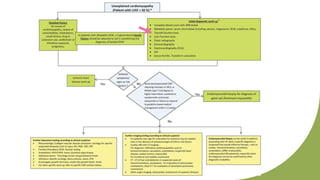
  • #13 igure 1. Diagnostic strategies in DCM. BUN indicates blood urea nitrogen; CAD, coronary artery disease; CMP, cardiomyopathy; CRP, C-reactive protein; CT, computed tomography; DCM, dilated cardiomyopathy; ESR, erythrocyte sedimentation rate; HbA1c, hemoglobin A1c; HF, heart failure; LVEF, left ventricular ejection fraction; MCS, mechanical circulatory support; MR, magnetic resonance; PAN, polyarthritis nodosa; PCR, polymerase chain reaction; RA, rheumatoid arthritis; SPEP, serum protein electrophoresis; and UPEP, urine protein electrophoresis.*Current definition per 2013 guidelines1. Heart failure with reduced ejection fraction (HFrEF; ejection fraction <40%) or heart failure with borderline preserved ejection fraction (HFpEF; borderline ejection fraction 41%-49%). †These diagnostic tests are part of a routine workup of initial evaluation of a patient with heart failure.1
  • #14 Combination therapy of liothyronine and levothyroxine for hypothyroidism induced dilated cardiomyopathyYoungha Choi1  , Se Yong Jung2, Jung Min Park2, Junghwan Suh1  , Eun Jung Shin3, Hyun Wook Chae4, Ho-Seong Kim1  , Ahreum Kwon1 1Department of Pediatrics, Severance Children's Hospital, Endocrine Research Institute, Yonsei University College of Medicine, Seoul, Korea 2Division of Pediatric Cardiology, Department of Pediatrics, Severance Cardiovascular Hospital, Yonsei University College of Medicine, Seoul, Korea 3Department of Pediatrics, Inha University Hospital, Incheon, Korea 4Department of Pediatrics, Gangnam Severance Hospital, Yonsei University College of Medicine , Seoul, Republic of KoreaAddress for correspondence:  Ahreum Kwon Email: ARMEA@yuhs.ac Received: October 29, 2021   Revised: November 28, 2021   Accepted: December 14, 2021AbstractThyroid hormone plays a vital role in regulating human metabolism. They affect the functions of major organs, such as the brain, liver, skeletal muscle, and heart. Hypothyroidism can lead to dilated cardiomyopathy and decreased heart function. In this report, we describe the case of a teenage boy who developed dilated cardiomyopathy due to hypothyroidism and considered to undergo a heart transplant. Levothyroxine monotherapy was initiated; however, there was no improvement. Thereafter, a combination therapy of liothyronine and levothyroxine was administered, the heart function was gradually restored, and he recovered completely after 6 months. Cardiac myocytes respond more specifically to liothyronine than to levothyroxine. Therefore, we suggest that liothyronine and levothyroxine combination therapy should be considered rather than levothyroxine monotherapy for hypothyroidism accompanied by heart disease.
  • #15 Treated with levothyroxine Initial lv function 22.5  50% Complete resolution of symptoms at 2 months At 2 years, able to work independently The patient’s left ventricular function also improved gradually, and 17 months after discharge, cardiac MRI showed improvement in cardiac contractility (Appendix 2, Video  2C and 2D); the left ventricular ejection fraction was 49.1% and the right ventricular ejection fraction was 56.0%.