Electrical Machines-1
Unit 3: DCMachines
Dr.Mrs. Haripriya H. Kulkarni.
Review of previous Lecture
• Transformer-1 phase and 3 phase
Learning Objectives
Comparison between Motor and Generator
Study of D.C. Machine
Basics of Machine
Operating principle of Motor and Generator
Different parts and its function
Learning Outcomes
Students will be able to :
Compare Motor and Generator
Study of D.C. Machine
Explain basics of Machine
Demonstrate operating principle of Motor and Generator
Different parts and its function
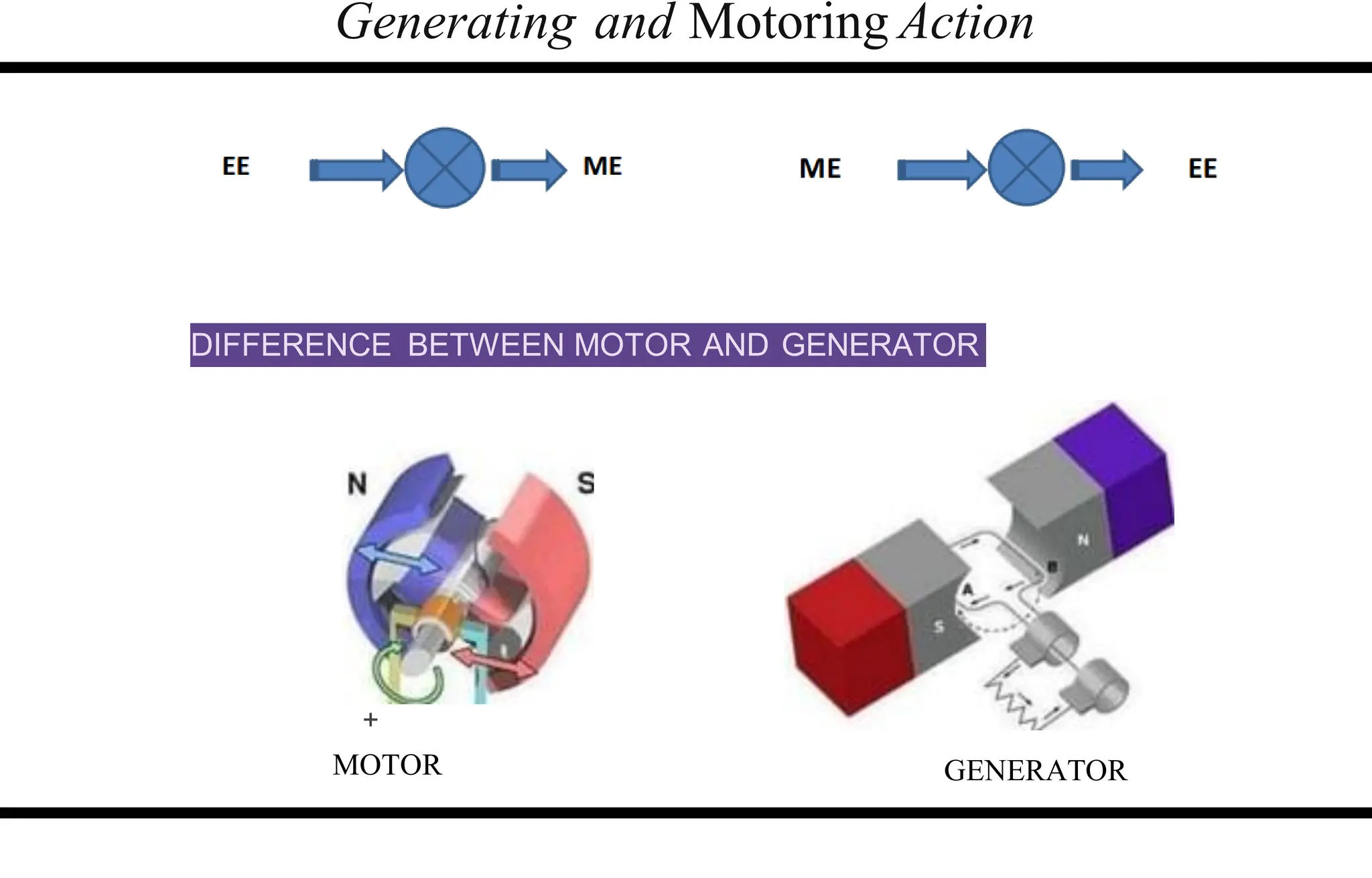
Generating and Motoring Action
DIFFERENCE BETWEEN MOTOR AND GENERATOR
+
MOTOR GENERATOR
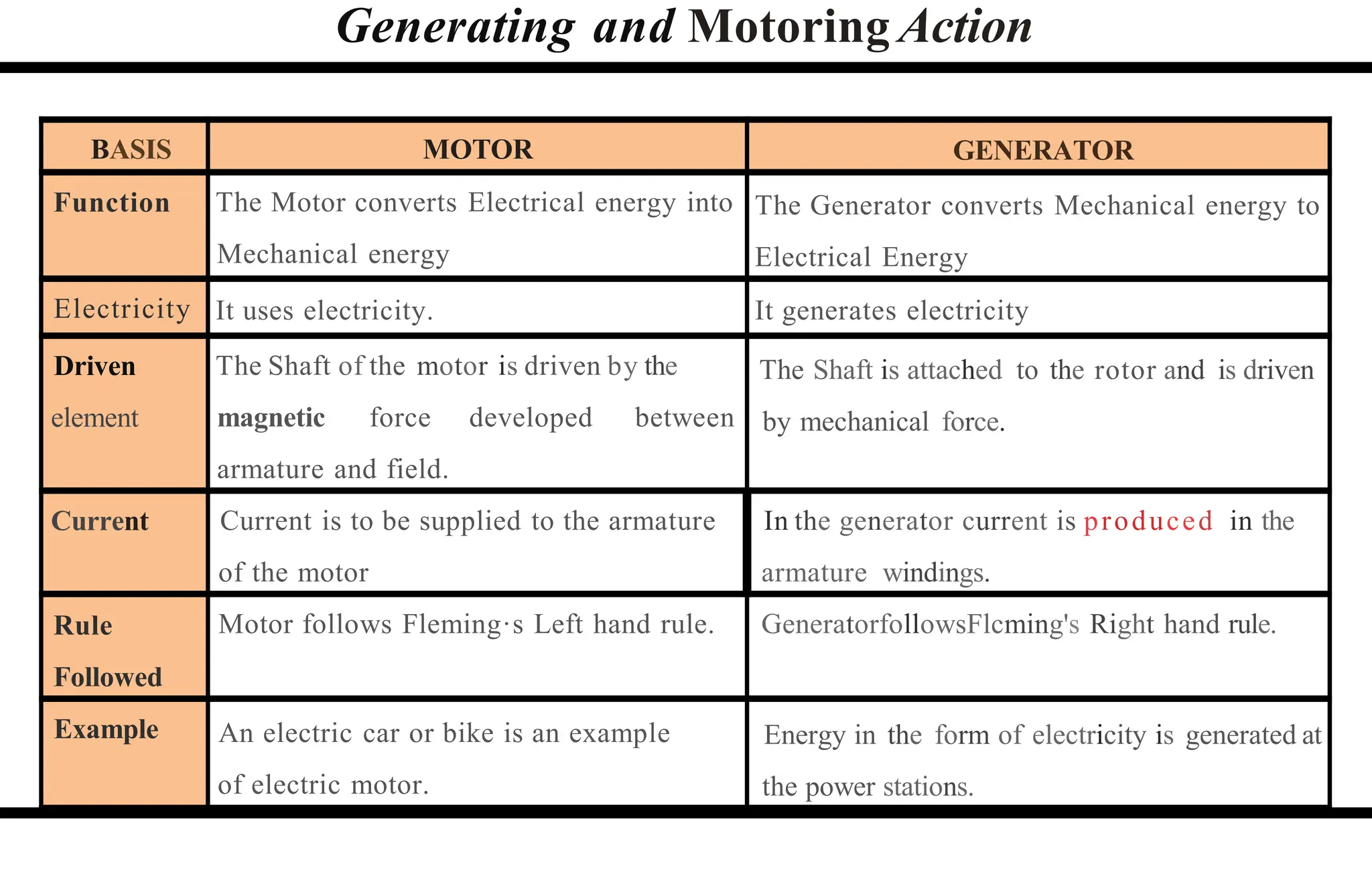
BASIS MOTOR GENERATOR
Function The Motor converts Electrical energy into
Mechanical energy
The Generator converts Mechanical energy to
Electrical Energy
Electricity It uses electricity. It generates electricity
Driven
element
The Shaft of the motor is driven by the
magnetic force developed between
armature and field.
The Shaft is attached to the rotor and is driven
by mechanical force.
Current Current is to be supplied to the armature
of the motor
In the generator current is produced in the
armature windings.
Rule
Followed
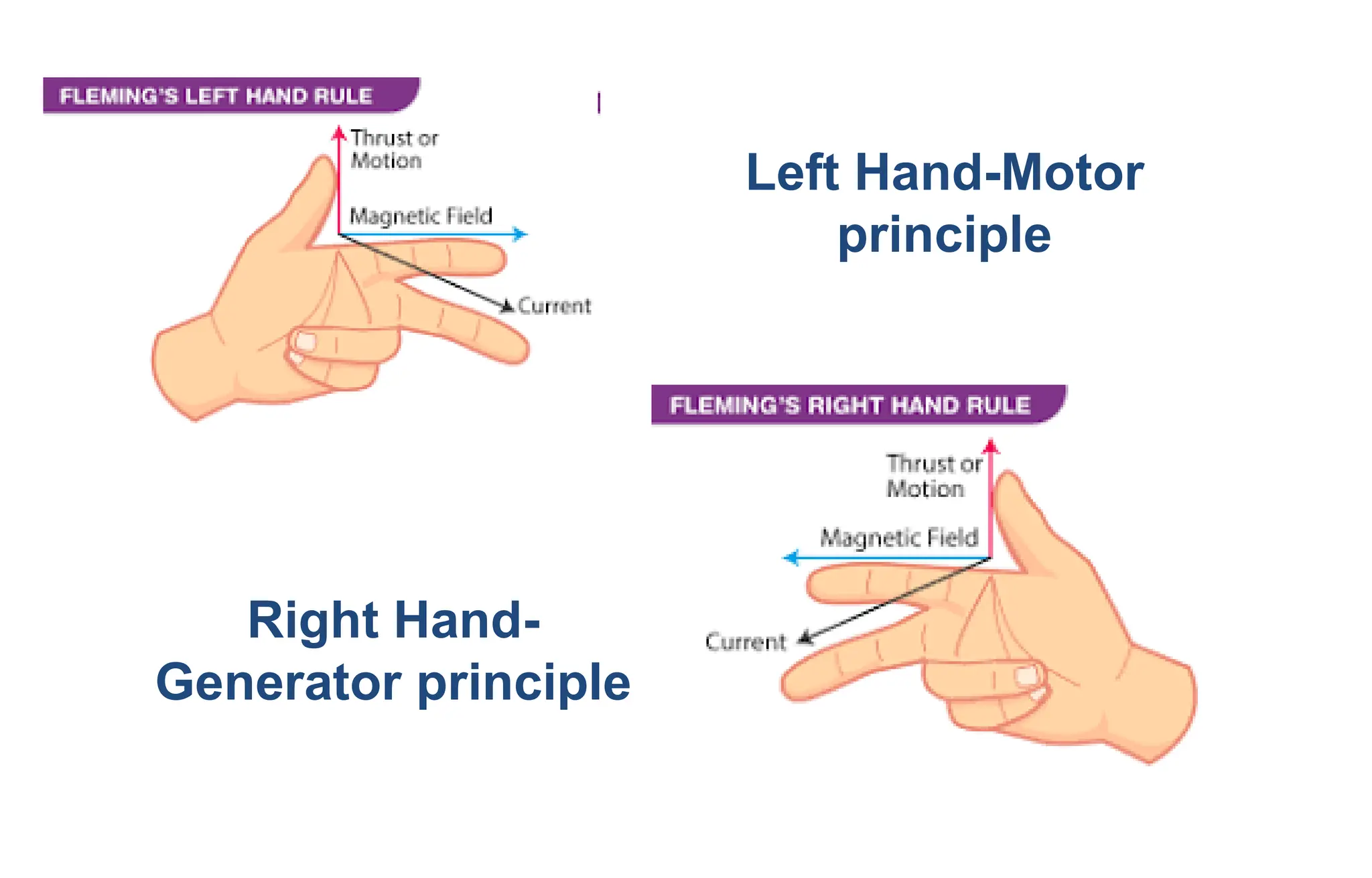
Motor follows Fleming·s Left hand rule. GeneratorfollowsFlcming's Right hand rule.
Example An electric car or bike is an example
of electric motor.
Energy in the form of electricity is generated at
the power stations.
Generating and Motoring Action
Left Hand-Motor
principle
Right Hand-
Generator principle
DC Generator Construction
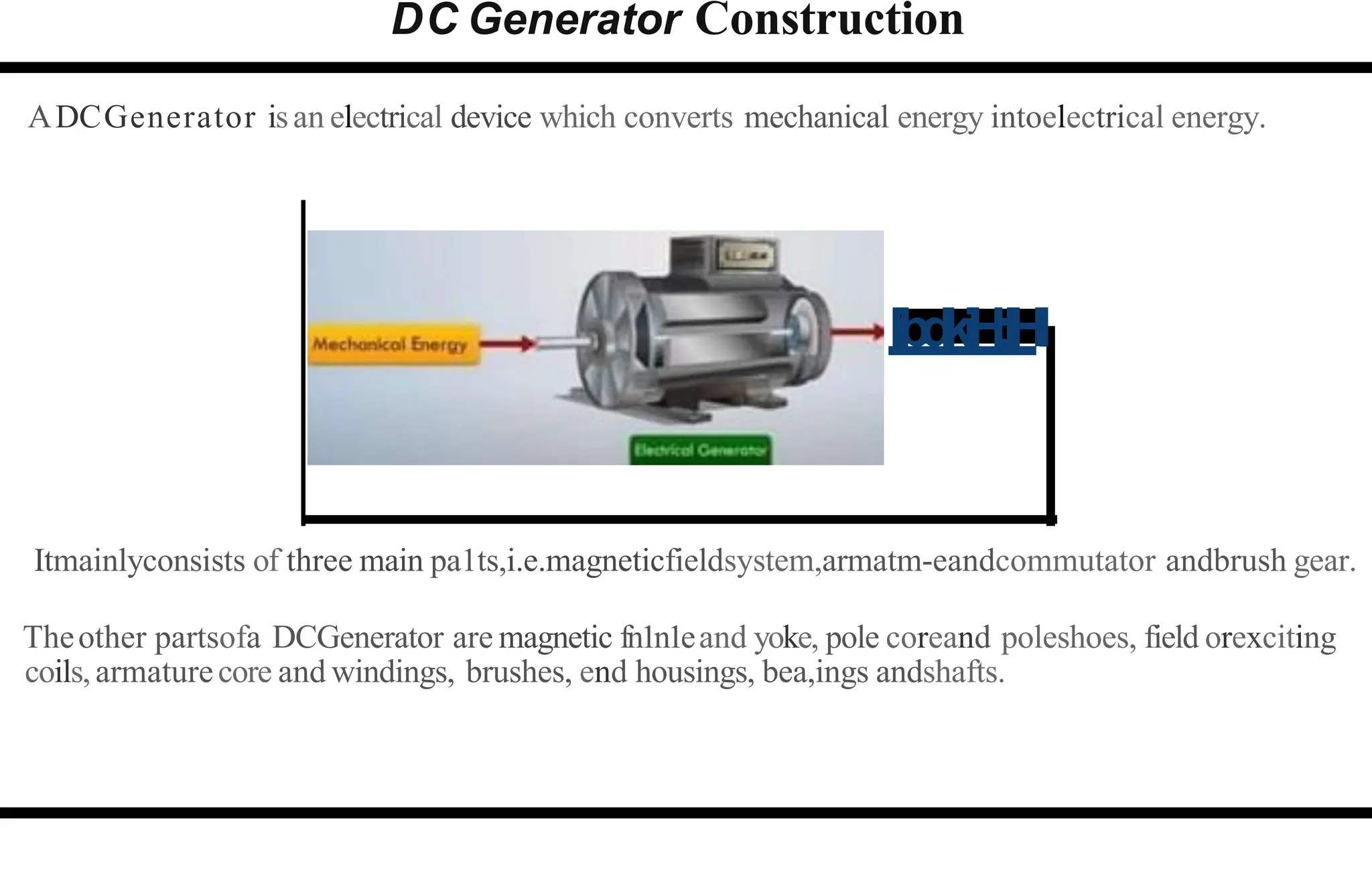
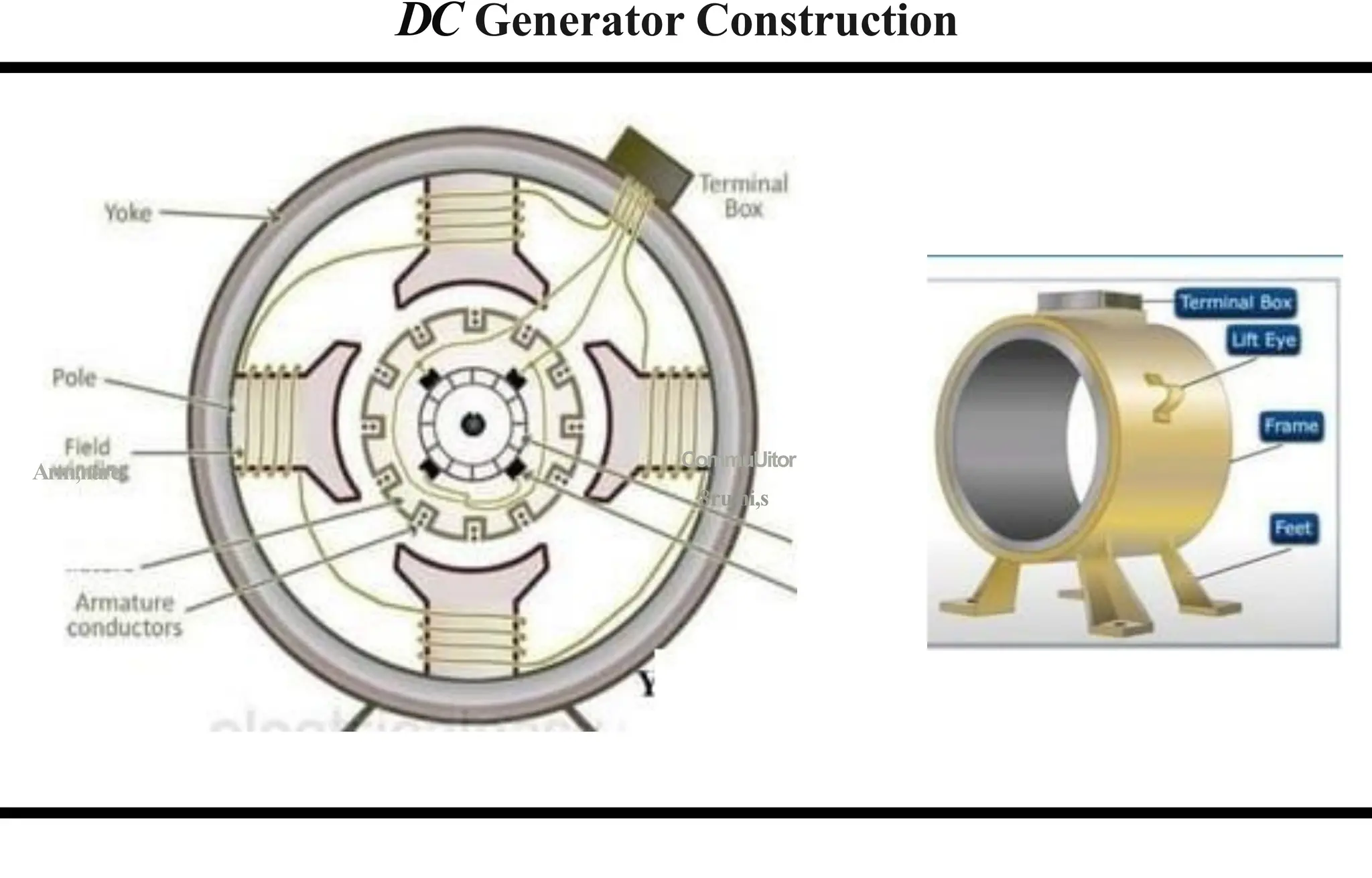
ADCGenerator isan electrical device which converts mechanical energy intoelectrical energy.
libdkiH:IHI
Itmainlyconsists of three main pa1ts,i.e.magneticfieldsystem,armatm-eandcommutator andbrush gear.
Theother partsofa DCGenerator are magnetic fn1n1eand yoke, pole coreand poleshoes, field orexciting
coils,armaturecore and windings, brushes, end housings, bea,ings andshafts.
DC Generator Construction
Arm;nure
CommuUitor
8ru hi,s
DCGenerator Construction
-
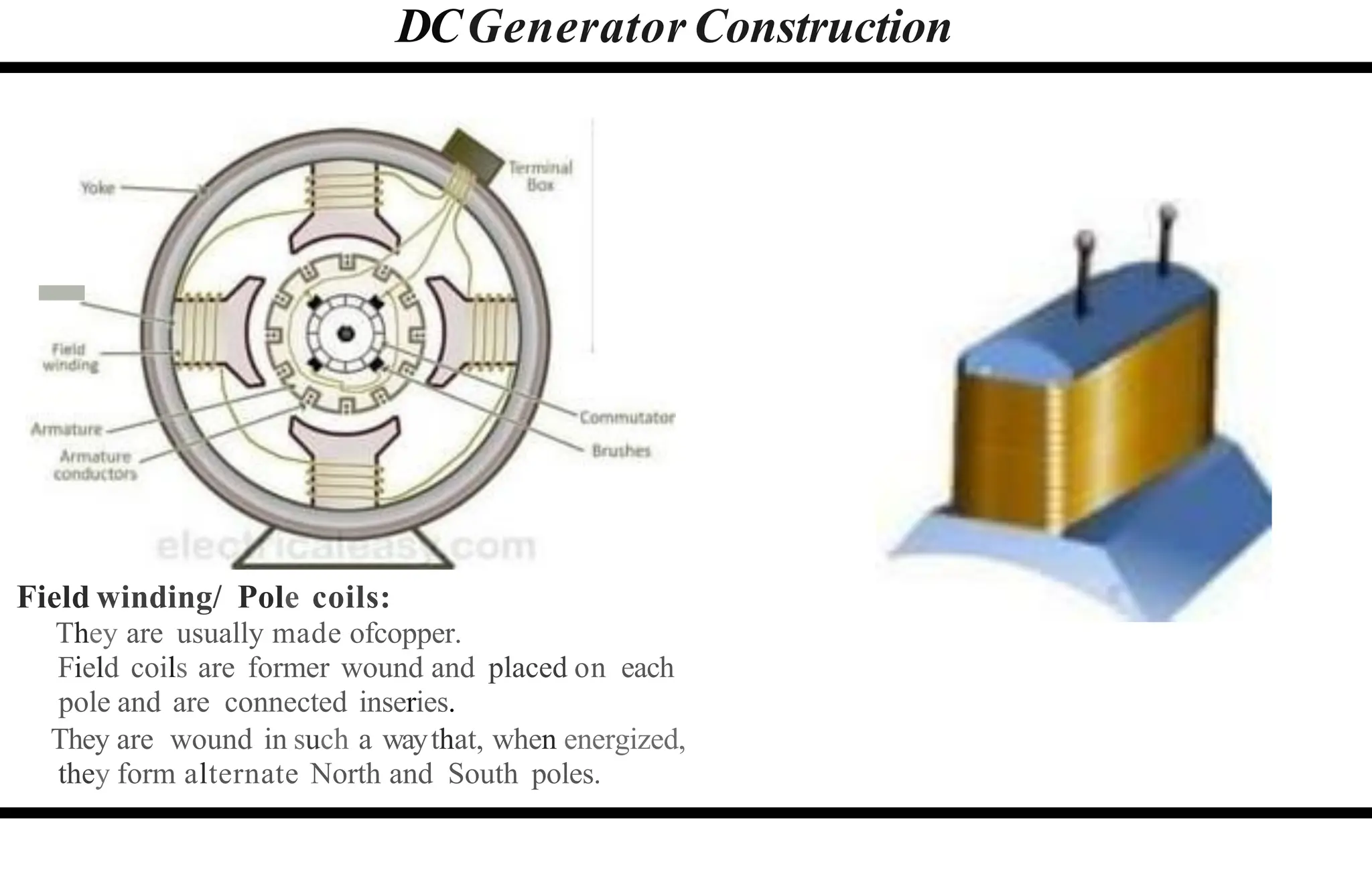
Field winding/ Pole coils:
They are usually made ofcopper.
Field coils are former wound and placed on each
pole and are connected inseries.
They are wound in such a waythat, when energized,
they form alternate North and South poles.
DC Generator Construction
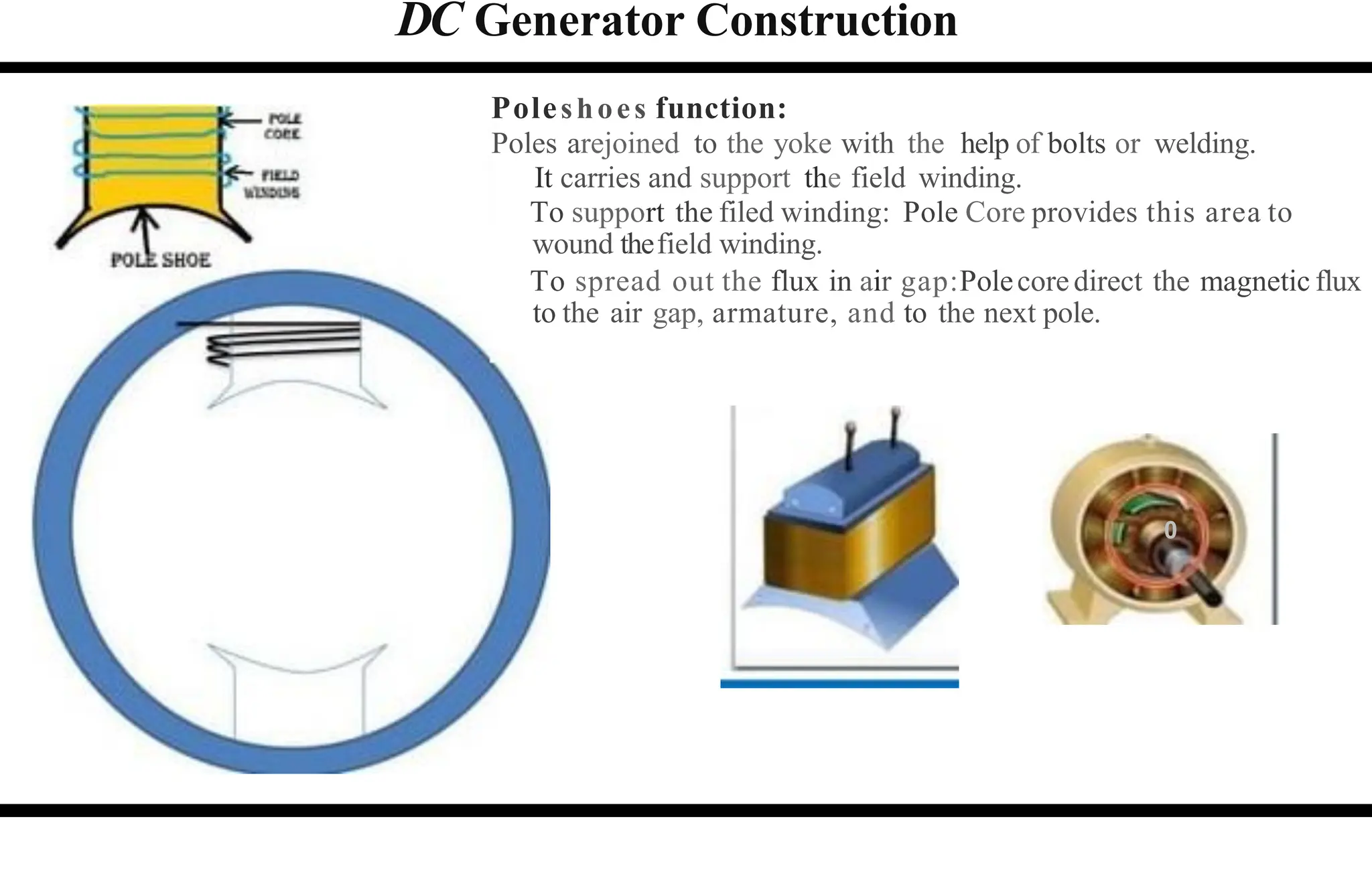
Poleshoes function:
Poles arejoined to the yoke with the help of bolts or welding.
It carries and support the field winding.
To support the filed winding: Pole Core provides this area to
wound thefield winding.
To spread out the flux in air gap:Polecoredirect the magnetic flux
to the air gap, armature, and to the next pole.
0
DCGenerator Construction
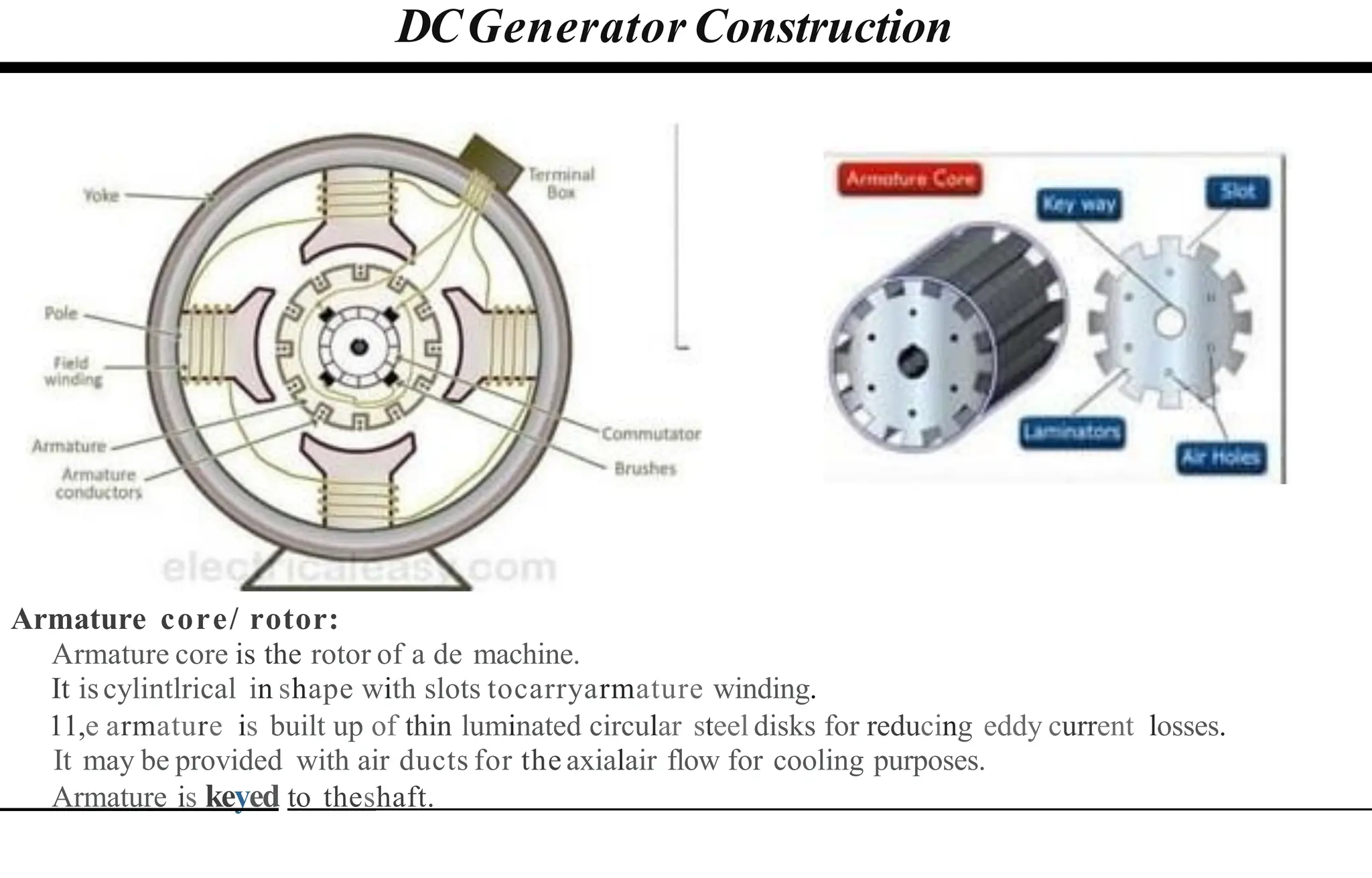
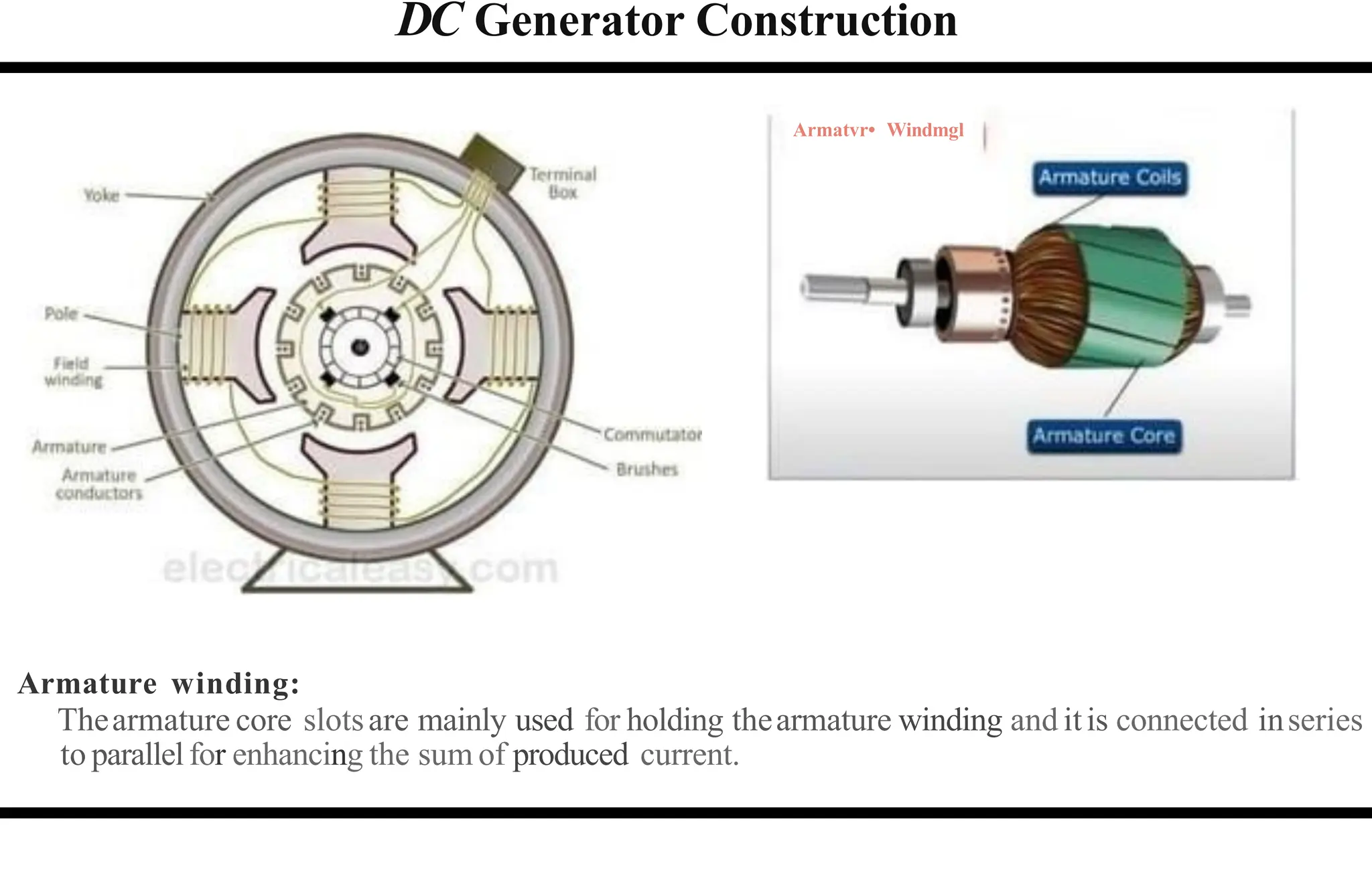
Armature core/ rotor:
Armature core is the rotor of a de machine.
It iscylintlrical in shape with slots tocarryarmature winding.
11,e armature is built up of thin luminated circular steel disks for reducing eddy current losses.
It may be provided with air ducts for the axialair flow for cooling purposes.
Armature is keyed to theshaft.
DC Generator Construction
Armatvr• Windmgl
Armature winding:
Thearmature core slotsare mainly used for holding thearmature winding and itis connected inseries
to parallelfor enhancing the sum of produced current.
DCGenerator Construction
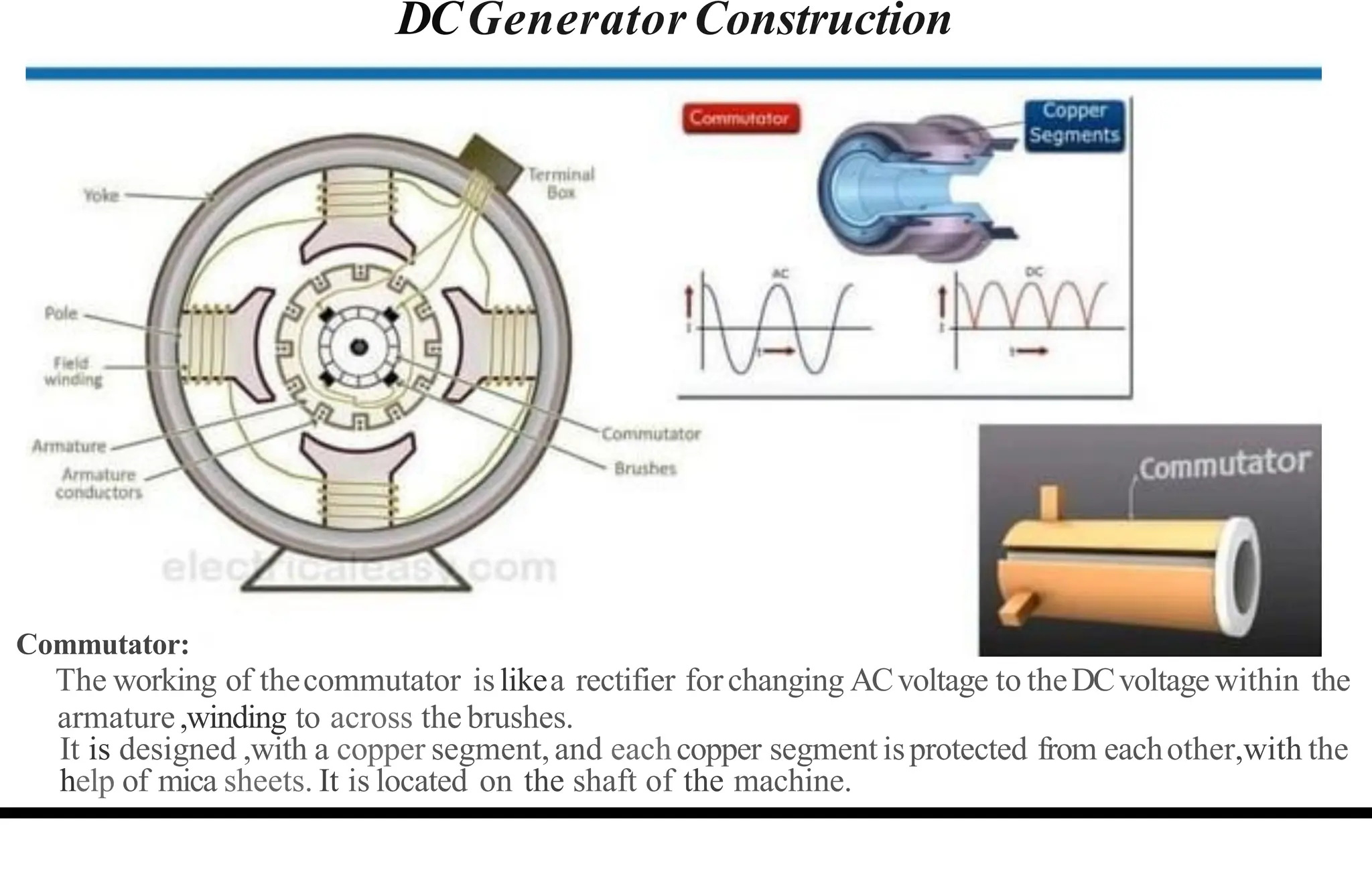
Commutator:
The working of thecommutator islikea rectifier forchanging ACvoltage to theDCvoltage within the
armature,winding to across the brushes.
It is designed ,with a copper segment,and eachcopper segment isprotected from eachother,with the
help of mica sheets. It is located on the shaft of the machine.
DC Generator Construction
Brushes:
Theelectrical connections can be ensured between the commutator as wellas the external load circuit
with the helpof brushes
Theycollect current from commutator. Made up of carbon or graphite.
Student’s Evaluation
Name the parts of D.C.Machine
Flemings left hand rule? Application?
Flemings right hand rule? Application?
Assignment
1. Draw constructional diagram of D.C. machine. State functions of different parts along with
the material used.
Wrap up
1. Principle of operation of D.C. Machine
2. As a motor, as a generator
3. Different parts of machine
4. Function of each part and construction , significance.
DC Machine_Session 1 - out of four sessions

DC Machine_Session 1 - out of four sessions

  • 1.
    Electrical Machines-1 Unit 3:DCMachines Dr.Mrs. Haripriya H. Kulkarni.
  • 2.
    Review of previousLecture • Transformer-1 phase and 3 phase
  • 3.
    Learning Objectives Comparison betweenMotor and Generator Study of D.C. Machine Basics of Machine Operating principle of Motor and Generator Different parts and its function
  • 4.
    Learning Outcomes Students willbe able to : Compare Motor and Generator Study of D.C. Machine Explain basics of Machine Demonstrate operating principle of Motor and Generator Different parts and its function
  • 5.
    Generating and MotoringAction DIFFERENCE BETWEEN MOTOR AND GENERATOR + MOTOR GENERATOR
  • 6.
    BASIS MOTOR GENERATOR FunctionThe Motor converts Electrical energy into Mechanical energy The Generator converts Mechanical energy to Electrical Energy Electricity It uses electricity. It generates electricity Driven element The Shaft of the motor is driven by the magnetic force developed between armature and field. The Shaft is attached to the rotor and is driven by mechanical force. Current Current is to be supplied to the armature of the motor In the generator current is produced in the armature windings. Rule Followed Motor follows Fleming·s Left hand rule. GeneratorfollowsFlcming's Right hand rule. Example An electric car or bike is an example of electric motor. Energy in the form of electricity is generated at the power stations. Generating and Motoring Action
  • 7.
  • 8.
    DC Generator Construction ADCGeneratorisan electrical device which converts mechanical energy intoelectrical energy. libdkiH:IHI Itmainlyconsists of three main pa1ts,i.e.magneticfieldsystem,armatm-eandcommutator andbrush gear. Theother partsofa DCGenerator are magnetic fn1n1eand yoke, pole coreand poleshoes, field orexciting coils,armaturecore and windings, brushes, end housings, bea,ings andshafts.
  • 9.
  • 10.
    DCGenerator Construction - Field winding/Pole coils: They are usually made ofcopper. Field coils are former wound and placed on each pole and are connected inseries. They are wound in such a waythat, when energized, they form alternate North and South poles.
  • 11.
    DC Generator Construction Poleshoesfunction: Poles arejoined to the yoke with the help of bolts or welding. It carries and support the field winding. To support the filed winding: Pole Core provides this area to wound thefield winding. To spread out the flux in air gap:Polecoredirect the magnetic flux to the air gap, armature, and to the next pole. 0
  • 12.
    DCGenerator Construction Armature core/rotor: Armature core is the rotor of a de machine. It iscylintlrical in shape with slots tocarryarmature winding. 11,e armature is built up of thin luminated circular steel disks for reducing eddy current losses. It may be provided with air ducts for the axialair flow for cooling purposes. Armature is keyed to theshaft.
  • 13.
    DC Generator Construction Armatvr•Windmgl Armature winding: Thearmature core slotsare mainly used for holding thearmature winding and itis connected inseries to parallelfor enhancing the sum of produced current.
  • 14.
    DCGenerator Construction Commutator: The workingof thecommutator islikea rectifier forchanging ACvoltage to theDCvoltage within the armature,winding to across the brushes. It is designed ,with a copper segment,and eachcopper segment isprotected from eachother,with the help of mica sheets. It is located on the shaft of the machine.
  • 15.
    DC Generator Construction Brushes: Theelectricalconnections can be ensured between the commutator as wellas the external load circuit with the helpof brushes Theycollect current from commutator. Made up of carbon or graphite.
  • 16.
    Student’s Evaluation Name theparts of D.C.Machine Flemings left hand rule? Application? Flemings right hand rule? Application?
  • 17.
    Assignment 1. Draw constructionaldiagram of D.C. machine. State functions of different parts along with the material used.
  • 18.
    Wrap up 1. Principleof operation of D.C. Machine 2. As a motor, as a generator 3. Different parts of machine 4. Function of each part and construction , significance.