Unlocking the housing chain through
innovation and capacity building
AUHF, Mauritius
September 2013
Contents

1. The Agence Française de Développement (AFD) at a glance
2. Housing Finance at AFD

2. Challenges and opportunities
2
1

AFD at a glance

3
1.1

Profile
 A Public (state owned) Financial (banking status) Institution,
registered under French Laws, created in 1942.
 AFD group: AFD, Proparco and FFEM (secretary)
 The main implementing agency for France’s official development
assistance: 7 billion euros of financing in 2013.
 Three main objectives :
 Reducing poverty and inequalities;
 Promoting sustainable economic growth;
 Preserving Global Public Goods (climate, biodiversity, global

public health…)

4
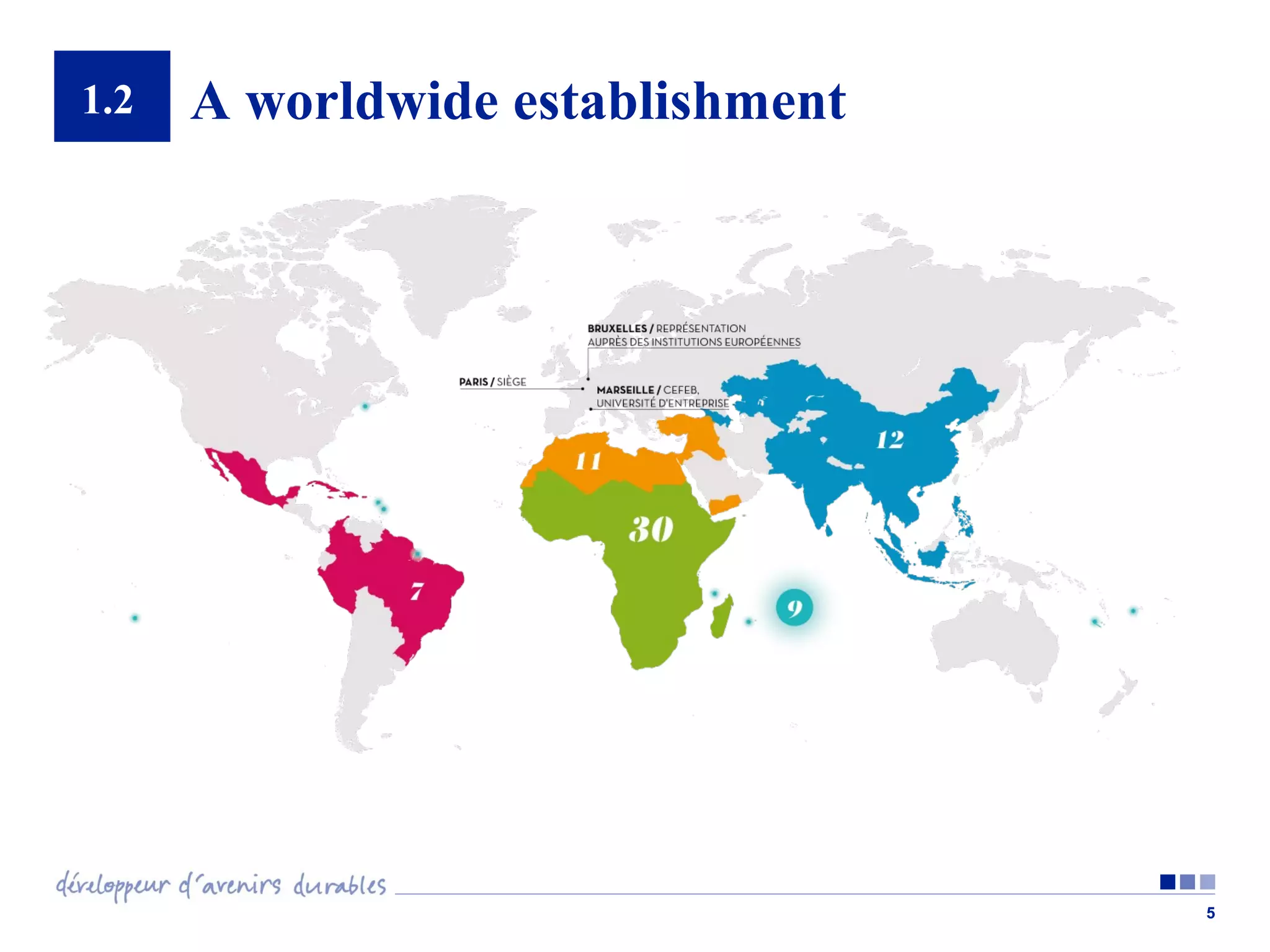
1.2

A worldwide establishment

5
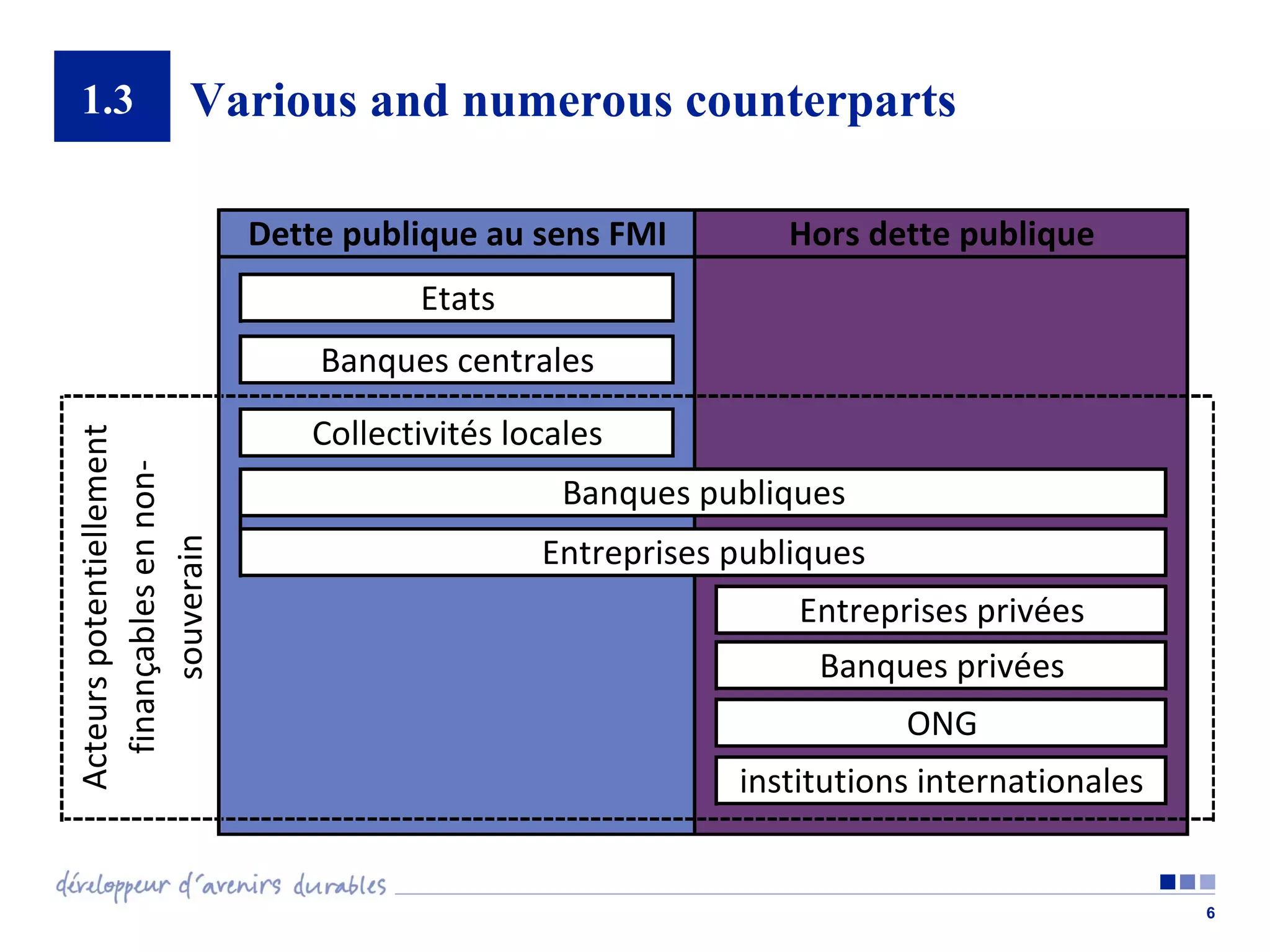
1.3

Various and numerous counterparts
Dette publique au sens FMI

Hors dette publique

Etats

Acteurs potentiellement
finançables en nonsouverain

Banques centrales
Collectivités locales
Banques publiques
Entreprises publiques
Entreprises privées
Banques privées
ONG
institutions internationales

6
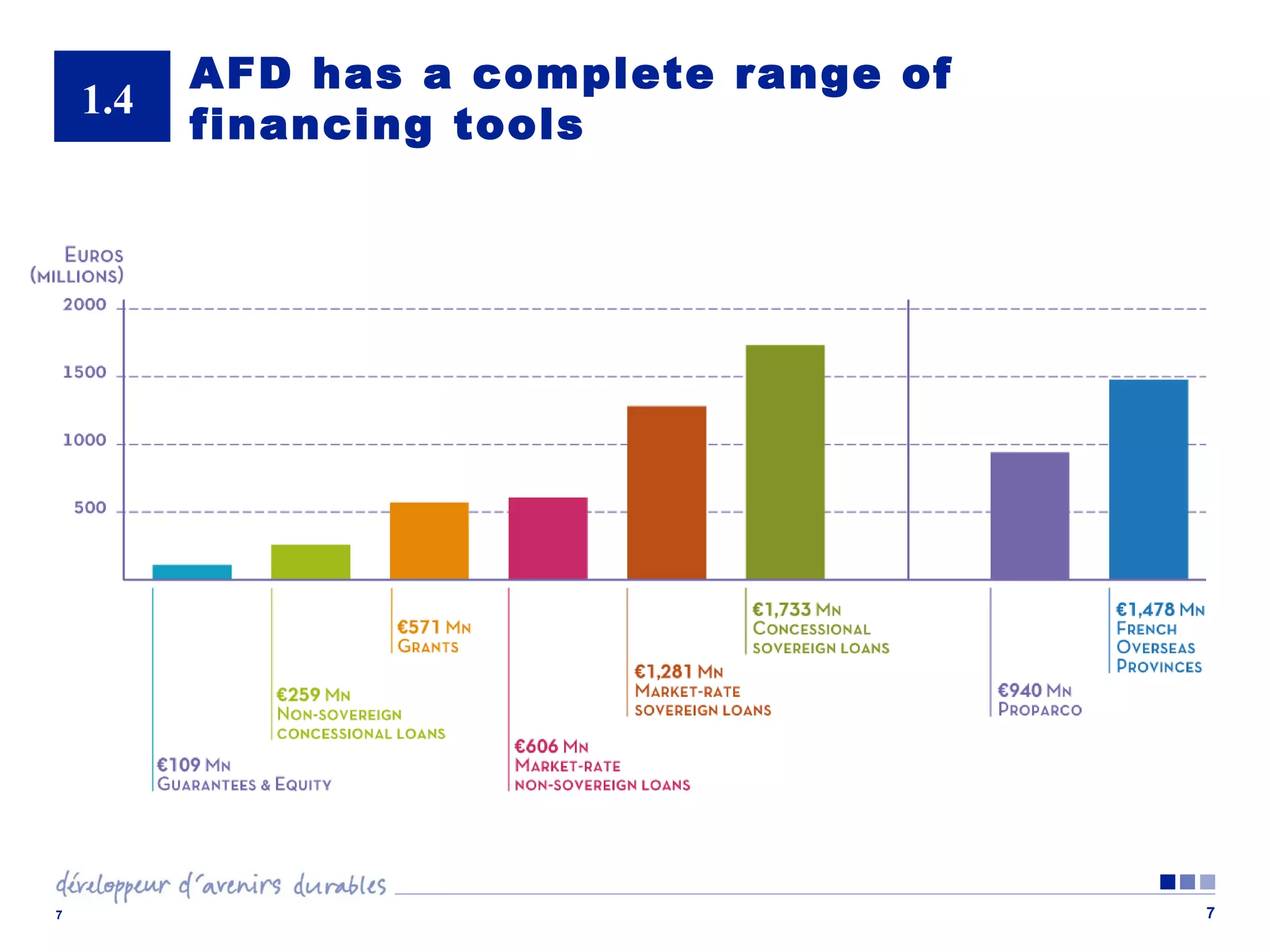
1.4

7

AFD has a complete range of
financing tools

7
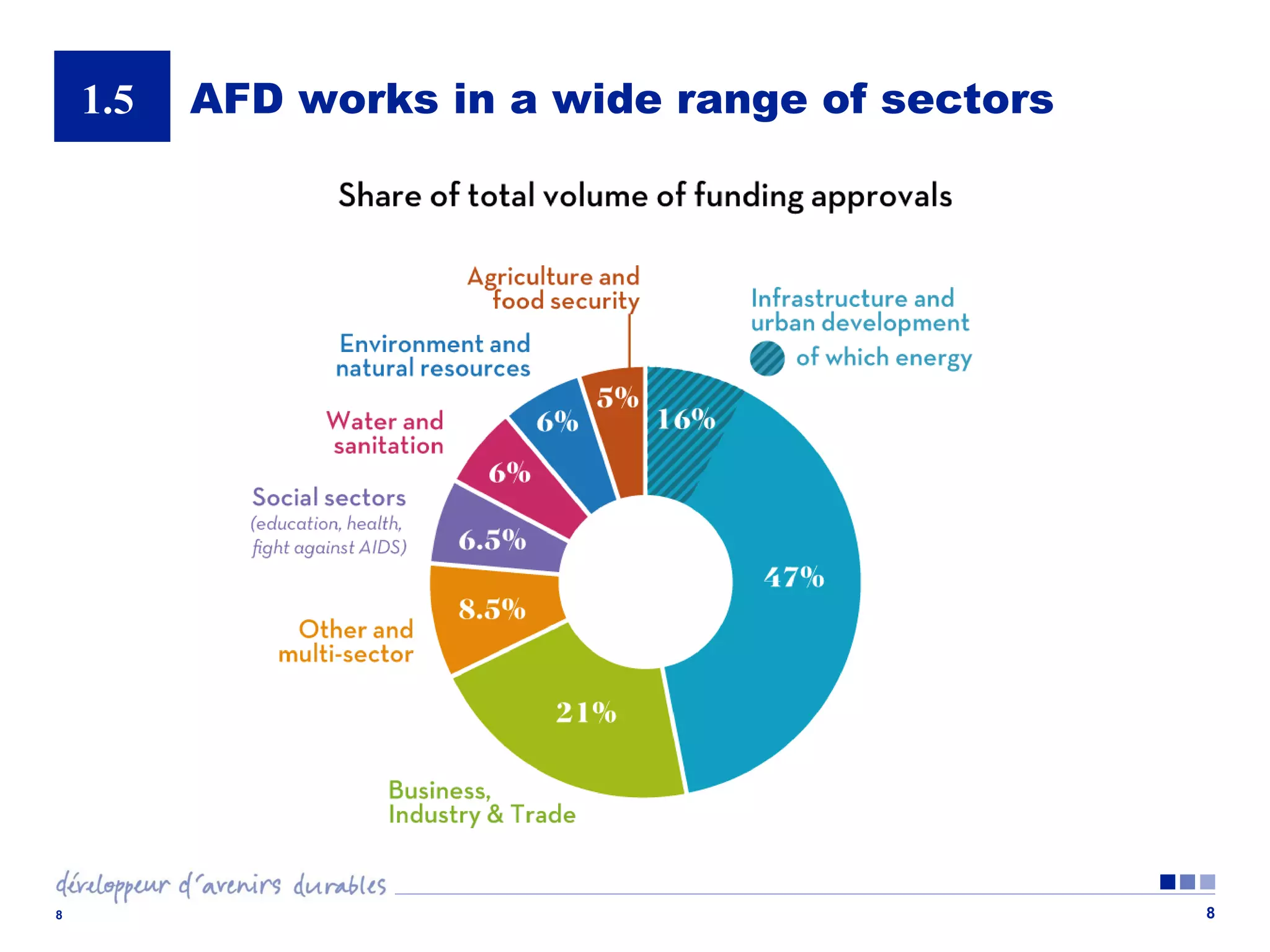
1.5

8

AFD works in a wide range of sectors

8
2. Housing Finance at AFD

9
2.1

Rationale
 Moto : support innovative and efficient initiatives to
unlock the housing chain in Africa
 Main focus:
Support housing finance to the benefit of the middle to low

income households
Promote “green and sustainable housing” initiatives

Cooperate with all stakeholders:
Work with national and local authorities to simplify the

regulation towards housing, to secure the land and to
integrate housing into the cities
Provide adequate funding
Support the private sector in innovative approaches
10
2.3

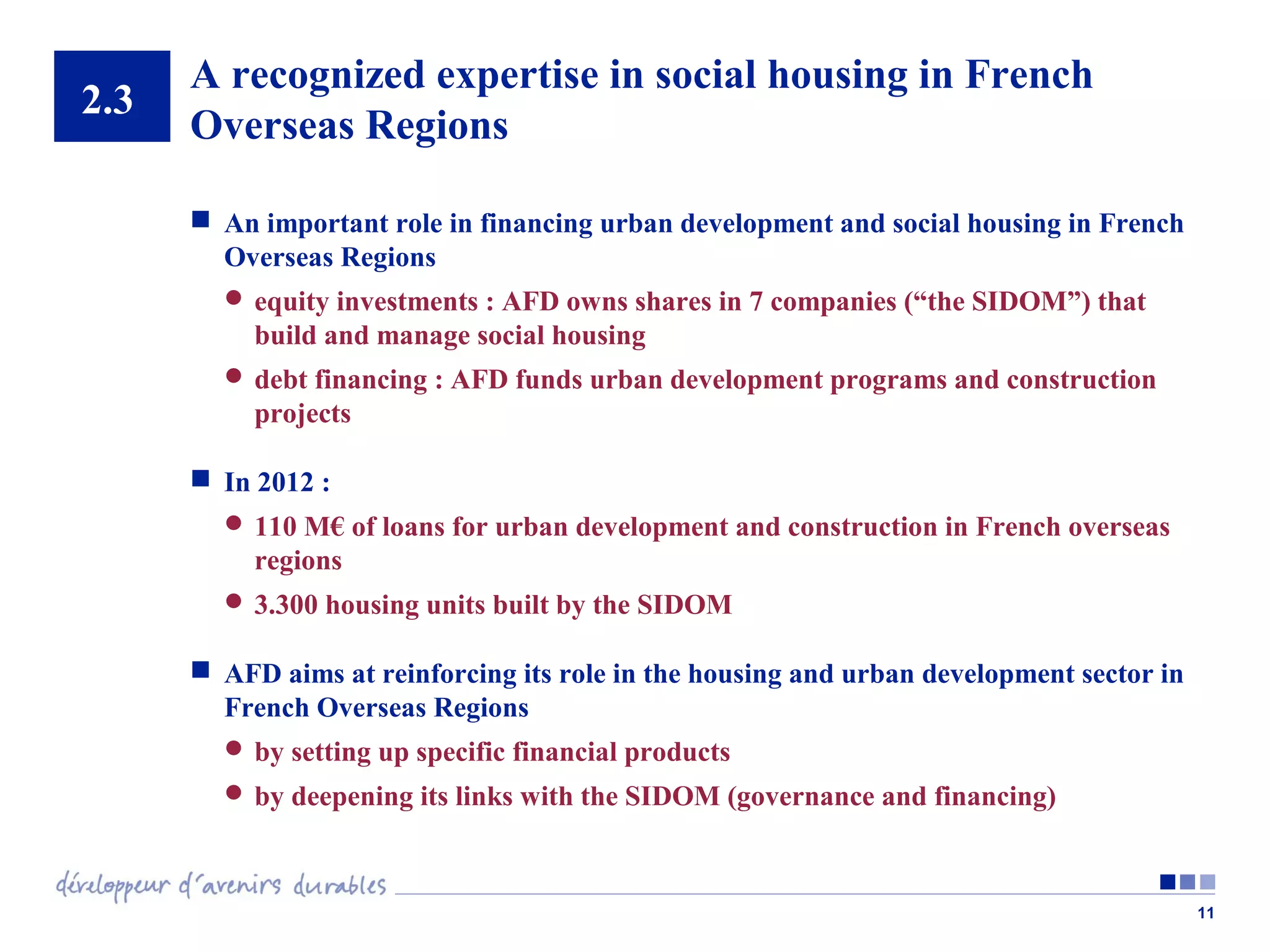
A recognized expertise in social housing in French
Overseas Regions
 An important role in financing urban development and social housing in French
Overseas Regions
 equity investments : AFD owns shares in 7 companies (“the SIDOM”) that

build and manage social housing
 debt financing : AFD funds urban development programs and construction

projects
 In 2012 :
 110 M€ of loans for urban development and construction in French overseas

regions
 3.300 housing units built by the SIDOM

 AFD aims at reinforcing its role in the housing and urban development sector in
French Overseas Regions
 by setting up specific financial products
 by deepening its links with the SIDOM (governance and financing)

11
2.4

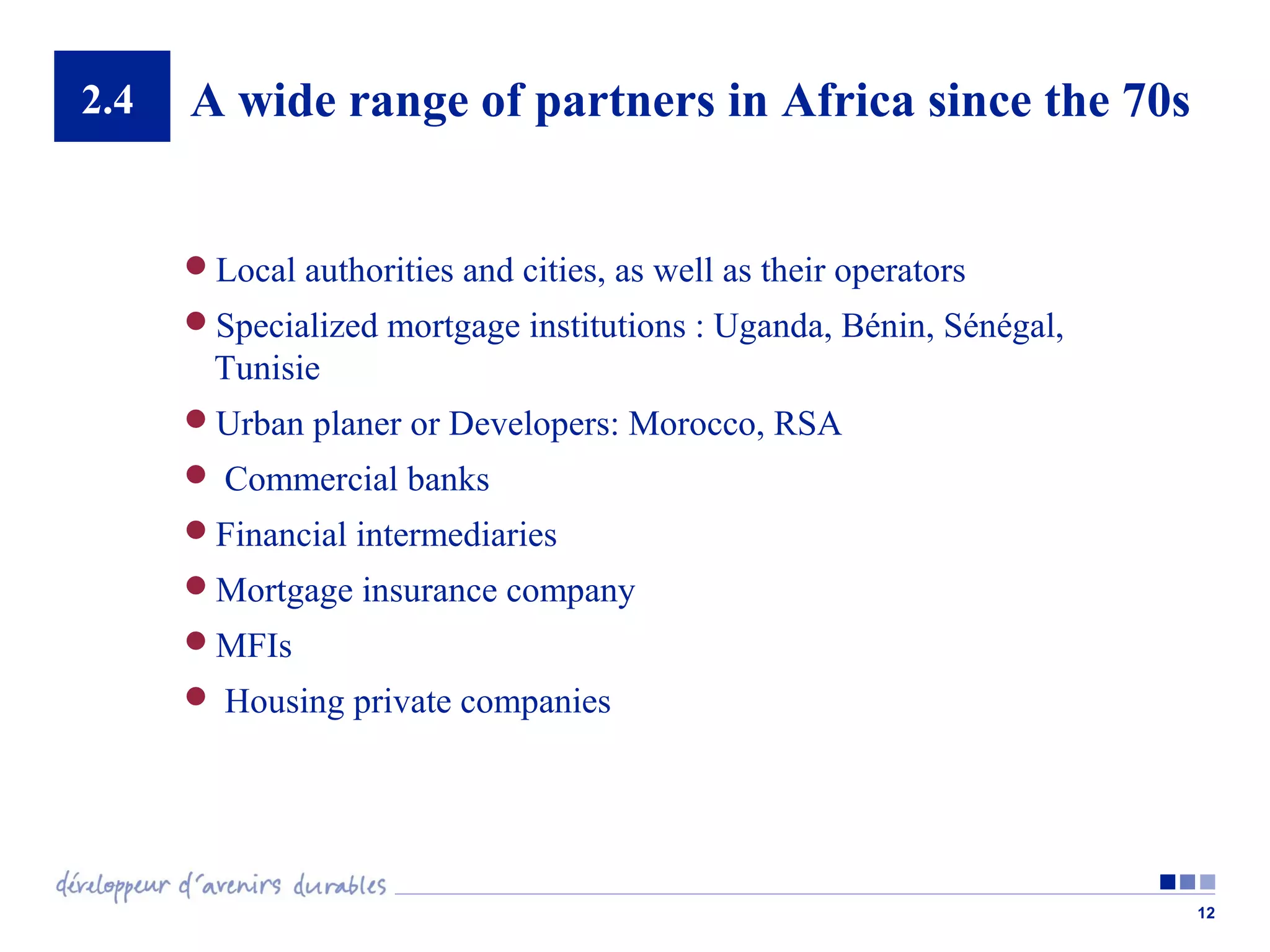
A wide range of partners in Africa since the 70s
Local authorities and cities, as well as their operators
Specialized mortgage institutions : Uganda, Bénin, Sénégal,

Tunisie
Urban planer or Developers: Morocco, RSA
 Commercial banks
Financial intermediaries
Mortgage insurance company
MFIs
 Housing private companies

12
2.5

A sample of operations

A strong partnership with Shelter Afrique
 Supporting their institutional lending activities
and their « social housing » programme through
soft loans and grant (2008 and 2013).
 Supporting the enhancement of the insitution and
financial innovation in affordable housing through
grants

13
2.5

A sample of operations

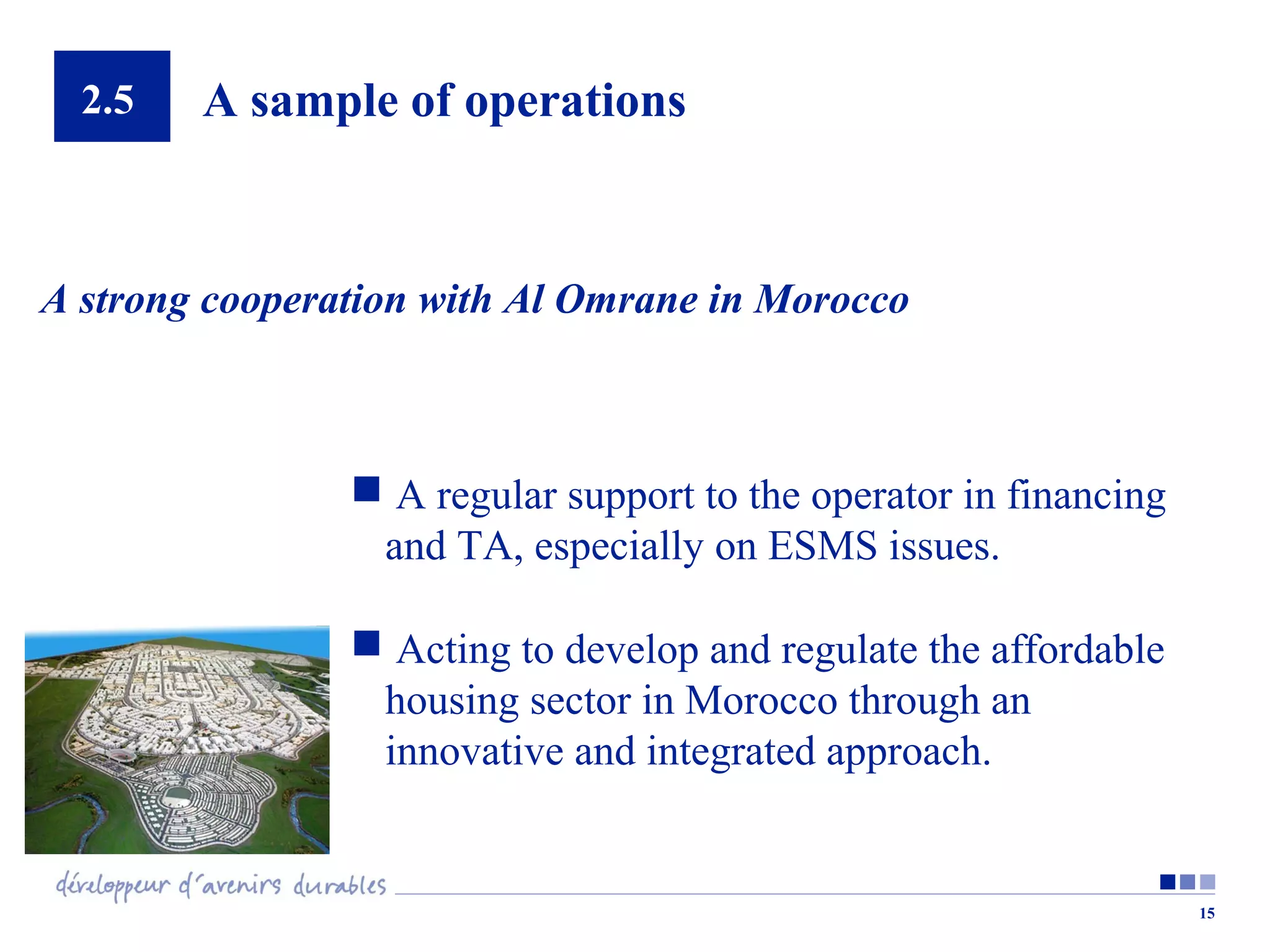
A strong cooperation with Al Omrane in Morocco

 A regular support to the operator in financing
and TA, especially on ESMS issues.
 Acting to develop and regulate the affordable
housing sector in Morocco through an
innovative and integrated approach.

15
2.5

A sample of operations

HFGA : Supporting a deposit mortgage insurance company

 Replicating a successful business model that has been
developed and run in RSA by HLGC for more than 20 years.
 Currently operating in Ghana, Rwanda, Kenya, Uganda,
Zambia and Tanzania

16
2.5

A sample of operations

LAPO in Nigeria: designing a new housing microloan, in
cooperation with Lafarge, a cement company
 Soft loan in local currency (NGN) to support the development
of a housing product (pilot phase)
 TA grant to build the MFI capacity towards housing
 Strong partnership with Lafarge, providing building TA
 Cooperation with Global Communities
 On-going process: project started in September 2013.
17
2.6

Next steps

 Share experiences and support innovation through the
Donors’ group coordinated by Making Finance Work for
Africa
 New model/methodology to operate in the sector, to
identify and support innovative initiatives
 Next “Private Sector and Development” review edited by
AFD group devoted to housing finance
18
3

3. Challenges and opportunities to address the
housing issues in Africa

19
3.1

Feedback from AFD’s experience in housing finance
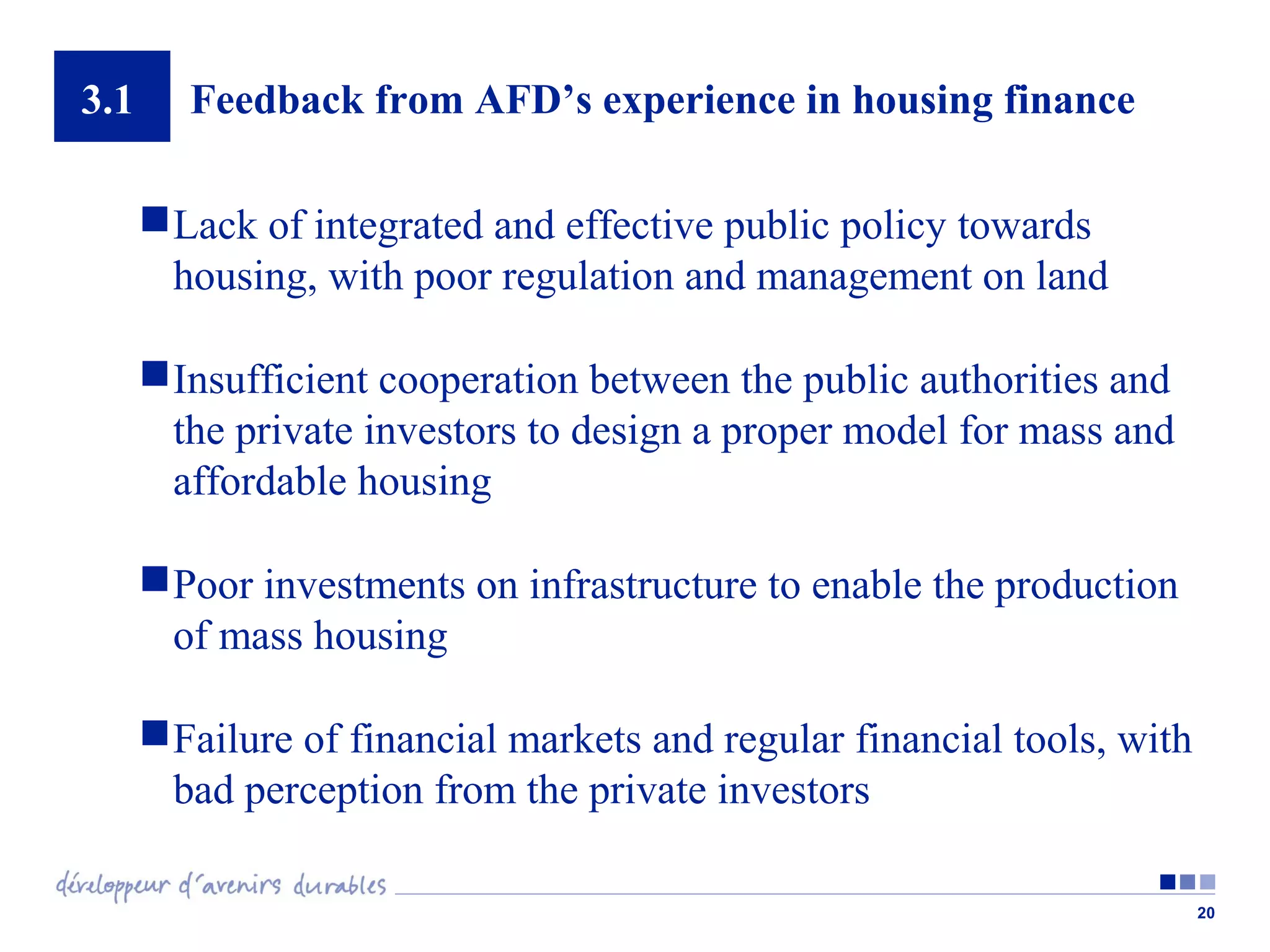
 Lack of integrated and effective public policy towards
housing, with poor regulation and management on land
 Insufficient cooperation between the public authorities and
the private investors to design a proper model for mass and
affordable housing
 Poor investments on infrastructure to enable the production
of mass housing
 Failure of financial markets and regular financial tools, with
bad perception from the private investors
20
3.2

« Thinking outside the box »
 Integrate housing in its environment and provide long
standing solutions
 Strengthen and ease the cooperation between the
government, the local authorities and the private
investors: identify mature projects for donors to support
 Create an attractive business environment to mobilize
capital for housing finance
 Structure and enhance the housing sector as a whole
(public authorities, developers, investors and end users)
with knowledge management, training and TA services
21
Many thanks for your attention
Isadora Bigourdan, Investment Officer in charge of Housing Finance,
at the Financial Institutions and Private Sector Support Division,
bigourdani@afd.fr

22

African Union for Housing Finance Conference: Unlocking the housing chain through innovation and capacity building

  • 1.
    Unlocking the housingchain through innovation and capacity building AUHF, Mauritius September 2013
  • 2.
    Contents 1. The AgenceFrançaise de Développement (AFD) at a glance 2. Housing Finance at AFD 2. Challenges and opportunities 2
  • 3.
    1 AFD at aglance 3
  • 4.
    1.1 Profile  A Public(state owned) Financial (banking status) Institution, registered under French Laws, created in 1942.  AFD group: AFD, Proparco and FFEM (secretary)  The main implementing agency for France’s official development assistance: 7 billion euros of financing in 2013.  Three main objectives :  Reducing poverty and inequalities;  Promoting sustainable economic growth;  Preserving Global Public Goods (climate, biodiversity, global public health…) 4
  • 5.
  • 6.
    1.3 Various and numerouscounterparts Dette publique au sens FMI Hors dette publique Etats Acteurs potentiellement finançables en nonsouverain Banques centrales Collectivités locales Banques publiques Entreprises publiques Entreprises privées Banques privées ONG institutions internationales 6
  • 7.
    1.4 7 AFD has acomplete range of financing tools 7
  • 8.
    1.5 8 AFD works ina wide range of sectors 8
  • 9.
  • 10.
    2.1 Rationale  Moto :support innovative and efficient initiatives to unlock the housing chain in Africa  Main focus: Support housing finance to the benefit of the middle to low income households Promote “green and sustainable housing” initiatives Cooperate with all stakeholders: Work with national and local authorities to simplify the regulation towards housing, to secure the land and to integrate housing into the cities Provide adequate funding Support the private sector in innovative approaches 10
  • 11.
    2.3 A recognized expertisein social housing in French Overseas Regions  An important role in financing urban development and social housing in French Overseas Regions  equity investments : AFD owns shares in 7 companies (“the SIDOM”) that build and manage social housing  debt financing : AFD funds urban development programs and construction projects  In 2012 :  110 M€ of loans for urban development and construction in French overseas regions  3.300 housing units built by the SIDOM  AFD aims at reinforcing its role in the housing and urban development sector in French Overseas Regions  by setting up specific financial products  by deepening its links with the SIDOM (governance and financing) 11
  • 12.
    2.4 A wide rangeof partners in Africa since the 70s Local authorities and cities, as well as their operators Specialized mortgage institutions : Uganda, Bénin, Sénégal, Tunisie Urban planer or Developers: Morocco, RSA  Commercial banks Financial intermediaries Mortgage insurance company MFIs  Housing private companies 12
  • 13.
    2.5 A sample ofoperations A strong partnership with Shelter Afrique  Supporting their institutional lending activities and their « social housing » programme through soft loans and grant (2008 and 2013).  Supporting the enhancement of the insitution and financial innovation in affordable housing through grants 13
  • 14.
    2.5 A sample ofoperations A strong cooperation with Al Omrane in Morocco  A regular support to the operator in financing and TA, especially on ESMS issues.  Acting to develop and regulate the affordable housing sector in Morocco through an innovative and integrated approach. 15
  • 15.
    2.5 A sample ofoperations HFGA : Supporting a deposit mortgage insurance company  Replicating a successful business model that has been developed and run in RSA by HLGC for more than 20 years.  Currently operating in Ghana, Rwanda, Kenya, Uganda, Zambia and Tanzania 16
  • 16.
    2.5 A sample ofoperations LAPO in Nigeria: designing a new housing microloan, in cooperation with Lafarge, a cement company  Soft loan in local currency (NGN) to support the development of a housing product (pilot phase)  TA grant to build the MFI capacity towards housing  Strong partnership with Lafarge, providing building TA  Cooperation with Global Communities  On-going process: project started in September 2013. 17
  • 17.
    2.6 Next steps  Shareexperiences and support innovation through the Donors’ group coordinated by Making Finance Work for Africa  New model/methodology to operate in the sector, to identify and support innovative initiatives  Next “Private Sector and Development” review edited by AFD group devoted to housing finance 18
  • 18.
    3 3. Challenges andopportunities to address the housing issues in Africa 19
  • 19.
    3.1 Feedback from AFD’sexperience in housing finance  Lack of integrated and effective public policy towards housing, with poor regulation and management on land  Insufficient cooperation between the public authorities and the private investors to design a proper model for mass and affordable housing  Poor investments on infrastructure to enable the production of mass housing  Failure of financial markets and regular financial tools, with bad perception from the private investors 20
  • 20.
    3.2 « Thinking outsidethe box »  Integrate housing in its environment and provide long standing solutions  Strengthen and ease the cooperation between the government, the local authorities and the private investors: identify mature projects for donors to support  Create an attractive business environment to mobilize capital for housing finance  Structure and enhance the housing sector as a whole (public authorities, developers, investors and end users) with knowledge management, training and TA services 21
  • 21.
    Many thanks foryour attention Isadora Bigourdan, Investment Officer in charge of Housing Finance, at the Financial Institutions and Private Sector Support Division, bigourdani@afd.fr 22

Editor's Notes

  • #15 Pour lutter contre le sous-équipement des quartiers Efficacité démontrée: Le taux d’urbanisation actuel de la Tunisie se rapproche sensiblement de celui des pays européens et le phénomène des extensions urbaines est en passe d’être maîtrisé. Impact sur les finances locales