Database Overview
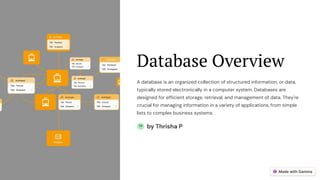
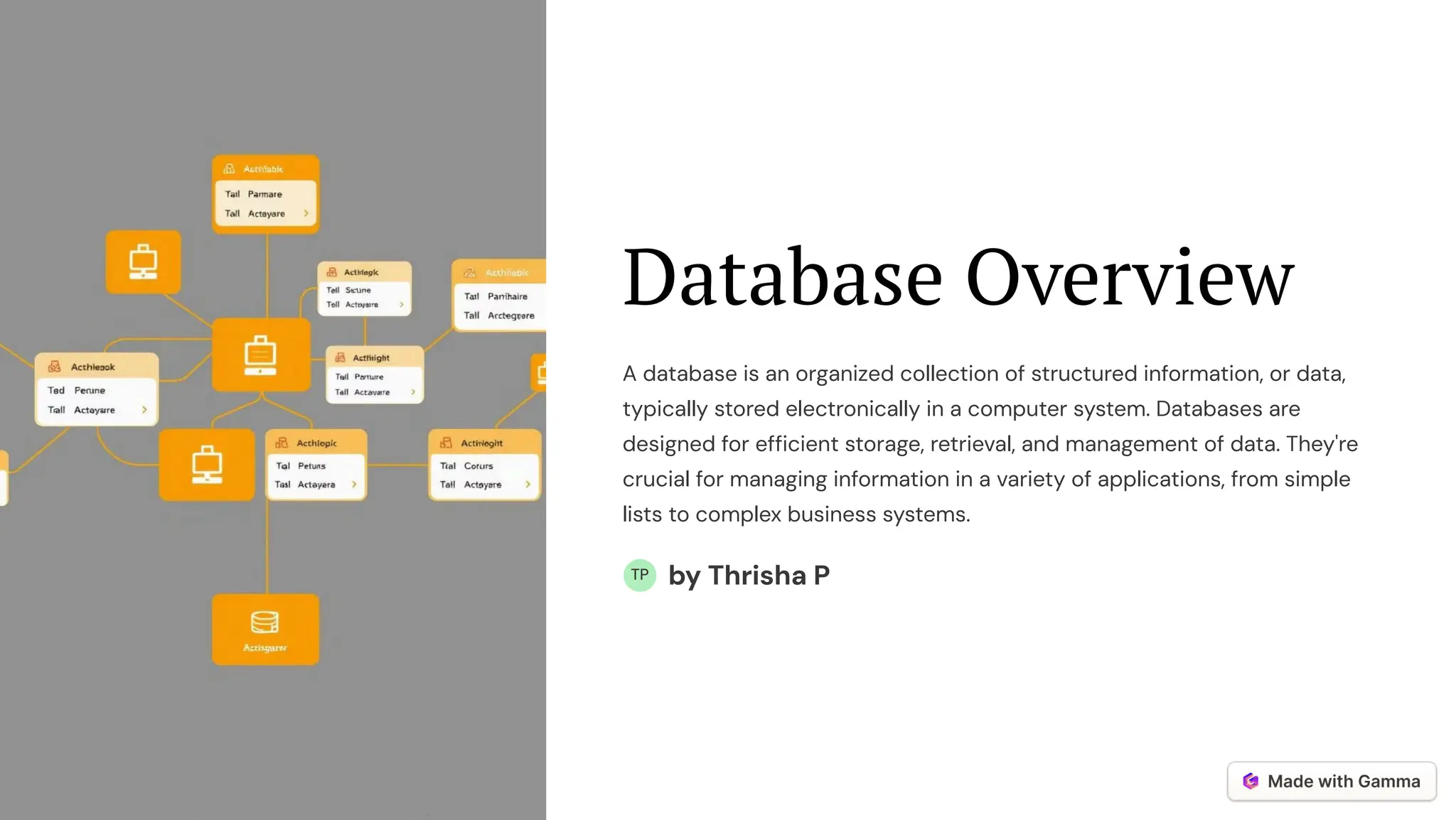
A database is an organized collection of structured information, or data,
typically stored electronically in a computer system. Databases are
designed for efficient storage, retrieval, and management of data. They're
crucial for managing information in a variety of applications, from simple
lists to complex business systems.
by Thrisha P
TP
Types of Databases
1 Hierarchical
Data is organized in a tree-
like structure with a parent-
child relationship. Each
record can only have one
parent, forming a hierarchy.
2 Network
Data is organized in a
network structure, allowing
multiple parent-child
relationships. Records can
have multiple parents,
creating a complex web of
connections.
3 Object-Oriented
Data is stored as objects,
which can be manipulated
by methods. This model
allows for complex data
structures and relationships.
4 Relational
Data is organized into tables
with rows and columns.
Relationships between tables
are established through
shared keys.
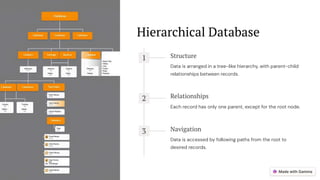
Hierarchical Database
1 Structure
Data is arranged in a tree-like hierarchy, with parent-child
relationships between records.
2 Relationships
Each record has only one parent, except for the root node.
3 Navigation
Data is accessed by following paths from the root to
desired records.
Network Database
Structure
Data is organized in a network of
interconnected records.
Relationships
Records can have multiple parent
records, creating complex connections.
Navigation
Data is accessed by following paths
through the network of relationships.
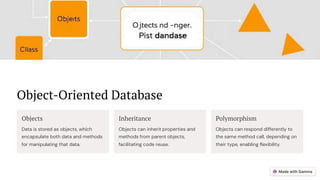
Object-Oriented Database
Objects
Data is stored as objects, which
encapsulate both data and methods
for manipulating that data.
Inheritance
Objects can inherit properties and
methods from parent objects,
facilitating code reuse.
Polymorphism
Objects can respond differently to
the same method call, depending on
their type, enabling flexibility.
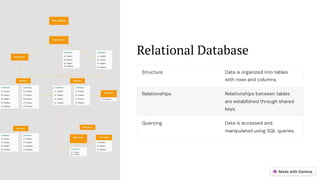
Relational Database
Structure Data is organized into tables
with rows and columns.
Relationships Relationships between tables
are established through shared
keys.
Querying Data is accessed and
manipulated using SQL queries.
Cloud Database
1
Accessibility
Databases are hosted and managed in the cloud, accessible
from anywhere.
2
Scalability
Resources can be dynamically adjusted based on demand.
3
Cost-Effectiveness
Pay-as-you-go pricing models offer flexibility and cost
optimization.
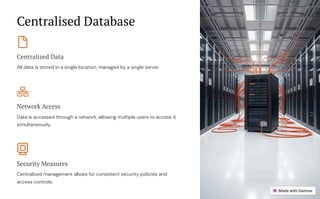
Centralised Database
Centralized Data
All data is stored in a single location, managed by a single server.
Network Access
Data is accessed through a network, allowing multiple users to access it
simultaneously.
Security Measures
Centralized management allows for consistent security policies and
access controls.
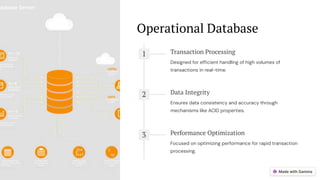
Operational Database
1 Transaction Processing
Designed for efficient handling of high volumes of
transactions in real-time.
2 Data Integrity
Ensures data consistency and accuracy through
mechanisms like ACID properties.
3 Performance Optimization
Focused on optimizing performance for rapid transaction
processing.
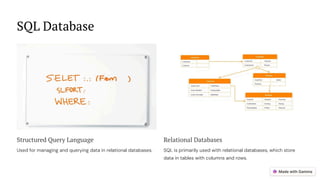
SQL Database
Structured Query Language
Used for managing and querying data in relational databases.
Relational Databases
SQL is primarily used with relational databases, which store
data in tables with columns and rows.

Database - Overview and its types of database..

  • 1.
    Database Overview A databaseis an organized collection of structured information, or data, typically stored electronically in a computer system. Databases are designed for efficient storage, retrieval, and management of data. They're crucial for managing information in a variety of applications, from simple lists to complex business systems. by Thrisha P TP
  • 2.
    Types of Databases 1Hierarchical Data is organized in a tree- like structure with a parent- child relationship. Each record can only have one parent, forming a hierarchy. 2 Network Data is organized in a network structure, allowing multiple parent-child relationships. Records can have multiple parents, creating a complex web of connections. 3 Object-Oriented Data is stored as objects, which can be manipulated by methods. This model allows for complex data structures and relationships. 4 Relational Data is organized into tables with rows and columns. Relationships between tables are established through shared keys.
  • 3.
    Hierarchical Database 1 Structure Datais arranged in a tree-like hierarchy, with parent-child relationships between records. 2 Relationships Each record has only one parent, except for the root node. 3 Navigation Data is accessed by following paths from the root to desired records.
  • 4.
    Network Database Structure Data isorganized in a network of interconnected records. Relationships Records can have multiple parent records, creating complex connections. Navigation Data is accessed by following paths through the network of relationships.
  • 5.
    Object-Oriented Database Objects Data isstored as objects, which encapsulate both data and methods for manipulating that data. Inheritance Objects can inherit properties and methods from parent objects, facilitating code reuse. Polymorphism Objects can respond differently to the same method call, depending on their type, enabling flexibility.
  • 6.
    Relational Database Structure Datais organized into tables with rows and columns. Relationships Relationships between tables are established through shared keys. Querying Data is accessed and manipulated using SQL queries.
  • 7.
    Cloud Database 1 Accessibility Databases arehosted and managed in the cloud, accessible from anywhere. 2 Scalability Resources can be dynamically adjusted based on demand. 3 Cost-Effectiveness Pay-as-you-go pricing models offer flexibility and cost optimization.
  • 8.
    Centralised Database Centralized Data Alldata is stored in a single location, managed by a single server. Network Access Data is accessed through a network, allowing multiple users to access it simultaneously. Security Measures Centralized management allows for consistent security policies and access controls.
  • 9.
    Operational Database 1 TransactionProcessing Designed for efficient handling of high volumes of transactions in real-time. 2 Data Integrity Ensures data consistency and accuracy through mechanisms like ACID properties. 3 Performance Optimization Focused on optimizing performance for rapid transaction processing.
  • 10.
    SQL Database Structured QueryLanguage Used for managing and querying data in relational databases. Relational Databases SQL is primarily used with relational databases, which store data in tables with columns and rows.