Data Visualization 101: Telling
Stories with Data
Transform complex numbers into compelling narratives that resonate.
Bridge the gap between data and human understanding through visual
storytelling.
Unlock powerful insights that drive better decisions and create deeper
connections with your audience.
by Ozías Rondón
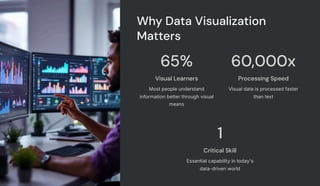
Why Data Visualization
Matters
65%
Visual Learners
Most people understand
information better through visual
means
60,000x
Processing Speed
Visual data is processed faster
than text
1
Critical Skill
Essential capability in today's
data-driven world
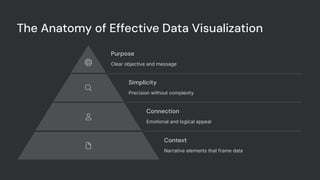
The Anatomy of Effective Data Visualization
Purpose
Clear objective and message
Simplicity
Precision without complexity
Connection
Emotional and logical appeal
Context
Narrative elements that frame data
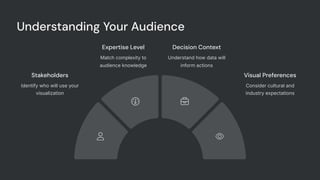
Understanding Your Audience
Stakeholders
Identify who will use your
visualization
Expertise Level
Match complexity to
audience knowledge
Decision Context
Understand how data will
inform actions
Visual Preferences
Consider cultural and
industry expectations
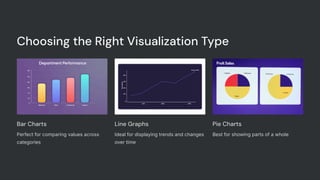
Choosing the Right Visualization Type
Bar Charts
Perfect for comparing values across
categories
Line Graphs
Ideal for displaying trends and changes
over time
Pie Charts
Best for showing parts of a whole
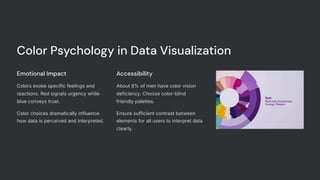
Color Psychology in Data Visualization
Emotional Impact
Colors evoke specific feelings and
reactions. Red signals urgency while
blue conveys trust.
Color choices dramatically influence
how data is perceived and interpreted.
Accessibility
About 8% of men have color vision
deficiency. Choose color-blind
friendly palettes.
Ensure sufficient contrast between
elements for all users to interpret data
clearly.
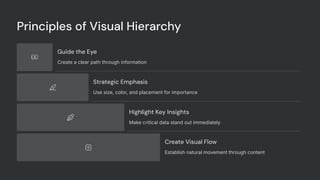
Principles of Visual Hierarchy
Guide the Eye
Create a clear path through information
Strategic Emphasis
Use size, color, and placement for importance
Highlight Key Insights
Make critical data stand out immediately
Create Visual Flow
Establish natural movement through content
Common Data Visualization
Mistakes
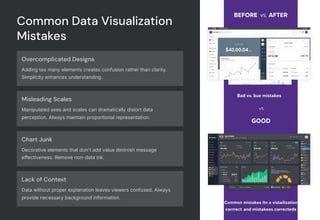
Overcomplicated Designs
Adding too many elements creates confusion rather than clarity.
Simplicity enhances understanding.
Misleading Scales
Manipulated axes and scales can dramatically distort data
perception. Always maintain proportional representation.
Chart Junk
Decorative elements that don't add value diminish message
effectiveness. Remove non-data ink.
Lack of Context
Data without proper explanation leaves viewers confused. Always
provide necessary background information.
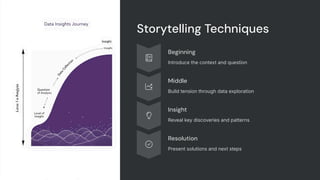
Storytelling Techniques
Beginning
Introduce the context and question
Middle
Build tension through data exploration
Insight
Reveal key discoveries and patterns
Resolution
Present solutions and next steps
Data Cleaning and
Preparation
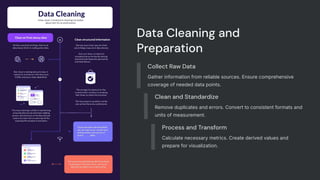
Collect Raw Data
Gather information from reliable sources. Ensure comprehensive
coverage of needed data points.
Clean and Standardize
Remove duplicates and errors. Convert to consistent formats and
units of measurement.
Process and Transform
Calculate necessary metrics. Create derived values and
prepare for visualization.
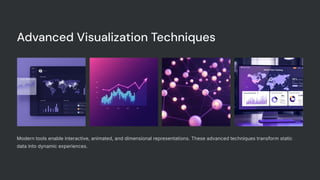
Advanced Visualization Techniques
Modern tools enable interactive, animated, and dimensional representations. These advanced techniques transform static
data into dynamic experiences.
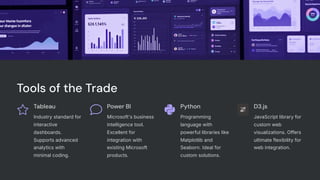
Tools of the Trade
Tableau
Industry standard for
interactive
dashboards.
Supports advanced
analytics with
minimal coding.
Power BI
Microsoft's business
intelligence tool.
Excellent for
integration with
existing Microsoft
products.
Python
Programming
language with
powerful libraries like
Matplotlib and
Seaborn. Ideal for
custom solutions.
D3.js
JavaScript library for
custom web
visualizations. Offers
ultimate flexibility for
web integration.
Best Practices for
Presentation
Simplify Complex Information
Break down intricate data into digestible components. Focus on
the essential message.
Consistent Design Language
Use cohesive colors, fonts, and styling. Maintain visual
consistency throughout your presentation.
Clear Annotations
Label important elements and explain key points. Guide viewers
through data interpretation.
Narrative Structure
Build a coherent story with your data. Connect insights to form a
compelling argument.
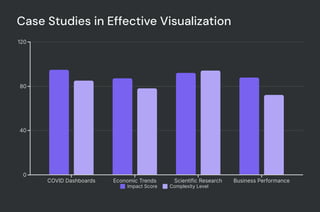
Case Studies in Effective Visualization
0
40
80
120
COVID Dashboards Economic Trends Scientific Research Business Performance
Impact Score Complexity Level
The Future of Data Visualization
3
AI-Powered Tools
Automatic insight generation and
visualization recommendations
Machine Learning
Pattern recognition and predictive
visualizations
Immersive Experiences
VR and AR data exploration
environments
Real-Time Global Data
Interconnected visualization of
worldwide information
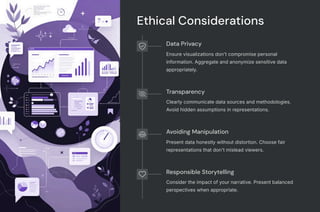
Ethical Considerations
Data Privacy
Ensure visualizations don't compromise personal
information. Aggregate and anonymize sensitive data
appropriately.
Transparency
Clearly communicate data sources and methodologies.
Avoid hidden assumptions in representations.
Avoiding Manipulation
Present data honestly without distortion. Choose fair
representations that don't mislead viewers.
Responsible Storytelling
Consider the impact of your narrative. Present balanced
perspectives when appropriate.
Developing Your Skills
Take Online Courses
Follow structured learning paths through platforms like Coursera
and DataCamp.
Practice with Real Datasets
Apply techniques to public datasets from Kaggle or data.gov.
Follow Industry Experts
Learn from leaders like Edward Tufte, Alberto Cairo, and Nadieh
Bremer.
Join Communities
Participate in forums and attend conferences to share and learn.
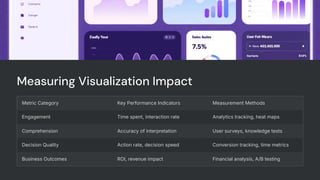
Measuring Visualization Impact
Metric Category Key Performance Indicators Measurement Methods
Engagement Time spent, interaction rate Analytics tracking, heat maps
Comprehension Accuracy of interpretation User surveys, knowledge tests
Decision Quality Action rate, decision speed Conversion tracking, time metrics
Business Outcomes ROI, revenue impact Financial analysis, A/B testing
Call to Action: AI Content
Engine
Transform Your Data
Storytelling
Leverage AI to create
compelling visualizations
automatically. Generate
insights from complex datasets
with minimal effort.
Save Time and
Resources
Reduce visualization creation
time by up to 70%. Focus on
strategy rather than technical
implementation.
Download Now
Visit: www.checkout-ds24.com/redir/599320/oziasrondon2/
Start your free trial today and revolutionize your data presentations.
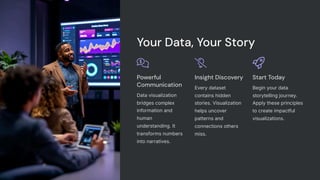
Your Data, Your Story
Powerful
Communication
Data visualization
bridges complex
information and
human
understanding. It
transforms numbers
into narratives.
Insight Discovery
Every dataset
contains hidden
stories. Visualization
helps uncover
patterns and
connections others
miss.
Start Today
Begin your data
storytelling journey.
Apply these principles
to create impactful
visualizations.

Data-Visualization-101-Telling-Stories-with-Data

  • 1.
    Data Visualization 101:Telling Stories with Data Transform complex numbers into compelling narratives that resonate. Bridge the gap between data and human understanding through visual storytelling. Unlock powerful insights that drive better decisions and create deeper connections with your audience. by Ozías Rondón
  • 2.
    Why Data Visualization Matters 65% VisualLearners Most people understand information better through visual means 60,000x Processing Speed Visual data is processed faster than text 1 Critical Skill Essential capability in today's data-driven world
  • 3.
    The Anatomy ofEffective Data Visualization Purpose Clear objective and message Simplicity Precision without complexity Connection Emotional and logical appeal Context Narrative elements that frame data
  • 4.
    Understanding Your Audience Stakeholders Identifywho will use your visualization Expertise Level Match complexity to audience knowledge Decision Context Understand how data will inform actions Visual Preferences Consider cultural and industry expectations
  • 5.
    Choosing the RightVisualization Type Bar Charts Perfect for comparing values across categories Line Graphs Ideal for displaying trends and changes over time Pie Charts Best for showing parts of a whole
  • 6.
    Color Psychology inData Visualization Emotional Impact Colors evoke specific feelings and reactions. Red signals urgency while blue conveys trust. Color choices dramatically influence how data is perceived and interpreted. Accessibility About 8% of men have color vision deficiency. Choose color-blind friendly palettes. Ensure sufficient contrast between elements for all users to interpret data clearly.
  • 7.
    Principles of VisualHierarchy Guide the Eye Create a clear path through information Strategic Emphasis Use size, color, and placement for importance Highlight Key Insights Make critical data stand out immediately Create Visual Flow Establish natural movement through content
  • 8.
    Common Data Visualization Mistakes OvercomplicatedDesigns Adding too many elements creates confusion rather than clarity. Simplicity enhances understanding. Misleading Scales Manipulated axes and scales can dramatically distort data perception. Always maintain proportional representation. Chart Junk Decorative elements that don't add value diminish message effectiveness. Remove non-data ink. Lack of Context Data without proper explanation leaves viewers confused. Always provide necessary background information.
  • 9.
    Storytelling Techniques Beginning Introduce thecontext and question Middle Build tension through data exploration Insight Reveal key discoveries and patterns Resolution Present solutions and next steps
  • 10.
    Data Cleaning and Preparation CollectRaw Data Gather information from reliable sources. Ensure comprehensive coverage of needed data points. Clean and Standardize Remove duplicates and errors. Convert to consistent formats and units of measurement. Process and Transform Calculate necessary metrics. Create derived values and prepare for visualization.
  • 11.
    Advanced Visualization Techniques Moderntools enable interactive, animated, and dimensional representations. These advanced techniques transform static data into dynamic experiences.
  • 12.
    Tools of theTrade Tableau Industry standard for interactive dashboards. Supports advanced analytics with minimal coding. Power BI Microsoft's business intelligence tool. Excellent for integration with existing Microsoft products. Python Programming language with powerful libraries like Matplotlib and Seaborn. Ideal for custom solutions. D3.js JavaScript library for custom web visualizations. Offers ultimate flexibility for web integration.
  • 13.
    Best Practices for Presentation SimplifyComplex Information Break down intricate data into digestible components. Focus on the essential message. Consistent Design Language Use cohesive colors, fonts, and styling. Maintain visual consistency throughout your presentation. Clear Annotations Label important elements and explain key points. Guide viewers through data interpretation. Narrative Structure Build a coherent story with your data. Connect insights to form a compelling argument.
  • 14.
    Case Studies inEffective Visualization 0 40 80 120 COVID Dashboards Economic Trends Scientific Research Business Performance Impact Score Complexity Level
  • 15.
    The Future ofData Visualization 3 AI-Powered Tools Automatic insight generation and visualization recommendations Machine Learning Pattern recognition and predictive visualizations Immersive Experiences VR and AR data exploration environments Real-Time Global Data Interconnected visualization of worldwide information
  • 16.
    Ethical Considerations Data Privacy Ensurevisualizations don't compromise personal information. Aggregate and anonymize sensitive data appropriately. Transparency Clearly communicate data sources and methodologies. Avoid hidden assumptions in representations. Avoiding Manipulation Present data honestly without distortion. Choose fair representations that don't mislead viewers. Responsible Storytelling Consider the impact of your narrative. Present balanced perspectives when appropriate.
  • 17.
    Developing Your Skills TakeOnline Courses Follow structured learning paths through platforms like Coursera and DataCamp. Practice with Real Datasets Apply techniques to public datasets from Kaggle or data.gov. Follow Industry Experts Learn from leaders like Edward Tufte, Alberto Cairo, and Nadieh Bremer. Join Communities Participate in forums and attend conferences to share and learn.
  • 18.
    Measuring Visualization Impact MetricCategory Key Performance Indicators Measurement Methods Engagement Time spent, interaction rate Analytics tracking, heat maps Comprehension Accuracy of interpretation User surveys, knowledge tests Decision Quality Action rate, decision speed Conversion tracking, time metrics Business Outcomes ROI, revenue impact Financial analysis, A/B testing
  • 19.
    Call to Action:AI Content Engine Transform Your Data Storytelling Leverage AI to create compelling visualizations automatically. Generate insights from complex datasets with minimal effort. Save Time and Resources Reduce visualization creation time by up to 70%. Focus on strategy rather than technical implementation. Download Now Visit: www.checkout-ds24.com/redir/599320/oziasrondon2/ Start your free trial today and revolutionize your data presentations.
  • 20.
    Your Data, YourStory Powerful Communication Data visualization bridges complex information and human understanding. It transforms numbers into narratives. Insight Discovery Every dataset contains hidden stories. Visualization helps uncover patterns and connections others miss. Start Today Begin your data storytelling journey. Apply these principles to create impactful visualizations.