DATA SECURITY AND MPS
WHAT YOU NEED TO KNOW ABOUT
KEEPING YOUR DATA SECURE
THE INFORMATION AGE
Sometimes referred to as the Computer Age or Digital Age, the Information Age
refers to the shift from traditional industry to an economy based on information
computerization. It’s a catchall term for the 21st century where information travels the
world in seconds and is more accessible than at any other point in history.
There are more than 1.2 billion
websites today.
Source: Cybersecurity Ventures
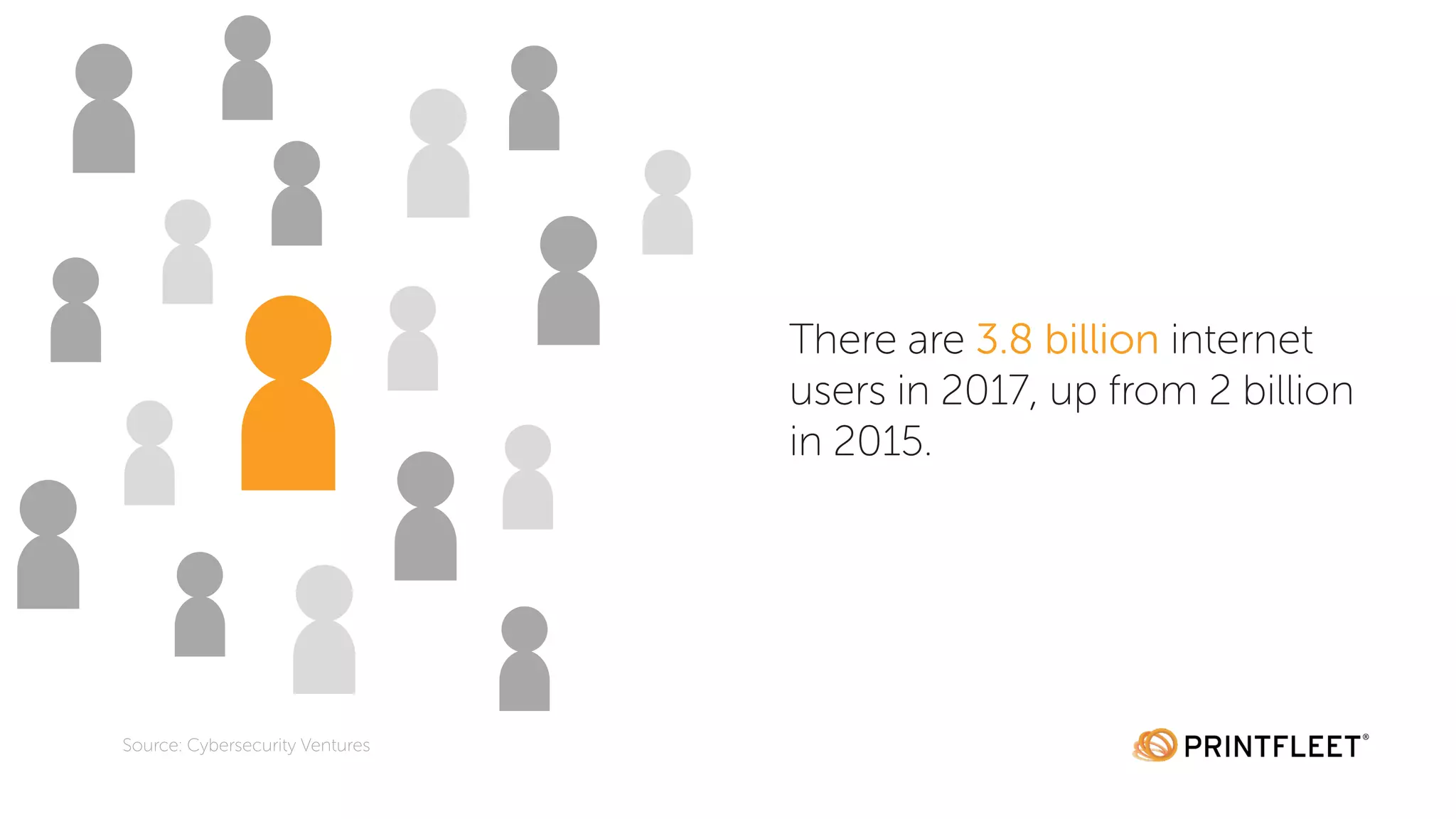
There are 3.8 billion internet
users in 2017, up from 2 billion
in 2015.
Source: Cybersecurity Ventures
THE CYBERSECURITY LANDSCAPE
The world runs on data. Banks, schools, hospitals, governments and business – all of
these organizations collect and use data on a regular basis. More and more of our
day-to-day activities are done online, from banking to shopping to refilling
prescriptions. With so much information being shared and exchanged online every
day, data security has never been more important.
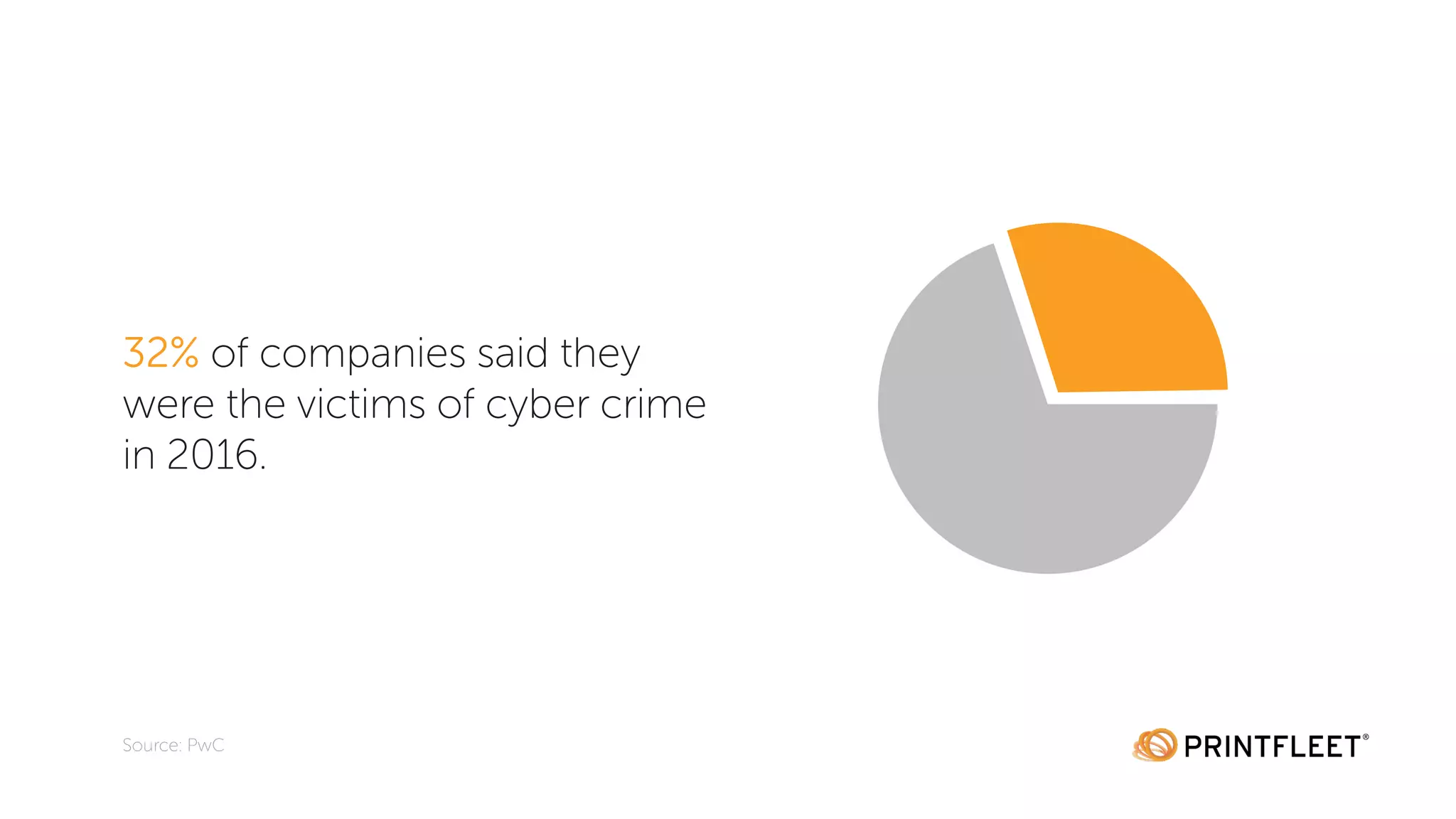
32% of companies said they
were the victims of cyber crime
in 2016.
Source: PwC
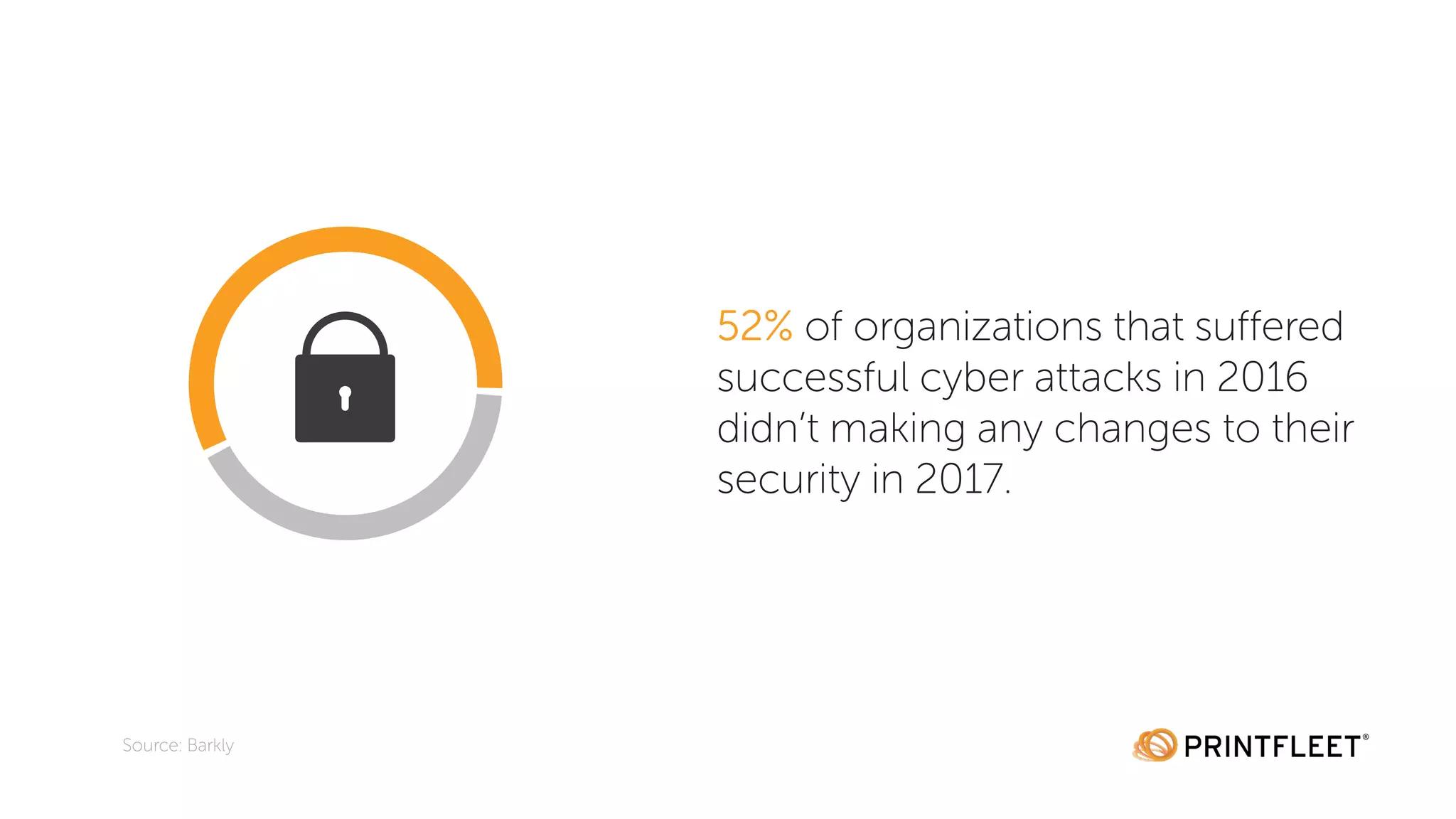
52% of organizations that suffered
successful cyber attacks in 2016
didn’t making any changes to their
security in 2017.
Source: Barkly
Global cybersecurity spending
expected to exceed $1 trillion
over the next five years.
Source: Cybersecurity Ventures
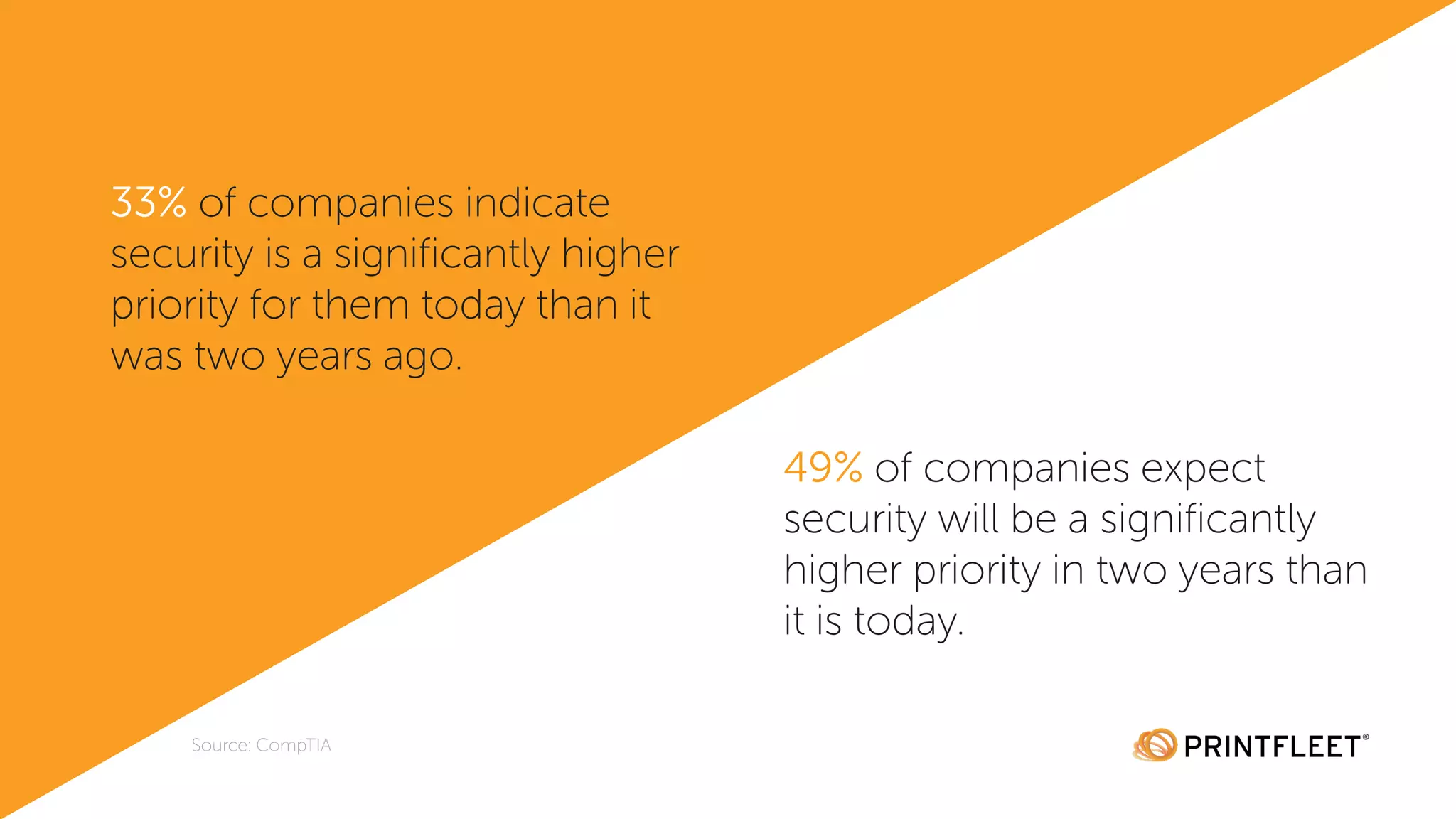
33% of companies indicate
security is a significantly higher
priority for them today than it
was two years ago.
Source: CompTIA
49% of companies expect
security will be a significantly
higher priority in two years than
it is today.
Human error is the number one
cause of data breaches.
Source: Information Commissioner's Office (ICO)
?
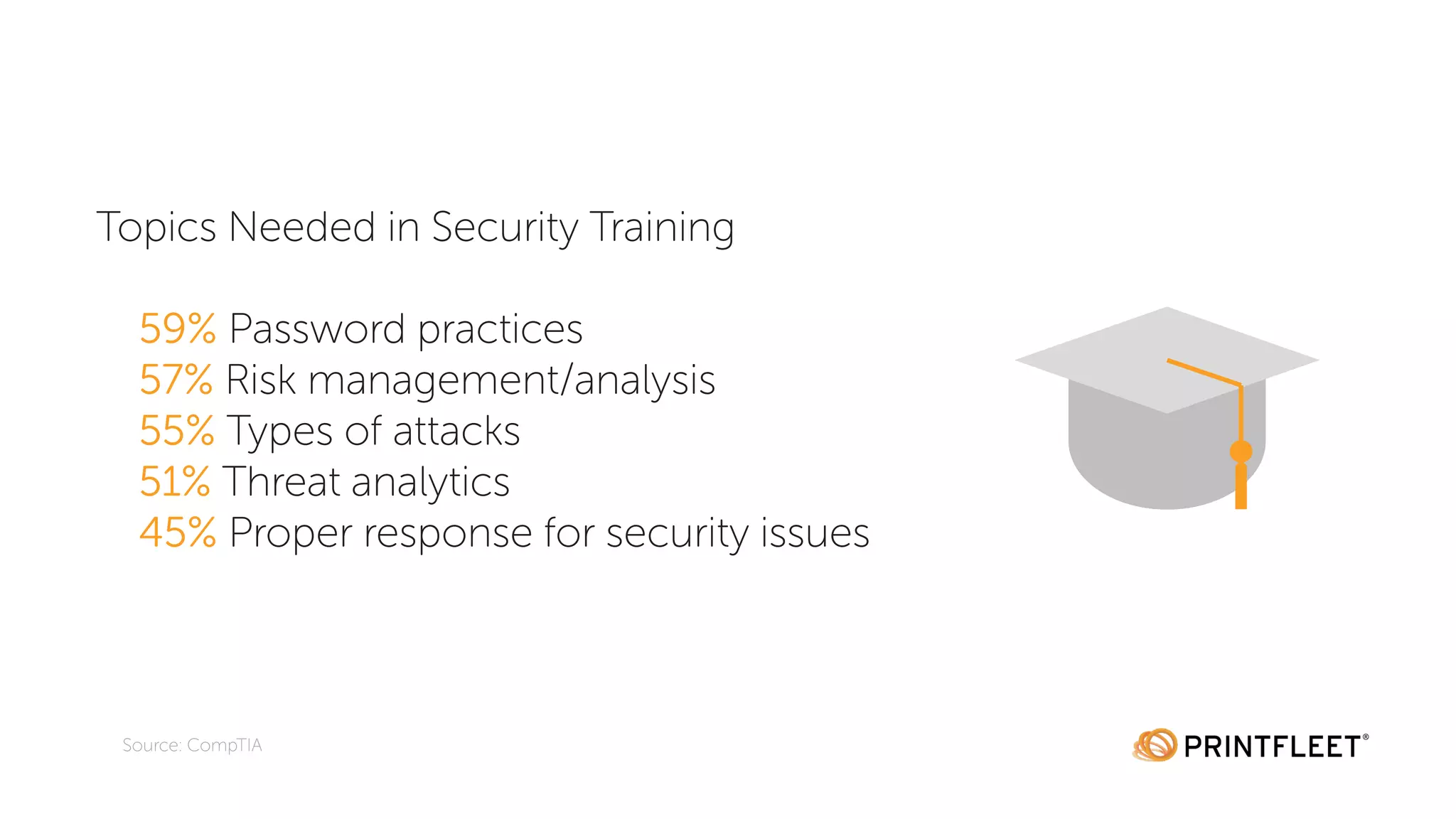
Topics Needed in Security Training
59% Password practices
57% Risk management/analysis
55% Types of attacks
51% Threat analytics
45% Proper response for security issues
Source: CompTIA
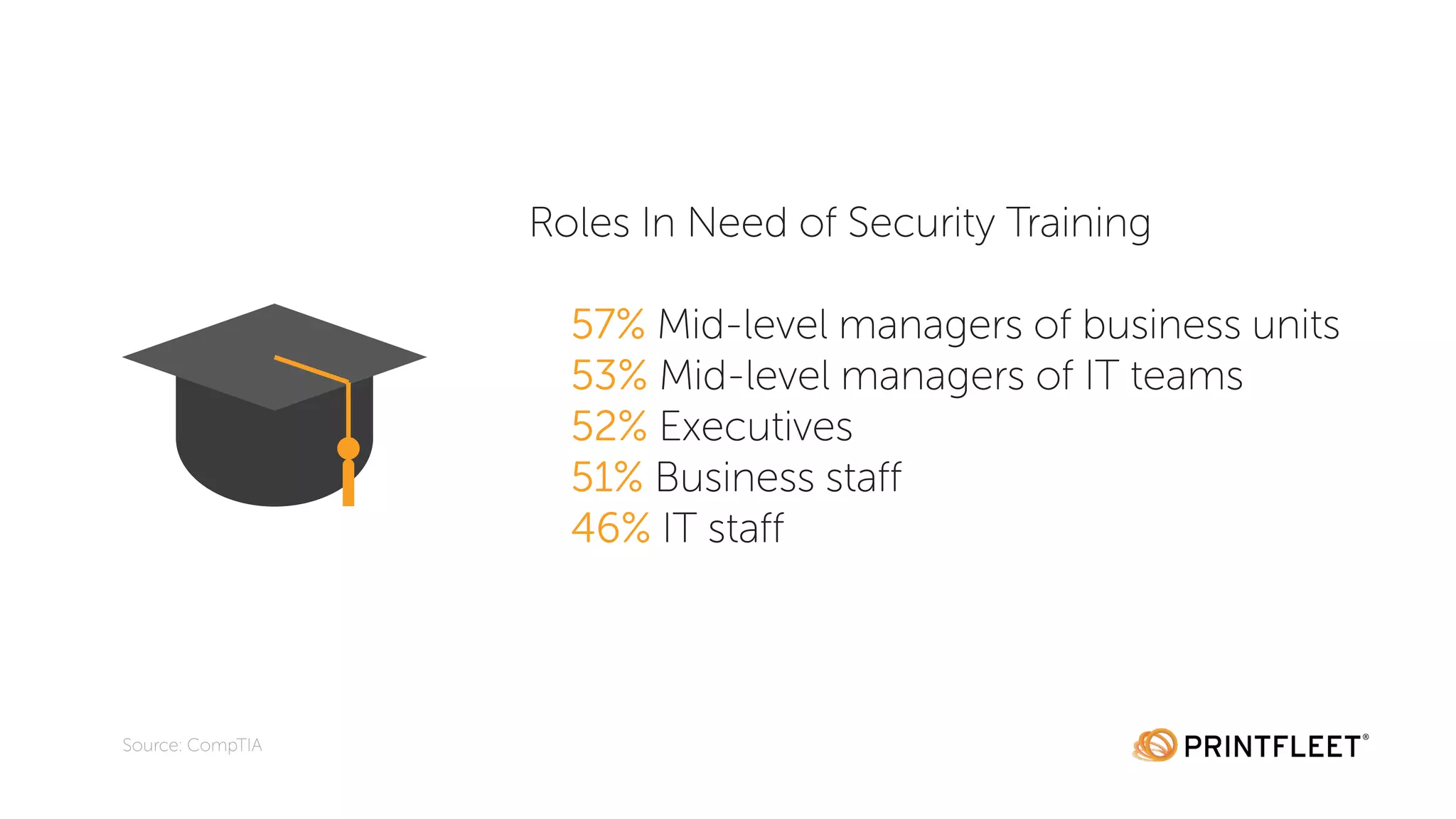
Roles In Need of Security Training
57% Mid-level managers of business units
53% Mid-level managers of IT teams
52% Executives
51% Business staff
46% IT staff
Source: CompTIA
PRINT SECURITY
The office printer is one of those ‘fringe’ devices that’s often overlooked when it
comes to cybersecurity. Like any networked device, it can become a foothold for
attackers to gain access to your network through if you’re not taking the necessary
security measures. Be sure to include print devices in your data security plans.
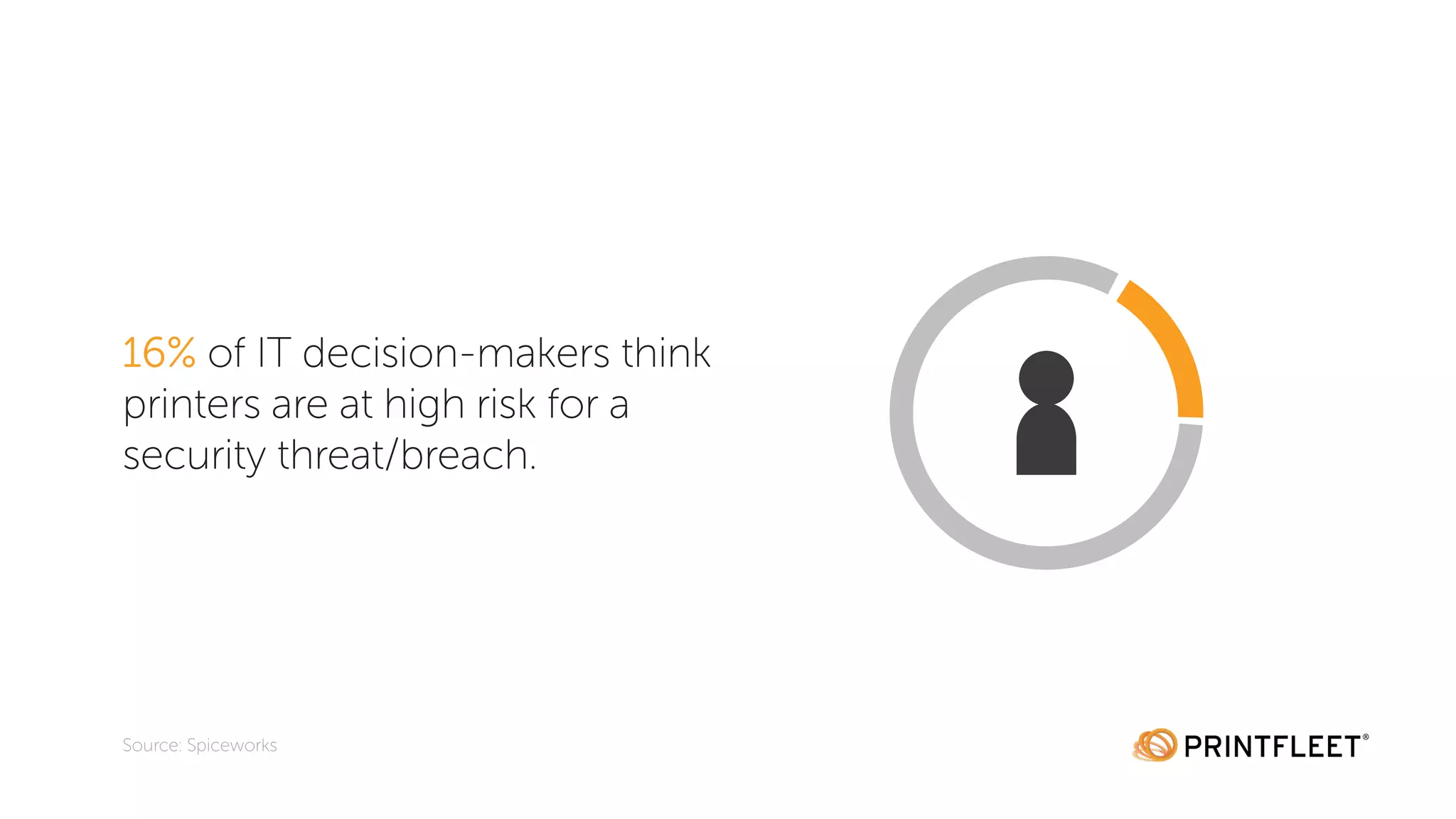
16% of IT decision-makers think
printers are at high risk for a
security threat/breach.
Source: Spiceworks
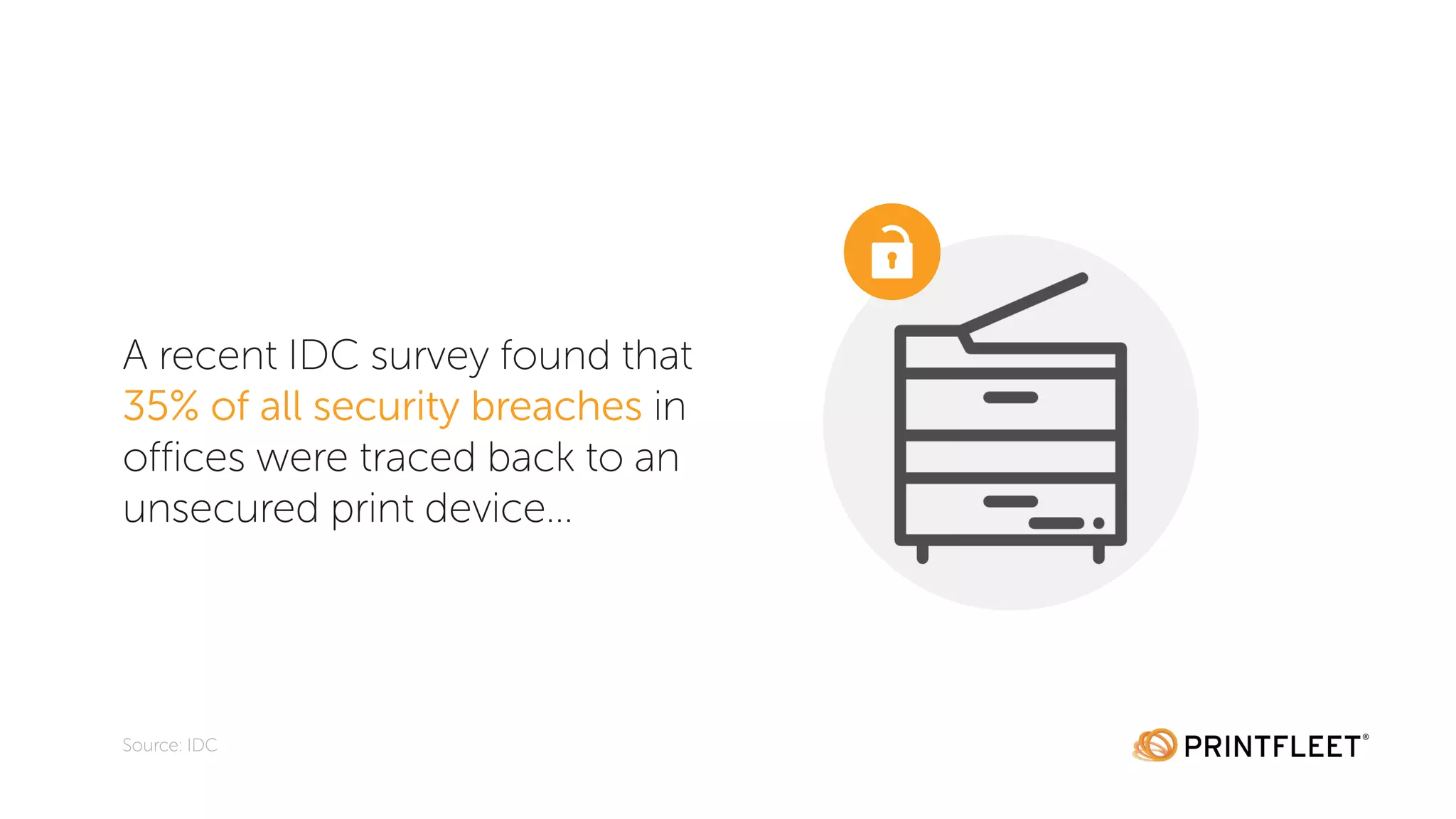
A recent IDC survey found that
35% of all security breaches in
offices were traced back to an
unsecured print device…
Source: IDC
And these breaches cost
companies $133,800 each year.
Source: IDC
$
$
$
$
$
$
$
$
$
€
$
$
€
€
€
€
€ €
$
€
€
€
€
$
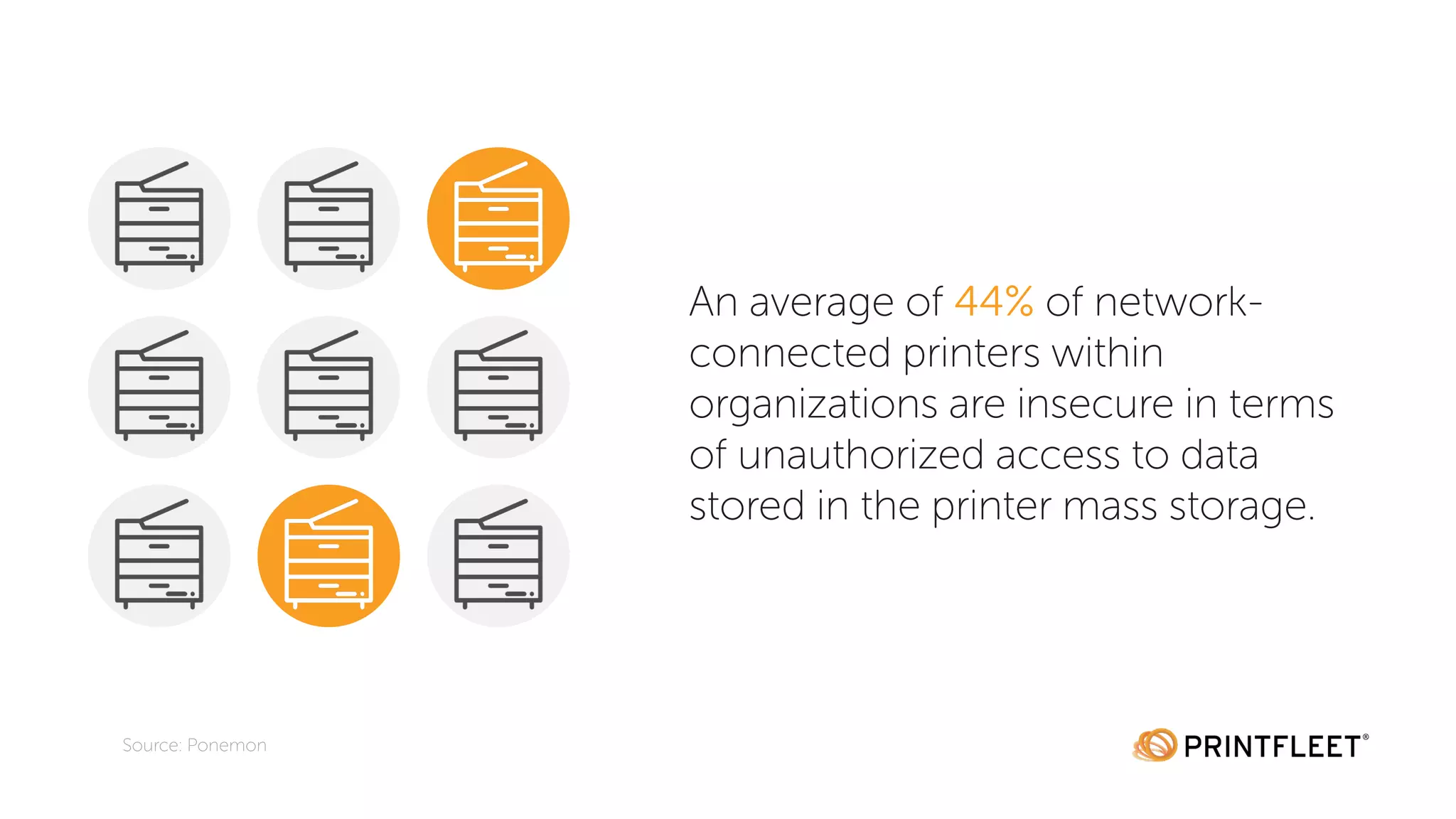
An average of 44% of network-
connected printers within
organizations are insecure in terms
of unauthorized access to data
stored in the printer mass storage.
Source: Ponemon
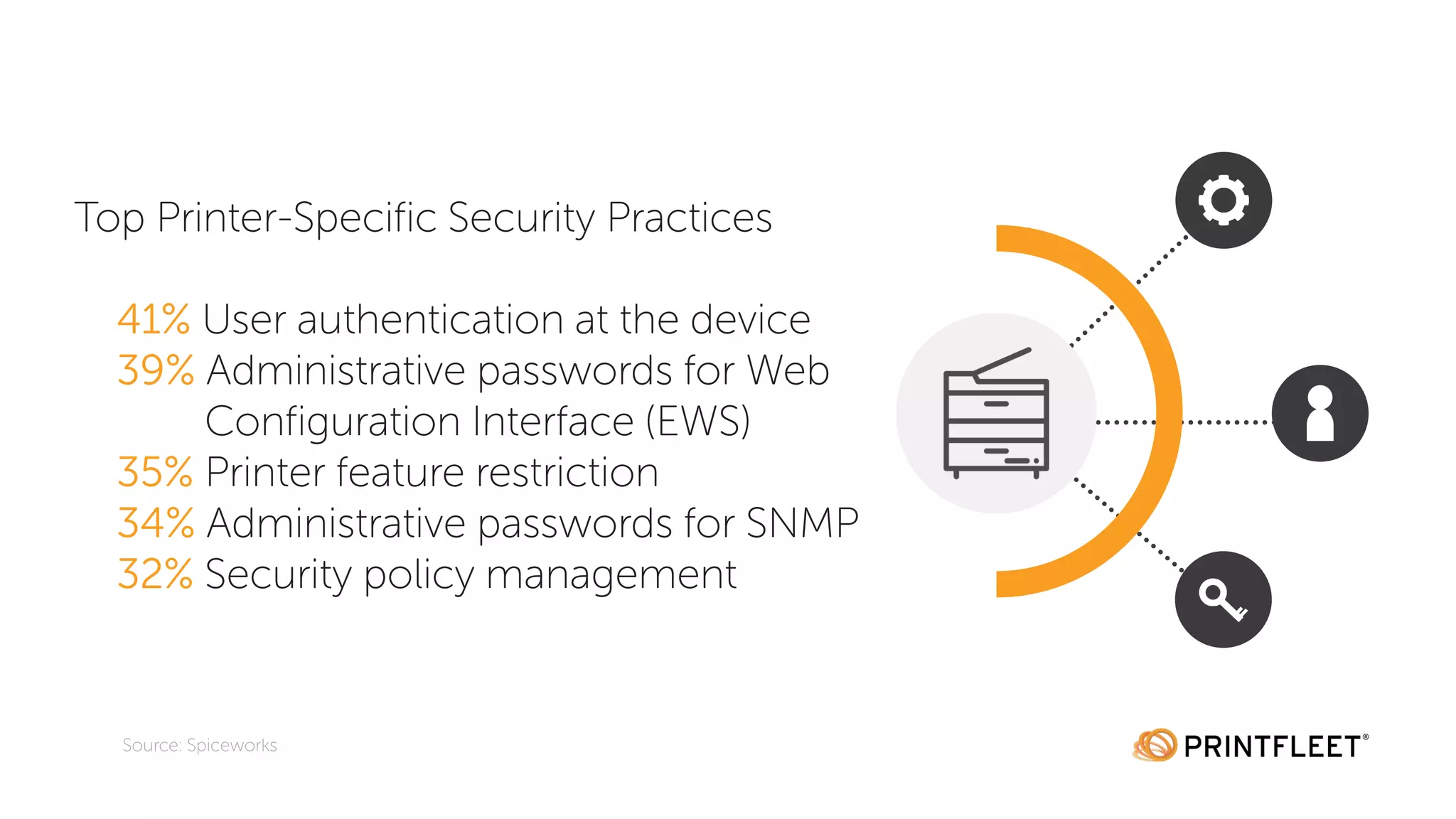
Top Printer-Specific Security Practices
41% User authentication at the device
39% Administrative passwords for Web
Configuration Interface (EWS)
35% Printer feature restriction
34% Administrative passwords for SNMP
32% Security policy management
Source: Spiceworks
Source: Spiceworks
83% of IT decision-makers use network
security on desktops/laptops
55% use it on mobile devices
Just 41% use it on printers
ABOUT PRINTFLEET
PrintFleet connects businesses by providing timely, reliable data, facilitating actionable
information that enables automation of processes within the imaging industry – the
industrialization of our industry. Our industry-leading print management solutions range
from simple rapid assessment to advanced, managed services offering unparalleled
agnostic data collection, analysis and back-end support. Available in multiple languages,
PrintFleet solutions empower OEMs, resellers and distributors in over 100 countries to solve
business challenges and foster growth. Visit www.printfleet.com for more information.

Data Security and MPS

  • 1.
    DATA SECURITY ANDMPS WHAT YOU NEED TO KNOW ABOUT KEEPING YOUR DATA SECURE
  • 2.
    THE INFORMATION AGE Sometimesreferred to as the Computer Age or Digital Age, the Information Age refers to the shift from traditional industry to an economy based on information computerization. It’s a catchall term for the 21st century where information travels the world in seconds and is more accessible than at any other point in history.
  • 3.
    There are morethan 1.2 billion websites today. Source: Cybersecurity Ventures
  • 4.
    There are 3.8billion internet users in 2017, up from 2 billion in 2015. Source: Cybersecurity Ventures
  • 5.
    THE CYBERSECURITY LANDSCAPE Theworld runs on data. Banks, schools, hospitals, governments and business – all of these organizations collect and use data on a regular basis. More and more of our day-to-day activities are done online, from banking to shopping to refilling prescriptions. With so much information being shared and exchanged online every day, data security has never been more important.
  • 6.
    32% of companiessaid they were the victims of cyber crime in 2016. Source: PwC
  • 7.
    52% of organizationsthat suffered successful cyber attacks in 2016 didn’t making any changes to their security in 2017. Source: Barkly
  • 8.
    Global cybersecurity spending expectedto exceed $1 trillion over the next five years. Source: Cybersecurity Ventures
  • 9.
    33% of companiesindicate security is a significantly higher priority for them today than it was two years ago. Source: CompTIA 49% of companies expect security will be a significantly higher priority in two years than it is today.
  • 10.
    Human error isthe number one cause of data breaches. Source: Information Commissioner's Office (ICO) ?
  • 11.
    Topics Needed inSecurity Training 59% Password practices 57% Risk management/analysis 55% Types of attacks 51% Threat analytics 45% Proper response for security issues Source: CompTIA
  • 12.
    Roles In Needof Security Training 57% Mid-level managers of business units 53% Mid-level managers of IT teams 52% Executives 51% Business staff 46% IT staff Source: CompTIA
  • 13.
    PRINT SECURITY The officeprinter is one of those ‘fringe’ devices that’s often overlooked when it comes to cybersecurity. Like any networked device, it can become a foothold for attackers to gain access to your network through if you’re not taking the necessary security measures. Be sure to include print devices in your data security plans.
  • 14.
    16% of ITdecision-makers think printers are at high risk for a security threat/breach. Source: Spiceworks
  • 15.
    A recent IDCsurvey found that 35% of all security breaches in offices were traced back to an unsecured print device… Source: IDC
  • 16.
    And these breachescost companies $133,800 each year. Source: IDC $ $ $ $ $ $ $ $ $ € $ $ € € € € € € $ € € € € $
  • 17.
    An average of44% of network- connected printers within organizations are insecure in terms of unauthorized access to data stored in the printer mass storage. Source: Ponemon
  • 18.
    Top Printer-Specific SecurityPractices 41% User authentication at the device 39% Administrative passwords for Web Configuration Interface (EWS) 35% Printer feature restriction 34% Administrative passwords for SNMP 32% Security policy management Source: Spiceworks
  • 19.
    Source: Spiceworks 83% ofIT decision-makers use network security on desktops/laptops 55% use it on mobile devices Just 41% use it on printers
  • 20.
    ABOUT PRINTFLEET PrintFleet connectsbusinesses by providing timely, reliable data, facilitating actionable information that enables automation of processes within the imaging industry – the industrialization of our industry. Our industry-leading print management solutions range from simple rapid assessment to advanced, managed services offering unparalleled agnostic data collection, analysis and back-end support. Available in multiple languages, PrintFleet solutions empower OEMs, resellers and distributors in over 100 countries to solve business challenges and foster growth. Visit www.printfleet.com for more information.