OPTIMIZING DATA
MANAGEMENT
STRATEGIES FOR
ENHANCED BUSINESS
INTELLIGENCE
OPTIMIZING DATA
MANAGEMENT
STRATEGIES FOR
ENHANCED BUSINESS
INTELLIGENCE
INTRODUCTION TO DATA
MANAGEMENT
INTRODUCTION TO DATA
MANAGEMENT
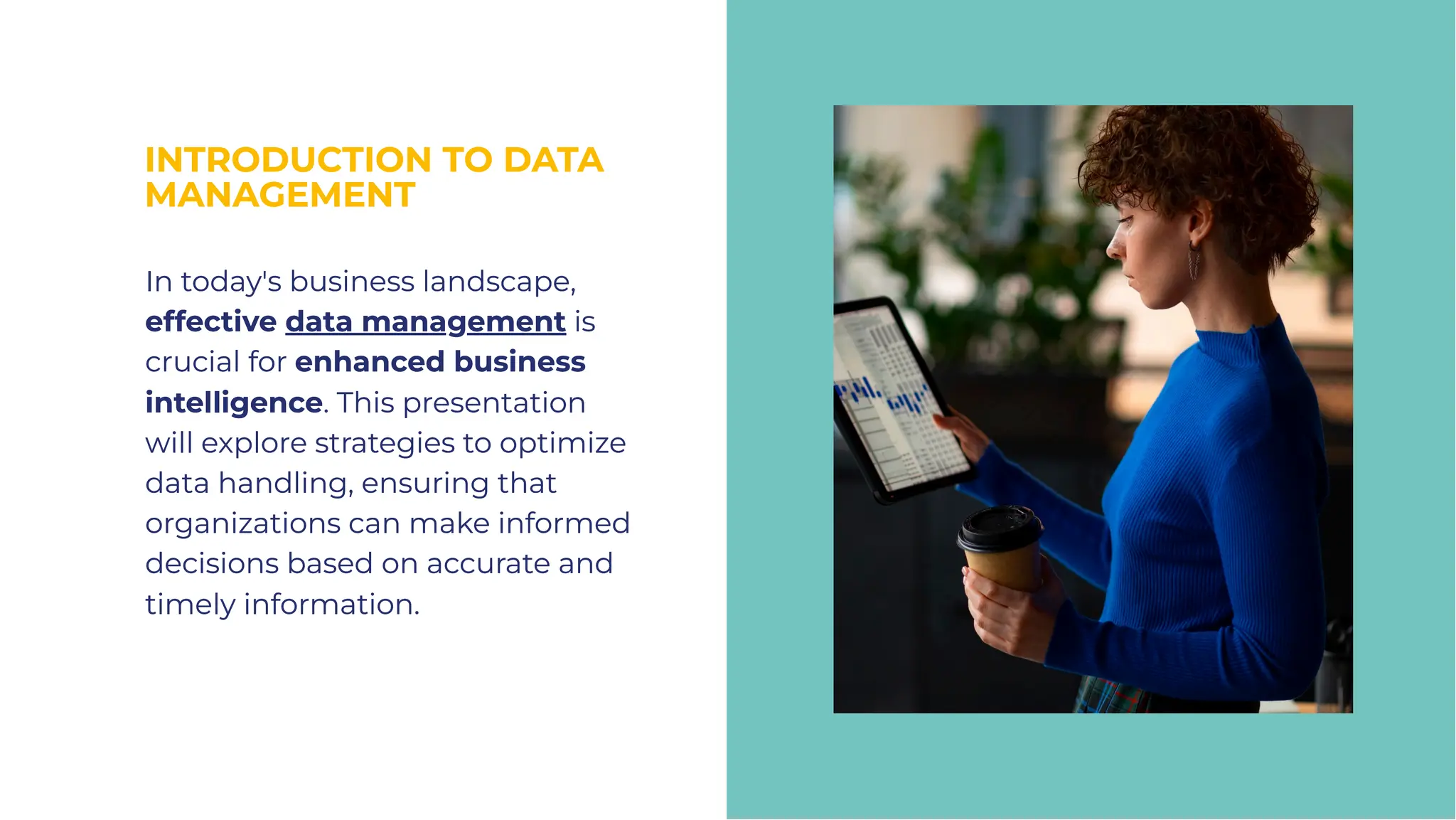
In today's business landscape,
effective data management is
crucial for enhanced business
intelligence. This presentation
will explore strategies to optimize
data handling, ensuring that
organizations can make informed
decisions based on accurate and
timely information.
In today's business landscape,
effective data management is
crucial for enhanced business
intelligence. This presentation
will explore strategies to optimize
data handling, ensuring that
organizations can make informed
decisions based on accurate and
timely information.
Understanding Data
Management
Understanding Data
Management
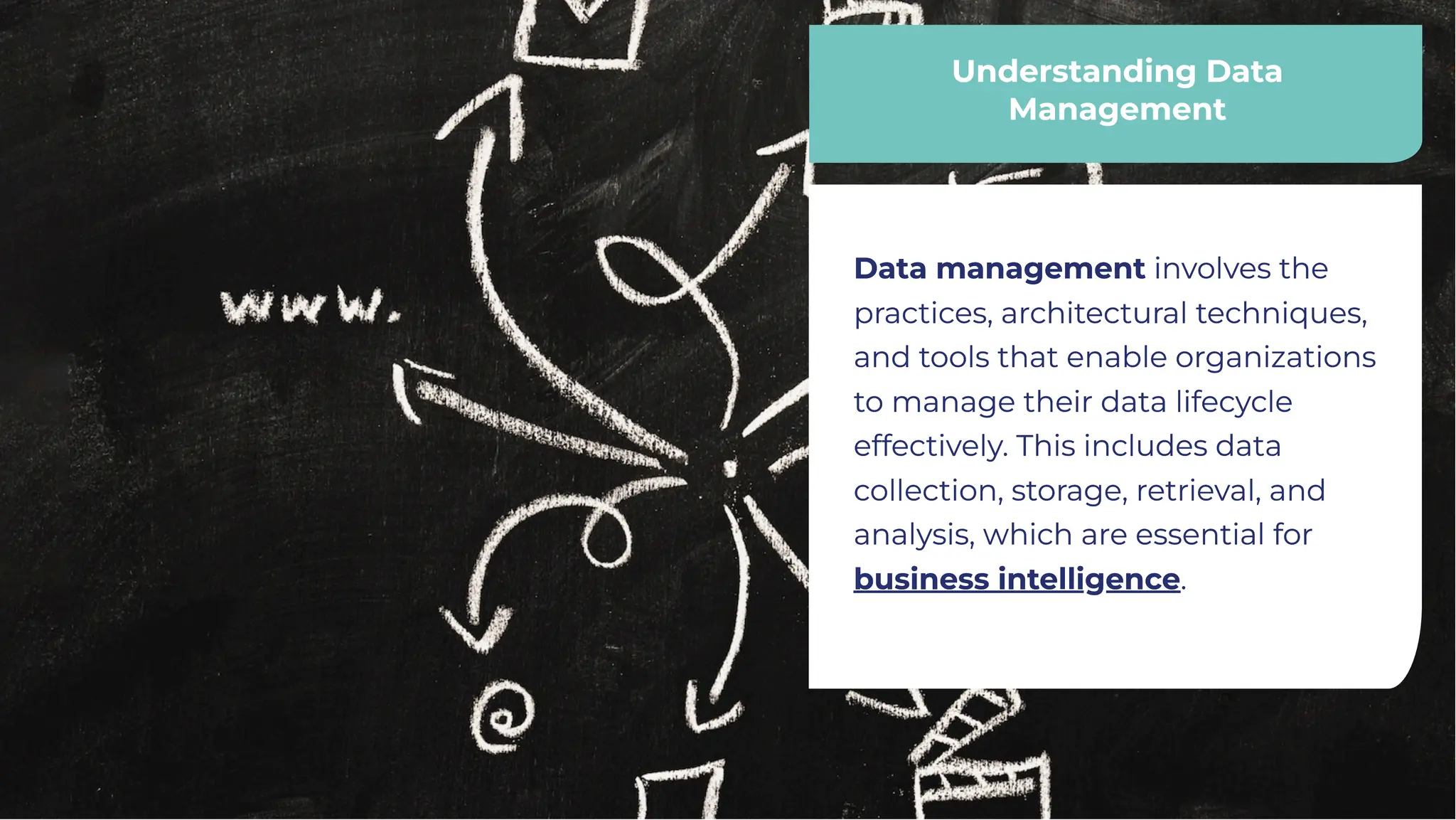
Data management involves the
practices, architectural techniques,
and tools that enable organizations
to manage their data lifecycle
effectively. This includes data
collection, storage, retrieval, and
analysis, which are essential for
business intelligence.
Data management involves the
practices, architectural techniques,
and tools that enable organizations
to manage their data lifecycle
effectively. This includes data
collection, storage, retrieval, and
analysis, which are essential for
business intelligence.
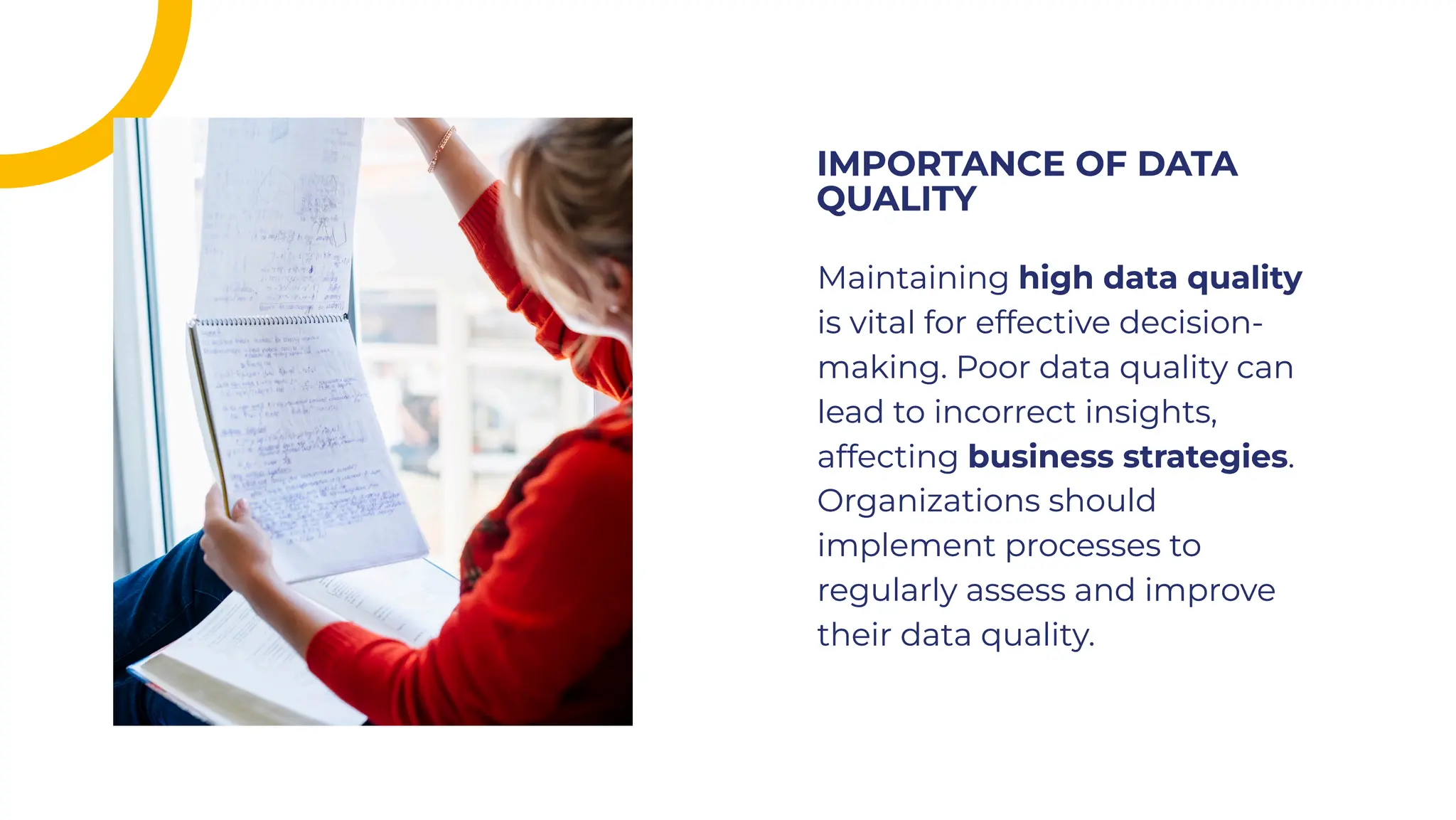
Maintaining high data quality
is vital for effective decision-
making. Poor data quality can
lead to incorrect insights,
affecting business strategies.
Organizations should
implement processes to
regularly assess and improve
their data quality.
Maintaining high data quality
is vital for effective decision-
making. Poor data quality can
lead to incorrect insights,
affecting business strategies.
Organizations should
implement processes to
regularly assess and improve
their data quality.
IMPORTANCE OF DATA
QUALITY
IMPORTANCE OF DATA
QUALITY
Integrating data from various
sources is essential for a
comprehensive view of
business operations. Utilizing
ETL (Extract, Transform,
Load) processes can
streamline data integration
and enhance the business
intelligence framework.
Integrating data from various
sources is essential for a
comprehensive view of
business operations. Utilizing
ETL (Extract, Transform,
Load) processes can
streamline data integration
and enhance the business
intelligence framework.
DATA INTEGRATION
TECHNIQUES
DATA INTEGRATION
TECHNIQUES
LEVERAGING CLOUD
SOLUTIONS
LEVERAGING CLOUD
SOLUTIONS
Cloud-based data
management solutions offer
scalability and flexibility. By
adopting cloud technologies,
businesses can enhance their
data accessibility and
collaboration, leading to
improved business
intelligence outcomes.
Cloud-based data
management solutions offer
scalability and flexibility. By
adopting cloud technologies,
businesses can enhance their
data accessibility and
collaboration, leading to
improved business
intelligence outcomes.
IMPLEMENTING DATA
GOVERNANCE
IMPLEMENTING DATA
GOVERNANCE
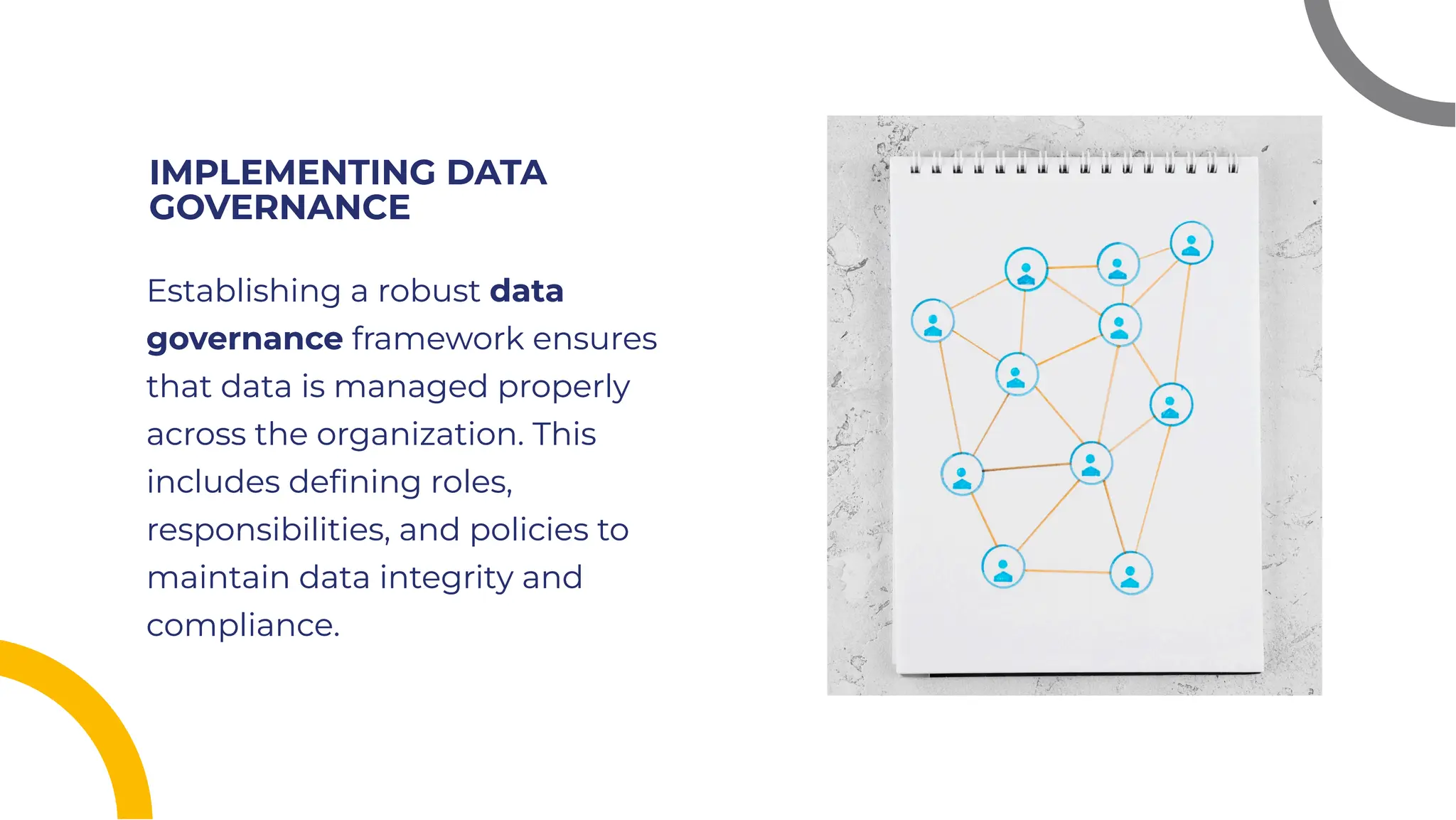
Establishing a robust data
governance framework ensures
that data is managed properly
across the organization. This
includes defining roles,
responsibilities, and policies to
maintain data integrity and
compliance.
Establishing a robust data
governance framework ensures
that data is managed properly
across the organization. This
includes defining roles,
responsibilities, and policies to
maintain data integrity and
compliance.
UTILIZING ADVANCED
ANALYTICS
UTILIZING ADVANCED
ANALYTICS
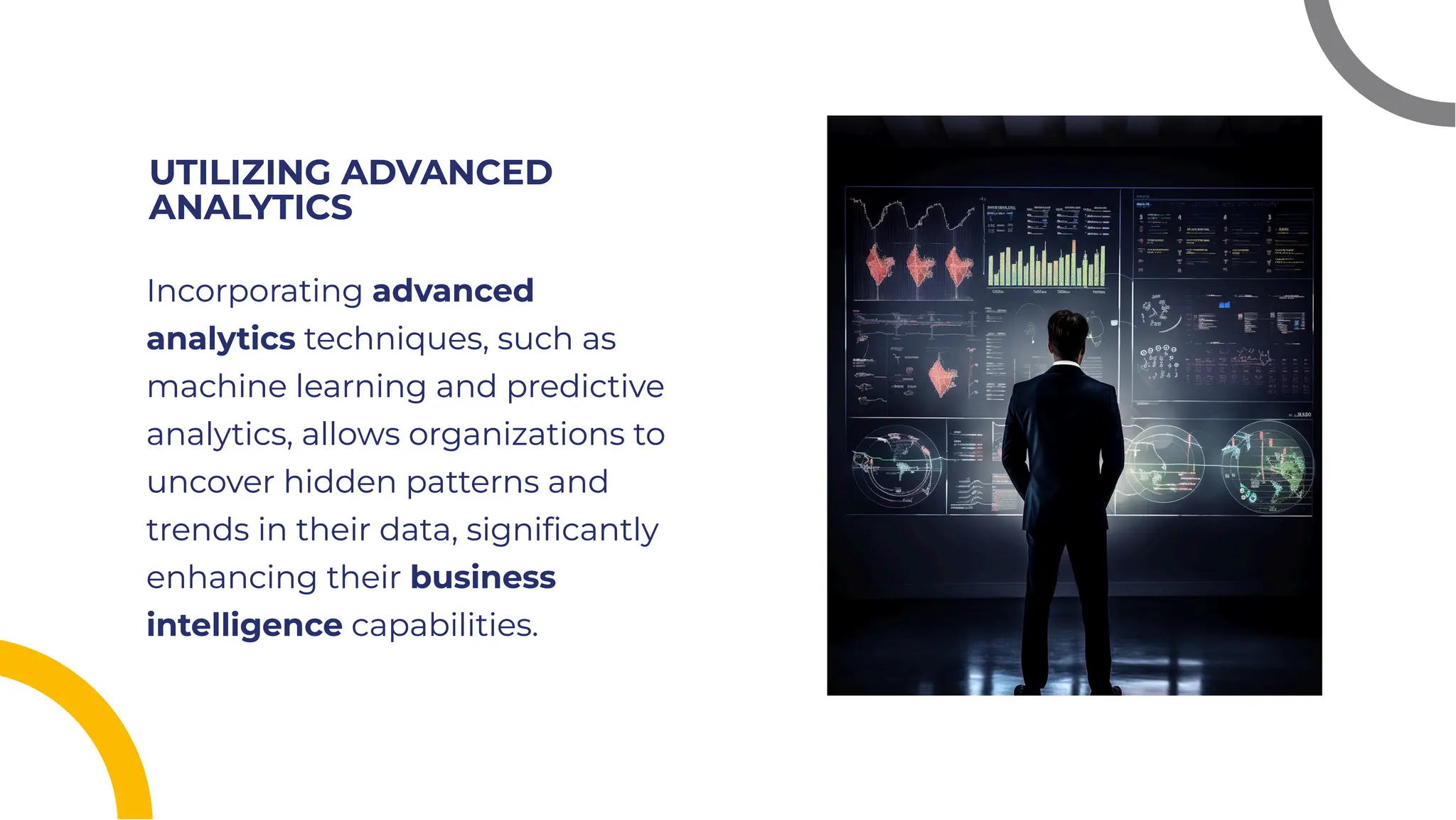
Incorporating advanced
analytics techniques, such as
machine learning and predictive
analytics, allows organizations to
uncover hidden patterns and
trends in their data, significantly
enhancing their business
intelligence capabilities.
Incorporating advanced
analytics techniques, such as
machine learning and predictive
analytics, allows organizations to
uncover hidden patterns and
trends in their data, significantly
enhancing their business
intelligence capabilities.
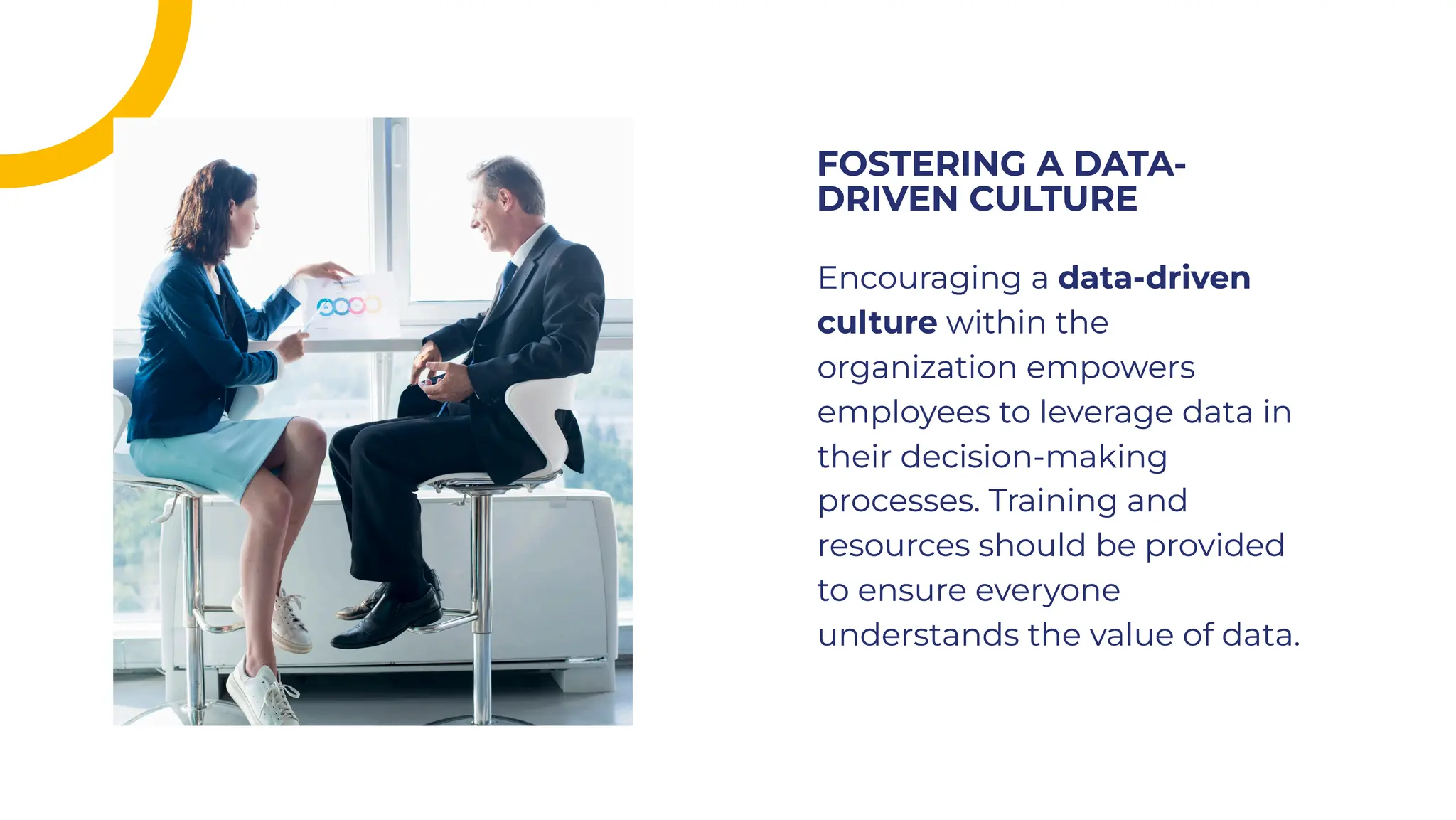
Encouraging a data-driven
culture within the
organization empowers
employees to leverage data in
their decision-making
processes. Training and
resources should be provided
to ensure everyone
understands the value of data.
Encouraging a data-driven
culture within the
organization empowers
employees to leverage data in
their decision-making
processes. Training and
resources should be provided
to ensure everyone
understands the value of data.
FOSTERING A DATA-
DRIVEN CULTURE
FOSTERING A DATA-
DRIVEN CULTURE
DATA SECURITY
MEASURES
DATA SECURITY
MEASURES
Protecting sensitive data is
paramount. Implementing
data security measures such
as encryption, access controls,
and regular audits helps
safeguard data integrity and
supports compliance with
regulations.
Protecting sensitive data is
paramount. Implementing
data security measures such
as encryption, access controls,
and regular audits helps
safeguard data integrity and
supports compliance with
regulations.
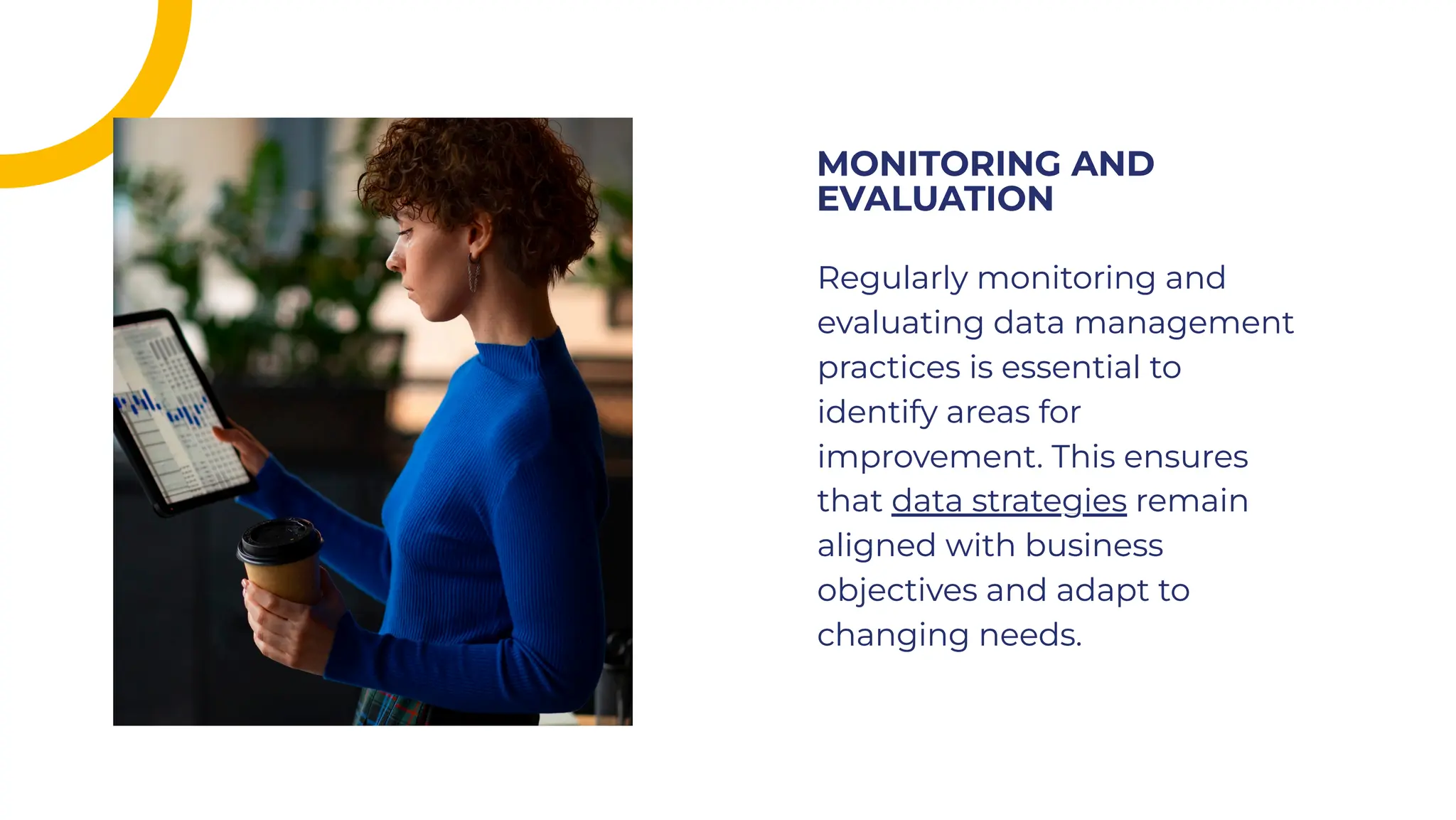
Regularly monitoring and
evaluating data management
practices is essential to
identify areas for
improvement. This ensures
that data strategies remain
aligned with business
objectives and adapt to
changing needs.
Regularly monitoring and
evaluating data management
practices is essential to
identify areas for
improvement. This ensures
that data strategies remain
aligned with business
objectives and adapt to
changing needs.
MONITORING AND
EVALUATION
MONITORING AND
EVALUATION
FUTURE TRENDS IN DATA
MANAGEMENT
FUTURE TRENDS IN DATA
MANAGEMENT
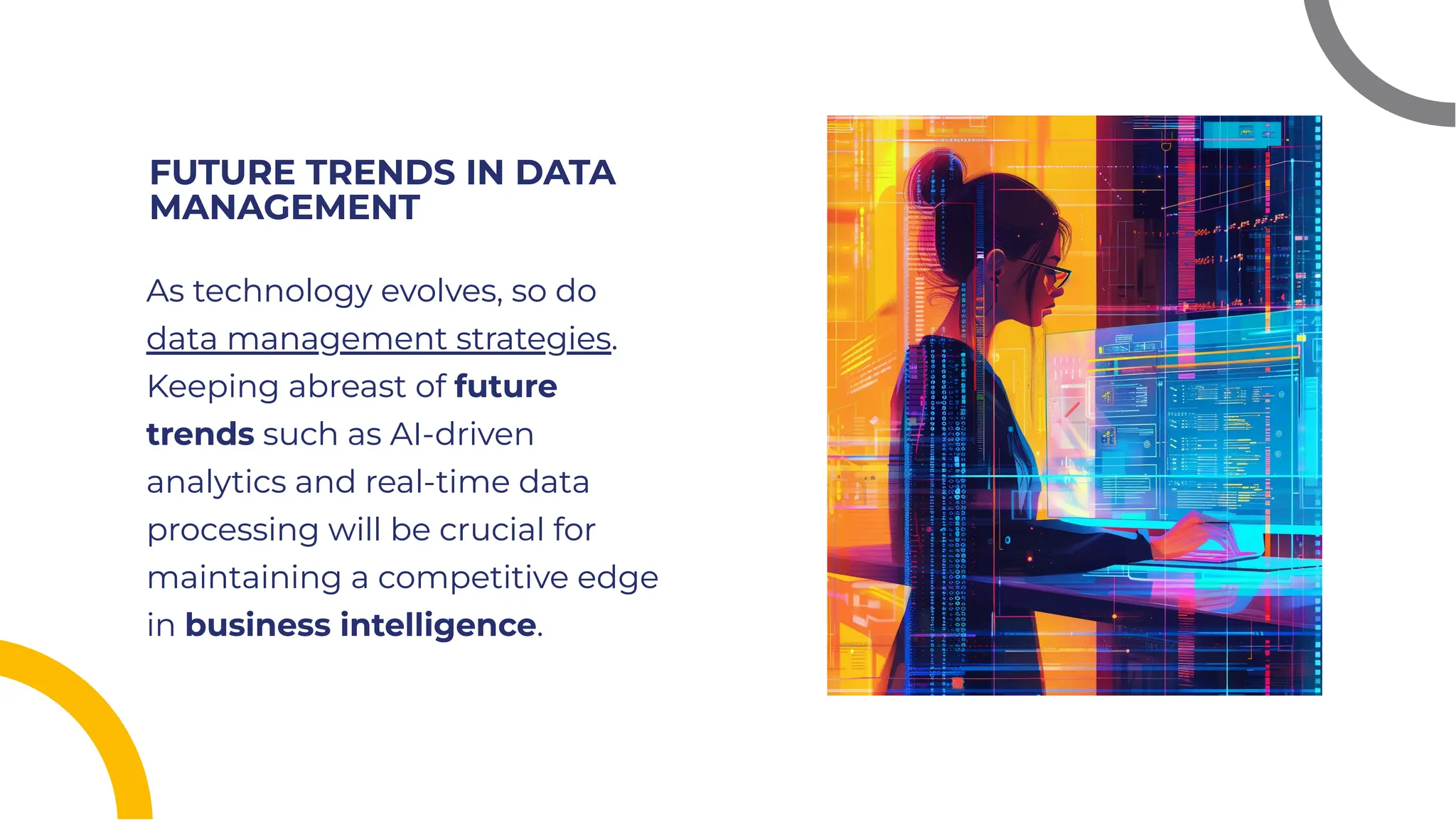
As technology evolves, so do
data management strategies.
Keeping abreast of future
trends such as AI-driven
analytics and real-time data
processing will be crucial for
maintaining a competitive edge
in business intelligence.
As technology evolves, so do
data management strategies.
Keeping abreast of future
trends such as AI-driven
analytics and real-time data
processing will be crucial for
maintaining a competitive edge
in business intelligence.
In conclusion, optimizing data management
strategies is essential for enhancing business
intelligence. Organizations should focus on data
quality, integration, governance, and fostering a
data-driven culture to fully leverage their data
assets.
In conclusion, optimizing data management
strategies is essential for enhancing business
intelligence. Organizations should focus on data
quality, integration, governance, and fostering a
data-driven culture to fully leverage their data
assets.
CONCLUSION AND
RECOMMENDATIONS
CONCLUSION AND
RECOMMENDATIONS
Thanks!
Thanks!
Do you have any questions?
peter@vuelitics.com
+1 727 756 1632
https://vuelitics.com/
Do you have any questions?
peter@vuelitics.com
+1 727 756 1632
https://vuelitics.com/

Data management strategy for Business in the USA.pdf

  • 1.
    OPTIMIZING DATA MANAGEMENT STRATEGIES FOR ENHANCEDBUSINESS INTELLIGENCE OPTIMIZING DATA MANAGEMENT STRATEGIES FOR ENHANCED BUSINESS INTELLIGENCE
  • 2.
    INTRODUCTION TO DATA MANAGEMENT INTRODUCTIONTO DATA MANAGEMENT In today's business landscape, effective data management is crucial for enhanced business intelligence. This presentation will explore strategies to optimize data handling, ensuring that organizations can make informed decisions based on accurate and timely information. In today's business landscape, effective data management is crucial for enhanced business intelligence. This presentation will explore strategies to optimize data handling, ensuring that organizations can make informed decisions based on accurate and timely information.
  • 3.
    Understanding Data Management Understanding Data Management Datamanagement involves the practices, architectural techniques, and tools that enable organizations to manage their data lifecycle effectively. This includes data collection, storage, retrieval, and analysis, which are essential for business intelligence. Data management involves the practices, architectural techniques, and tools that enable organizations to manage their data lifecycle effectively. This includes data collection, storage, retrieval, and analysis, which are essential for business intelligence.
  • 4.
    Maintaining high dataquality is vital for effective decision- making. Poor data quality can lead to incorrect insights, affecting business strategies. Organizations should implement processes to regularly assess and improve their data quality. Maintaining high data quality is vital for effective decision- making. Poor data quality can lead to incorrect insights, affecting business strategies. Organizations should implement processes to regularly assess and improve their data quality. IMPORTANCE OF DATA QUALITY IMPORTANCE OF DATA QUALITY
  • 5.
    Integrating data fromvarious sources is essential for a comprehensive view of business operations. Utilizing ETL (Extract, Transform, Load) processes can streamline data integration and enhance the business intelligence framework. Integrating data from various sources is essential for a comprehensive view of business operations. Utilizing ETL (Extract, Transform, Load) processes can streamline data integration and enhance the business intelligence framework. DATA INTEGRATION TECHNIQUES DATA INTEGRATION TECHNIQUES
  • 6.
    LEVERAGING CLOUD SOLUTIONS LEVERAGING CLOUD SOLUTIONS Cloud-baseddata management solutions offer scalability and flexibility. By adopting cloud technologies, businesses can enhance their data accessibility and collaboration, leading to improved business intelligence outcomes. Cloud-based data management solutions offer scalability and flexibility. By adopting cloud technologies, businesses can enhance their data accessibility and collaboration, leading to improved business intelligence outcomes.
  • 7.
    IMPLEMENTING DATA GOVERNANCE IMPLEMENTING DATA GOVERNANCE Establishinga robust data governance framework ensures that data is managed properly across the organization. This includes defining roles, responsibilities, and policies to maintain data integrity and compliance. Establishing a robust data governance framework ensures that data is managed properly across the organization. This includes defining roles, responsibilities, and policies to maintain data integrity and compliance.
  • 8.
    UTILIZING ADVANCED ANALYTICS UTILIZING ADVANCED ANALYTICS Incorporatingadvanced analytics techniques, such as machine learning and predictive analytics, allows organizations to uncover hidden patterns and trends in their data, significantly enhancing their business intelligence capabilities. Incorporating advanced analytics techniques, such as machine learning and predictive analytics, allows organizations to uncover hidden patterns and trends in their data, significantly enhancing their business intelligence capabilities.
  • 9.
    Encouraging a data-driven culturewithin the organization empowers employees to leverage data in their decision-making processes. Training and resources should be provided to ensure everyone understands the value of data. Encouraging a data-driven culture within the organization empowers employees to leverage data in their decision-making processes. Training and resources should be provided to ensure everyone understands the value of data. FOSTERING A DATA- DRIVEN CULTURE FOSTERING A DATA- DRIVEN CULTURE
  • 10.
    DATA SECURITY MEASURES DATA SECURITY MEASURES Protectingsensitive data is paramount. Implementing data security measures such as encryption, access controls, and regular audits helps safeguard data integrity and supports compliance with regulations. Protecting sensitive data is paramount. Implementing data security measures such as encryption, access controls, and regular audits helps safeguard data integrity and supports compliance with regulations.
  • 11.
    Regularly monitoring and evaluatingdata management practices is essential to identify areas for improvement. This ensures that data strategies remain aligned with business objectives and adapt to changing needs. Regularly monitoring and evaluating data management practices is essential to identify areas for improvement. This ensures that data strategies remain aligned with business objectives and adapt to changing needs. MONITORING AND EVALUATION MONITORING AND EVALUATION
  • 12.
    FUTURE TRENDS INDATA MANAGEMENT FUTURE TRENDS IN DATA MANAGEMENT As technology evolves, so do data management strategies. Keeping abreast of future trends such as AI-driven analytics and real-time data processing will be crucial for maintaining a competitive edge in business intelligence. As technology evolves, so do data management strategies. Keeping abreast of future trends such as AI-driven analytics and real-time data processing will be crucial for maintaining a competitive edge in business intelligence.
  • 13.
    In conclusion, optimizingdata management strategies is essential for enhancing business intelligence. Organizations should focus on data quality, integration, governance, and fostering a data-driven culture to fully leverage their data assets. In conclusion, optimizing data management strategies is essential for enhancing business intelligence. Organizations should focus on data quality, integration, governance, and fostering a data-driven culture to fully leverage their data assets. CONCLUSION AND RECOMMENDATIONS CONCLUSION AND RECOMMENDATIONS
  • 14.
    Thanks! Thanks! Do you haveany questions? peter@vuelitics.com +1 727 756 1632 https://vuelitics.com/ Do you have any questions? peter@vuelitics.com +1 727 756 1632 https://vuelitics.com/