Download to read offline
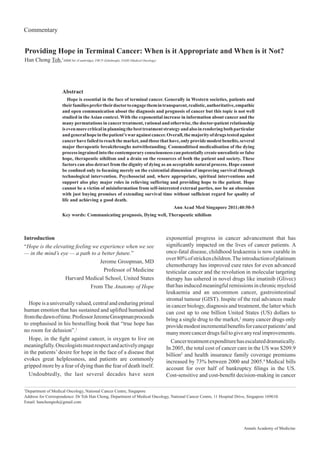
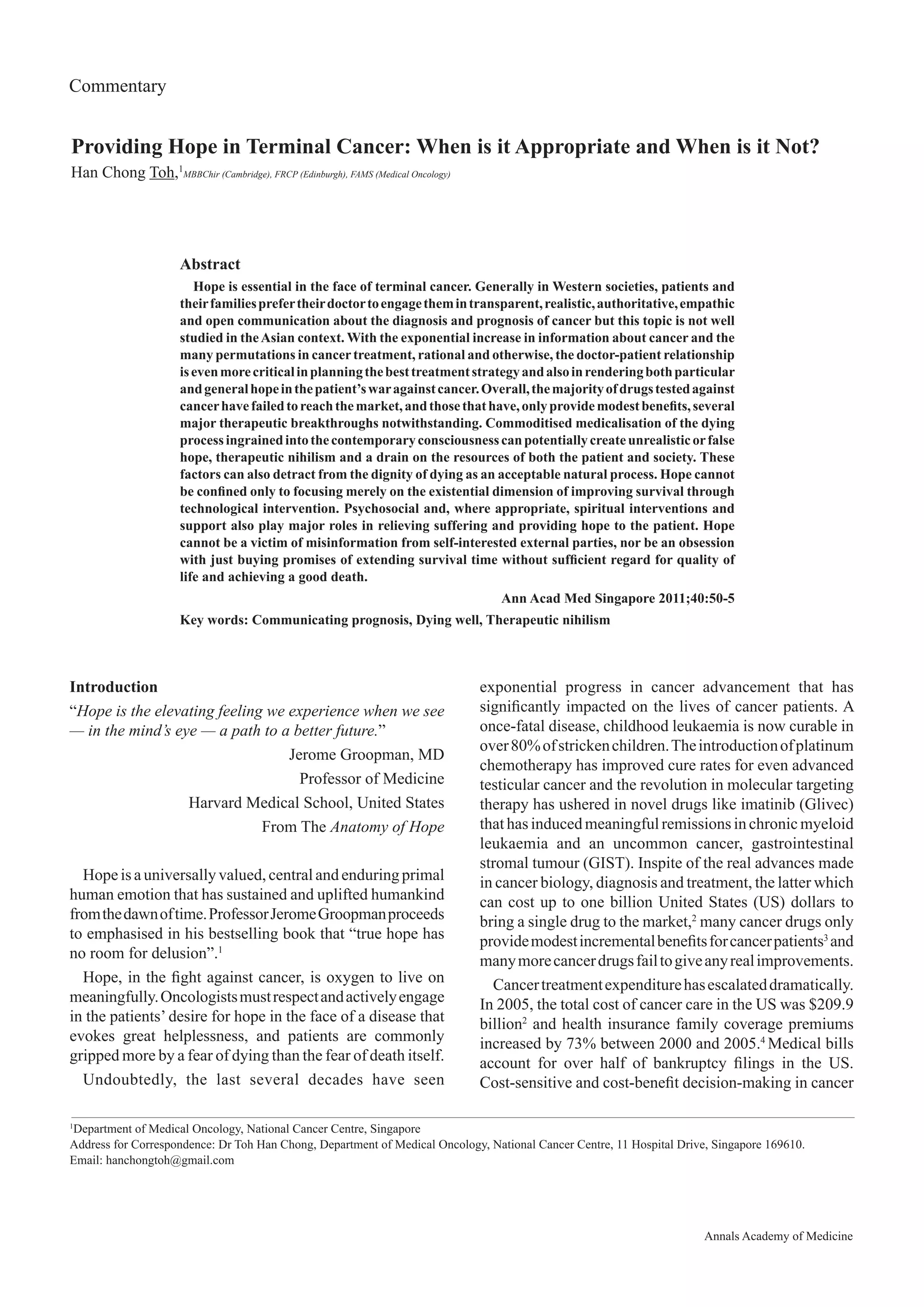

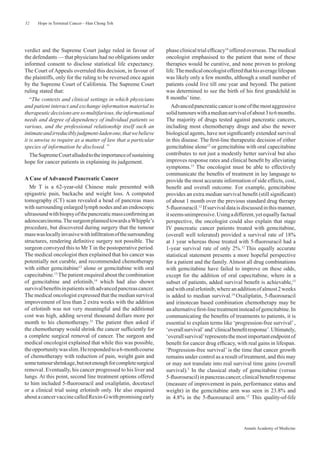
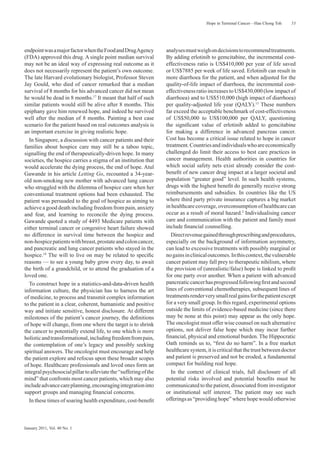
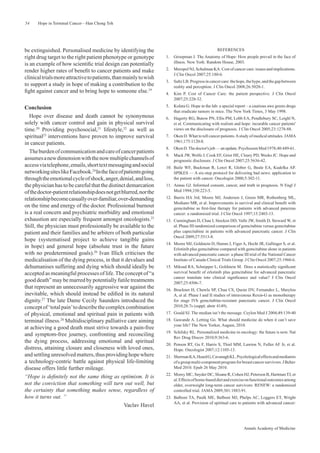
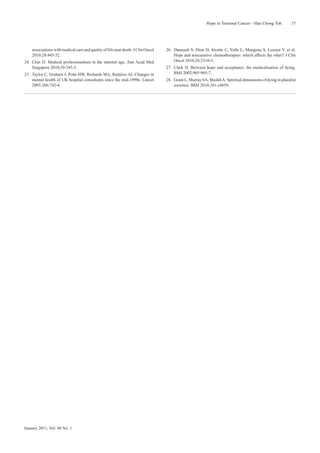

1. The document discusses providing hope in terminal cancer and when it is appropriate versus not. It focuses on the importance of realistic yet empathetic communication between doctors and patients about diagnosis, prognosis, and treatment options. 2. Unrealistic or false hope can be created by misinformation from external parties or an obsession with extending survival time without regard for quality of life. Hope requires a balance of realism with psychosocial and spiritual support. 3. The case study examines communicating prognosis and treatment options to a patient with advanced pancreatic cancer. It emphasizes conveying both risks and benefits of various options factually yet hopefully to help the patient make informed decisions.


![Abstract Workshop On Psycho Oncology Alleviation.7[1]](https://cdn.slidesharecdn.com/ss_thumbnails/abstractworkshoponpsychooncologyalleviation-71-100119144957-phpapp01-thumbnail.jpg?width=640&height=640&fit=bounds)


![PERI-PROSTHETIC FRACTURE NAIL-PLATE CONSTRUCT [NPC].pptx](https://cdn.slidesharecdn.com/ss_thumbnails/drarunkumardrmohamedashrafperiprostheticfrasturenail-plateconstructnpc-260209164459-7e9d15a1-thumbnail.jpg?width=640&height=640&fit=bounds)

![CTEV [ clubfoot] DR ARUN LAL ,DR MOHAMED ASHRAF travancore medical college k...](https://cdn.slidesharecdn.com/ss_thumbnails/ctevclubfootdrarunlaldrmohamedashraftravancoremedicalcollegekollamkeralaindia-260208063247-18fc466c-thumbnail.jpg?width=640&height=640&fit=bounds)


![ONFH[AVN HIP] -TRIPLE REGIME -A NOVAL SURGICAL CONCEPT .pptx](https://cdn.slidesharecdn.com/ss_thumbnails/onfhavnhip2026koaconcalicutdrgokuldevdrmashraf-260210064517-213ec005-thumbnail.jpg?width=640&height=640&fit=bounds)