7.1  The student will identify and use analogous, complementary,  and monochromatic color relationships in works of art. http://www.gamersuniform.com/img/pantone.jpg Let’s talk  About C O L O R
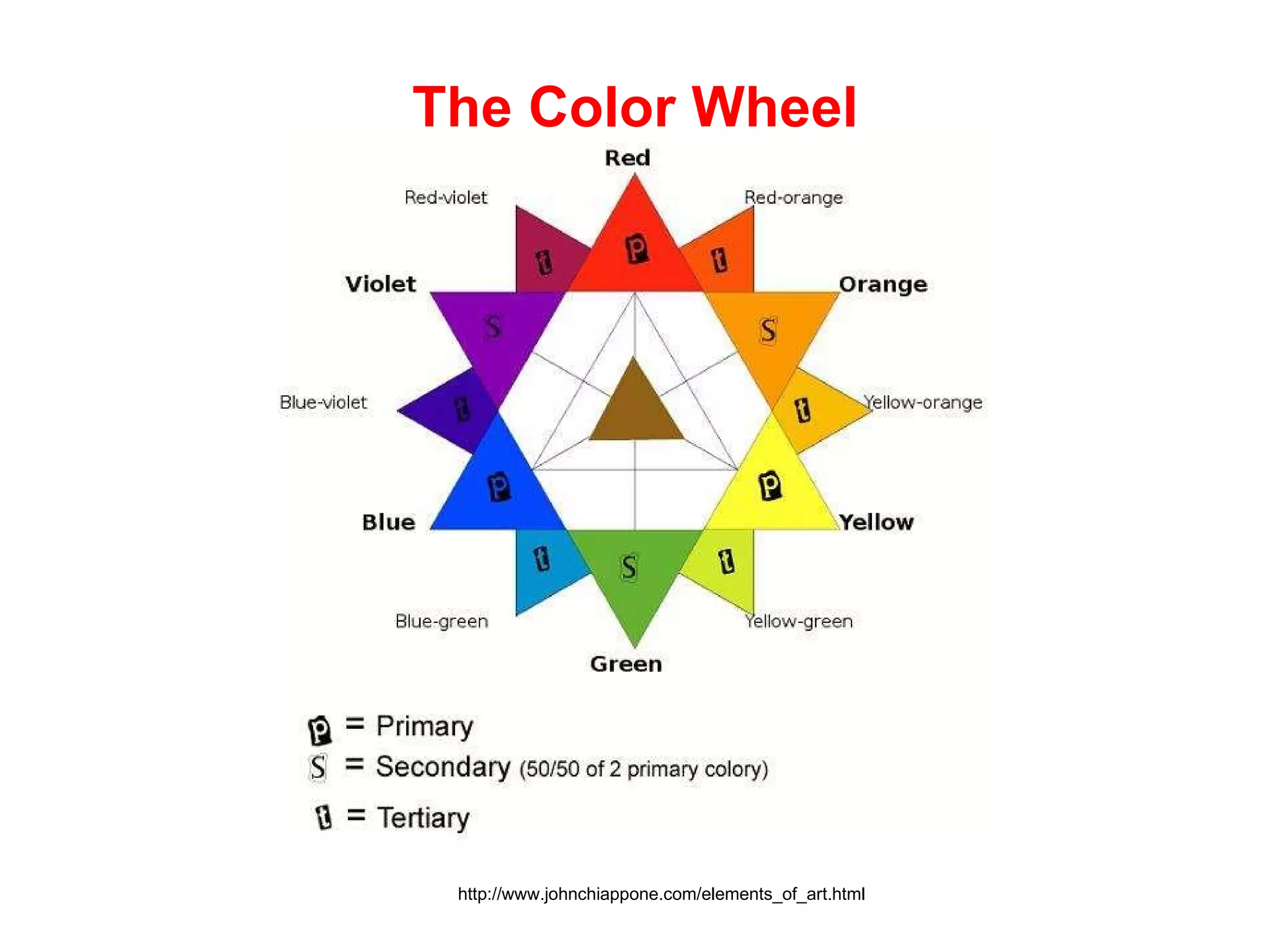
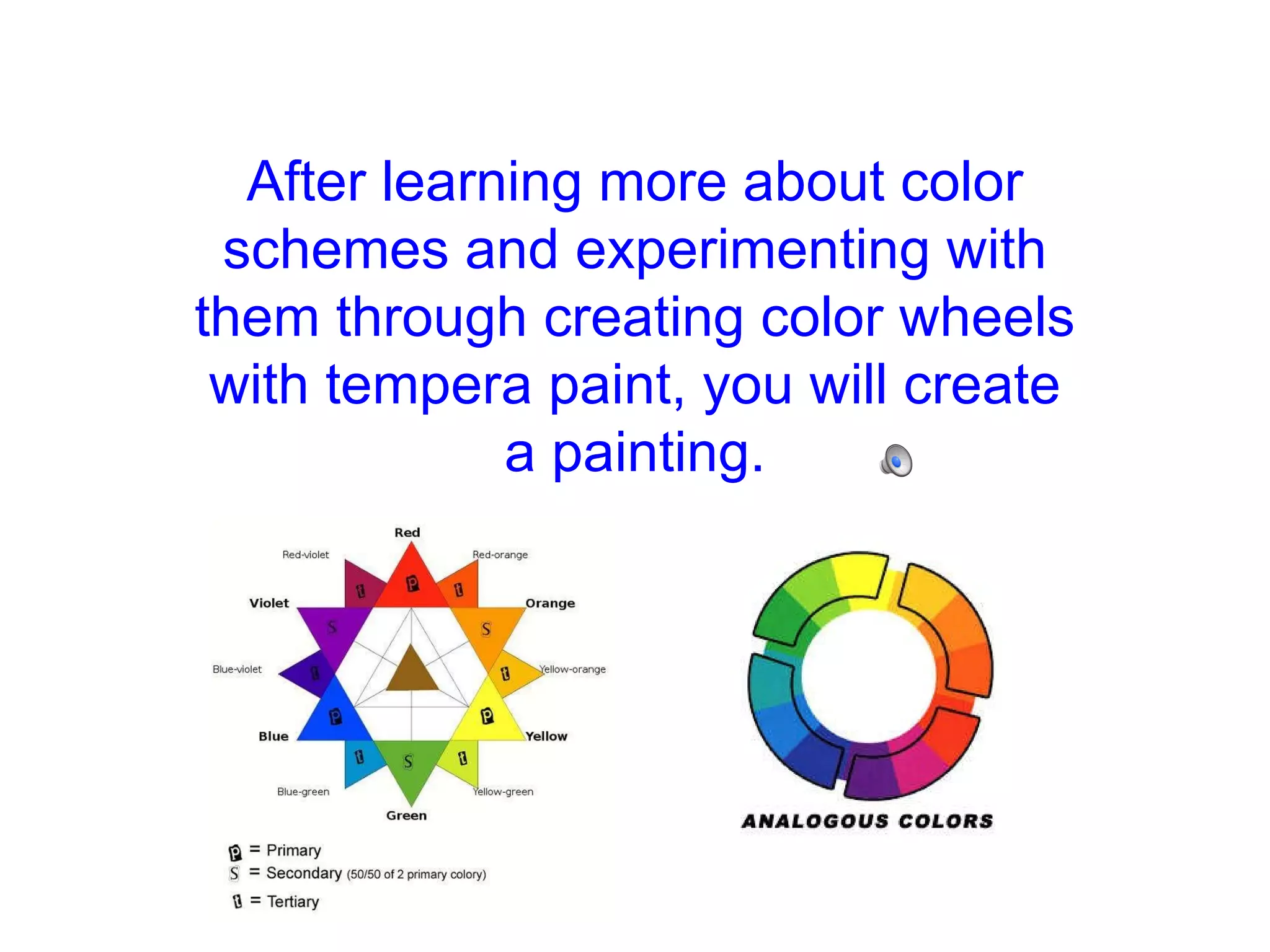
The Color Wheel http://www.johnchiappone.com/elements_of_art.html
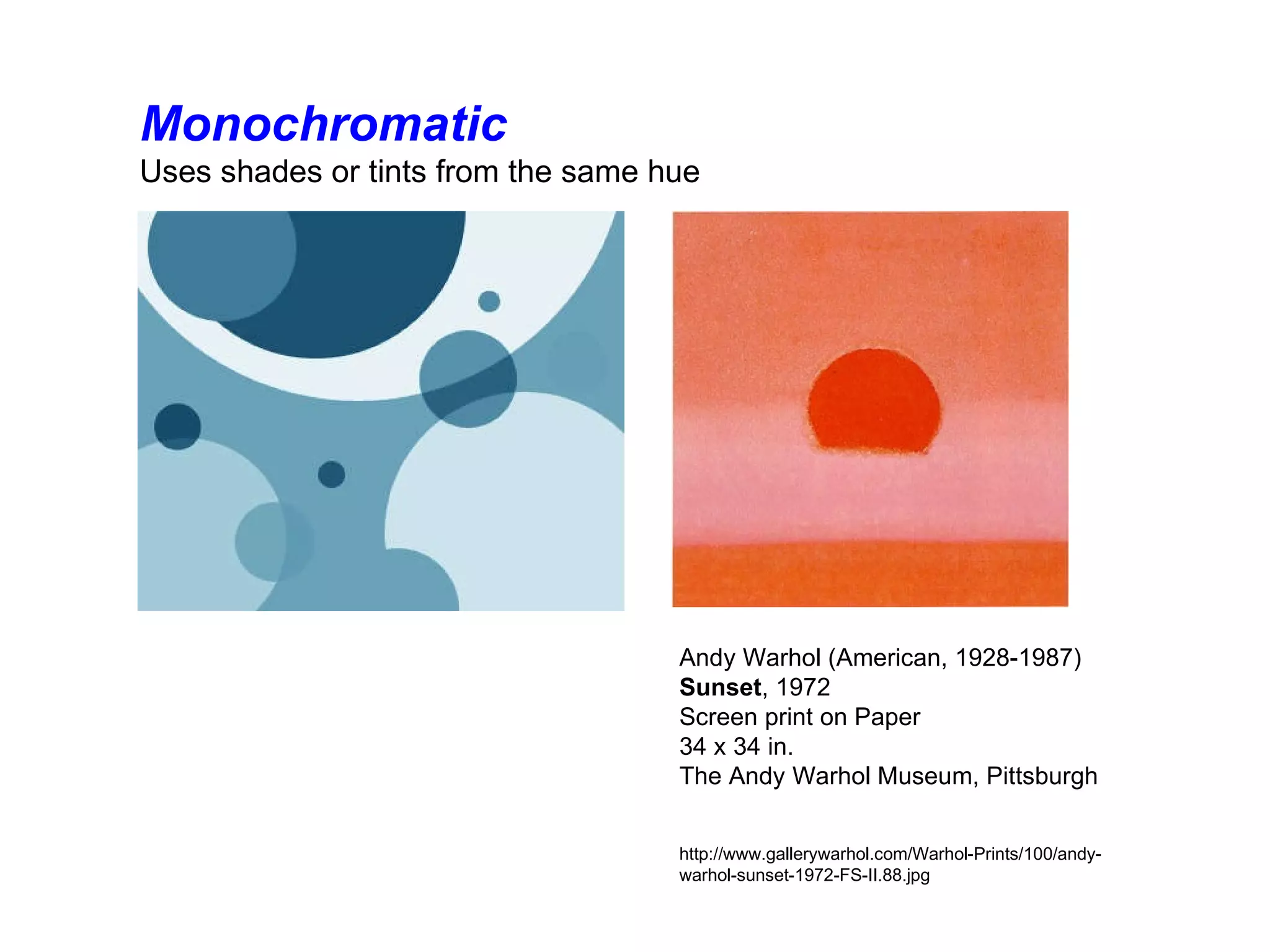
Monochromatic Uses shades or tints from the same hue          Andy Warhol (American, 1928-1987)  Sunset , 1972  Screen print on Paper 34 x 34 in. The Andy Warhol Museum, Pittsburgh http://www.gallerywarhol.com/Warhol-Prints/100/andy-warhol-sunset-1972-FS-II.88.jpg
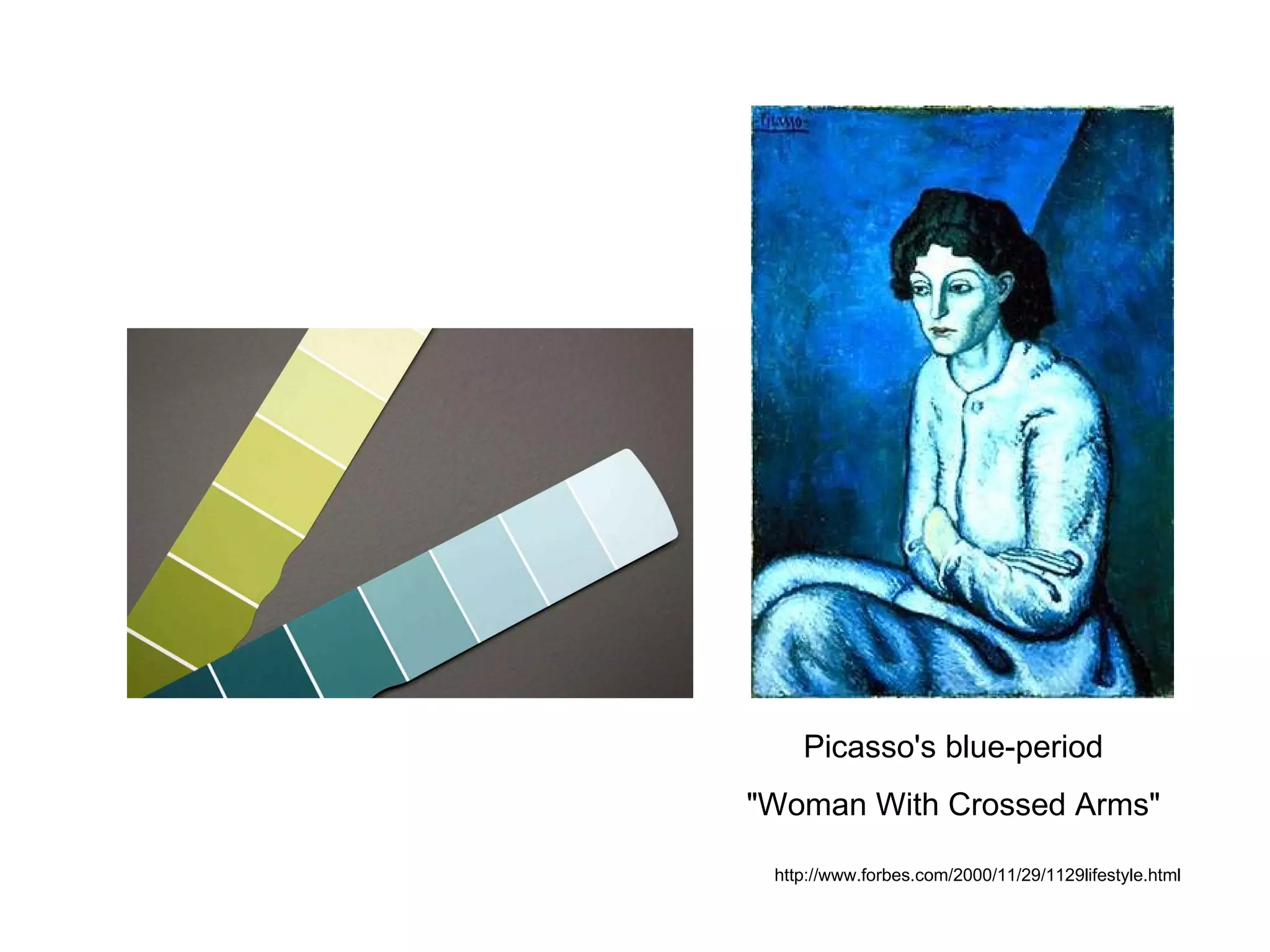
Picasso's blue-period  "Woman With Crossed Arms"  http://www.forbes.com/2000/11/29/1129lifestyle.html
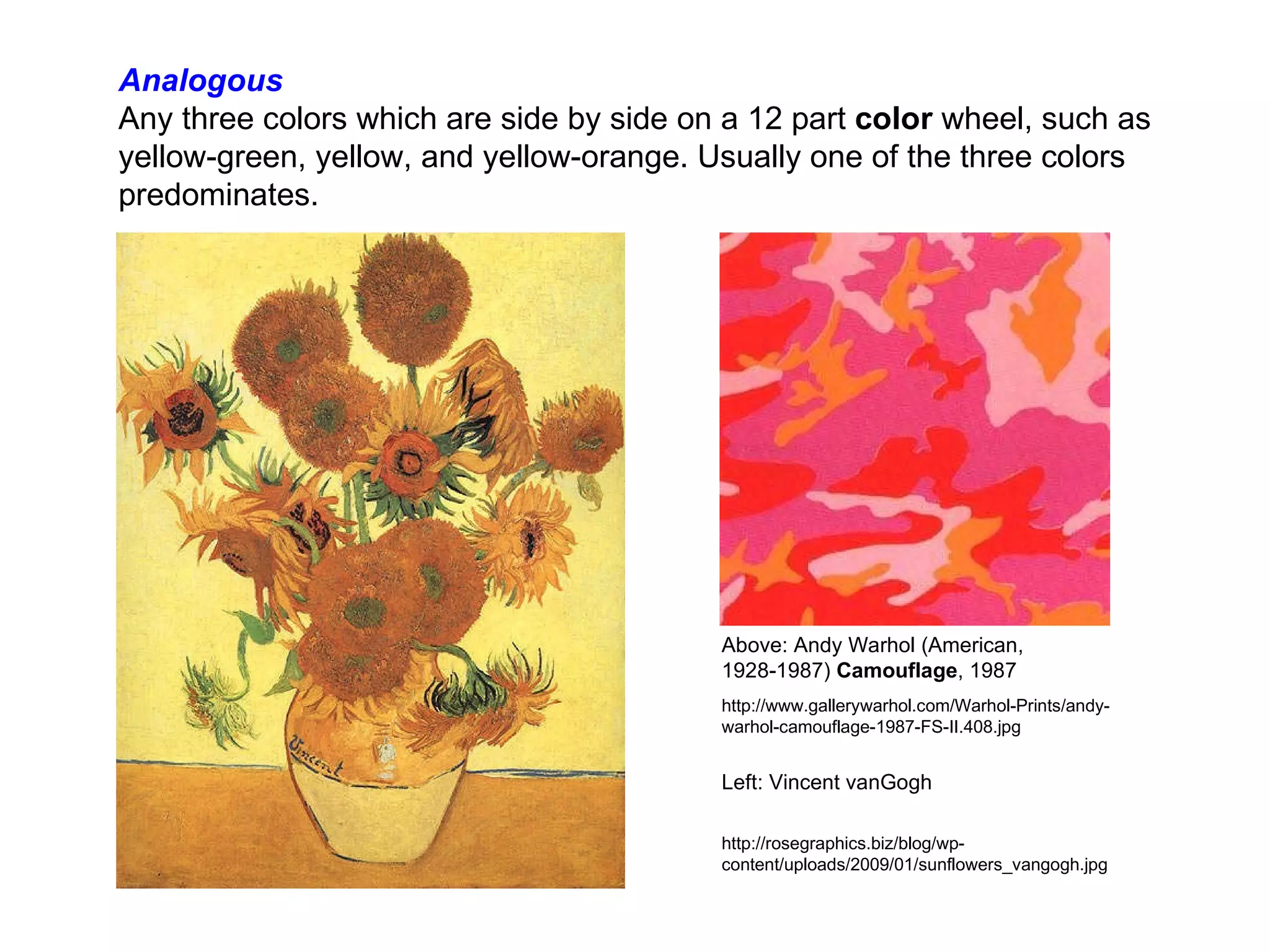
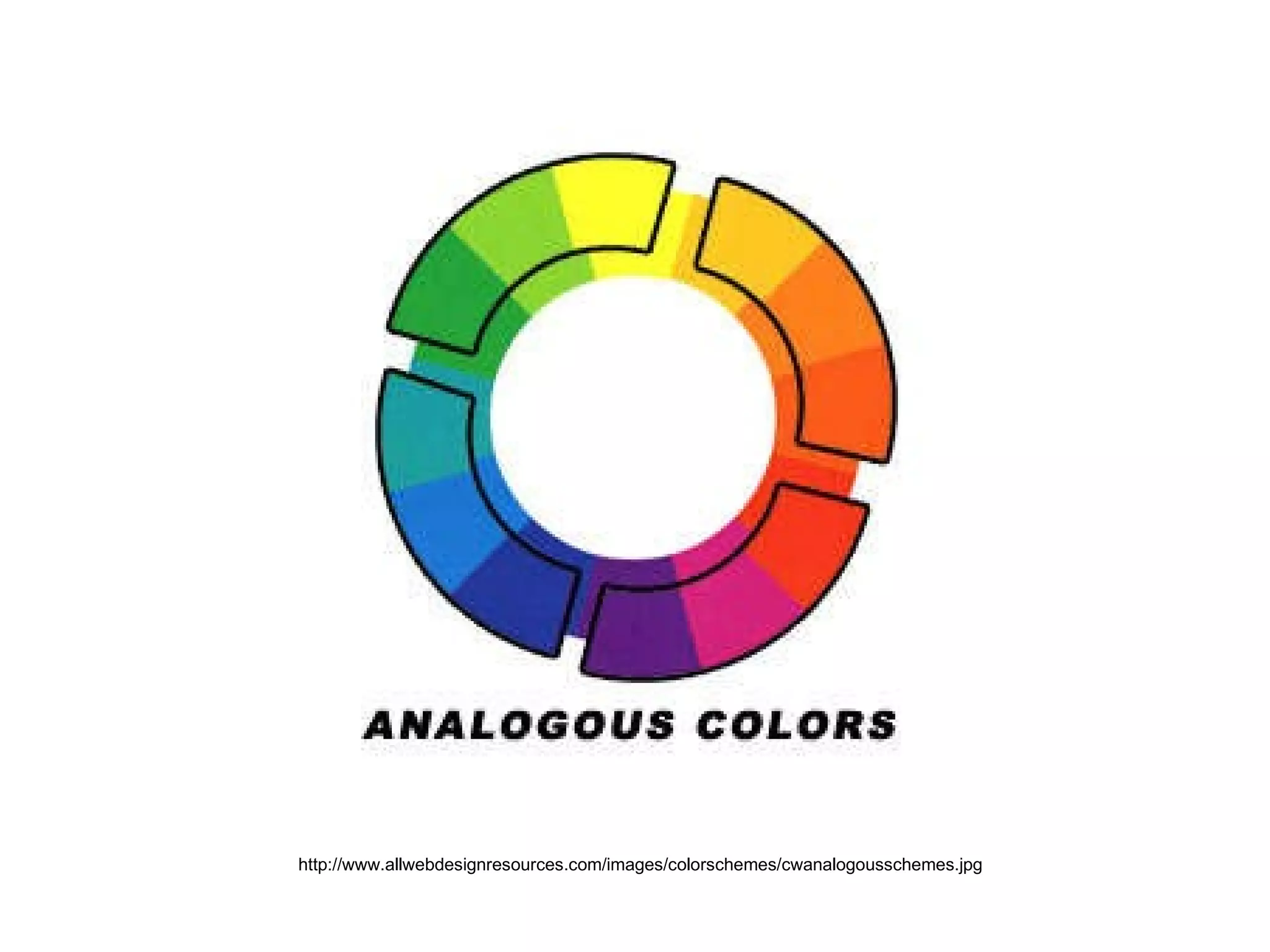
Analogous Any three colors which are side by side on a 12 part  color  wheel, such as yellow-green, yellow, and yellow-orange. Usually one of the three colors predominates.         Above: Andy Warhol (American, 1928-1987)  Camouflage , 1987   http://www.gallerywarhol.com/Warhol-Prints/andy-warhol-camouflage-1987-FS-II.408.jpg Left: Vincent vanGogh http://rosegraphics.biz/blog/wp-content/uploads/2009/01/sunflowers_vangogh.jpg
http://www.allwebdesignresources.com/images/colorschemes/cwanalogousschemes.jpg
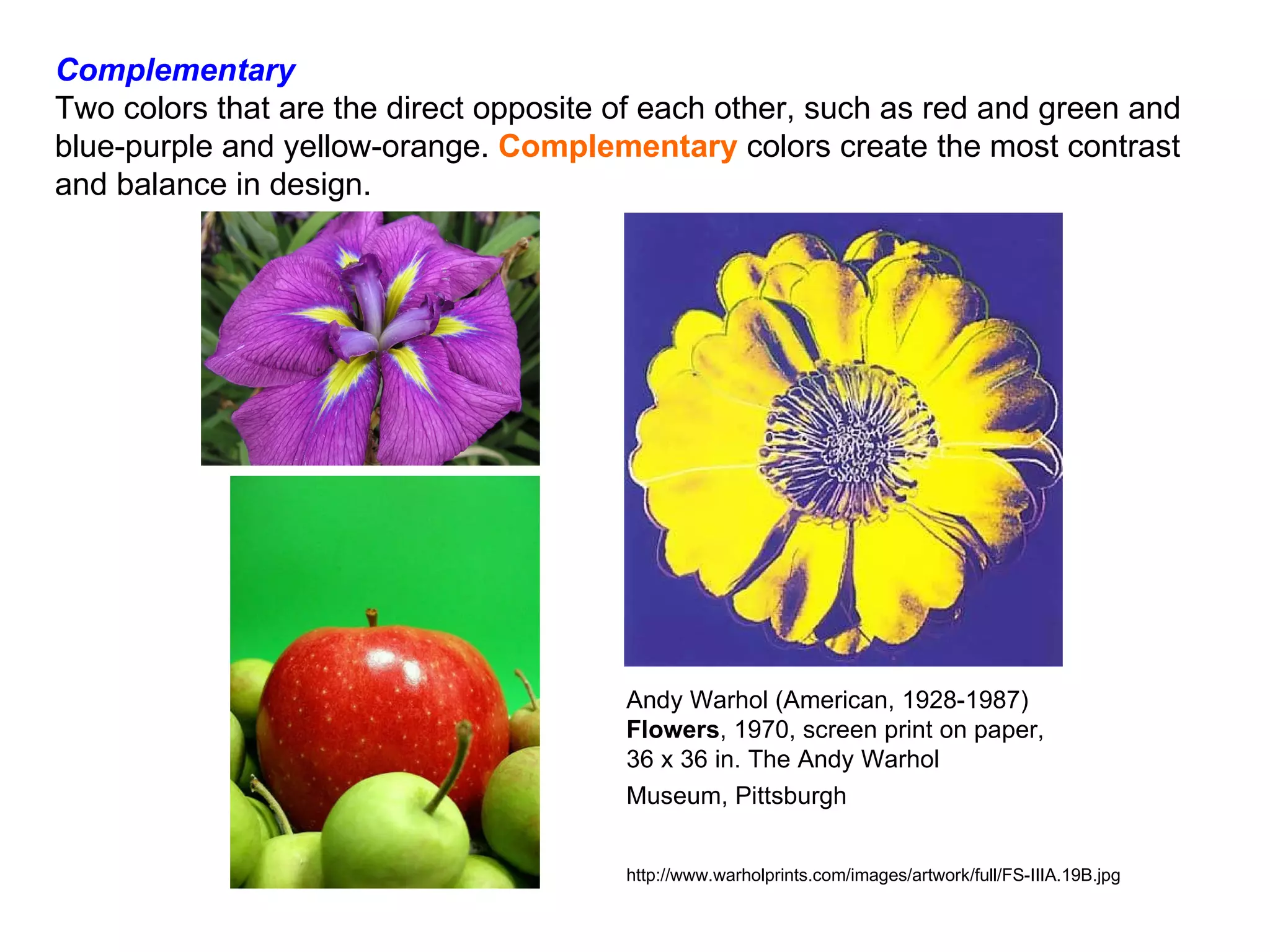
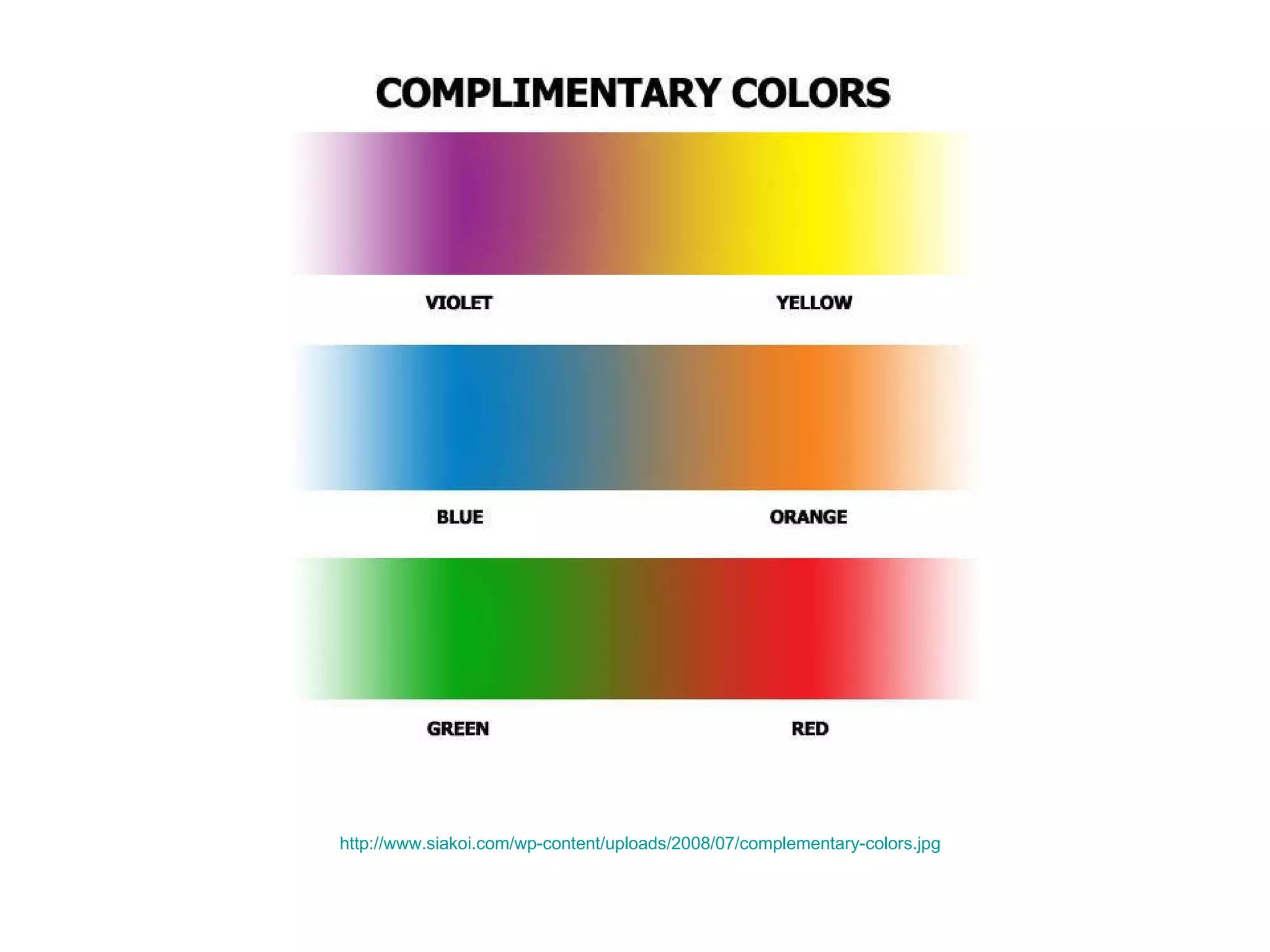
Complementary Two colors that are the direct opposite of each other, such as red and green and blue-purple and yellow-orange.  Complementary  colors create the most contrast and balance in design.     Andy Warhol (American, 1928-1987)  Flowers , 1970, screen print on paper, 36 x 36 in. The Andy Warhol Museum, Pittsburgh   http://www.warholprints.com/images/artwork/full/FS-IIIA.19B.jpg
http://www.siakoi.com/wp-content/uploads/2008/07/complementary-colors.jpg
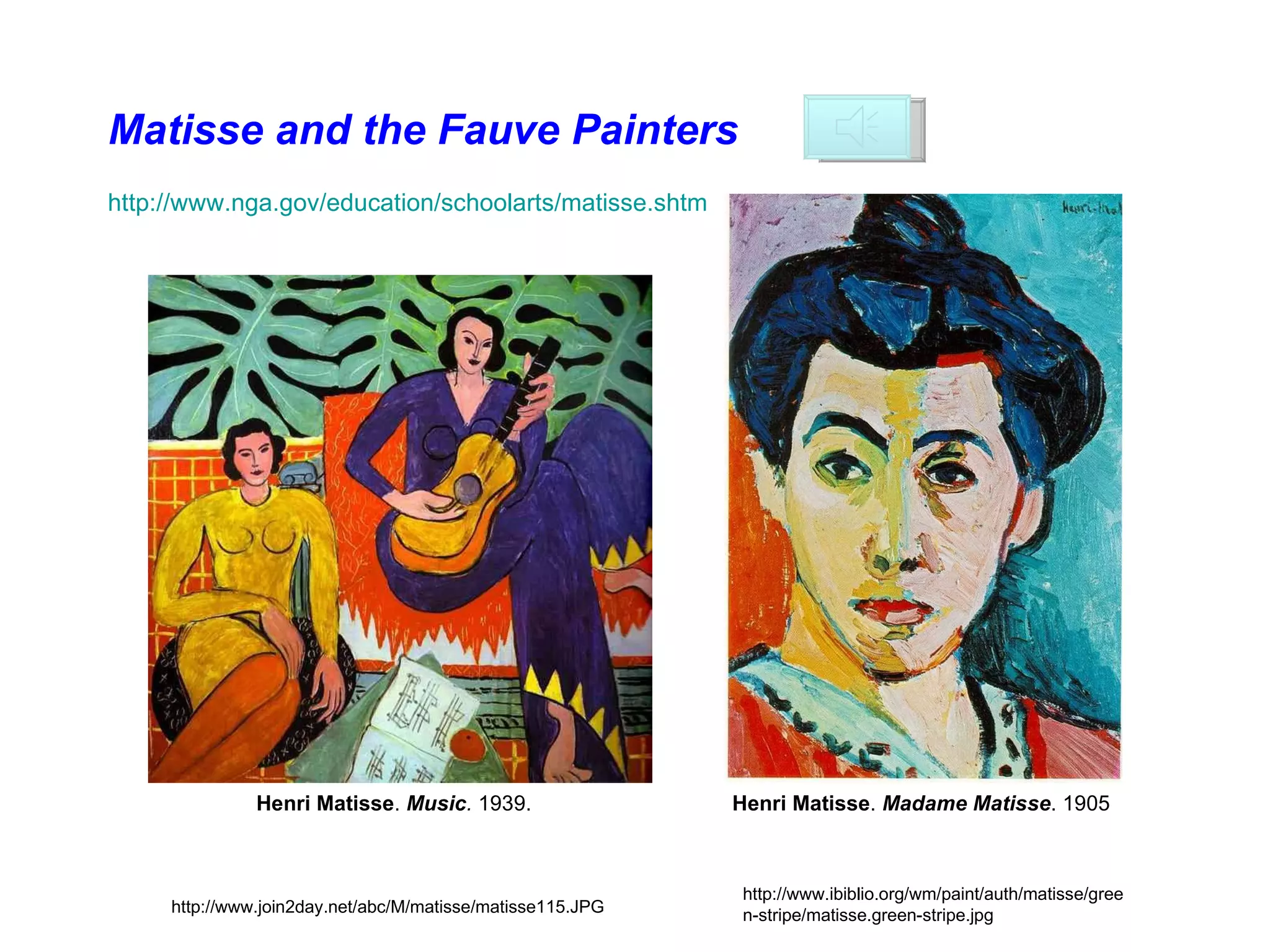
http://www.ibiblio.org/wm/paint/auth/matisse/green-stripe/matisse.green-stripe.jpg http://www.join2day.net/abc/M/matisse/matisse115.JPG http://www.nga.gov/education/schoolarts/matisse.shtm Matisse and the Fauve Painters Henri Matisse .   Music .  1939.  Henri Matisse .  Madame Matisse . 1905
After learning more about color schemes and experimenting with them through creating color wheels with tempera paint, you will create a painting.
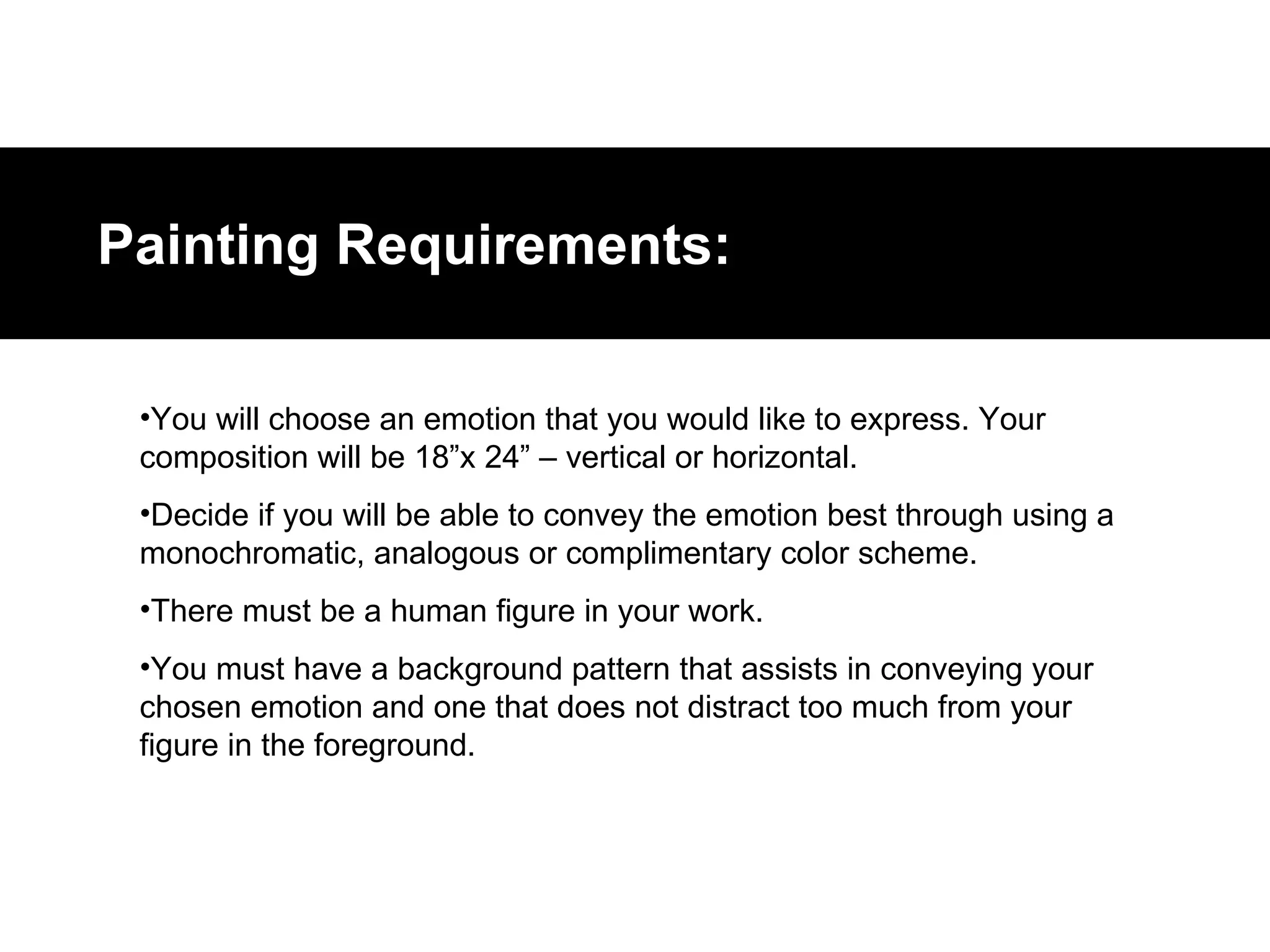
You will choose an emotion that you would like to express. Your composition will be 18”x 24” – vertical or horizontal. Decide if you will be able to convey the emotion best through using a monochromatic, analogous or complimentary color scheme.  There must be a human figure in your work. You must have a background pattern that assists in conveying your chosen emotion and one that does not distract too much from your figure in the foreground. Painting Requirements:

Danker.color.art7

  • 1.
    7.1 Thestudent will identify and use analogous, complementary, and monochromatic color relationships in works of art. http://www.gamersuniform.com/img/pantone.jpg Let’s talk About C O L O R
  • 2.
    The Color Wheelhttp://www.johnchiappone.com/elements_of_art.html
  • 3.
    Monochromatic Uses shadesor tints from the same hue          Andy Warhol (American, 1928-1987) Sunset , 1972 Screen print on Paper 34 x 34 in. The Andy Warhol Museum, Pittsburgh http://www.gallerywarhol.com/Warhol-Prints/100/andy-warhol-sunset-1972-FS-II.88.jpg
  • 4.
    Picasso's blue-period "Woman With Crossed Arms" http://www.forbes.com/2000/11/29/1129lifestyle.html
  • 5.
    Analogous Any threecolors which are side by side on a 12 part color wheel, such as yellow-green, yellow, and yellow-orange. Usually one of the three colors predominates.         Above: Andy Warhol (American, 1928-1987) Camouflage , 1987   http://www.gallerywarhol.com/Warhol-Prints/andy-warhol-camouflage-1987-FS-II.408.jpg Left: Vincent vanGogh http://rosegraphics.biz/blog/wp-content/uploads/2009/01/sunflowers_vangogh.jpg
  • 6.
  • 7.
    Complementary Two colorsthat are the direct opposite of each other, such as red and green and blue-purple and yellow-orange. Complementary colors create the most contrast and balance in design.     Andy Warhol (American, 1928-1987) Flowers , 1970, screen print on paper, 36 x 36 in. The Andy Warhol Museum, Pittsburgh http://www.warholprints.com/images/artwork/full/FS-IIIA.19B.jpg
  • 8.
  • 9.
  • 10.
    After learning moreabout color schemes and experimenting with them through creating color wheels with tempera paint, you will create a painting.
  • 11.
    You will choosean emotion that you would like to express. Your composition will be 18”x 24” – vertical or horizontal. Decide if you will be able to convey the emotion best through using a monochromatic, analogous or complimentary color scheme. There must be a human figure in your work. You must have a background pattern that assists in conveying your chosen emotion and one that does not distract too much from your figure in the foreground. Painting Requirements: