DOING 
BUSINESS IN 
SERBIA 
2014
01 F O R E W O R D 
02 B U S I N E S S E N V I R O N M E N T 
S ta b l e a n d P r e d i c ta b l e 
03 W H Y I N V E S T ? 
Tr a d e U n l i m i t e d 
H u m a n R e s o u r c e s 
Favo r a b l e G e o g r a p h i c P o s i t i o n 
Low O p e r a t i n g C o s t s 
F i n a n c i a l I n c e n t i v e s 
S I E P A - A D e c a d e o f M i n d i n g Y o u r B u s i n e s s 
04 W H E R E T O I N V E S T ? 
A u to m ot i ve I n d u s t r y 
A g r i c u l tu r e a n d F o o d P r o d u c t i o n 
I C T S e c t o r 
S I E P A - S u p p l i e r s D a ta b a s e ™ 
E l e c t r o n i c s I n d u s t r y 
S h a r e d S e r v i c e s a n d B P O 
R e a l E s t ate 
Wo o d a n d F u r n i tu r e I n d u s t r y 
Te x t i l e a n d A p p a r e l P r o d u c t i o n 
05 S T E P S T O T A K E 
G et t i n g T o a n d W o r k i n g i n S e r b i a 
O f f i c e a n d R e s i d e n t i a l S p a c e M a r k et 
C o n s t r u c t i o n P r o c e d u r e 
S I E P A - I n v e s t m e n t L o c at i o n s D a ta b a s e ™ 
U s e f u l C o n t a c t s 
. . . . . . . . . . . . . . . . . . . . . . . . . . . . . . . . . . . . . . . . . . . . . . . . . . . 0 6 
. . . . . . . . . . . . . . . . . . . . . . . . . . . . . . . . . . . . . . . . . . . . . . . . . . . 0 8 
. . . . . . . . . . . . . . . . . . . . . . . . . . . . . . . . . . . . . . . . . . . . . . . . . . . 1 0 
. . . . . . . . . . . . . . . . . . . . . . . . . . . . . . . . . . . . . . . . . . . . . . . . . . . 12 
. . . . . . . . . . . . . . . . . . . . . . . . . . . . . . . . . . . . . . . . . . . . . . . . . . . 1 4 
. . . . . . . . . . . . . . . . . . . . . . . . . . . . . . . . . . . . . . . . . . . . . . . . . . . 1 6 
. . . . . . . . . . . . . . . . . . . . . . . . . . . . . . . . . . . . . . . . . . . . . . . . . . . 1 8 
. . . . . . . . . . . . . . . . . . . . . . . . . . . . . . . . . . . . . . . . . . . . . . . . . . . 2 0 
. . . . . . . . . . . . . . . . . . . . . . . . . . . . . . . . . . . . . . . . . . . . . . . . . . . 2 2 
. . . . . . . . . . . . . . . . . . . . . . . . . . . . . . . . . . . . . . . . . . . . . . . . . . . 2 3 
. . . . . . . . . . . . . . . . . . . . . . . . . . . . . . . . . . . . . . . . . . . . . . . . . . . 24 
. . . . . . . . . . . . . . . . . . . . . . . . . . . . . . . . . . . . . . . . . . . . . . . . . . . 2 6 
. . . . . . . . . . . . . . . . . . . . . . . . . . . . . . . . . . . . . . . . . . . . . . . . . . . 2 8 
. . . . . . . . . . . . . . . . . . . . . . . . . . . . . . . . . . . . . . . . . . . . . . . . . . . 3 0 
. . . . . . . . . . . . . . . . . . . . . . . . . . . . . . . . . . . . . . . . . . . . . . . . . . . 3 1 
. . . . . . . . . . . . . . . . . . . . . . . . . . . . . . . . . . . . . . . . . . . . . . . . . . . 3 2 
. . . . . . . . . . . . . . . . . . . . . . . . . . . . . . . . . . . . . . . . . . . . . . . . . . . 3 4 
. . . . . . . . . . . . . . . . . . . . . . . . . . . . . . . . . . . . . . . . . . . . . . . . . . . 3 6 
. . . . . . . . . . . . . . . . . . . . . . . . . . . . . . . . . . . . . . . . . . . . . . . . . . . 3 7 
. . . . . . . . . . . . . . . . . . . . . . . . . . . . . . . . . . . . . . . . . . . . . . . . . . . 3 8 
. . . . . . . . . . . . . . . . . . . . . . . . . . . . . . . . . . . . . . . . . . . . . . . . . . . 40 
. . . . . . . . . . . . . . . . . . . . . . . . . . . . . . . . . . . . . . . . . . . . . . . . . . . 4 2 
. . . . . . . . . . . . . . . . . . . . . . . . . . . . . . . . . . . . . . . . . . . . . . . . . . . 4 3 
. . . . . . . . . . . . . . . . . . . . . . . . . . . . . . . . . . . . . . . . . . . . . . . . . . . 4 4 
. . . . . . . . . . . . . . . . . . . . . . . . . . . . . . . . . . . . . . . . . . . . . . . . . . . 4 5 
. . . . . . . . . . . . . . . . . . . . . . . . . . . . . . . . . . . . . . . . . . . . . . . . . . . 4 6 
00 I N D E X O F C O N T E N T 
Airport City Belgrade, the first multi-use commercial facility in Serbia that merges 
the latest in building technology, together with a tenant-focused approach.
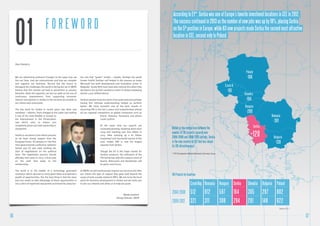
According to EY*, Serbia was one of Europe’s favorite investment locations in CEE in 2012. 
The success continued in 2013 as the number of ne w jobs was up by 18%, placing Serbia 
on the 5th position in Europe, while 63 ne w projects made Serbia the second most a ttractive 
Poland 
-180 
01 location in CEE, second only t o Poland. F O R E W O R D 
Czech R. 
-191 
Slovakia 
-104 
Hungary 
-289 
Romania 
-301 
Serbia 
+120 Bulgaria 
-139 
Poland 
802 
622 
Source: EY * 
Based on the comparison be tween the 
number of FDI projects secured o ver 
2004-2008 and 2009-2013 periods, Serbia 
is the only country in CEE tha t has raised 
its FDI a ttractiverness 
* EY European Attractiveness Survey 2014 
FDI Projects by Countries 
Slovakia 
305 
201 
Bulgaria 
287 
148 
Hungary 
597 
308 
Czech Rep. 
512 
321 
2004-2008 
2009-2013 
Romania 
612 
311 
Serbia 
164 
284 
Nikola Jankovic 
Acting Director, SIEPA 
06 07
Foreign investors are accorded national treatment 
02 B U S I N E S S 
and provided with full legal security and protection in respect 
to the rights acquired by the virtue of investment. E N V I R O N M E N T 
The government’s fiscal consolidation plans outlined in the 
draft medium-term strategy identify a set of measures that 
aim to put public finances on a sustainable footing. The 
2013 general government deficit of 5.0% of GDP exceeded 
the initial target, although it came in below the 2012 
deficit. The 2014 budget envisaged an increase in the 
deficit to 5.5% of GDP to finance mainly higher investment 
and interest payments. 
A new Privatization Law was enacted in August, setting the 
end of 2015 as a deadline for completing the privatization 
process and outlining the possible models of privatization: 
strategic partnership, transfer of capital without 
compensation, sale of capital and sale of assets. 
The new Labor Law was adopted granting more flexibility to 
employers and providing options for work previously not 
available. Amendments to the Pension and Disability 
Insurance Law were adopted in July. In August, amendments 
to the Bankruptcy Law were adopted, regulating more in detail 
the role of the bankruptcy administrator and creditor rights. 
Serbia wants to secure a three-year loan agreement with the 
International Monetary Fund this year end to help reach debt 
and deficit goals. 
www.srbija.gov.rs www.seio.gov.rs 
Over the past several years, the Serbian economy has 
experienced growth due to strong foreign investment and 
continuous improvement of its business environment. Major 
steps to improve the business climate and reduce the state’s 
footprint in the economy have been implemented with the aim to 
provide momentum for investments, economic diversification, 
and sustainable private sector growth in order to create jobs. 
Serbia has set an ambitious plan regarding its top priorities - EU 
accession, fiscal consolidation, finalization of the privatization 
process, improvements of the Labor Law and pension system 
and reforms in the functioning of the public enterprises. 
The European Council granted the status of candidate 
country to Serbia in March 2012 and decided to open 
accession negotiations in June 2013. Accession negotiations 
were formally launched in January 2014. The Stabilization 
and Association Agreement between Serbia and the EU 
entered into force in September 2013. Serbia has continued 
to build a satisfactory track record in implementing the 
obligations of the SAA as noted in the EC latest report from 
October 2014. The analytical examination of the EU Acquis 
(screening process) started in September 2013 and so far 5 
chapters have been fully screened and screening of 9 more 
chapters have started. Overall, the screening exercise is 
expected to be completed in 2015. 
Serbia’s external position is more balanced than before the 
2008–09 crises. This was reflected by a lower current 
account deficit, a more competitive exchange rate and a 
comfortable level of international reserves. The banking 
system is liquid and well-capitalized, a result of cautious 
economic policies pursued before and during the crisis. 
“Serbia has great potential in the IT industry 
- that is why the w orld’s biggest software company 
decided to open a development centre in Belgrade”. 
Mr. Christopher Brennan, 
Central Eastern Europe General Manager, 
Microsoft 
08 09
After the screening process in 2014 
Serbia will officialy start 
the EU negotiation process in 2015 
E N V I R O N M E N T 
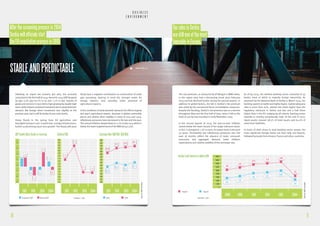
STABLE AND PREDICTABLE www.nbs.rs 
Following an export led recovery last year, the economy 
contracted in the first half of 2014. Hence H1 2014 GDP dropped 
by app. 0.5% yoy (+0.1% in Q1 and -1.1% in Q2). Exports of 
goods and services in euro terms kept growing by double digit 
rates, while imports remained restrained due to weak domestic 
demand. Net foreign direct investment rose slightly on the 
previous year, but is still far below its pre-crisis levels. 
Heavy floods in the spring have hit agriculture and 
damaged transport and, in particular, energy infrastructure, 
further undermining short term growth. The floods will most 
likely have a negative contribution on continuation of trade 
gap narrowing, bearing in mind the stronger needs for 
energy imports, and, possibly, lower potential of 
agricultural exports. 
In the conditions of weak domestic demand, the effects of good 
last year’s agricultural season, decrease in global commodity 
prices and relative dinar stability in most of 2013 and 2014, 
inflationary pressures have decreased in the last and this year. 
The annual inflation slowed down to 2.1% in July 2014 which is 
below the lower targeted band of the NBS (of 4±1.5%). 
GDP Growth Rates Serbia vs Eurozone Inflation RSD Exchange Rate EUR/RSD, USD/RSD 
Tax rates in Serbia 
are still one of the most 
favorable in Europe. 
The risk premium, as measured by JP Morgan's EMBI index, 
in the region have had a decreasing trend since February 
2014 and has declined further during the second quarter. In 
addition to global factors, the fall in Serbia’s risk premium 
was aided by the announced fiscal consolidation measures. 
Despite the flooding, Serbia’s risk premium was on a decline 
throughout May and the first half of June, when it fell to the 
level of 220 bp last recorded in early November 2007. 
In the second quarter of 2014, the year-on-year inflation 
moved below the lower bound of the target tolerance band. 
In fact, it plunged to 1.3% in June, its lowest level in the past 
50 years. Persistently low inflationary pressures over the 
past 18 months reflect the absence of major cost-push 
pressures, low aggregate demand, lower inflation 
expectations and relative stability of the exchange rate. 
Serbias trade balance in million EUR 
B U S I N E S S 
Source: NBS, Eurostat 
As of Q3 2014, the Serbian banking sector consisted of 29 
banks, most of which in majority foreign ownership. As 
assessed by the National Bank of Serbia in March 2014, the 
banking system is stable and highly liquid. Capital adequacy 
ratio is more than 20%, almost two times higher than the 
regulatory minimum in Serbia and two and a half times 
higher than in the EU. Judging by all criteria, banking sector 
liquidity is running exceptionally high. At the end of 2013, 
liquid assets covered 38.5% of total assets and 62.2% of 
short-term liabilities. 
In terms of their share in total banking sector assets, the 
most significant foreign banks are from Italy and Austria, 
followed by banks from Greece, France and other countries. 
Source: NBS, Eurostat 
11,505 
5,961 
12,622 
7,393 
14,250 14,716 
8,441 8,738 
15,469 
10,996 
7,500 
5,514 
2009 2010 2011 2012 2013 2014* 
18,000 
16,000 
14,000 
12,000 
10,000 
8,000 
6,000 
4,000 
2,000 
0 
14 
13 
12 
11 
10 
9 
8 
7 
6 
5 
4 
3 
2 
1 
0 
-1 
-2 
-0.6 -0.4 
1.6 
-1.5 
-0.5 
104.6 
80.8 
113.7 114.6 116.7 
86.1 
83.1 
87.1 
2.5 
0.9 
125 
120 
115 
110 
105 
100 
95 
90 
85 
80 
75 
70 
65 
60 
55 
50 
12.2 
2.1 
7.0 
2.2 
2011 2012 2013 2014* 2011 2012 2013 2014* 2011 2012 2013 2014* 
1.4 
Import Export 
Eurozone GDP Serbia GDP * January - July * January - July 
4 
3 
2 
1 
0 
-1 
-2 
-3 
USD EUR 
10 11
03 W H Y 
-Duty-free access to a 1 billion people mark et; 
-State grants for new jobs created; 
I N V E S T ? 
-One of Europe’s lowest CIT rates - 15%; 
-Major European corridors’ intersection point; 
-Access to a competitive and qualified talent pool. LOW OPERATING 
COSTS 
FINANCIAL 
INCENTIVES 
TRADE 
UNLIMITED 
HUMAN 
RESOURCES 
FAVORABLE 
GEOGRAPHIC 
POSITION 
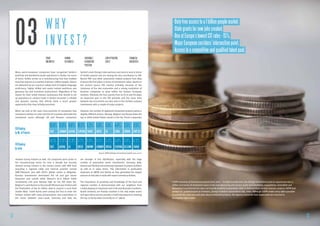
FDI Ranking 
by No. of Projects 
FDI Ranking 
by value 
10.2% 
SLOVENIA 
8.7% 
GREECE 
5.2% 
FRANCE 
8.6% 
NORWAY 
5.0% 
GREECE 
6.5% 
GERMANY 
5.0% 
US 
5.3% 
RUSSIA 
4.4% 
ISRAEL 
4.9% 
SLOVENIA 
2.5% 
CROATIA 
4.8% 
BELGIUM 
2.5% 
SWITZER. 
4.3% 
FRANCE 
16.9% 
ITALY 
14.1% 
ITALY 
13.0% 
GERMANY 
12.0% 
AUSTRIA 
11.6% 
AUSTRIA 
12.0% 
US 
Source: SIEPA database of investment projects 2001-2014* 
12 13
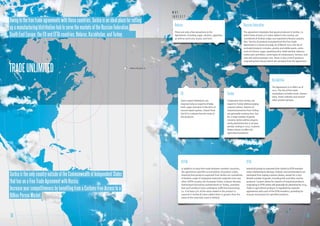
Owing to the free trade agreements with these countries, Serbia is an ideal place for setting 
up a manufacturing/distribution hub to serve the markets of the Russian Federation, 
South East Europe, the EU and EFT A countries, Belarus, Kazakhstan, and Turkey. 
W H Y 
I N V E S T ? 
Belarus 
There are only a few exceptions to the 
Agreement, including sugar, alcohol, cigarettes, 
as well as used cars, buses, and tires. 
EU 
Some export limitations are 
imposed only on exports of baby 
beef, sugar and wine in the form of 
annual export quotas. Import from 
the EU is customs-free for most of 
the products. 
CEFTA 
Turkey 
Companies from Serbia can 
export to Turkey without paying 
customs duties. Imports of 
industrial products from Turkey 
are generally customs-free, but 
for a large number of goods 
customs duties will be progres-sively 
abolished over a six-year 
period, ending in 2015. Customs 
duties remain in effect for 
agricultural products. 
In addition to duty-free trade between member countries, 
the agreement specifies accumulation of product origin, 
meaning that products exported from Serbia are considered 
of Serbian origin if integrated materials originate from any 
other CEFTA country, the European Union, Iceland, Norway, 
Switzerland (including Liechtenstein) or Turkey, provided 
that such products have undergone sufficient processing, 
i.e. if at least 51% of the value added in the product is 
sourced in Serbia (if value added there is greater than the 
value of the materials used in Serbia). 
Russian Federation 
The agreement stipulates that goods produced in Serbia, i.e. 
which have at least 51% value added in the country, are 
considered of Serbian origin and exported to Russia customs 
free. The list of products excluded from the Free Trade 
Agreement is revised annually. As of March 2012, the list of 
excluded products includes: poultry and edible waste, some 
sorts of cheese, sugar, sparkling wine, ethyl-alcohol, tobacco, 
cotton yarn and fabric, some types of compressors, tractors, and 
new and used passenger cars. There is also a list of products 
originating from Russia which are excluded from the agreement. 
EFTA 
Kazakhstan 
The Agreement is in effect as of 
2011. The list of free trade 
exemptions includes meat, cheese, 
wine, motor vehicles and several 
other product groups. 
Industrial products exported from Serbia to EFTA member 
states (Switzerland, Norway, Iceland, and Liechtenstein) are 
exempted from paying customs duties, except for a very 
limited number of goods, including fish and other marine 
products. Custom duties for imports of industrial products 
originating in EFTA states will gradually be abolished by 2014. 
Trade in agricultural products is regulated by separate 
agreements with each of the EFTA members, providing for 
mutual concessions for specified products. 
TRADE UNLIMITED 
Serbia is the only country outside of the Commonw ealth of Independent States 
that has an a Free Trade Agreement with Russia. 
Increase your competitiveness by benefiting from a Cust oms-Free Access to a 
Billion Person Market. 
www.mtt.gov.rs 
14 15
AGE 
TOTAL 
AGE 
20-29 
AGE 
30-39 
AGE 
40-49 
AGE 
50-59 
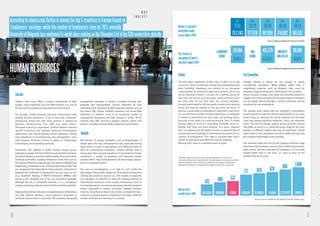
Number of registered 
unemployed people, 
by age (August 2014) 757,243 177,976 187,056 174,802 165,512 
Source: National Employment Service of Serbia 
W H Y 
I N V E S T ? 
According to elance.com Serbia is among the t op 5 countries in Europe based on 
freelancers’ earnings, while the number of freelancers rises b y 70% annually. 
University of Belgrade has confirmed its world class ranking on the Shanghai List of top 500 universities globally. 
The structure of 
unemployed by level of 
education (August 2014) 
405,379 
53.53% 
HIGH 
SCHOOL 
UNIVERSITY 
AND COLLEGE 
ELEMENTARY 
SCHOOL 
110,680 
14.61% 
241,184 
31.85% 
HUMAN RESOURCES Source: National Employment Service of Serbia 
Educated 
Serbia's labor force offers a unique combination of high 
quality, wide availability and cost effectiveness. It is one of 
the key factors enabling strong business performance. 
For decades, Serbia fostered extensive relationships with 
leading western economies. A list of blue-chip companies 
maintaining strong ties with local partners is topped by 
Siemens, Alcatel-Lucent, Fiat, IKEA and many others. 
Throughout years of cooperation, Serbian workers received 
specific know-how and adopted advanced technological 
applications and intense quality control standards. Having 
vast experience in manufacturing and management, local 
staff requires minimum training to adopt to cutting-edge 
technologies and assembly processes. 
Universities and colleges in Serbia produce around 47,500 
graduates annually. One third of them are produced by business 
and administration universities, while another third comes from 
technical universities. Leading institutions in this field such as 
the School of Electrical Engineering or the School of Mechanical 
Engineering in Belgrade or the Technical University in Novi Sad 
are recognized internationally for their expertise. University of 
Belgrade has confirmed its ranking from 301-400 place on the 
2014 Academic Ranking of World Universities (ARWU), also 
known as the Shanghai List of top 500 universities globally. 
Although the list is considered informal, it is a prestigious 
ranking comprising only two percent of all universities globally. 
High-quality technical education is largely based on elementary 
and high schools offering a more advanced curriculum in 
technical sciences than in most other CEE countries. Top-quality 
www.bg.ac.rs 
www.uns.ac.rs 
www.ni.ac.rs 
management education in Serbia is provided through joint 
graduate and post-graduate courses organized by local 
universities and renowned western business schools such as 
the French HEC, British Sheffield University and Heriot Watt 
University. In addition, there is an increasing number of 
international elementary and high schools in Serbia. At the 
moment, they offer curricula in English, German, French, and 
Russian, including internationally recognized examinations. 
Available 
Recruitment of young graduates and undergraduates is 
simple given the high unemployment rate, especially among 
those under 30 years of age (almost 50%). Many are keen to 
work for international companies. Serbian workers have a 
strong work ethic and demographics are favorable for foreign 
companies: a wealth of ambitious and educated people 
coupled with a high unemployment rate keep wage expecta-tions 
at competitive levels. 
The rate of unemployment is as high as 22%, while the 
percentage of those with college and university level education 
seeking jobs stands at around 15%. The number of engineers 
and managers is sufficient to meet the growing demand of 
international companies in the country. Freelancing is also an 
increasingly popular concept among young educated people in 
Serbia, especially in creative industries, software develop-ment 
etc. According to elance.com Serbia is among the top 5 
countries in Europe based on freelancers’ earnings, while the 
number of freelancers rises by 70% annually. 
Flexible 
The new labor regulations (Labor Law, in effect as of July 
2014) are in favor of employer, bolster new employment and 
labor flexibility. Employees are entitled for an increased 
compensation for working at night and overtime (26%), but 
not for working in shifts. A contract for a definite period of 
time may now last for up to two years, while severance pays 
are paid only for the time with the current employer. 
Standard work week for full-time work consists of 40 working 
hours, but may be reduced to not less than 36 hours. In 
general, a work week is comprised of 5 days but in case there 
is a need for work in shifts and overnight hours, an employer 
is entitled to determine the exact days and working hours, 
pursuant to the needs of a working process. Also, if a work 
process allows it, there is a possibility of flexible hours i.e. 
flexible start time, but fixed duration. In a given calendar 
year, an employee has the right to at least 20 working days of 
annual paid leave (holiday) as determined by general act or 
contract of employment. This right is acquired after only a 
month of continuous work with the current employer. 
Working after 10pm is considered work at night. 
Cost Competitive 
Average salaries in Serbia are low enough to ensure 
cost-effective operations. While slightly higher than in 
neighboring countries such as Bulgaria, total costs for 
employers stand at merely 60% of the level in CEE countries. 
Social insurance charges and salary tax nominally amount to 
roughly 62% of the net salary, but the tax burden for employers 
can be largely reduced through a variety of financial and tax 
incentives for new employment. 
The average gross salary with out employer’s contributions 
across economic sectors for the first eight months of 2014 was 
around €540 as noted by the Vienna Institute, but the labor 
costs vary among individual industries, cities, and education 
levels. The ratio of average salaries among economic sectors 
may differ as much as 5:1, while the salary range for the same 
position in different regions may also be significant. Overall 
salary levels in euro equivalent are rather stable and vary only 
by a couple of percentage points annually. 
The minimum salary has to be at the statutory minimum wage 
determined by the mutual consent of the Serbian Government, 
labor unions, and the association of employers. It is currently 
slightly higher than €1 per hour, i.e. close to €240 on the 
monthly level (as of 2015). 
This table does not represent total cost of employees. It is used as an 
international benchmarking standard. Average wages encompass net salary 
and contributions and tax paid by employees only. Adding contributions 
paid by the employer on behalf of the employee will result in total cost. 
413 490 537 
777 824 870 965 1.048 
Average gross 
monthly salary (EUR) 
BULGARIA ROMANIA SERBIA HUNGARY SLOVAKIA POLAND CZECH REP. CROATIA 
Source: Vienna Institute for International Economic Studies, 2014 
16 17
Serbia bridges the East and the W est. 
Its treasured position in the heart of South East Europe 
makes it an outstanding investment location. 
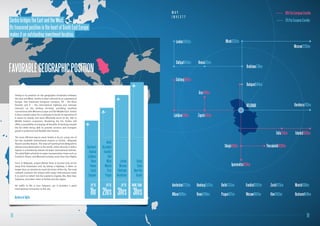
FAVORABLE GEOGRAPHIC POSITION 
Owing to its position on the geographic borderline between 
the East and West, Serbia is often referred to as a gateway of 
Europe. Two important European corridors, VII – the River 
Danube and X – the international highway and railroad, 
intersect on the Serbian territory, providing excellent 
connections with Western Europe and the Middle East. Serbia 
is thus a perfect place for a company to locate its operations if 
it wants to closely and most efficiently serve its EU, SEE or 
Middle Eastern customers. Bordering the EU, Serbia still 
offers a possibility of enjoying all benefits of working outside 
the EU while being able to provide services and transport 
goods in projected and flexible time frames. 
The most efficient way to reach Serbia is by air, using one of 
the two available international airports in Serbia - Belgrade 
Airport and Nis Airport. The ease of traveling from Belgrade to 
almost every destination in the world, either directly or with a 
layover is provided by almost all major international airlines. 
The daily flight schedule to major transportation hubs such as 
Frankfurt, Rome, and Moscow includes more than four flights. 
Once in Belgrade, airport Nikola Tesla is located only 18 km 
away from downtown and, by taking a highway, it takes no 
longer than 20 minutes to reach the heart of the city. The road 
network connects the airport with major international roads 
E-75 and E-70 which link the capital to Zagreb, Nis, Novi Sad, 
Subotica, and other cities in Serbia and the region. 
Air traffic to Nis is less frequent, yet it provides a good 
international connection to the city. 
Bucharest 
Istanbul 
Ljubljana 
Rome 
Vienna 
Zurich 
Sarajevo 
Berlin 
Düsseldorf 
Frankfurt 
Kiev 
Milan 
Munich 
Paris 
Prague 
London 
Moscow 
Stockholm 
Amsterdam 
Bejing 
Dubai 
New York 
Toronto 
UP TO 
1hr 
UP TO 
2hrs 
UP TO 
3hrs 
MORE THAN 
3hrs 
Duration of flights 
Bratislava578km 
Budapest384km 
BELGRADE 
10th Pan European Corridor 
7th Pan European Corridor 
Moscow2235km 
Minsk1532km 
W H Y 
I N V E S T ? 
London2042km 
Stuttgart1451km Vienna612km 
Salzburg989km 
Graz699km 
Ljubljana510km Zagreb442km 
Sofia756km 
Skopje889km Thessaloniki1020km 
Igoumenitsa1051km 
Konstanza702km 
Istanbul1356km 
Amsterdam1722km Hamburg1547km Berlin1255km Frankfurt1282km Zurich1175km Munich930km 
Milano1009km Rome1289km Prague907km Warsaw1067km Kiev1302km Bucharest641km 
18 19
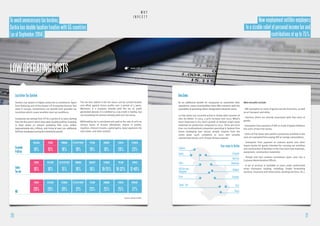
To avoid unnecessary tax burdens, 
Serbia has double taxation treaties with 55 countries 
(as of September 2014). 
LOW OPERATING COSTS 
New employment entitles employers 
to a sizable relief of personal income t ax and 
contributions of up to 75%. 
W H Y 
I N V E S T ? 
BULGARIA 
10% 
SERBIA 
15% 
ROMANIA 
16% 
CZECH REPUBLIC 
19% 
POLAND 
19% 
HUNGARY 
19% 
CROATIA 
20% 
www.mfin.gov.rs 
SLOVAKIA 
23% 
SERBIA 
10% 
BULGARIA 
10% 
CZECH REPUBLIC 
15% 
ROMANIA 
16% 
HUNGARY 
16% 
SLOVAKIA 
19-25% 
POLAND 
18-32% 
CROATIA 
12-40% 
SERBIA 
20% 
BULGARIA 
20% 
SLOVAKIA 
20% 
CZECH REPUBLIC 
21% 
POLAND 
23% 
ROMANIA 
25% 
CROATIA 
25% 
HUNGARY 
27% 
Corporate 
Profit tax 
Salary 
Tax rate 
VAT 
Source: National IPAs 
Free zones in Serbia 
Subotica 
Zrenjanin 
Novi Sad 
Smederevo 
FAS Free zone - Svilajnac 
Kragujevac 
Krusevac 
Pirot 
Vranje 
Apatin 
Sabac 
Uzice 
“South” - Nis 
20 21
SIEPA - one-stop-shop 
for financial support 
FINANCIAL INCENTIVES 
W H Y 
I N V E S T ? 
22 
www.siepa.gov.rs 
www.privreda.gov.rs 
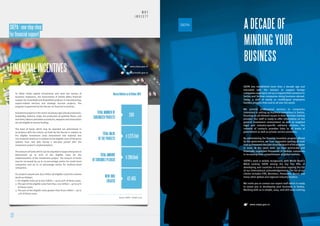
Decree Statistics as of October 2014 
TOTAL NUMBER OF 
SUBSIDIZED PROJECTS 200 
TOTAL VALUE 
OF THE PROJECTS 
TOTAL AMOUNT 
OF SUBSIDIES PLEDGED 
NEW JOBS 
CREATED 42,405 
A DECADE OF 
MINDING YOUR 
BUSINESS 
SIEPA was established more than a decade ago and 
entrusted with the mission to support foreign 
companies seeking to set up or expand their presence in 
Serbia and Serbian companies doing business abroad. 
Today, a staff of nearly 50 multilingual employees 
handles projects from and to all over the world. 
We provide professional services to companies 
interested in setting up business operations in Serbia, 
focusing on all relevant issues in their decision making 
process. Our staff is ready to offer information on the 
general investment environment as well as targeted 
legal and industry-specific advisory services. Our 
network of contacts provides links to all levels of 
government as well as private service providers. 
By administering the financial incentives program offered 
by the government, we have supported opening of more 
than 40 thousand new jobs since the launch of the program 
in 2006. At the same time, we have technically and 
financially supported thousands of Serbian companies 
in increasing their competiveness at global markets. 
SIEPA’s work is widely recognized, with World Bank’s 
MIGA ranking SIEPA among the top five IPAs of 
developing and countries in transition topping the list 
of our international acknowledgements. The list of our 
clients includes FIAT, Benetton, Panasonic, Bosch and 
many other global and regional industry leaders. 
We invite you to contact our expert staff which is ready 
to assist you in developing your business in Serbia. 
Working with us is simple, easy, and still costs nothing. 
www.siepa.gov.rs 
Source: SIEPA - October 2014
Mr. Jeff McCroskey, VP Services, Europe 04 W H E R E T O 
„I have been nothing but impressed by Serbia - a hidden gem t o the business world. 
I will be sure I share my v ery positive experience with many inside and outside of NCR“ 
I N V E S T ? 
AUTOMOTIVE 
INDUSTRY 
AGRICULTURE 
AND FOOD 
ICT 
SECTOR 
SHARED 
SERVICES 
AND BPO 
ELECTRONICS 
INDUSTRY 
TEXTILE 
INDUSTRY 
WOOD AND 
FURNITURE 
INDUSTRY 
REAL 
ESTATE 
In previous chapters we saw the main reasons why 
companies selected Serbia as the host for their projects 
and also saw detailed information of the FDI source 
countries. In order to get the full picture and to understand 
the potential and attractiveness of Serbian economy we will 
take a look at the specific sectors which attracted the 
largest portion of investments. 
Apart from what we could mark as expected FDI results such 
as financial sector (vast majority of banks operating in Serbia 
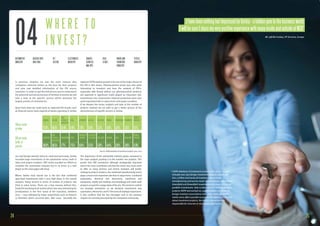
FDI per sector 
by value 
TELECOM. 
16.6% 
FOOD 
BEVERAGE & 
AGRICULTURE 
12.4% 
RETAIL 
8.8% 
FINANCIAL 
17.9% 
FDI per sector 
by No. of 
projects 
FOOD 
BEVERAGE & 
AGRICULTURE 
10.5% 
CONSTRUCTION 
7.7% 
TEXTILE 
7.5% 
AUTOMOTIVE 
16.0% 
are now foreign owned), telecom, retail and real estate, Serbia 
recorded large investments in the automotive sector, both in 
value and project numbers. FIAT nicely rounded our efforts to 
revitalize the automotive industry but in no terms is a sole 
player as the next pages will show. 
Where Serbia truly stands out is the fact that combined 
agro-food investments take a very high place in the overall 
analysis, being second in terms of number of projects and 
third in value terms. There are a few reasons behind this, 
firstly the booming local market which was very interesting for 
privatizations in the first round of the tranzition, between 
2001 – 2005 followed by major acquisitions such as Pepsico 
or Heineken which occurred later, after 2007. Secondly the 
regional CEFTA market proved to be one of the major drivers of 
the FDI in this sector. Pharmaceutical sector was also quite 
interesting to investors and here the network of FTA’s, 
especially with Russia (where our pharmaceutical products 
are exported in significant scale) played an important role. 
Investments into construction material production were also 
quite important both in value terms and project numbers. 
If we deepen the sector analysis and look at the number of 
projects realized we are able to get a better picture of the 
attractiveness of specific sectors in Serbia. 
AUTOMOTIVE 
7.8% 
OIL & GAS 
6.9% 
REAL ESTATE 
5.3% 
TOBACCO 
4.8% 
CONSTRUCTION 
3.9% 
PHARMACEUT. 
3.5% 
WOOD& & 
FURNITURE 
1.5% 
MACHINERY & 
EQUIPMENT 
6.4% 
ELECTRICAL & 
ELECTRONICS 
5.5% 
REAL ESTATE 
5.0% 
FINANCIAL 
4.4% 
RETAIL 
3.9% 
METALLURGY 
3.6% 
WOOD& & 
FURNITURE 
2.8% 
Source: SIEPA database of investment projects 2001-2014 
The importance of the automotive industry grows compared to 
the value analysis pushing it to the number one position. This 
proves that FIAT investment although strategically important 
wasn’t the main contributor and that the sector has much more 
to offer as many German and French investors will testify. 
Looking at project numbers, the combined manufacturing sector 
plays a much more important role than in value terms. Combined 
automotive, electrical and electronics, machinery and 
equipment, textile and clothing and metallurgy and metal work 
projects account for a large stake of the pie. This tends to confirm 
our strategic orientation as we declared investments into 
automotive, electronics and ICT the ones of strategic importance. 
It also confirms that the key messages sent in the previous 
chapter are correctly perceived by the investment community. 
24 25
“Our operations here will provide Fiat Group with the means t o widen its 
W H E R E 
T O I N V E S T ? 
customer base and to support its expansion and v olume aspirations from a strategic region, 
while, at the same time, contributing t o Serbia’s industrial and t echnological development. 
For over half a century, FIAT and Zastava have played 
an important role in developing the Serbian automotive industry.” 
Mr. Sergio Marchionne, 
President, FIAT Group 
- Wide availability of highly-qualified staff; top technical education 
at both the secondary and tertiary levels. 
- Perfect geographic location for efficiently serving EU, SEE and Middle Eastern customers. 
- Sufficient capacity for even larger volumes of production. 
AUTOMOTIVE INDUSTRY 
Sector Overview 
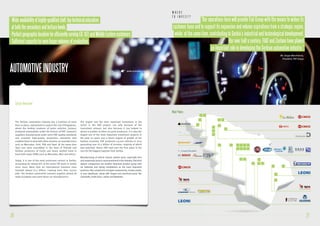
The Serbian automotive industry has a tradition of more 
than 70 years, dating back to 1939 in the city of Kragujevac, 
where the Serbian producer of motor vehicles, Zastava, 
produced automobiles under the license of FIAT. Zastava’s 
suppliers manufactured under strict FIAT quality standards 
and acquired high-quality production standards that 
enabled them to work with other western car manufacturers 
such as Mercedes, Ford, PSA and Opel. At the same time 
Opel cars were assembled in the town of Kikinda and 
Serbian producers of trucks and buses worked hand in 
hand with major OEMs such as Mercedes, Man and others. 
Today, it is one of the most prominent sectors in Serbia, 
accounting for almost 8% of the entire FDI stock in Serbia 
since 2000. More than 60 international investors have 
invested almost €1.7 billion, creating more than 27,000 
jobs. The Serbian automotive industry supplies almost all 
major European and some Asian car manufacturers. 
www.acserbia.org.rs 
The largest and the most important investment in the 
sector is the FIAT project, not only because of the 
investment amount, but also because it has helped to 
attract a number of other car parts producers. It is also the 
largest one of the most important investment projects in 
the past 20 years and a future engine of growth of the 
Serbian economy. FIAT produced 117,000 vehicles in 2013 
generating over €1.5 billion of turnover, majority of which 
was exported. Hence FIAT took over the first place in the 
race for the biggest exporter from Serbia. 
Manufacturing of vehicle chassis system parts, especially tires 
and suspension parts is most prominent in the industry. Electrical 
system components are another dominant product group with 
car batteries and wiring installations as the most important 
products. Also, production of engine components, mostly casted, 
is very significant, along with forged and machined parts like 
camshafts, brake discs, valves and flywheels. 
Major Players: 
26 27
- Serbia is a global leader in the export 
of frozen raspberries with $232 million exported in 2013. 
- Serbia is the largest provider of frozen fruit to the French and German market, 
and the second largest to the Belgium market in 2013. 
- Highly-attractive sector accounting for 12.4% 
of FDI stock since 2001. 
- One of the few industry sectors recording a surplus; 
made-in-Serbia food is present around the globe. 
AGRICULTURE AND 
FOOD PRODUCTION 
W H E R E 
T O I N V E S T ? 
Sector Overview 
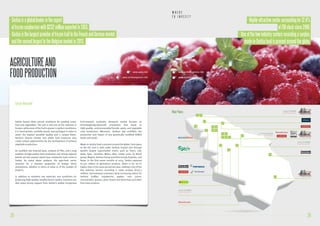
Serbia boasts ideal natural conditions for growing crops, 
fruit and vegetables. The soil is still one of the cleanest in 
Europe, while most of the fruit is grown in perfect conditions; 
it is hand-picked, carefully stored, and packaged in order to 
attain the highest possible quality and a unique flavor. 
Serbia’s diverse climate and ample land resources also 
create unique opportunities for the development of primary 
vegetable production. 
An excellent raw material base, network of FTAs, and a long 
tradition of high-quality food production and strong regional 
brands are key reasons world class companies have come to 
Serbia. As noted above analysis, the agro-food sector 
accounts for a massive proportion of foreign direct 
investments, whether in terms of value or of the number of 
projects. 
In addition to excellent raw materials and conditions for 
producing high-quality, healthy food in Serbia, investors can 
also enjoy strong support from Serbia’s widely recognized 
www.spos.info www.serbiaorganica.info 
www.serbiaorganica.info 
fruit-research institutes. Research mainly focuses on 
technologically-advanced production that leads to 
high-quality, environmentally-friendly seeds and vegetable 
crop production. Moreover, Serbian law prohibits the 
production and import of any genetically modified (GMO) 
foods and seeds. 
Made-in-Serbia food is present around the globe, from Japan 
to the US, and is sold under Serbian brands and through 
world’s largest supermarket chains such as Tesco, Lidl, 
Asda, Spar, Carrefour, Metro, Idea, Leader price, X5 Retail 
group, Magnit, Auchan Group and Dixie Group, Kopeika, and 
Rewe. In the first seven months of 2014, Serbia exported 
€1,232 million of agriculture produce, which is for 16.1% 
higher than in the same period last year, making it one of the 
few industry sectors recording a trade surplus (€537.3 
million). International customers keep increasing orders for 
Serbian truffles, raspberries, apples, corn, juices, 
concentrates, purees, jams, frozen and dried fruit and other 
first-class produce. 
www.srpskemlekare.org 
Major Players: 
28 29
If you know what you’re looking for, 
we know where to find it. 
SIEPA SUPPLIERS 
DATABASE™ 
Upgrade your business by buying products and 
services from Serbia. In order to assist you in doing 
just that, we have developed a comprehensive tool 
that enables on-line browsing of our SIEPA Suppliers 
Database™ and find the suitable product or 
component for your business. This ever-expanding 
database currently has around 2,500 suppliers and is 
searchable by various criteria such as product, sector, 
technology, region, and others. We come in once you 
find the product and shortlist companies. By using our 
vast experience with the Serbian industry, we will help 
you select the right company and put you in contact 
with the key people to make sure you establish 
mutually-beneficial business cooperation. 
serbia-suppliers.rs 
W H E R E 
T O I N V E S T ? 
- Serbia - home to 1,600 innovative IT Companies employing more than 14,000 people. 
- Microsoft’s 4th development center in the world opened in Serbia, evolving over time into an innovation center. 
- Expertise in custom, high-end IT development services including software development, 
hardware, and solutions. 
ICT SECTOR 
Sector Overview 
As the world market for ICT continues to evolve towards 
outsourced software engineering, offshore systems design 
and integration, Serbia is well-placed both geographically and 
structurally to provide a cost-effective, reliable alternative to 
more established markets. An outstanding pool of intellectual 
capital, attractive labor costs, excellent skills, good 
communications networks and a high fluency in English are 
just some of the key competitive advantages that persuade 
international companies to expand their businesses to Serbia. 
Engineering education in Serbia is particularly strong, with 
approximately 33% of university graduates coming from 
technical schools. ICT is taught at 35 high-education 
institutions, 16 of which state-owned, 6 private and 13 
state-owned Vocational Higher Schools. These institutions are 
located in 18 cities, which greatly helps recruiting a wide base 
of ICT students for two studying programs (Tertiary-type A and 
type B) and six studying sub-programs. Given today’s growing 
demand for ICT products and services, Serbian educational 
institutions are facing challenges, both accommodating 
booming interest among high-school graduates and supplying 
more experts to the market. Total number of new ICT enrollees 
in school year 2011/2012 was 5,523, of which 3,042 students 
www.ict-net.com 
www.vojvodinaictcluster.org 
www.ni-cat.org 
begun their ICT education with Tertiary type A studying 
program (OAS) and the remaining 2,481 with tertiary type B 
(OSS). Serbian ICT sector absorbs a vast majority of ICT 
graduates, although “brain drain” is still an issue. 
The cost-competitiveness of engineers is another advantage of 
doing business with Serbia. Compared to salaries in the 
country, IT specialists earn more than average, but compared 
to their European colleagues, the situation is quite different. 
Net salaries range from €600 to €1,200 per month for 
highly-qualified and experienced, university-educated talents, 
while gross salaries range from €1,000 to €2,000 per month. 
Shoulder to shoulder with food, production and automotive 
sector, ICT is becoming one of the pillars of the Serbian 
economy. A large number of Serbian ICT companies offer 
very strong technical skills that have attracted partnerships 
with international firms and won them a place in high-value 
market niches. Serbia ranks 40th on the list of biggest 
software exporters globally. In 2013 Serbia exported around 
€230 million in software services, which is a 30% increase 
compared to the year before and as much as 165% against 
2008. Local market is worth additional €400 million. 
Major Players: 
30 31
W H E R E 
T O I N V E S T ? 
- Significant investment track record 
Siemens, Panasonic, Gorenje, 
Elrad, ATB, Gruner, Eaton. 
- Manufacturing tradition and 
skillset in place. 
- Fifth most exported oriented sector in 2013. 
ELECTRONICS INDUSTRY 
Sector Overview 
Serbia is home to a rich tradition in the electronics industry 
that dates back to the days of Nikola Tesla, one of the 
greatest pioneers and inventors in the field of electricity. 
This industry had its peak back in 1980s, when Yugoslavia’s 
electronics industry was a $1 billion sector that employed 
around 100,000 people. Although the sector today is still 
only a fraction of what it was back then, recent foreign direct 
investment into the industry and various state-driven 
initiatives suggest that this sector has strong potential for 
future growth. 
From 2001 onwards, this industry has witnessed a steady 
revival primarily driven by a continual inflow of foreign direct 
investment - roughly €200 million. This, coupled with the 
upcoming opening of several ICT-electronics parks, illustrates 
that the best is yet to come for companies in Serbia’s 
electronics sector. Some of the key investments are those of 
Austrian giant ATB Gruppe, Slovenian home appliance 
company Gorenje that has invested a total of €44 million in 
three separate locations, Siemens with €16 million in Subotica 
and Panasonic with €13 million facility in central Serbia. 
Serbian electronics industry is a thriving, export-oriented 
sector that grows with influx of foreign direct investment. 
MEET US AT: 
Embedded World, Nuremberg, Germany 
Exports from the industry were growing by 24% annually 
on average over the past four years (2010-2013). Between 
15 and 20 electronics companies each export more than €1 
million per year, while the entire sector exported €743 
million in 2013 which made it the fifth most exported 
oriented sector. 
The Government of Serbia was actively promoting the growth 
of this sector: along with automotive and ICT industry, the 
electronics sector was designated as one of the priority 
sectors in Serbia’s National Development Strategy and 
allowed investors in this sector to receive more favorable 
investment incentive packages. Companies in this industry 
have taken advantage of this fact: investments in the 
electronics industry are fourth when it comes to the number 
of projects which have been approved for funding and third 
in terms of created jobs. 
Furthermore, numerous initiatives, including the promotion 
of IT and Research and Development parks throughout the 
country and the founding of an electronic systems cluster, 
will propel the sector even further. 
Major Players: 
32 33
W H E R E 
T O I N V E S T ? 
- Low market saturation. 
- Available labor with low attrition rates which is proficient in foreign languages. 
- The right time zone to service European customers. 
SHARED SERVICES AND BPO 
Sector Overview 
Serbia holds a whole range of aces up its sleeve to emerge as a 
new hot spot for hosting BPO centers. Although new 
small-to-medium sized service providers are emerging on 
monthly basis, with an increasing number of big players, the 
market is still unsaturated compared to “usual” BPO locations in 
CEE. However, all of the pre-requisites for growth are in place and 
considerable growth potential especially given the size and 
availability of the labor pool. Many global players, mostly US 
companies, have already recognized and used Serbia’s potential 
as a BPO destination. The list of companies serviced from Serbia 
is much longer and includes companies across a wide spectrum 
of industries. They are serviced on as many as 17 languages. 
The workforce is reliable, with a good skills base and business 
culture stemming from strong cultural and business ties with 
the West. The country has a level of multilingualism, especially 
as concerns the English language, almost without parallel in 
many other parts of Central and Eastern Europe. In 2012, Serbia 
was ranked fourth out of 76 reviewed countries in Business 
English proficiency by the Business English Index (BEI). The 
average attrition rate for large BPO centers is around 5 percent. 
Although there are international BPO centers outside of the 
Serbian capital, companies with more diversified talent needs 
usually opt for Belgrade. It is one of the largest cities in CEE and 
www.siepa.gov.rs 
one of the biggest and the best university centers in Balkans. 
The total number of studying in Belgrade at all levels and 
across all faculties stands at around 118,000, more than half of 
the 230,000 students on the country level. Business-related 
studies are the most popular, while one third of all students 
belong to technical faculties. Out of just over 53,000 students 
enrolled in higher education in Serbia in 2012, nearly 27,000 of 
them have started studying in Belgrade. 
The latest statistics show that the number of unemployed workers 
in Belgrade stands at around 107,000. Moreover, there are over 
100,000 unemployed in Serbia holding a higher-education 
degree (college or university degree+), which is 14.6% of the total 
number of the unemployed. Due to a strong migration trend 
towards Belgrade the percentage of college/university among the 
unemployed in Belgrade is much higher. Unemployment level in 
the under 30 population is especially high, with around 300,000 
unemployed workers in this tier. 
The quality of life is exactly what one could expect from a 
capital of 2 million people, with international schools, quality 
medical services, and infrastructure to host a large expat 
community. In 2007, the Financial Times’ fDi magazine picked 
Belgrade as the City of the Future. It is also described by 
Lonely Planet as the No. 1 nightlife destination in the world. 
Major Players: 
34 39
W H E R E 
T O I N V E S T ? 
- Among the highest office yields in Central and Eastern Europe. 
- Strong demand for residential space across the country. 
- Shopping center stock well below the CEE average. 
REAL ESTATE 
Sector Overview Sector Overview 
The market is witnessing an increasing number of international 
companies who have chosen Serbia instead of, for instance, the 
Czech Republic, Slovakia, or Bulgaria, which is quite encourag-ing. 
Consequently, the office space market now faces a lack of 
new supply with only small-scale projects either under construc-tion 
or being in shall and core condition, waiting for the future 
tenants to finalize construction. The list of announced projects is 
long, proving that the office segment remains attractive segment 
for the investors, but the vacancy rates will remain insufficient to 
accommodate the projected growth of services industry. 
Based on CB Richard Ellis’ report, in Q2 2014, the vacancy rate 
further dropped below 10% (as compared to the total stock). 
Due to the lack of new supply, the market becomes undersup-plied 
of quality office spaces as at the moment only a few 
office buildings may accommodate requests of over 500 sq.m 
as a compound unit. When analyzing the distribution of lease 
activities by sector in the first two quarters of 2014, the two 
fast growing industries, ICT industry with 53% and SS & BPO 
with 16% are still the most dominant. 
However, the segment with the most promising investment 
potential is the retail market. According to global CBRE annual 
research on the presence of leading international brand 
retailers (“How Global is the Business of Retail”), in 2014 
Serbia’s positioned at 46th place on the global list, with 19% of 
share. For comparison, Croatia is ranked at 39th place with 
25% of share. Belgrade itself holds 114th place, among 188 
cities which participated in the research across the world. 
- Large opportunities in sawn wood, engineered wood products, furniture, and paper production. 
www.belgradewaterfront.com 
www.klasternekretnine.gov.rs www.klasterdp.rs 
The total retail stock in Belgrade remained unchanged at the 
end of Q2 2014, standing at app. 230,000 sq m of GLA, which 
includes all types of retail schemes: western-style shopping 
centers, neighborhood malls, department stores and 
secondary SC schemes. At the moment, Belgrade retail stock 
comprises only three modern western-style shopping 
centers (in total app. 105,000 sq.m GLA). 
In terms of the new developments, one of the biggest RE 
projects in the region – Belgrade Waterfront is underway. This 
multi-use complex developed by UAE’s Eagle Hill will include 
the construction of 5,700 residential units, 2,200 hotel rooms, 
12,700 sq.m of office space on the total of 1.8 million sq.m. 
Also, the opening of two retail parks in Belgrade is planned for 
2015 and 2016, developed by Israeli IBC and Aviv Arlon, as 
well as Poseidon Group’s 20,000sq.m Capitol Park. Poseidon 
already built such retail park totaling 9,700 sq.m with 17 
stores in Sabac in April 2014, accommodating brands such as 
Tempo, C&A, NewYorker, JYSK, Deichmann, Takko Fashion etc. 
The construction works on Vivo shopping park Jagodina are 
underway. The project will comprise 10,000 sq.m with app. 30 
stores, while the opening is expected in late 2014. Slovenian 
company Toming targets Cacak to open its first retail scheme 
of 7,000 sq.m. Austrian Immofinanz Group is also looking for 
locations for retail park development. At the moment, their 
scheme Stop.Shopof 11,000 sq.m is planned for development 
in Subotica. Subotica should also witness the development of 
10,000 sq.m large retail park, planned by MPC. 
- Strong local demand and duty-free export access 
to Russian, EU and SEE market. 
- Top-quality raw base materials. 
WOOD AND FURNITURE INDUSTRY 
Furniture industry is one of the few sectors recording trade 
surplus of over €100 million. FTAs with CEFTA, the EU and 
Russian Federation underpin vast customs-free export oppor-tunities 
for the Serbian furniture. Made-in-Serbia furniture has 
a good reputation at the Russian market and numerous 
Serbian construction companies are engaged in projects in 
Russia, further increasing the demand. Export of furniture to 
Russia is growing at the pace of 50% annually. 
The foundation of the industry lies in good raw base and the 
skillset of the workers. Forests cover some 2.252.400 
hectares (29.1%) of the territory of Serbia. Broad leaves 
constitute 90% of Serbian forests, while the remaining 
portion is made up of various conifers. The main tree groups 
of Serbian natural forests are beech (40%), oak (30%) and 
other broadleaves. State owned forests (1,194,123 hectares) 
has been certified by FSC standard. 
There are 22 high schools in Serbia that specialize in wood 
processing, while the Forest Sciences Faculty at the Belgrade 
University produces around 1,000 graduates annually. 
Serbian companies also have long-standing traditions of 
supplying international buyers and the skill-set for the wood 
processing industry is constantly improving. 
One of the sub-sectors of the industry with the brightest future 
is the production of massive furniture. This area offers 
comparative advantages such as: high-quality local raw materi-als, 
a low-priced labor force, low energy prices compared to 
other European countries, and a strategic geographic position 
that allows for fast shipment. All of these benefits represent 
advantages compared to Asian competitors. Majority producers 
of solid wood furniture from Serbia are successful, as they 
focus on exporting to Russia, France, Germany, Italy and the 
neighboring countries. Upholstery production is also a strong 
point for Serbia. Simpo and Forma Ideale are the biggest 
furniture producers in Serbia and the region, they are followed 
by the exporters such as Matis, Gir, Atlas, Tra-Duga and 
Extraform, which are widely recognized for their style and 
quality. Serbian companies dominate the region, especially in 
Macedonia, Bosnia and Herzegovina, Montenegro, Croatia and 
Albania. To support the local and regional demand for 
chipboard furniture, there have been significant investments 
into automated lines for production of chipboards, especially 
by Austrian company Kronospan, the largest multinational 
company in this domain, and Fantoni from Italy. Interior design 
is also a sub-sector in which Serbian companies are achieving 
especially on the markets of Montenegro, Greece and Russia. 
The last but certainly not the least important significant 
component of furniture industry, offering enormous potential 
and competitive advantage, is business relationships between 
Serbian designers and local furniture producers, in order to 
create a sustainable cooperation and business ventures. 
Major Projects: Airport City Belgrade, Belgrade; Block 67, Belgrade; Big Center, Novi Sad Major Players: 
36 37
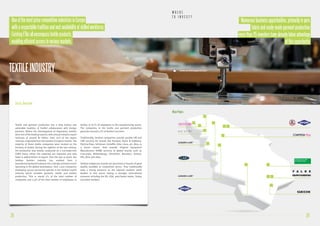
- Numerous business opportunities, primarily in yarn, 
fabric and ready-made garment production; 
more than 25 investors have already taken advantage 
of this opportunity. 
COMPROM Plus 
- One of the most price-competitive industries in Europe 
with a respectable tradition and vast availability of skilled workforce. 
- Existing FTAs all encompass textile products, 
enabling efficient access to various markets. 
TEXTILE INDUSTRY 
W H E R E 
T O I N V E S T ? 
Sector Overview 
Textile and garment production has a long history and 
admirable tradition of fruitful collaboration with foreign 
partners. Before the disintegration of Yugoslavia, textiles 
were one of the leading exports, with annual industry export 
revenues of around $1 billion. Over 70% of the export 
revenues originated from the western European market. The 
majority of these textile companies were located on the 
territory of Serbia. During the eighties of the last century, 
the production was mostly conducted on a cut-make-trim 
(CMT) basis; where the materials are imported and only 
labor is added before re-export. Over the last 10 years, the 
Serbian fashion industry has evolved from a 
manufacturing-based industry into a design-oriented sector 
operating in the global marketplace. Over 1,500 companies 
employing 30,000 personnel operate in the Serbian textile 
industry which includes garment, textile and leather 
production. This is nearly 2% of the total number of 
companies and 2.9% of the total number of employees in 
Serbia, or 8.7% of employees in the manufacturing sector. 
The companies in the textile and garment production 
generate around 0.7% of Serbia’s turnover. 
Traditionally, Serbian companies provide quality CM and 
CMT services for brands like Pompea, Dolce & Gabbana, 
Patricia Pepe, Schiesser, Schoffel, Glitz, Lisca, etc. Also, to 
a lesser extent, they provide Original Equipment 
Manufacturer (OEM) services to global brands such as 
Concordia, Bikkembergs, Decathlon, Benetton, Armani, 
HIS, Atair and alike. 
Serbian indigenous brands are perceived as brands of good 
quality available at competitive prices. They traditionally 
have a strong presence on the regional markets, while 
leaders in this sector having a stronger international 
presence including the EU, USA, post-Soviet states, Turkey 
and other markets. 
www.serbianapparel.com 
Major Players: 
38 39
The business registration procedure in Serbia 
typically takes around 5 business da ys. 
“The registration of the company w ent on simple and fast. 
We think that the procedure is v ery rational and that the competent institutions in 
the state administration perform their work very professionally”. 
Mr. Milutin Ivanovic, 
Former General Manager, 
Knauf Beograd, Germany 
05 S T E P S 
T O T A K E 
C O N S T R U C T I O N 
P R O C E D U R E 
GETTING TO 
AND WORKING 
IN SERBIA 
O F F I C E A N D 
R E S I D E N T I A L 
S P A C E 
M A R K E T 
Starting a Business in Serbia 
Serbian Company Law is in accordance with the European 
Union’s directives and the latest trends in harmonization 
with the EU legislation. Therefore, company types in Serbia 
are similar to those in other countries. 
Usually, international investors pursue business activities in 
Serbia by setting up a Limited Liability Company, for which 
the minimum capital required is as low as €1. Other usual 
forms of incorporation include Joint Stock Companies, 
Limited and General Partnerships. Minimum capital required 
for opening a Joint Stock Company is around €25,000, while 
the minimum capital requirements for setting up an 
insurance company range from €2-4 million for companies 
providing life insurance to €1-4.5 million for those offering 
other forms of insurance. In this case, an operating license 
issued by the National Bank of Serbia is also required. 
A company can also set-up a representative office in Serbia 
which would not have the status of a legal entity and could 
also have one or more branches in Serbia. The parent 
company assumes responsibility for all obligations that may 
occur as a result of the representative office’s operations in 
Serbia. Also, opening one or several branch offices is also an 
option. Branches do not have legal personality either and 
they conduct business activities in the name and on the 
behalf of their parent companies. 
Finally, business association is a legal entity founded by one 
or more companies or entrepreneurs to achieve common 
goals, but cannot conduct any business for profit, only for 
the mutual interest of its members. The name of business 
association must specifically include words "business 
association“, abbreviated “b.a.” or “p.u.” in Serbian. 
Association is not permitted to convert its legal form into a 
company of any type. 
All business forms must be registered with the Serbian 
Business Registers Agency. The procedure is swift and easy 
– for a Limited Liability Company the Agency will issue a 
decision on the registration of a company, along with the 
registration and tax identification number (PIB), certificate 
on the registration with the Fund for Pension and Disability 
Insurance, and certificate and registration number with 
Republic Health Insurance Fund within the statutory 
timeframe of 5 days. Agency’s headquarter is in Belgrade, 
but it also has 13 branch offices throughout Serbia (the list of 
cities can be found at www.apr.gov.rs). The Agency also 
accepts applications over the Internet. 
www.apr.gov.rs 
40 41
“Life is very cosmopolitan, it is very easy to integrate, 
and I have a great quality of life. It’s rela tively easy for me 
to get back to the UK at weekends, as my children do no t live here with me. 
But when they come over to visit, my kids lo ve it.” 
Mr. Anthony Burnett, 
Former Plant Manager, Ball Packaging 
GETTING TO AND WORKING IN SERBIA 
Citizens of the EU member countries may travel and stay in 
Serbia for up to 90 days without a visa. The same regime 
applies to EU membership candidate countries and a 
number of other countries such as Argentina, Australia, 
Brazil, Canada, Israel, Japan, Mexico, New Zealand, Russian 
Federation, The Republic of Korea, Switzerland, Turkey, UAE, 
Ukraine, the United Kingdom and US (for a complete list of 
countries please refer to www.mfa.gov.rs). Residents of 
other countries traveling to Serbia for business purposes or 
permanent employment may obtain a business visa which is 
valid for up to one year from a Serbian embassy abroad. 
Visas can be requested by submitting an application to the 
Consular Section of the responsible Embassy or Consulate 
General. There are three types of visas that are available: 
Short stay visas (type C visa), Transit visas (type B visa) and 
Temporary residence visas (type D visa). Short stay visas are 
mainly issued for tourism, business and other travel needs 
and may be valid for single, double or multiple entries into 
the Republic of Serbia. The duration of an uninterrupted 
stay and/or the total duration of successive visits of a 
foreigner with a short stay visa shall not exceed 90 days 
within a period of six months, starting on the day of the first 
entry. Short stay visas with multiple entries option are valid 
for up to one year, for a maximum stay of 180 days. 
www.mup.gov.rs 
To start employment in Serbia, a foreigner must be granted 
the approval for temporary residence as well as the 
approval for employment. Temporary residence may be 
approved for a period of up to one year and may be 
extended multiple times for the same duration. Business 
Permits are issued to company founders, directors of 
companies with foreign shareholders, directors of 
representative offices, directors of banks, bank 
representative offices, insurance companies, and their 
representative offices; Work Permits are issued to all 
non-Serbian citizens looking to establish employment. 
The prerequisite for this is the proposed employment 
contract and letter written on company letterhead that 
explains the company’s need for the expatriate’s skills. A 
work permit is issued for a period of at least 3 months, but 
not more than 12 months. It always has the same validity 
period as the temporary residence permit. It can be 
renewed without any obstacles. 
Temporary residence can also be obtained on the basis of 
ownership over residential or business structure, 
professional specialization, training, engagement at NGOs, 
private visits, as well as to accredited journalists, officers of 
international institutions and university professors. 
“I have lived in Belgrade for 4 y ears and I must sa y, 
personally, I believe that Belgrade is the most a ttractive 
and most interesting city in Europe. 
There is no doubt”. 
Mrs. Doerte Weidig, 
Former President of ProCredit Bank, Serbia 
OFFICE AND RESIDENTIAL SPACE MARKET 
S T E P S 
T O T A K E 
Investors can either buy or rent an office space in all major cities 
in Serbia. Naturally, availability of high quality offices is much 
greater in larger cities, especially in the capital. According to CB 
Richard Ellis’ report, speculative office stock in Belgrade 
amounted to a million square meters of GLA in Q1 2014. 
Belgrade’s contemporary supply exceeds 734,000 square 
meters of GLA, out of which 70% is speculative (513,000 sq.m) 
and 28% owner-occupied space (221,000) sq.m. 
Class A Stock Class B Stock 
Owner-Ocuppied Stock Total Completions 
2005 2006 2007 2008 2009 2010 2011 2012 2013 
Source: CB Richard Ellis 
Belgrade Office Space Stock 
500.000 
400.000 
300.000 
200.000 
100.000 
0 
The second quarter of 2014 recorded a slower activity with 
the total take-up of 9,356 square meters, while the overall 
number of transactions was 16 and the average deal size was 
585 sq.m. As of the beginning of 2014, the total take-up 
amounted to around 25,000 square meters. 
Class A office buildings recorded asking rents ranging 
between €14-16/sq.m/month, while average asking rents of 
Class B stock vary between €11-12/sq.m/month. Prime yields 
range between 9-9.5%. 
Residential Market Developments 
In 2013, the number of completed units in Belgrade amounted 
to 7,596. Currently, New Belgrade municipality marks the 
strongest construction activity. According to the official 
statistics, the number of finished apartments preserved a 
stable trend in Belgrade in the previous few years, after a 
certain standstill in construction activities that characterized 
the period 2009-2010 thanks to the joint efforts of the 
government and the private investors. On the other hand, 
when analyzing Serbia as a whole, the construction sector 
witnessed the further drop of 12% in the number of finished 
apartments, as compared to the 2012-results. 
The sales prices of residential units remained mostly stable, due 
to the more balanced demand-supply ratio. In central Belgrade 
municipalities, the asking prices of high-quality projects start at 
€2,200 (VAT included), with most mid-end projects varying 
between €1,700-2,200. Steady demand in the leasing segment 
continued in the first months of 2014. In general, typical rental 
levels range between €8-10/sq m for renovated properties and 
from €10-13/sq m for newly built properties, while some of the 
units generate asking rents of even €15/sq m, depending on the 
location and the quality of properties. 
42 43
Greenfield and Brownfield Sites That 
Match the Color of Your Business 
SIEPA 
INVESTMENT 
LOCATIONS 
DATABASE™ 
A SIEPA database of more than 500 available Greenfield 
and Brownfield sites throughout Serbia will ease your 
quest for locations that suit the needs of your business. 
The database is easy to browse: you just need to choose 
the size, rough geographic location and few other 
details, and you will instantly get a list of matching 
locations. Couple that with municipality-specific data 
also, and you will be able to screen the list of potential 
locations and come up with a shortlist. 
Let us take it from there and advise you on the final 
selection and further steps to be taken. 
serbia-locations.rs 
www.mgsi.gov.rs 
“Mace would invite major investors to join 
Microsoft, Lukoil, Intesa Sanpaolo, Coca Cola, Telenor, and Mace itself. 
The Serbian economy is on the mo ve, has the right a ttitude for 
future growth and a stable political and financial pla tform to move forward” 
Mr. Mark Richards, 
Business Development Director International, 
Mace International. 
CONSTRUCTION PROCEDURE 
The Law on Planning and Construction provides for private 
ownership over any type of construction land and enables 
further transfer of ownership rights. The provisions are aimed 
at replacing the right of use which was commonly used during 
previous periods when city construction land was state 
owned and when owners of buildings were entitled to the 
right of use over the land beneath them. 
The Law introduces different categories of construction land, 
namely: 
- City (Urban) Construction Land and 
- Construction Land outside the City Construction Land 
Urban construction land may be purchased from an owner of 
such land or leased from a municipality through either public 
bidding or public tender where the land is sold or leased to 
the highest bidder. However, municipal authorities have, and 
often exercise, the power to lease the land at a fee lower than 
the market value or free-of-charge with the prior consent of 
the government. Additionally, a plot of agricultural land may 
be converted into construction land with approval of the 
competent bodies and payment of the land conversion fee. 
A building is lawfully constructed if a building permit has 
been issued by the competent authority. The permit is 
issued on the basis of a location permit and technical 
documentation main design. One of the main features of 
the Construction Law is the possibility of a building 
permit transfer together with a transfer of property rights 
over building/land. Municipalities are authorised to 
issue building permits. The competent Ministry is in 
charge of issuing building permits for the construction of 
nuclear plants, oil and gas production/processing 
industry objects, hydro power stations, airports, traffic 
infrastructure and similar. 
Once a Location Permit is obtained from a municipal 
authority, an investor applies for the Construction Permit, 
which is issued within 8 days from the date of submission of 
the application. A structured technical inspection is done 
upon the completion of construction. It may sometimes be 
carried out simultaneously with the construction process, 
upon which the Occupation Permit is issued. The final stage 
in the construction process is the registration of an initiated 
structure in the Real Estate Cadaster or in the Land Book 
Registry kept by a Municipal Court. 
The Construction Law provides for automatic conversion of 
the right of use on State owned developed construction land 
into ownership at no fee, subject to numerous exceptions. 
The main exception is related to the right of use on state 
owned developed construction land currently or formerly 
held by companies that were subject to privatization, 
bankruptcy or enforcement laws which can be converted into 
ownership subject to the payment of a fee equal to the 
difference between the market value of the land at the 
conversion date and the amount paid for the acquisition of 
the right of use on such land. 
44 49
USEFUL CONTACTS 
Ministries 
Office of the Prime Minister 
www.srbija.gov.rs 
 predsednikvladeŠgov.rs 
Ministry of Foreign Affairs 
www.mfa.gov.rs 
 mspŠmfa.rs 
Ministry of Economy 
www.privreda.gov.rs 
 kabinetŠprivreda.gov.rs 
Ministry of Finance 
www.mfin.gov.rs 
 kabinetŠmfin.gov.rs 
Ministry of Trade, 
Tourism and Telecommunications 
www.mtt.gov.rs 
 kabinetŠmtt.gov.rs 
Ministry of Agriculture and 
Environmental Protection 
www.mpt.gov.rs 
 officeŠminpolj.gov.rs 
Ministry of Construction, 
Transport and Infrastructure 
www.mgsi.gov.rs 
 kabinetŠmgsi.gov.rs 
Ministry of Mining and Energy 
www.mre.gov.rs 
 pr.kabinetŠmre.gov.rs 
Ministry of Public Administration and 
Local-Self Government 
www.mduls.gov.rs 
 jparezanovicŠgov.rs 
Ministry of Education, Science and 
Technological Development 
www.mpn.gov.rs 
 kabinetŠmpn.gov.rs 
Ministry of Labour, Employment, 
Veteran and Social Affairs 
www.minrzs.gov.rs 
 pressŠminrzs.gov.rs 
Other Relevant Institutions 
National Bank of Serbia 
www.nbs.rs 
 kabinetŠnbs.rs 
Serbian Business Registers Agency 
www.apr.gov.rs 
 registerŠapr.gov.rs 
Privatization Agency 
www.priv.rs 
 indoŠpriv.rs 
Customs Administrations 
www.upravacarina.rs 
 kabinetŠcarina.rs 
Statistical Office 
of the Republic of Serbia 
www.stat.gov.rs 
 statŠstat.gov.rs 
National Employment Service 
www.nsz.gov.rs 
 pressŠnsz.gov.rs 
National Tourism Organization of Serbia 
www.serbia.travel 
 officeŠserbia.travel 
University of Belgrade 
www.bg.ac.rs 
 officebuŠrect.bg.ac.rs 
Other Useful Contacts: 
National Agency for Regional 
Development 
www.narr.gov.rs 
 officeŠnarr.gov.rs 
Vojvodina Investment Promotion – VIP 
www.vip.org.rs 
 officeŠvip.org.rs 
Agency for Investment Promotion and 
Business Support in Central Serbia 
www.invest-in-central-serbia.org 
 officeŠinvest-in-central-serbia.org 
Regional Development Agency 
Eastern Serbia (RARIS) 
www.raris.org 
 officeŠraris.org 
National Alliance for Local 
Economic Development (NALED) 
www.naled-serbia.org 
 naledŠnaled-serbia.org 
Chamber of Commerce and Industry 
of Serbia 
www.pks.rs 
 kabinetŠpks.rs 
Foreign Investors Council 
www.fic.org.rs 
 officeŠfic.org.rs 
American Chamber of Commerce 
in Serbia 
www.amcham.rs 
 infoŠamcham.rs 
Delegation of the German Economy in 
Serbia/ 
German –Serbian Business 
Association 
www.serbien.ahk.de 
 dswŠahk.rs 
Italian Trade Agency 
www.ice.gov.it 
 belgradoŠice.it 
“Europe’s New Capital of Cool“, Sunday Times 
” Belgrade one of the ten “hotspots” of Europe” , Lonely Planet Guide 
“Les folles nuits de Belgrade”, Le Monde 
“City of Future”, Financial Times 
“For the real beguiling Balkan spirit, it has to be Belgrade. It is a city where 
hospitality crackles in the air and where looking good is a birthright. Simply irresistible”, CNN Traveler 
“Serbia… a natural combination of Oriental passion and European finesse”, Time Out 
“The real Belgrade is in the people – they are generous, warm and extraordinarily friendly-they 
will go to any lengths to help and make you welcome” , Spaces Magazine 
“After taking my traditional Sunday stroll down Knez Mihajlova, I feel enlivened”, Herald Tribune 
“No 1 to Party the Night Away” , Times Magazine 
46 47
Tel: +381 11 3398 550 
Fax: +381 11 3398 814 
officeŠsiepa.gov.rs 
www.siepa.gov.rs 
www.doingbusinessinserbia.com

DOING BUSINESS IN SERBIA 2014

  • 1.
    DOING BUSINESS IN SERBIA 2014
  • 2.
    01 F OR E W O R D 02 B U S I N E S S E N V I R O N M E N T S ta b l e a n d P r e d i c ta b l e 03 W H Y I N V E S T ? Tr a d e U n l i m i t e d H u m a n R e s o u r c e s Favo r a b l e G e o g r a p h i c P o s i t i o n Low O p e r a t i n g C o s t s F i n a n c i a l I n c e n t i v e s S I E P A - A D e c a d e o f M i n d i n g Y o u r B u s i n e s s 04 W H E R E T O I N V E S T ? A u to m ot i ve I n d u s t r y A g r i c u l tu r e a n d F o o d P r o d u c t i o n I C T S e c t o r S I E P A - S u p p l i e r s D a ta b a s e ™ E l e c t r o n i c s I n d u s t r y S h a r e d S e r v i c e s a n d B P O R e a l E s t ate Wo o d a n d F u r n i tu r e I n d u s t r y Te x t i l e a n d A p p a r e l P r o d u c t i o n 05 S T E P S T O T A K E G et t i n g T o a n d W o r k i n g i n S e r b i a O f f i c e a n d R e s i d e n t i a l S p a c e M a r k et C o n s t r u c t i o n P r o c e d u r e S I E P A - I n v e s t m e n t L o c at i o n s D a ta b a s e ™ U s e f u l C o n t a c t s . . . . . . . . . . . . . . . . . . . . . . . . . . . . . . . . . . . . . . . . . . . . . . . . . . . 0 6 . . . . . . . . . . . . . . . . . . . . . . . . . . . . . . . . . . . . . . . . . . . . . . . . . . . 0 8 . . . . . . . . . . . . . . . . . . . . . . . . . . . . . . . . . . . . . . . . . . . . . . . . . . . 1 0 . . . . . . . . . . . . . . . . . . . . . . . . . . . . . . . . . . . . . . . . . . . . . . . . . . . 12 . . . . . . . . . . . . . . . . . . . . . . . . . . . . . . . . . . . . . . . . . . . . . . . . . . . 1 4 . . . . . . . . . . . . . . . . . . . . . . . . . . . . . . . . . . . . . . . . . . . . . . . . . . . 1 6 . . . . . . . . . . . . . . . . . . . . . . . . . . . . . . . . . . . . . . . . . . . . . . . . . . . 1 8 . . . . . . . . . . . . . . . . . . . . . . . . . . . . . . . . . . . . . . . . . . . . . . . . . . . 2 0 . . . . . . . . . . . . . . . . . . . . . . . . . . . . . . . . . . . . . . . . . . . . . . . . . . . 2 2 . . . . . . . . . . . . . . . . . . . . . . . . . . . . . . . . . . . . . . . . . . . . . . . . . . . 2 3 . . . . . . . . . . . . . . . . . . . . . . . . . . . . . . . . . . . . . . . . . . . . . . . . . . . 24 . . . . . . . . . . . . . . . . . . . . . . . . . . . . . . . . . . . . . . . . . . . . . . . . . . . 2 6 . . . . . . . . . . . . . . . . . . . . . . . . . . . . . . . . . . . . . . . . . . . . . . . . . . . 2 8 . . . . . . . . . . . . . . . . . . . . . . . . . . . . . . . . . . . . . . . . . . . . . . . . . . . 3 0 . . . . . . . . . . . . . . . . . . . . . . . . . . . . . . . . . . . . . . . . . . . . . . . . . . . 3 1 . . . . . . . . . . . . . . . . . . . . . . . . . . . . . . . . . . . . . . . . . . . . . . . . . . . 3 2 . . . . . . . . . . . . . . . . . . . . . . . . . . . . . . . . . . . . . . . . . . . . . . . . . . . 3 4 . . . . . . . . . . . . . . . . . . . . . . . . . . . . . . . . . . . . . . . . . . . . . . . . . . . 3 6 . . . . . . . . . . . . . . . . . . . . . . . . . . . . . . . . . . . . . . . . . . . . . . . . . . . 3 7 . . . . . . . . . . . . . . . . . . . . . . . . . . . . . . . . . . . . . . . . . . . . . . . . . . . 3 8 . . . . . . . . . . . . . . . . . . . . . . . . . . . . . . . . . . . . . . . . . . . . . . . . . . . 40 . . . . . . . . . . . . . . . . . . . . . . . . . . . . . . . . . . . . . . . . . . . . . . . . . . . 4 2 . . . . . . . . . . . . . . . . . . . . . . . . . . . . . . . . . . . . . . . . . . . . . . . . . . . 4 3 . . . . . . . . . . . . . . . . . . . . . . . . . . . . . . . . . . . . . . . . . . . . . . . . . . . 4 4 . . . . . . . . . . . . . . . . . . . . . . . . . . . . . . . . . . . . . . . . . . . . . . . . . . . 4 5 . . . . . . . . . . . . . . . . . . . . . . . . . . . . . . . . . . . . . . . . . . . . . . . . . . . 4 6 00 I N D E X O F C O N T E N T Airport City Belgrade, the first multi-use commercial facility in Serbia that merges the latest in building technology, together with a tenant-focused approach.
  • 3.
    According to EY*,Serbia was one of Europe’s favorite investment locations in CEE in 2012. The success continued in 2013 as the number of ne w jobs was up by 18%, placing Serbia on the 5th position in Europe, while 63 ne w projects made Serbia the second most a ttractive Poland -180 01 location in CEE, second only t o Poland. F O R E W O R D Czech R. -191 Slovakia -104 Hungary -289 Romania -301 Serbia +120 Bulgaria -139 Poland 802 622 Source: EY * Based on the comparison be tween the number of FDI projects secured o ver 2004-2008 and 2009-2013 periods, Serbia is the only country in CEE tha t has raised its FDI a ttractiverness * EY European Attractiveness Survey 2014 FDI Projects by Countries Slovakia 305 201 Bulgaria 287 148 Hungary 597 308 Czech Rep. 512 321 2004-2008 2009-2013 Romania 612 311 Serbia 164 284 Nikola Jankovic Acting Director, SIEPA 06 07
  • 4.
    Foreign investors areaccorded national treatment 02 B U S I N E S S and provided with full legal security and protection in respect to the rights acquired by the virtue of investment. E N V I R O N M E N T The government’s fiscal consolidation plans outlined in the draft medium-term strategy identify a set of measures that aim to put public finances on a sustainable footing. The 2013 general government deficit of 5.0% of GDP exceeded the initial target, although it came in below the 2012 deficit. The 2014 budget envisaged an increase in the deficit to 5.5% of GDP to finance mainly higher investment and interest payments. A new Privatization Law was enacted in August, setting the end of 2015 as a deadline for completing the privatization process and outlining the possible models of privatization: strategic partnership, transfer of capital without compensation, sale of capital and sale of assets. The new Labor Law was adopted granting more flexibility to employers and providing options for work previously not available. Amendments to the Pension and Disability Insurance Law were adopted in July. In August, amendments to the Bankruptcy Law were adopted, regulating more in detail the role of the bankruptcy administrator and creditor rights. Serbia wants to secure a three-year loan agreement with the International Monetary Fund this year end to help reach debt and deficit goals. www.srbija.gov.rs www.seio.gov.rs Over the past several years, the Serbian economy has experienced growth due to strong foreign investment and continuous improvement of its business environment. Major steps to improve the business climate and reduce the state’s footprint in the economy have been implemented with the aim to provide momentum for investments, economic diversification, and sustainable private sector growth in order to create jobs. Serbia has set an ambitious plan regarding its top priorities - EU accession, fiscal consolidation, finalization of the privatization process, improvements of the Labor Law and pension system and reforms in the functioning of the public enterprises. The European Council granted the status of candidate country to Serbia in March 2012 and decided to open accession negotiations in June 2013. Accession negotiations were formally launched in January 2014. The Stabilization and Association Agreement between Serbia and the EU entered into force in September 2013. Serbia has continued to build a satisfactory track record in implementing the obligations of the SAA as noted in the EC latest report from October 2014. The analytical examination of the EU Acquis (screening process) started in September 2013 and so far 5 chapters have been fully screened and screening of 9 more chapters have started. Overall, the screening exercise is expected to be completed in 2015. Serbia’s external position is more balanced than before the 2008–09 crises. This was reflected by a lower current account deficit, a more competitive exchange rate and a comfortable level of international reserves. The banking system is liquid and well-capitalized, a result of cautious economic policies pursued before and during the crisis. “Serbia has great potential in the IT industry - that is why the w orld’s biggest software company decided to open a development centre in Belgrade”. Mr. Christopher Brennan, Central Eastern Europe General Manager, Microsoft 08 09
  • 5.
    After the screeningprocess in 2014 Serbia will officialy start the EU negotiation process in 2015 E N V I R O N M E N T STABLE AND PREDICTABLE www.nbs.rs Following an export led recovery last year, the economy contracted in the first half of 2014. Hence H1 2014 GDP dropped by app. 0.5% yoy (+0.1% in Q1 and -1.1% in Q2). Exports of goods and services in euro terms kept growing by double digit rates, while imports remained restrained due to weak domestic demand. Net foreign direct investment rose slightly on the previous year, but is still far below its pre-crisis levels. Heavy floods in the spring have hit agriculture and damaged transport and, in particular, energy infrastructure, further undermining short term growth. The floods will most likely have a negative contribution on continuation of trade gap narrowing, bearing in mind the stronger needs for energy imports, and, possibly, lower potential of agricultural exports. In the conditions of weak domestic demand, the effects of good last year’s agricultural season, decrease in global commodity prices and relative dinar stability in most of 2013 and 2014, inflationary pressures have decreased in the last and this year. The annual inflation slowed down to 2.1% in July 2014 which is below the lower targeted band of the NBS (of 4±1.5%). GDP Growth Rates Serbia vs Eurozone Inflation RSD Exchange Rate EUR/RSD, USD/RSD Tax rates in Serbia are still one of the most favorable in Europe. The risk premium, as measured by JP Morgan's EMBI index, in the region have had a decreasing trend since February 2014 and has declined further during the second quarter. In addition to global factors, the fall in Serbia’s risk premium was aided by the announced fiscal consolidation measures. Despite the flooding, Serbia’s risk premium was on a decline throughout May and the first half of June, when it fell to the level of 220 bp last recorded in early November 2007. In the second quarter of 2014, the year-on-year inflation moved below the lower bound of the target tolerance band. In fact, it plunged to 1.3% in June, its lowest level in the past 50 years. Persistently low inflationary pressures over the past 18 months reflect the absence of major cost-push pressures, low aggregate demand, lower inflation expectations and relative stability of the exchange rate. Serbias trade balance in million EUR B U S I N E S S Source: NBS, Eurostat As of Q3 2014, the Serbian banking sector consisted of 29 banks, most of which in majority foreign ownership. As assessed by the National Bank of Serbia in March 2014, the banking system is stable and highly liquid. Capital adequacy ratio is more than 20%, almost two times higher than the regulatory minimum in Serbia and two and a half times higher than in the EU. Judging by all criteria, banking sector liquidity is running exceptionally high. At the end of 2013, liquid assets covered 38.5% of total assets and 62.2% of short-term liabilities. In terms of their share in total banking sector assets, the most significant foreign banks are from Italy and Austria, followed by banks from Greece, France and other countries. Source: NBS, Eurostat 11,505 5,961 12,622 7,393 14,250 14,716 8,441 8,738 15,469 10,996 7,500 5,514 2009 2010 2011 2012 2013 2014* 18,000 16,000 14,000 12,000 10,000 8,000 6,000 4,000 2,000 0 14 13 12 11 10 9 8 7 6 5 4 3 2 1 0 -1 -2 -0.6 -0.4 1.6 -1.5 -0.5 104.6 80.8 113.7 114.6 116.7 86.1 83.1 87.1 2.5 0.9 125 120 115 110 105 100 95 90 85 80 75 70 65 60 55 50 12.2 2.1 7.0 2.2 2011 2012 2013 2014* 2011 2012 2013 2014* 2011 2012 2013 2014* 1.4 Import Export Eurozone GDP Serbia GDP * January - July * January - July 4 3 2 1 0 -1 -2 -3 USD EUR 10 11
  • 6.
    03 W HY -Duty-free access to a 1 billion people mark et; -State grants for new jobs created; I N V E S T ? -One of Europe’s lowest CIT rates - 15%; -Major European corridors’ intersection point; -Access to a competitive and qualified talent pool. LOW OPERATING COSTS FINANCIAL INCENTIVES TRADE UNLIMITED HUMAN RESOURCES FAVORABLE GEOGRAPHIC POSITION FDI Ranking by No. of Projects FDI Ranking by value 10.2% SLOVENIA 8.7% GREECE 5.2% FRANCE 8.6% NORWAY 5.0% GREECE 6.5% GERMANY 5.0% US 5.3% RUSSIA 4.4% ISRAEL 4.9% SLOVENIA 2.5% CROATIA 4.8% BELGIUM 2.5% SWITZER. 4.3% FRANCE 16.9% ITALY 14.1% ITALY 13.0% GERMANY 12.0% AUSTRIA 11.6% AUSTRIA 12.0% US Source: SIEPA database of investment projects 2001-2014* 12 13
  • 7.
    Owing to thefree trade agreements with these countries, Serbia is an ideal place for setting up a manufacturing/distribution hub to serve the markets of the Russian Federation, South East Europe, the EU and EFT A countries, Belarus, Kazakhstan, and Turkey. W H Y I N V E S T ? Belarus There are only a few exceptions to the Agreement, including sugar, alcohol, cigarettes, as well as used cars, buses, and tires. EU Some export limitations are imposed only on exports of baby beef, sugar and wine in the form of annual export quotas. Import from the EU is customs-free for most of the products. CEFTA Turkey Companies from Serbia can export to Turkey without paying customs duties. Imports of industrial products from Turkey are generally customs-free, but for a large number of goods customs duties will be progres-sively abolished over a six-year period, ending in 2015. Customs duties remain in effect for agricultural products. In addition to duty-free trade between member countries, the agreement specifies accumulation of product origin, meaning that products exported from Serbia are considered of Serbian origin if integrated materials originate from any other CEFTA country, the European Union, Iceland, Norway, Switzerland (including Liechtenstein) or Turkey, provided that such products have undergone sufficient processing, i.e. if at least 51% of the value added in the product is sourced in Serbia (if value added there is greater than the value of the materials used in Serbia). Russian Federation The agreement stipulates that goods produced in Serbia, i.e. which have at least 51% value added in the country, are considered of Serbian origin and exported to Russia customs free. The list of products excluded from the Free Trade Agreement is revised annually. As of March 2012, the list of excluded products includes: poultry and edible waste, some sorts of cheese, sugar, sparkling wine, ethyl-alcohol, tobacco, cotton yarn and fabric, some types of compressors, tractors, and new and used passenger cars. There is also a list of products originating from Russia which are excluded from the agreement. EFTA Kazakhstan The Agreement is in effect as of 2011. The list of free trade exemptions includes meat, cheese, wine, motor vehicles and several other product groups. Industrial products exported from Serbia to EFTA member states (Switzerland, Norway, Iceland, and Liechtenstein) are exempted from paying customs duties, except for a very limited number of goods, including fish and other marine products. Custom duties for imports of industrial products originating in EFTA states will gradually be abolished by 2014. Trade in agricultural products is regulated by separate agreements with each of the EFTA members, providing for mutual concessions for specified products. TRADE UNLIMITED Serbia is the only country outside of the Commonw ealth of Independent States that has an a Free Trade Agreement with Russia. Increase your competitiveness by benefiting from a Cust oms-Free Access to a Billion Person Market. www.mtt.gov.rs 14 15
  • 8.
    AGE TOTAL AGE 20-29 AGE 30-39 AGE 40-49 AGE 50-59 Number of registered unemployed people, by age (August 2014) 757,243 177,976 187,056 174,802 165,512 Source: National Employment Service of Serbia W H Y I N V E S T ? According to elance.com Serbia is among the t op 5 countries in Europe based on freelancers’ earnings, while the number of freelancers rises b y 70% annually. University of Belgrade has confirmed its world class ranking on the Shanghai List of top 500 universities globally. The structure of unemployed by level of education (August 2014) 405,379 53.53% HIGH SCHOOL UNIVERSITY AND COLLEGE ELEMENTARY SCHOOL 110,680 14.61% 241,184 31.85% HUMAN RESOURCES Source: National Employment Service of Serbia Educated Serbia's labor force offers a unique combination of high quality, wide availability and cost effectiveness. It is one of the key factors enabling strong business performance. For decades, Serbia fostered extensive relationships with leading western economies. A list of blue-chip companies maintaining strong ties with local partners is topped by Siemens, Alcatel-Lucent, Fiat, IKEA and many others. Throughout years of cooperation, Serbian workers received specific know-how and adopted advanced technological applications and intense quality control standards. Having vast experience in manufacturing and management, local staff requires minimum training to adopt to cutting-edge technologies and assembly processes. Universities and colleges in Serbia produce around 47,500 graduates annually. One third of them are produced by business and administration universities, while another third comes from technical universities. Leading institutions in this field such as the School of Electrical Engineering or the School of Mechanical Engineering in Belgrade or the Technical University in Novi Sad are recognized internationally for their expertise. University of Belgrade has confirmed its ranking from 301-400 place on the 2014 Academic Ranking of World Universities (ARWU), also known as the Shanghai List of top 500 universities globally. Although the list is considered informal, it is a prestigious ranking comprising only two percent of all universities globally. High-quality technical education is largely based on elementary and high schools offering a more advanced curriculum in technical sciences than in most other CEE countries. Top-quality www.bg.ac.rs www.uns.ac.rs www.ni.ac.rs management education in Serbia is provided through joint graduate and post-graduate courses organized by local universities and renowned western business schools such as the French HEC, British Sheffield University and Heriot Watt University. In addition, there is an increasing number of international elementary and high schools in Serbia. At the moment, they offer curricula in English, German, French, and Russian, including internationally recognized examinations. Available Recruitment of young graduates and undergraduates is simple given the high unemployment rate, especially among those under 30 years of age (almost 50%). Many are keen to work for international companies. Serbian workers have a strong work ethic and demographics are favorable for foreign companies: a wealth of ambitious and educated people coupled with a high unemployment rate keep wage expecta-tions at competitive levels. The rate of unemployment is as high as 22%, while the percentage of those with college and university level education seeking jobs stands at around 15%. The number of engineers and managers is sufficient to meet the growing demand of international companies in the country. Freelancing is also an increasingly popular concept among young educated people in Serbia, especially in creative industries, software develop-ment etc. According to elance.com Serbia is among the top 5 countries in Europe based on freelancers’ earnings, while the number of freelancers rises by 70% annually. Flexible The new labor regulations (Labor Law, in effect as of July 2014) are in favor of employer, bolster new employment and labor flexibility. Employees are entitled for an increased compensation for working at night and overtime (26%), but not for working in shifts. A contract for a definite period of time may now last for up to two years, while severance pays are paid only for the time with the current employer. Standard work week for full-time work consists of 40 working hours, but may be reduced to not less than 36 hours. In general, a work week is comprised of 5 days but in case there is a need for work in shifts and overnight hours, an employer is entitled to determine the exact days and working hours, pursuant to the needs of a working process. Also, if a work process allows it, there is a possibility of flexible hours i.e. flexible start time, but fixed duration. In a given calendar year, an employee has the right to at least 20 working days of annual paid leave (holiday) as determined by general act or contract of employment. This right is acquired after only a month of continuous work with the current employer. Working after 10pm is considered work at night. Cost Competitive Average salaries in Serbia are low enough to ensure cost-effective operations. While slightly higher than in neighboring countries such as Bulgaria, total costs for employers stand at merely 60% of the level in CEE countries. Social insurance charges and salary tax nominally amount to roughly 62% of the net salary, but the tax burden for employers can be largely reduced through a variety of financial and tax incentives for new employment. The average gross salary with out employer’s contributions across economic sectors for the first eight months of 2014 was around €540 as noted by the Vienna Institute, but the labor costs vary among individual industries, cities, and education levels. The ratio of average salaries among economic sectors may differ as much as 5:1, while the salary range for the same position in different regions may also be significant. Overall salary levels in euro equivalent are rather stable and vary only by a couple of percentage points annually. The minimum salary has to be at the statutory minimum wage determined by the mutual consent of the Serbian Government, labor unions, and the association of employers. It is currently slightly higher than €1 per hour, i.e. close to €240 on the monthly level (as of 2015). This table does not represent total cost of employees. It is used as an international benchmarking standard. Average wages encompass net salary and contributions and tax paid by employees only. Adding contributions paid by the employer on behalf of the employee will result in total cost. 413 490 537 777 824 870 965 1.048 Average gross monthly salary (EUR) BULGARIA ROMANIA SERBIA HUNGARY SLOVAKIA POLAND CZECH REP. CROATIA Source: Vienna Institute for International Economic Studies, 2014 16 17
  • 9.
    Serbia bridges theEast and the W est. Its treasured position in the heart of South East Europe makes it an outstanding investment location. FAVORABLE GEOGRAPHIC POSITION Owing to its position on the geographic borderline between the East and West, Serbia is often referred to as a gateway of Europe. Two important European corridors, VII – the River Danube and X – the international highway and railroad, intersect on the Serbian territory, providing excellent connections with Western Europe and the Middle East. Serbia is thus a perfect place for a company to locate its operations if it wants to closely and most efficiently serve its EU, SEE or Middle Eastern customers. Bordering the EU, Serbia still offers a possibility of enjoying all benefits of working outside the EU while being able to provide services and transport goods in projected and flexible time frames. The most efficient way to reach Serbia is by air, using one of the two available international airports in Serbia - Belgrade Airport and Nis Airport. The ease of traveling from Belgrade to almost every destination in the world, either directly or with a layover is provided by almost all major international airlines. The daily flight schedule to major transportation hubs such as Frankfurt, Rome, and Moscow includes more than four flights. Once in Belgrade, airport Nikola Tesla is located only 18 km away from downtown and, by taking a highway, it takes no longer than 20 minutes to reach the heart of the city. The road network connects the airport with major international roads E-75 and E-70 which link the capital to Zagreb, Nis, Novi Sad, Subotica, and other cities in Serbia and the region. Air traffic to Nis is less frequent, yet it provides a good international connection to the city. Bucharest Istanbul Ljubljana Rome Vienna Zurich Sarajevo Berlin Düsseldorf Frankfurt Kiev Milan Munich Paris Prague London Moscow Stockholm Amsterdam Bejing Dubai New York Toronto UP TO 1hr UP TO 2hrs UP TO 3hrs MORE THAN 3hrs Duration of flights Bratislava578km Budapest384km BELGRADE 10th Pan European Corridor 7th Pan European Corridor Moscow2235km Minsk1532km W H Y I N V E S T ? London2042km Stuttgart1451km Vienna612km Salzburg989km Graz699km Ljubljana510km Zagreb442km Sofia756km Skopje889km Thessaloniki1020km Igoumenitsa1051km Konstanza702km Istanbul1356km Amsterdam1722km Hamburg1547km Berlin1255km Frankfurt1282km Zurich1175km Munich930km Milano1009km Rome1289km Prague907km Warsaw1067km Kiev1302km Bucharest641km 18 19
  • 10.
    To avoid unnecessarytax burdens, Serbia has double taxation treaties with 55 countries (as of September 2014). LOW OPERATING COSTS New employment entitles employers to a sizable relief of personal income t ax and contributions of up to 75%. W H Y I N V E S T ? BULGARIA 10% SERBIA 15% ROMANIA 16% CZECH REPUBLIC 19% POLAND 19% HUNGARY 19% CROATIA 20% www.mfin.gov.rs SLOVAKIA 23% SERBIA 10% BULGARIA 10% CZECH REPUBLIC 15% ROMANIA 16% HUNGARY 16% SLOVAKIA 19-25% POLAND 18-32% CROATIA 12-40% SERBIA 20% BULGARIA 20% SLOVAKIA 20% CZECH REPUBLIC 21% POLAND 23% ROMANIA 25% CROATIA 25% HUNGARY 27% Corporate Profit tax Salary Tax rate VAT Source: National IPAs Free zones in Serbia Subotica Zrenjanin Novi Sad Smederevo FAS Free zone - Svilajnac Kragujevac Krusevac Pirot Vranje Apatin Sabac Uzice “South” - Nis 20 21
  • 11.
    SIEPA - one-stop-shop for financial support FINANCIAL INCENTIVES W H Y I N V E S T ? 22 www.siepa.gov.rs www.privreda.gov.rs Decree Statistics as of October 2014 TOTAL NUMBER OF SUBSIDIZED PROJECTS 200 TOTAL VALUE OF THE PROJECTS TOTAL AMOUNT OF SUBSIDIES PLEDGED NEW JOBS CREATED 42,405 A DECADE OF MINDING YOUR BUSINESS SIEPA was established more than a decade ago and entrusted with the mission to support foreign companies seeking to set up or expand their presence in Serbia and Serbian companies doing business abroad. Today, a staff of nearly 50 multilingual employees handles projects from and to all over the world. We provide professional services to companies interested in setting up business operations in Serbia, focusing on all relevant issues in their decision making process. Our staff is ready to offer information on the general investment environment as well as targeted legal and industry-specific advisory services. Our network of contacts provides links to all levels of government as well as private service providers. By administering the financial incentives program offered by the government, we have supported opening of more than 40 thousand new jobs since the launch of the program in 2006. At the same time, we have technically and financially supported thousands of Serbian companies in increasing their competiveness at global markets. SIEPA’s work is widely recognized, with World Bank’s MIGA ranking SIEPA among the top five IPAs of developing and countries in transition topping the list of our international acknowledgements. The list of our clients includes FIAT, Benetton, Panasonic, Bosch and many other global and regional industry leaders. We invite you to contact our expert staff which is ready to assist you in developing your business in Serbia. Working with us is simple, easy, and still costs nothing. www.siepa.gov.rs Source: SIEPA - October 2014
  • 12.
    Mr. Jeff McCroskey,VP Services, Europe 04 W H E R E T O „I have been nothing but impressed by Serbia - a hidden gem t o the business world. I will be sure I share my v ery positive experience with many inside and outside of NCR“ I N V E S T ? AUTOMOTIVE INDUSTRY AGRICULTURE AND FOOD ICT SECTOR SHARED SERVICES AND BPO ELECTRONICS INDUSTRY TEXTILE INDUSTRY WOOD AND FURNITURE INDUSTRY REAL ESTATE In previous chapters we saw the main reasons why companies selected Serbia as the host for their projects and also saw detailed information of the FDI source countries. In order to get the full picture and to understand the potential and attractiveness of Serbian economy we will take a look at the specific sectors which attracted the largest portion of investments. Apart from what we could mark as expected FDI results such as financial sector (vast majority of banks operating in Serbia FDI per sector by value TELECOM. 16.6% FOOD BEVERAGE & AGRICULTURE 12.4% RETAIL 8.8% FINANCIAL 17.9% FDI per sector by No. of projects FOOD BEVERAGE & AGRICULTURE 10.5% CONSTRUCTION 7.7% TEXTILE 7.5% AUTOMOTIVE 16.0% are now foreign owned), telecom, retail and real estate, Serbia recorded large investments in the automotive sector, both in value and project numbers. FIAT nicely rounded our efforts to revitalize the automotive industry but in no terms is a sole player as the next pages will show. Where Serbia truly stands out is the fact that combined agro-food investments take a very high place in the overall analysis, being second in terms of number of projects and third in value terms. There are a few reasons behind this, firstly the booming local market which was very interesting for privatizations in the first round of the tranzition, between 2001 – 2005 followed by major acquisitions such as Pepsico or Heineken which occurred later, after 2007. Secondly the regional CEFTA market proved to be one of the major drivers of the FDI in this sector. Pharmaceutical sector was also quite interesting to investors and here the network of FTA’s, especially with Russia (where our pharmaceutical products are exported in significant scale) played an important role. Investments into construction material production were also quite important both in value terms and project numbers. If we deepen the sector analysis and look at the number of projects realized we are able to get a better picture of the attractiveness of specific sectors in Serbia. AUTOMOTIVE 7.8% OIL & GAS 6.9% REAL ESTATE 5.3% TOBACCO 4.8% CONSTRUCTION 3.9% PHARMACEUT. 3.5% WOOD& & FURNITURE 1.5% MACHINERY & EQUIPMENT 6.4% ELECTRICAL & ELECTRONICS 5.5% REAL ESTATE 5.0% FINANCIAL 4.4% RETAIL 3.9% METALLURGY 3.6% WOOD& & FURNITURE 2.8% Source: SIEPA database of investment projects 2001-2014 The importance of the automotive industry grows compared to the value analysis pushing it to the number one position. This proves that FIAT investment although strategically important wasn’t the main contributor and that the sector has much more to offer as many German and French investors will testify. Looking at project numbers, the combined manufacturing sector plays a much more important role than in value terms. Combined automotive, electrical and electronics, machinery and equipment, textile and clothing and metallurgy and metal work projects account for a large stake of the pie. This tends to confirm our strategic orientation as we declared investments into automotive, electronics and ICT the ones of strategic importance. It also confirms that the key messages sent in the previous chapter are correctly perceived by the investment community. 24 25
  • 13.
    “Our operations herewill provide Fiat Group with the means t o widen its W H E R E T O I N V E S T ? customer base and to support its expansion and v olume aspirations from a strategic region, while, at the same time, contributing t o Serbia’s industrial and t echnological development. For over half a century, FIAT and Zastava have played an important role in developing the Serbian automotive industry.” Mr. Sergio Marchionne, President, FIAT Group - Wide availability of highly-qualified staff; top technical education at both the secondary and tertiary levels. - Perfect geographic location for efficiently serving EU, SEE and Middle Eastern customers. - Sufficient capacity for even larger volumes of production. AUTOMOTIVE INDUSTRY Sector Overview The Serbian automotive industry has a tradition of more than 70 years, dating back to 1939 in the city of Kragujevac, where the Serbian producer of motor vehicles, Zastava, produced automobiles under the license of FIAT. Zastava’s suppliers manufactured under strict FIAT quality standards and acquired high-quality production standards that enabled them to work with other western car manufacturers such as Mercedes, Ford, PSA and Opel. At the same time Opel cars were assembled in the town of Kikinda and Serbian producers of trucks and buses worked hand in hand with major OEMs such as Mercedes, Man and others. Today, it is one of the most prominent sectors in Serbia, accounting for almost 8% of the entire FDI stock in Serbia since 2000. More than 60 international investors have invested almost €1.7 billion, creating more than 27,000 jobs. The Serbian automotive industry supplies almost all major European and some Asian car manufacturers. www.acserbia.org.rs The largest and the most important investment in the sector is the FIAT project, not only because of the investment amount, but also because it has helped to attract a number of other car parts producers. It is also the largest one of the most important investment projects in the past 20 years and a future engine of growth of the Serbian economy. FIAT produced 117,000 vehicles in 2013 generating over €1.5 billion of turnover, majority of which was exported. Hence FIAT took over the first place in the race for the biggest exporter from Serbia. Manufacturing of vehicle chassis system parts, especially tires and suspension parts is most prominent in the industry. Electrical system components are another dominant product group with car batteries and wiring installations as the most important products. Also, production of engine components, mostly casted, is very significant, along with forged and machined parts like camshafts, brake discs, valves and flywheels. Major Players: 26 27
  • 14.
    - Serbia isa global leader in the export of frozen raspberries with $232 million exported in 2013. - Serbia is the largest provider of frozen fruit to the French and German market, and the second largest to the Belgium market in 2013. - Highly-attractive sector accounting for 12.4% of FDI stock since 2001. - One of the few industry sectors recording a surplus; made-in-Serbia food is present around the globe. AGRICULTURE AND FOOD PRODUCTION W H E R E T O I N V E S T ? Sector Overview Serbia boasts ideal natural conditions for growing crops, fruit and vegetables. The soil is still one of the cleanest in Europe, while most of the fruit is grown in perfect conditions; it is hand-picked, carefully stored, and packaged in order to attain the highest possible quality and a unique flavor. Serbia’s diverse climate and ample land resources also create unique opportunities for the development of primary vegetable production. An excellent raw material base, network of FTAs, and a long tradition of high-quality food production and strong regional brands are key reasons world class companies have come to Serbia. As noted above analysis, the agro-food sector accounts for a massive proportion of foreign direct investments, whether in terms of value or of the number of projects. In addition to excellent raw materials and conditions for producing high-quality, healthy food in Serbia, investors can also enjoy strong support from Serbia’s widely recognized www.spos.info www.serbiaorganica.info www.serbiaorganica.info fruit-research institutes. Research mainly focuses on technologically-advanced production that leads to high-quality, environmentally-friendly seeds and vegetable crop production. Moreover, Serbian law prohibits the production and import of any genetically modified (GMO) foods and seeds. Made-in-Serbia food is present around the globe, from Japan to the US, and is sold under Serbian brands and through world’s largest supermarket chains such as Tesco, Lidl, Asda, Spar, Carrefour, Metro, Idea, Leader price, X5 Retail group, Magnit, Auchan Group and Dixie Group, Kopeika, and Rewe. In the first seven months of 2014, Serbia exported €1,232 million of agriculture produce, which is for 16.1% higher than in the same period last year, making it one of the few industry sectors recording a trade surplus (€537.3 million). International customers keep increasing orders for Serbian truffles, raspberries, apples, corn, juices, concentrates, purees, jams, frozen and dried fruit and other first-class produce. www.srpskemlekare.org Major Players: 28 29
  • 15.
    If you knowwhat you’re looking for, we know where to find it. SIEPA SUPPLIERS DATABASE™ Upgrade your business by buying products and services from Serbia. In order to assist you in doing just that, we have developed a comprehensive tool that enables on-line browsing of our SIEPA Suppliers Database™ and find the suitable product or component for your business. This ever-expanding database currently has around 2,500 suppliers and is searchable by various criteria such as product, sector, technology, region, and others. We come in once you find the product and shortlist companies. By using our vast experience with the Serbian industry, we will help you select the right company and put you in contact with the key people to make sure you establish mutually-beneficial business cooperation. serbia-suppliers.rs W H E R E T O I N V E S T ? - Serbia - home to 1,600 innovative IT Companies employing more than 14,000 people. - Microsoft’s 4th development center in the world opened in Serbia, evolving over time into an innovation center. - Expertise in custom, high-end IT development services including software development, hardware, and solutions. ICT SECTOR Sector Overview As the world market for ICT continues to evolve towards outsourced software engineering, offshore systems design and integration, Serbia is well-placed both geographically and structurally to provide a cost-effective, reliable alternative to more established markets. An outstanding pool of intellectual capital, attractive labor costs, excellent skills, good communications networks and a high fluency in English are just some of the key competitive advantages that persuade international companies to expand their businesses to Serbia. Engineering education in Serbia is particularly strong, with approximately 33% of university graduates coming from technical schools. ICT is taught at 35 high-education institutions, 16 of which state-owned, 6 private and 13 state-owned Vocational Higher Schools. These institutions are located in 18 cities, which greatly helps recruiting a wide base of ICT students for two studying programs (Tertiary-type A and type B) and six studying sub-programs. Given today’s growing demand for ICT products and services, Serbian educational institutions are facing challenges, both accommodating booming interest among high-school graduates and supplying more experts to the market. Total number of new ICT enrollees in school year 2011/2012 was 5,523, of which 3,042 students www.ict-net.com www.vojvodinaictcluster.org www.ni-cat.org begun their ICT education with Tertiary type A studying program (OAS) and the remaining 2,481 with tertiary type B (OSS). Serbian ICT sector absorbs a vast majority of ICT graduates, although “brain drain” is still an issue. The cost-competitiveness of engineers is another advantage of doing business with Serbia. Compared to salaries in the country, IT specialists earn more than average, but compared to their European colleagues, the situation is quite different. Net salaries range from €600 to €1,200 per month for highly-qualified and experienced, university-educated talents, while gross salaries range from €1,000 to €2,000 per month. Shoulder to shoulder with food, production and automotive sector, ICT is becoming one of the pillars of the Serbian economy. A large number of Serbian ICT companies offer very strong technical skills that have attracted partnerships with international firms and won them a place in high-value market niches. Serbia ranks 40th on the list of biggest software exporters globally. In 2013 Serbia exported around €230 million in software services, which is a 30% increase compared to the year before and as much as 165% against 2008. Local market is worth additional €400 million. Major Players: 30 31
  • 16.
    W H ER E T O I N V E S T ? - Significant investment track record Siemens, Panasonic, Gorenje, Elrad, ATB, Gruner, Eaton. - Manufacturing tradition and skillset in place. - Fifth most exported oriented sector in 2013. ELECTRONICS INDUSTRY Sector Overview Serbia is home to a rich tradition in the electronics industry that dates back to the days of Nikola Tesla, one of the greatest pioneers and inventors in the field of electricity. This industry had its peak back in 1980s, when Yugoslavia’s electronics industry was a $1 billion sector that employed around 100,000 people. Although the sector today is still only a fraction of what it was back then, recent foreign direct investment into the industry and various state-driven initiatives suggest that this sector has strong potential for future growth. From 2001 onwards, this industry has witnessed a steady revival primarily driven by a continual inflow of foreign direct investment - roughly €200 million. This, coupled with the upcoming opening of several ICT-electronics parks, illustrates that the best is yet to come for companies in Serbia’s electronics sector. Some of the key investments are those of Austrian giant ATB Gruppe, Slovenian home appliance company Gorenje that has invested a total of €44 million in three separate locations, Siemens with €16 million in Subotica and Panasonic with €13 million facility in central Serbia. Serbian electronics industry is a thriving, export-oriented sector that grows with influx of foreign direct investment. MEET US AT: Embedded World, Nuremberg, Germany Exports from the industry were growing by 24% annually on average over the past four years (2010-2013). Between 15 and 20 electronics companies each export more than €1 million per year, while the entire sector exported €743 million in 2013 which made it the fifth most exported oriented sector. The Government of Serbia was actively promoting the growth of this sector: along with automotive and ICT industry, the electronics sector was designated as one of the priority sectors in Serbia’s National Development Strategy and allowed investors in this sector to receive more favorable investment incentive packages. Companies in this industry have taken advantage of this fact: investments in the electronics industry are fourth when it comes to the number of projects which have been approved for funding and third in terms of created jobs. Furthermore, numerous initiatives, including the promotion of IT and Research and Development parks throughout the country and the founding of an electronic systems cluster, will propel the sector even further. Major Players: 32 33
  • 17.
    W H ER E T O I N V E S T ? - Low market saturation. - Available labor with low attrition rates which is proficient in foreign languages. - The right time zone to service European customers. SHARED SERVICES AND BPO Sector Overview Serbia holds a whole range of aces up its sleeve to emerge as a new hot spot for hosting BPO centers. Although new small-to-medium sized service providers are emerging on monthly basis, with an increasing number of big players, the market is still unsaturated compared to “usual” BPO locations in CEE. However, all of the pre-requisites for growth are in place and considerable growth potential especially given the size and availability of the labor pool. Many global players, mostly US companies, have already recognized and used Serbia’s potential as a BPO destination. The list of companies serviced from Serbia is much longer and includes companies across a wide spectrum of industries. They are serviced on as many as 17 languages. The workforce is reliable, with a good skills base and business culture stemming from strong cultural and business ties with the West. The country has a level of multilingualism, especially as concerns the English language, almost without parallel in many other parts of Central and Eastern Europe. In 2012, Serbia was ranked fourth out of 76 reviewed countries in Business English proficiency by the Business English Index (BEI). The average attrition rate for large BPO centers is around 5 percent. Although there are international BPO centers outside of the Serbian capital, companies with more diversified talent needs usually opt for Belgrade. It is one of the largest cities in CEE and www.siepa.gov.rs one of the biggest and the best university centers in Balkans. The total number of studying in Belgrade at all levels and across all faculties stands at around 118,000, more than half of the 230,000 students on the country level. Business-related studies are the most popular, while one third of all students belong to technical faculties. Out of just over 53,000 students enrolled in higher education in Serbia in 2012, nearly 27,000 of them have started studying in Belgrade. The latest statistics show that the number of unemployed workers in Belgrade stands at around 107,000. Moreover, there are over 100,000 unemployed in Serbia holding a higher-education degree (college or university degree+), which is 14.6% of the total number of the unemployed. Due to a strong migration trend towards Belgrade the percentage of college/university among the unemployed in Belgrade is much higher. Unemployment level in the under 30 population is especially high, with around 300,000 unemployed workers in this tier. The quality of life is exactly what one could expect from a capital of 2 million people, with international schools, quality medical services, and infrastructure to host a large expat community. In 2007, the Financial Times’ fDi magazine picked Belgrade as the City of the Future. It is also described by Lonely Planet as the No. 1 nightlife destination in the world. Major Players: 34 39
  • 18.
    W H ER E T O I N V E S T ? - Among the highest office yields in Central and Eastern Europe. - Strong demand for residential space across the country. - Shopping center stock well below the CEE average. REAL ESTATE Sector Overview Sector Overview The market is witnessing an increasing number of international companies who have chosen Serbia instead of, for instance, the Czech Republic, Slovakia, or Bulgaria, which is quite encourag-ing. Consequently, the office space market now faces a lack of new supply with only small-scale projects either under construc-tion or being in shall and core condition, waiting for the future tenants to finalize construction. The list of announced projects is long, proving that the office segment remains attractive segment for the investors, but the vacancy rates will remain insufficient to accommodate the projected growth of services industry. Based on CB Richard Ellis’ report, in Q2 2014, the vacancy rate further dropped below 10% (as compared to the total stock). Due to the lack of new supply, the market becomes undersup-plied of quality office spaces as at the moment only a few office buildings may accommodate requests of over 500 sq.m as a compound unit. When analyzing the distribution of lease activities by sector in the first two quarters of 2014, the two fast growing industries, ICT industry with 53% and SS & BPO with 16% are still the most dominant. However, the segment with the most promising investment potential is the retail market. According to global CBRE annual research on the presence of leading international brand retailers (“How Global is the Business of Retail”), in 2014 Serbia’s positioned at 46th place on the global list, with 19% of share. For comparison, Croatia is ranked at 39th place with 25% of share. Belgrade itself holds 114th place, among 188 cities which participated in the research across the world. - Large opportunities in sawn wood, engineered wood products, furniture, and paper production. www.belgradewaterfront.com www.klasternekretnine.gov.rs www.klasterdp.rs The total retail stock in Belgrade remained unchanged at the end of Q2 2014, standing at app. 230,000 sq m of GLA, which includes all types of retail schemes: western-style shopping centers, neighborhood malls, department stores and secondary SC schemes. At the moment, Belgrade retail stock comprises only three modern western-style shopping centers (in total app. 105,000 sq.m GLA). In terms of the new developments, one of the biggest RE projects in the region – Belgrade Waterfront is underway. This multi-use complex developed by UAE’s Eagle Hill will include the construction of 5,700 residential units, 2,200 hotel rooms, 12,700 sq.m of office space on the total of 1.8 million sq.m. Also, the opening of two retail parks in Belgrade is planned for 2015 and 2016, developed by Israeli IBC and Aviv Arlon, as well as Poseidon Group’s 20,000sq.m Capitol Park. Poseidon already built such retail park totaling 9,700 sq.m with 17 stores in Sabac in April 2014, accommodating brands such as Tempo, C&A, NewYorker, JYSK, Deichmann, Takko Fashion etc. The construction works on Vivo shopping park Jagodina are underway. The project will comprise 10,000 sq.m with app. 30 stores, while the opening is expected in late 2014. Slovenian company Toming targets Cacak to open its first retail scheme of 7,000 sq.m. Austrian Immofinanz Group is also looking for locations for retail park development. At the moment, their scheme Stop.Shopof 11,000 sq.m is planned for development in Subotica. Subotica should also witness the development of 10,000 sq.m large retail park, planned by MPC. - Strong local demand and duty-free export access to Russian, EU and SEE market. - Top-quality raw base materials. WOOD AND FURNITURE INDUSTRY Furniture industry is one of the few sectors recording trade surplus of over €100 million. FTAs with CEFTA, the EU and Russian Federation underpin vast customs-free export oppor-tunities for the Serbian furniture. Made-in-Serbia furniture has a good reputation at the Russian market and numerous Serbian construction companies are engaged in projects in Russia, further increasing the demand. Export of furniture to Russia is growing at the pace of 50% annually. The foundation of the industry lies in good raw base and the skillset of the workers. Forests cover some 2.252.400 hectares (29.1%) of the territory of Serbia. Broad leaves constitute 90% of Serbian forests, while the remaining portion is made up of various conifers. The main tree groups of Serbian natural forests are beech (40%), oak (30%) and other broadleaves. State owned forests (1,194,123 hectares) has been certified by FSC standard. There are 22 high schools in Serbia that specialize in wood processing, while the Forest Sciences Faculty at the Belgrade University produces around 1,000 graduates annually. Serbian companies also have long-standing traditions of supplying international buyers and the skill-set for the wood processing industry is constantly improving. One of the sub-sectors of the industry with the brightest future is the production of massive furniture. This area offers comparative advantages such as: high-quality local raw materi-als, a low-priced labor force, low energy prices compared to other European countries, and a strategic geographic position that allows for fast shipment. All of these benefits represent advantages compared to Asian competitors. Majority producers of solid wood furniture from Serbia are successful, as they focus on exporting to Russia, France, Germany, Italy and the neighboring countries. Upholstery production is also a strong point for Serbia. Simpo and Forma Ideale are the biggest furniture producers in Serbia and the region, they are followed by the exporters such as Matis, Gir, Atlas, Tra-Duga and Extraform, which are widely recognized for their style and quality. Serbian companies dominate the region, especially in Macedonia, Bosnia and Herzegovina, Montenegro, Croatia and Albania. To support the local and regional demand for chipboard furniture, there have been significant investments into automated lines for production of chipboards, especially by Austrian company Kronospan, the largest multinational company in this domain, and Fantoni from Italy. Interior design is also a sub-sector in which Serbian companies are achieving especially on the markets of Montenegro, Greece and Russia. The last but certainly not the least important significant component of furniture industry, offering enormous potential and competitive advantage, is business relationships between Serbian designers and local furniture producers, in order to create a sustainable cooperation and business ventures. Major Projects: Airport City Belgrade, Belgrade; Block 67, Belgrade; Big Center, Novi Sad Major Players: 36 37
  • 19.
    - Numerous businessopportunities, primarily in yarn, fabric and ready-made garment production; more than 25 investors have already taken advantage of this opportunity. COMPROM Plus - One of the most price-competitive industries in Europe with a respectable tradition and vast availability of skilled workforce. - Existing FTAs all encompass textile products, enabling efficient access to various markets. TEXTILE INDUSTRY W H E R E T O I N V E S T ? Sector Overview Textile and garment production has a long history and admirable tradition of fruitful collaboration with foreign partners. Before the disintegration of Yugoslavia, textiles were one of the leading exports, with annual industry export revenues of around $1 billion. Over 70% of the export revenues originated from the western European market. The majority of these textile companies were located on the territory of Serbia. During the eighties of the last century, the production was mostly conducted on a cut-make-trim (CMT) basis; where the materials are imported and only labor is added before re-export. Over the last 10 years, the Serbian fashion industry has evolved from a manufacturing-based industry into a design-oriented sector operating in the global marketplace. Over 1,500 companies employing 30,000 personnel operate in the Serbian textile industry which includes garment, textile and leather production. This is nearly 2% of the total number of companies and 2.9% of the total number of employees in Serbia, or 8.7% of employees in the manufacturing sector. The companies in the textile and garment production generate around 0.7% of Serbia’s turnover. Traditionally, Serbian companies provide quality CM and CMT services for brands like Pompea, Dolce & Gabbana, Patricia Pepe, Schiesser, Schoffel, Glitz, Lisca, etc. Also, to a lesser extent, they provide Original Equipment Manufacturer (OEM) services to global brands such as Concordia, Bikkembergs, Decathlon, Benetton, Armani, HIS, Atair and alike. Serbian indigenous brands are perceived as brands of good quality available at competitive prices. They traditionally have a strong presence on the regional markets, while leaders in this sector having a stronger international presence including the EU, USA, post-Soviet states, Turkey and other markets. www.serbianapparel.com Major Players: 38 39
  • 20.
    The business registrationprocedure in Serbia typically takes around 5 business da ys. “The registration of the company w ent on simple and fast. We think that the procedure is v ery rational and that the competent institutions in the state administration perform their work very professionally”. Mr. Milutin Ivanovic, Former General Manager, Knauf Beograd, Germany 05 S T E P S T O T A K E C O N S T R U C T I O N P R O C E D U R E GETTING TO AND WORKING IN SERBIA O F F I C E A N D R E S I D E N T I A L S P A C E M A R K E T Starting a Business in Serbia Serbian Company Law is in accordance with the European Union’s directives and the latest trends in harmonization with the EU legislation. Therefore, company types in Serbia are similar to those in other countries. Usually, international investors pursue business activities in Serbia by setting up a Limited Liability Company, for which the minimum capital required is as low as €1. Other usual forms of incorporation include Joint Stock Companies, Limited and General Partnerships. Minimum capital required for opening a Joint Stock Company is around €25,000, while the minimum capital requirements for setting up an insurance company range from €2-4 million for companies providing life insurance to €1-4.5 million for those offering other forms of insurance. In this case, an operating license issued by the National Bank of Serbia is also required. A company can also set-up a representative office in Serbia which would not have the status of a legal entity and could also have one or more branches in Serbia. The parent company assumes responsibility for all obligations that may occur as a result of the representative office’s operations in Serbia. Also, opening one or several branch offices is also an option. Branches do not have legal personality either and they conduct business activities in the name and on the behalf of their parent companies. Finally, business association is a legal entity founded by one or more companies or entrepreneurs to achieve common goals, but cannot conduct any business for profit, only for the mutual interest of its members. The name of business association must specifically include words "business association“, abbreviated “b.a.” or “p.u.” in Serbian. Association is not permitted to convert its legal form into a company of any type. All business forms must be registered with the Serbian Business Registers Agency. The procedure is swift and easy – for a Limited Liability Company the Agency will issue a decision on the registration of a company, along with the registration and tax identification number (PIB), certificate on the registration with the Fund for Pension and Disability Insurance, and certificate and registration number with Republic Health Insurance Fund within the statutory timeframe of 5 days. Agency’s headquarter is in Belgrade, but it also has 13 branch offices throughout Serbia (the list of cities can be found at www.apr.gov.rs). The Agency also accepts applications over the Internet. www.apr.gov.rs 40 41
  • 21.
    “Life is verycosmopolitan, it is very easy to integrate, and I have a great quality of life. It’s rela tively easy for me to get back to the UK at weekends, as my children do no t live here with me. But when they come over to visit, my kids lo ve it.” Mr. Anthony Burnett, Former Plant Manager, Ball Packaging GETTING TO AND WORKING IN SERBIA Citizens of the EU member countries may travel and stay in Serbia for up to 90 days without a visa. The same regime applies to EU membership candidate countries and a number of other countries such as Argentina, Australia, Brazil, Canada, Israel, Japan, Mexico, New Zealand, Russian Federation, The Republic of Korea, Switzerland, Turkey, UAE, Ukraine, the United Kingdom and US (for a complete list of countries please refer to www.mfa.gov.rs). Residents of other countries traveling to Serbia for business purposes or permanent employment may obtain a business visa which is valid for up to one year from a Serbian embassy abroad. Visas can be requested by submitting an application to the Consular Section of the responsible Embassy or Consulate General. There are three types of visas that are available: Short stay visas (type C visa), Transit visas (type B visa) and Temporary residence visas (type D visa). Short stay visas are mainly issued for tourism, business and other travel needs and may be valid for single, double or multiple entries into the Republic of Serbia. The duration of an uninterrupted stay and/or the total duration of successive visits of a foreigner with a short stay visa shall not exceed 90 days within a period of six months, starting on the day of the first entry. Short stay visas with multiple entries option are valid for up to one year, for a maximum stay of 180 days. www.mup.gov.rs To start employment in Serbia, a foreigner must be granted the approval for temporary residence as well as the approval for employment. Temporary residence may be approved for a period of up to one year and may be extended multiple times for the same duration. Business Permits are issued to company founders, directors of companies with foreign shareholders, directors of representative offices, directors of banks, bank representative offices, insurance companies, and their representative offices; Work Permits are issued to all non-Serbian citizens looking to establish employment. The prerequisite for this is the proposed employment contract and letter written on company letterhead that explains the company’s need for the expatriate’s skills. A work permit is issued for a period of at least 3 months, but not more than 12 months. It always has the same validity period as the temporary residence permit. It can be renewed without any obstacles. Temporary residence can also be obtained on the basis of ownership over residential or business structure, professional specialization, training, engagement at NGOs, private visits, as well as to accredited journalists, officers of international institutions and university professors. “I have lived in Belgrade for 4 y ears and I must sa y, personally, I believe that Belgrade is the most a ttractive and most interesting city in Europe. There is no doubt”. Mrs. Doerte Weidig, Former President of ProCredit Bank, Serbia OFFICE AND RESIDENTIAL SPACE MARKET S T E P S T O T A K E Investors can either buy or rent an office space in all major cities in Serbia. Naturally, availability of high quality offices is much greater in larger cities, especially in the capital. According to CB Richard Ellis’ report, speculative office stock in Belgrade amounted to a million square meters of GLA in Q1 2014. Belgrade’s contemporary supply exceeds 734,000 square meters of GLA, out of which 70% is speculative (513,000 sq.m) and 28% owner-occupied space (221,000) sq.m. Class A Stock Class B Stock Owner-Ocuppied Stock Total Completions 2005 2006 2007 2008 2009 2010 2011 2012 2013 Source: CB Richard Ellis Belgrade Office Space Stock 500.000 400.000 300.000 200.000 100.000 0 The second quarter of 2014 recorded a slower activity with the total take-up of 9,356 square meters, while the overall number of transactions was 16 and the average deal size was 585 sq.m. As of the beginning of 2014, the total take-up amounted to around 25,000 square meters. Class A office buildings recorded asking rents ranging between €14-16/sq.m/month, while average asking rents of Class B stock vary between €11-12/sq.m/month. Prime yields range between 9-9.5%. Residential Market Developments In 2013, the number of completed units in Belgrade amounted to 7,596. Currently, New Belgrade municipality marks the strongest construction activity. According to the official statistics, the number of finished apartments preserved a stable trend in Belgrade in the previous few years, after a certain standstill in construction activities that characterized the period 2009-2010 thanks to the joint efforts of the government and the private investors. On the other hand, when analyzing Serbia as a whole, the construction sector witnessed the further drop of 12% in the number of finished apartments, as compared to the 2012-results. The sales prices of residential units remained mostly stable, due to the more balanced demand-supply ratio. In central Belgrade municipalities, the asking prices of high-quality projects start at €2,200 (VAT included), with most mid-end projects varying between €1,700-2,200. Steady demand in the leasing segment continued in the first months of 2014. In general, typical rental levels range between €8-10/sq m for renovated properties and from €10-13/sq m for newly built properties, while some of the units generate asking rents of even €15/sq m, depending on the location and the quality of properties. 42 43
  • 22.
    Greenfield and BrownfieldSites That Match the Color of Your Business SIEPA INVESTMENT LOCATIONS DATABASE™ A SIEPA database of more than 500 available Greenfield and Brownfield sites throughout Serbia will ease your quest for locations that suit the needs of your business. The database is easy to browse: you just need to choose the size, rough geographic location and few other details, and you will instantly get a list of matching locations. Couple that with municipality-specific data also, and you will be able to screen the list of potential locations and come up with a shortlist. Let us take it from there and advise you on the final selection and further steps to be taken. serbia-locations.rs www.mgsi.gov.rs “Mace would invite major investors to join Microsoft, Lukoil, Intesa Sanpaolo, Coca Cola, Telenor, and Mace itself. The Serbian economy is on the mo ve, has the right a ttitude for future growth and a stable political and financial pla tform to move forward” Mr. Mark Richards, Business Development Director International, Mace International. CONSTRUCTION PROCEDURE The Law on Planning and Construction provides for private ownership over any type of construction land and enables further transfer of ownership rights. The provisions are aimed at replacing the right of use which was commonly used during previous periods when city construction land was state owned and when owners of buildings were entitled to the right of use over the land beneath them. The Law introduces different categories of construction land, namely: - City (Urban) Construction Land and - Construction Land outside the City Construction Land Urban construction land may be purchased from an owner of such land or leased from a municipality through either public bidding or public tender where the land is sold or leased to the highest bidder. However, municipal authorities have, and often exercise, the power to lease the land at a fee lower than the market value or free-of-charge with the prior consent of the government. Additionally, a plot of agricultural land may be converted into construction land with approval of the competent bodies and payment of the land conversion fee. A building is lawfully constructed if a building permit has been issued by the competent authority. The permit is issued on the basis of a location permit and technical documentation main design. One of the main features of the Construction Law is the possibility of a building permit transfer together with a transfer of property rights over building/land. Municipalities are authorised to issue building permits. The competent Ministry is in charge of issuing building permits for the construction of nuclear plants, oil and gas production/processing industry objects, hydro power stations, airports, traffic infrastructure and similar. Once a Location Permit is obtained from a municipal authority, an investor applies for the Construction Permit, which is issued within 8 days from the date of submission of the application. A structured technical inspection is done upon the completion of construction. It may sometimes be carried out simultaneously with the construction process, upon which the Occupation Permit is issued. The final stage in the construction process is the registration of an initiated structure in the Real Estate Cadaster or in the Land Book Registry kept by a Municipal Court. The Construction Law provides for automatic conversion of the right of use on State owned developed construction land into ownership at no fee, subject to numerous exceptions. The main exception is related to the right of use on state owned developed construction land currently or formerly held by companies that were subject to privatization, bankruptcy or enforcement laws which can be converted into ownership subject to the payment of a fee equal to the difference between the market value of the land at the conversion date and the amount paid for the acquisition of the right of use on such land. 44 49
  • 23.
    USEFUL CONTACTS Ministries Office of the Prime Minister www.srbija.gov.rs  predsednikvladeŠgov.rs Ministry of Foreign Affairs www.mfa.gov.rs  mspŠmfa.rs Ministry of Economy www.privreda.gov.rs  kabinetŠprivreda.gov.rs Ministry of Finance www.mfin.gov.rs  kabinetŠmfin.gov.rs Ministry of Trade, Tourism and Telecommunications www.mtt.gov.rs  kabinetŠmtt.gov.rs Ministry of Agriculture and Environmental Protection www.mpt.gov.rs  officeŠminpolj.gov.rs Ministry of Construction, Transport and Infrastructure www.mgsi.gov.rs  kabinetŠmgsi.gov.rs Ministry of Mining and Energy www.mre.gov.rs  pr.kabinetŠmre.gov.rs Ministry of Public Administration and Local-Self Government www.mduls.gov.rs  jparezanovicŠgov.rs Ministry of Education, Science and Technological Development www.mpn.gov.rs  kabinetŠmpn.gov.rs Ministry of Labour, Employment, Veteran and Social Affairs www.minrzs.gov.rs  pressŠminrzs.gov.rs Other Relevant Institutions National Bank of Serbia www.nbs.rs  kabinetŠnbs.rs Serbian Business Registers Agency www.apr.gov.rs  registerŠapr.gov.rs Privatization Agency www.priv.rs  indoŠpriv.rs Customs Administrations www.upravacarina.rs  kabinetŠcarina.rs Statistical Office of the Republic of Serbia www.stat.gov.rs  statŠstat.gov.rs National Employment Service www.nsz.gov.rs  pressŠnsz.gov.rs National Tourism Organization of Serbia www.serbia.travel  officeŠserbia.travel University of Belgrade www.bg.ac.rs  officebuŠrect.bg.ac.rs Other Useful Contacts: National Agency for Regional Development www.narr.gov.rs  officeŠnarr.gov.rs Vojvodina Investment Promotion – VIP www.vip.org.rs  officeŠvip.org.rs Agency for Investment Promotion and Business Support in Central Serbia www.invest-in-central-serbia.org  officeŠinvest-in-central-serbia.org Regional Development Agency Eastern Serbia (RARIS) www.raris.org  officeŠraris.org National Alliance for Local Economic Development (NALED) www.naled-serbia.org  naledŠnaled-serbia.org Chamber of Commerce and Industry of Serbia www.pks.rs  kabinetŠpks.rs Foreign Investors Council www.fic.org.rs  officeŠfic.org.rs American Chamber of Commerce in Serbia www.amcham.rs  infoŠamcham.rs Delegation of the German Economy in Serbia/ German –Serbian Business Association www.serbien.ahk.de  dswŠahk.rs Italian Trade Agency www.ice.gov.it  belgradoŠice.it “Europe’s New Capital of Cool“, Sunday Times ” Belgrade one of the ten “hotspots” of Europe” , Lonely Planet Guide “Les folles nuits de Belgrade”, Le Monde “City of Future”, Financial Times “For the real beguiling Balkan spirit, it has to be Belgrade. It is a city where hospitality crackles in the air and where looking good is a birthright. Simply irresistible”, CNN Traveler “Serbia… a natural combination of Oriental passion and European finesse”, Time Out “The real Belgrade is in the people – they are generous, warm and extraordinarily friendly-they will go to any lengths to help and make you welcome” , Spaces Magazine “After taking my traditional Sunday stroll down Knez Mihajlova, I feel enlivened”, Herald Tribune “No 1 to Party the Night Away” , Times Magazine 46 47
  • 24.
    Tel: +381 113398 550 Fax: +381 11 3398 814 officeŠsiepa.gov.rs www.siepa.gov.rs www.doingbusinessinserbia.com