VIVEKANANDHA
MM.Sowmiya
II B.SC. Biotechnology
PG & Research Department of Biotechnology
Vivekanandha Arts and Science College For Women
Sankari
Assignment on “ cytokine types and structure and fuction ”
Subject: Immune system and immunotechnology
ARTS & SCIENCE COLLEGE FOR WOMEN
[An ISO 9001:2015 Certified Institution]
(Affiliated to Periyar University, Salem
Recognised Under Section 2(f) &12(B) of the UGC Act, 1956)
Veerachipalayam, Sankari West (Post) – 637 303, Sankari Tk, Salem Dt., Tamil Nadu
PG & RESEARCH DEPARTMENT OF
BIOTECHNOLOGY
cytokine types
structure and function
Introduction
 Types of cytokine
 Structure
 Biological functions
 Disorders
 Conclusion
CONTENS
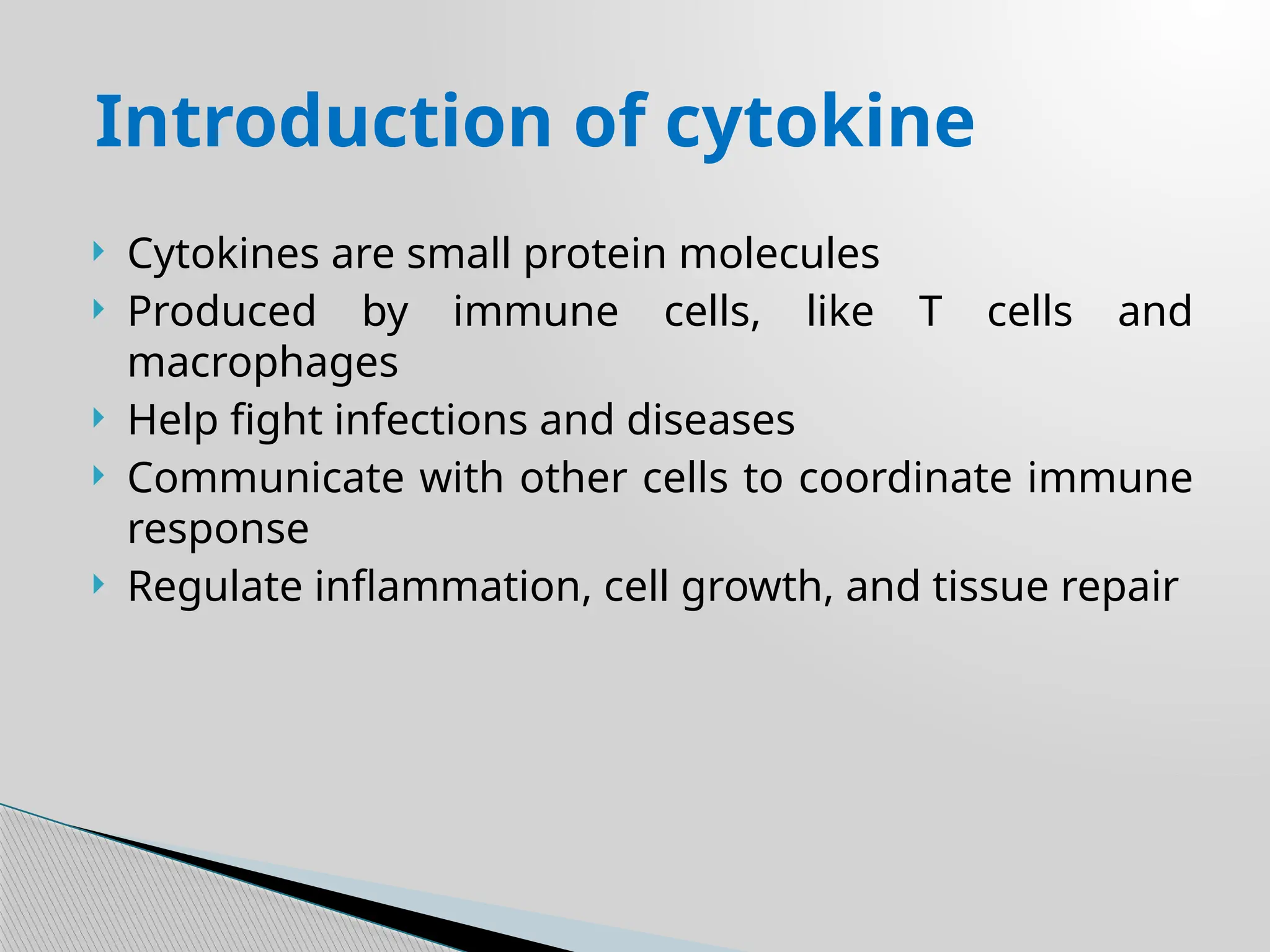
 Cytokines are small protein molecules
 Produced by immune cells, like T cells and
macrophages
 Help fight infections and diseases
 Communicate with other cells to coordinate immune
response
 Regulate inflammation, cell growth, and tissue repair
Introduction of cytokine
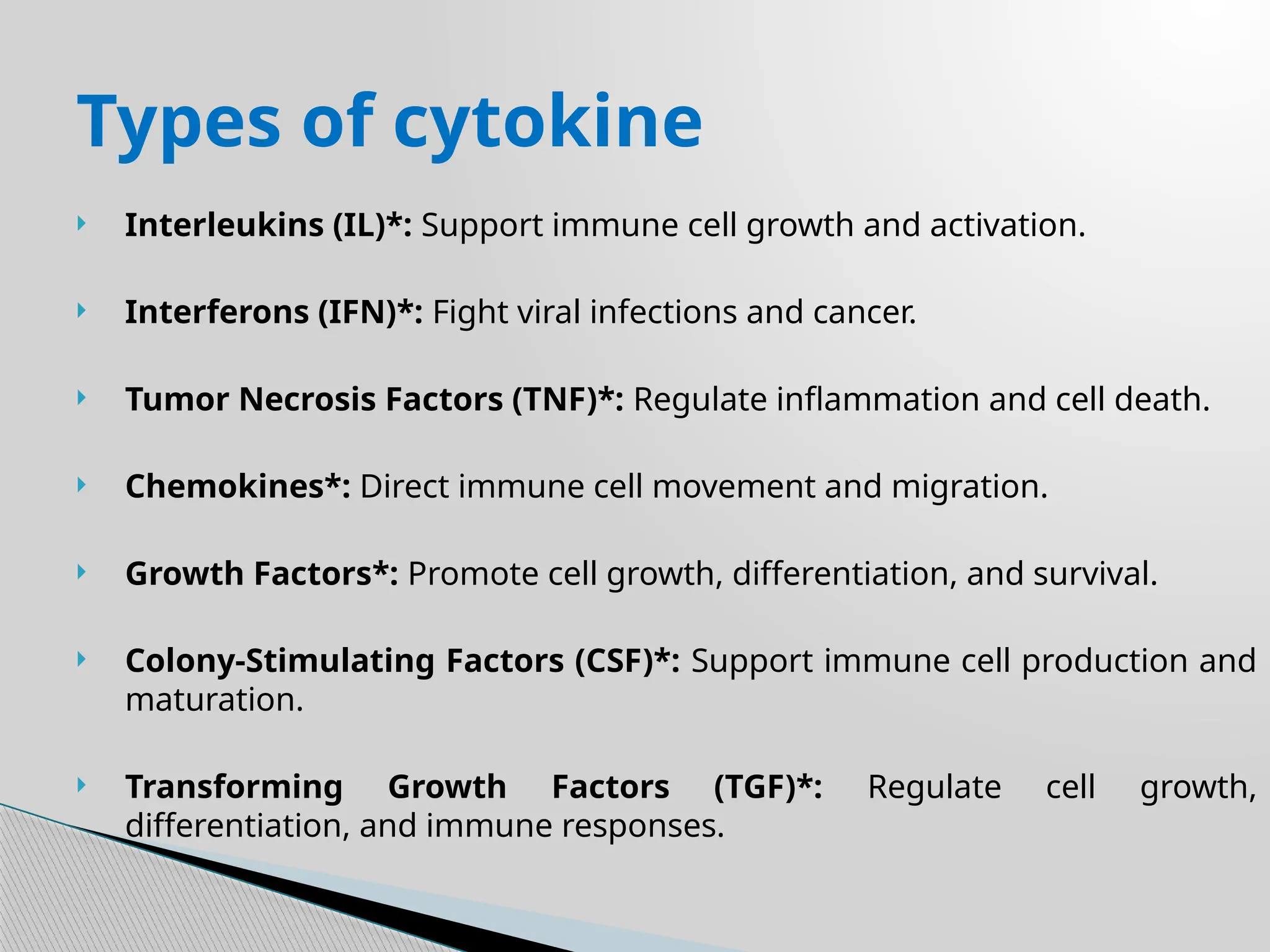
 Interleukins (IL)*: Support immune cell growth and activation.
 Interferons (IFN)*: Fight viral infections and cancer.
 Tumor Necrosis Factors (TNF)*: Regulate inflammation and cell death.
 Chemokines*: Direct immune cell movement and migration.
 Growth Factors*: Promote cell growth, differentiation, and survival.
 Colony-Stimulating Factors (CSF)*: Support immune cell production and
maturation.
 Transforming Growth Factors (TGF)*: Regulate cell growth,
differentiation, and immune responses.
Types of cytokine
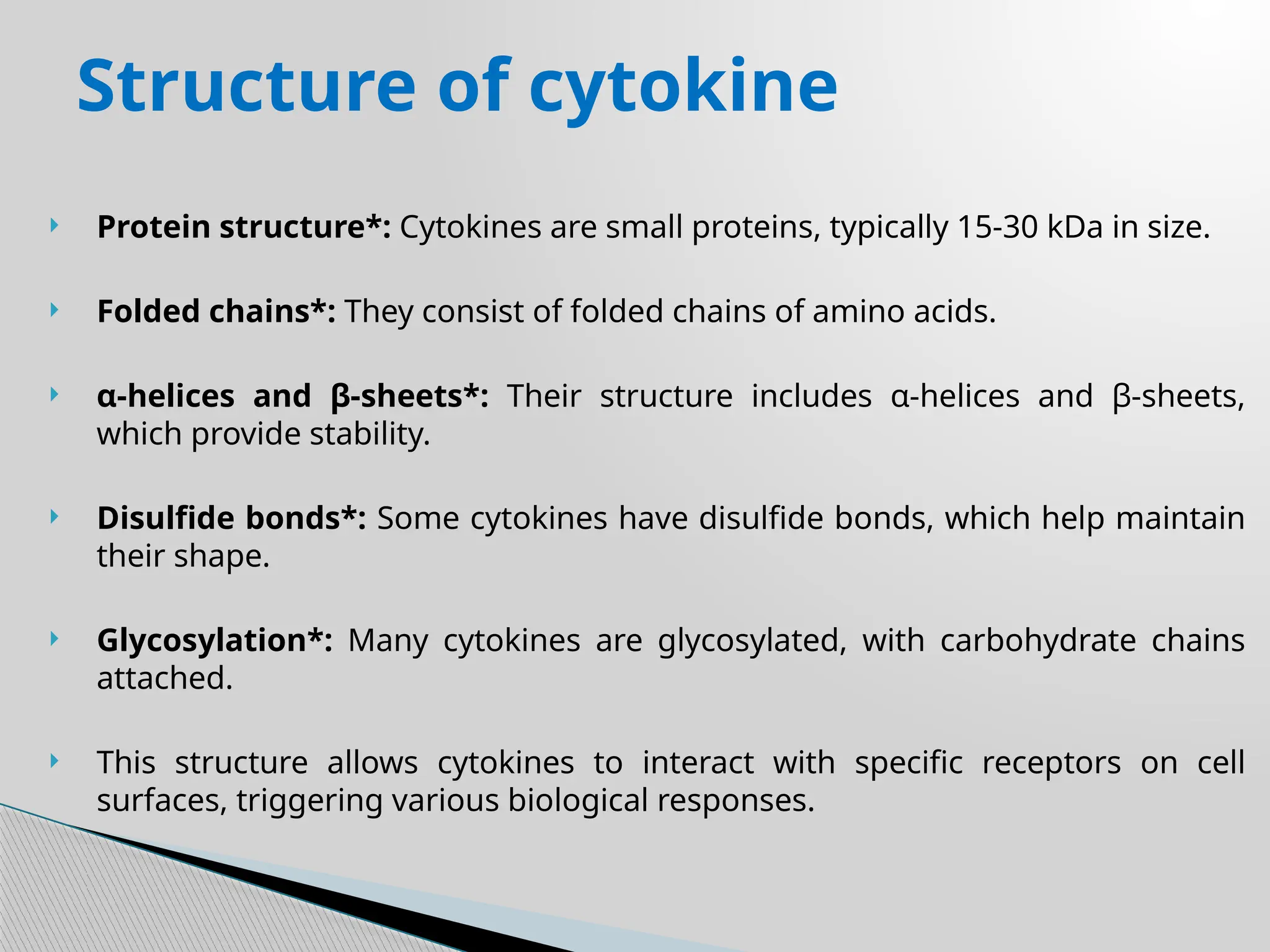
 Protein structure*: Cytokines are small proteins, typically 15-30 kDa in size.
 Folded chains*: They consist of folded chains of amino acids.
 α-helices and β-sheets*: Their structure includes α-helices and β-sheets,
which provide stability.
 Disulfide bonds*: Some cytokines have disulfide bonds, which help maintain
their shape.
 Glycosylation*: Many cytokines are glycosylated, with carbohydrate chains
attached.
 This structure allows cytokines to interact with specific receptors on cell
surfaces, triggering various biological responses.
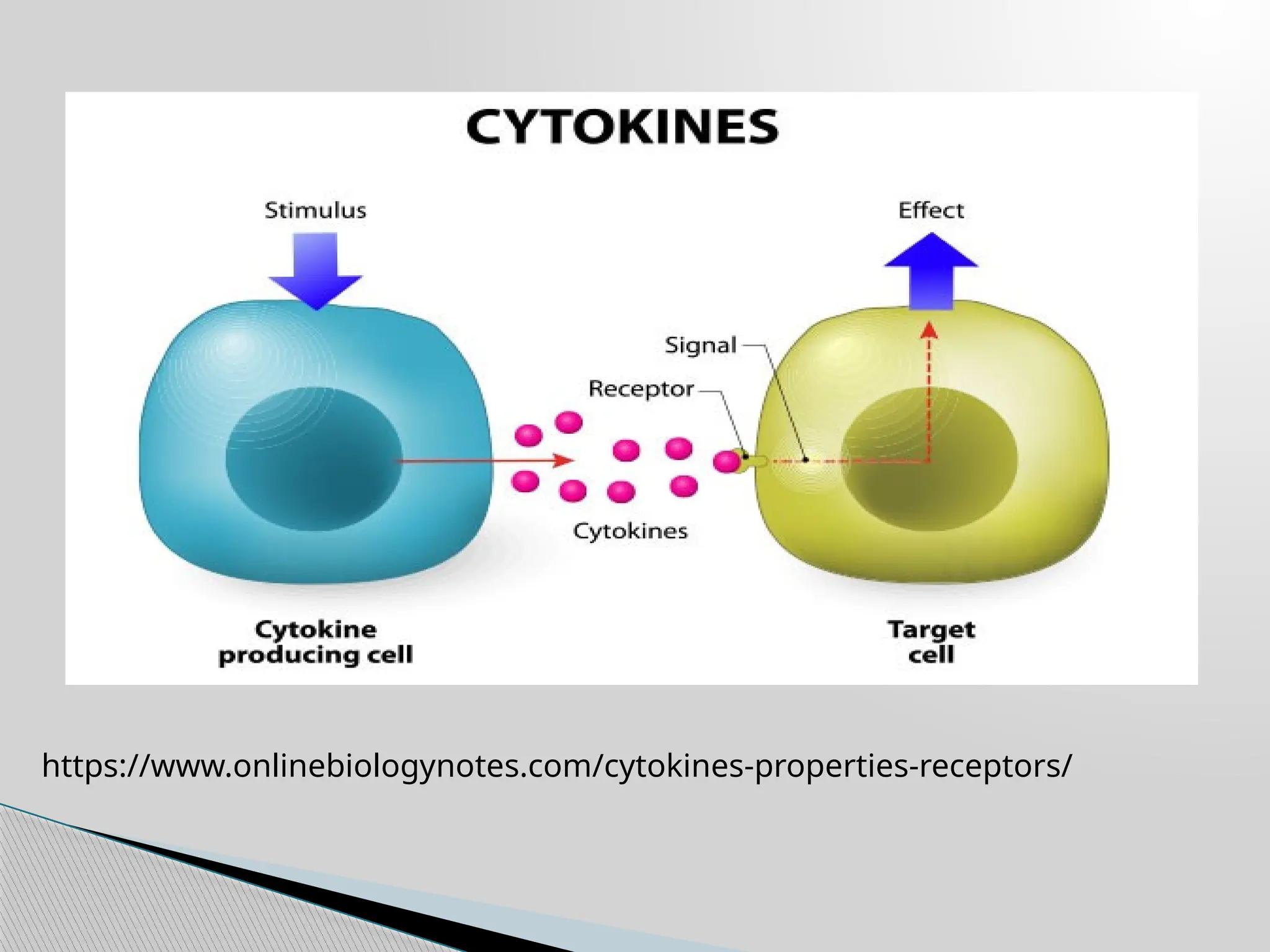
Structure of cytokine
https://www.onlinebiologynotes.com/cytokines-properties-receptors/
 1. Activate immune cells
 2. Regulate inflammation
 3. Fight infections
 4. Heal wounds
 5. Maintain tissue homeostasis
 6. Coordinate immune response
 7. Regulate cell growth
 8. Differentiate cells
 These functions highlight the crucial roles
cytokines play in the immune system,
inflammation, and cell development.
Function of cytokine:
http://www.sbs.utexas.edu/sanders/Bio347/Lectures/2006/Lecture
%2014%202006.htm
 1.Autoimmune diseases*
 - Rheumatoid arthritis (excessive TNF-alpha)
 - Lupus (imbalanced cytokine production)
 2. Inflammatory disorders*:
 - Asthma (elevated IL-4, IL-5)
 - Allergies (increased IL-4, IL-13)
 3.Cancer*:
 - Tumor progression (altered cytokine signaling)
 - Immune evasion (suppressed cytokine production)
 4. Infectious diseases*:
 - Sepsis (uncontrolled cytokine response)
 - HIV (dysregulated cytokine production)
 5. Neurological disorders*:
 - Multiple sclerosis (imbalanced cytokine production)
 - Alzheimer's disease (elevated TNF-alpha, IL-1)
Disorder of cytokine:
https://www.cusabio.com/cytokines/Cytokine-Receptor.html
 1. Cancer treatment and immunotherapy
 2. Vaccine development and adjuvants
 3. Treating autoimmune diseases like rheumatoid arthritis
 4. Combating infectious diseases like HIV and tuberculosis
 5. Promoting tissue repair and wound healing
 6. Gene therapy and cytokine-mediated gene delivery
 7. Treating immunodeficiency disorders like HIV/AIDS
 8. Transplantation and immunosuppression
 9. Inflammatory disease management
 10. Regenerative medicine and cell therapy
 Let me know if you need anything else!
Use of cytokine
 Cytokines play a crucial role in immune response.
 They facilitate communication between immune
cells.
 Regulate inflammation and fight infections.
 Imbalance can lead to various diseases.
 Therapeutic applications are vast and growing.
 Cytokines hold promise for treating cancer and
autoimmune disorders.
 Understanding cytokines is key to advancing
medicine.
Conclusion
1. Mahmoudi, M. (2013). Immunology made ridiculously simple (3rd
ed.). MedMaster Inc.
2. Abbas, A. K., Lichtman, A. H., & Pillai, S. (2022). Basic
immunology: Functions and disorders of the immune system (6th
ed.). Elsevier.
3. Coico, R., & Sunshine, G. (2015). Immunology: A short course
(7th ed.). Wiley.
4. Shand, M. H. D. O. (2018). Advanced immunology. Cambridge
University Press.
5. Paul, W. E. (2018). Fundamental immunology (7th ed.).
Lippincott Williams & Wilkins.
Reference Books
MM.Sowmiya
THANK YOU

CYTOKINE TYPES And FUNCTION IMMUNE SYSTEM And IMMUNO TECHNOLOGY

  • 1.
    VIVEKANANDHA MM.Sowmiya II B.SC. Biotechnology PG& Research Department of Biotechnology Vivekanandha Arts and Science College For Women Sankari Assignment on “ cytokine types and structure and fuction ” Subject: Immune system and immunotechnology ARTS & SCIENCE COLLEGE FOR WOMEN [An ISO 9001:2015 Certified Institution] (Affiliated to Periyar University, Salem Recognised Under Section 2(f) &12(B) of the UGC Act, 1956) Veerachipalayam, Sankari West (Post) – 637 303, Sankari Tk, Salem Dt., Tamil Nadu PG & RESEARCH DEPARTMENT OF BIOTECHNOLOGY
  • 2.
  • 3.
    Introduction  Types ofcytokine  Structure  Biological functions  Disorders  Conclusion CONTENS
  • 4.
     Cytokines aresmall protein molecules  Produced by immune cells, like T cells and macrophages  Help fight infections and diseases  Communicate with other cells to coordinate immune response  Regulate inflammation, cell growth, and tissue repair Introduction of cytokine
  • 5.
     Interleukins (IL)*:Support immune cell growth and activation.  Interferons (IFN)*: Fight viral infections and cancer.  Tumor Necrosis Factors (TNF)*: Regulate inflammation and cell death.  Chemokines*: Direct immune cell movement and migration.  Growth Factors*: Promote cell growth, differentiation, and survival.  Colony-Stimulating Factors (CSF)*: Support immune cell production and maturation.  Transforming Growth Factors (TGF)*: Regulate cell growth, differentiation, and immune responses. Types of cytokine
  • 6.
     Protein structure*:Cytokines are small proteins, typically 15-30 kDa in size.  Folded chains*: They consist of folded chains of amino acids.  α-helices and β-sheets*: Their structure includes α-helices and β-sheets, which provide stability.  Disulfide bonds*: Some cytokines have disulfide bonds, which help maintain their shape.  Glycosylation*: Many cytokines are glycosylated, with carbohydrate chains attached.  This structure allows cytokines to interact with specific receptors on cell surfaces, triggering various biological responses. Structure of cytokine
  • 7.
  • 8.
     1. Activateimmune cells  2. Regulate inflammation  3. Fight infections  4. Heal wounds  5. Maintain tissue homeostasis  6. Coordinate immune response  7. Regulate cell growth  8. Differentiate cells  These functions highlight the crucial roles cytokines play in the immune system, inflammation, and cell development. Function of cytokine:
  • 9.
  • 10.
     1.Autoimmune diseases* - Rheumatoid arthritis (excessive TNF-alpha)  - Lupus (imbalanced cytokine production)  2. Inflammatory disorders*:  - Asthma (elevated IL-4, IL-5)  - Allergies (increased IL-4, IL-13)  3.Cancer*:  - Tumor progression (altered cytokine signaling)  - Immune evasion (suppressed cytokine production)  4. Infectious diseases*:  - Sepsis (uncontrolled cytokine response)  - HIV (dysregulated cytokine production)  5. Neurological disorders*:  - Multiple sclerosis (imbalanced cytokine production)  - Alzheimer's disease (elevated TNF-alpha, IL-1) Disorder of cytokine:
  • 11.
  • 12.
     1. Cancertreatment and immunotherapy  2. Vaccine development and adjuvants  3. Treating autoimmune diseases like rheumatoid arthritis  4. Combating infectious diseases like HIV and tuberculosis  5. Promoting tissue repair and wound healing  6. Gene therapy and cytokine-mediated gene delivery  7. Treating immunodeficiency disorders like HIV/AIDS  8. Transplantation and immunosuppression  9. Inflammatory disease management  10. Regenerative medicine and cell therapy  Let me know if you need anything else! Use of cytokine
  • 13.
     Cytokines playa crucial role in immune response.  They facilitate communication between immune cells.  Regulate inflammation and fight infections.  Imbalance can lead to various diseases.  Therapeutic applications are vast and growing.  Cytokines hold promise for treating cancer and autoimmune disorders.  Understanding cytokines is key to advancing medicine. Conclusion
  • 14.
    1. Mahmoudi, M.(2013). Immunology made ridiculously simple (3rd ed.). MedMaster Inc. 2. Abbas, A. K., Lichtman, A. H., & Pillai, S. (2022). Basic immunology: Functions and disorders of the immune system (6th ed.). Elsevier. 3. Coico, R., & Sunshine, G. (2015). Immunology: A short course (7th ed.). Wiley. 4. Shand, M. H. D. O. (2018). Advanced immunology. Cambridge University Press. 5. Paul, W. E. (2018). Fundamental immunology (7th ed.). Lippincott Williams & Wilkins. Reference Books
  • 15.