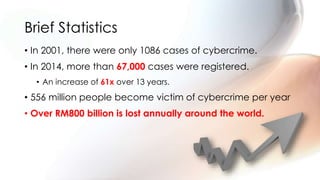
This document discusses cybercrime, including its definition, types, statistics, consequences, prevention, and reasons not to commit cybercrime. It defines cybercrime as a criminal act carried out through cybertechnology or in cyberspace. Some common types are cyber-stalking, online fraud, identity theft, and phishing. Statistics show cybercrime cases increasing 61x from 2001 to 2014, with over 500 million victims annually losing over $800 billion worldwide. Consequences include financial losses, lost intellectual property and customer trust. The document recommends steps to prevent cybercrime like using strong passwords and updating antivirus software. It concludes that cybercrime is against religion, law, and philosophy.