CYBERBULLYING
• Students age and level: This Micromodule plan is aimed at 14 years- old
students who attend a state-run school in CABA with an elementary level of
English.
• Actionable objective: By the end of this micromodule plan, students will be
able to define cyberbullying and identify cyberbullying as a negative
behaviour. Students will also be able to develop strategies to prevent or
minimise cyberbulling.
LESSON 1
ACTIVITY 1
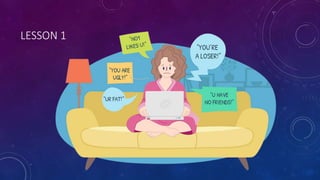
Teacher shares the image to students, together they disscuss the
following questions:
• What can you see in the picture?
• What's cyberbullying ? What sort of technologies can be used for cyberbullying?
• Is cyberbullying any different to offline bullying? Do you think it is
worse or just different?
• Do the people involved in cyberbullying have to know each other?
ACTIVITY 2
What's Cyberbullying?
Students open the following Game. Students in pairs decide which ones
are examples of cyberbullying and which ones not . After a minute, the
teacher takes some feedback and let students know that some of the
examples on the game count as bullying too.
Students complete the next poll. Students may leave comments if they want to sha
them in class. Together teacher and students reflect upon the results.
LESSON 2
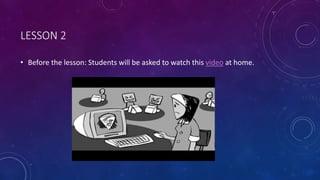
• Before the lesson: Students will be asked to watch this video at home.
ACTIVITY 1
Students and teacher disscuss these questions in class
1. What is the video about?
2. How might the girl with a different face shape be feeling? (embarrassed, panicked, scared, angry)
3. What actions could she take? (screenshotting the messages, blocking and reporting the sender on all social media channels, speaking to
a trusted adult)
4. What is the role of her brother? •(listening, empathy, encouragement and support to do one of the actions above, emotional comfort
and support)
.
ACTIVITY 2
Students are asked to draw some emojis of how the girl might be feeling and
then write ideas here about what she could do next.
LESSON 3
Make a poster for your school/class/club board to tell others
about cyberbullying and what we can do to help to stop cyberbullying in
your school/class/club.

Cyberbullying

  • 1.
    CYBERBULLYING • Students ageand level: This Micromodule plan is aimed at 14 years- old students who attend a state-run school in CABA with an elementary level of English. • Actionable objective: By the end of this micromodule plan, students will be able to define cyberbullying and identify cyberbullying as a negative behaviour. Students will also be able to develop strategies to prevent or minimise cyberbulling.
  • 2.
  • 3.
    ACTIVITY 1 Teacher sharesthe image to students, together they disscuss the following questions: • What can you see in the picture? • What's cyberbullying ? What sort of technologies can be used for cyberbullying? • Is cyberbullying any different to offline bullying? Do you think it is worse or just different? • Do the people involved in cyberbullying have to know each other?
  • 4.
    ACTIVITY 2 What's Cyberbullying? Studentsopen the following Game. Students in pairs decide which ones are examples of cyberbullying and which ones not . After a minute, the teacher takes some feedback and let students know that some of the examples on the game count as bullying too. Students complete the next poll. Students may leave comments if they want to sha them in class. Together teacher and students reflect upon the results.
  • 5.
    LESSON 2 • Beforethe lesson: Students will be asked to watch this video at home.
  • 6.
    ACTIVITY 1 Students andteacher disscuss these questions in class 1. What is the video about? 2. How might the girl with a different face shape be feeling? (embarrassed, panicked, scared, angry) 3. What actions could she take? (screenshotting the messages, blocking and reporting the sender on all social media channels, speaking to a trusted adult) 4. What is the role of her brother? •(listening, empathy, encouragement and support to do one of the actions above, emotional comfort and support) .
  • 7.
    ACTIVITY 2 Students areasked to draw some emojis of how the girl might be feeling and then write ideas here about what she could do next.
  • 8.
    LESSON 3 Make aposter for your school/class/club board to tell others about cyberbullying and what we can do to help to stop cyberbullying in your school/class/club.