© 2012 Fluor Corporation. All Rights Reserved.
A Case Study on Information Security and Cyber
Risks Implementation on an IP/MPLS Network
Gabriel Ozique & Peter Crumpton
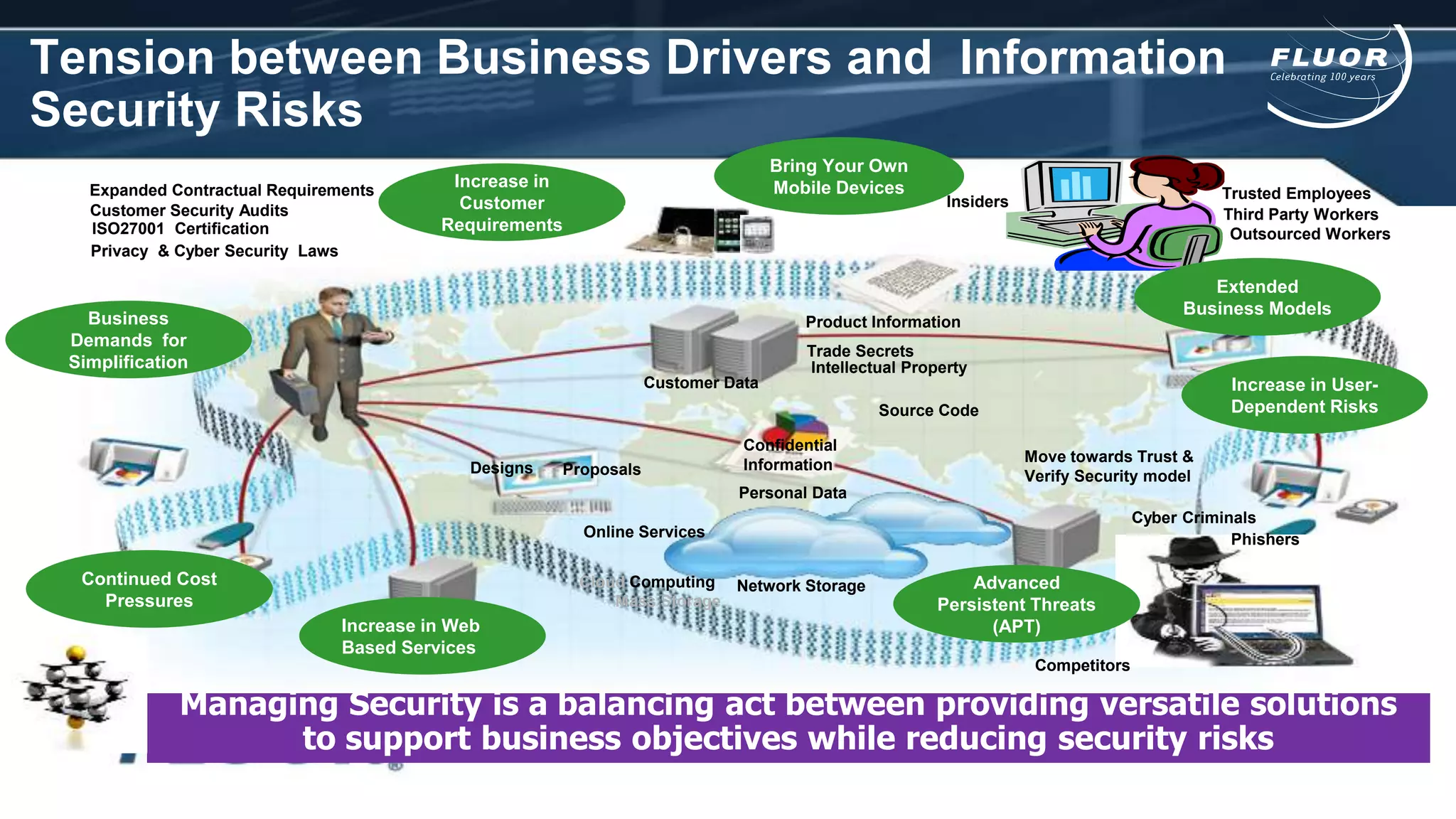
Tension between Business Drivers and Information
Security Risks
Managing Security is a balancing act between providing versatile solutions
to support business objectives while reducing security risks
•DLP-Focused Visual
Outsourced Workers
Insiders Trusted Employees
Third Party Workers
Competitors
Cyber Criminals
Phishers
Cloud Computing
Mass Storage
Online Services
ISO27001 Certification
Confidential
Information
Intellectual Property
Trade Secrets
Source Code
Customer Data
Personal Data
Product Information
ProposalsDesigns
Extended
Business Models
Bring Your Own
Mobile Devices
Advanced
Persistent Threats
(APT)Increase in Web
Based Services
Privacy & Cyber Security Laws
Increase in
Customer
Requirements
Increase in User-
Dependent Risks
Network Storage
Move towards Trust &
Verify Security model
Customer Security Audits
Expanded Contractual Requirements
Business
Demands for
Simplification
Continued Cost
Pressures
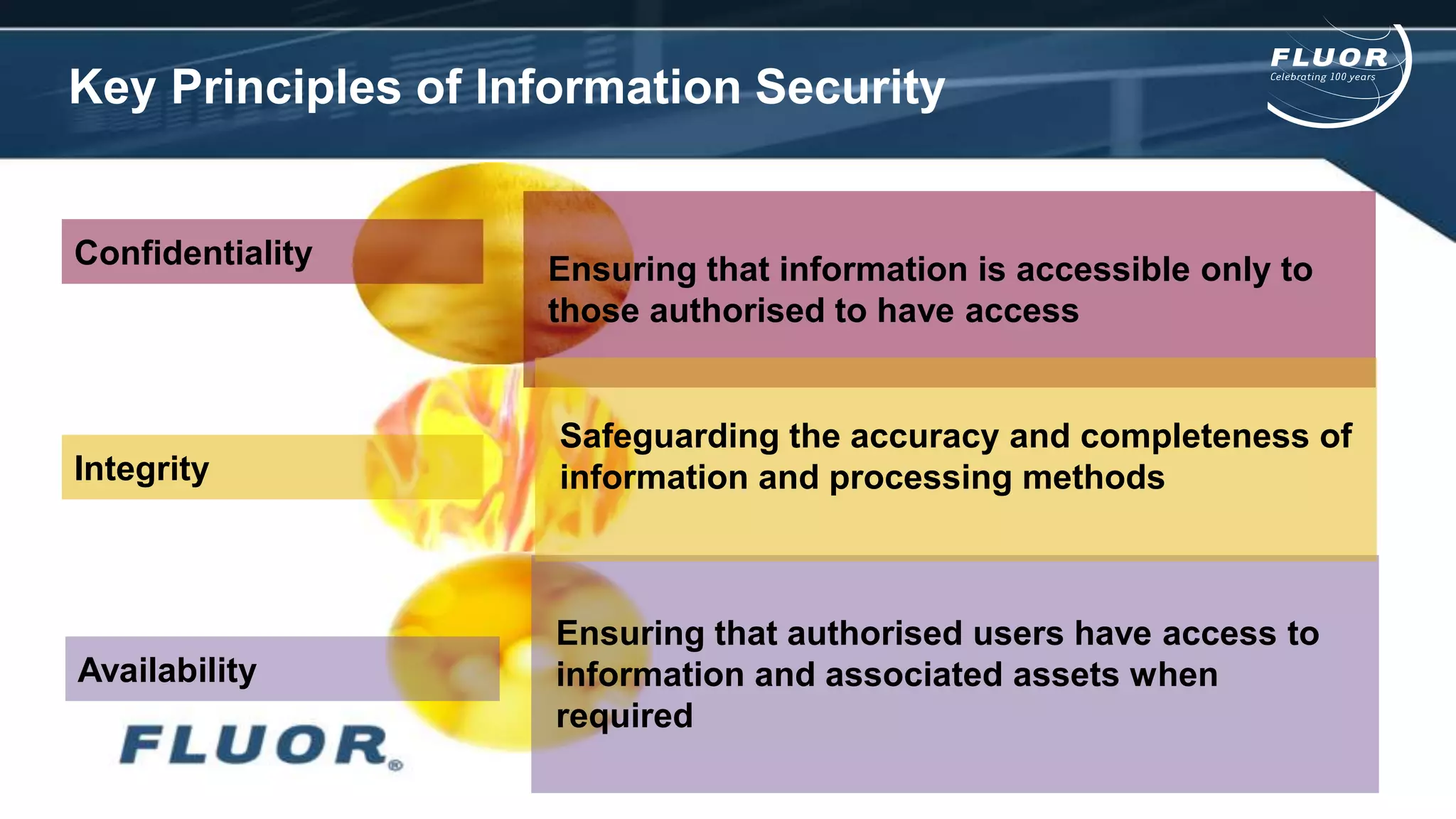
Key Principles of Information Security
Confidentiality
Integrity
Availability
Ensuring that information is accessible only to
those authorised to have access
Ensuring that authorised users have access to
information and associated assets when
required
Safeguarding the accuracy and completeness of
information and processing methods
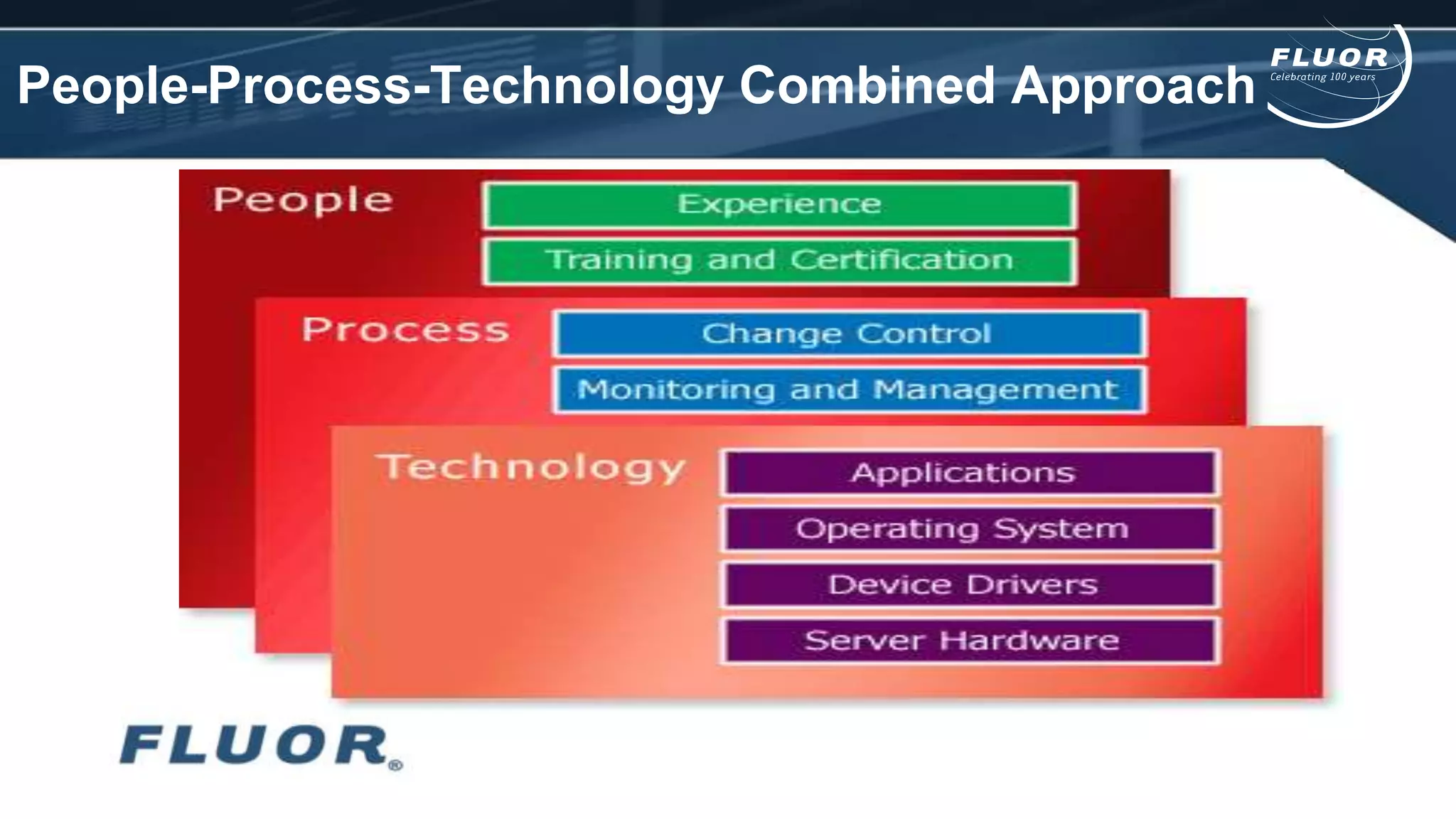
People-Process-Technology Combined Approach
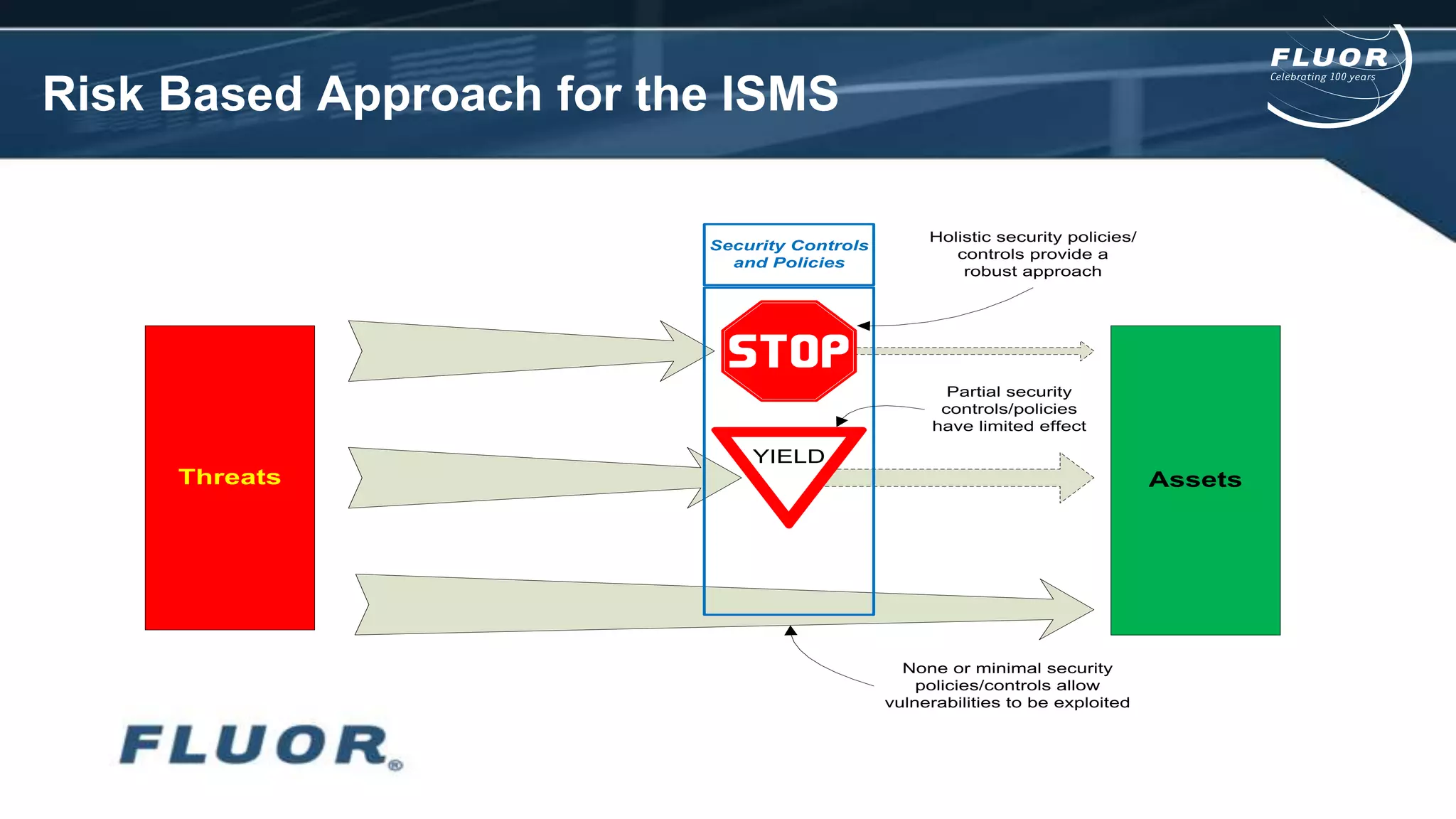
Risk Based Approach for the ISMS
Threats Assets
YIELD
Security Controls
and Policies
None or minimal security
policies/controls allow
vulnerabilities to be exploited
Partial security
controls/policies
have limited effect
Holistic security policies/
controls provide a
robust approach
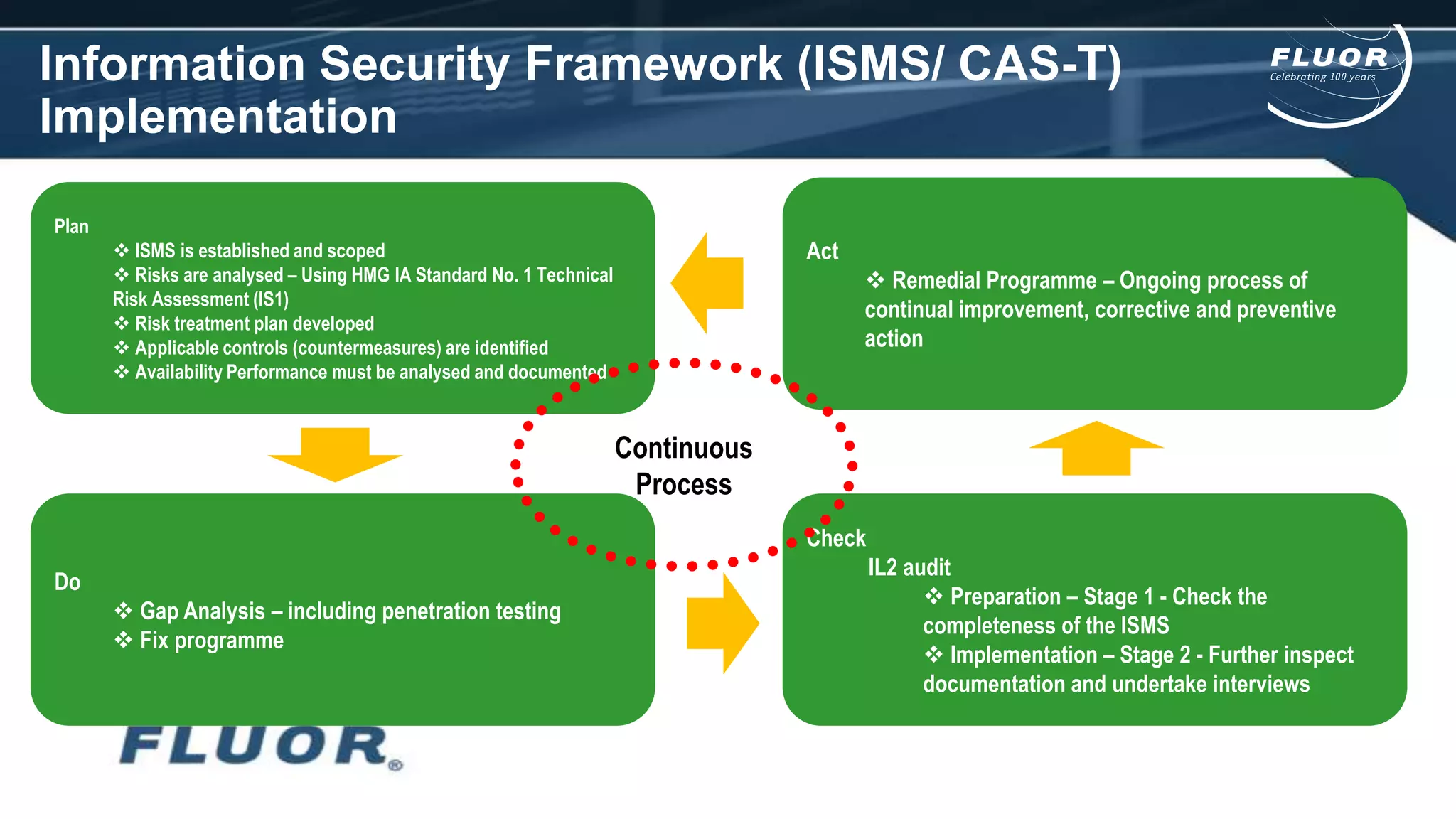
Information Security Framework (ISMS/ CAS-T)
Implementation
Plan
 ISMS is established and scoped
 Risks are analysed – Using HMG IA Standard No. 1 Technical
Risk Assessment (IS1)
 Risk treatment plan developed
 Applicable controls (countermeasures) are identified
 Availability Performance must be analysed and documented
Do
 Gap Analysis – including penetration testing
 Fix programme
Act
 Remedial Programme – Ongoing process of
continual improvement, corrective and preventive
action
Check
IL2 audit
 Preparation – Stage 1 - Check the
completeness of the ISMS
 Implementation – Stage 2 - Further inspect
documentation and undertake interviews
Continuous
Process
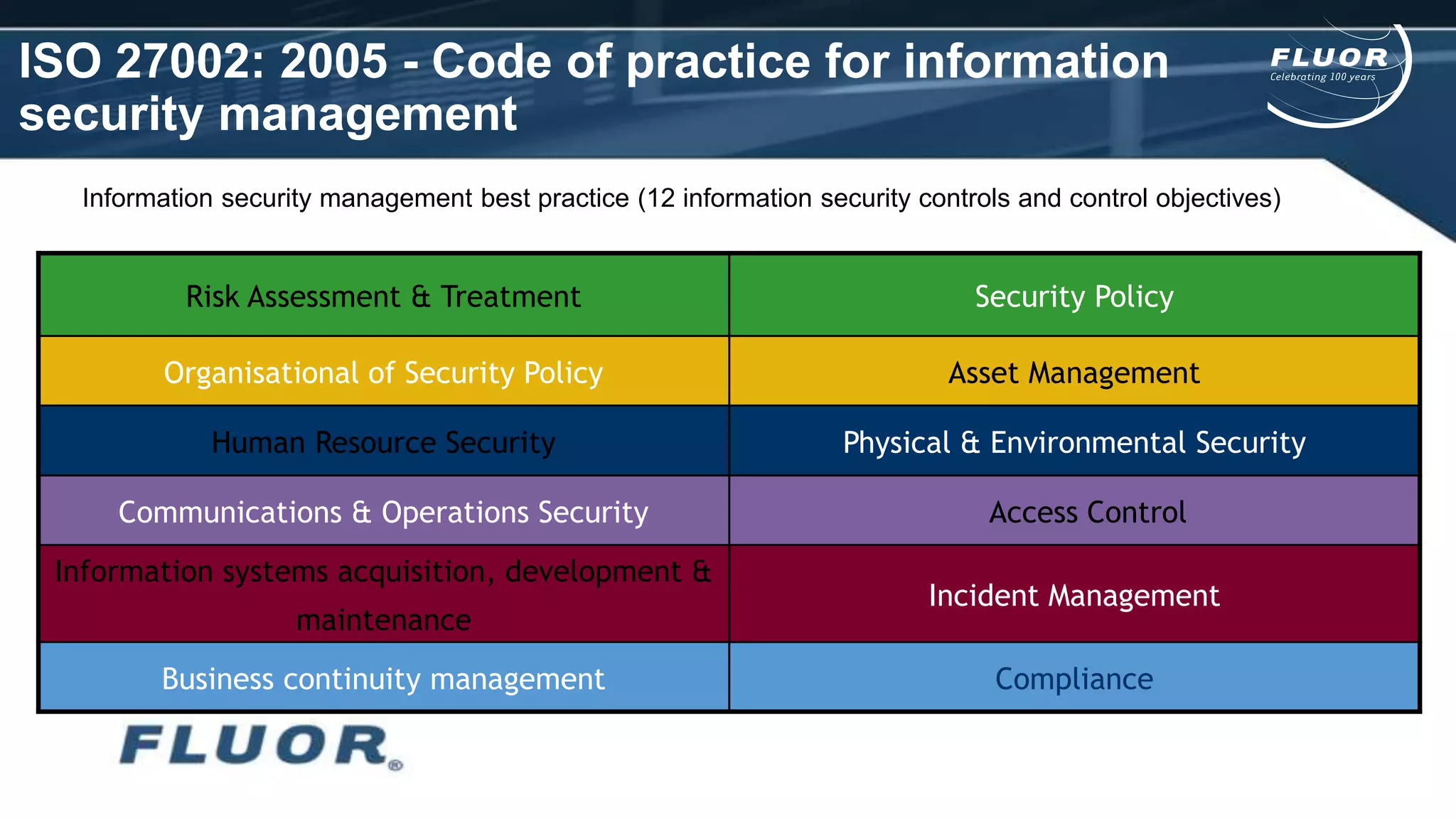
ISO 27002: 2005 - Code of practice for information
security management
Information security management best practice (12 information security controls and control objectives)
Risk Assessment & Treatment Security Policy
Organisational of Security Policy Asset Management
Human Resource Security Physical & Environmental Security
Communications & Operations Security Access Control
Information systems acquisition, development &
maintenance
Incident Management
Business continuity management Compliance
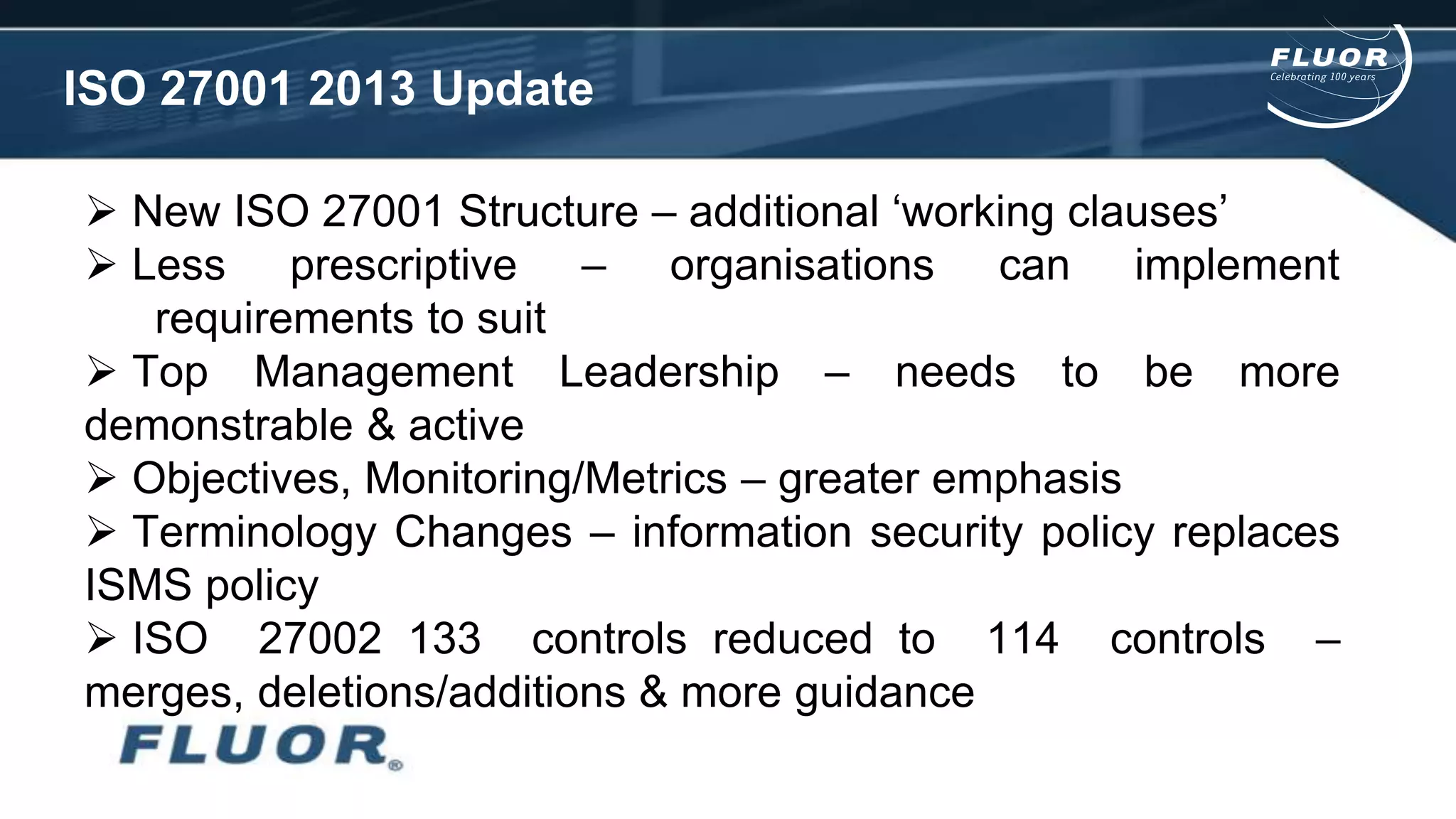
ISO 27001 2013 Update
 New ISO 27001 Structure – additional ‘working clauses’
 Less prescriptive – organisations can implement
requirements to suit
 Top Management Leadership – needs to be more
demonstrable & active
 Objectives, Monitoring/Metrics – greater emphasis
 Terminology Changes – information security policy replaces
ISMS policy
 ISO 27002 133 controls reduced to 114 controls –
merges, deletions/additions & more guidance
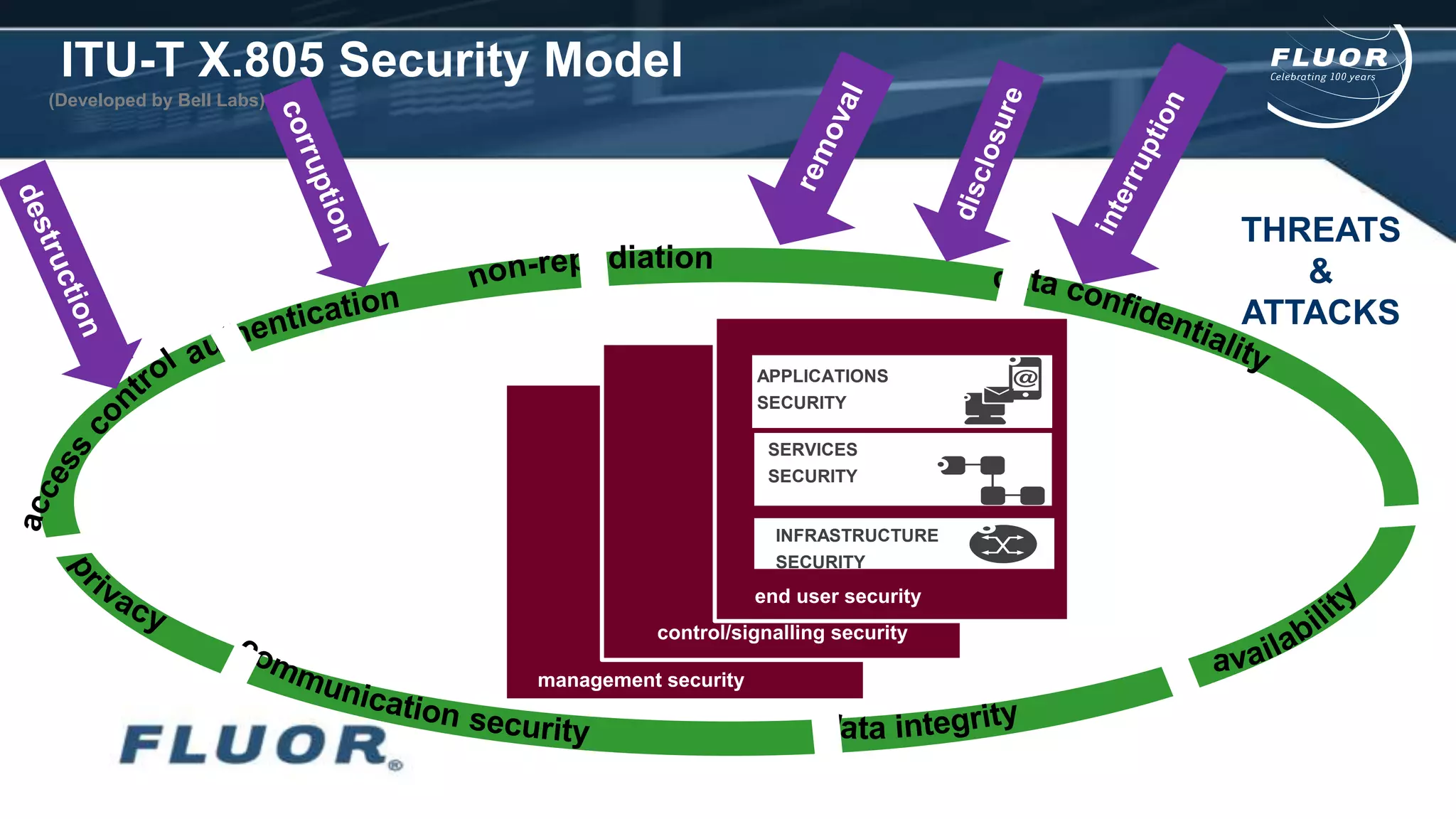
ITU-T X.805 Security Model
end user security
control/signalling security
management security
INFRASTRUCTURE
SECURITY
SERVICES
SECURITY
APPLICATIONS
SECURITY
THREATS
&
ATTACKS
(Developed by Bell Labs)
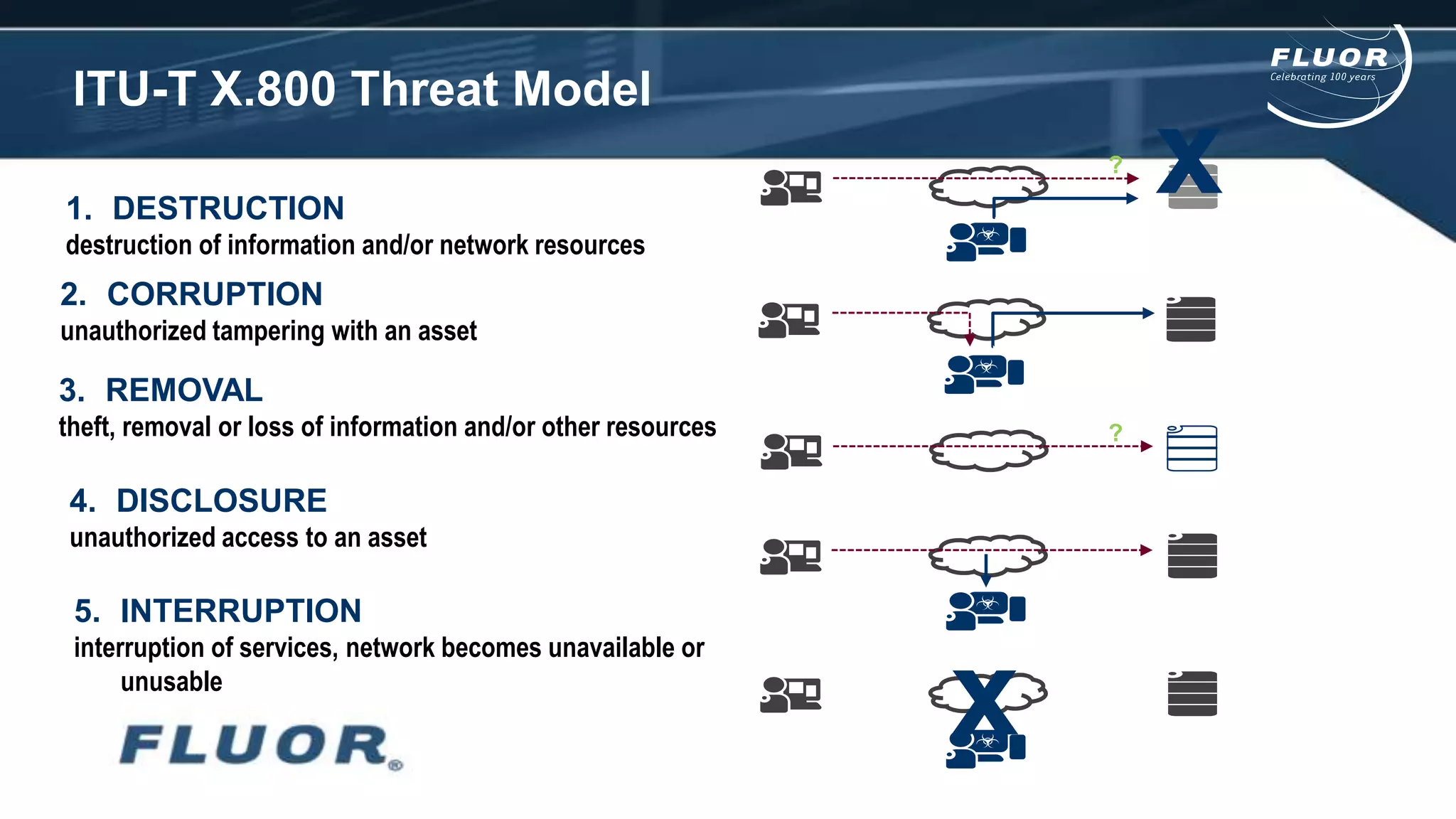
ITU-T X.800 Threat Model
1. DESTRUCTION
destruction of information and/or network resources
2. CORRUPTION
unauthorized tampering with an asset
3. REMOVAL
theft, removal or loss of information and/or other resources
4. DISCLOSURE
unauthorized access to an asset
5. INTERRUPTION
interruption of services, network becomes unavailable or
unusable
x?
?
x
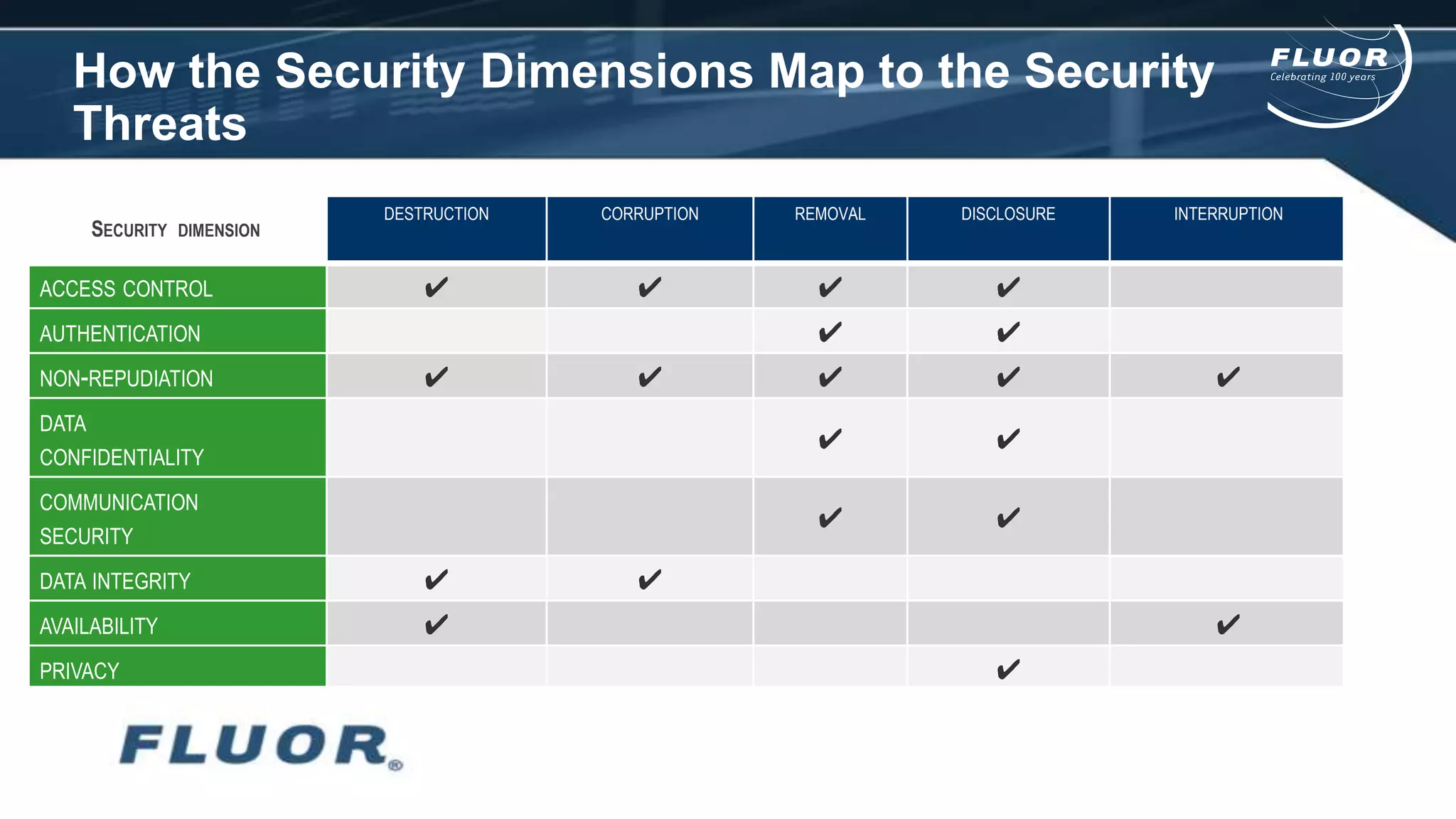
How the Security Dimensions Map to the Security
Threats
SECURITY DIMENSION
DESTRUCTION CORRUPTION REMOVAL DISCLOSURE INTERRUPTION
ACCESS CONTROL ✔ ✔ ✔ ✔
AUTHENTICATION ✔ ✔
NON-REPUDIATION ✔ ✔ ✔ ✔ ✔
DATA
CONFIDENTIALITY
✔ ✔
COMMUNICATION
SECURITY
✔ ✔
DATA INTEGRITY ✔ ✔
AVAILABILITY ✔ ✔
PRIVACY ✔
Addressing Security Threats
THREAT RESPONSE ENCRYPTION IDS/ IPS FIREWALL SYSTEM
HARDENING
Network data interception - man-in-the-middle attack ✔ ✔ ✔
Intruder gains control of roadside camera ✔ ✔ ✔
Disgruntled employee or subcontractor with malicious intent ✔ ✔ ✔
Intruder bypasses physical security and gets into transmission station ✔ ✔ ✔ ✔
Gain access to control network through corporate network ✔ ✔ ✔
Malware introduction ✔ ✔ ✔
Access protected data ✔ ✔ ✔
Remote –access-based attacks ✔ ✔ ✔
DDoS attacks from the internet ✔ ✔ ✔
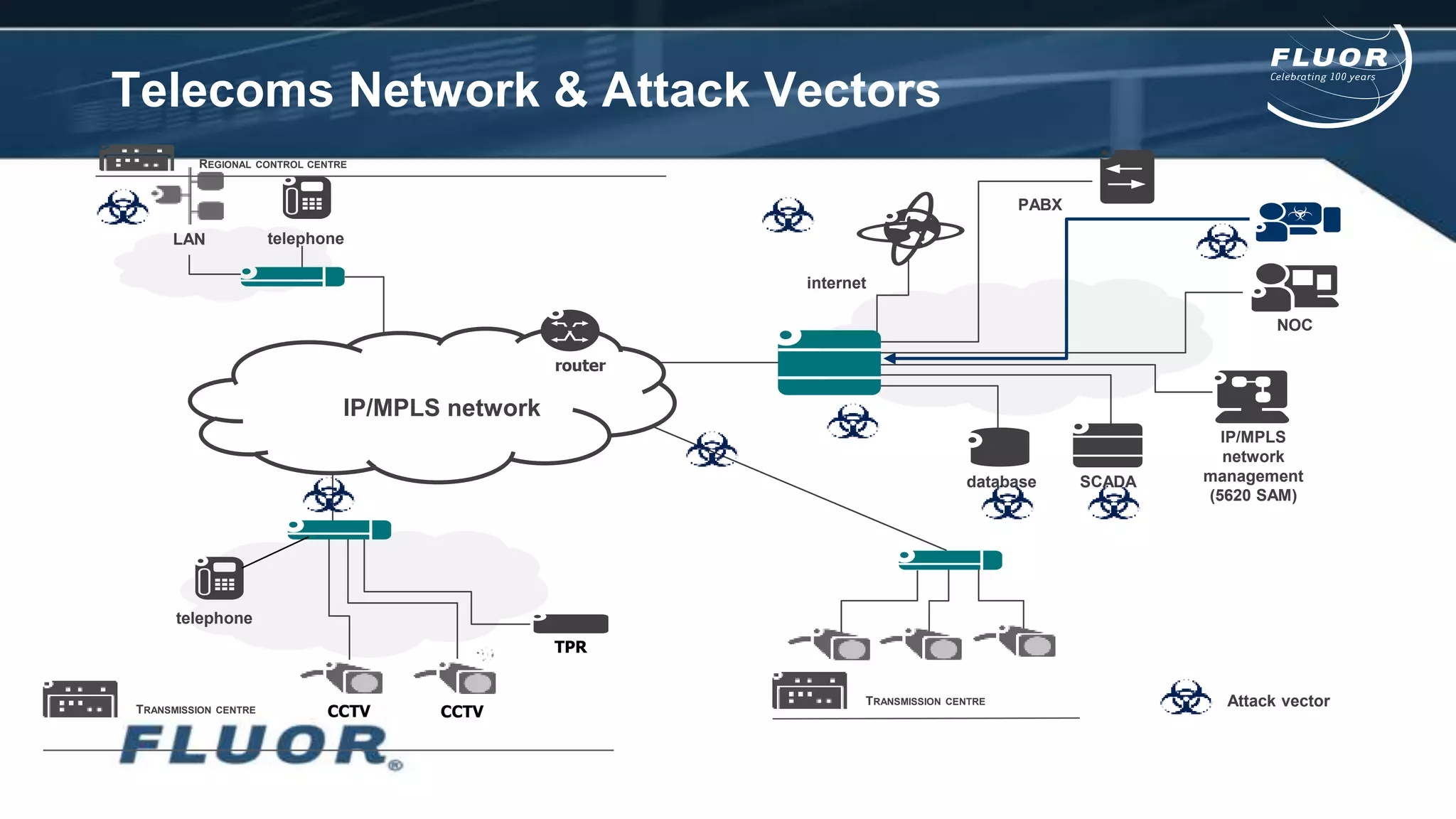
Telecoms Network & Attack Vectors
IP/MPLS network
internet
PABX
NOC
SCADA
IP/MPLS
network
management
(5620 SAM)
LAN
CCTV
TPR
telephone
TRANSMISSION CENTRE
database
CCTV
REGIONAL CONTROL CENTRE
router
telephone
TRANSMISSION CENTRE Attack vector
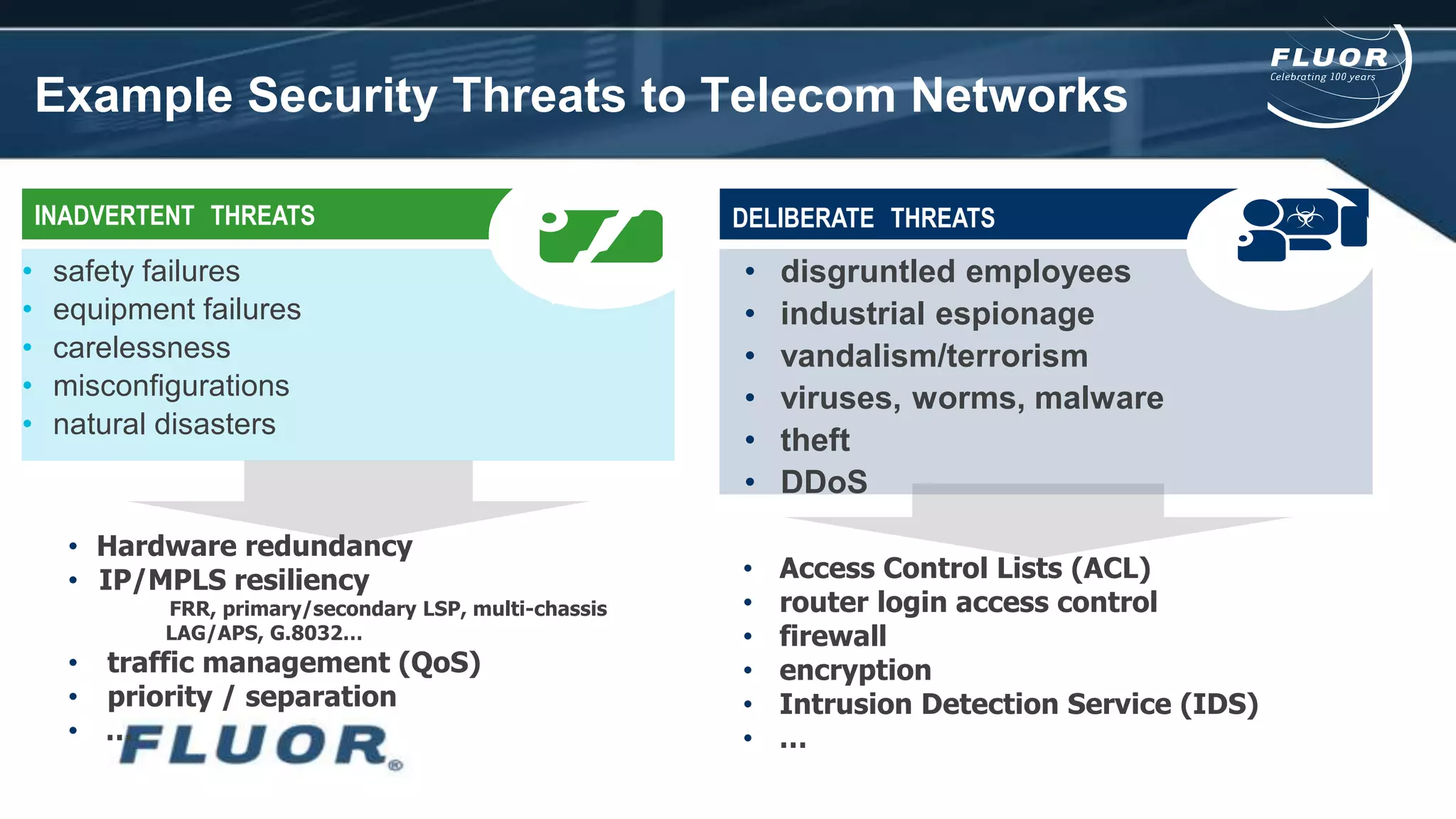
Example Security Threats to Telecom Networks
• safety failures
• equipment failures
• carelessness
• misconfigurations
• natural disasters
• Hardware redundancy
• IP/MPLS resiliency
FRR, primary/secondary LSP, multi-chassis
LAG/APS, G.8032…
• traffic management (QoS)
• priority / separation
• …
INADVERTENT THREATS
• disgruntled employees
• industrial espionage
• vandalism/terrorism
• viruses, worms, malware
• theft
• DDoS
DELIBERATE THREATS
• Access Control Lists (ACL)
• router login access control
• firewall
• encryption
• Intrusion Detection Service (IDS)
• …
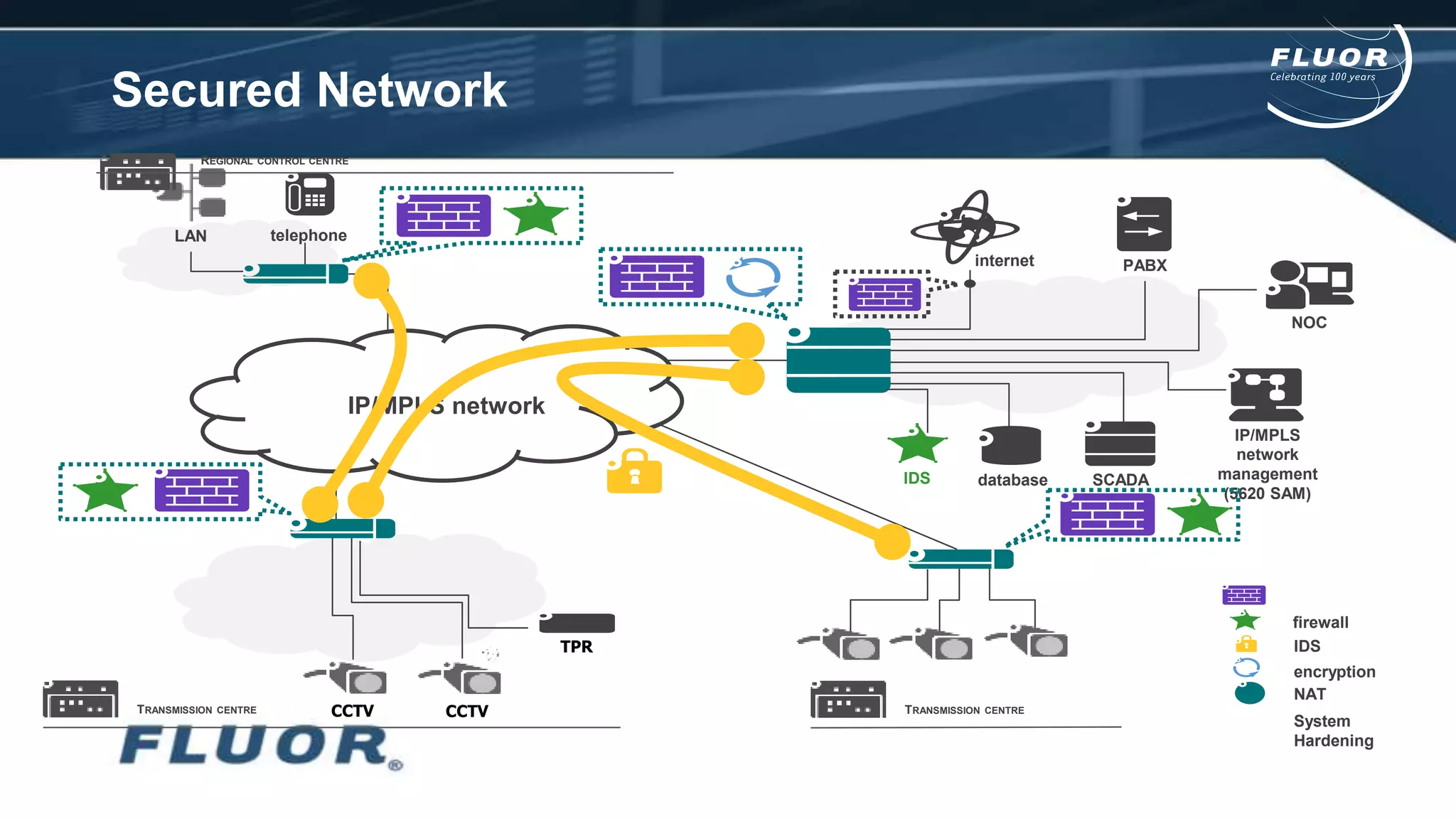
Secured Network
IP/MPLS network
internet PABX
NOC
SCADA
IP/MPLS
network
management
(5620 SAM)
LAN
CCTV
TPR
telephone
TRANSMISSION CENTRE
databaseIDS
firewall
IDS
encryption
NAT
System
Hardening
CCTV
REGIONAL CONTROL CENTRE
TRANSMISSION CENTRE
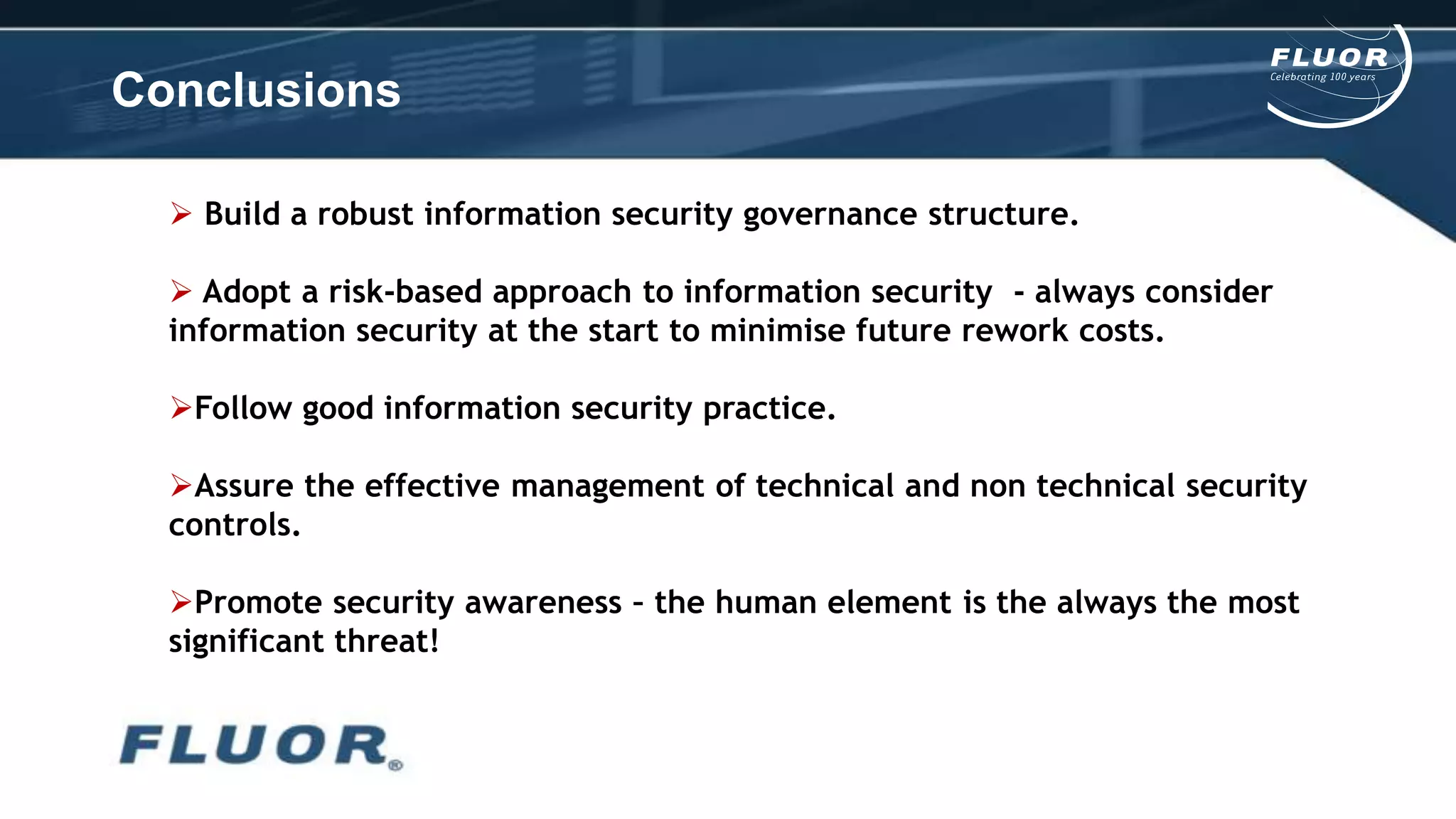
Conclusions
 Build a robust information security governance structure.
 Adopt a risk-based approach to information security - always consider
information security at the start to minimise future rework costs.
Follow good information security practice.
Assure the effective management of technical and non technical security
controls.
Promote security awareness – the human element is the always the most
significant threat!
17
Any Questions?

Cyber Risks Implementation on an IP MPLS Network

  • 1.
    © 2012 FluorCorporation. All Rights Reserved. A Case Study on Information Security and Cyber Risks Implementation on an IP/MPLS Network Gabriel Ozique & Peter Crumpton
  • 2.
    Tension between BusinessDrivers and Information Security Risks Managing Security is a balancing act between providing versatile solutions to support business objectives while reducing security risks •DLP-Focused Visual Outsourced Workers Insiders Trusted Employees Third Party Workers Competitors Cyber Criminals Phishers Cloud Computing Mass Storage Online Services ISO27001 Certification Confidential Information Intellectual Property Trade Secrets Source Code Customer Data Personal Data Product Information ProposalsDesigns Extended Business Models Bring Your Own Mobile Devices Advanced Persistent Threats (APT)Increase in Web Based Services Privacy & Cyber Security Laws Increase in Customer Requirements Increase in User- Dependent Risks Network Storage Move towards Trust & Verify Security model Customer Security Audits Expanded Contractual Requirements Business Demands for Simplification Continued Cost Pressures
  • 3.
    Key Principles ofInformation Security Confidentiality Integrity Availability Ensuring that information is accessible only to those authorised to have access Ensuring that authorised users have access to information and associated assets when required Safeguarding the accuracy and completeness of information and processing methods
  • 4.
  • 5.
    Risk Based Approachfor the ISMS Threats Assets YIELD Security Controls and Policies None or minimal security policies/controls allow vulnerabilities to be exploited Partial security controls/policies have limited effect Holistic security policies/ controls provide a robust approach
  • 6.
    Information Security Framework(ISMS/ CAS-T) Implementation Plan  ISMS is established and scoped  Risks are analysed – Using HMG IA Standard No. 1 Technical Risk Assessment (IS1)  Risk treatment plan developed  Applicable controls (countermeasures) are identified  Availability Performance must be analysed and documented Do  Gap Analysis – including penetration testing  Fix programme Act  Remedial Programme – Ongoing process of continual improvement, corrective and preventive action Check IL2 audit  Preparation – Stage 1 - Check the completeness of the ISMS  Implementation – Stage 2 - Further inspect documentation and undertake interviews Continuous Process
  • 7.
    ISO 27002: 2005- Code of practice for information security management Information security management best practice (12 information security controls and control objectives) Risk Assessment & Treatment Security Policy Organisational of Security Policy Asset Management Human Resource Security Physical & Environmental Security Communications & Operations Security Access Control Information systems acquisition, development & maintenance Incident Management Business continuity management Compliance
  • 8.
    ISO 27001 2013Update  New ISO 27001 Structure – additional ‘working clauses’  Less prescriptive – organisations can implement requirements to suit  Top Management Leadership – needs to be more demonstrable & active  Objectives, Monitoring/Metrics – greater emphasis  Terminology Changes – information security policy replaces ISMS policy  ISO 27002 133 controls reduced to 114 controls – merges, deletions/additions & more guidance
  • 9.
    ITU-T X.805 SecurityModel end user security control/signalling security management security INFRASTRUCTURE SECURITY SERVICES SECURITY APPLICATIONS SECURITY THREATS & ATTACKS (Developed by Bell Labs)
  • 10.
    ITU-T X.800 ThreatModel 1. DESTRUCTION destruction of information and/or network resources 2. CORRUPTION unauthorized tampering with an asset 3. REMOVAL theft, removal or loss of information and/or other resources 4. DISCLOSURE unauthorized access to an asset 5. INTERRUPTION interruption of services, network becomes unavailable or unusable x? ? x
  • 11.
    How the SecurityDimensions Map to the Security Threats SECURITY DIMENSION DESTRUCTION CORRUPTION REMOVAL DISCLOSURE INTERRUPTION ACCESS CONTROL ✔ ✔ ✔ ✔ AUTHENTICATION ✔ ✔ NON-REPUDIATION ✔ ✔ ✔ ✔ ✔ DATA CONFIDENTIALITY ✔ ✔ COMMUNICATION SECURITY ✔ ✔ DATA INTEGRITY ✔ ✔ AVAILABILITY ✔ ✔ PRIVACY ✔
  • 12.
    Addressing Security Threats THREATRESPONSE ENCRYPTION IDS/ IPS FIREWALL SYSTEM HARDENING Network data interception - man-in-the-middle attack ✔ ✔ ✔ Intruder gains control of roadside camera ✔ ✔ ✔ Disgruntled employee or subcontractor with malicious intent ✔ ✔ ✔ Intruder bypasses physical security and gets into transmission station ✔ ✔ ✔ ✔ Gain access to control network through corporate network ✔ ✔ ✔ Malware introduction ✔ ✔ ✔ Access protected data ✔ ✔ ✔ Remote –access-based attacks ✔ ✔ ✔ DDoS attacks from the internet ✔ ✔ ✔
  • 13.
    Telecoms Network &Attack Vectors IP/MPLS network internet PABX NOC SCADA IP/MPLS network management (5620 SAM) LAN CCTV TPR telephone TRANSMISSION CENTRE database CCTV REGIONAL CONTROL CENTRE router telephone TRANSMISSION CENTRE Attack vector
  • 14.
    Example Security Threatsto Telecom Networks • safety failures • equipment failures • carelessness • misconfigurations • natural disasters • Hardware redundancy • IP/MPLS resiliency FRR, primary/secondary LSP, multi-chassis LAG/APS, G.8032… • traffic management (QoS) • priority / separation • … INADVERTENT THREATS • disgruntled employees • industrial espionage • vandalism/terrorism • viruses, worms, malware • theft • DDoS DELIBERATE THREATS • Access Control Lists (ACL) • router login access control • firewall • encryption • Intrusion Detection Service (IDS) • …
  • 15.
    Secured Network IP/MPLS network internetPABX NOC SCADA IP/MPLS network management (5620 SAM) LAN CCTV TPR telephone TRANSMISSION CENTRE databaseIDS firewall IDS encryption NAT System Hardening CCTV REGIONAL CONTROL CENTRE TRANSMISSION CENTRE
  • 16.
    Conclusions  Build arobust information security governance structure.  Adopt a risk-based approach to information security - always consider information security at the start to minimise future rework costs. Follow good information security practice. Assure the effective management of technical and non technical security controls. Promote security awareness – the human element is the always the most significant threat!
  • 17.