Spencer Fane LLP | spencerfane.com
Cyber Incident Response Checklist
n	 Determine whether incident justifies escalation
n	 Begin documentation of decisions and actions
n	 Begin mitigation of compromise
n	 Engage experienced legal counsel to guide
through process, determine privilege vs
disclosure tracks
n	 Activate Incident Response Plan and notify and
convene Incident Response Team
n	 Notify cyber insurance carrier
n	 Notify affected business partners per contractual
obligations
n	 Engage forensics to mitigate continued harm,
gather evidence, and investigate
n	 Assess scope and nature of data compromised
n	 Preliminarily determine legal obligations based
on type of data and jurisdictions
n	 Determine whether to notify law enforcement
n	 Begin preparing public relations message
n	 Engage notification / credit services vendor
n	 Investigate whether data has been “breached”
n	 Determine when notification “clock” started
n	 Remediate and protect against future breaches
n	 Confirm notification / remediation obligations
n	 Determine proper remediation services
n	 Assemble contact information for notifications
n	 Prepare notification letters, frequently asked
questions, and call centers
n	 Plan and time notification “drop”
n	 Implement public relations strategy
n	 Administrative reporting (AGs, HHS, FTC, SEC)
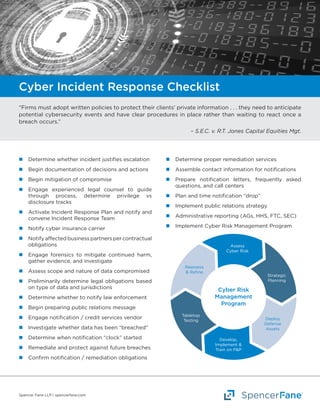
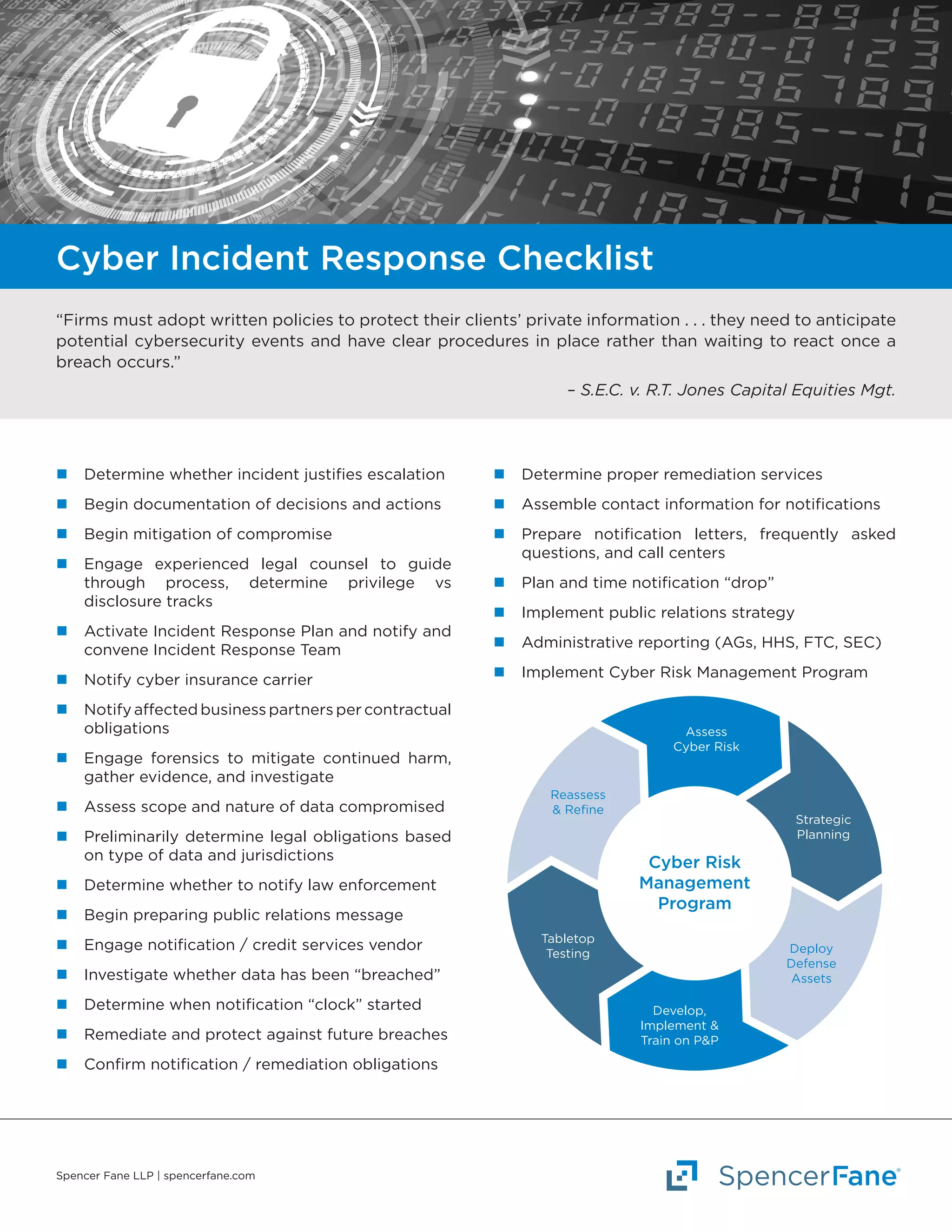
n	 Implement Cyber Risk Management Program
Assess
Cyber Risk
Strategic
Planning
Deploy
Defense
Assets
Develop,
Implement &
Train on P&P
Tabletop
Testing
Reassess
& Refine
Cyber Risk
Management
Program
“Firms must adopt written policies to protect their clients’ private information . . . they need to anticipate
potential cybersecurity events and have clear procedures in place rather than waiting to react once a
breach occurs.”
– S.E.C. v. R.T. Jones Capital Equities Mgt.

Cyber Incident Response Checklist

  • 1.
    Spencer Fane LLP| spencerfane.com Cyber Incident Response Checklist n Determine whether incident justifies escalation n Begin documentation of decisions and actions n Begin mitigation of compromise n Engage experienced legal counsel to guide through process, determine privilege vs disclosure tracks n Activate Incident Response Plan and notify and convene Incident Response Team n Notify cyber insurance carrier n Notify affected business partners per contractual obligations n Engage forensics to mitigate continued harm, gather evidence, and investigate n Assess scope and nature of data compromised n Preliminarily determine legal obligations based on type of data and jurisdictions n Determine whether to notify law enforcement n Begin preparing public relations message n Engage notification / credit services vendor n Investigate whether data has been “breached” n Determine when notification “clock” started n Remediate and protect against future breaches n Confirm notification / remediation obligations n Determine proper remediation services n Assemble contact information for notifications n Prepare notification letters, frequently asked questions, and call centers n Plan and time notification “drop” n Implement public relations strategy n Administrative reporting (AGs, HHS, FTC, SEC) n Implement Cyber Risk Management Program Assess Cyber Risk Strategic Planning Deploy Defense Assets Develop, Implement & Train on P&P Tabletop Testing Reassess & Refine Cyber Risk Management Program “Firms must adopt written policies to protect their clients’ private information . . . they need to anticipate potential cybersecurity events and have clear procedures in place rather than waiting to react once a breach occurs.” – S.E.C. v. R.T. Jones Capital Equities Mgt.