CVRC
Central Valley Regional Center
                                Josh Winters
                               Cheryl Whittle
                            Wednesday 6-8:50
History

 On July 1, 1969 the Lanterman Developmental Disabilities
   Services Act went into effect in California.

 Authored by Frank D. Lanterman, this act is foundation for all
   services to individuals with Developmental Disabilities are
   built.

 21 Regional Centers in California to serve as “fixed points of
   contract in the community for persons with Developmental
   Disabilities and their families.
Funding
 Through Lanterman Act

 Medicaid Waiver

 SSI
C. V. R.C. Practices
 C. Coordinating resources and collaborating with other
   agencies to develop the best services for consumers and
   families.

 V. Valuing diversity.

 R. Respecting individual rights and choices.

 C. Committing to excellence, honesty, and cost effectiveness
   in service delivery.
Goals
 Advocate for persons with Developmental Disabilities

 Identify Client and Family needs and to establish a person-
  centered plan
 Provide the most effective client services through
  community resources
 Assist communities in preventing and early identification of
  Developmental Disabilities
 To Assist in the establishment of new and innovative
  programs and to expand existing community resources.
Mission

 To help individuals with Developmental
  Disabilities and children at risk to reach their
  goals.
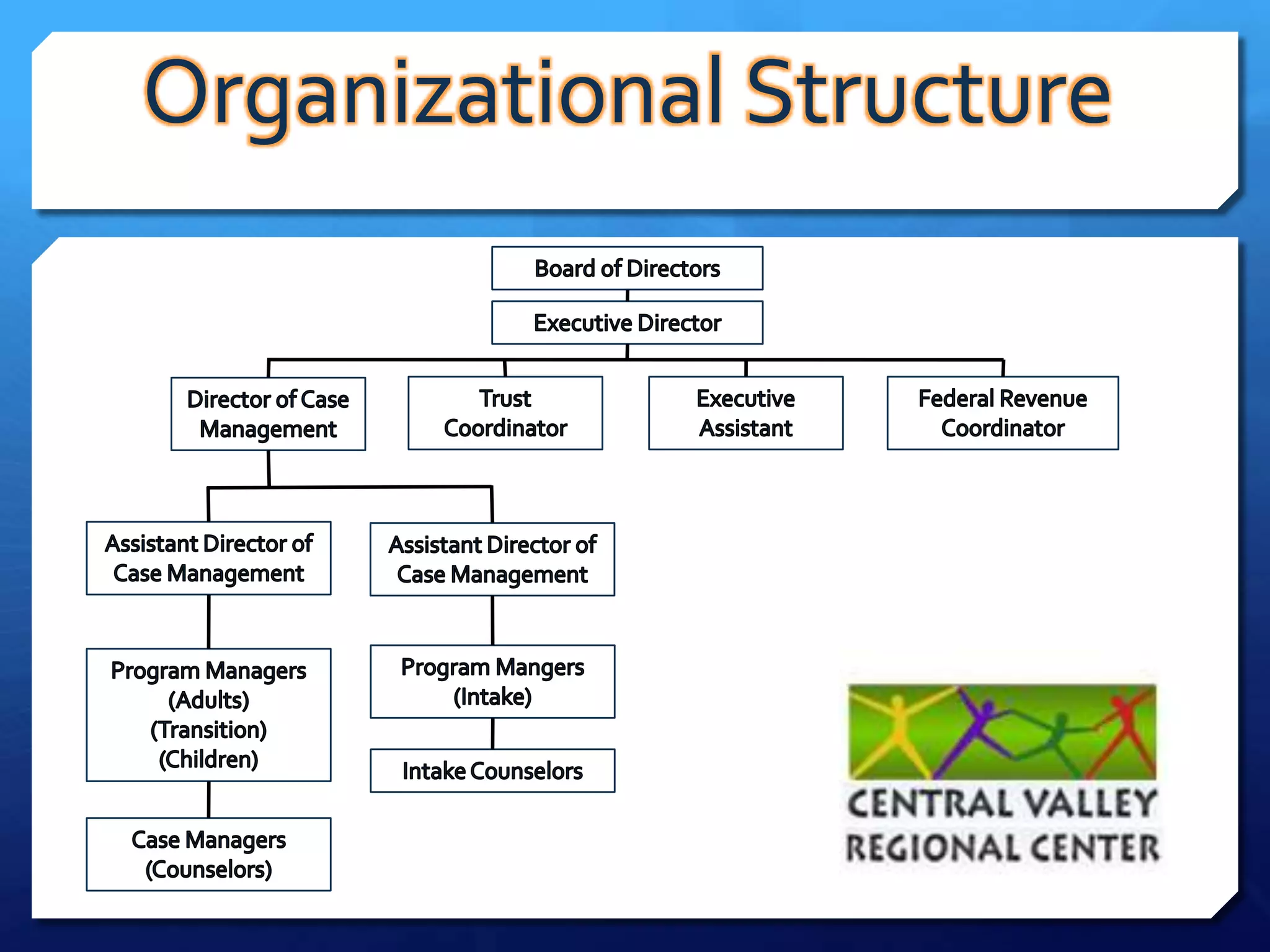
Organizational Structure
Who Qualifies?
 Children and Adults who are substantially handicapped.

 Qualifying conditions include Mental Retardation, Cerebral
  Palsy, Epilepsy, and Autism.

 The onset of these conditions must have been prior to age
  18.

 Infants and young children under age 3 may be served as
  “high risk” or “at risk” because of a significant delays in one
  or more developmental areas.
Services Provided
 Assessment         Activities for people with
                      Developmental Disabilities
 Evaluation
                     Funding of Resources
 Diagnosis
                        Respite Care
 Case Management       ILP Services
                        Day Programs
                        Group Homes
Populations At Risk
 Developmental disabled aged birth to death.
   Autism
   Cerebral Palsy
   Epilepsy
   Mental Retardation
   Other conditions similar or related to Mental
    Retardation that require similar treatment
Community Context
 Referral based by
  Parents, Teachers, Relatives, Doctors, the Individual
  themselves or anyone who suspects a
  Developmental Disability.
 Utilization of Generic Resources

 Counties served:
  Tulare, Kings, Fresno, Madera, Merced and
  Mariposa
 All ethnic groups served

 Upper, Middle and Lower class clients.
Sources
 CVRC.org

 http://www.dds.ca.gov/Statutes/LantermanAct.cfm

 http://www.dds.ca.gov/

CVRC

  • 1.
    CVRC Central Valley RegionalCenter Josh Winters Cheryl Whittle Wednesday 6-8:50
  • 2.
    History  On July1, 1969 the Lanterman Developmental Disabilities Services Act went into effect in California.  Authored by Frank D. Lanterman, this act is foundation for all services to individuals with Developmental Disabilities are built.  21 Regional Centers in California to serve as “fixed points of contract in the community for persons with Developmental Disabilities and their families.
  • 3.
    Funding  Through LantermanAct  Medicaid Waiver  SSI
  • 4.
    C. V. R.C.Practices  C. Coordinating resources and collaborating with other agencies to develop the best services for consumers and families.  V. Valuing diversity.  R. Respecting individual rights and choices.  C. Committing to excellence, honesty, and cost effectiveness in service delivery.
  • 5.
    Goals  Advocate forpersons with Developmental Disabilities  Identify Client and Family needs and to establish a person- centered plan  Provide the most effective client services through community resources  Assist communities in preventing and early identification of Developmental Disabilities  To Assist in the establishment of new and innovative programs and to expand existing community resources.
  • 6.
    Mission  To helpindividuals with Developmental Disabilities and children at risk to reach their goals.
  • 7.
  • 8.
    Who Qualifies?  Childrenand Adults who are substantially handicapped.  Qualifying conditions include Mental Retardation, Cerebral Palsy, Epilepsy, and Autism.  The onset of these conditions must have been prior to age 18.  Infants and young children under age 3 may be served as “high risk” or “at risk” because of a significant delays in one or more developmental areas.
  • 9.
    Services Provided  Assessment  Activities for people with Developmental Disabilities  Evaluation  Funding of Resources  Diagnosis  Respite Care  Case Management  ILP Services  Day Programs  Group Homes
  • 10.
    Populations At Risk Developmental disabled aged birth to death.  Autism  Cerebral Palsy  Epilepsy  Mental Retardation  Other conditions similar or related to Mental Retardation that require similar treatment
  • 11.
    Community Context  Referralbased by Parents, Teachers, Relatives, Doctors, the Individual themselves or anyone who suspects a Developmental Disability.  Utilization of Generic Resources  Counties served: Tulare, Kings, Fresno, Madera, Merced and Mariposa  All ethnic groups served  Upper, Middle and Lower class clients.
  • 12.