Current and
Future Trends in
Robotics and
Automation
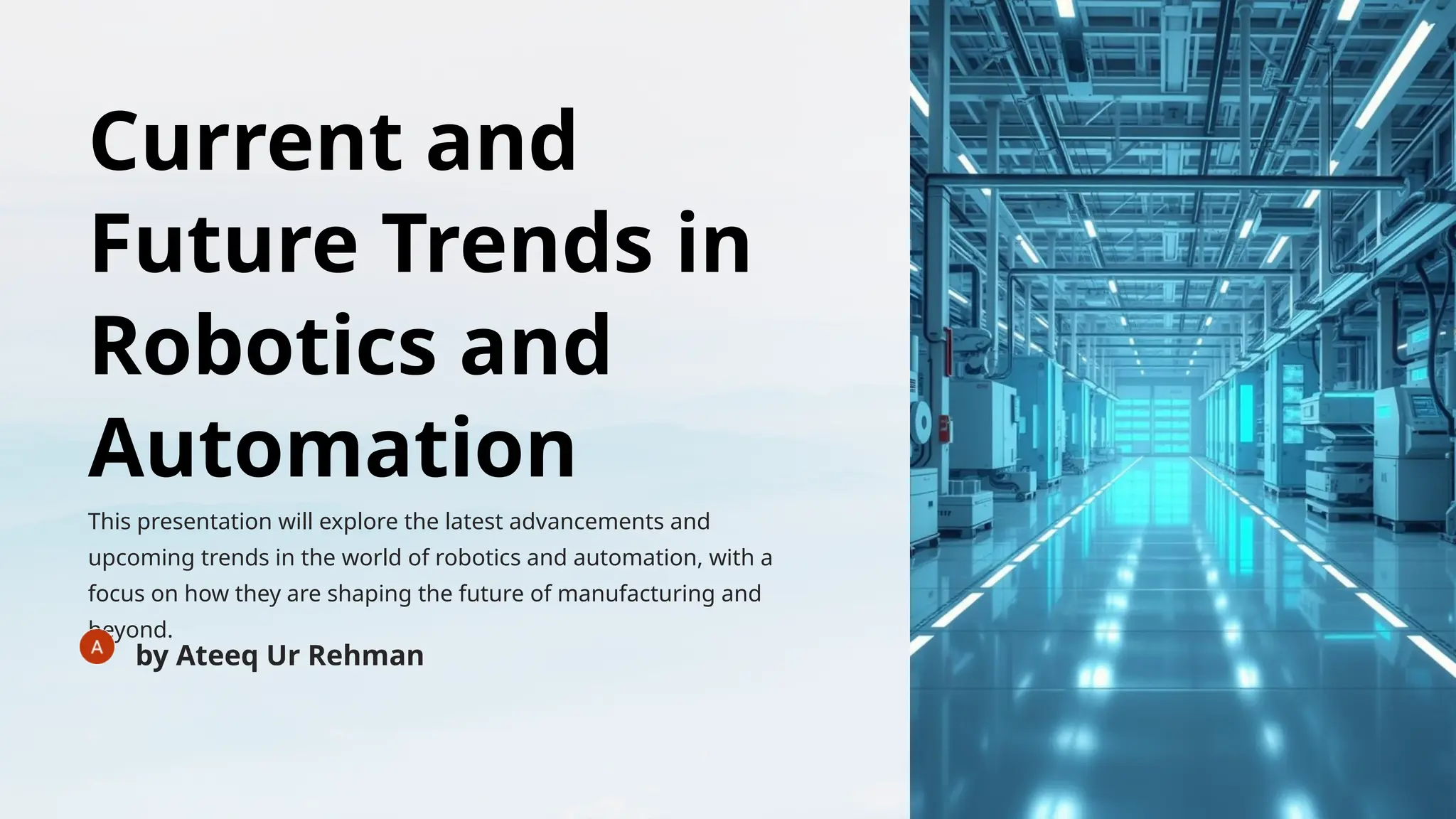
This presentation will explore the latest advancements and
upcoming trends in the world of robotics and automation, with a
focus on how they are shaping the future of manufacturing and
beyond.
by Ateeq Ur Rehman
Industry 4.0: The Rise of Smart Manufacturing
Cyber-Physical Systems
Integrating digital and physical
components to create intelligent,
connected factories.
Big Data Analytics
Leveraging real-time data to
optimize production processes and
make data-driven decisions.
Additive Manufacturing
3D printing revolutionizing product
design and customization in
manufacturing.
Robotics in Industry 4.0:
Enhancing Productivity and
Efficiency
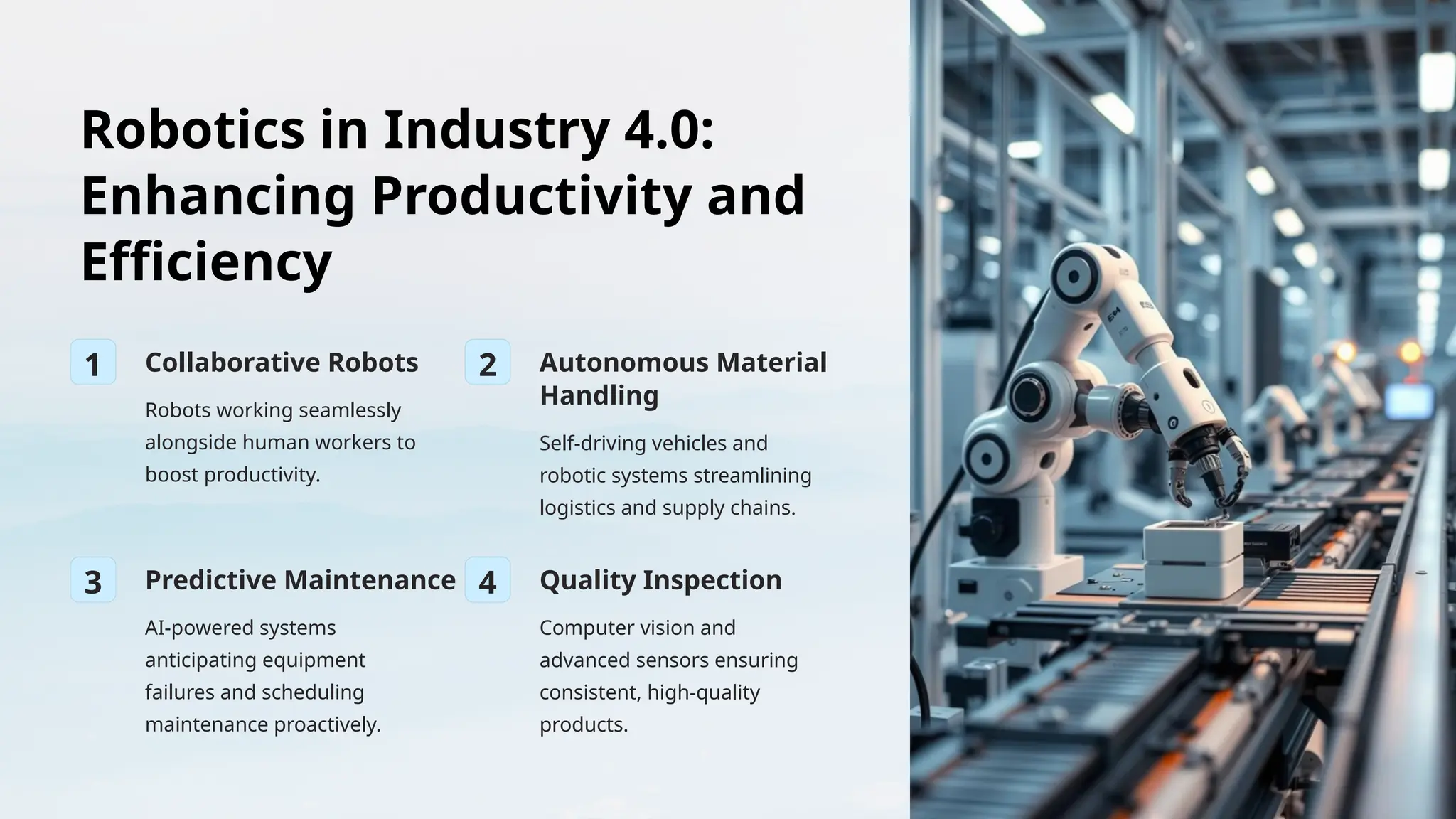
1 Collaborative Robots
Robots working seamlessly
alongside human workers to
boost productivity.
2 Autonomous Material
Handling
Self-driving vehicles and
robotic systems streamlining
logistics and supply chains.
3 Predictive Maintenance
AI-powered systems
anticipating equipment
failures and scheduling
maintenance proactively.
4 Quality Inspection
Computer vision and
advanced sensors ensuring
consistent, high-quality
products.
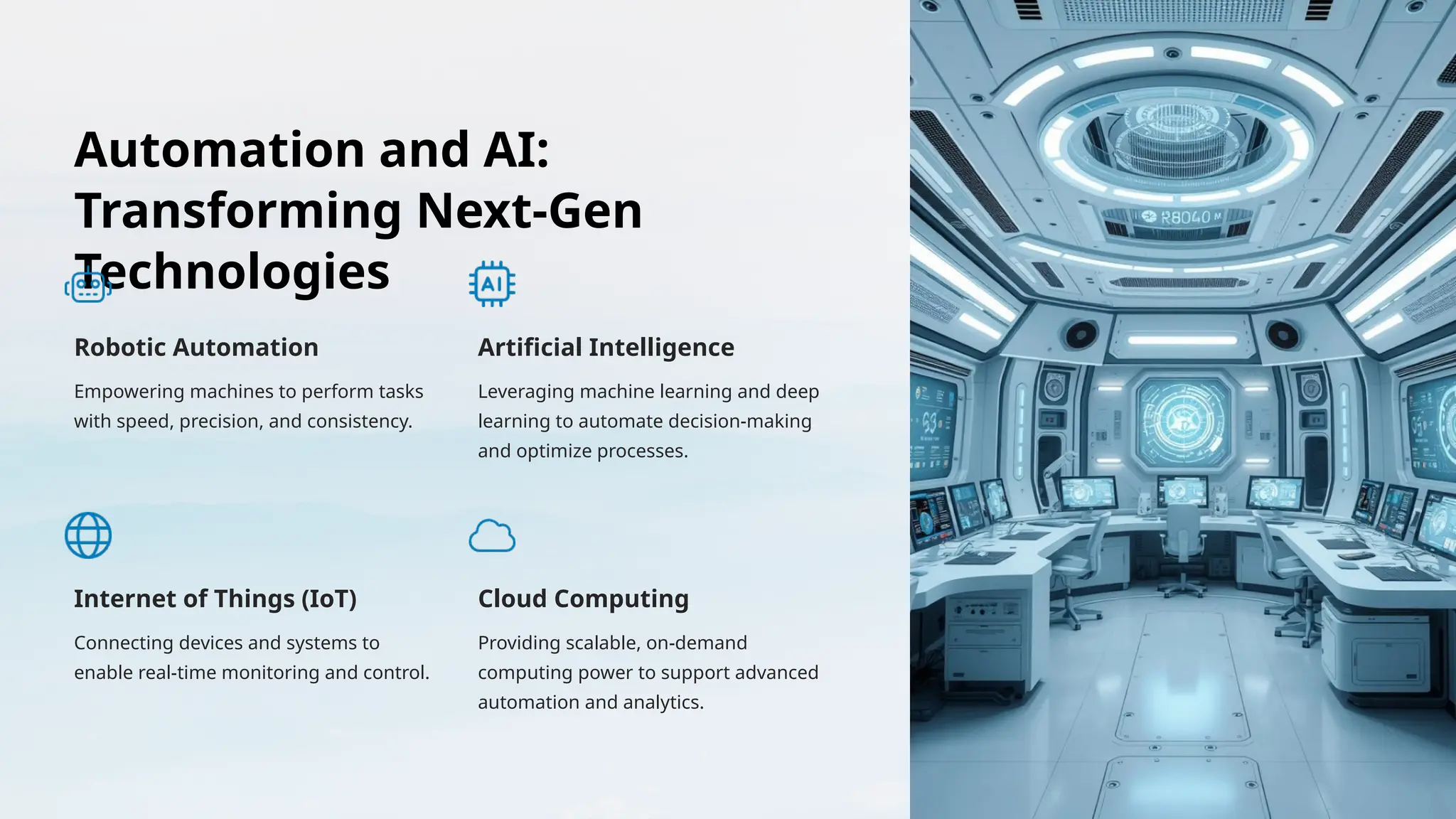
Automation and AI:
Transforming Next-Gen
Technologies
Robotic Automation
Empowering machines to perform tasks
with speed, precision, and consistency.
Artificial Intelligence
Leveraging machine learning and deep
learning to automate decision-making
and optimize processes.
Internet of Things (IoT)
Connecting devices and systems to
enable real-time monitoring and control.
Cloud Computing
Providing scalable, on-demand
computing power to support advanced
automation and analytics.
The Emergence of Industry
5.0: Human-Robot
Collaboration
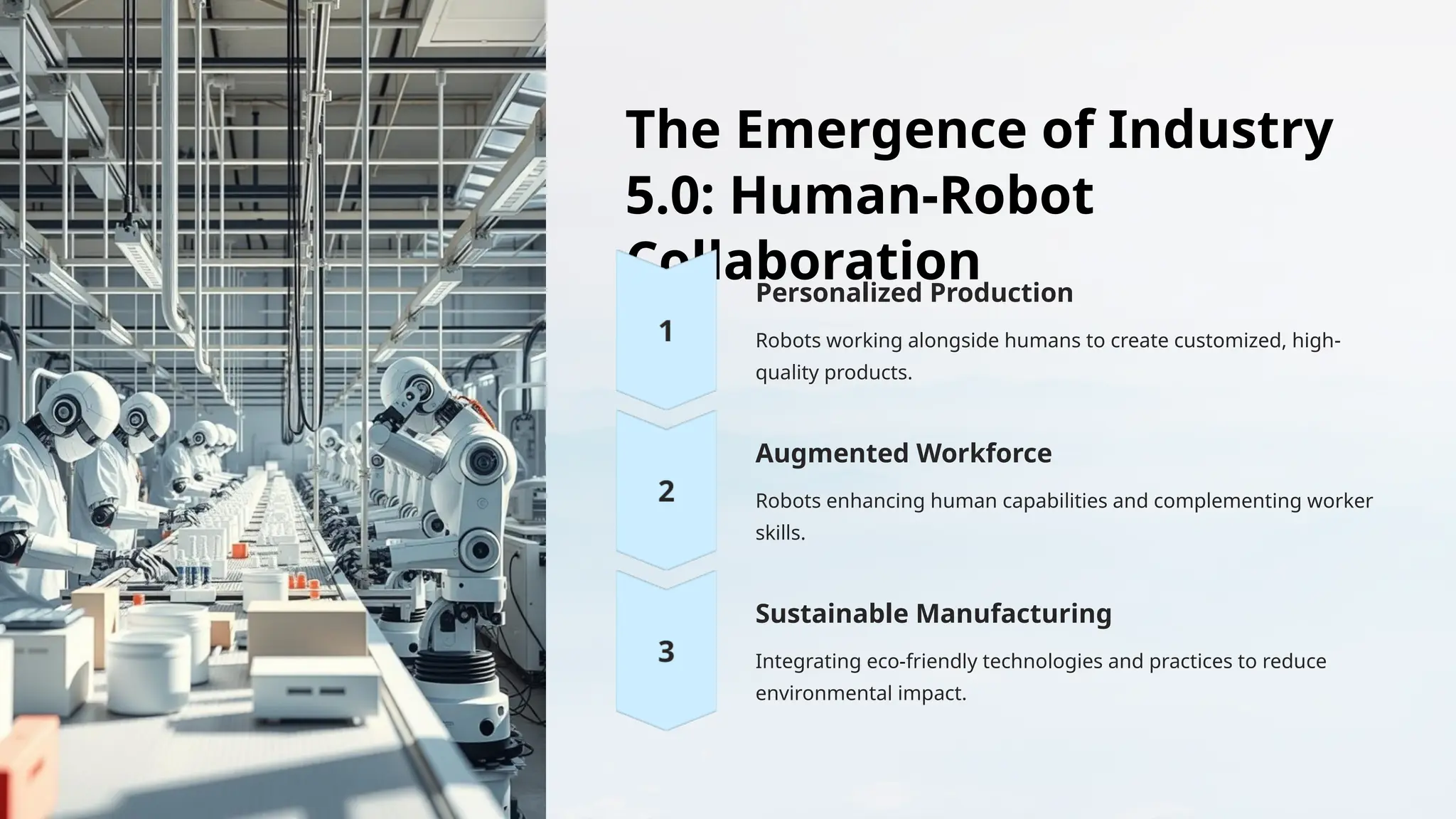
Personalized Production
Robots working alongside humans to create customized, high-
quality products.
Augmented Workforce
Robots enhancing human capabilities and complementing worker
skills.
Sustainable Manufacturing
Integrating eco-friendly technologies and practices to reduce
environmental impact.
Predictive Maintenance
and Condition
Monitoring
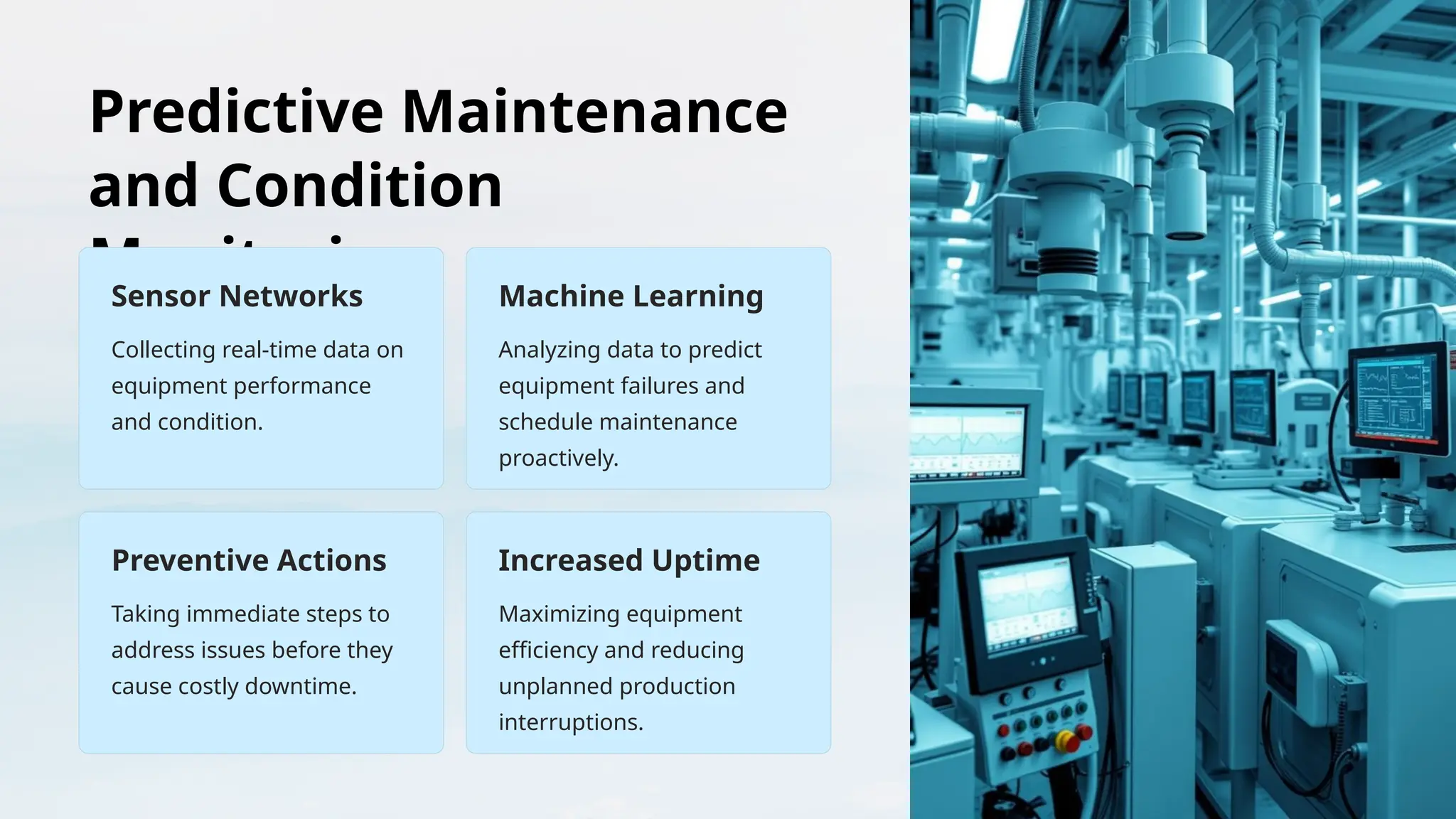
Sensor Networks
Collecting real-time data on
equipment performance
and condition.
Machine Learning
Analyzing data to predict
equipment failures and
schedule maintenance
proactively.
Preventive Actions
Taking immediate steps to
address issues before they
cause costly downtime.
Increased Uptime
Maximizing equipment
efficiency and reducing
unplanned production
interruptions.
Robotics in Logistics and
Supply Chain
Management
1 Automated Warehousing
Robotic systems for storage, retrieval, and inventory
management.
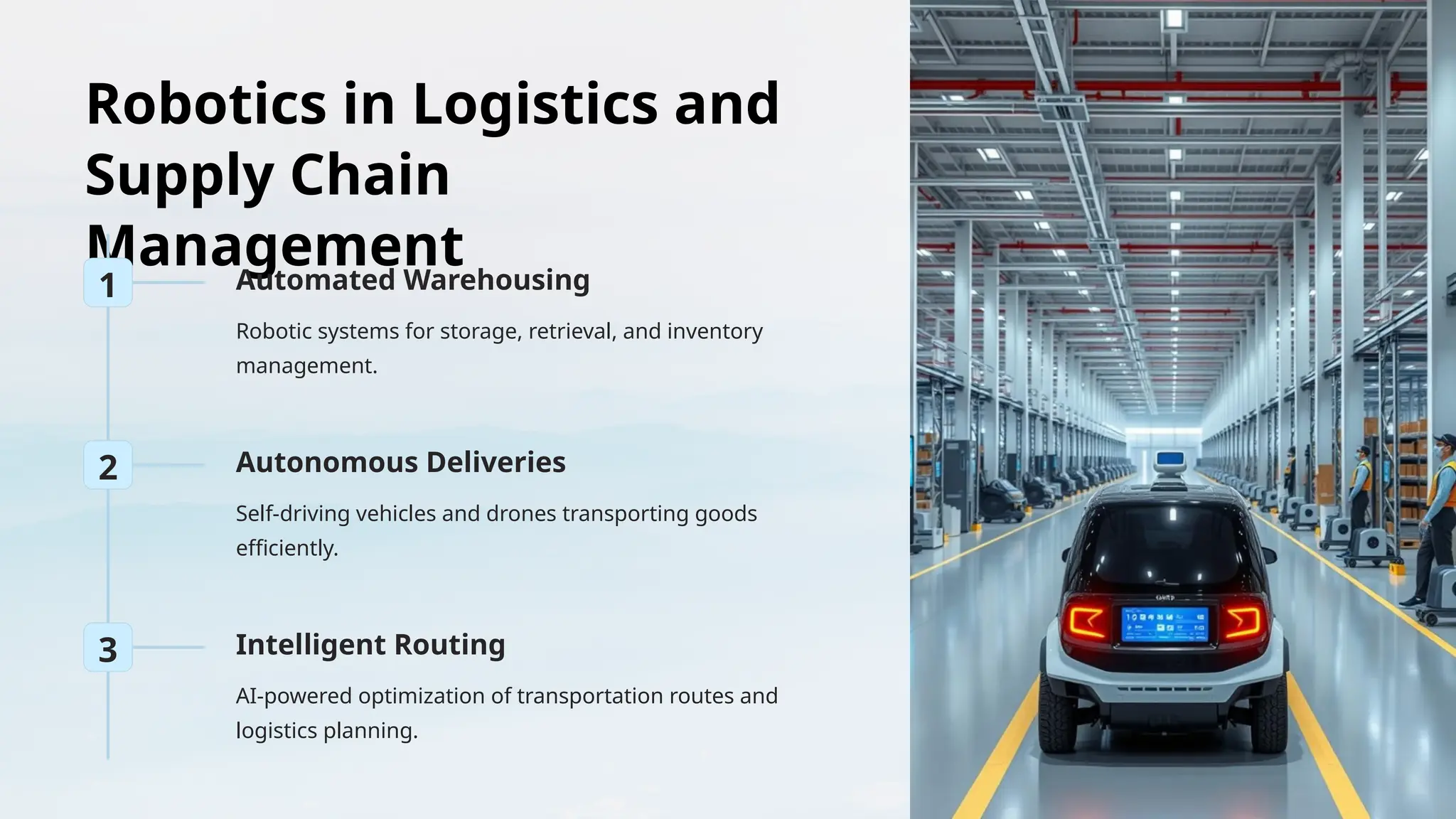
2 Autonomous Deliveries
Self-driving vehicles and drones transporting goods
efficiently.
3 Intelligent Routing
AI-powered optimization of transportation routes and
logistics planning.
The Future of Robotics and Automation
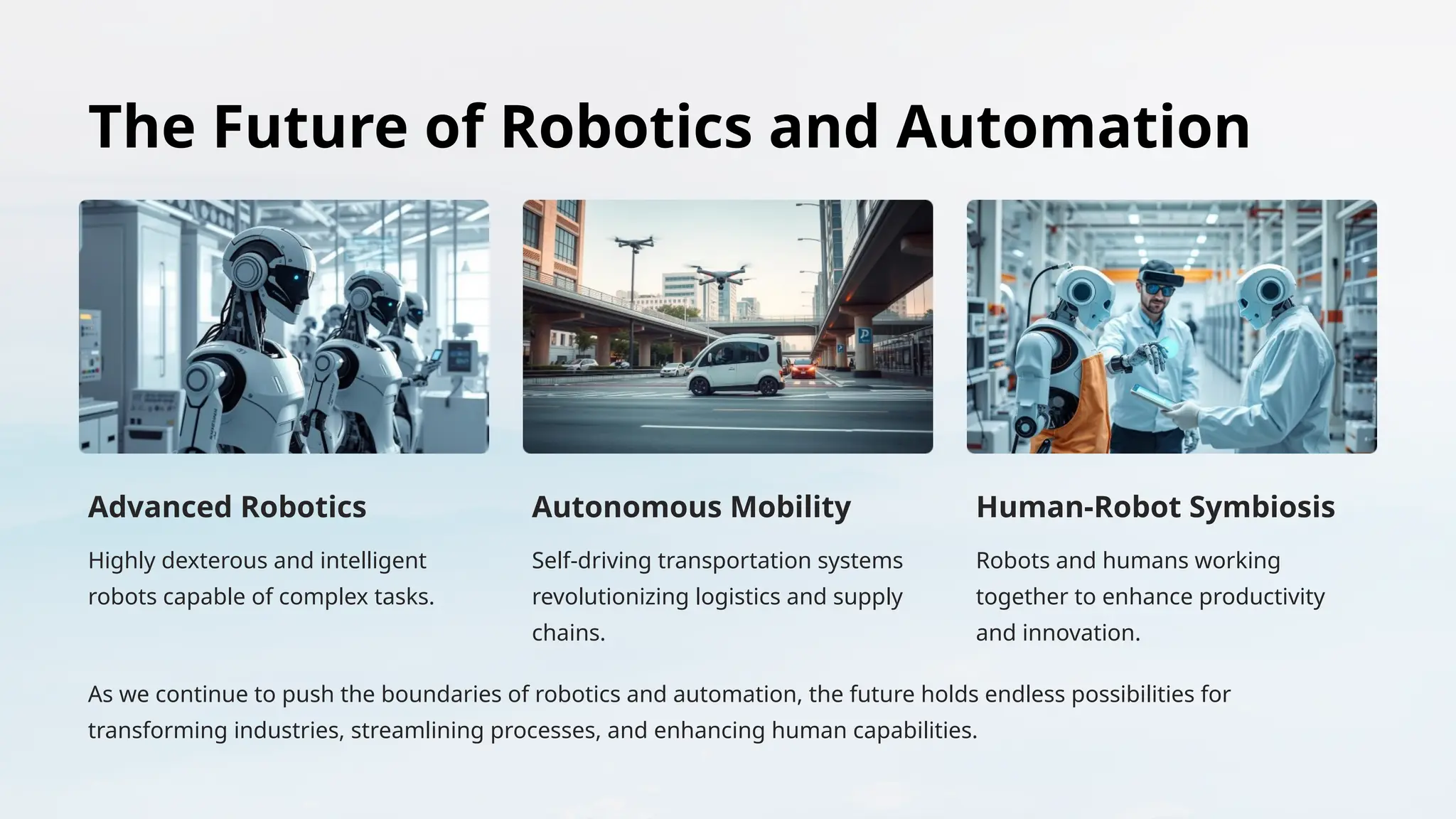
Advanced Robotics
Highly dexterous and intelligent
robots capable of complex tasks.
Autonomous Mobility
Self-driving transportation systems
revolutionizing logistics and supply
chains.
Human-Robot Symbiosis
Robots and humans working
together to enhance productivity
and innovation.
As we continue to push the boundaries of robotics and automation, the future holds endless possibilities for
transforming industries, streamlining processes, and enhancing human capabilities.

Current-and-Future-Trends-in-Robotics-and-Automation.pptx

  • 1.
    Current and Future Trendsin Robotics and Automation This presentation will explore the latest advancements and upcoming trends in the world of robotics and automation, with a focus on how they are shaping the future of manufacturing and beyond. by Ateeq Ur Rehman
  • 2.
    Industry 4.0: TheRise of Smart Manufacturing Cyber-Physical Systems Integrating digital and physical components to create intelligent, connected factories. Big Data Analytics Leveraging real-time data to optimize production processes and make data-driven decisions. Additive Manufacturing 3D printing revolutionizing product design and customization in manufacturing.
  • 3.
    Robotics in Industry4.0: Enhancing Productivity and Efficiency 1 Collaborative Robots Robots working seamlessly alongside human workers to boost productivity. 2 Autonomous Material Handling Self-driving vehicles and robotic systems streamlining logistics and supply chains. 3 Predictive Maintenance AI-powered systems anticipating equipment failures and scheduling maintenance proactively. 4 Quality Inspection Computer vision and advanced sensors ensuring consistent, high-quality products.
  • 4.
    Automation and AI: TransformingNext-Gen Technologies Robotic Automation Empowering machines to perform tasks with speed, precision, and consistency. Artificial Intelligence Leveraging machine learning and deep learning to automate decision-making and optimize processes. Internet of Things (IoT) Connecting devices and systems to enable real-time monitoring and control. Cloud Computing Providing scalable, on-demand computing power to support advanced automation and analytics.
  • 5.
    The Emergence ofIndustry 5.0: Human-Robot Collaboration Personalized Production Robots working alongside humans to create customized, high- quality products. Augmented Workforce Robots enhancing human capabilities and complementing worker skills. Sustainable Manufacturing Integrating eco-friendly technologies and practices to reduce environmental impact.
  • 6.
    Predictive Maintenance and Condition Monitoring SensorNetworks Collecting real-time data on equipment performance and condition. Machine Learning Analyzing data to predict equipment failures and schedule maintenance proactively. Preventive Actions Taking immediate steps to address issues before they cause costly downtime. Increased Uptime Maximizing equipment efficiency and reducing unplanned production interruptions.
  • 7.
    Robotics in Logisticsand Supply Chain Management 1 Automated Warehousing Robotic systems for storage, retrieval, and inventory management. 2 Autonomous Deliveries Self-driving vehicles and drones transporting goods efficiently. 3 Intelligent Routing AI-powered optimization of transportation routes and logistics planning.
  • 8.
    The Future ofRobotics and Automation Advanced Robotics Highly dexterous and intelligent robots capable of complex tasks. Autonomous Mobility Self-driving transportation systems revolutionizing logistics and supply chains. Human-Robot Symbiosis Robots and humans working together to enhance productivity and innovation. As we continue to push the boundaries of robotics and automation, the future holds endless possibilities for transforming industries, streamlining processes, and enhancing human capabilities.